

Note: This article contains affiliate links. If you click on these links and make a purchase, I may earn a small commission at no extra cost to you. This helps support my research and content. Read my full affiliate disclosure here.
Picking the right potting soil for African violets matters because these plants demand a very specific root environment: loose, well aerated yet moisture-retentive and low in salts. The wrong mix leads to poor flowering, root rot, or compacted soil that stresses crowns. This guide looks at six top potting soils selected for common African violet situations – from beginner windowsill growers to collectors who repot often. We shortlisted mixes that balance drainage, moisture retention, and gentle nutrition, and evaluated them on factors that matter in everyday care. Read on to understand what each potting soil offers and which mix matches your growing routine.
Top Picks at a Glance
| Best Overall The best all-around choice for most situations | Sun Gro Horticulture Black Gold African Violet Mix (8 qt) |  |
| Best Quality Built to a higher standard if you want something more solid | Leaves & Soul African Violet Potting Soil Mix, 2.2 Quart |  |
| Best Budget The cheapest option that still gets the job done reliably | Doter Organic African Violet Potting Mix (1 qt) |  |
| Highest Rated A top-rated pick with lots of positive feedback | Sun Gro Horticulture African Violet Potting Soil, 8 qt |  |
| Most Popular A crowd favorite that many people choose with confidence | Espoma Organic Premium Potting Mix for African Violets (4 qt) |  |
| Best Seller A high-volume bestseller chosen again and again | Midwest Hearth African Violet Potting Soil Mix (4 Dry Quarts) |  |
Sun Gro Horticulture Black Gold African Violet Mix (8 qt)

| Unit Count | 296 Ounce |
|---|---|
| Item Type Name | Sun Gro Horticulture Black Gold African Violet Mix |
| Manufacturer | BFG Supply |
| Volume | 8 quarts |
This Black Gold African Violet Mix is a ready-to-use potting medium tailored to the needs of African violets and other small indoor flowering plants. The blend pairs sphagnum peat moss for moisture retention with perlite and volcanic pumice to improve drainage and aeration, while earthworm castings add gentle organic fertility. Dolomite lime helps stabilize pH so the soil stays within the neutral-to-slightly-acid range violets prefer. In practice the mix is easy to work with when repotting single plants or topping up small containers, and the 8 quart package is convenient to handle and store. Because it is a focused blend rather than a general-purpose potting soil, you get predictable moisture behavior and fewer adjustments compared with making your own mix. Limitations are that it is a small-volume retail bag and does not include slow-release fertilizer, so high-performing growers will likely supplement with liquid feed or controlled-release nutrition for heavier bloom cycles.
Best for: Growers who prioritize reliable, plant-specific performance and want a ready-made medium that gives consistent moisture and aeration for African violets.
Less Ideal for: Gardeners who need large volumes of soil for many plants or those who prefer a potting mix with pre-mixed long-term fertilizer included.
- Formulated specifically for African violets with peat-based moisture retention and added aeration
- Includes earthworm castings for mild organic nutrient support
- Dolomite lime included to help maintain an appropriate pH
- Light, airy texture from perlite and pumice helps prevent root rot in small pots
- No built-in slow-release fertilizer so regular feeding is required for maximum flowering
- Small 8 quart bag may be insufficient for multiple plants or frequent repots
Verdict: Choose this mix when you want a consistent, airy peat-based medium that supports healthy roots and reliable bloom performance in African violets.
Leaves & Soul African Violet Potting Soil Mix, 2.2 Quart

| Volume | 2.2 quarts |
|---|---|
| Made in | USA |
| Blend components | Peat moss, coco coir, perlite, dolomite |
| Packaging | Resealable bag |
Leaves & Soul African Violet Potting Soil is a premixed, ready-to-use medium designed specifically for Saintpaulia and other delicate indoor flowering plants. The blend of peat moss and coco coir helps retain useful moisture while remaining loose, while perlite improves drainage and aeration so fine roots get oxygen without staying waterlogged. Dolomite is included to moderate acidity and contribute to a balanced root environment. The bag is resealable, which keeps unused mix fresh between repotting sessions and makes it convenient for small collections. In practice this mix works well for repotting seedlings through mature plants when used in pots with drainage holes and adjusted watering. Important limitations are that it is a base medium rather than a complete fertilizer solution, so regular feeding according to your fertilizer schedule is still needed, and very small or recently rooted plantlets require careful moisture control. For growers who want a consistent, out-of-the-bag option that prioritizes moisture balance and aeration, this mix is an easy, practical choice.
Best for: Buyers who want a dependable, low-effort potting mix that balances moisture and aeration for indoor African violets and other delicate flowering houseplants.
Less Ideal for: Growers seeking a soil that supplies long-term nutrients without additional feeding or those managing large outdoor plantings where this indoor blend is unnecessary.
- Ready-to-use mix tailored for African violets so no immediate amendment is required
- Combination of peat moss, coco coir, and perlite balances moisture retention with drainage
- Includes dolomite to help stabilize pH and nutrient uptake
- Resealable bag for convenient storage between uses
- Not a fertilizer replacement so plants will need a separate feeding regimen
- May require extra care with very young plantlets to avoid overwatering
Verdict: A convenient, out-of-the-bag potting mix that gives African violets reliable moisture control and root aeration for healthier growth.
Doter Organic African Violet Potting Mix (1 qt)
| Brand Name | Doter |
|---|---|
| Item Type Name | Garden soil |
| Volume | 1 quarts |
| Item Weight | 224 g |
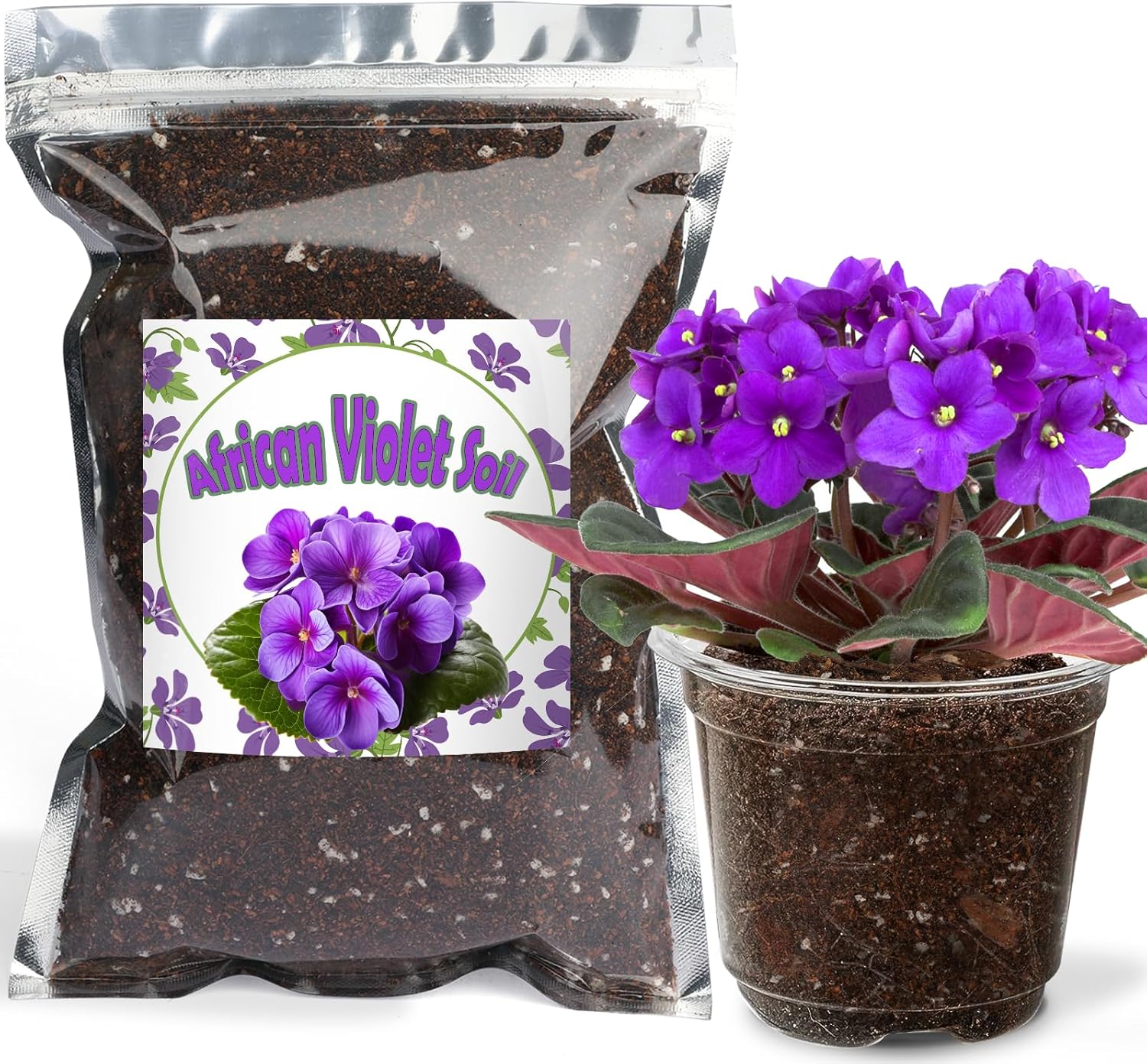
This 1 quart Doter potting mix is made specifically for African violets and similar small indoor plants. It combines peat moss, perlite, and bark to create a fine, airy medium that resists compaction and helps delicate roots get oxygen while holding enough moisture between waterings. The mix is described as slightly acidic and fortified with nutrients to support steady leaf growth and frequent flowering, so you can use it straight from the bag for repotting or topping up small pots. Practical benefits include easier watering control in shallow violet pots and reduced need to amend with extra perlite for drainage. Limitations are the small 1 quart volume, which means frequent repurchases if you maintain multiple plants, and the product guidance is general rather than giving specific feeding schedules or exact pH numbers. It is best used for routine repotting of single plants and as a ready blend for hobbyists who want a violet‑focused soil without custom mixing.
Best for: Plant owners who want an affordable, ready‑to‑use potting mix tailored to African violets and prefer not to mix their own media.
Less Ideal for: Enthusiasts who grow large collections, repot often, or need bulk soil for many plants should choose larger bags or prepare a custom mix.
- Formulated for African violets with a slightly acidic pH to improve nutrient uptake
- Fine, airy texture from peat moss, perlite, and bark that prevents compaction
- Fortified with nutrients to support flowering and foliage without immediate amendments
- Works straight from the bag for repotting small indoor pots
- Small 1 quart volume requires frequent repurchase for multiple plants
- No specific pH value or feeding schedule provided on product details
Verdict: A convenient, budget‑friendly 1 qt potting mix that gives African violets a light, nutrient‑ready medium for healthy foliage and more blooms.
Sun Gro Horticulture African Violet Potting Soil, 8 qt

| Brand Name | SUN GRO |
|---|---|
| Volume | 8 quarts |
| UPC | 064277124081 |
This Sun Gro African violet potting mix is a ready-to-use soil blend aimed at indoor growers who want consistent, low-maintenance results. The formula emphasizes porosity and organic material to keep roots aerated while retaining enough moisture to prevent frequent watering. Typical use is repotting or topping off small to medium African violet pots; the 8 quart bag supplies multiple plants and is easy to scoop into pots. Notable features include an organic-based composition and a moisture-balance design that helps reduce the risk of compaction and root rot. Practically, that means less fussing with drainage amendments and more predictable watering cycles for growers who prefer reliable performance. Limitations are the single-purpose focus on African violets and similar small houseplants, so gardeners seeking an all-purpose potting mix for larger or outdoor plants will need something else. The bag is convenient for indoor storage but comes as a compact volume, so repeat purchases are likely for collectors with many pots.
Best for: Buyers who want a dependable, purpose-built potting mix to keep African violets healthy with minimal fuss, especially indoor growers who prioritize consistent watering and root health.
Less Ideal for: Gardeners who need an all-purpose soil for outdoor beds or larger container plants should choose a broader-use potting mix instead.
- Formulated specifically for African violets to support flowering and root health
- Balanced porosity that helps prevent compaction and promotes aeration
- Moisture-retaining yet well-draining mix reduces risk of overwatering
- Organic ingredients provide plant nutrients and a natural growing medium
- Designed primarily for African violets and other small houseplants so not ideal for general garden use
- 8 quart volume may require frequent repurchasing for larger collections
Verdict: Choose this mix if you want a reliable, ready-made potting soil that keeps African violets well aerated and evenly moist for consistent flowering.
Espoma Organic Premium Potting Mix for African Violets (4 qt)

| Brand | Espoma |
|---|---|
| Unit Count | 128 Ounce |
| Included Components | Espoma Organic Natural and Organic Premium Potting Soil Mix |
| Volume | 4 quarts |
This Espoma mix is designed specifically for African violets and other indoor flowering houseplants. It combines sphagnum peat moss, humus, perlite and yucca extract to create a light, well-draining medium that helps roots breathe and encourages blooming. Typical use is potting new violets or repotting plants into slightly larger containers; the blend is ready to use out of the bag with no need to amend for basic houseplant needs. Notable features include organic ingredients and a focus on aeration and moisture retention balance, which reduces the risk of root rot from overwatering while still holding enough moisture for frequent bloomers. Because it contains only natural components and no synthetic fertilizers, growers who prefer low-chemical or organic care will appreciate it. Limitations are the small 4 quart volume, which means multiple bags are needed for several plants, and it does not include a built-in fertilizer, so feeding on a regular schedule is still necessary for vigorous flowering over time.
Best for: A cautious indoor gardener who prefers organic, low-chemical products and wants a ready-made soil that supports healthy root aeration and reliable flowering in African violets and similar houseplants.
Less Ideal for: People who need large volumes of potting mix for many plants or who want an all-in-one mix with built-in long‑term fertilizer.
- Formulated specifically for African violets and indoor flowering houseplants
- Light, well-draining mix (peat moss and perlite) that reduces risk of waterlogged roots
- Uses organic, natural ingredients without synthetic plant foods
- Includes yucca extract to help wetting and even moisture distribution
- Small 4 quart bag limits coverage for multiple plants
- No added fertilizer so separate feeding is required for sustained bloom
Verdict: Choose this Espoma African violet mix when you want a small, organic, well‑draining potting medium that supports healthy flowering in indoor violets.
Midwest Hearth African Violet Potting Soil Mix (4 Dry Quarts)

| Brand Name | Midwest Hearth |
|---|---|
| Item Type Name | Potting Soil |
| Unit Count | 128 Ounce |
| Style Name | Peat Moss, Perlite, Vermiculite Potting Soil Mix |
| Volume | 4 quarts |
This ready-to-use mix is designed specifically for African violets and aims to supply the loose, well-drained but moisture-retentive medium those plants prefer. You use it straight from the bag for repotting or top-dressing without needing to amend; the combination of peat moss, perlite and vermiculite creates aeration to protect delicate roots while holding enough moisture to avoid rapid drying. The mix is pH-controlled to match African violet needs and is the same formulation the brand positions as professional grower quality. Practical benefits include reduced mixing time, consistent texture across pots, and a visible color/weight change that helps time watering. Limitations are the small 4-quart bag size for hobbyists with many plants and potential skin irritation for sensitive users when handling dry media. For growers who prefer to tailor their own blends, this premix leaves less room to adjust components or fertility.
Best for: Buyers who value an off-the-shelf, proven potting medium for African violets and want a consistent, low-effort mix that mimics professional grower formulas.
Less Ideal for: Growers who prefer to custom-blend soils, those managing large collections that need bulk bags, or users who want an already-fertilized/boosted mix.
- Formulated specifically for African violets with pH control
- Ready-to-use mix requires no additional amendments
- Peat moss, perlite and vermiculite balance aeration and moisture retention
- Consistent texture suitable for delicate, shallow rooting systems
- Small 4-quart bag may require frequent replenishing for multiple plants
- Dry mix can irritate sensitive skin if handled without protection
Verdict: Choose this ready-made, pH-balanced mix when you want a low-effort, professional-style soil that reliably supports African violet root health.
Choosing the Right Potting Soil for African Violets: Key Factors to Consider
Soil Texture and Aeration
African violets have fine, shallow roots that need lots of air. A mix that crumbles easily and does not compact gives roots access to oxygen, which supports healthy growth and more blooms. Look for components like fine peat alternatives, coconut coir, and perlite or vermiculite sized for small pots. Too much fine organic matter makes the soil dense and slow to dry; too much coarse grit reduces water retention and forces more frequent watering.
Texture also influences how the soil breaks down over time. Mixes with stable, inert components maintain structure between repottings so you do not have to replace soil as frequently.
Drainage Versus Moisture Retention
African violets prefer evenly moist but not waterlogged conditions. Drainage determines how quickly excess water escapes, while retention determines how long the mix holds available moisture for roots. A good balance reduces crown rot risk and prevents stress from erratic drying cycles.
In practice this means choosing a mix with fast surface drying and good through-drainage but molecules that hold water near the root zone. Components like perlite increase drainage, while small amounts of vermiculite or coir can hold water without becoming soggy. Consider your watering habits and pot size: smaller pots dry faster and need mixes that retain water a bit longer.
Nutrient Content and Fertilizer Compatibility
Most African violet mixes include a light starter charge of nutrients. That is helpful for the first weeks after repotting but should not be so strong that it burns the crown or stresses young roots. Low-soluble-salt starter blends are preferable. Also check that the mix works well with the slow-release or water-soluble fertilization routine you prefer.
Some blends are intentionally low in nutrients because growers prefer to control feeding. If you plan to use frequent dilute fertilizer, choose a cleaner mix; if you want less frequent feeding, choose a mix with a mild, balanced starter nutrient charge.
pH and Buffering Capacity
African violets prefer a slightly acidic to near-neutral pH. A potting soil that is too alkaline limits uptake of key nutrients like iron and manganese and can cause yellowing leaves. Soils with stable pH or buffering additives keep conditions consistent between waterings and fertilizations.
If your tap water is hard or alkaline, favor mixes that resist pH increases or plan to adjust irrigation water. pH stability also reduces the need for frequent corrective products.
Cleanliness and Disease Risk
Because African violets are sensitive and often grown in small pots, starting with a sterile, pest-free mix reduces the risk of damping-off, root rot, and soil-borne pests. Look for mixes that are described as pasteurized or made from processed components less likely to carry pathogens.
Using a clean mix also reduces the need for chemical treatments and helps young plants establish quickly. Avoid mixes containing uncomposted manure, garden soil, or large volumes of fresh compost in this context.
Particle Size Consistency and Pot Size Fit
Particle size consistency affects watering behavior and root penetration. A mix with uniform granules prevents pockets of over-wet or bone-dry media and helps roots spread evenly. For African violets, whose pots are typically small and shallow, a fine but well-draining particle distribution is ideal.
Also consider the pot size you use. Very small pots need mixes with slightly higher water retention; larger shallow pots require faster-draining blends to prevent uneven moisture gradients across the root ball.
Repotting Tips For African Violets
Repotting frequency influences which soil you choose. Many growers repot annually or every two years to refresh the medium and check for crown health. When repotting, loosen the old mix gently and remove any compacted material from the root ball before placing the plant in fresh soil. Avoid burying the crown; the top of the root ball should sit just below the pot rim to allow air circulation around the crown.
If you are moving plants between pot sizes, adjust the mix moisture and watering schedule right after repotting. Newly repotted plants benefit from a light watering to settle the soil, then allow the top surface to dry slightly before resuming a normal watering rhythm.
- Choose a pot one size larger when roots fill the current container.
- Use a shallow, well-draining pot to match the shallow root habit.
- Remove dead leaves and inspect crowns for rot before repotting.
Watering Strategy With Specialized Mixes
How you water matters as much as the mix. For small pots, bottom watering can keep crowns dry while hydrating the root zone. Alternatively, water from the top until it runs through, then empty excess from the saucer after 15 minutes to prevent constant saturation. Let the top third of the mix dry slightly before the next full watering.
If your mix contains more coarse material, expect more frequent watering but faster recovery from overwatering. Finer mixes hold moisture longer and suit less frequent, careful watering.
- Bottom watering reduces crown wetting and leaf spotting.
- Allow the top layer to firm and dry slightly to gauge when to water again.
- Adjust frequency seasonally as growth slows in winter.
Managing Fertility Without Overfeeding
African violets respond to regular, low-dose feeding rather than occasional heavy applications. Use a balanced, diluted water-soluble fertilizer or a low-release formula compatible with the mix's starter charge. Watch for signs of salt build-up such as brown leaf edges or slowed growth; if that appears, flush the pot with plain water a few times to leach excess salts.
When switching mixes, allow a few weeks before changing your fertilization routine to let the plant acclimate. Consistent, modest feeding encourages continuous bloom without stressing roots.
- Use dilute fertilizer at half to quarter strength when feeding frequently.
- Flush containers occasionally to prevent salt accumulation.
- Reduce feeding during the plant's slower growth periods.
Adapting Mix Choice To Growing Conditions
Light, humidity, and pot location influence the best potting soil choice. In very bright, dry windowsills, choose a mix that retains more moisture so the medium does not dry completely between waterings. In humid or low-light conditions, favor faster-draining mixes to reduce rot risk.
Room temperature and air circulation also matter. Cooler, stagnant air slows drying; adjust mix drainage accordingly or increase ventilation to keep the crown healthy.
- Increase retention for dry, sunny spots.
- Choose faster-draining mixes for humid rooms or greenhouse benches.
- Match the mix to your climate and indoor microenvironment.
How We Chose the Best Potting Soil for African Violets
We evaluated potting soils specifically for African violets using gardener-relevant, measurable criteria. We prioritized mix texture and aeration because violet roots are fine and need high oxygen levels; drainage rate and water retention were measured to ensure mixes do not stay soggy yet hold enough moisture between waterings. We assessed nutrient profile and fertilizer compatibility so soils provide a gentle starter charge without salt build-up that burns crowns. pH stability and buffering were checked because African violets prefer a slightly acidic to neutral range and abrupt swings harm nutrient uptake. We also considered sterility and disease risk, favoring mixes that are pasteurized or consist of components unlikely to carry pests or pathogens. Exclusions: We excluded heavy garden soils, unamended composts, and mixes formulated for large outdoor containers that are too dense for African violets. We also excluded products formulated mainly for cacti, orchids, or succulents unless their texture and nutrient levels matched violet needs. The final list focuses on practical mixes that fit typical pot sizes and repotting routines for this plant.
FAQ
How often should I repot African violets?
Often repotting every 12 to 24 months is adequate. Repot sooner if roots are circling, soil has compacted, or plants show slow growth despite proper care. Annual refresh helps maintain texture and reduces disease risk.
Can I use standard houseplant potting soil?
Standard houseplant mixes are often too dense for African violets and can retain excess moisture. If using a general mix, amend it with extra perlite or a finer steric material to improve aeration and drainage.
What pot size is best for African violets?
Choose shallow pots that match the plant's root ball diameter; many violets do well in small, shallow containers. Upsize incrementally only when roots fill the pot to avoid excess soil volume that holds moisture and stresses the plant.
Should I add fertilizer to the potting mix when repotting?
A light starter nutrient charge in the mix is helpful, but avoid mixes with heavy nutrient loads. If the mix is low in nutrients, use a gentle, regular fertilizer program rather than a strong initial dose.
Is bottom watering better than top watering for African violets?
Bottom watering can reduce crown wetting and leaf spotting, which many growers prefer. Top watering is fine if you avoid wetting the crown and empty saucers to prevent standing water.
How do I tell if my soil is compacted or broken down?
Compacted soil becomes hard to the touch, drains slowly, and may hold standing water on the surface. Roots may appear crowded or strangled. Repot and replace the medium if you notice these signs.
Final Verdict
Pick a potting soil that prioritizes airy texture and balanced moisture retention for the shallow, fine roots of African violets. Match the mix to your pot size, watering habits, and local growing conditions, and plan to refresh soil periodically to maintain structure and cleanliness. Prioritizing aeration, drainage, and gentle nutrient balance will reduce common problems and help you choose confidently among suitable mixes.
