

Note: This article contains affiliate links. If you click on these links and make a purchase, I may earn a small commission at no extra cost to you. This helps support my research and content. Read my full affiliate disclosure here.
Choosing the right fertilizer for your peace lily matters because these houseplants respond quickly to feeding but are sensitive to overfertilizing and salt build-up. The right formula supports glossy green leaves, steady growth, and more frequent blooms without stressing roots. This guide shortlists seven top options suitable for the typical indoor conditions peace lilies face and explains what to expect from each feeding approach. We'll evaluate nutrient ratios, application ease, and salt management to help you pick the best fit for your pot size and watering routine.
Top Picks at a Glance
| Best Overall The best all-around choice for most situations | GARDENWISE Peace Lily Liquid Fertilizer (3-1-2), 8 fl oz |  |
| Best Quality Built to a higher standard if you want something more solid | Leaves & Soul Professional Peace Lily Liquid Fertilizer Concentrate, 8 oz (3-1-2) |  |
| Best Value The sweet spot between price and what you get | HiThrive Peace Lily Liquid Fertilizer, 16 oz |  |
| Best Budget The cheapest option that still gets the job done reliably | TPS NUTRIENTS Peace Lily Fertilizer Spray (16 fl oz) |  |
| Highest Rated A top-rated pick with lots of positive feedback | Miracle-Gro Indoor Plant Food for All Plants, Liquid, 8 fl. oz. (2-Pack) |  |
| Most Popular A crowd favorite that many people choose with confidence | TPS NUTRIENTS Peace Lily Liquid Fertilizer, 8 oz |  |
| Best Seller A high-volume bestseller chosen again and again | Miracle-Gro Indoor Plant Food, Liquid, 8 oz. (2-Pack) |  |
GARDENWISE Peace Lily Liquid Fertilizer (3-1-2), 8 fl oz

| Item Form | Liquid |
|---|---|
| Specific Uses For Product | Spathiphyllum & Peace Lilies |
| Application Method | Watering and Foliar Spray |
| Mixing Ratio | Root: 2 tbsp/gal; Foliar: 1 tsp/20 oz |
This liquid fertilizer is designed for Spathiphyllum and delivers an N-P-K of 3-1-2 with a suite of chelated micronutrients to support leaf color, root health, and flowering. It is supplied as an 8 fl oz concentrate with clear mixing guidance for root feeding and foliar sprays, so you can replace routine watering every two weeks during the growing season or apply a gentle weekly foliar boost. The product’s micronutrient profile (including iron, magnesium, zinc and others) helps reduce yellowing and encourages broader, glossier leaves while the low-concentration dilution makes it economical for repeated use. Practical benefits include flexible application methods and explicit dosing for beginners, plus a formula tuned for low-light indoor conditions. Limitations are typical of concentrates: you must measure and dilute accurately to avoid overfeeding, and an 8 oz bottle yields a finite number of treatments for multiple large plants. For growers wanting a balanced, plant-specific feed, this is a straightforward, easy-to-use option.
Best for: Buyers who want a tailored, easy-to-use fertilizer to maintain healthy foliage and occasional blooms on indoor Peace Lilies, without needing advanced nutrient management. Ideal for casual to committed houseplant keepers focused on steady, balanced growth.
Less Ideal for: Not the best choice for gardeners who prefer granular/slow-release fertilizers or those managing large numbers of mature plants where bulk product is more economical.
- Formulated specifically for Peace Lilies so nutrient ratios suit Spathiphyllum needs
- Dual application: usable as a root feed or foliar spray for flexible care
- Includes a range of micronutrients (Fe, Mg, Zn, Mn, Cu, B, Mo) to address leaf color and vigor
- Clear mixing ratios and directions make it accessible to beginners
- Small 8 fl oz bottle requires careful dilution and will need replacement for collections of plants
- Concentrated liquid requires measuring tools to avoid accidental over-application
Verdict: A simple, Peace Lily–specific liquid fertilizer that gives balanced nutrients and easy foliar or root application for consistently healthier leaves.
Leaves & Soul Professional Peace Lily Liquid Fertilizer Concentrate, 8 oz (3-1-2)

| Item Form | Liquid |
|---|---|
| Target Species | Peace Lily |
| Mixing Ratio | 1:4 |
| NPK | 3-1-2 |
| Liquid Volume | 8 fluid ounces |
This 8 oz concentrate from Leaves & Soul is a liquid plant food formulated specifically for peace lilies and similar indoor plants. It mixes at 1–2 teaspoons per 8 cups of water and is intended to be applied to the potting medium every 2–4 weeks during active growth and every 4 weeks in cooler periods. The 3-1-2 NPK profile supplies nitrogen for foliage, phosphorus for roots, and potassium for overall vigor, while added micronutrients broaden nutritional support. The liquid format absorbs quickly into the root zone and is convenient to blend into regular watering routines, which makes it useful for maintaining leaf color and encouraging blooms when other cultural needs are met. Because it is a concentrate, a small bottle can last many feedings, but it must be measured and diluted carefully since overconcentration can stress roots. It is designed as part of a complete care program rather than a cure-all for yellowing or other problems caused by light, watering, or pests.
Best for: For plant owners focused on measurable growth and foliage performance who follow a regular feeding routine and want a fertilizer targeted to peace lilies.
Less Ideal for: Not the best choice for gardeners who prefer slow-release granular feeding or who want an all-in-one solution for pest or environmental problems.
- Balanced 3-1-2 NPK profile tailored for foliage, root and vigor support
- Concentrated liquid mixes easily for fast absorption and convenient routine feeding
- Includes micronutrients for broader nutritional coverage
- Mixing ratio and schedule provided for repeatable application
- Small 8 oz bottle requires careful dilution to avoid overfeeding
- Not a standalone fix for non-nutrient issues like light or watering problems
Verdict: A concentrated, fast-absorbing liquid fertilizer designed to deliver targeted, repeatable nutrition for peace lilies and stronger foliage growth.
HiThrive Peace Lily Liquid Fertilizer, 16 oz

| Item Form | Liquid |
|---|---|
| Target Species | Peace Lily |
| Liquid Volume | 16 fluid ounces |
| Mixing Ratio | 1:10 |
HiThrive Peace Lily Liquid Fertilizer is a concentrate designed for routine feeding of indoor peace lilies. The 6-2-4 NPK formula plus six micronutrients targets leaf color, root strength, and flowering and mixes at a 1:10 ratio to stretch a single bottle into many gallons of feed solution. You can add it to each watering or use bottom-watering for steady uptake, and the product gives dosing options for standard maintenance or correcting nutrient deficiencies. Practical benefits include easy measuring, a liquid form that dissolves quickly, and coverage suitable for multiple plants over a season. Expect healthier green foliage and more consistent blooms when used as directed. Limitations are that it is formulated specifically for peace lilies so it may not be optimal for other houseplants with very different nutrient needs and it requires regular use rather than a one-time application to see results.
Best for: Buyers who want a cost-effective, easy-to-measure liquid feed to keep peace lilies consistently healthy and flowering through routine watering.
Less Ideal for: People who prefer a universal fertilizer for a mixed houseplant collection or those who want a single slow-release product that needs infrequent applications.
- Balanced 6-2-4 NPK formula tailored for foliage, roots, and blooms
- Concentrated liquid mixes at 1:10 for extended coverage (96 gallons per 16 oz)
- Includes six micronutrients like calcium and magnesium to address deficiencies
- Easy to apply with directions for standard and corrective feeding and compatibility with bottom-watering
- Targeted specifically to peace lilies so not ideal as a universal houseplant fertilizer
- Requires regular application to maintain results rather than delivering long-term slow release
Verdict: A concentrated, peace-lily–specific liquid fertilizer that delivers practical, repeatable feeding for greener leaves and more reliable white blooms.
TPS NUTRIENTS Peace Lily Fertilizer Spray (16 fl oz)

| Item Form | Liquid |
|---|---|
| Specific Uses For Product | Indoor Houseplants |
| Application Method | Spray |
| Target Species | Peace Lilies |
| Liquid Volume | 16 fluid ounces |
This ready-to-use spray is designed specifically for peace lilies, delivering key nutrients via a fine mist so you can feed leaves and blooms without mixing concentrates. You mist the tops and undersides of leaves two to three times weekly in spring and summer and reduce to once weekly in cooler months, which makes it easy to add into a plant-care routine for home or office. Notable features include a liquid spray format for foliar feeding, a formula containing seaweed extract and several nitrate and phosphate salts, and guidance aimed at avoiding heat stress by applying in the morning or evening. Practical benefits are quick application, targeted feeding that can help revive dull foliage and encourage more consistent blooms, and a size suitable for multiple applications from a single bottle. Limitations are that coverage is listed as low so larger collections will need multiple bottles, and spray feeding requires consistent scheduling to see results rather than a one-time boost. Also take care to avoid skin or eye contact and keep it away from pets and children.
Best for: Buyers who want an easy, no-mix feeding solution to keep one or a few indoor peace lilies healthy and flowering with minimal fuss.
Less Ideal for: People managing large houseplant collections, greenhouse growers, or those who prefer slow-release soil fertilizers for infrequent feeding should consider other formats.
- Formulated for peace lilies so instructions and ingredients match the plant’s needs
- Convenient spray application for quick foliar feeding without dilution
- Contains seaweed extract plus nitrogen, phosphorus and magnesium for foliage and blooms
- Coverage rated low so one bottle may not be enough for many plants or large collections
- Requires regular application schedule to be effective rather than one-time use
Verdict: A simple, ready-to-use foliar spray that makes regular feeding of one or a few peace lilies fast and fuss-free.
Miracle-Gro Indoor Plant Food for All Plants, Liquid, 8 fl. oz. (2-Pack)

| Item Form | Liquid |
|---|---|
| Application Method | Apply directly to soil or mix with water |
| Target Species | Houseplants |
| Liquid Volume | 8 fluid ounces |
| Mixing Ratio | 4 pumps per 1 quart of water |
Miracle-Gro Indoor Plant Food is a water-soluble liquid fertilizer meant for routine feeding of potted houseplants, applied either directly to the soil or mixed with water using the built-in pump. For typical use you mix 4 pumps per quart of water (or 2 pumps for larger pots) and apply every two weeks while watering. The formula delivers N, P and K instantly so leaves and roots get nutrients right away, which is helpful for fast-growing foliage and to revive limp plants. The pump dispenser keeps dosing consistent and the 2-pack gives enough product for several months of biweekly feedings for a small indoor collection. Limitations are that the product is a general all-purpose feed rather than a peace-lily–specific formula, so very nutrient-sensitive plants may need milder or bloom-focused alternatives, and the label gives no precise NPK ratio on the listing. For someone wanting a straightforward, easy-to-use liquid fertilizer to maintain healthy peace lilies and other houseplants, this is a convenient, reliable option; gardeners who need tailored micronutrient mixes or organic certification should look elsewhere.
Best for: Houseplant owners who prioritize a simple, dependable feeding routine and want an easy-to-use liquid fertilizer to keep peace lilies and other indoor plants healthy.
Less Ideal for: Growers seeking a specialized bloom booster, precise NPK information, organic inputs, or formulations for very nutrient-sensitive species should consider targeted or certified alternatives.
- Liquid formula feeds instantly when watered and is easy to apply.
- Pump dispenser provides consistent, repeatable dosing.
- Suitable for a wide range of indoor plants including foliage, herbs, flowers and vegetables.
- Two 8 fl. oz. bottles supply multiple months of biweekly feedings for small collections.
- Not labeled with a specific NPK ratio on the product page, so exact nutrient balance is unclear.
- General-purpose formula rather than a peace-lily–targeted fertilizer.
Verdict: A straightforward, pump-dosed liquid fertilizer that makes reliable biweekly feeding simple for peace lilies and other houseplants.
TPS NUTRIENTS Peace Lily Liquid Fertilizer, 8 oz

| Item Form | Liquid |
|---|---|
| Application Method | Liquid |
| Coverage | Peace lilies |
| Target Species | Peace Lily |
| Mixing Ratio | 3:1:2 |
This 8-ounce liquid fertilizer from TPS Nutrients is formulated specifically for peace lilies and is intended for regular feeding of potted indoor plants. You mix the concentrate per the provided 3:1:2 ratio and apply as a liquid, which makes it easy to deliver balanced nutrition directly to the root zone. The formula is designed to boost flower production, deepen leaf color, and support root development while being gentle enough to avoid burning sensitive roots when used as directed. Practical benefits include targeted coverage for peace lilies, simple mixing and application, and a small bottle size that is convenient for hobbyists or those with a few plants. Limitations are the small 8 oz volume, which means frequent replacement for larger collections, and the product is species-specific so it is not a general-purpose houseplant fertilizer. If you need bulk feeding or a multi-species solution, look for larger or all-purpose options instead.
Best for: Buyers who prioritize a peace-lily–specific feed backed by positive user feedback and want a gentle, easy-to-apply liquid for a few indoor plants.
Less Ideal for: Large collections, growers who want an all-purpose houseplant fertilizer, or those who prefer bulk concentrated containers to reduce refill frequency.
- Formulated specifically for peace lilies to support blooms and foliage color
- Liquid concentrate allows precise, even feeding and easy root uptake
- Gentle formula intended to avoid burning sensitive roots when used as directed
- Small 8 fl oz bottle may be insufficient for users with many plants
- Not intended as an all-purpose fertilizer for mixed houseplant collections
Verdict: If you want a gentle, peace-lily–targeted liquid feed that promotes blooms and deep green leaves, this small TPS Nutrients bottle is a convenient, reliable choice.
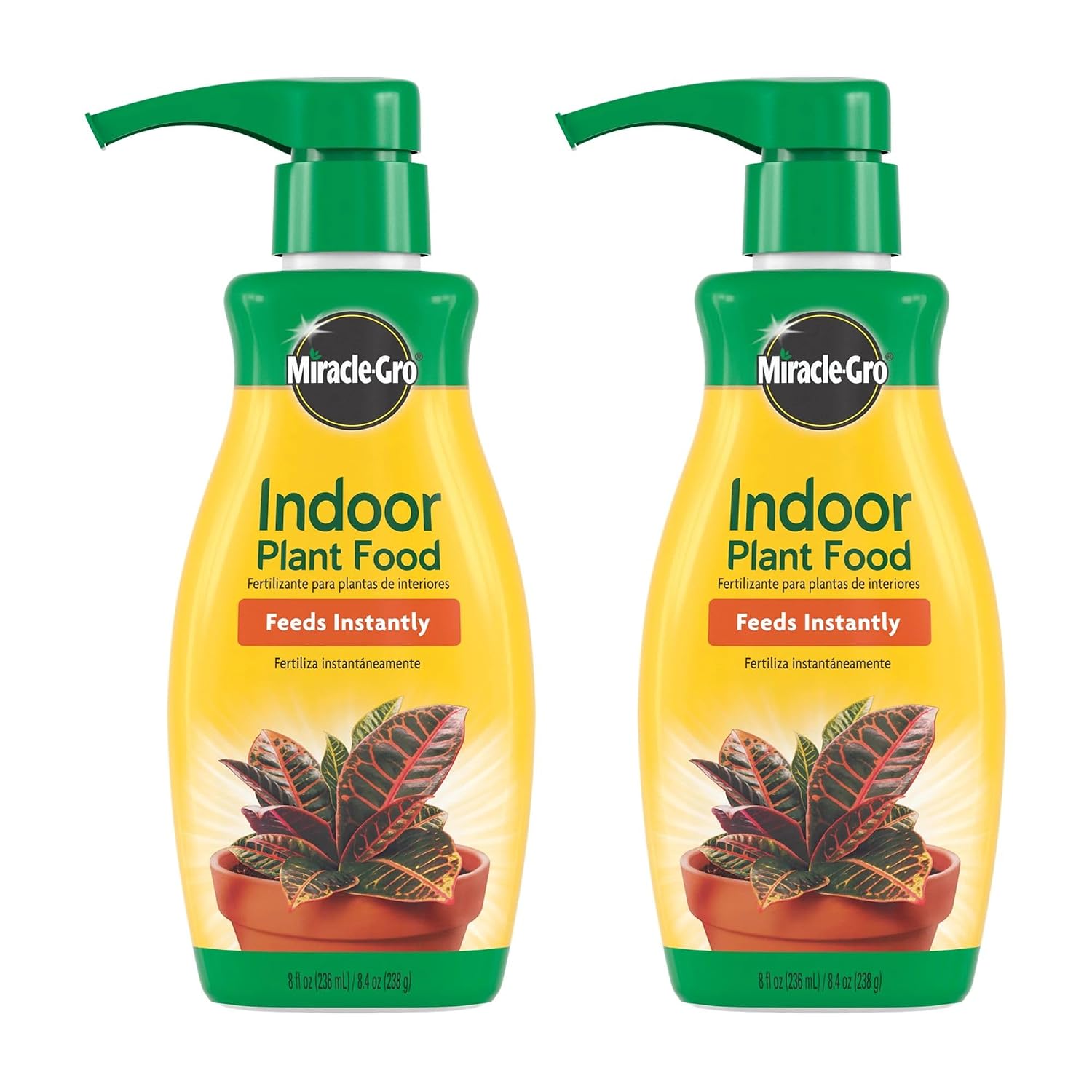
Miracle-Gro Indoor Plant Food, Liquid, 8 oz. (2-Pack)
| Item Form | Liquid |
|---|---|
| Specific Uses For Product | Plant Food |
| Application Method | Apply directly to the soil or mix with water |
| Coverage | Pot size |
| Target Species | Peace Lily, Snake Plant, Croton, Succulents, Herbs |
Miracle-Gro Indoor Plant Food is a ready-to-use liquid fertilizer for indoor container plants supplied as two 8-ounce bottles. It is applied by pumping directly onto the soil or diluting four pumps per quart of water, then watering as usual; the manufacturer recommends weekly applications. In practice the liquid form makes it quick to feed a variety of houseplants from peace lilies and snake plants to herbs and flowering pots, and the small pump dosing reduces mess compared with loose granules. The product’s target-use guidance and weekly schedule are helpful for cautious growers who prefer predictable, simple routines. Limitations are that the label gives general dosing by pot size rather than exact nutrient analysis on this listing, so advanced users who want full N-P-K specifics or specialized feeding plans may need a different product. Also it requires regular weekly application for best results rather than a slow-release option that can be left alone for months.
Best for: A plant owner who wants a simple, low-effort weekly feeding routine for common indoor plants like peace lilies and wants predictable, easy dosing without fuss.
Less Ideal for: Growers who need precise N-P-K ratios, custom nutrient programs, or prefer an infrequent slow-release fertilizer for long vacations should look elsewhere.
- Liquid formula feeds plants instantly and is easy to apply with the pump or mixed into water
- Clear usage instructions for weekly feeding suitable for a wide range of common houseplants
- Comes as a two-pack so you have a spare bottle for ongoing maintenance
- Listing does not show the exact N-P-K numbers or a full nutrient breakdown
- Requires weekly applications rather than offering long-term slow release
Verdict: A straightforward, pump-dosed liquid fertilizer that makes weekly feeding of peace lilies and other common houseplants quick and reliable.
Choosing the Right Fertilizer for Peace Lily: Key Factors to Consider
Nutrient Ratio and NPK Balance
Peace lilies prefer a balanced but slightly nitrogen-lean formula that supports foliage without forcing excessive leafy growth at the expense of blooms. Look for products with moderate nitrogen, adequate phosphorus to encourage flowering, and potassium for overall plant vigor.
The exact NPK numbers matter because indoor plants are in limited soil volumes; overly high nitrogen can cause soft, leggy growth and increase water needs. Conversely, too little phosphorus may reduce spadix and spathe development. Consider how often you water and the plant's light level when choosing a ratio, since lower light reduces the plant's nutrient demand.
Application Method and Frequency
Fertilizers come as liquids, soluble powders, granules, and slow-release spikes. Liquid feeds are fast-acting and easy to control at low doses, which suits small pots and sensitive roots. Slow-release options reduce the chance of accidental overfeeding and can be convenient for busy households.
Frequency affects salt build-up and monitoring. Regular low-dose liquid feeding during the growing season can produce steady results, while a controlled-release granule can supply nutrients for months with minimal intervention. Choose a method that matches your watering habits and willingness to monitor soil salts.
Salt Buildup and Water Quality
Indoor fertilizing carries the risk of soluble salt accumulation in potting mix, which shows up as brown leaf tips, slowed growth, or root damage. Products with lower salt index or that recommend lower-strength applications are better choices for peace lilies.
Tap water hardness and mineral content influence how quickly salts build. If your water is hard, flush the potting mix occasionally with plain water to leach salts. Also consider fertilizers that provide instructions for periodic leaching or that include organic matter to buffer salt effects.
pH Compatibility and Micronutrients
Peace lilies thrive in slightly acidic to neutral potting mixes. Some fertilizers can alter substrate pH over time or lack essential micronutrients such as iron or magnesium. Micronutrient availability affects leaf color and overall plant health, especially for indoor specimens grown in stable, contained soils.
Look for formulas that mention balanced micronutrient profiles or that are labeled for houseplants. If you see persistent yellowing between leaf veins, a product with chelated iron or magnesium could correct deficiencies without changing your routine.
Residue, Ease of Mixing, and Measuring
Indoor gardeners benefit from low-mess fertilizer formats. Powders and crystals that dissolve cleanly, or pre-measured liquid concentrates, reduce the chance of spills and inaccurate dosing. Residue on the pot or saucer can attract pests or leave hard-to-clean deposits.
The clarity of mixing instructions and whether the product includes measuring tools influences consistent application. Choose formulas with straightforward dilution rates and visible guidance for different pot sizes to avoid accidental overfeeding.
Safety for Indoor Use and Plant Sensitivity
Peace lilies are commonly kept indoors around people and pets, so consider fertilizer labels that note indoor plant safety and minimal odor. Highly concentrated feeds can harm roots if spilled or misapplied, and some slow-release spikes can heat or desiccate soil if inserted incorrectly.
Also consider whether a formula is suitable for young or recently repotted plants, which are more sensitive. A gentle, lower-dose option is often preferable for small pots, newly rooted divisions, or plants recovering from stress.
Feeding Schedules That Work for Peace Lilies
Peace lilies usually do best with a reduced winter schedule and a modestly increased feeding plan in spring and summer when growth and flowering are active. A common approach is to feed lightly every two to four weeks during the growing season and pause or greatly reduce feedings during the dormant period.
Adjust frequency based on light and pot size. Plants in brighter locations or large pots with fresh mix may need feeding less often, while those in low light or older, depleted mix may respond to a gentler, more consistent schedule.
- Liquid feeds: dilute to half or quarter strength and apply every two to four weeks.
- Slow-release granules: follow container guidance but monitor for tip burn.
- Flush pots with plain water every few months to prevent salt build-up.
Signs Your Peace Lily Needs Nutrients
Watch your plant for visual cues rather than following a strict calendar. Pale or yellowing leaves, reduced new growth, or fewer and smaller blooms are common indicators of nutrient deficiency. Leaf margin browning or crusty deposits on the soil surface can signal salt stress instead.
New leaves that emerge smaller than previous ones usually indicate a nutrient shortfall in the potting mix. If you see these signs, try a low-dose liquid feed and observe changes over a month before increasing strength.
- Pale older leaves: consider a balanced feed with moderate nitrogen.
- Poor flowering: look for adequate phosphorus and consistent light.
Adjusting Feeding for Pot Size and Repotted Plants
Small pots concentrate nutrients and salts, so reduce recommended doses for compact containers. After repotting into fresh mix, hold off on fertilizing for a few weeks unless the new soil lacks starter nutrients. When you do resume feeding, start at the lower recommended rate.
For recently divided or newly rooted plants, use very gentle feeds and monitor root establishment. Strong concentrations can damage tender roots and set back recovery.
- Large pots: you can follow standard dilution rates but still watch for leaf symptoms.
- New soil: give a settling period before full-strength feeding.
Organic Versus Synthetic Options for Indoor Use
Organic fertilizers tend to release nutrients more slowly and can improve soil biology in potted mixes. They are less likely to cause rapid salt spikes and are often more forgiving for houseplants that receive irregular care.
Synthetic soluble feeds act quickly and let you correct deficiencies fast, but they require careful measurement and regular leaching to avoid buildup. Choose the form that matches your willingness to monitor and flush pots periodically.
- Organic: slower release, gentler on roots, beneficial for long-term soil health.
- Synthetic: fast correction, precise dosing, needs more deliberate flushing.
Common Mistakes That Harm Peace Lilies
Overfeeding and failing to flush the potting mix are the two most frequent errors. Salt accumulation from regular concentrated feeds leads to leaf tip burn and poor root function. Another mistake is feeding in low light when the plant cannot use the nutrients efficiently.
Using outdoor or high-analysis fertilizers intended for lawns or vegetables can overwhelm a houseplant's small root zone. Stick to products labeled for indoor use or follow reduced-strength directions appropriate for small pots.
- Avoid full-strength feeds unless specifically advised for houseplants.
- Do not feed during extended periods of low light or dormancy.
How We Chose the Best Fertilizer for Peace Lily
We focused on practical criteria that affect how peace lilies perform indoors. Key evaluation dimensions included the nutrient balance and ratio, since peace lilies do best with accessible nitrogen and enough phosphorus for blooms without excess salts. Application method and frequency were scored because liquid feeds, slow-release granules, and soluble crystals behave differently in small pots and low-light conditions. Salt accumulation and residue risk were considered to avoid leaf tip burn and root stress. Ingredient source and whether the product is labeled for houseplants or indoor foliage was reviewed to ensure pH-appropriate formulas. Ease of measuring and mixing rounded out the filters, since many indoor gardeners prefer simple, low-mess routines. We excluded formulations made only for lawns, outdoor vegetables, or heavy-feeding annuals because those concentrations and application schedules are unsuitable for indoor peace lilies. Products that require specialized equipment or very high salt indexes were also filtered out. The final shortlist balances feeding effectiveness with safety for delicate indoor roots and practical application for common household pot sizes.
FAQ
How often should I feed a peace lily during the growing season?
Often a light feed every two to four weeks during spring and summer is sufficient. Frequency depends on pot size and light levels; use half-strength liquid feeds if you prefer more frequent applications.
Can I use general houseplant fertilizer on a peace lily?
Usually yes if the formula is balanced and labeled for indoor foliage plants. Avoid high-nitrogen garden formulas designed for lawns or vegetables, which can cause overly vigorous leaf growth and stress the plant.
What should I do if my peace lily shows brown leaf tips after fertilizing?
Brown tips often indicate salt buildup from overfeeding or hard water. Stop fertilizing for a while and flush the potting mix with plain water to leach salts. Resume with a gentler, lower-strength schedule.
Are organic fertilizers better for peace lilies than synthetic ones?
Organic options release nutrients more slowly and tend to reduce the risk of salt spikes, making them a good choice for steady, low-maintenance care. Synthetic feeds are useful for quick corrections but require careful dosing.
When should I stop feeding my peace lily for winter?
You can reduce or pause feeding in late fall and winter when growth slows. Resume light, regular feedings in spring as new growth and flowering pick up.
Final Verdict
Choose a fertilizer that matches your care style and the conditions in which your peace lily grows. Prioritize an appropriate nutrient ratio, low salt potential, and an application method you will use consistently. Tradeoffs include speed of correction versus safety for roots; faster-acting formulas help fix deficiencies quickly but require careful dosing and occasional leaching. If you want low maintenance, a gentle slow-release or low-strength organic option is sensible. For faster results and targeted corrections, use a diluted liquid feed and monitor for leaf response. Focus on matching the product to pot size, light level, and your watering routine to keep the plant healthy and encourage regular blooms.
