

Note: This article contains affiliate links. If you click on these links and make a purchase, I may earn a small commission at no extra cost to you. This helps support my research and content. Read my full affiliate disclosure here.
If you grow plants in pots, the right potting soil changes how often you water, how well roots develop, and how big your plants get. Potting mixes behave differently than garden soil: they need to drain freely inside a container while still holding enough moisture and nutrients for roots. This guide covers seven top potting soils chosen for container gardening and explains the practical tradeoffs gardeners face. Below are the shortlisted potting soil options plus the evaluation criteria that matter in a container: moisture management, nutrient profile, texture and aeration, and suitability for the plant types you grow. Use the notes to match a mix to your pots, plants, and watering routine.
Top Picks at a Glance
| Best Overall The best all-around choice for most situations | Miracle-Gro Potting Mix, 16 qt. |  |
| Best Quality Built to a higher standard if you want something more solid | FoxFarm Happy Frog Potting Soil, 2 cu ft (2-pack) |  |
| Best Value The sweet spot between price and what you get | Miracle-Gro Potting Mix, 16 qt. (2-Pack) |  |
| Best Budget The cheapest option that still gets the job done reliably | Miracle-Gro Indoor Potting Mix for Seed Starting, 8 qt. (2-Pack) |  |
| Highest Rated A top-rated pick with lots of positive feedback | FoxFarm Ocean Forest Potting Soil, 12 Quart |  |
| Most Popular A crowd favorite that many people choose with confidence | Miracle-Gro Organic Indoor Potting Mix, 16 qt. |  |
| Best Seller A high-volume bestseller chosen again and again | Back to the Roots Organic Expanding Coco Coir Potting Soil Brick |  |
Miracle-Gro Potting Mix, 16 qt.

| Unit Count | 592 Ounce |
|---|---|
| Volume | 16 quarts |
| Feeds up to | 6 Months |
| Guaranteed Analysis | 0.21-0.11-0.16 |
Miracle-Gro Potting Mix is a general-purpose container mix designed to give flowers, vegetables and shrubs a nutrient-rich, well-draining medium. It is used straight from the bag to fill pots with a drain hole, plant or repot container-grown perennials and annuals, then water and let drain. The mix includes perlite and wetting agents for improved aeration and moisture distribution and contains a low-rate coated fertilizer that feeds for up to six months. For typical patio and balcony containers it simplifies seasonal repotting and can reduce the need for immediate supplemental feeding. Practical benefits include easy handling in 16 qt. bags, predictable performance for a wide range of plants, and instructions for potting and watering. Limitations to note are the modest fertilizer analysis relative to heavy-feeding edibles or extended-season containers and that the formula contains peat and processed forest products, which some gardeners may prefer to avoid for sustainability reasons.
Best for: Gardeners who want an easy, reliable all-purpose potting mix for seasonal container gardening and prefer a product that provides built-in feeding for several months.
Less Ideal for: Growers who prioritize peat-free or fully organic blends or who need a high-nutrient mix for continuous heavy-feeding crops should consider specialty mixes instead.
- Includes coated slow-release fertilizer that feeds container plants for up to six months
- Formulated for good drainage and aeration with perlite and wetting agents
- Ready to use straight from the bag with clear potting and planting instructions
- Suitable for a wide range of container plants including flowers, vegetables and shrubs
- Fertilizer levels are modest for heavy-feeding vegetables or long-season containers
- Contains peat and processed forest products which some gardeners avoid for environmental reasons
Verdict: A dependable, easy-to-use potting mix that supplies aeration and slow-release nutrients to most container plants for a full season.
FoxFarm Happy Frog Potting Soil, 2 cu ft (2-pack)

| Brand Name | FoxFarm |
|---|---|
| Item Highlight | Ready-to-Use Amended Container Blend with Soil Microbes, Earthworm Castings, Bat Guano, and Aged Forest Products |
| Number of Packs | 2 |
| Volume | 2 cubic feet |
FoxFarm Happy Frog Potting Soil is a pre-mixed container blend designed to give potted plants a nutrient‑rich, biologically active growing medium right out of the bag. It is typically used to fill planters, pots, and containers for ornamentals, vegetables, and small trees where roots cannot access ground soil. Notable features include a mix of soil microbes and mycorrhizal fungi plus amendments such as earthworm castings and bat guano that boost nutrient availability and encourage stronger root uptake. The ready-to-use formula saves prep time compared with custom mixes and eliminates the need to add multiple separate amendments for better early growth. Because it is concentrated for container culture, it supports vigorous top growth and helps reduce initial transplant shock. Limitations are that it comes in a large, heavy bag that is bulky to handle and the rich amendment profile means you may need to tailor follow-up fertilization for long-term container crops rather than rely solely on the bagged mix for an entire season.
Best for: Buyers who prioritize strong early growth and biological activity in container plants and want a convenient, professional-grade potting mix that performs without additional mixing.
Less Ideal for: People who need lightweight or sterile mixes for seed starting or those who prefer to formulate their own exact nutrient ratios from base components.
- Ready-to-use, no mixing required for immediate potting
- Contains mycorrhizal fungi and a blend of soil microbes to improve root efficiency
- Amended with earthworm castings, bat guano, and aged forest products for rich, organic nutrition
- Suitable for a wide range of container plants including ornamentals, shrubs, and small trees
- Large heavy bag can be awkward to lift and pour without assistance
- Rich amendment profile may require tailored supplemental feeding for extended container crops
Verdict: Choose this soil when you want a high-performance, ready-made container mix that delivers rich organic nutrition and active microbes for faster, healthier root and top growth.
Miracle-Gro Potting Mix, 16 qt. (2-Pack)

| Volume | 16 quarts (per bag) |
|---|---|
| Number of Packs | 2 |
| Feeds | Up to 6 months |
| Ingredients | Sphagnum Peat Moss, Peat, Perlite, Compost, Fertilizer |
Miracle-Gro Potting Mix is a ready-to-use container soil designed for outdoor pots, planters, and hanging baskets. It combines peat-based material, perlite, compost, and built-in fertilizer so you can pot flowers, vegetables, herbs, and shrubs with minimal prep. Typical use is straightforward: choose a pot with drainage, fill, position the plant, top off, and water through until runoff. The mix is formulated to drain well while retaining enough moisture to support roots and the included nutrients are intended to feed plants for up to six months, reducing how often you need to fertilize. Practical benefits include consistent texture that makes repotting easier and a formulation that helps new transplants establish quickly. Limitations are that it is made for container use only and will compact over time, so annual refresh or repotting is recommended; heavy feeders or long-season crops may still need supplemental fertilizer after the six-month feeding period. Safety guidance notes keeping it away from children and pets and avoiding contact with food prep surfaces.
Best for: Gardeners who want a low-fuss, dependable potting mix for outdoor containers that speeds planting and cuts down on early-season feeding.
Less Ideal for: Growers who need a soil amendment for in-ground beds or who prefer organic-only mixes and multi-season no-repot systems should look elsewhere.
- Formulated for outdoor containers with perlite for good drainage and aeration
- Includes fertilizer that feeds plants for up to six months, reducing immediate need to fertilize
- Consistent, loose texture makes potting and repotting easy
- Suitable for a wide range of container plants including flowers, vegetables, herbs, and shrubs
- Intended only for container use and not formulated to amend in-ground beds
- Nutrient boost lasts about six months so longer-term crops may need additional feeding
- Will compact over time and requires annual refresh or repotting
Verdict: A convenient, ready-to-use potting mix that simplifies outdoor container gardening by combining good drainage with built-in nutrition for several months.
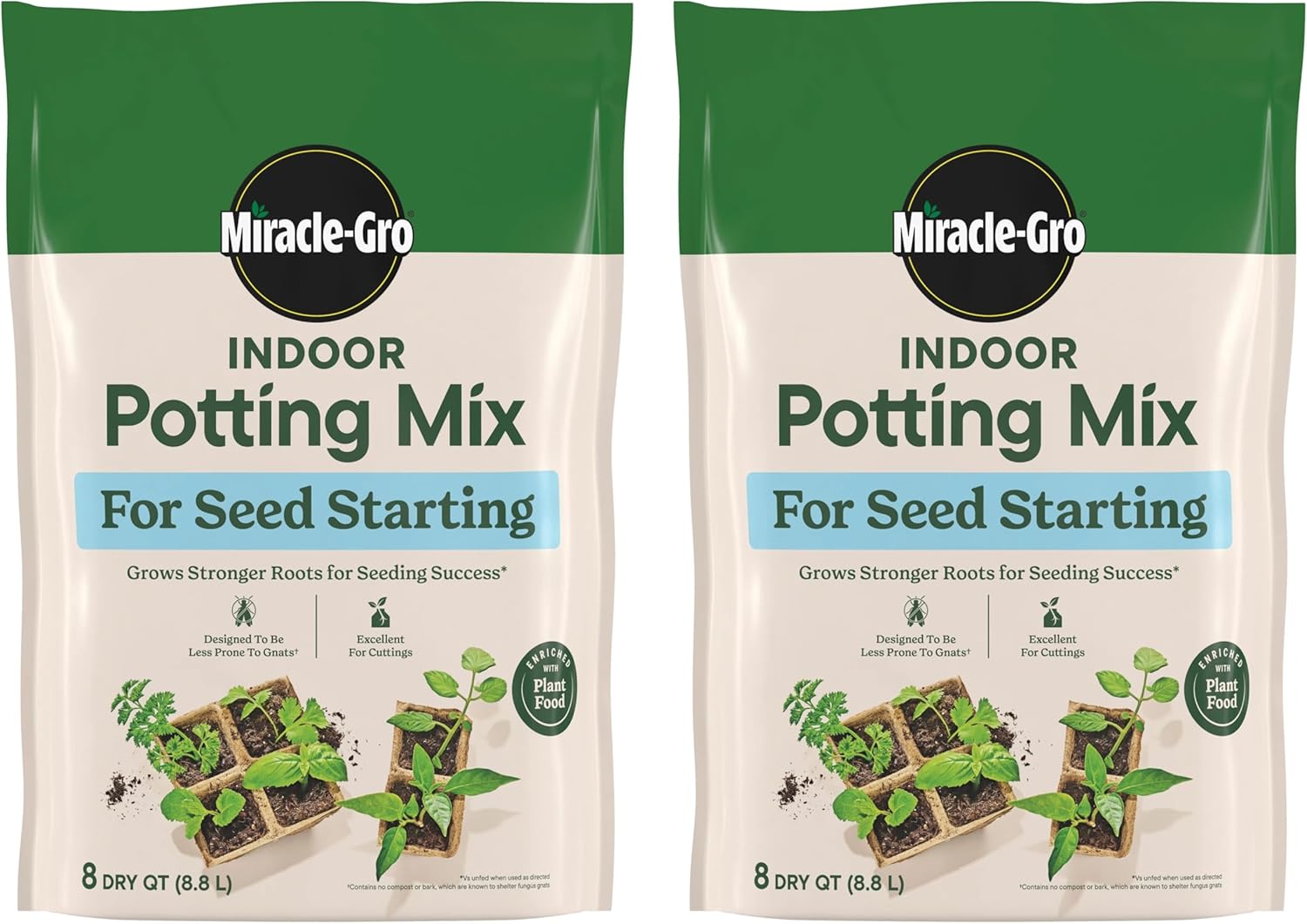
Miracle-Gro Indoor Potting Mix for Seed Starting, 8 qt. (2-Pack)
| Brand Name | Miracle-Gro |
|---|---|
| Item Type Name | Potting Mix |
| Number of Packs | 2 |
| Volume | 8 quarts per bag |
This two-pack of Miracle-Gro Indoor Potting Mix is made for starting seeds and rooting cuttings indoors. The mix is lightweight and enriched with plant food, so when used as directed it helps seedlings establish stronger roots compared with unfed media. It contains no compost or bark, which reduces places where fungus gnats breed, and one 8 qt. bag is sized to fill multiple 72-cell trays for small-scale container gardening. Typical use is filling seed trays or small pots, keeping the medium consistently moist, and transplanting after true leaves appear. Practical benefits are ease of use straight from the bag, predictable germination performance for vegetables, herbs, and flowers, and fewer pest-starting materials. Limitations are that it is a seed-starting mix rather than an all-purpose container soil so heavy-feeding or long-term container plants will need repotting into a more robust potting mix later, and the bagged volume is modest for larger projects. Handle with care because the product contains fertilizer that can irritate if inhaled or mishandled.
Best for: Buyers who want an affordable, no-fuss seed starting medium to get vegetable, herb, or flower seedlings reliably started indoors and who prioritize easy setup over long-term container soil performance.
Less Ideal for: Gardeners planning to pot mature, heavy-feeding plants or outfit many large containers without adding more bulk potting soil should choose a heavier-duty all-purpose mix instead.
- Lightweight, ready-to-use formula suited for seed trays and cuttings
- Includes plant food to support stronger root development in seedlings
- No compost or bark, which helps reduce fungus gnat habitat
- Two 8 qt. bags provide multiple tray fills for small projects
- Designed specifically for seed starting so not ideal as a permanent long-term potting mix
- Modest bag volume requires additional soil for larger container gardens
Verdict: A budget-friendly, ready-to-use seed-starting mix that makes indoor germination and rooting cuttings simple and reliable.
FoxFarm Ocean Forest Potting Soil, 12 Quart

| Item Form | Granules |
|---|---|
| Specific Uses For Product | Dry Fertilizer |
| Coverage | 4.8 sq ft |
| Mixing Ratio | 1:1 |
FoxFarm Ocean Forest is a premixed potting soil intended for containers, houseplants, and seedling starts. You use it straight from the bag to fill pots or to top-dress and it combines aged forest products, sandy loam and sphagnum peat moss for drainage and aeration. The mix is fortified with fish meal, crab meal and earthworm castings so young plants get an initial nutrient boost and many gardeners can skip additional fertilizer for the first month. Practical benefits include good water retention without becoming compacted, a pH adjusted for nutrient uptake, and a texture that helps roots establish quickly. Important limitations are that it is a packaged, heavier mix compared with lightweight seed-starting mixes and it may be richer than needed for some succulents or plants that prefer lean soils. Also, because it contains organic amendments, occasional reapplication or blending is recommended for long-term container use once the initial nutrients are used up.
Best for: Gardeners who want a reliable, out-of-the-bag potting soil that establishes roots quickly and reduces the need for immediate fertilizing in container gardens.
Less Ideal for: Growers who need ultra-light seed-starting mixes, very low-nutrient media, or specialized substrates for succulents and cacti should consider alternatives.
- Ready to use from the bag for quick planting
- Nutrient-rich formula with fish meal, crab meal, and earthworm castings to support early growth
- Light, aerated texture that promotes drainage and root development
- pH adjusted to improve nutrient uptake
- Richer and heavier than specialized seed-starting or cactus mixes
- Nutrients decline over time so follow-up feeding or top dressing is needed for long-term containers
Verdict: Choose this if you want a dependable, ready-made potting mix that gives container plants a strong, nutrient-rich start.
Miracle-Gro Organic Indoor Potting Mix, 16 qt.

| Brand | Miracle-Gro |
|---|---|
| Volume | 16 qt. |
| OMRI Listed | Yes |
| Intended use | Indoor container plants and seed starting |
Miracle-Gro Organic Indoor Potting Mix is a ready-to-use organic blend intended for houseplants, herbs and seed starting in containers. The mix combines coir for improved air space and moisture-holding capacity, sphagnum peat to retain and release water, plus a quick-start natural fertilizer so plants get early nutrition. In practice it is used to fill pots with drainage holes, repot transplants by loosening root balls and topping with fresh mix, or to start seeds in shallow trays. The main practical benefits are its focus on preventing both over- and under-watering, OMRI listing for organic growing, and a texture that works across a wide range of indoor species. Because a 16 qt. bag fills roughly one 12-inch pot, you can expect to buy multiple bags for larger collections. It does include a light starter nutrient rather than long-term feeding, so you will need to supplement with regular plant food for ongoing growth. Overall it is a convenient, organic option for indoor container gardeners who want a reliable base potting medium.
Best for: Indoor gardeners who want an organic, ready-made potting mix that helps manage watering and gives seedlings or recently potted plants a fast nutrient start.
Less Ideal for: Gardeners seeking an all-in-one long-term fertilized soil or those who need large-volume bulk bags for many containers should consider other options.
- OMRI listed for use in organic indoor gardening
- Formulation balances moisture retention and aeration to reduce over- and under-watering
- Contains coir and sphagnum peat for improved texture and water management
- Includes quick-start natural fertilizer to give seedlings and transplants an early nutrient boost
- 16 qt. bag covers only one medium pot, so frequent repurchasing is needed for larger collections
- Starter fertilizer is short-term, requiring additional feeding for sustained growth
Verdict: A convenient OMRI-listed organic potting mix that reliably balances moisture and aeration for healthier indoor container plants.
Back to the Roots Organic Expanding Coco Coir Potting Soil Brick

| Item Highlight | 10 lb compressed coco coir brick; peat-free; OMRI Listed |
|---|---|
| Item Type Name | Coconut Coir |
| Volume | 2 cubic feet |
| Ingredients | Coconut Coir |
This compressed coco coir brick rehydrates into a light, pH-balanced potting medium that expands to roughly 2 cubic feet, making it easy to store and handle compared with bulky bagged soil. You add water to the 10 lb block, fluff the material, and use it alone for pots or mix it with existing soil to improve aeration and water retention. It is OMRI listed and peat-free, so it fits organic container gardens and seed starting where a clean, consistent substrate is preferred. Practical benefits include tidy storage before use, strong water-holding capacity that reduces frequent watering, and a neutral, plant-friendly pH that works for vegetables, herbs, and flowers. Limitations are that coco coir alone has limited nutrient content, so you will need to supply fertilizer for long-term container growth, and it can compact over time if not refreshed or mixed with other amendments. Expect straightforward preparation but plan to supplement nutrients for mature or heavy-feeding plants.
Best for: Buyers who want a tidy, low-mess potting substrate for container gardening and seed starting and who prefer organic, peat-free options and predictable, easy preparation.
Less Ideal for: Gardeners who want an all-in-one, nutrient-rich potting mix and those who do not want to add fertilizer or other amendments to support long-term container growth.
- Expands to about 2 cubic feet from a compact brick for easy storage and transport
- Peat-free and OMRI listed for organic gardening
- pH-balanced medium suitable for seed starting and a wide range of container plants
- Improves aeration and water retention when used alone or mixed into potting mixes
- Contains only coconut coir so it lacks significant nutrients and requires fertilization for sustained plant growth
- Can compact over time if not amended or refreshed
Verdict: A compact, organic coco coir brick that expands into a light, pH-balanced substrate ideal for tidy, peat-free container gardening and seed starting.
Choosing the Right Potting Soil for Container Gardening: Key Factors to Consider
Moisture Retention and Drainage Balance
Potting soil must hold enough water for roots between waterings while still allowing excess to escape. A mix with too much fine material will stay soggy and suffocate roots, especially in cool weather. Conversely, a very gritty mix will drain quickly and can stress plants if you cannot water frequently.
Think about how often you can water and the microclimate of your porch or balcony. For hot, sunny exposed locations, prefer mixes with higher moisture retention. For shaded or cool situations, lean toward faster-draining blends. The right balance reduces root rot risk and improves flowering and fruiting in containers.
Particle Size, Texture, and Aeration
Particle size determines how much air reaches roots and how the mix resists compaction over time. Coarser components such as bark, perlite, or pumice create voids that keep oxygen available even when the mix is moist. Finer components like peat or coconut coir help hold water and nutrients but compress if not balanced with coarse material.
Pay attention to the texture when you squeeze a handful: it should be friable, not muddy or bricklike. For heavy containers and large specimen pots, a more open, coarser mix helps root systems expand and reduces the need for frequent repotting.
Nutrient Profile and Starter Feed
Some potting soils come with a starter nutrient charge to support growth for several weeks, while others are inert and require immediate fertilization. The right choice depends on whether you plan to transplant seedlings, plant established ornamentals, or grow vegetables that demand steady feeding.
Consider the expected cropping period for food crops and the feeding schedule you prefer. A mix with a modest starter feed can simplify initial care, but long-term fertility depends on regular fertilization or slow-release formulations to maintain vigor in containers.
Organic Matter Content and Long-term Stability
Organic ingredients supply nutrients and influence water holding, but they also decompose over time and can compact the mix. Stable components such as well-aged compost or coir are preferable to fresh uncomposted materials that shrink or tie up nutrients as they break down.
Assess how often you want to refresh soil in containers. Higher organic content gives a nutrient boost but may require earlier repotting or top-dressing. Lower-organic, more inert mixes need more fertilizer but keep structure longer.
Suitability for Specific Container Uses
Different plants in containers have different soil needs. Vegetables and heavy feeders usually prefer richer, moisture-retentive mixes with good nutrient availability. Succulents and cacti need very fast-draining, coarse blends. Hanging baskets benefit from lighter textures that wick moisture and reduce weight.
Match the mix to the crop and container type. Also consider pot material: terracotta wicks moisture and may require a slightly richer mix, while plastic retains water and can work with faster-draining blends.
Preparing Containers and Drainage
Before adding potting soil, check container drainage. Most plants need at least one clear drainage hole. If a pot lacks holes, add them or use it only as a decorative outer container with a lined inner pot that drains.
Use a shallow layer of coarse material only if necessary to keep soil out of the drainage hole, but avoid creating a false 'dry' zone under the root ball. Better approaches include lining the hole with a bit of mesh to stop soil loss and choosing a mix that is sized appropriately for the pot aperture.
- Ensure bottom holes are clear and not blocked by saucers for long periods.
- Match soil depth to the plant root system; shallow-rooted plants need less soil volume.
When to Repot and Refresh Container Soil
Container soil loses structure and nutrients over a season or several, depending on the original mix and plant load. Look for signs such as poor drainage, compacted texture, reduced growth, or visible salt buildup on the rim.
For annuals, a fresh top-dressing mid-season and full repot at the end of the season often suffices. For perennials or larger specimens, repot every 1 to 3 years to refresh structure and root space.
- Top-dress with compost or a light layer of fresh mix to renew fertility.
- Gently tease roots during repotting to inspect for crowding or disease.
Feeding Schedule for Potted Plants
Container-grown plants have limited access to soil nutrients and usually require a regular feeding plan. Use either a balanced liquid feed on a schedule or a slow-release granular fertilizer as suited to the plant type and pot size.
Vegetables and heavy bloomers benefit from more frequent or higher-strength feeding compared with most foliage houseplants. Follow label guidance for application rates and avoid over-fertilizing, which can cause salt buildup and root damage.
- Flush containers occasionally with plain water to reduce salt accumulation.
- Increase feed frequency during active growth and reduce it during dormancy.
Adapting Mixes for Special Situations
You can tailor a potting soil by adding components to address specific needs. Perlite or pumice increases drainage and aeration. Coconut coir or well-decomposed compost boosts water-holding capacity and provides some nutrients.
When growing edible crops, prioritize food-safe, well-composted organic inputs and avoid fresh manures or unverified amendments. For hanging baskets or rooftop planters where weight matters, choose lighter components and limit dense compost layers.
- Add slow-release fertilizer if you want less frequent feeding.
- Use grit or sand sparingly and only as a small percentage to avoid compaction.
Environmental Considerations and Sustainable Choices
Many commercial potting soils use peat, which stores carbon but is a nonrenewable resource at scale. Alternatives like coconut coir and well-aged compost reduce reliance on peat while offering good water retention. Check labels for responsibly sourced materials if sustainability matters to you.
Choosing mixes with recyclable packaging and ingredients that break down predictably can lower long-term waste. Reuse healthy root-bound plants by refreshing soil rather than discarding the pot and plant when possible.
- Seek products with clear ingredient lists and sourcing statements.
- Compost spent potting soil into garden beds if it is weed-and-disease-free.
How We Chose the Best Potting Soil for Container Gardening
We focused on attributes that directly affect container-grown plants and excluded bulk landscape soils and mixes intended only for in-ground beds. Selection prioritized mixes formulated for container drainage and moisture balance, stable long-term structure that resists compaction, and nutrient content appropriate for typical potted ornamentals and edibles. We verified that shortlisted products used common, garden-safe ingredients rather than untested additives, and we favored mixes with clear guidance on refeeding and re-potting intervals. Concrete evaluation criteria included moisture retention versus drainage, particle size and structural stability, nutrient balance and starter feed, organic matter content and amendment compatibility, and suitability for specific container uses such as vegetables, flowering annuals, or houseplants. We excluded mixes designed solely for seedlings, bonsai, or in-ground soil replacement. The final list reflects those criteria so gardeners can pick mixes that perform predictably in pots and planters.
FAQ
How often should I replace potting soil in container plants?
It depends on the plant and mix. Annuals often only need a seasonal top-dress, while perennials and larger specimens benefit from full repotting every 1 to 3 years when soil becomes compacted or depleted.
Can I use garden soil in containers?
Garden soil is usually too dense for containers and can compact, reducing aeration and drainage. For most pots, a purpose-made potting mix or an amended container blend is a better choice.
Do potting soils need fertilizer right away?
Some mixes include a starter nutrient charge, but many are designed to be inert and will need feeding soon after planting. Check product guidance and plan a feeding schedule appropriate for the plants you grow.
What is the difference between potting soil and potting mix?
Terminology varies, but potting mixes are usually lighter, soilless blends formulated for containers, while potting soils may contain more composted material. The important factor is texture and drainage rather than wording on the bag.
How can I make a mix drain faster for succulents?
Increase coarse components like pumice or horticultural grit and reduce fine organic matter. A higher proportion of inorganic material improves drainage and prevents prolonged moisture around roots.
Final Verdict
When choosing potting soil for container gardening, prioritize the balance between moisture retention and drainage, stable structure that resists compaction, and a nutrient approach that matches your plant type and feeding habits. Tradeoffs are inevitable: mixes that hold more water need less frequent watering but may require vigilance against root rot, while very free-draining blends demand more frequent irrigation but reduce disease risk. Decide based on the plant species, container material, and how often you will water and feed. Use the evaluation criteria here to match a mix to your routine and repot or refresh soil as structure and fertility decline.
