

Note: This article contains affiliate links. If you click on these links and make a purchase, I may earn a small commission at no extra cost to you. This helps support my research and content. Read my full affiliate disclosure here.
If you do a lot of pruning, small-tree work, or occasional limb cleanup, a lighter gas chainsaw makes those chores less tiring and more precise. The right light gas chainsaw reduces arm fatigue, improves reach when working from a ladder or hedge, and still delivers the torque needed to cut through wet branches or small trunks. This guide covers our five shortlisted lightest gas chainsaws and explains how each option performed against key gardener-focused criteria like weight, cutting power, and vibration control. Read on to see which lightweight saws best match common yard tasks and handling preferences before the product details.
Top Picks at a Glance
| Best Overall The best all-around choice for most situations | V-MODEST 14" 25cc Rear-Handle Gas Chainsaw (Lightweight) |  |
| Best Quality Built to a higher standard if you want something more solid | Husqvarna 120 Mark III 14" Gas Chainsaw |  |
| Best Value The sweet spot between price and what you get | WORKIT 25.4CC 12" Top-Handle Gas Chainsaw (WX112) |  |
| Highest Rated A top-rated pick with lots of positive feedback | GTHAN STORE 12" Top-Handle Gas Chainsaw (25.4cc, 2-Cycle) |  |
| Best Seller A high-volume bestseller chosen again and again | ODOGYM 12-inch 2-Stroke Gas Chainsaw |  |
V-MODEST 14" 25cc Rear-Handle Gas Chainsaw (Lightweight)

| Power Source | Gas Powered |
|---|---|
| Horsepower | 1.5 |
| Chain Speed | 26.7ft/s |
| Chain Length | 14 inches |
The V-MODEST 14" 25cc rear-handle chainsaw is aimed at homeowners and small-farm users who want a gas saw that is easier to handle than typical same-size models. It pairs a 25cc two-stroke engine with a 14-inch guide bar to tackle limb pruning, storm cleanup, small log cutting, and orchard thinning while keeping operator fatigue low. Notable features include an easy-start system, automatic clutch-driven oiling, side-access chain tensioning with dual bar nuts, an inertia chain brake, anti-vibration components, and a high-efficiency air filter. In practice the saw delivers a favorable power-to-weight balance that makes repeated cuts and overhead reach from the ground more comfortable than heavier 14-inch gas saws. The included basic kit (bar, chain, tool kit, gloves and mixing bottle) gets you close to ready-to-run once you mix fuel. Expect typical 2-stroke maintenance and the usual noise and exhaust of a gas engine, plus the need to learn proper tensioning and oiling habits for reliable performance. For buyers who want a lighter gas option with straightforward controls, this is a practical choice.
Best for: A pragmatic homeowner or small-ranch owner who needs a lighter gas saw for routine pruning, limb work, storm cleanup, and occasional small log cutting and values easier handling over maximum cutting power.
Less Ideal for: Professional arborists or those regularly cutting large-diameter timber who need heavier-duty, high-displacement saws with longer bars and greater sustained power.
- Lightweight rear-handle design improves balance and reduces operator fatigue during extended use
- 25cc 2-stroke engine offers good power-to-weight for small to medium cutting tasks
- Automatic clutch-driven oiler and side-access tensioning simplify chain lubrication and adjustments
- Safety features include inertia chain brake and dual throttle lock for added control
- Requires mixing gas and oil and regular 2-stroke maintenance
- Not intended for heavy professional felling or large-diameter log work
Verdict: Choose this saw if you want a genuinely lightweight 14-inch gas chainsaw that makes ground-level pruning and light log work noticeably easier to handle.
Husqvarna 120 Mark III 14" Gas Chainsaw

| Power Source | Gas Powered |
|---|---|
| Horsepower | 1.88 hp |
| Chain Length | 14 inches |
The Husqvarna 120 Mark III is a straightforward gas chainsaw that delivers solid cutting performance for pruning, limb work, and small tree felling. Powered by a 38-cc X-Torq two-cycle engine and a 14-inch bar, it provides enough torque and cleaner combustion for efficient cuts without complicated features. Notable design elements include Air Injection to keep debris away from the air filter, LowVib vibration damping for more comfortable handling during extended use, an inertia-activated chain brake for safety, and an automatic oiler for continuous chain lubrication. It is typically used by homeowners tackling yard cleanup, firewood prep, and occasional property maintenance where portability and raw power matter more than pro-level features. Limitations are its 14-inch bar which constrains maximum log diameter and the inherent maintenance needs of a gas engine compared with battery models. For buyers seeking a simple, durable gas saw that emphasizes cutting performance and fuel efficiency, this model is a practical choice under $300.
Best for: Buyers who prioritize cutting performance and dependable gas power for regular homeowner tasks like pruning, small tree work, and firewood prep.
Less Ideal for: If you need to cut large-diameter trees frequently or prefer low-maintenance, emissions-free operation, a larger gas saw or a battery/electric model would be a better fit.
- Efficient 38-cc X-Torq engine for good power and improved fuel economy
- Air Injection system reduces debris reaching the air filter to extend engine life
- LowVib technology reduces vibration for more comfortable handling
- Inertia-activated chain brake and automatic oiler add practical safety and convenience
- 14-inch bar limits cutting capacity for larger trees or thick logs
- Requires regular gas engine maintenance and fuel handling
Verdict: A capable, fuel-efficient 14-inch gas saw that delivers reliable cutting performance for homeowners who want straightforward, power-focused results.
WORKIT 25.4CC 12" Top-Handle Gas Chainsaw (WX112)
| Power Source | Gas Powered |
|---|---|
| Horsepower | 1.2 hp |
| Chain Length | 12 inches |
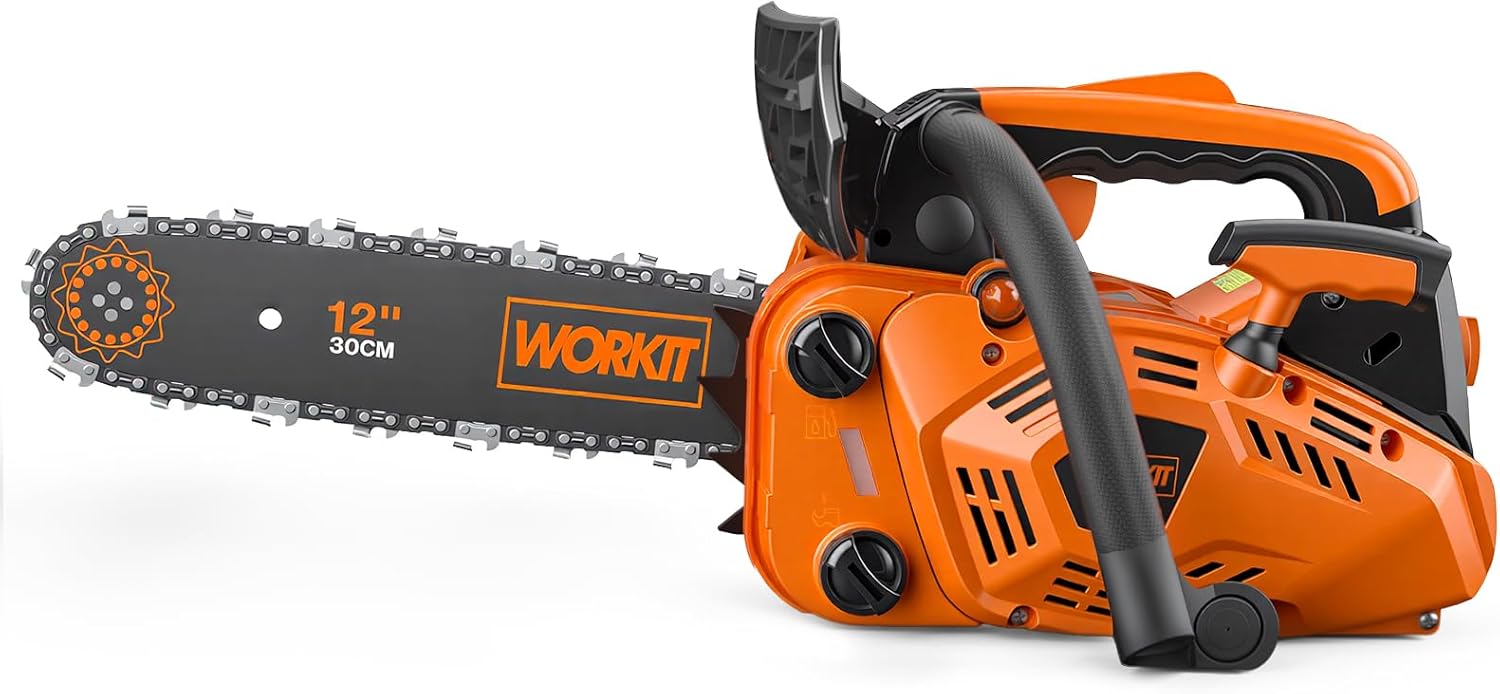
The WORKIT WX112 is a lightweight top-handle gas chainsaw built for precision work in tight spaces. Its 25.4CC Xtreme two-cycle engine and 12-inch guide bar give it enough punch to cut hardwood, prune limbs, and handle routine storm cleanup while remaining nimble for high work or nursery tasks. Practical features include an OptiSpark ignition and an easy-start system to reduce pull-start frustration, an automatic stop switch to help avoid engine flooding, and an automatic oiler to keep the chain lubricated during extended runs. The reinforced body, heavy-duty bearings, and upgraded clutch aim to improve durability compared with entry-level units. Safety touches such as a chain brake, protective baffle, dual safety locks, and a one-stop engine switch make it suitable for pros who need a compact tool and for homeowners who value built-in protections. Expect some noise and the usual maintenance for a gas engine like fuel mixing and periodic spark plug/chain tuneups, and its 12-inch bar limits it to smaller-diameter cutting rather than full-size felling or large logs.
Best for: Buyers who need a compact, commercially styled top-handle saw for pruning, high work, and cleanup where maneuverability and dependable starts matter most.
Less Ideal for: Not a good choice for users who need a full-size felling saw or those who prefer low-maintenance electric or battery chainsaws for quiet, occasional yard chores.
- Compact, lightweight design for easy maneuvering in tight or overhead work
- 25.4CC Xtreme engine provides enough power for pruning, storm cleanup, and cutting hardwood up to small diameters
- Easy-start OptiSpark ignition and engine stop switch reduce starting problems and flooding
- Reinforced body, heavy-duty bearings, and improved clutch target better durability under heavier use
- Includes safety gear and protective features such as chain brake, dual safety locks, and protective baffle
- 12-inch bar restricts use to smaller limbs and logs rather than large-tree felling
- Being gas-powered requires routine maintenance, fuel mixing, and generates more noise and emissions than electric alternatives
Verdict: If you want a nimble, commercially oriented top-handle chainsaw for pruning and tight-space cutting, the WORKIT 25.4CC delivers dependable starts and durability in a compact package.
GTHAN STORE 12" Top-Handle Gas Chainsaw (25.4cc, 2-Cycle)

| Power Source | Gas Powered |
|---|---|
| Horsepower | 1.2 hp |
| Chain Speed | 3400 Rpm/Min |
| Chain Length | 12 inches |
This GTHAN STORE 12-inch gas chainsaw is a compact, top-handle tool intended for routine yard work like pruning, clearing brush, and small firewood cutting. The 25.4cc 2-cycle engine and 1.2 hp output deliver adequate cutting power for small to medium branches, while the 12-inch bar keeps the unit nimble and easy to maneuver. Its wrap-around ergonomic handle and built-in steel bar spring reduce hand fatigue and make one-handed use more practical for overhead or tight-space cuts. Starting is simplified by a spring-assisted pull cord and an easy-grip knob, and safety features include dual throttle switches and a quick-acting chain brake. Because it is a gasoline tool, expect routine maintenance such as fuel mixing, chain sharpening, and general engine upkeep; it is also louder and emits exhaust compared with electric alternatives. The included installation toolkit helps initial setup, but users should be comfortable with basic chainsaw maintenance and safe handling before single-handed operation. For someone who values a reliable, portable gas option for frequent outdoor cutting, this model is a sensible choice.
Best for: Buyers who need a dependable, portable gas chainsaw for regular outdoor maintenance and value straightforward starting and ergonomic handling for one-handed tasks.
Less Ideal for: Users who want a low-maintenance, quiet electric option or those planning to cut large logs and heavy timber should consider a larger or cordless model instead.
- Compact 12-inch bar keeps the saw maneuverable for tight spaces and pruning.
- Ergonomic wrap-around handle with steel spring reduces hand fatigue during extended use.
- Spring-assisted pull cord and easy-grip knob make starting quicker and more predictable.
- Dual throttle switches and a high-quality chain brake improve operator safety.
- Lightweight for a gas model, aiding single-handed and overhead work.
- Requires mixing fuel at the specified 25:1 ratio and routine small-engine maintenance.
- Gas engine produces noise and exhaust, making it less suitable for enclosed or noise-sensitive areas.
Verdict: A reliable, easy-to-start compact gas chainsaw that prioritizes portability and ergonomic one-handed use for routine yard and pruning jobs.
ODOGYM 12-inch 2-Stroke Gas Chainsaw

| Power Source | gas chainsaw |
|---|---|
| Horsepower | 1.25 hp |
| Chain Length | 12 inches |
| Chain Speed | High Speed |
The ODOGYM 12-inch gas chainsaw is a lightweight, handheld saw built for routine cutting tasks around the yard. It uses a 2-stroke 25.4cc engine that delivers about 1.25 horsepower and a high-speed chain for fast cuts on small to medium limbs, firewood, and pruning jobs. Its low weight and compact form make it easy to lift and maneuver when working on ladders or in tight spaces. Safety-minded features include dual throttle switches to prevent accidental starts and a brake baffle for emergency stops. Expect straightforward use for occasional homeowners: fill fuel and chain oil, check tension, and maintain the chain sharpness for consistent performance. Limitations are typical of small gas saws—it is not suited for prolonged professional felling or very large-diameter logs, and gas engines require mixing fuel and more upkeep than battery models. For buyers who prioritize a lightweight, petrol-powered tool for general yardwork, this model offers a good balance of power and portability.
Best for: Best for homeowners who want a lightweight, petrol-powered chainsaw for occasional pruning, limb trimming, and cutting firewood where portability matters and professional-level power is not required.
Less Ideal for: Not a good choice for commercial landscapers or anyone who needs a high-capacity saw for frequent, heavy-duty logging or milling tasks.
- Very light and compact for easier handling and maneuvering
- High chain speed and a 25.4cc 2-stroke engine for quick cuts on small to medium wood
- Built-in safety controls with dual throttle switches to reduce accidental starts
- Emergency brake baffle adds a layer of operator protection
- Not intended for heavy professional felling or large-diameter logs
- Gas engine requires regular fuel mixing, maintenance, and more upkeep than electric alternatives
Verdict: Buy this if you need one of the lightest gas-powered 12-inch chainsaws for easy, portable yard work and occasional cutting jobs.
Choosing the Right Lightest Gas Chainsaw: Key Factors to Consider
Weight and Balance
Actual carried weight matters more than the headline number because balance determines how heavy the saw feels during cuts. A well-balanced lightweight saw hangs naturally in your hands and reduces wrist strain, while a poorly balanced unit can feel heavier than a slightly heavier but better-balanced saw.
Consider how you will hold the saw during typical tasks. Repetitive overhead or extended horizontal cutting multiplies small weight differences into significant fatigue. Also think about reach when on a ladder; a nimble, balanced saw lets you control the bar tip more precisely for pruning and tight cuts.
Power-to-Weight Ratio
A light saw is only useful if it still provides enough torque and chain speed to cut efficiently. Power-to-weight ratio compares engine output to the saw's mass and is a practical indicator of how the saw will perform on green wood, frozen branches, or slightly larger diameter trunks.
Look beyond cubic-centimeter figures alone. Two-stroke tuning, carburetion, and exhaust design affect real torque at the bar. A saw with modest displacement may still outwork a heavier unit if its gearing and chain match the engine characteristics well.
Vibration Control and Ergonomics
Vibration increases fatigue and can numb hands during long sessions, so effective anti-vibration systems and ergonomic handle layouts are essential on lightweight saws that encourage longer use. Good vibration isolation reduces the effort needed to keep the saw steady and improves cutting precision.
Ergonomics also include trigger feel, front handle shape, and the location of choke and on/off controls. Those small details affect comfort when doing repetitive pruning and long trimming tasks.
Starting and Cold-Weather Behavior
Lightweight saws sometimes compromise starting systems to save weight. Reliable starting mechanisms, predictable choke settings, and an easy primer bulb make the saw faster to get running when you need it. Cold-weather performance matters if you use the saw in early spring or winter cleanup because weak starting behavior can turn simple jobs into long delays.
Consider how often you expect to start the saw cold and whether you can tolerate a few extra pulls in exchange for lower weight. Transparent controls and a forgiving carburetor setup make daily use less frustrating.
Serviceability and Routine Maintenance
A light chainsaw that is hard to service can cost more in time and frustration over its life. Check how accessible the air filter, spark plug, chain tensioner, and bar studs are for basic cleaning and adjustments. Tool-free access panels and intuitive tensioning systems save time during seasonal maintenance.
Also think about replacement part availability for common wear items like chains, drive sprockets, and bars. A saw that is easy to maintain will stay lighter in practice because you can keep it tuned and avoid sluggish cutting caused by dull chains or clogged filters.
Best Uses for a Light Gas Chainsaw
Light gas chainsaws excel at pruning, limbing, and small-tree felling where maneuverability and low fatigue are priorities. They are ideal for property owners who spend time trimming hedges, cutting back overgrown limbs, or clearing storm debris without needing the sustained power of a full-size professional saw.
For casual woodcutters who split occasional firewood and for gardeners who maintain fruit trees and ornamental specimens, a lightweight gas saw gives the portability of gas power while keeping handling manageable during longer sessions.
- Pruning and thinning branches up to medium diameters
- Limbing fallen trees and storm cleanup
- Light duty cutting for trail maintenance and property upkeep
- Work in areas without access to battery charging
Bar Lengths and Chain Choices for Lightweight Saws
Shorter bars make a saw feel lighter and improve tip control for pruning. Typical bar lengths for lightweight gas saws range from 12 to 16 inches, which cover most residential tasks. Choose the shortest bar that still handles the largest diameter you expect to cut safely.
Chain type and pitch influence cutting smoothness and required engine torque. Lower-pitch chains reduce kickback and require less power to drive, making them a good match for small, light engines used on these saws.
- 12 to 14 inch bars for pruning, orchard work, and light limbing
- 14 to 16 inch bars for occasional small-trunk cutting
- Use low-kickback chains for increased safety during homeowner use
Safe Handling Tips for Lightweight Chainsaws
Even a light gas chainsaw can be dangerous when used carelessly. Keep a firm two-handed grip, maintain good footing, and avoid cutting above shoulder height. Use reduced bar lengths and appropriate cutting techniques for overhead or ladders work.
Wear proper PPE including eye protection, gloves, chainsaw chaps, and hearing protection. Inspect the chain tension and brakes before each session. Practice clear escape steps when felling small trees to avoid being struck by falling limbs.
- Always maintain two-handed control and a stable stance
- Check chain tension at warm operating temperature
- Never cut directly overhead or while standing on unstable surfaces
Fuel and Mix Considerations
Two-stroke gas saws require the correct fuel-to-oil mix to run reliably and avoid engine damage. Use fresh fuel and the manufacturer-recommended oil ratio. Storing premixed fuel in approved containers and using it within a month reduces gum and starting issues.
Avoid ethanol blends when possible because they attract moisture and can degrade small carburetors. If you must use ethanol-containing fuel, run the saw until the tank is empty before storing it for long periods and consider a fuel stabilizer for seasonal storage.
- Prepare small batches of premix for occasional use
- Drain fuel for long-term storage or use a stabilizer
- Run the saw dry before winter storage to prevent carburetor problems
When a Lightweight Saw Is Not Enough
If you frequently cut large-diameter trunks, haul and split lots of firewood, or perform professional tree work, a lightweight gas chainsaw will feel underpowered and wear faster. In those situations, prioritize higher displacement and a sturdier build over minimal weight.
Also consider that some light saws have smaller bars and chains that dull faster under heavy use. For extended daily cutting tasks, a larger saw with more robust cooling and a heavier crank may be the more economical and reliable choice.
- Choose a larger saw for sustained felling and heavy firewood work
- Expect faster wear on small bars and chains if used for frequent big cuts
- Balance portability needs against workload and maintenance frequency
How We Chose the Best Lightest Gas Chainsaw
We prioritized tools that deliver genuinely lower carry and working weight without sacrificing the power needed for pruning, limbing, and small trunk cuts. Core evaluation criteria included dry weight and balance, engine power and torque, bar and chain efficiency, vibration and comfort, starting reliability, and basic maintenance accessibility. Each candidate had to show real-world usability for backyard and property maintenance rather than being optimized only for spec-sheet lightness. Exclusions: we excluded models that are primarily electric or battery-powered, heavy pro-felling saws, and units with unserviceable integrated components that make routine maintenance difficult. We also filtered out machines with inconsistent starting or safety shortcomings in user reports. The final picks were selected by comparing manufacturer specs and common user experiences for carry weight, power-to-weight ratio, anti-vibration measures, and how easy the saws are to maintain in a home workshop. Those same dimensions inform the scorecard labels and the advice in this guide.
FAQ
How much lighter is a true light gas chainsaw compared with a full-size saw?
Light gas chainsaws commonly weigh several pounds less than full-size models, which translates to noticeably less fatigue during extended use. Exact differences depend on bar length and engine displacement, but shoppers should focus on balance and power-to-weight ratio rather than headline pounds alone.
Are lightweight gas chainsaws harder to start than heavier models?
Not necessarily. Some lightweight saws use simplified starting systems, but many include optimized starters and primer bulbs. Reliable starting depends on carburetor tuning and fuel condition as much as the saw's weight. Prioritize models with well-documented starting systems.
Can a light gas chainsaw handle cutting firewood for winter?
It can handle occasional firewood cutting and small logs, but a lightweight saw is best for splitting and cutting small-diameter pieces. Frequent cutting of large logs will stress the engine and wear the chain and bar more quickly, so consider a heavier-duty saw for routine firewood processing.
How important is anti-vibration technology on a lightweight saw?
Very important. Because light saws encourage longer use and more precise cuts, good vibration isolation and comfortable handles reduce fatigue and improve control. Effective anti-vibration systems also help prevent numbness in the hands during extended sessions.
Should I pick a shorter bar to save weight?
Choosing a shorter bar does reduce weight and improve maneuverability, but it limits the maximum safe cutting diameter. Pick the shortest bar that still comfortably handles the largest pieces you will cut to balance portability and capability.
Final Verdict
When choosing a light gas chainsaw, prioritize a solid power-to-weight ratio and stable balance over the smallest possible weight figure. Vibration control, easy starting, and simple maintenance often matter more in everyday use than a single-pound difference on the spec sheet. Match bar length and chain pitch to the tasks you do most and accept tradeoffs between portability and sustained cutting ability. With those priorities in mind, you can confidently select a lightweight gas saw that reduces fatigue while still handling typical pruning and property maintenance work.
