

Note: This article contains affiliate links. If you click on these links and make a purchase, I may earn a small commission at no extra cost to you. This helps support my research and content. Read my full affiliate disclosure here.
When starting plumeria from cuttings, the right soil makes the difference between slow rooting and a healthy, vigorous plant. You need a mix that drains quickly to prevent rot but still holds enough moisture and nutrients to feed new roots. This guide covers five shortlisted soils that suit plumeria cuttings and explains the traits that help cuttings establish faster and with fewer failures. We evaluated mixes for drainage, particle size, and nutrient buffering so you can pick a medium suited to your climate and watering habits. Read on for practical advice to set up successful cuttings.
Top Picks at a Glance
| Best Quality Built to a higher standard if you want something more solid | Chalily Tropical Gold Potting Soil — Premium Mix for Tropical Plants |  |
| Best Value The sweet spot between price and what you get | Miracle-Gro Cactus, Palm & Citrus Potting Mix, 8 qt. |  |
| Best Budget The cheapest option that still gets the job done reliably | Doter Plant Propagation Potting Mix (1 qt) |  |
| Highest Rated A top-rated pick with lots of positive feedback | Sol Soils Seedling & Propagation Mix (1 gal) |  |
| Best Seller A high-volume bestseller chosen again and again | Back to the Roots Organic Indoor Potting Mix, 6 Quart |  |
Chalily Tropical Gold Potting Soil — Premium Mix for Tropical Plants

| Brand | Chalily |
|---|---|
| Style Name | Tropical |
Chalily Tropical Gold is a ready-to-use potting mix aimed at tropical species such as plumeria, hibiscus, palms, and crotons. The blend is described as nutrient-enriched and moisture-retentive yet well-draining, so it can be used for repotting container-grown plumeria or refreshing topsoil in tubs and planters. Its formulation claims to support strong root establishment and large leaf growth, which is useful for quick-growing tropical ornamentals. In practice, the mix should reduce watering frequency compared with straight potting soil while avoiding waterlogging thanks to drainage components. The product is positioned for both greenhouse production and home use, so it suits frequent repotting and routine container care. Limitations are that exact ingredient proportions and feeding schedule are not specified, so growers seeking precise control over pH, fertilizer strength, or custom coarse drainage may want to amend the mix with pumice or perlite and follow a regular fertilization plan for flowering plumeria.
Best for: Home gardeners and hobbyists who want an off-the-shelf, tropical-focused potting mix for container plumeria and other heat-loving ornamentals and prefer convenience over custom blends.
Less Ideal for: Growers who require a precisely controlled, custom soil recipe for show-quality flowering or those who prefer to blend their own coarse drainage and fertilizer levels from raw components.
- Formulated specifically for tropical plants to promote strong roots and vigorous foliage
- Balanced moisture retention with claimed good drainage to reduce root stress
- Enriched with natural nutrients to support early growth without immediate fertilization
- Used by professional growers, suggesting consistency for production and repeat use
- No detailed ingredient list or component proportions provided for precise customization
- Manufacturer guidance on feeding schedule or pH is not specified in the listing
Verdict: A ready-made, nutrient-rich tropical potting mix that simplifies repotting and routine care for plumeria and other tropical container plants.
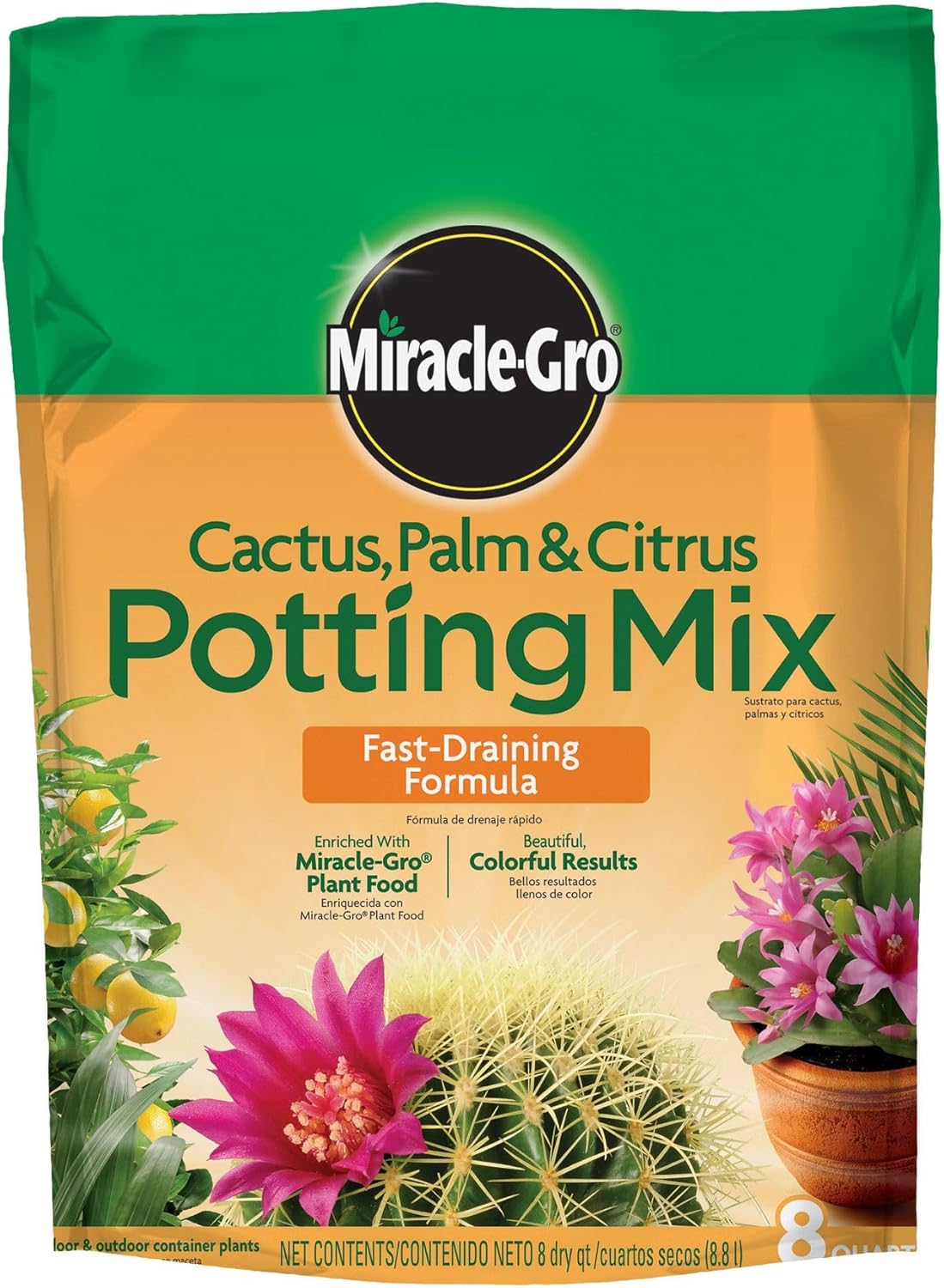
Miracle-Gro Cactus, Palm & Citrus Potting Mix, 8 qt.
| Brand Name | Miracle-Gro |
|---|---|
| Volume | 8 quarts |
| Unit Count | 1 Count |
This 8-quart Miracle-Gro potting mix is designed for container-grown cacti, palms, and citrus and combines peat moss, sand, perlite, and forest products for faster drainage and reduced compaction. It arrives ready to use and is enriched with Miracle-Gro plant food so newly potted citrus get an initial nutrient boost without immediate fertilizing. Typical use is straightforward: choose a pot with drainage, fill about one third, set the root ball and top up, then water and allow to drain. The formula helps soil dry between waterings, which is important for citrus root health in containers, and one bag is enough for two 8-inch pots. Limitations are the small volume for larger trees and the presence of peat moss if you prefer peat-free mixes; heavier or older citrus will need larger volumes and eventual repotting. For growers wanting a quick, reliable container medium that balances moisture retention with drainage, this mix performs as expected.
Best for: Growers who repot or maintain container citrus and want a ready-to-use mix that balances drainage and initial feeding for healthier root development.
Less Ideal for: Gardeners potting mature or large citrus specimens that need large volumes of soil or those seeking a peat-free or custom mineral-heavy citrus bonsai substrate.
- Fast-draining blend reduces risk of waterlogged roots for container citrus
- Pre-enriched with plant food to give newly potted plants an initial nutrient boost
- Contains perlite and sand to resist compaction and maintain aeration
- Formulated for indoor or outdoor containers so it works across sites
- 8-quart bag is small for larger or multiple citrus containers
- Contains peat moss which some buyers avoid for sustainability reasons
Verdict: A convenient, fast-draining, plant-food–enriched container mix that makes repotting small to medium citrus trees quick and reliable.
Doter Plant Propagation Potting Mix (1 qt)

| Brand | Doter |
|---|---|
| Unit Count | 32 Ounce |
| Item Type Name | Garden soil |
| Volume | 1 quarts |
Doter Plant Propagation Potting Mix is a small 1 quart blend designed to speed rooting by combining chunky perlite with vermiculite and organic components. In practice you use it to insert plumeria cuttings about one-third of their length, keep the mix slightly moist, and provide bright indirect light until roots form. The perlite gives excellent drainage and keeps the medium airy so stems are less likely to rot, while vermiculite holds enough moisture to prevent dessication between waterings. The bag is lightweight and easy to handle for small batches of cuttings or for topping up pots. Important limitations are the small volume and lack of detailed nutrient analysis, so you will need larger quantities or a potting mix for later potting and occasional fertilizing after rooting. The product also warns about dust and recommends gloves and a mask when handling.
Best for: Gardeners propagating a few plumeria cuttings at a time who want a ready-made, easy-to-use rooting medium without mixing ingredients themselves.
Less Ideal for: Those who need large quantities for mass propagation or a finished potting soil for established plumeria should choose a larger or more complete potting mix instead.
- Formulated for propagation with perlite and vermiculite to balance drainage and moisture retention
- Lightweight, easy to handle for small-scale cutting batches
- Described as clean and sterile, reducing risk of soil-borne contaminants for new cuttings
- Only 1 quart volume so you will need multiple bags for several cuttings or repeat propagation sessions
- No nutrient or pH specs provided, so additional fertilizing may be required after roots form
Verdict: A compact, propagation-focused mix that gives plumeria cuttings the aeration and moisture balance they need to root successfully.
Sol Soils Seedling & Propagation Mix (1 gal)

| Brand Name | sol soils |
|---|---|
| Style Name | Seedling & Propagation Mix |
| Unit Count | 128 Ounce |
| Volume | 1 gallons |
This Seedling & Propagation Mix is designed specifically for starting seeds and rooting cuttings. It combines calcined clay for moisture buffering and aeration, hardwood biochar to improve structure and microbial activity, coconut husk as a peat-free moisture-retentive medium, and earthworm castings to supply gentle nutrients. In practice the mix is fine-textured and holds water without becoming soggy, which helps delicate roots establish while reducing the risk of damping-off. It is sterile out of the bag and compatible with most plant types, so you can use it in trays, small pots, or plug cells for both indoor seed starting and greenhouse propagation. Bags are hand-mixed in small batches so texture varies slightly between bags, but the ingredients are chosen to extend time between waterings and resist compaction over a single growing cycle. Important limitations: the bag is one gallon so larger or repeated projects will require multiple bags, and users should soak coconut husk as recommended to remove tannins before heavy use.
Best for: Buyers who prioritize reliable, low-maintenance seed starting want a consistent, sterile medium that reduces overwatering risk and helps fragile roots establish. Ideal for hobbyists and small greenhouse growers focused on dependable results.
Less Ideal for: Not a good fit for growers who need large volumes for broadscale sowing or those who prefer DIY mixes tailored to specific crop nutrient profiles.
- Blend formulated for seedlings with calcined clay for moisture consistency and aeration
- Hardwood biochar and castings support beneficial microbes and gentle nutrient supply
- Peat-free coconut husk improves moisture retention while providing aeration
- Fine texture and sterile mix suitable for trays, small pots, and cuttings
- Small 1 gallon volume may be insufficient for larger seed-starting projects
- Batch-to-batch texture variability due to small-batch mixing
Verdict: A dependable, fine-textured peat-free propagation mix that helps seedlings and cuttings establish with less risk of overwatering.
Back to the Roots Organic Indoor Potting Mix, 6 Quart

| Unit Count | 192 Fluid Ounces |
|---|---|
| Item Type Name | Indoor Potting Mix 6qt |
| Item Highlight | Peat-free, 100% organic, made in the USA |
| Ingredients | Coconut Coir, Yucca, Mycorrhizae, Perlite, Horticultural Sand |
This Back to the Roots indoor potting mix is a ready-to-use, 6-quart blend designed for common houseplants such as pothos, monstera and ferns. It combines coconut coir, yucca extract, mycorrhizae, perlite and horticultural sand to improve moisture retention, drainage and root development without peat. In practice it feels light and friable, so it is easy to pot seedlings or repot mature plants and it reduces compaction that can suffocate roots. The added mycorrhizae helps young roots establish and take up nutrients more efficiently while yucca extract helps the mix hold water between waterings, which is convenient for forgetful or busy plant owners. Because it is peat-free and made in the USA, it is a more sustainable choice versus traditional peat-based mixes. Limitations are the small 6-quart size, which means frequent repurchasing for larger collections, and the bag does not include fertilizer so you will need to feed plants separately as they grow.
Best for: Buyers who prioritize low-risk, easy-care houseplant solutions and want an organic, ready-to-use potting mix that reduces watering hassles and supports healthy root growth.
Less Ideal for: Not ideal for gardeners who need large-volume soil for many pots or for those expecting a mix that includes built-in fertilizer for long-term feeding.
- Peat-free organic formula that reduces environmental impact
- Yucca extract improves moisture retention between waterings
- Contains mycorrhizae to support root development and nutrient uptake
- Light, well-draining texture suitable for repotting seedlings and houseplants
- Small 6-quart volume may require frequent repurchasing for larger plant collections
- Does not include fertilizer so additional feeding is necessary
Verdict: A compact, peat-free potting mix that simplifies indoor plant care by holding moisture and boosting root establishment.
Choosing the Right Soil for Plumeria Cuttings: Key Factors to Consider
Drainage and Aeration
Plumeria cuttings are prone to rot if the rooting zone stays wet. A soil that drains freely and holds generous pore space for oxygen reduces stem and root rot risk. Look for mixes with chunky components such as coarse sand, perlite, pumice, or fine bark to maintain airflow around the cutting base.
Good aeration also encourages faster development of fibrous roots instead of soft, waterlogged tissue. For gardeners in humid climates, favor mixes with higher coarse component ratios. In drier climates, you can retain a bit more water-holding organic matter but maintain clear drainage pathways.
Moisture Retention Balance
Cuttings need moisture to prevent desiccation while they form roots, but constant wetness is harmful. The ideal medium wicks enough moisture to keep the immediate zone slightly damp for a day or two, then dries enough to allow oxygen back into the root zone.
Components like coco coir or peat can hold moisture well, but used alone they may hold too much. Pair moisture-retentive ingredients with coarse particles to create a balanced profile. Consider your watering routine: if you prefer infrequent deep waterings, choose a mix with more water-holding capacity; if you water lightly and often, a faster-draining blend is safer.
Particle Size and Texture
Uniform, appropriately sized particles affect both drainage and root traction. Very fine soils can compact around a cutting and squeeze out air, while very large particles may not support the cutting upright. A combination of small coarse pieces for aeration and finer components for stability creates a good rooting environment.
Texture also affects how easily you can insert a cutting and how well the stem stays stable. Aim for a mix with some grit or bark chips and a fine fraction that locks the pieces together without cementing when wet.
Salt Content and pH Tendency
High soluble salt levels from fertilizers or recycled media can damage tender plumeria cuttings and inhibit root initiation. Choose or prepare soil with low salt content and avoid mixes that contain concentrated controlled-release fertilizers.
Plumeria generally root well in slightly acidic to neutral media. While pH is not the primary driver for rooting success, extremely alkaline or acidic conditions can impair nutrient uptake and stress the cutting. If using store mixes, check for salt or fertilizer additives and rinse or age mixes if salt levels seem high.
Nutrient Buffering for Early Root Growth
New roots need some accessible nutrients, but too much fertilizer can burn cuttings that have limited root systems. A soil with light nutrient buffering, such as stable organic matter or a small reserve of slow-release nutrient sources, supports establishment without overwhelming the cutting.
Many gardeners prefer a low-nutrient starting medium and then supply weak liquid feed after roots begin. When a mix contains long-lasting organic components it can slowly release modest nutrients as roots develop, reducing the risk of fertilizer shock.
Consistency and Ease of Use
Predictable texture and ingredient consistency make it easier to reproduce successful results. Mixed soils that vary widely by batch can create inconsistent outcomes for cuttings. Reliable, purpose-made mixes or clearly labeled bagged components help you replicate a successful setup.
Ease of handling is also practical: mixes that are dusty or that compact during filling can frustrate setup. Consider how easy the soil is to work with when inserting cuttings and whether you need to pre-moisten or age it before use.
Preparing a Pot and Drainage Setup
Choose a container with several drainage holes and shallow depth so excess moisture leaves the pot quickly. Use a clean pot to reduce disease risk and fill it with your chosen rooting mix, leaving room to insert cuttings without crowding.
Add a thin layer of coarse grit or broken pottery at the bottom only if your potting mix tends to wash out of the holes. For most well-draining rooting mixes, that extra layer is unnecessary and can create a perched water table. Ensure the cutting sits stable and upright in the medium without forcing it down into very tight soil.
- Use shallow pots or tubes to encourage easy monitoring of moisture.
- Avoid overly large containers that hold excess moisture around a small cutting.
Timing and Environment for Rooting
Rooting success depends as much on environmental conditions as on soil. Start cuttings during the warm growing season when temperatures are consistently warm and humidity is moderate to high. Warm soil temperatures speed root initiation in plumeria.
Provide bright, indirect light and avoid direct hot sun on freshly cut stems. If you use a humidity dome or plastic cover, ventilate periodically to prevent fungal growth. Monitor moisture daily rather than following a strict schedule; the correct mix should show drying on the surface between waterings.
- Aim for soil temperatures in the comfortable warm range for tropical cuttings.
- Check for surface drying before the next watering to reduce rot risk.
Mixing Your Own Rooting Medium
Many gardeners combine coarse inorganic components with a small fraction of organic matter to create a tailored rooting medium. A typical DIY formula might include coarse sand or grit, perlite or pumice for aeration, and a modest amount of coco coir or composted bark for moisture retention and slight nutrient support.
Pre-mix ingredients thoroughly and moisten the blend before inserting cuttings so the medium settles evenly. Avoid adding fertilizers to the mix; wait until you see root growth before applying diluted feed.
- Test small batches to refine ratios for your local climate and watering habits.
- Sterilize reused media by sun baking or replacing it to avoid pathogen buildup.
Watering and Aftercare for New Roots
Water sparingly after planting a cutting. Soak the medium lightly to settle it, then let the top portion dry slightly. Overwatering is the most common cause of failure. Once roots form, you can increase moisture frequency but maintain the balance between wet and dry.
After roots appear, gradually expose the cutting to stronger light and begin a low-strength feeding routine if desired. Handle transplanting carefully so new root systems are not torn.
- Water deeply but infrequently once rooting is established.
- Use gentle liquid feeds at quarter strength only after visible root development.
Recognizing Healthy Root Development
Healthy roots are firm and white or cream-colored. Signs of success include new leaf buds, swelling at the stem base, and resistance when you give the cutting a gentle tug. Ghostly, soft, or foul-smelling tissue indicates rot and the need to reassess drainage and moisture.
If roots fail to appear after several weeks, check for pathogens, excessive salts, or overly cool soil temperatures. Recutting the base and changing to a fresher, cleaner mix can sometimes salvage a slow starter.
- Gently probe the rooting zone if you suspect problems rather than pulling the cutting out abruptly.
- Look for clean, white root tips as the best sign of establishment.
How We Chose the Best Soil for Plumeria Cuttings
We selected these soils by focusing on properties that matter specifically for plumeria cuttings rather than general potting uses. Primary evaluation criteria included drainage and aeration, particle size and texture, moisture retention balanced with fast drying, and the presence of light nutrient buffering to support initial root growth. We also considered pH tendency and salt content because succulent-like cuttings are sensitive to high soluble salts and prefer slightly acidic to neutral ranges. Accessibility and consistent ingredient labeling were secondary filters to ensure gardeners could reproduce mixes or approximate them with common components. Exclusions: We excluded heavy garden soils, dense loams, and mixes formulated for long-term houseplants that retain too much water. We also filtered out media with unknown or unlabeled ingredients and those designed primarily for seedlings rather than woody succulent cuttings. The final list highlights blends and base components that reliably give cuttings oxygen at the root zone while supplying modest nutrients for the first weeks of growth.
FAQ
Can I root plumeria cuttings directly in garden soil?
Often garden soil is too dense and retains too much moisture, which increases rot risk. If you must use ground soil, amend it heavily with coarse grit, sand, and organic matter to improve drainage and aeration.
How long do plumeria cuttings usually take to root in the right soil?
Rooting time depends on temperature and medium but usually ranges from a few weeks to a couple of months. Warm temperatures and a free-draining mix accelerate the process.
Should I add fertilizer to the rooting mix?
Usually no. High fertilizer levels can burn tender cuttings. Wait until you see root development, then apply a weak liquid feed or move the plant into a more nutrient-rich potting mix.
Is sterilizing soil necessary before rooting cuttings?
Sterilizing reused or questionable media reduces disease risk, but fresh, well-labeled mixes typically do not require sterilization. Simple measures like clean tools and sanitation cut down on pathogens.
What are good signs that my soil mix needs adjustment?
Slow drying, persistent sogginess, foul odors, or discolored, soft stems all indicate poor drainage or high salt content. If cuttings show these signs, move them into a coarser, cleaner medium and reassess watering.
Final Verdict
Choosing the right soil for plumeria cuttings is a balance between moisture retention and fast drainage. Prioritize mixes with plenty of coarse particles for aeration, moderate moisture-holding components, low soluble salts, and a stable texture you can reproduce. Factor in your climate and watering style when adjusting ingredient ratios. With the right medium and attentive aftercare, most gardeners can reliably root plumeria cuttings and move them into growth containers once roots are established.
