

Note: This article contains affiliate links. If you click on these links and make a purchase, I may earn a small commission at no extra cost to you. This helps support my research and content. Read my full affiliate disclosure here.
Choosing the right indoor houseplant fertilizer changes how well your houseplants grow through the seasons. Feedings that are too weak leave plants pale and slow-growing, while overfeeding causes leaf burn and salt buildup in pots. This guide covers seven shortlisted options that suit common indoor situations from foliage-first pothos to bloom-hungry African violets. We evaluated each option for nutrient balance, ease of use, and how it performs in typical container soils and pot sizes. The following picks are the top fertilizers for indoor houseplants and include practical notes about application cadence and expected results. Read on for clear guidance to match a feeding plan to your plant mix and routine.
Top Picks at a Glance
| Best Overall The best all-around choice for most situations | Miracle-Gro Watering Can Singles All Purpose Plant Food, 24 Packets | 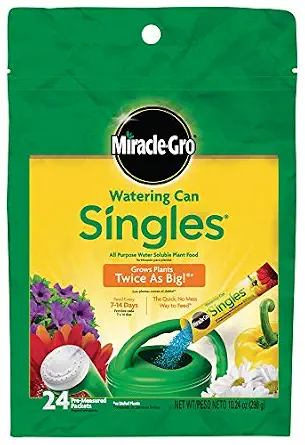 |
| Best Quality Built to a higher standard if you want something more solid | BLESS YOUR SOIL Big Green Leaves Indoor Plant Food, 1 lb Concentrated Powder |  |
| Best Value The sweet spot between price and what you get | Grow Queen Organic Liquid Indoor Plant Food 5-5-5 with Sea Kelp, 8 oz | 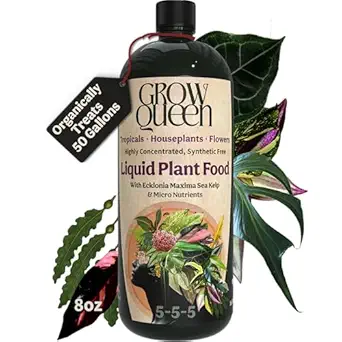 |
| Best Budget The cheapest option that still gets the job done reliably | Jobe's Organics Indoor Plant Fertilizer Spikes, 50 Count |  |
| Highest Rated A top-rated pick with lots of positive feedback | Miracle-Gro Water Soluble All Purpose Plant Food, 1.5 lb |  |
| Most Popular A crowd favorite that many people choose with confidence | Miracle-Gro Indoor Plant Food for All Plants, Liquid, 8 fl. oz. (2-Pack) |  |
| Best Seller A high-volume bestseller chosen again and again | TPS NUTRIENTS Indoor Plant Food Liquid Fertilizer, 8 oz |  |
Miracle-Gro Watering Can Singles All Purpose Plant Food, 24 Packets

| Number of Packs | 24 |
|---|---|
| Item Form | SOLID |
| Application Method | watering can |
| Mixing Ratio | 1 teaspoon per 1 gallon of water |
Miracle-Gro Watering Can Singles are single-use, pre-measured packets of water-soluble all-purpose fertilizer meant to be mixed into a watering can and applied while you water. Each packet is formulated for general-purpose feeding of houseplants, flowers, vegetables and container or in-ground plantings, and the directions call for feeding every 7 to 14 days. The biggest practical advantage is convenience: no measuring, no spills, and predictable dilution rates for indoor versus outdoor use. Because the formula is intended as an all-purpose feed, it gives a fast nutrient boost that helps actively growing plants respond quickly. Limitations are that this is a general fertilizer rather than a specialty formula for succulents, orchids or heavy-feeding vegetables, and repeated weekly use may be more than some slow-growing plants need. Also you must buy replacement packets once the 24-count runs out, so it is best for gardeners who prefer single-dose convenience over bulk concentrate bottles.
Best for: A practical indoor plant owner who wants a no-fuss, reliable weekly or biweekly feed for a variety of common houseplants and mixed container plantings.
Less Ideal for: Growers who need crop-specific nutrition or those managing large numbers of plants should consider concentrated or specialty fertilizers for better long-term control.
- Pre-measured packets eliminate measuring and reduce mess
- Water-soluble formula works instantly when mixed into a watering can
- Labeled dosages for indoor and outdoor use simplify application
- Suitable for a wide range of plants including houseplants, flowers, vegetables and shrubs
- All-purpose formula is not specialized for succulents or orchids
- Limited to the 24-packet supply so frequent users will need to repurchase
Verdict: If you want a tidy, foolproof way to feed a variety of houseplants on a regular schedule, these pre-measured, water-soluble packets make feeding fast and mess-free.
BLESS YOUR SOIL Big Green Leaves Indoor Plant Food, 1 lb Concentrated Powder

| NPK Ratio | 12-4-8 |
|---|---|
| Form | Powder, water-soluble concentrate |
| Included | Pre-measured teaspoon scoop |
| Application | Soil drench, foliar feed, hydroponic systems |
Big Green Leaves is a concentrated powdered houseplant fertilizer intended to promote vigorous foliage and healthier roots for tropical and leafy indoor plants. You mix one pre-measured teaspoon per gallon for a soil drench or half that for foliar feed; a 1 lb pouch makes roughly 90 gallons of solution, so it is clearly geared toward repeated, performance-focused feeding. Notable features include a high-nitrogen 12-4-8 formula, chelated micronutrients for better uptake across pH ranges, and organic sea kelp to support cell enlargement and beneficial soil microbes. The powder dissolves quickly with no residue and the resealable pouch plus included scoop reduce measuring guesswork. Practical benefits are stronger, greener leaf growth on plants like pothos, monstera, and philodendron, compatibility with hydro and LECA systems, and a lower-plastic footprint versus bottled liquids. Limitations are that the formula is targeted at leafy tropicals and not suited for cacti, succulents, or high-phosphorus flowering needs, and frequent feeding schedules may be unnecessary for slow growers or low-light winter conditions.
Best for: Buyers looking to push faster, greener leafy growth across an indoor tropical plant collection and who prioritize measurable performance and repeatable feeding routines.
Less Ideal for: Casual plant owners who prefer low-maintenance schedules or people focused mainly on succulents or heavy-blooming flowering houseplants.
- High-nitrogen 12-4-8 formula designed to stimulate leafy growth and fuller foliage
- Contains sea kelp and chelated micronutrients to support leaf expansion and improve nutrient uptake
- Very concentrated powder yields about 90 gallons, giving strong value per gallon
- Quick-dissolving, residue-free formula with a pre-measured scoop and resealable pouch
- Compatible with soil, hydroponic, LECA, and propagation systems
- Not formulated for cacti, succulents, or flowering plants that need higher phosphorus
- Regular feeding every 2–4 weeks may be excessive for slow-growing or low-light plants
Verdict: Choose this concentrated powder if you want a performance-focused, low-waste fertilizer that reliably produces bigger, greener leaves on indoor tropicals.
Grow Queen Organic Liquid Indoor Plant Food 5-5-5 with Sea Kelp, 8 oz

| Item Form | Liquid |
|---|---|
| Mixing Ratio | 1:1 |
| Application Method | Watering |
| Specific Uses For Product | Plant Growth |
This Grow Queen liquid plant food is a concentrated, balanced 5-5-5 organic fertilizer formulated for houseplants, tropicals and container gardens. You mix one capful (about 4 ml) per gallon of water and apply as a soil drench or foliar spray every 1 to 3 weeks during active growth, so it fits into routine watering rather than a separate feeding step. Notable features include Ecklonia maxima sea kelp and micronutrients for greener foliage and stronger roots and a concentrated 8 oz bottle that treats up to 50 gallons. Practical benefits are easy dosing, compatibility with soil and oxygenated hydroponic systems, and a gentle formula the brand says can be used frequently without burning. Limitations to note are the natural kelp scent that some may find off-putting, and the warning that organic nutrients can film in standing, non-aerated water so it is not ideal for closed reservoirs without frequent changes. Overall this is a convenient, multipurpose liquid feed for people who want a single, regular-use fertilizer for a variety of indoor potted plants.
Best for: Houseplant owners who want a single, easy-to-dose organic fertilizer they can use regularly across a mixed collection of potted tropicals and container plants.
Less Ideal for: People who rely on closed, non-aerated hydroponic reservoirs or who need a scentless indoor product should consider alternatives.
- Balanced 5-5-5 NPK formula suitable for foliage, root and general growth
- Concentrated 8 oz bottle mixes to treat up to 50 gallons for long-lasting supply
- Contains Ecklonia maxima sea kelp and trace micronutrients to support leaf color and root strength
- Can be used as soil drench or foliar feed and is compatible with aerated hydroponic systems
- Distinct natural seaweed smell may be unpleasant indoors until it dissipates
- Not recommended for use in standing, non-aerated reservoirs because organic particles can form a film
Verdict: A concentrated, gentle organic 5-5-5 liquid fertilizer with sea kelp that simplifies regular feeding for mixed indoor plant collections.
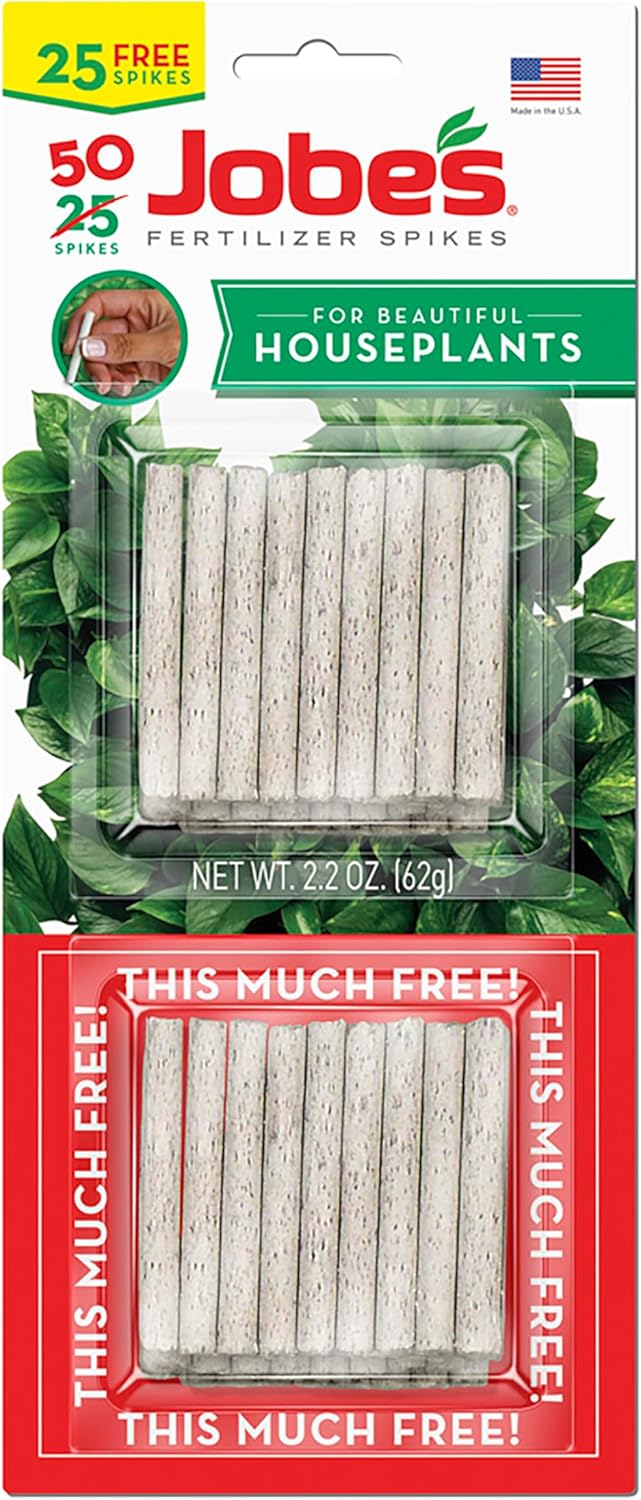
Jobe's Organics Indoor Plant Fertilizer Spikes, 50 Count
| Unit Count | 50 Count |
|---|---|
| Application Method | Insert spikes into soil |
| Item Form | Granules, Liquid, Sticks |
| Target Species | Houseplant |
| Mixing Ratio | 13-4-5 |
Jobe's Organics Indoor Plant Fertilizer Spikes are pre-measured, slow-release sticks designed to keep potted houseplants fed without regular liquid feeding. You push the spikes into the potting soil around the root zone and they gradually release a 13-4-5 NPK formula intended to support foliage growth and flowering for roughly 60 days. The main benefit is convenience: no measuring, no mixing, and no runoff or mess, which makes them handy for busy plant owners or for plants in decorative pots where spills are a concern. They are formulated for general houseplant use and marketed to avoid overfertilizing when used as directed. Limitations are that spikes deliver a fixed nutrient ratio and dosing schedule, so they are less flexible for plants with specific or changing nutrient needs and you must remember to replace them every 60 days for continuous feeding. Also they contain phosphorus so local restrictions on phosphorus use could apply.
Best for: Best for houseplant owners who want a low-effort, mess-free feeding routine and prioritize convenience and predictable maintenance over custom nutrient plans.
Less Ideal for: Not ideal for collectors or growers who need precise, adjustable fertilization or who prefer liquid feeds for foliar applications.
- Pre-measured slow-release spikes eliminate mixing and reduce mess around indoor pots
- Simple insert-and-forget application lasts about 60 days per spike
- 13-4-5 NPK formula supports both foliage and bloom development
- Designed to place nutrients at the root zone to limit runoff and waste
- Fixed NPK ratio and dosing schedule limit customization for specific plant deficiencies
- Requires regular replacement every 60 days to maintain feeding cycle
Verdict: Choose these spikes if you want a simple, low-maintenance way to keep indoor plants fed without measuring or messy liquid fertilizers.
Miracle-Gro Water Soluble All Purpose Plant Food, 1.5 lb

| Item Form | Powder |
|---|---|
| Application Method | Watering Can |
| Target Species | All flowers, vegetables, trees, shrubs and houseplants |
| Mixing Ratio | 24-8-16 |
Miracle‑Gro Water Soluble All Purpose Plant Food is a powdered fertilizer you mix into water to feed a wide range of plants, including houseplants, flowers and vegetables. It dissolves easily and is applied with a watering can or a garden feeder, delivering nutrients immediately to the root zone. The 24‑8‑16 formula is nitrogen‑forward, so you can expect faster leafy growth and greener foliage when used as directed. Directions vary by use—small doses for indoor pots every two weeks and stronger mixes for outdoor beds every 7 to 14 days—so it is straightforward to fit into a regular feeding schedule. Practical benefits include clear mixing instructions, compatibility with containers and in‑ground plantings, and coverage sufficient for roughly 600 sq. ft. from the 1.5 lb jar. Important limitations are that the high nitrogen level makes it better for foliage than bloom‑only results, and frequent liquid feeding means more time mixing than with slow‑release granules. Follow label mixing rates carefully to avoid overfeeding sensitive plants.
Best for: For plant owners who prioritize consistent, reliable feeding and want a product that delivers quick, predictable results for houseplants and mixed indoor collections.
Less Ideal for: Growers seeking a hands‑off, infrequent feeding solution or those who need a bloom‑focused fertilizer should consider slow‑release or higher‑phosphorus formulations instead.
- Water‑soluble powder that dissolves quickly for fast root uptake
- Simple, specific mixing instructions for indoor and outdoor use
- Versatile for both container and in‑ground plants
- Feeds an estimated 600 sq. ft. from a single 1.5 lb container
- Higher nitrogen ratio favors leafy growth over bloom boosting
- Requires repeated mixing and more frequent applications than slow‑release options
Verdict: A dependable, easy‑to‑use water‑soluble fertilizer that delivers fast, consistent feeding for indoor houseplants and mixed collections.
Miracle-Gro Indoor Plant Food for All Plants, Liquid, 8 fl. oz. (2-Pack)

| Item Form | Liquid |
|---|---|
| Application Method | Apply directly to soil or mix with water |
| Target Species | Houseplants |
| Liquid Volume | 8 fluid ounces |
| Mixing Ratio | 4 pumps per 1 quart of water |
Miracle-Gro Indoor Plant Food is a ready-to-use liquid fertilizer for indoor potted plants that you apply either directly to soil or diluted in water. It is typically used every two weeks by mixing the recommended number of pumps into a quart of water or by applying a few pumps for larger pots, making it easy to add to a regular watering routine. The product feeds quickly because nutrients are water-soluble and the pump dispenser gives repeatable doses without measuring spoons. Practical benefits include broad compatibility with most houseplants and a compact bottle size that is convenient for small indoor gardens. Limitations are that the label lists only N, P, K without a full nutrient breakdown, so growers wanting precise NPK ratios or micronutrient profiles may prefer a more detailed formula. Also the 8 fl. oz. bottles are best for hobbyists or small collections rather than large indoor plantings because frequent repurchasing will be necessary for heavy users.
Best for: Buyers who want a simple, low-effort fertilizer to add to a regular watering routine and who prioritize straightforward dosing and broad houseplant compatibility.
Less Ideal for: Specialist growers who need exact NPK ratios, detailed micronutrient information, or bulk quantities for many plants should consider a different product.
- Liquid formula feeds instantly when mixed with water or applied to soil
- Pump dispenser provides simple, repeatable dosing without measuring
- Designed for use with a wide range of indoor plants including herbs, flowers and vegetables
- Full NPK ratio and micronutrient details are not shown on the product summary
- Small 8 fl. oz. bottle size may require frequent replacement for larger collections
Verdict: A convenient, pump-dosed liquid fertilizer that makes fortnightly feeding simple for casual indoor plant owners.
TPS NUTRIENTS Indoor Plant Food Liquid Fertilizer, 8 oz

| Item Form | Liquid |
|---|---|
| Application Method | Watering can |
| Unit Count | 8 Fluid Ounces |
| Mixing Ratio | 2:1 (oz/gallon) or 1:64 (tbsp/gallon) |
This 8 oz TPS NUTRIENTS indoor plant food is a liquid concentrate designed to mix with water and be applied during normal watering. It supplies balanced nutrients and kelp extract to support fuller foliage, steady new growth, and stronger roots for common houseplants like pothos, monstera, snake plants, and philodendrons. The bottle mixes at an easy home ratio (about 1 tablespoon per 32 oz water) and is intended for weekly or regular feeding, which makes it simple to add into an established watering routine. As a liquid formula it absorbs quickly through the soil and is gentle enough for frequent applications, which helps avoid sudden nutrient shock for sensitive species. The product is compact and concentrated so a small bottle treats many feedings, but the 8 oz size means you will need to repurchase sooner if you have a large collection. Also the label warns to keep it away from children and pets and to avoid skin or eye contact, so handle and store carefully.
Best for: For houseplant owners who want a simple, reliable weekly fertilizer that integrates with normal watering and prioritizes steady, safe growth.
Less Ideal for: Not the best choice for growers who need large-volume or slow-release granular fertilizers for outdoor beds or very large indoor collections.
- Balanced liquid concentrate suitable for most common indoor plants
- Kelp-enriched formula to encourage healthier foliage and root development
- Easy mixing ratio designed for use with a watering can and regular watering schedules
- Gentle enough for frequent feeding to reduce risk of nutrient burn
- Small 8 oz bottle may require frequent repurchase for larger collections
- Contains concentrated nutrients that require careful handling and storage
Verdict: A compact, easy-to-use liquid fertilizer that reliably supports healthier leaves and steady new growth for typical indoor houseplants.
Choosing the Right Indoor Houseplant Fertilizer: Key Factors to Consider
Nutrient Ratio and What It Means
The macronutrient ratio on a fertilizer package tells you the relative amounts of nitrogen, phosphorus, and potassium. For many houseplants that are grown for foliage, a slightly higher nitrogen ratio promotes leaf growth and deep green color.
Flowering houseplants need a formula with more phosphorus or balanced NPK to encourage bloom set and longer flowering periods. Pay attention to secondary nutrients such as magnesium and calcium when your tap water is soft or if you use reverse osmosis water, because deficiencies show quickly in container-grown plants.
Formulation and Application Method
Liquid concentrates and ready-to-use sprays deliver nutrients quickly and let you adjust feeding strength each session. They work well for frequent, controlled applications but require measuring and consistent dilution.
Granular and slow-release formulations provide a steady nutrient supply over weeks to months and reduce the risk of overfeeding when you forget occasional feedings. However, they can be harder to correct once applied. Water-soluble granules combine convenience with adjustable strength and are a common middle ground.
Pot Size, Soil, and Watering Frequency
Smaller pots concentrate salts faster than large containers, so feed less frequently or at lower strength for compact pots. Potting mixes with a high proportion of bark or peat hold nutrients differently than mineral-rich mixes, which affects how long a single application lasts.
If you water lightly and often, nutrients can be leached quickly, which favors slow-release or frequent low-strength liquid feedings. For plants that dry between waterings, a single balanced feed at the start of the active growth season may be enough.
Salt Accumulation and Flushing Practices
Houseplant fertilizers leave minerals behind as water evaporates. Over time salts build up and cause brown leaf edges, wilting, or stunted growth. Regularly check the surface of pots for white crust and use periodic deep watering to flush excess salts from the root zone.
When selecting a fertilizer, consider products formulated for low-salt residue or those designed for indoor containers. Establish a flushing routine based on pot size and watering frequency to avoid needing corrective action later.
Compatibility With Houseplant Types
Different houseplants have different nutrient preferences. Succulents and cacti usually want lower nitrogen and a lighter feeding schedule to avoid soft, leggy growth. Tropical foliage plants thrive on steady nitrogen for lush leaves, while bloomers require phosphorus during bud set and bloom.
If your collection includes mixed types, choose a balanced fertilizer you can dilute to different strengths rather than a single specialized formula that may overfeed some species.
Safety, Storage, and Indoor Use Practicalities
Indoor products must store safely in a cabinet away from pets and children. Concentrated liquids and powders should have clear labeling for handling and spills. Consider packaging that minimizes accidental misuse, such as measuring caps or premeasured pods.
Also think about odor and airborne dust from granules when applying indoors. A low-odor, low-dust option reduces mess and makes feeding more pleasant in small apartments or shared living spaces.
When To Feed Indoor Plants
Most houseplants need supplemental feeding during active growth months and little to no fertilizer during dormancy. For many species that means feeding from spring through early fall and reducing or stopping during winter.
Adjust timing based on your plant's growth rhythm. If new growth is steady, continue a regular, reduced-strength feeding cycle. Pause feedings when plants are not producing leaves or flowers to avoid stressing roots.
- Feed weekly or every two weeks with a dilute liquid for actively growing plants.
- Consider a single slow-release application in spring for low-maintenance collections.
- Skip feeding for a month after repotting to let fresh potting mix settle.
Using Dilution to Customize Feeding Strength
Dosing is one of the simplest tools to adapt a single fertilizer to many plant types. Many garden center formulas can be diluted to half- or quarter-strength to accommodate sensitive species or small pots.
Record the dilution you use for each plant type so you can repeat a successful routine. If leaf tips brown after feeding, cut strength back rather than reducing frequency initially.
- Start at half the recommended strength for new or stressed plants.
- Increase gradually if plants show steady vigorous growth without leaf tip burn.
Dealing With Common Nutrient Issues
Yellowing leaves, slow growth, or pale new growth often point to underfeeding or an imbalanced mix. Conversely, brown leaf margins and weak roots are common signs of excess soluble salts. Soil testing and observing new growth are practical ways to diagnose problems.
Before changing fertilizer type, try adjusting dosage and frequency. If issues persist, flush the pot thoroughly and wait for new growth before altering the nutrient regimen.
- Test suspicious plants by reducing feed strength for a month and monitoring new leaves.
- Flush containers with fresh water if salts accumulate; allow to drain fully before resuming regular feeding.
Practical Storage and Safety Tips for Indoor Supplies
Store all fertilizers in a cool, dry place away from direct sunlight and out of reach of children and pets. Keep powders sealed to avoid airborne dust and liquids capped to prevent spills.
Label any secondary containers clearly and keep measuring tools dedicated to plant care to avoid cross-contamination with household items.
- Keep a small spill kit and cloth near your plant area when dosing.
- Rinse measuring caps and tools outdoors or in a utility sink to avoid residue on kitchen surfaces.
Feeding Small Collections and Apartment Gardens
For small collections, simplicity matters. Choose a fertilizer format that fits your routine: a weekly liquid dosing is efficient for a bench of mixed pots, while a slow-release granule can be ideal for a few hands-off plants.
Consider how much storage space you have and whether you prefer to mix concentrate when needed or keep premeasured doses ready to go.
- Pre-mix a single week's worth of feed in a closed bottle for quick application.
- Use clear labeling on bottles to note dilution and application dates.
How We Chose the Best Indoor Houseplant Fertilizer
We prioritized formulas and formats that match how people actually maintain indoor plants. Evaluation focused on nutrient balance appropriate for container-grown houseplants, clarity of dosing instructions, and the ease of applying the product at home. We also considered how each fertilizer interacts with common indoor potting mixes, potential for salt accumulation, and whether the product supports both foliage health and flowering when applicable. Practical handling was a major filter: fertilizers that require complex dilution steps or specialized equipment were downweighted, while straightforward liquid, granular, and slow-release options that gardeners can use without extra tools scored higher. We excluded products intended primarily for outdoor garden beds, lawns, or hydroponic systems unless they explicitly listed routine indoor container use. Safety and storage cues for indoor environments were also part of the review, with attention to child- and pet-safe labeling where relevant. Final selection emphasized usable information a homeowner can act on: nutrient ratio suitability for indoor plants, dosing clarity, residue risk in pots, and format convenience. These same dimensions map to the scoring criteria used in the product blocks below.
FAQ
How often should I fertilize indoor houseplants during the growing season?
Most indoor plants benefit from feeding every one to two weeks during active growth when using a liquid fertilizer at the recommended or reduced strength. Slow-release products typically require application only once every two to four months depending on the product label.
Can overfertilizing damage my houseplants?
Yes. Overfertilizing often causes leaf tip burn, brown margins, and root stress from salt buildup. If you suspect overfeeding, flush the pot with clean water, pause applications, and resume at a lower strength after new growth appears.
Is a general-purpose fertilizer OK for all types of houseplants?
A balanced general-purpose fertilizer works for many common houseplants, but some groups like succulents or bloomers benefit from tailored ratios and schedules. Using dilution lets you adapt a single formula to multiple species in a mixed collection.
Should I reduce feeding after repotting?
Yes. Fresh potting mix usually contains starter nutrients, so wait at least four to six weeks after repotting before resuming regular fertilizer to avoid overfeeding and to allow roots to establish.
How can I tell if my fertilizer is leaving too much residue in pots?
Watch for white crust on the soil surface or rim of the pot, brown leaf edges, or reduced water uptake. These signs suggest salts are accumulating and you should flush the pot and cut back on concentration or frequency.
Are slow-release fertilizers safe to use indoors?
Yes. Slow-release fertilizers can be safe and convenient for indoor use because they lower the risk of accidental overfeeding. Place them according to label directions and avoid scattering granules on top of exposed roots to prevent concentrated pockets.
Final Verdict
Prioritize nutrient balance, dosing clarity, and the application format that fits your routine when choosing an Indoor Houseplant Fertilizer. Smaller pots and sensitive species do better with reduced-strength liquid feedings, while larger collections or forgetful caretakers often benefit from slow-release options. Always watch new growth and salt signs, and adjust concentration before switching product types. Focus on predictable results and manageable application. With the right fertilizer format and a simple schedule, you can keep foliage vibrant and blooms reliable without frequent corrections.
