

Note: This article contains affiliate links. If you click on these links and make a purchase, I may earn a small commission at no extra cost to you. This helps support my research and content. Read my full affiliate disclosure here.
Picking the right soil mix for a ZZ plant matters more than most indoor potting decisions. These plants tolerate low light and irregular watering, but they are vulnerable to sitting in water. A tailored soil blend gives the rhizomes access to oxygen, sheds excess water quickly, and still holds enough moisture between waterings to avoid stress. This guide covers seven shortlisted soil mixes selected for ZZ plant growing situations. We focus on drainage, water retention, aeration, and how mixes behave in real pots and containers. Read on to see the evaluation criteria and practical notes that will help you choose the right mix for your home or office greenery.
Top Picks at a Glance
| Best Overall The best all-around choice for most situations | Gardenera ZZ Plant Potting Mix, 4 Quart |  |
| Best Quality Built to a higher standard if you want something more solid | Gardenera ZZ Plant Potting Mix (2 Quart) |  |
| Best Value The sweet spot between price and what you get | rePotme ZZ Plant Potting Soil — Premium Indoor Potting Mix (2 Quarts) |  |
| Best Budget The cheapest option that still gets the job done reliably | DUSPRO Pre-Mixed 7-in-1 Houseplant Potting Mix, 2 qt |  |
| Highest Rated A top-rated pick with lots of positive feedback | Grow Queen Craft Aroid Potting Mix, Chunky Monstera & Tropical Plant Soil, 2 qt |  |
| Most Popular A crowd favorite that many people choose with confidence | Grow Queen Craft Houseplant Potting Mix, 2 Quart |  |
| Best Seller A high-volume bestseller chosen again and again | Soil Sunrise Aroid Potting Soil Mix (8 Quarts) |  |
Gardenera ZZ Plant Potting Mix, 4 Quart

| Brand Name | Gardenera |
|---|---|
| Item Type Name | Soil Mix |
| Unit Count | 128 Ounce |
| Volume | 4 quarts |
This Gardenera ZZ Plant Potting Mix is a ready-to-use blend targeted at the moisture and aeration needs of Zamioculcas zamiifolia. You get a mix of Canadian peat moss for moisture retention, sand and perlite to improve drainage and aeration, worm castings for slow-release nutrients, and charcoal to help keep the root zone clean. It is typically used when repotting or refreshing the top layer of soil for indoor ZZ plants and works for container culture where root oxygenation matters. The small 4 quart bag makes it convenient for one or two plants and avoids long-term storage issues. Practical benefits include better root airflow, reduced risk of waterlogging compared with plain potting soil, and a nutrient boost that can reduce the need for frequent feeding. Limits are the modest volume for collectors with many plants and the safety notice about potential skin irritation, so gloves are advisable when handling. There is no detailed NPK analysis provided, so gardeners wanting precise fertilizer planning may need to supplement with measured feedings.
Best for: Buyers who want an off-the-shelf, plant-specific mix to simplify repotting and improve root health for indoor ZZ plants without custom blending.
Less Ideal for: Those who maintain large collections, need bulk volumes, or require exact nutrient analysis for regimented fertilizing should look for larger or laboratory-tested mixes.
- Formulated specifically for ZZ plants with peat, sand, perlite and charcoal for balanced moisture and drainage
- Includes worm castings for organic nutrient support
- Charcoal component helps keep the potting medium fresher and may reduce odors
- Fine-grain 4 quart size is convenient for single-plant repotting and reduces leftover storage
- Small 4 quart bag may be insufficient for multiple or larger ZZ plants
- No lab-tested NPK or ingredient percentages provided for precise fertilization planning
Verdict: A compact, ZZ-focused potting mix that simplifies repotting by pairing moisture-holding peat with drainage-enhancing sand and perlite plus organic nutrients.
Gardenera ZZ Plant Potting Mix (2 Quart)

| Brand Name | Gardenera |
|---|---|
| Item Type Name | ZZ Plant Potting Mix |
| Volume | 2 quarts |
| Unit Count | 1 Count |
This Gardenera ZZ Plant Potting Mix is built specifically for Zamioculcas zamiifolia and aims to give owners a ready-to-use medium that balances water retention and drainage. The formula mixes Canadian peat moss for moisture, sand to mimic the plant's drier preferences, perlite for aeration, worm castings for nutrients, and charcoal to help reduce impurities. In practice it is best used when repotting or refreshing the top layer of an existing ZZ plant to encourage steady root development and healthier foliage. The notable benefits are improved root oxygenation and reduced risk of waterlogging compared with heavy all-purpose soils, plus a modest nutrient boost from the worm castings that supports growth without heavy feeding. Limitations are the small 2-quart volume, which makes it suitable for small to medium pots only, and the presence of peat which still holds some moisture so watering schedules should be adjusted to avoid overwatering. For growers who want a plant-specific mix without blending components themselves, this is a convenient option.
Best for: Buyers who want a ready-made, plant-specific mix to optimize ZZ plant health and growth without mixing individual components themselves.
Less Ideal for: People who keep very large ZZ plants, need bulk quantities for multiple pots, or prefer entirely peat-free or custom-blended media.
- Formulated for ZZ plants with peat, sand, perlite, worm castings, and charcoal for balanced moisture and aeration
- Includes organic nutrients from worm castings to support steady growth without heavy fertilizing
- Charcoal and sand improve drainage and reduce risk of root rot compared with standard potting soil
- Light, airy texture from perlite promotes root oxygenation and easier watering control
- Small 2-quart volume limits use to small or few repots
- Contains peat moss which retains moisture, requiring attentive watering to avoid soggy conditions
Verdict: A convenient, purpose-formulated potting mix that gives ZZ plants balanced drainage, aeration, and a light nutrient boost for healthier roots and foliage.
rePotme ZZ Plant Potting Soil — Premium Indoor Potting Mix (2 Quarts)

| Brand Name | rePotme |
|---|---|
| Unit Count | 64 Ounce |
| Item Type Name | Potting Soil |
| Manufacturer | rePotme |
This rePotme mix is a ready-to-use, handcrafted potting soil aimed at indoor plants like ZZ plants. It is made in small batches in the USA and formulated to provide good drainage and optimal water content for houseplants that prefer not to sit in wet soil. Typical use is straight from the bag for repotting small to medium ZZ plants or topping up containers; the 2 quart size is best for pots under about 6 inches. Notable features are the fresh hand-blended production and a focus on drainage, which helps reduce overwatering stress common with Zamioculcas zamiifolia. Practical benefits include convenience and quality ingredients used in a mix trusted by some conservatories. Important limitations are the small volume — you will need multiple bags for larger plants or multiple pots — and limited specification detail about exact components and fertilizer content, so expect to supplement if you need a specific soil texture or nutrient profile. Safety notes advise avoiding dust inhalation and wearing gloves when handling.
Best for: Buyers who prioritize a fresh, ready-to-use indoor potting mix that reduces overwatering risk and want a convenient small-batch option for one or two ZZ plants.
Less Ideal for: People repotting large ZZ plants, servicing many containers, or who need a specifically tailored soil recipe with exact component ratios and added fertilizer.
- Hand-blended in small batches for freshness
- Formulated for good drainage and optimal water content suited to ZZ plants
- Made in the USA using curated ingredients
- Ready to use straight from the bag for quick repotting or top-dressing
- Only 2 quarts per bag, requiring multiple bags for larger repots
- Ingredient proportions and exact components are not listed for precise customization
Verdict: A fresh, drainage-focused, ready-to-use potting mix ideal for small ZZ plants and quick repots.
DUSPRO Pre-Mixed 7-in-1 Houseplant Potting Mix, 2 qt

| Brand | Duspro |
|---|---|
| Unit Count | 2 Count |
| Item Highlight | Indoor Tropical Potting Soil with Pine Bark, Pumice, Coco Coir, Perlite, Worm Castings, Gypsum & Peat Moss |
| Style Name | Custom |
This DUSPRO pre-mixed 7-in-1 potting mix is a small, ready-to-use bag aimed at quick repotting of indoor plants. The blend combines pine bark, pumice, coco coir, perlite, worm castings, gypsum and peat moss to create a loose, airy medium that drains well while retaining moderate moisture. Typical use is direct repotting of aroid and tropical houseplants or topping off pots; the 2 qt size suits one to two small pots. Notable features are the inclusion of both coarse components (pumice, perlite, pine bark) for aeration and organic components (peat, coco coir, worm castings) for moisture balance and nutrients. In practice it will reduce soggy soil and help ZZ plant roots avoid waterlogging compared with heavy garden soils. Limitations are the small package size for larger repots and that the mix may compact over time in high-watering routines, so occasional refresh or amendment may be needed. Safety notes advise misting before use. For someone wanting an out-of-the-box mix that improves drainage for ZZ plants without mixing multiple ingredients, this is convenient and low-effort.
Best for: Buyers who want an inexpensive, no-mix potting mix that improves drainage for indoor tropical plants and prefers a quick, low-effort repotting solution.
Less Ideal for: People repotting larger plants or filling multiple pots who need bulk quantities or those who prefer to custom-blend specific ratios for very dry or very wet-loving species.
- Balanced 7-ingredient formula combines coarse and organic components for improved drainage and airflow
- Ready-to-use mix removes the need to measure and combine separate ingredients
- Includes worm castings and gypsum to provide some nutrients and mineral balance
- Small 2 qt size is convenient for repotting one or two small houseplants
- 2 qt package is small and will not cover medium or large repots
- May compact over time with frequent watering and require refreshing or amendment
Verdict: A compact, ready-made potting mix that offers better drainage and root airflow for ZZ plants and other aroids without mixing ingredients yourself.
Grow Queen Craft Aroid Potting Mix, Chunky Monstera & Tropical Plant Soil, 2 qt

| Brand | Grow Queen |
|---|---|
| Volume | 2 quarts |
| Ingredients | Tree fern fiber, earthworm castings, lava rock, biochar, coco coir, gypsum, alfalfa meal |
| Designed for | Monstera, Alocasia, Philodendron, Anthurium and tropical houseplants |
This Grow Queen Craft Aroid Mix is a ready-to-use, chunky potting soil built to replicate a rainforest floor for Monsteras, Alocasias and similar tropical houseplants. The blend combines large bark pieces, pumice and lava rock for fast drainage and aeration, while coco coir and charged biochar retain modest moisture so the mix does not go bone dry between waterings. It also includes earthworm castings, alfalfa meal and gypsum to support beneficial microbes and provide gentle nutrition out of the bag. The mix arrives pre‑moistened and is straightforward for repotting, especially when you want to reduce compaction and lower the risk of overwatering. Notable limitations are the small 2 quart bag size for larger repotting jobs and the absence of perlite if you prefer that specific amendment. This is a practical, botanist‑informed option for people who want a sustainable, peat‑free alternative tailored to aroids and other chunky‑soil‑loving houseplants.
Best for: Buyers who want a ready-made, sustainable potting mix that mimics tropical forest soil for Monsteras and other aroids and who value drainage with living amendments over DIY mixing.
Less Ideal for: Growers repotting many large plants at once or those who prefer to fully customize their own soil recipe with specific additives like perlite or added fertilizer concentrates.
- Chunky, well aerated formula with bark, pumice and lava rock to improve drainage and prevent compaction
- Includes charged biochar and earthworm castings to support microbes and provide starter nutrients
- Peat free and perlite free, using coco coir and natural porous aggregates for sustainability
- Pre‑moistened and ready to use straight from the bag for easy repotting
- Small 2 quart volume may be impractical for repotting multiple or large plants
- Does not contain perlite, which some growers prefer for a lighter texture
Verdict: Choose this mix if you want a peat‑free, botanist‑designed chunky soil that gives Monsteras and other aroids the fast drainage and living nutrition they need straight from the bag.
Grow Queen Craft Houseplant Potting Mix, 2 Quart

| Unit Count | 64 Ounce |
|---|---|
| Item Type Name | Potting Mix |
| Volume | 2 quarts |
| Ingredients | Douglas Fir Bark, Lava Rock, Pumice, Coco Coir, Organic Worm Castings, Charged Biochar |
This Grow Queen craft houseplant mix is a chunky, peat-free potting soil made for repotting and ongoing care of indoor plants like peace lily. The blend uses Douglas fir bark, lava rock and pumice to create permanent air pockets so the mix drains quickly and resists compaction, which helps prevent root rot while still allowing the soil to dry evenly between waterings. It arrives slightly moist and ready to use, which makes repotting new plants or rooting cuttings faster and less messy. Organic worm castings and charged biochar supply steady micronutrients and help retain water and nutrients at the root zone without synthetic fertilizer burn. The formula excludes peat and perlite and is designed to stay structured for multiple seasons, so you repot less often. Note that the bag is small at 2 quarts, so you will need larger sizes for bigger plants or multiple repots and should confirm quantity before starting a project.
Best for: Buyers who want a low-maintenance, sustainable indoor potting mix that prevents soggy roots and feeds plants gradually while minimizing repotting frequency.
Less Ideal for: People who need large volumes of soil for many plants or very large containers should choose bigger bag sizes or bulk potting mix alternatives.
- Chunky mix with bark, lava rock and pumice for lasting aeration and fast drainage
- Contains organic worm castings and charged biochar for slow-release nutrition and improved moisture retention at roots
- Peat-free and perlite-free formula reduces compaction and uses renewable ingredients
- Arrives pre-moistened and ready to use for immediate repotting or rooting cuttings
- Small 2 quart bag may not be enough for larger peace lilies or multiple plants
Verdict: A sustainable, chunky houseplant mix that keeps peace lilies healthy by combining fast drainage with bioactive nutrition.
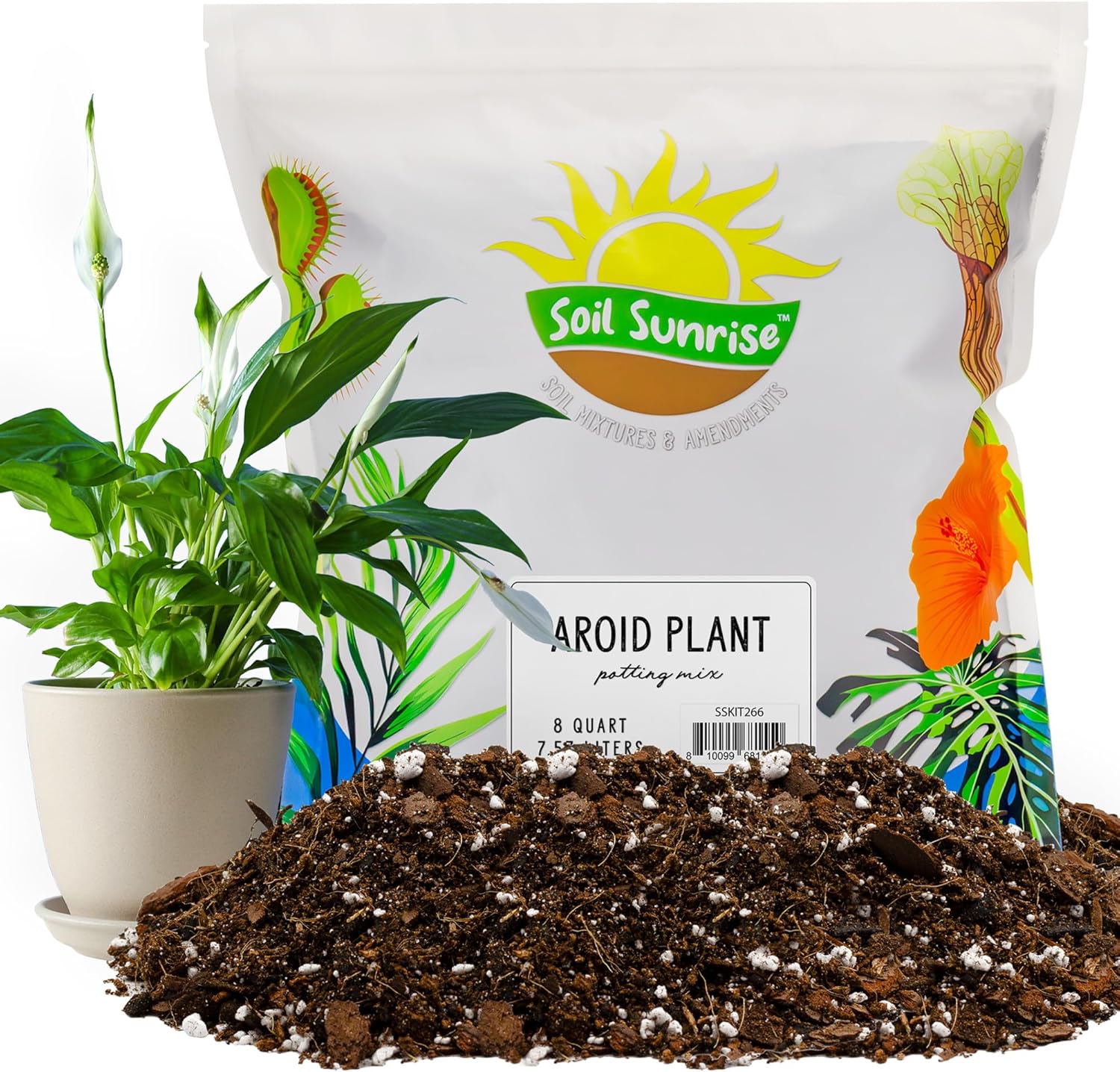
Soil Sunrise Aroid Potting Soil Mix (8 Quarts)
| Volume | 8 quarts |
|---|---|
| Ingredients | Coco coir, bark, perlite, worm casting, charcoal |
| Unit Count | 1 Count |
This 8-quart Soil Sunrise aroid mix is designed specifically for jungle-type houseplants like golden pothos and other Araceae. The blend of coco coir, pine bark, perlite, worm castings, and horticultural charcoal creates a light, chunky texture that promotes fast drainage while holding enough moisture for steady root growth. In practice it is useful for repotting store plants into a more breathable medium or refreshing the top layer of older pots. Notable features include organic amendments for nutrition, perlite and bark for aeration to reduce root rot risk, and charcoal to help with moisture regulation and odor control. The bag states it will fill a large 12-inch planter, so a single pack suits one or two typical pothos repots. Limitations are the small volume for multi-plant households and the absence of added slow-release fertilizer, so you will need to plan feedings after repotting for vigorous growth.
Best for: Balanced houseplant owners who want a ready-made, all-natural mix that mimics jungle soils for healthy pothos root development and easier repotting.
Less Ideal for: People who need large quantities for many plants or who want a potting mix with built-in slow-release fertilizer.
- Aroid-specific blend with coco coir, pine bark, perlite and charcoal for matching pothos root needs
- Includes worm castings to provide natural, gentle nutrients
- Light, chunky texture improves aeration and reduces chance of root rot
- Suitable for both young and mature plants and fits a 12-inch pot
- 8-quart bag is modest volume if you need to repot many plants
- No added fertilizer means you must supplement nutrients after repotting
Verdict: A purpose-made, all-natural aroid mix that gives golden pothos the drainage and airy texture they need for healthier roots and easier repotting.
Choosing the Right Soil Mix for Zz Plant: Key Factors to Consider
Drainage and Particle Size
ZZ plants need soil that sheds excess water quickly so rhizomes do not sit in saturated media. Larger particles like coarse perlite, pumice, or grit create flow channels that let water move through the pot instead of pooling. Too many fine particles will compact after repeated waterings, reducing pore space and oxygen availability.
When comparing mixes, look at the visible particle mix and ask whether the blend contains a significant portion of mineral grit or coarse aggregate. That mineral fraction determines how fast water exits the root zone and how well the soil re-aerates between waterings.
Moisture Retention Balance
Although ZZ plants tolerate drought, they still require some moisture between waterings to sustain leaf turgor and slow steady growth. Organic components such as coir or a small amount of peat hold water and slowly release it to the roots. The right blend keeps plants healthy for longer between drenchings without holding water long enough to cause rot.
Assess mixes for a measured organic fraction. Too little organic matter makes the soil dry out instantly; too much causes prolonged saturation. For most indoor pots a moderate share of moisture-holding organics paired with coarse mineral components works best.
Aeration and Root Oxygen
ZZ plant rhizomes need oxygen to remain healthy. Soil that maintains stable pore space allows roots to breathe and supports beneficial microbe activity. Aeration depends on component shapes and how they settle in the pot after watering. Angular particles like crushed pumice resist compaction better than rounded fine bark or degraded compost.
Consider how the mix will perform over time. A freshly airy blend that compacts within months will become problematic. Look for mixes formulated to keep structure in container environments and for components known to maintain porosity.
Nutrient Content and Fertility
ZZ plants are not heavy feeders, but a baseline of available nutrients helps steady growth without frequent fertilizing. Blends with a modest, balanced nutrient profile or that accept slow-release fertilizers allow you to provide consistent feeding. Avoid mixes overloaded with rich compost or high-nitrogen components that encourage lush top growth at the expense of root health.
When choosing a mix, think about how often you want to fertilize. A neutral, balanced soil makes nutrient scheduling more predictable and reduces the chance of salt build-up in indoor pots.
pH and Ionic Stability
Soil pH affects nutrient availability and microbe activity. ZZ plants prefer a slightly acidic to neutral range. Components such as coir tend to be near neutral, while some peats can be acidic. Mineral amendments also change cation exchange behavior and salt levels over time.
Choose mixes with stable pH and low soluble salt content, especially for indoor plants where flushing is infrequent. If you use tap water with higher mineral content, favor mixes that tolerate or buffer those inputs without rapid pH shifts.
Long-Term Stability and Repotting Frequency
Container mixes break down at different rates, affecting how often you repot. Components like bark, compost, and peat degrade faster than inorganic aggregates. For ZZ plants, long-term structure matters because compacted soil increases rot risk and reduces aeration.
Select a mix that balances longevity with the desired maintenance schedule. If you prefer low-maintenance care, choose blends with inert aggregates that keep their shape for years and schedule repotting based on root inspection rather than a fixed calendar.
Best Container Sizes and Drainage Practices
Container choice interacts with soil mix performance. Too-large pots hold a lot of moisture; too-small pots restrict root expansion and force more frequent watering. For ZZ plants, choose a pot that gives the root ball 1 to 2 inches of extra room to grow and ensures the soil profile can dry from the top down between waterings.
drainage holes are essential. Even a fast-draining mix will trap water in a pot without adequate exit points. If you use decorative outer containers, place the plant pot inside and remove it when the soil needs to dry or when you water to allow excess to escape.
- Use terracotta or other breathable pots if you want faster drying.
- Avoid oversized planters that create large wet soil volumes.
- Elevate pots with a grid or feet to keep drainage holes unobstructed.
Adjusting Mix for Low-Light Indoor Conditions
ZZ plants often live in low-light rooms where evaporation is slower and soil stays damp longer. In dim spots, lean toward mixes with slightly more coarse mineral content to speed drying and reduce the frequency of watering. You can also increase container ventilation by using pots with thin walls or placing them where air movement is better.
If you cannot change the light, water less often and test the soil moisture by finger or probe before watering. The right soil mix will give you a wider margin for error in low-light conditions.
- Add extra pumice or perlite for pots kept in shaded areas.
- Monitor moisture more closely in winter when indoors stay damper.
Mixing Your Own ZZ Plant Soil Blend
A DIY mix gives you control over drainage and water retention. A common starting ratio is roughly equal parts coarse mineral (pumice or grit), potting medium (coco coir or peat-based mix), and chunky organic matter (pine bark fines). Adjust the proportions based on pot size and indoor humidity.
When assembling your own blend, pre-wet peat or coir to ensure even water absorption and sieve out very fine dusty particles that can clog pores. Test the blend in a small pot and observe how it drains after a heavy watering before using it in larger specimens.
- Start with a 1:1:1 ratio and tweak for local conditions.
- Sterilize or source clean components to avoid introducing pests or weed seeds.
Watering Techniques That Complement the Soil
Matching your watering routine to the soil mix prevents problems. For fast-draining mixes, water thoroughly until excess runs from the drainage holes, then let the top inch or two dry before the next irrigation. For mixes with more organic content, water with moderation and check the lower root zone more carefully.
Avoid frequent light misting as a substitute for deeper waterings; shallow wetting encourages surface-rooting and does not penetrate to the rhizomes. Periodic deep waterings followed by adequate drying mimic natural wet-dry cycles that ZZ plants handle well.
- Use a moisture probe or finger test to gauge deeper moisture.
- Flush pots occasionally if you use fertilizer to prevent salt buildup.
Repotting and Refreshing Old Mix
Even the best mixes will change over time. Repot when you see compacted media, unusually slow drainage, or if the plant becomes root-bound. Removing the old top layer and replacing some of the soil can rejuvenate aeration without full repotting for moderately aged pots.
When repotting, take the opportunity to inspect rhizomes for firmness and signs of rot. Healthy ZZ rhizomes are firm and plump; soft, darkened tissue indicates past overwatering and may require trimming.
- Refresh the top third of the soil every 12 to 24 months if compaction is minor.
- Fully repot only when roots have filled the pot or soil has broken down extensively.
How We Chose the Best Soil Mix for Zz Plant
We looked for mixes that match the ZZ plant's preference for quick drainage and moderate moisture holding. Selection centered on measurable growing traits: drainage rate, aggregate structure and aeration, moisture retention between waterings, nutrient balance and slow-release feeding, and long-term stability in pots. Each mix was evaluated for how it performs in common container sizes and indoor light conditions and whether it reduces the risk of root rot while allowing the rhizomes to breathe. We excluded any mixes designed exclusively for succulents that lack sufficient organic matter, and blends formulated for heavy-feeding tropicals that stay too wet. We also filtered out mixes with unstable components known to compact quickly or break down into sludge. The final picks favor mixes with proven coarse components, consistent particle size, and a balance of peat or coir with mineral amendments that suit ZZ plant physiology.
FAQ
How often should I water a ZZ plant in a fast-draining mix?
It depends on light and pot size, but typically water when the top 1 to 2 inches of soil are dry. In bright indoor light you may water every 2 to 3 weeks; in low light frequencies will be lower. Always check soil moisture rather than following a strict schedule.
Can I use cactus or succulent mix for ZZ plants?
Cactus mixes can work if they include enough organic matter to hold some moisture. Purely mineral cactus mixes may dry too quickly in small pots. If you use a succulent mix, consider blending in a bit of coir or bark to improve water availability.
Is coir or peat better for a ZZ plant mix?
Coir and peat both hold moisture, but coir is more sustainable and tends to have a more neutral pH. Either works when balanced with coarse minerals. Choose based on availability and whether you prefer slightly faster drying (coir) or higher initial water hold (peat).
What additives help prevent root rot in indoor pots?
Adding coarse pumice, perlite, or grit improves drainage and aeration, reducing rot risk. Using a well-draining pot and ensuring drainage holes are clear are equally important. Avoid overwatering and allow soil to dry between thorough waterings.
Should I fertilize a ZZ plant in a custom soil mix?
ZZ plants need only light feeding. Use a balanced, diluted fertilizer during the growing season every few months. If your mix contains slow-release nutrients, reduce supplemental feeding to avoid salt buildup.
How can I tell if my soil mix has compacted too much?
Signs include slow drainage, water pooling on the surface, or the plant showing stress despite regular watering. Gently remove the plant to inspect the root ball; compacted soil will feel dense and clumped rather than crumbly and porous.
Final Verdict
Choose a soil mix that prioritizes drainage and stable aeration while providing enough organic matter to hold moisture between waterings. Balance is the key: mixes with coarse mineral fractions plus a modest organic component reduce rot risk and support steady growth. Consider pot size, light conditions, and how often you want to repot when selecting or blending a mix. With the right soil approach, you can give a ZZ plant a forgiving growing environment that withstands occasional missed waterings and keeps the rhizomes healthy.
