

Note: This article contains affiliate links. If you click on these links and make a purchase, I may earn a small commission at no extra cost to you. This helps support my research and content. Read my full affiliate disclosure here.
When you plant spring or summer bulbs, the right feeding strategy can determine whether you get full, long-lasting blooms or a few weak stems. Bulbs need a careful balance of nutrients at planting and during growth without harsh salts or fast-release chemicals that can scorch roots. This guide shortlists seven top organic fertilizer options suited for bulbs and their planting situations, from freshly amended beds to established borders and containers. We evaluated products on nutrient profile, soil-building benefits, and application ease so you can pick a feed that fits how you garden. Read on to see the kinds of organic feeds that work best for bulbs and why those criteria matter.
Top Picks at a Glance
| Best Overall The best all-around choice for most situations | Jobe's Organics Granular Bulb Fertilizer, 4 lb | 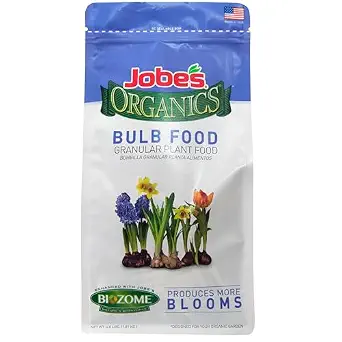 |
| Best Quality Built to a higher standard if you want something more solid | Dr. Earth 707P Organic Bud and Bloom Fertilizer, 4 lb |  |
| Best Value The sweet spot between price and what you get | True Organic All Purpose Plant Food, 4 lb |  |
| Best Budget The cheapest option that still gets the job done reliably | Whitney Farms Organic Bone Meal 6-8-0, 3 lb. |  |
| Highest Rated A top-rated pick with lots of positive feedback | Espoma Bulb-Tone Organic Bulb Food, 3-5-3, 4 lb (4-pack) |  |
| Most Popular A crowd favorite that many people choose with confidence | Burpee Bone Meal Fertilizer, 3 lb |  |
| Best Seller A high-volume bestseller chosen again and again | Jobe's Organics Bone Meal Fertilizer Spikes, 50 Count |  |
Jobe's Organics Granular Bulb Fertilizer, 4 lb

| Item Form | Granules |
|---|---|
| Specific Uses For Product | Plant Growth, Root Development, Seed Development, Soil Conditioning |
| Target Species | bulbs, flowers |
| Mixing Ratio | 3-5-4 |
Jobe's Organics Granular Bulb Fertilizer is an OMRI-listed, pet- and kid-friendly granular formula designed to feed tulips and other spring bulbs through bloom. It uses a 3-5-4 NPK ratio aimed at supporting flowering and root development and is applied every 3 to 5 weeks during the growing season. In practice the granules are easy to measure and sprinkle into bulb beds or mixed into the planting hole, and because it is organic it reduces the risk of burning delicate bulbs when used as directed. The product is versatile for both new plantings and established beds and is intended to minimize runoff and mess compared with liquids. Limitations to know are that granular organics release nutrients more slowly than soluble feeds, so you should expect gradual results rather than an immediate boost, and regular reapplication is required during bloom. For growers seeking steady, low-risk feeding tailored to bulb flowering, this delivers practical, reliable nutrition.
Best for: Gardeners who prioritize steady, low-risk feeding for tulips and other bulb flowers and want an organic product that protects delicate bulbs while supporting bloom production.
Less Ideal for: Growers who need an immediate, dramatic bloom response or who prefer quick-release, water-soluble feeds for rapid correction of nutrient deficiencies.
- OMRI listed organic formula suitable for certified organic production
- 3-5-4 NPK ratio formulated to promote blooms and root development
- Granular form is easy to measure and apply to beds or planting holes
- Labeled safe for use around children and pets when used as directed
- Slower nutrient release than water-soluble fertilizers, so effects are gradual
- Requires repeated applications every 3–5 weeks during the season for best results
Verdict: Choose this product if you want a reliable organic granular fertilizer that steadily promotes bulbs' blooms and root health without risking burn.
Dr. Earth 707P Organic Bud and Bloom Fertilizer, 4 lb

| Item Form | Granules |
|---|---|
| Specific Uses For Product | Plant Growth |
| Coverage | Medium |
| Target Species | Bulbs, tubers, corms and rhizomes |
| Mixing Ratio | 3-9-4 |
Dr. Earth 707P is an all-natural granular fertilizer designed to supply steady phosphorus-heavy nutrition from fish bone meal, alfalfa and feather meals plus rock phosphate and potassium sulfate. It is applied to the soil around plants and watered in, where nutrients release gradually to support sustained flowering and root development for several months. The formula includes multiple mycorrhizal strains to improve nutrient uptake and drought tolerance, and the product labels itself pet- and people-safe and free of GMOs and chicken manure. For rose growers this fertilizer offers dependable bloom and root support without synthetic chemicals, making it suitable for organic beds and mixed borders. Limitations are that the packaging is relatively small for larger rose gardens and the product contains phosphorus, which may be restricted by local regulations and can contribute to runoff if overapplied. Follow the stated application rates and local guidance to avoid environmental issues.
Best for: Gardeners who prefer proven organic inputs and want a steady, flower-focused feed for roses without synthetic chemicals; suited to conscientious home growers who follow label directions.
Less Ideal for: Those managing very large rose plantings who need bulk fertilizer or gardeners restricted by local rules on phosphorus application.
- 100% organic ingredients with no GMOs or chicken manure
- Contains a phosphorus-rich 3-9-4 formula aimed at improving bloom and root development
- Includes ecto and endo mycorrhizae to enhance nutrient uptake and drought tolerance
- Granular form releases nutrients over several months for steady feeding
- Small 4 lb bag may require multiple purchases for larger rose beds
- Contains phosphorus which may be regulated in some areas due to runoff concerns
Verdict: A reliable organic granular fertilizer that supports stronger blooms and root health for rose growers who prioritize natural, slow-release nutrition.
True Organic All Purpose Plant Food, 4 lb

| Item Form | Granules |
|---|---|
| Unit Count | 64 Ounce |
| Coverage | Full |
| Specific Uses For Product | Agriculture, Gardening |
| Target Species | Plants |
True Organic All Purpose Plant Food is a granular, multi-purpose organic fertilizer designed to boost plant growth and soil health across a range of garden plants. It supplies a balanced nutrient mix (including 5% N with 3.75% slow-release nitrogen, 4% phosphate, and 5% potash) and contains organic inputs such as seabird guano, fish bone meal, and shell meals that contribute both nutrients and organic matter. Typical use is monthly application during the growing season for in-ground beds and containers; the 4 lb bag is sized to cover roughly 87 sq. ft. Notable features are the slow-release nitrogen fraction for steadier feeding and a blend aimed at improving microbial activity and soil structure. Practically, it will support bulb development by providing steady nitrogen and phosphorus for root and flower formation while adding organics to the soil. Limitations are that analysis is relatively low compared with synthetic feeds so results are gradual, and the product is not formulated specifically for high-phosphorus bloom-boosting applications if you need a targeted bulb bloom booster.
Best for: Gardeners who prioritize soil health and steady, natural feeding for mixed beds and containers and who want an organic, easy-to-apply all-purpose fertilizer for routine monthly use.
Less Ideal for: Growers seeking a fast-acting, high-analysis bloom booster for forcing large, immediate bulb blooms or those who need a highly concentrated synthetic feed.
- Balanced organic N-P-K with a slow-release nitrogen fraction for steadier feeding
- Contains diverse natural inputs (seabird guano, fish bone meal, shell meals) that add both nutrients and organic matter
- Suitable for both in-ground and container plantings with monthly application guidance
- Formulation promotes soil microbial activity and long-term soil health
- Lower nutrient percentages than concentrated synthetics so visible effects take longer
- Not a targeted bulb bloom formula with extra phosphorus for immediate flowering response
Verdict: A dependable organic all-purpose fertilizer that builds soil health while providing steady nutrition for bulbs and mixed garden plantings.
Whitney Farms Organic Bone Meal 6-8-0, 3 lb.

| Item Form | Granules |
|---|---|
| Specific Uses For Product | Plant Growth, Root Development, Soil Conditioning |
| Coverage | Medium |
| Item Weight | 3 pounds |
This 3 lb. bag of Whitney Farms Organic Bone Meal is a simple, ready-to-use phosphorus supplement you spread into planting holes or work into the top 1 to 3 inches of soil at planting time. It is OMRI listed and formulated as a 6-8-0 NPK granule, so it supplies phosphorus and calcium that encourage stronger root systems and better flower set in bulbs such as tulips. Typical use is one application in spring, or spring and fall for bulbs, applying about 1 cup per 30 sq. ft. or 1 tablespoon per 2 sq. ft. The granular form is easy to measure and mixes into backfill or around established plants, and the slow-release nature reduces the need for frequent reapplications. Important limitations are that bone meal works slowly and depends on soil biology to release nutrients, so it is not a fast corrective for severely deficient soils; also it should be kept away from pets and stored dry. For gardeners looking for an organic, targeted phosphorus boost for tulip planting, this is a practical, no-frills option.
Best for: Gardeners planting tulip bulbs who want an inexpensive, organic phosphorus boost applied at planting time and prefer a simple, measured granular amendment.
Less Ideal for: People who need a rapid corrective fertilizer for severely phosphorus-deficient soil or who avoid animal-based amendments should consider alternative products.
- OMRI listed organic bone meal suitable for organic gardens
- 6-8-0 NPK formulation supplies phosphorus and calcium for root and flower development
- Granular form is easy to measure and work into planting holes or soil
- Recommended application rates and seasonal timing provided for bulbs
- Slow-release action requires soil microbes to convert nutrients so results are not immediate
- Contains animal-derived material so it must be stored away from pets and some gardeners may avoid it
Verdict: A budget-friendly, OMRI-listed bone meal that provides a straightforward, slow-release phosphorus boost ideal for improving tulip bulb root and flower development at planting time.
Espoma Bulb-Tone Organic Bulb Food, 3-5-3, 4 lb (4-pack)

| Item Form | Granules |
|---|---|
| Specific Uses For Product | Bulbs |
| Coverage | Organic |
| Mixing Ratio | 3:5:3 |
Espoma Bulb-Tone is a ready-to-use granular fertilizer made specifically for bulb crops like tulips, daffodils, crocus, hyacinths, gladioli and lilies. It is formulated as a 3-5-3 analysis with added calcium, humates and beneficial microbes, and is intended to be placed in the planting hole for new bulbs or sprinkled on the soil around established bulbs then watered in. The product’s organic certification and absence of fillers make it a good fit for gardeners who prefer natural inputs, and the granular form is easy to spread by hand or with a small spreader. Practical benefits include targeted nutrition when bulbs need bloom and root development and the convenience of a ready-mix that does not require dilution. Limitations are that the nutrient numbers are fixed so it is not for growers who need custom NPK adjustments and the 4-pack format may be more than a small-plot gardener needs at once. Follow label directions carefully to avoid overapplication and store unused granules dry.
Best for: Gardeners who prioritize consistent, organic nutrition for spring and fall bulbs and want a simple, ready-to-use product they can rely on season after season.
Less Ideal for: Growers who need precise, adjustable nutrient formulas or those managing very small container displays who prefer single-use packets.
- Formulated specifically for bulbs with a 3-5-3 nutrient ratio plus 6% calcium
- Organic and contains humates and beneficial microbes to support soil biology
- Ready-to-use granular form requires no mixing and is easy to apply by hand
- Can be used at planting and for post-bloom feeding to support blooms and root health
- Fixed NPK ratio may not suit gardeners who need a different nutrient balance
- Four-pack quantity may be excessive for very small gardens or single-season use
Verdict: A reliable, ready-to-use organic bulb fertilizer that delivers targeted nutrition and soil-friendly biology to support strong blooms and root development.
Burpee Bone Meal Fertilizer, 3 lb

| Item Form | Powder |
|---|---|
| Specific Uses For Product | Plant Growth, Root Development |
| Coverage | 240 Sqaure Feet |
| Target Species | tomatoes, peppers, and bulbs |
Burpee Bone Meal is a slow-release granular fertilizer designed to boost early root development and flowering in root and bulb crops. Gardeners typically work it into planting holes for bulbs or mix it into soil and potting media when starting seeds or transplanting vegetables like carrots, beets, and onions. The product is OMRI listed for organic gardening and provides phosphorus and calcium that support stronger root systems and better early-season growth. Its fine granular texture makes it easy to apply evenly, and because it breaks down slowly it feeds plants over the season without burning them. Practical benefits include targeted support for root vegetables and an easy application method for beds and containers. Limitations are that it supplies mainly phosphorus and calcium rather than a balanced NPK profile, so it is best used alongside a nitrogen source if foliage development is needed, and results are gradual rather than immediate because of the slow-release nature.
Best for: Gardeners focused on improving root development and bulb planting who prefer organic inputs and want a simple amendment to add at planting or during bed preparation.
Less Ideal for: Growers seeking an all-in-one balanced fertilizer for both foliage and root development or those who need fast-acting, soluble nutrients for immediate correction.
- OMRI listed for organic gardening, suitable for certified organic beds
- Fine granular form that is easy to spread and incorporate
- Provides phosphorus and calcium to encourage strong root and bulb development
- Slow-release action reduces risk of burning plants and supplies season-long support
- Not a complete fertilizer profile so additional nitrogen may be needed for leafy growth
Verdict: A reliable organic bone meal to strengthen roots and jump-start bulbs and root vegetables when added at planting.
Jobe's Organics Bone Meal Fertilizer Spikes, 50 Count

| Unit Count | 50 Count |
|---|---|
| Item Form | Sticks |
| Application Method | Spikes |
| Mixing Ratio | 2-14-0 |
Jobe's Organics Bone Meal Fertilizer Spikes are pre-measured sticks of natural bone meal designed to feed bulbs, roses, tomatoes and other flowering plants by releasing phosphorus and calcium at the root zone. You push the spikes into potting soil or garden beds around bulbs and plants every eight weeks during the growing season; because each spike is metered, application is neat and simple with minimal handling or runoff. The product is OMRI-listed for organic use and formulated with a 2-14-0 NPK, so it targets bloom and root development rather than leafy growth. Practical benefits include reduced risk of overfertilizing, no mixing or measuring, and a low-mess option for small beds or containers. Limitations are that spikes release nutrients slowly so they are not a quick fix for deficiency and the fixed nutrient ratio cannot be adjusted for other specific needs; you also need enough spikes to cover large beds. For gardeners prioritizing predictable, low-risk feeding for bulbs and flowers, these spikes make an easy, organic choice.
Best for: Gardeners who want a low-risk, easy-to-use organic fertilizer for bulbs and flowering plants and prefer simple, pre-measured applications over liquid or granular feeding.
Less Ideal for: People needing a fast-acting corrective fertilizer or those managing large beds who prefer adjustable nutrient programs and bulk application methods.
- Pre-measured spikes eliminate measuring and reduce mess
- Made from natural bone meal and OMRI listed for organic gardening
- High phosphorus formulation (2-14-0) tailored for blooms and root development
- Simple application every eight weeks with minimal runoff risk
- Slow-release delivery not suitable for rapid correction of nutrient deficiencies
- Fixed NPK ratio limits flexibility for different plant needs
Verdict: An easy, low-mess organic bone meal option that reliably feeds bulbs and flowers at the roots for gardeners seeking predictable, risk-averse feeding.
Choosing the Right Organic Fertilizer for Bulbs: Key Factors to Consider
Nutrient Ratio and Phosphorus Content
Bulbs rely on phosphorus to develop strong flower spikes and well-formed blooms. When choosing an organic fertilizer for bulbs, look for a product with a clear phosphorus content and a balanced N-P-K ratio that favors bloom development over excessive leafy growth.
Too much nitrogen early on can produce lush foliage at the expense of flowers, while too little phosphorus can limit bud set. Organic sources often release phosphorus more slowly than synthetic feeds, so consider whether you need an immediate planting boost or a sustained supply through the growing season.
Release Rate and Timing
How quickly nutrients become available affects bulb growth and risk of root damage. Slow-release organic fertilizers feed over weeks to months, matching the natural development cycle of many bulbs and reducing the chance of nutrient burn.
If you are planting bulbs in the fall for spring bloom, a slower release is usually preferable. For late-season feeding to encourage next year's performance, choose a formula that remains active into the dormant period without causing a late flush of green growth that can weaken the bulb.
Soil Structure and Microbial Support
Bulbs perform best in well-structured, biologically active soil. Fertilizers that add organic matter, humic substances, or beneficial microbes can improve drainage, aeration, and nutrient cycling around bulb roots.
Improved soil structure also helps bulbs resist rot and encourages deeper root growth. When evaluating organic options, consider whether the product contributes carbon-rich material or inoculants that support a healthy soil ecosystem rather than merely supplying soluble nutrients.
Salt Content and Root Safety
Bulb roots are vulnerable to high soluble salt levels, which can desiccate root tissue and impair nutrient uptake. Organic fertilizers tend to have lower salt indices, but composition varies widely.
Check for low-salt formulations and avoid concentrated feeds that require direct contact with bulbs at planting. Products designed for top-dressing or worked into surrounding soil are often safer. Prioritizing low burn risk preserves stored energy in the bulb and supports reliable spring or summer flowering.
Application Method and Practicality
Consider how the fertilizer fits into your planting and maintenance routine. Some organic feeds are granular and easy to incorporate at planting or sprinkle as a top-dress, while others are dry powders, compost-based, or liquid concentrates that require dilution.
If you grow bulbs in containers or tight beds, choose products formulated for those situations to avoid overapplication. Ease of measuring, applying, and reapplying influences whether you will follow recommended schedules and get consistent results.
Environmental Impact and Runoff Risk
Organic fertilizers vary in their potential to wash away or contribute to nutrient runoff. Slow-release and soil-improving products generally pose less immediate runoff risk than soluble feeds.
For bulbs planted near water features, slopes, or in heavy rainfall areas, prioritize options that bind nutrients into soil organic matter and minimize soluble nitrogen. Choosing lower-impact inputs helps protect surrounding plants and local waterways while supporting long-term soil fertility.
Timing Your Feeding Throughout the Bulb Cycle
Different stages of a bulb's life call for different feeding approaches. At planting, incorporate a modest amount of a steady-release organic fertilizer around the planting hole or mix it into the backfill to supply phosphorus for root and bud formation. After shoots emerge, a light top-dress can support foliage growth while avoiding a heavy early nitrogen push.
Post-bloom care is also critical. After flowers fade, allow foliage to ripen naturally while applying a low-nitrogen, organic form of food that encourages the bulb to replenish stores. Avoid late-season high-nitrogen feeds that may trigger new growth before dormancy.
- Planting: use a measured granular or powder feed worked into surrounding soil.
- Growing season: light top-dress or dilute liquid feed after emergence.
- After bloom: feed to aid storage, then reduce inputs as foliage yellows.
Feeding Bulbs in Containers Vs In-Ground
Containers dry and deplete nutrients faster than in-ground beds, so container-grown bulbs typically need more frequent, gentle feeding. Choose liquid organics or soluble organic teas for containers to avoid salt buildup and allow even distribution in the limited root zone.
In-ground bulbs benefit more from soil-improving fertilizers that boost organic matter and microbial life. A single well-timed application at planting plus a seasonal top-dress will often suffice in fertile beds.
- Containers: prefer dilute liquid or soluble organic feeds on a regular schedule.
- Beds: favor granular soil amendments and compost-style fertilizers for long-term improvement.
Using Compost and Organic Amendments with Fertilizers
Compost is a cornerstone of bulb culture because it improves structure, supplies a broad spectrum of micronutrients, and supports beneficial microbes. When combined with an organic fertilizer, compost reduces the chance of localized nutrient spikes and helps stabilize release rates.
Apply a thin layer of well-rotted compost at planting or as a fall top-dress. If you add a separate fertilizer, keep quantities moderate to avoid excessive nutrient concentration in the planting hole.
- Use well-rotted compost to avoid introducing diseases or tying up nitrogen.
- Pair compost with a balanced organic fertilizer if soil test shows specific deficiencies.
Signs Your Bulbs Need Different Feeding
Watch foliage and bloom quality for clues. Pale, stunted leaves often point to nitrogen or general nutrient deficiency, while poor or few blooms can indicate low phosphorus. However, an overly lush canopy with few flowers usually signals too much nitrogen relative to phosphorus.
Soil testing can reveal pH and nutrient imbalances that explain persistent problems. Adjust feeding based on observed symptoms rather than applying more of the same product repeatedly.
- Pale leaves: consider a gentle nitrogen boost or check for compacted roots.
- Weak blooms: look at phosphorus levels and timing of feed applications.
- Healthy foliage but few blooms: reduce nitrogen and emphasize bloom-supporting nutrients.
Safe Application Practices and Storage
Measure carefully and follow recommended rates for bulbs. Overapplication is a common mistake that increases burn risk and can disturb soil biology. When applying near bulbs, keep granules away from direct contact with the basal plate and avoid piling material directly on top of the bulb.
Store organic fertilizers in a cool, dry place with lids sealed to maintain potency and prevent moisture-driven clumping. Keep products away from children and pets and label containers with application instructions.
- Avoid direct contact between concentrated granules and bulb tissue.
- Rake or mix granular feeds into surrounding soil rather than mounding over bulbs.
- Keep products sealed and dry to preserve effectiveness.
How We Chose the Best Organic Fertilizer for Bulbs
We focused on attributes that directly affect bulb health and flowering. Primary evaluation criteria included nutrient balance and release timing, to ensure the feed supplies phosphorus for blooms and steady nitrogen for foliage without excess early salts. Soil improvement potential was assessed, favoring fertilizers that add organic matter, beneficial microbes, or mycorrhizal support to strengthen root systems. Ease of application was considered for common bulb workflows like planting, top-dressing, and seasonal maintenance. Safety around tender bulb tissues and low burn risk were important, especially for bulbs planted shallowly. Environmental impact weighed into selections, preferring inputs with minimal synthetic additives and low runoff potential. Exclusions: any product lacking clear organic inputs or with unverified nutrient claims was removed, as were high-salt mineral blends and formulations not suited to bulbs. The final list reflects options that balance bloom support with soil health, simple garden use, and predictable release patterns.
FAQ
When is the best time to apply organic fertilizer for bulbs?
Apply a measured, slow-release organic fertilizer at planting and again as a light top-dress after shoots emerge. A post-bloom application that supports bulb storage is often beneficial, but avoid late-season high-nitrogen feeds.
Can I use compost instead of an organic fertilizer for bulbs?
Compost improves soil structure and provides many nutrients, but it may not supply a concentrated phosphorus boost. Combining compost with a targeted organic fertilizer is a common approach when soil tests show specific deficiencies.
Are liquid organic feeds safe for container-grown bulbs?
Yes, dilute liquid organics are often ideal for containers because they distribute nutrients evenly and reduce buildup. Use lighter concentrations and feed more frequently compared with in-ground bulbs.
How do I avoid burning bulb roots with organic feeds?
Choose low-salt organic options and avoid placing concentrated granules in direct contact with the bulb base. Apply fertilizers to surrounding soil and water in gently to disperse nutrients.
Do bulbs need different feeds during dormancy?
Bulbs generally need less active feeding during full dormancy. Focus on light, slow-release inputs in fall to support overwintering reserves rather than high-nitrogen feeds that could trigger tender new growth.
Will organic fertilizers change soil pH around bulbs?
Most organic fertilizers have minimal short-term effect on pH, but long-term additions of certain materials can slowly alter soil chemistry. If pH concerns arise, perform a soil test and amend accordingly.
Final Verdict
Choose an organic fertilizer for bulbs that prioritizes bloom-supporting phosphorus, gentle slow-release nutrients, and contributions to soil health. Match the product to your planting situation: liquids or soluble feeds for containers and granular, soil-building formulas for in-ground beds. Pay attention to release timing and low burn risk so bulbs can store energy for the next season. With the right balance of feeding and good cultural care, you will get more reliable flowering and healthier bulb beds.
