

Note: This article contains affiliate links. If you click on these links and make a purchase, I may earn a small commission at no extra cost to you. This helps support my research and content. Read my full affiliate disclosure here.
A well-chosen trellis transforms jasmine from a sprawling shrub into a framed, fragrant feature. The right trellis provides safe attachment points, resists weather and rot, and lets you train shoots to maximize blooms and scent. This guide covers six shortlisted trellises for jasmine suited to gardens, patios, and small yards, with practical notes on durability, attachment options, and ease of planting around the base. We evaluated each option for structural strength and how it supports jasmine growth, along with material longevity and installation simplicity. Read on to see which trellis styles fit your planting situation and maintenance preferences.
Top Picks at a Glance
| Best Overall The best all-around choice for most situations | LeJoy Garden 6.3 ft Metal Obelisk Trellis |  |
| Best Quality Built to a higher standard if you want something more solid | Evergreen Garden 5 ft Metal Obelisk Trellis (Antique Copper) |  |
| Best Value The sweet spot between price and what you get | LZRS 71 x 40 in Rustic Iron Garden Trellis (2-Pack) |  |
| Highest Rated A top-rated pick with lots of positive feedback | Gardener's Supply Company 7 ft Garden Obelisk Trellis, Powder-Coated Steel |  |
| Most Popular A crowd favorite that many people choose with confidence | Adorox Metal Garden Arch Trellis, Powder-Coated Black |  |
| Best Seller A high-volume bestseller chosen again and again | LANDGARDEN Expandable Willow Garden Trellis Panel |  |
LeJoy Garden 6.3 ft Metal Obelisk Trellis

| Material Type | Metal |
|---|---|
| Finish Type | Epoxy Coated |
| Item Highlight | Upgraded 16mm Thick Steel Tubes |
| Size | Large |
This LeJoy Garden obelisk is a straightforward, performance-focused plant support built from metal tubing with an epoxy finish. At 6.3 feet tall it gives vines, roses, clematis and even indeterminate tomatoes room to climb vertically, and the round, four-stake base design helps keep the frame stable once plants begin to weigh it down. Assembly is simple: tubes arrive pre-drilled which speeds setup, and the epoxy coating gives basic weather resistance against rust. The 16 mm thick tubes and nearly 5 lb weight make it heavier and more rigid than many lightweight decorative trellises, so it stays put in garden beds and large pots. Expect some sharp edges during assembly so wear gloves, and note that while the finish resists weathering it is not stainless steel so long-term coastal exposure may still cause corrosion. The trellis works best as a structural support rather than a decorative instant topiary, and it is easy to decorate with lights or garland for events.
Best for: Gardeners who prioritize durable, functional supports for heavy or prolific climbers and want a tall, no-nonsense frame that stays upright in beds and large containers.
Less Ideal for: Buyers seeking a lightweight decorative piece for small indoor pots or those who need stainless steel corrosion resistance for coastal locations should look elsewhere.
- Tall 6.3 ft height provides ample vertical space for large climbers and indeterminate tomatoes
- Thicker 16 mm metal tubing and 4.9 lb mass offer greater rigidity and stability than flimsy wire trellises
- Epoxy coating adds basic rust resistance for outdoor use
- Pre-drilled tubes simplify and speed assembly
- Not stainless steel so may eventually corrode in very wet or salty environments
- Sharp edges reported during assembly require careful handling
Verdict: Choose this obelisk when you need a tall, heavier-duty metal trellis that keeps vigorous climbers and tomato vines supported season after season.
Evergreen Garden 5 ft Metal Obelisk Trellis (Antique Copper)

| Material Type | Metal, Stainless Steel, Steel |
|---|---|
| Finish Type | Powder Coated |
| Item Type Name | Obelisk |
| Size | 5 ft |
This Evergreen Garden 5 ft obelisk trellis provides a tall, decorative support for jasmine and other climbing plants. It assembles quickly with included stainless steel hardware and powder-coated steel components that resist rust for season-long outdoor use. The round tower shape and floral-pattern support bands give vines multiple anchor points so plants can climb evenly and develop fuller coverage. At five feet tall it works well in pots, along borders, or as a focal upright in small beds where jasmine needs vertical structure without a permanent framework. Expect straightforward single-person assembly and a lightweight but stable footprint that is easy to reposition for seasonal planting. It is not engineered as a heavy-duty arbor for very large woody vines, so very vigorous or mature jasmine may eventually need additional anchoring or a taller permanent support. For most garden and container jasmine varieties this trellis balances aesthetics and functional plant support effectively.
Best for: Gardeners who want a performance-minded, rust-resistant vertical support that combines decorative style with reliable plant training for jasmine in containers or small beds.
Less Ideal for: Those needing a permanent, heavy-duty arbor for large, established woody climbers or for supporting very heavy fruit loads should consider a sturdier, larger structure.
- Powder-coated steel with stainless hardware for rust resistance in outdoor conditions
- Five-foot height gives good vertical support for most jasmine varieties and other flowering climbers
- Decorative floral-pattern bands provide multiple attachment points for even vine coverage
- Lightweight design makes it easy to move and place in containers or garden beds
- Not intended as a heavy-duty support for very large or mature woody vines
- Narrow base footprint may require staking in very windy sites
Verdict: A rust-resistant, decorative 5 ft obelisk that gives jasmine dependable vertical support and easy installation for container and small-bed planting.
LZRS 71 x 40 in Rustic Iron Garden Trellis (2-Pack)

| Material Type | Iron |
|---|---|
| Finish Type | Powder Coated |
| Shape | Arch |
| Number of Items | 2 |
This LZRS 2-pack iron trellis provides tall, sturdy support for climbing plants and is aimed at gardeners who need reliable structure for heavy vines. Each arched panel is made from thickened iron wire with a black powder-coat intended to resist rust and weathering, and the included ground stakes let you install the panels directly in soil or a large planter. The adjustable hook connectors let you join the two panels at various angles, so you can make a straight screen, a corner accent, or a freestanding display. The wire lattice gives tendrils plenty of purchase and promotes vertical growth while freeing up ground space, which is useful for training roses, clematis, tomatoes, cucumbers, and vining grapes. Assembly is straightforward with a few screws and the panels are lightweight enough to position by one person yet rigid once staked. Expect to add extra anchoring in very exposed, windy sites and to use two panels side-by-side for maximum reinforcement when supporting very heavy, fruit-bearing vines.
Best for: Gardeners who prioritize performance and need durable vertical support for heavy-climbing ornamentals or vegetable vines, and who plan to train plants into an organized living screen or arch.
Less Ideal for: People seeking a lightweight decorative trellis for small houseplants or those needing a permanent, load-bearing arbor for very large mature vines.
- Heavy-duty iron construction with thicker wires for better load-bearing capacity
- Powder-coated finish designed to resist rust and outdoor weathering
- Adjustable hook connectors allow flexible layout and corner configurations
- Includes ground stakes for direct-in-soil or planter installation for improved stability
- Wire lattice encourages vertical growth and gives tendrils good anchoring points
- May need additional anchoring or paired installation in very windy or exposed locations
- Panels are tall but not a full structural frame for extremely heavy or mature grapevines
Verdict: Buy this set if you need a weather-resistant, heavy-duty trellis that reliably supports and trains robust climbing plants for vertical gardening.
Gardener's Supply Company 7 ft Garden Obelisk Trellis, Powder-Coated Steel

| Material Type | powder-coated steel |
|---|---|
| Finish Type | Powder Coated |
| Shape | Semicircular |
| Size | 7 Foot |
This 7-foot garden obelisk is a simple, performance-focused freestanding trellis for training climbers such as clematis, morning glories, sweet peas, and climbing roses. Built from powder-coated steel, the semicircular frame resists weathering and holds upright without stakes when placed over plants or in a flowerbed. The design stacks together for tool-free assembly and can be taken apart flat for winter storage, which makes it easy to move and reuse season after season. In practice it offers immediate vertical structure to boost blooms and improve air circulation through the canopy, and its narrow footprint works well where ground space is limited. The main limitations are its single-piece shape and moderate diameter, which means very heavy vines or large shrub-like climbers will need additional anchoring or multiple supports to prevent leaning. It is decorative enough to function as a garden focal point even before plants fill in, and it doubles as a frame for string lights or holiday décor.
Best for: Gardeners who prioritize reliable, long-lasting supports to maximize bloom display and plant health in small to medium beds, and who want a no-fuss solution that assembles and stores easily.
Less Ideal for: People growing very heavy vines or establishing large climbing shrub forms that require broad or highly adjustable support systems.
- Tall 7-foot height provides strong vertical support for flowering climbers and vines
- Powder-coated steel construction resists weathering for season-to-season use
- Tool-free stackable assembly and flat disassembly for easy setup and storage
- Narrow footprint fits small beds or patios without taking much ground space
- Single freestanding frame may need extra anchoring for very heavy or dense climbers
- Not adjustable in width or shape, limiting custom configurations for larger plantings
Verdict: Choose this sturdy, no-tool 7-foot steel obelisk when you want a durable vertical support that quickly boosts blooms and fits into small garden spaces.
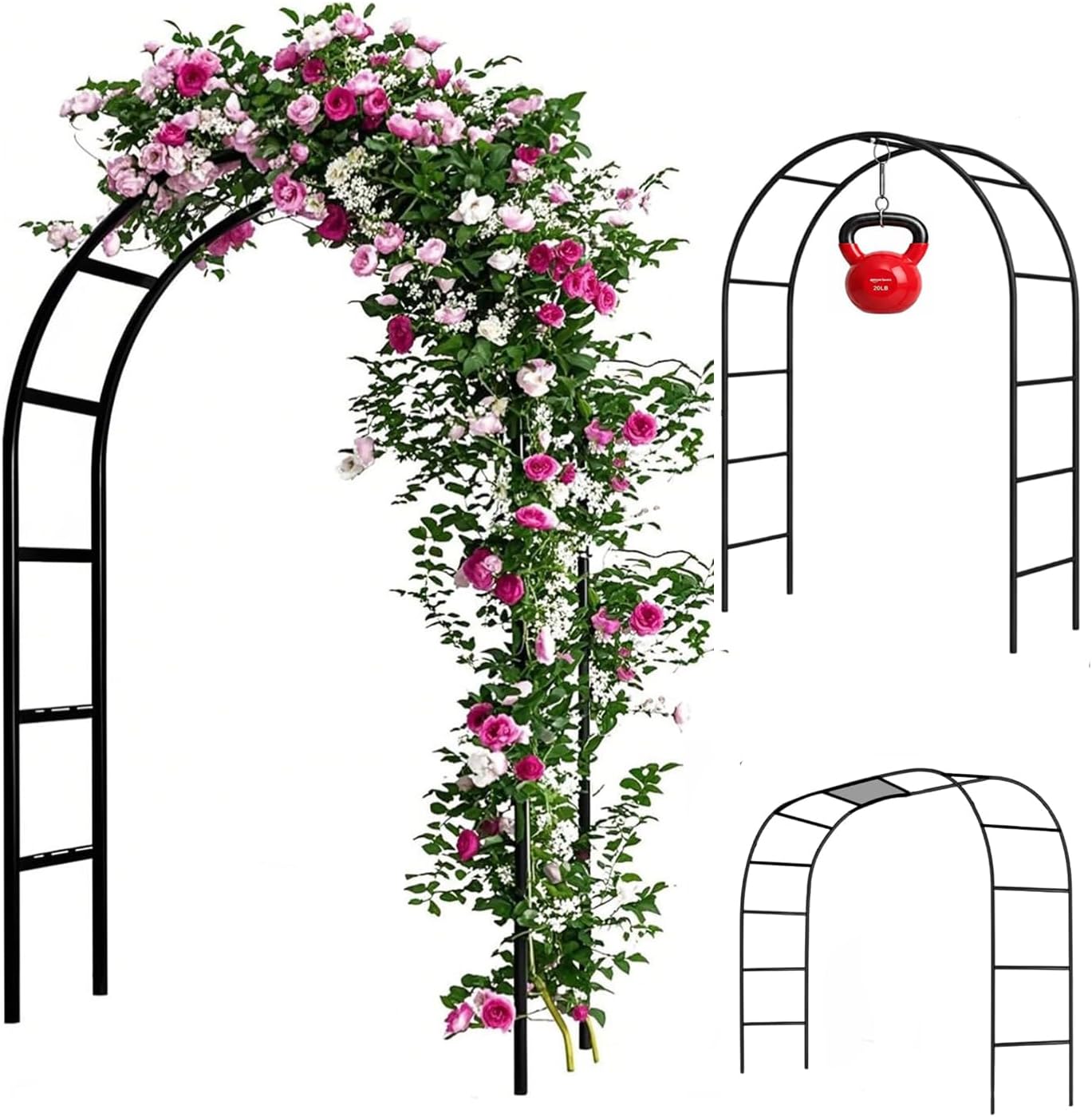
Adorox Metal Garden Arch Trellis, Powder-Coated Black
| Material Type | Metal |
|---|---|
| Finish Type | Powder Coated |
| Shape | Single Arch |
| Size | Standard |
This Adorox garden arch is a straightforward metal arbor that gives climbing roses, clematis, vines, or seasonal decorations a neat vertical framework. It arrives as sectional metal pieces with a powder-coated finish and assembles in simple steps to create a single arched entrance or focal point for a walkway, garden bed, or event backdrop. The open-frame design lets plants weave through the bars and provides height without blocking sightlines, while the powder coating helps resist rust in typical outdoor conditions. Because it is relatively lightweight and sectional, it is easy for two people to position and plant around, and it is also simple to dress with string lights or fabric for celebrations. Expect to secure it into the ground or use anchors before loading with heavy mature vines, since the slim metal sections will perform best when planted with lighter to moderate climbers rather than very heavy, established growth. Assembly is convenient but may require basic tools and a second person to steady the arch while tightening connections.
Best for: Buyers who want an attractive, easy-to-install arch to add vertical interest and support for climbing plants or seasonal decor, and who prefer a straightforward product with visible user feedback to inform the choice.
Less Ideal for: Gardeners seeking a heavy-duty permanent arbor to bear large mature vines or climbing shrubs should look for a sturdier, commercial-grade structure with integrated anchoring.
- Simple sectional design that is easy to assemble and position
- Powder-coated metal finish improves resistance to outdoor corrosion
- Open-arch framework allows vines and flowers to weave naturally and creates visual height
- Lightweight enough for two people to handle and decorative enough for events or pathways
- Relatively lightweight construction needs anchoring before supporting heavy, mature vines
- No built-in ground stakes or heavy bases included for long-term high-wind stability
Verdict: A lightweight, powder-coated metal arch that quickly creates a decorative entry or plant support for garden paths and small to moderate climbers.
LANDGARDEN Expandable Willow Garden Trellis Panel

| Material Type | Willow Wood |
|---|---|
| Finish Type | Fumigation |
| Size | 1PC |
| Item Weight | 1.54 kg |
This LANDGARDEN willow trellis is an expandable lattice panel made from real willow branches that works as a climbing-plant support and light decorative privacy screen. It expands from a compact folded width to a long, open lattice so you can shape it to suit small balconies, garden beds, or to back a planter box. The willow slats are riveted at regular points, which lets the panel flex while holding vines, clematis, cucumbers, or light-string decorations without extra framing. Installation is simple: tie or screw the panel to a railing, fence, or stakes; because it is lightweight you can reposition it seasonally. Expect natural wood smell at first and some variation between pieces since this is untreated willow, and it will weather outdoors rather than remain like painted or composite materials. The product is best when used for lightweight plantings and decorative screening rather than heavy structural support or permanent privacy fencing.
Best for: Buyers who prefer low-risk, natural garden solutions and want an easy-to-install, movable trellis or privacy screen for patios, balconies, or small beds.
Less Ideal for: Homeowners needing permanent, heavy-duty support for large woody vines or a long-lasting privacy fence should consider treated wood or metal trellis systems instead.
- Made from real willow for a natural look and eco-friendly material choice
- Expandable design adapts to different widths and can be shaped for varied spaces
- Riveted connections provide flexible support for climbing plants and decorative items
- Not designed as a heavy-duty structural support for large, heavy vines or permanent fencing
- Will weather over time and may need replacement sooner than treated wood or metal alternatives
Verdict: Choose this expandable willow trellis if you want an affordable, natural-looking, easy-to-install support and decorative screen for lightweight climbing plants and small outdoor spaces.
Choosing the Right Trellis for Jasmine: Key Factors to Consider
Material and Weather Resistance
The material a trellis is made from affects how long it lasts in sun, rain, and freezing temperatures. Metal trellises can be very strong but need rust-resistant coatings or stainless finishes to avoid corrosion. Wood provides a natural look but must be a rot-resistant species or treated to resist moisture and fungal decay.
Material choice also determines finish upkeep. Painted or powder-coated metal usually needs less seasonal care than untreated wood. Composite materials and vinyl can offer low-maintenance longevity but vary in strength and flexibility. Match material to your local climate so the trellis stays secure while supporting jasmine for many seasons.
Grid Spacing and Support Surface
Jasmine vines use twining stems or aerial roots to climb, so the spacing and shape of the trellis openings determine how well shoots can grab and climb. Narrow grid spacing with multiple horizontal and vertical contact points gives more opportunities for twining stems to secure themselves and helps distribute weight as shoots thicken.
Large open panels may require additional ties or training to prevent stems from slipping or sagging. For heavier, mature jasmine plants, look for trellises with ledges, crossbars, or tighter lattices that create stable attachment points and reduce the need for constant retraining.
Mounting Method and Placement Flexibility
Consider whether you plan to mount the trellis against a wall, place it in the ground near the plant, or use a freestanding structure. Wall-mounted trellises should have adequate anchors and a small gap to allow air circulation and prevent moisture buildup against siding. In-ground posts need sufficient depth and possibly concrete footings if used in a windy site.
Placement affects access for pruning and harvesting as well. A freestanding arch or obelisk lets you plant on multiple sides and create a focal point, while a fence-top or wall trellis is space-efficient for narrow beds. Ensure the mounting method suits your garden substrate and intended use.
Height and Width Relative to Planting Location
Match trellis dimensions to both the planting location and the expected mature size of your jasmine. Some jasmine varieties are vigorous climbers that will quickly reach several meters, while others stay more compact. Choose a trellis tall enough to accommodate future growth and wide enough to let you shape the plant for even light exposure.
If height is limited by overhead lines or a porch, plan for more horizontal training to spread the vine. Also think about access for pruning tools and reach when placing taller supports so maintenance is safe and practical.
Ease of Installation and Required Tools
Not all trellises install the same way. Some arrive as simple panels that slot into ground stakes, while others require drilling into masonry or assembling multiple pieces with bolts. Consider how comfortable you are with basic tools and whether you want a temporary seasonal structure or a permanent fixture.
Easy-to-install trellises save time and reduce upfront frustration. Look for clear mounting hardware and included fasteners if you prefer a straightforward setup. If the site is windy or the trellis supports heavy vines, plan for sturdier anchoring systems even if they take more time to install.
Maintenance and Long-Term Care
All trellises require some maintenance, but the frequency varies. Painted or coated metal may only need occasional touch-ups, while wood might need annual sealing or staining. Check joints, anchor points, and fasteners each season to prevent gradual loosening as vines put pressure on the structure.
Also consider pest and disease exposure. Wood close to soil can be more susceptible to rot or insects, so ensure good drainage and consider adding gravel or a small barrier at the base. Regularly pruning the jasmine to manage weight and airflow reduces strain and extends the life of the trellis.
Trellis Styles and When to Use Them
Different trellis designs suit different garden roles. Flat panel trellises work well against walls or fences where you want a neat vertical display. They are space-efficient and simple to train, good for narrow beds and patio borders. Arbors and archways create a dramatic passage and are ideal when you want a scented walkway or entry feature; they often require deeper footings and stronger framing due to the multi-sided growth pressure.
Freestanding obelisks and spirals are great for small patios or container planting. They give a focal point without requiring wall mounting and let you plant on all sides. Lattice screens provide privacy while supporting jasmine across a larger horizontal area, making them a practical choice for fences and boundary plantings.
- Flat panel trellis: space-saving, best for walls or fences
- Arbor or arch: dramatic entry, needs sturdy anchoring
- Obelisk or spiral: compact, ideal for containers
- Lattice screen: privacy plus broad support
Training Techniques for Faster Coverage
Begin training when shoots are young and flexible. Use soft ties or plant tape to secure new growth to the trellis at intervals that match the grid spacing. Encourage lateral branching by pinching tips when shoots reach the desired height so the plant develops more flowering wood.
Rotate which stems you anchor to encourage even coverage and avoid heavy bunching in one area. For heavier varieties, add supplemental ties as stems thicken and check ties annually to prevent girdling. Regular, light pruning after flowering maintains shape and stimulates new blooms.
- Start early: tie flexible shoots every 6 to 12 inches
- Pinch tips to promote branching and more flowers
- Re-tie stems as they thicken to prevent damage
Protecting Trellises From Weather and Pests
Position trellises so they get good air movement to reduce fungal problems on both the plant and the support. For wood structures, keep soil contact minimal by using short gravel beds or treated posts at the base and consider seasonal sealing. Metal trellises with powder coating resist rust better, but inspect joints for chip damage and touch up paint when needed.
To deter pests, avoid dense mulch piled against wooden supports and prune to increase airflow. If winter storms are common where you garden, brace freestanding structures before the season and remove any heavy snow promptly to avoid deformation.
- Ensure airflow to reduce fungal risks
- Seal or coat wood and touch up metal finishes
- Brace or remove heavy snow to prevent bending
Using Trellises in Containers and Small Spaces
Jasmine in containers benefits from compact trellises like obelisks or small panels. Choose a trellis that can be anchored securely into the potting mix or attached to a stake driven into the container. Use a tall enough container to support the root ball and add weight at the base to prevent tipping as the vine grows.
Container setups need more frequent watering and feeding, so plan irrigation around the trellis. If space is very limited, horizontal training along a balcony railing can give blooms and scent without needing a large upright structure.
- Anchor trellis securely into the pot
- Use weighted containers to prevent tipping
- Consider horizontal training for tight balconies
How We Chose the Best Trellis for Jasmine
We focused on attributes that directly affect how jasmine performs on a support structure. First, structural strength was a key filter: trellises had to offer secure anchor points and resist bending under the weight of mature vines. Second, material durability mattered because jasmine is long-lived and often trained over many seasons; we prioritized rust-resistant metals, rot-resistant woods, and weatherproof composites. Third, attachment and training features were evaluated, including grid spacing, horizontal ledges, and built-in ties or eyelets that make directing new shoots easier. Fourth, installation practicality was considered: options needed clear mounting methods for in-ground planting, wall mounting, or freestanding use. We also assessed maintenance requirements such as repainting, seasonal tightening, or winter removal. We excluded flimsy, unsupported lattice panels and designs that lack adequate surface area for tendril-bearing jasmine. Products that required complex tools or professional installation were downgraded. The final list balances vine support, longevity, and homeowner-friendly installation and upkeep.
FAQ
How tall should a trellis be for common jasmine varieties?
Height depends on the variety, but a practical range is 6 to 12 feet for most vining jasmines. If you expect vigorous growth, choose taller supports or plan staged training to a second tier later.
Can I attach a trellis directly to my house siding?
You can attach a trellis to siding, but leave a small gap for air circulation and moisture control. Use appropriate anchors for the siding material and avoid forcing heavy vines directly against delicate exterior finishes.
What is the best way to secure heavy, mature jasmine to a trellis?
Use multiple soft ties and distribute stems across several anchor points to spread the load. Add horizontal supports or ledges if possible and check fastenings each season as stems thicken.
Is a metal trellis better than wood for jasmine?
Metal often offers greater long-term strength and lower maintenance, especially when coated against rust. Wood provides a natural look but requires more care to prevent rot, so choice depends on the desired aesthetic and local climate.
How often should I inspect the trellis once jasmine is established?
Inspect supports at least once per season and after major storms. Look for loose fasteners, flaking finishes, and any signs of bending or soil movement at in-ground anchors.
Final Verdict
Choose a trellis that matches how vigorous your jasmine is and how permanent you want the installation to be. Prioritize structural strength and adequate contact surfaces for twining stems, then align material and mounting style with your climate and maintenance willingness. With the right balance of support, anchoring, and training, a trellis will keep jasmine healthy, manageable, and richly fragrant for many seasons.
