

Note: This article contains affiliate links. If you click on these links and make a purchase, I may earn a small commission at no extra cost to you. This helps support my research and content. Read my full affiliate disclosure here.
Areca palms respond best to regular, balanced feeding that supports steady new frond growth and preserves the warm green color of older leaves. Choosing the right fertilizer matters because too much nitrogen, an imbalanced trace element mix, or the wrong release pattern can cause scorch, weak new shoots, or nutrient deficiencies that show up slowly. This guide shortlists seven top fertilizer options for Areca palms and evaluates them against the most relevant gardener concerns: nutrient ratio, feed schedule, and how easy the product is to apply and track in a container or landscape setting. Read on to see the criteria we used and what to prioritize for healthy, vigorous arecas.
Top Picks at a Glance
| Best Overall The best all-around choice for most situations | Jack's Classic Tropical Food 16-5-25 Water-Soluble Fertilizer, 1.5 lb |  |
| Best Quality Built to a higher standard if you want something more solid | PERFECT PALM Dual Action Palm Tree Fertilizer, 7 lb Pail with Measuring Scoop |  |
| Best Value The sweet spot between price and what you get | PERFECT PALM Dual Action Palm Tree Fertilizer — 40 lb Refill Bag |  |
| Best Budget The cheapest option that still gets the job done reliably | Jobe's Fern & Palm Fertilizer Spikes, 30 Count |  |
| Highest Rated A top-rated pick with lots of positive feedback | MicroLife Palms & Tropical Granular Organic Fertilizer (4-2-4), 7 lb |  |
| Most Popular A crowd favorite that many people choose with confidence | Miracle-Gro Shake 'N Feed Palm Plant Food, 4.5 lb |  |
| Best Seller A high-volume bestseller chosen again and again | TPS NUTRIENTS Indoor Plant Food Liquid Fertilizer, 8 fl oz |  |
Jack's Classic Tropical Food 16-5-25 Water-Soluble Fertilizer, 1.5 lb

| Item Form | Powder |
|---|---|
| Application Method | foliar or root feeding |
| Unit Count | 24 Ounce |
| Mixing Ratio | 16:5:25 |
| Target Species | palms, Lady Cycad including Sego Palm and Zamia |
Jack's Classic Tropical Food (16-5-25) is a powdered, water-soluble fertilizer designed specifically for palms and other tropical plants, sold in a 1.5 pound container with a measuring spoon. You mix the powder with water and apply it as a foliar spray, root drench, or via a continuous feed system, which makes it flexible for potted areca palms and landscape specimens. The formula emphasizes higher potassium with added magnesium, sulfur, and micronutrients to encourage lush green fronds and steady growth while reducing salt buildup. Practical strengths are its concentrated powder form that makes multiple gallons of feed, clear mixing directions, and the included scoop for consistent dosing. Limitations are that it is a single N-P-K ratio so adjusting nitrogen or micronutrient levels requires switching products or supplementing, and users who prefer ready-to-use liquids will need to mix it. For balanced home growers seeking a palm-focused, professional-grade soluble feed, this provides a reliable, easy-to-use option that fits routine maintenance schedules.
Best for: Home gardeners who want a palm-focused, professional-style soluble fertilizer they can mix to feed areca palms regularly and control application method.
Less Ideal for: Gardeners who want a ready-to-use liquid or who need a multi-formula system to tweak N-P-K frequently should consider other options.
- Formulated specifically for palms and tropical plants with a 16-5-25 N-P-K ratio
- Water-soluble powder concentrates into multiple gallons of feed for economical use
- Can be applied as foliar spray, root drench, or in continuous feed systems
- Includes a measuring spoon and clear mixing directions for consistent dosing
- Single fixed formulation may require other products to adjust nitrogen or micronutrients
- Requires measuring and mixing which adds a step compared with ready-to-use liquids
Verdict: A concentrated, palm-specific water-soluble fertilizer that gives areca palms the potassium-rich nutrition they need for greener fronds and steady growth.
PERFECT PALM Dual Action Palm Tree Fertilizer, 7 lb Pail with Measuring Scoop

| Item Form | Granules |
|---|---|
| Application Method | Sprinkle |
| Specific Uses For Product | Palm Tree Health and Growth |
| Mixing Ratio | 7:14:40 |
Perfect Palm 7 lb is a granular, dual-action fertilizer designed specifically for palms and built around a spoon-feed application that is easy to use. You simply fill the included scoop, sprinkle the granules evenly within the root zone around the trunk and irrigate as normal; the mix contains quick-release and slow-release granules so some nutrients take effect immediately while others feed the tree over about six weeks. Notable features include a free measuring scoop and a resealable pail for tidy storage, a 7-14-40 NPK ratio that prioritizes potassium for stress resistance, and micronutrients such as iron and magnesium to support greening. The product is intended for repeated applications every six weeks and is sized to feed multiple small to medium palms per container. Limitations are that it is a palm-specific formula so it is not a balanced all-purpose fertilizer for non-palm ornamentals and the granular surface application requires even distribution and routine irrigation to dissolve evenly.
Best for: Buyers who prioritize measurable performance for Majesty palms and want a palm-specific program that delivers steady feeding and improved frond color with minimal mixing or calibration.
Less Ideal for: Gardeners seeking a multi-purpose fertilizer for lawns or non-palm ornamentals or those who prefer liquid or foliar feeding methods.
- Formulated specifically for palms with a 7-14-40 NPK that boosts potassium for improved stress tolerance
- Includes a measuring scoop and resealable pail for precise, tidy application
- Dual-action granules combine immediate and sustained nutrient release over roughly six weeks
- Contains micronutrients (iron, magnesium, manganese, zinc) to help correct deficiencies and improve frond color
- Designed for palms rather than as a general-purpose fertilizer for mixed plantings
- Requires even surface distribution and consistent irrigation to activate slow-release granules
Verdict: A purpose-built granular program for Majesty palms that delivers predictable, spoon-fed nutrition and improved frond color with minimal fuss.
PERFECT PALM Dual Action Palm Tree Fertilizer — 40 lb Refill Bag

| Item Form | Granules |
|---|---|
| Specific Uses For Product | Palm Tree Fertilizer |
| Application Method | Sprinkle |
| Target Species | ['palm trees'] |
| Unit Count | 640 Ounce |
This 40 lb Perfect Palm refill bag is a granular, spoon-feed fertilizer made specifically for palms and intended to be sprinkled on the soil surface and watered in every six weeks. It contains a dual-action formula with coated and soluble granules so some nutrients release quickly while others feed over about six weeks, which reduces the need for frequent reapplication. The bulk bag is sized to refill pails or treat many trees — the manufacturer lists counts for small, medium, and large trunks so you can plan coverage. Key practical benefits are simple application with no mixing, included application guidance for scoop measurements, and nutrients targeted to palms including higher potassium and multiple magnesium and iron sources to help maintain green fronds and stress tolerance. Limitations are that this is a refill bag only — pails and scoops are sold separately — and the directions assume regular irrigation to move granules into the root zone, so it is less convenient for very dry sites without reliable water. Also ingredient detail shows synthetic carriers and salts that some organic gardeners may prefer to avoid.
Best for: Best for homeowners or property managers who want an efficient, low-fuss program to keep multiple foxtail or other palms green and who prioritize clear application guidance and cost-per-tree efficiency.
Less Ideal for: Not a good fit for gardeners seeking certified organic palm fertilizers or for people without reliable irrigation who cannot water granules into the root zone.
- Formulated specifically for palm trees with higher potassium and multiple micronutrients
- Dual-action granules provide immediate and controlled release feeding for up to six weeks
- Bulk 40 lb bag covers many palms, useful for larger yards or refilling pails
- Simple scoop-and-sprinkle application with clear guidance reduces measuring errors
- Designed by palm growers and includes directions for matching palm trunk size to application rates
- Bag is a refill product and does not include the easy-carry pail or scoop
- Requires regular watering or irrigation to activate controlled-release granules
- Contains synthetic coated granules and common fertilizer salts that some organic users avoid
Verdict: If you need a straightforward, cost-effective bulk fertilizer to regularly feed many foxtail palms, this 40 lb Perfect Palm refill bag delivers targeted nutrients with easy surface application.
Jobe's Fern & Palm Fertilizer Spikes, 30 Count

| Unit Count | 30 Count |
|---|---|
| Application Method | Insert into soil |
| Target Species | Fern and Palm |
| NPK | 16-2-6 |
Jobe's Fern & Palm Fertilizer Spikes are ready-to-use sticks that deliver a slow-release dose of nutrients directly to the root zone of potted palms and ferns. You insert the pre-measured spikes into the soil at planting or around established plants, and repeat application about every 60 days. The 16-2-6 NPK blend emphasizes nitrogen for leafy growth with small amounts of phosphorus and potassium, making it suited to encourage lush foliage in indoor and container palms. Practical advantages include no mixing, minimal mess, and built-in portion control that reduces the chance of overfeeding. Because they release slowly, spikes provide steady feeding without frequent attention. Limitations are the fixed nutrient ratio and limited coverage per spike, so larger landscape palms or trees will need many spikes or an alternate granular/tree fertilizer formulated for big palms and root volumes outdoors. Also the product contains phosphorus, which may be restricted in some locales near waterways.
Best for: Buyers who want a simple, low-effort way to keep container or small palm specimens and ferns fed without mixing fertilizers or precise measuring.
Less Ideal for: People caring for large landscape palms or those who need a custom NPK program should choose a granular or liquid palm fertilizer designed for trees and wide root zones.
- Pre-measured spikes for no-mess, easy application
- Slow-release formula targets roots for steady feeding
- High nitrogen NPK (16-2-6) encourages leafy growth in palms and ferns
- Safe for indoor use around homes when used as directed
- Fixed NPK ratio may not suit palms needing different nutrient balance
- Limited coverage per spike makes it impractical for large outdoor palms
Verdict: A convenient, no-mess slow-release spike that keeps potted palms and ferns fed with minimal effort.
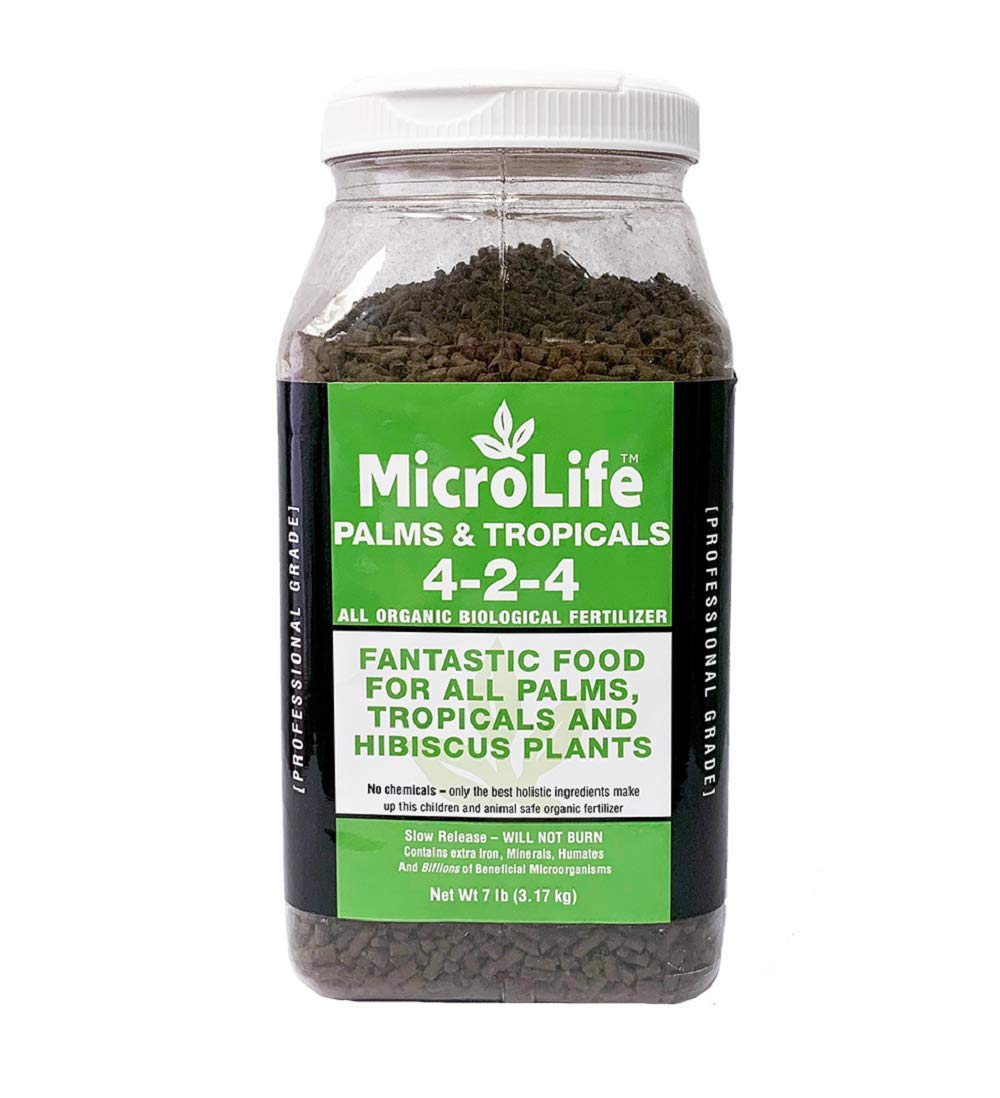
MicroLife Palms & Tropical Granular Organic Fertilizer (4-2-4), 7 lb
| Item Form | Granules |
|---|---|
| Specific Uses For Product | Organic |
| Target Species | Palms, tropicals & hibiscus |
| Mixing Ratio | 1:1:1 |
This granular formula delivers steady nutrition with a 100 percent slow-release profile designed to avoid burning sensitive tropical plants. You apply it to soil around the base of new plantings and as part of annual maintenance; the slow-release granules feed over time so you do not need frequent reapplication. The product includes extra potassium, magnesium, manganese, and iron, which support strong foliage color and stress tolerance in nutrient-hungry tropicals. Its professional-grade concentration means you can expect robust, gradual growth and improved plant resilience rather than a short burst of lush but weak growth. On the downside it is a specialty palm/tropical blend so it is not tailored for every fruiting crop and directions must be followed to get the intended slow-release benefit. Also the granular form requires spreading or incorporation into soil, so it is less convenient than a liquid feed for foliar applications. For gardeners focused on steady, dependable nutrition this fertilizer simplifies seasonal feeding for tropical and hibiscus plantings.
Best for: Buyers who prioritize dependable, low-maintenance nutrition for tropical plants and want a slow, steady feeding program rather than frequent dosing.
Less Ideal for: Growers seeking a fertilizer optimized specifically for pineapple fruit production or those who prefer liquid or foliar feeds for quick correction.
- 100% slow-release granules reduce risk of fertilizer burn and provide sustained feeding
- Includes added potassium, magnesium, manganese and iron to support foliage health and stress tolerance
- Professional-strength formula suited for new plantings and annual maintenance
- Formulated specifically for palms and tropicals so nutrient balance may not match all fruiting crops
- Granular form requires soil application and is not suitable for quick foliar feeding
Verdict: Choose this slow-release tropical fertilizer when you want reliable, low-risk seasonal feeding to maintain healthy foliage and steady growth.
Miracle-Gro Shake 'N Feed Palm Plant Food, 4.5 lb

| Item Form | Powder |
|---|---|
| Application Method | shake onto soil |
| Target Species | Palm plants |
| Unit Count | 72 Ounce |
| Mixing Ratio | 8:2:12 |
Miracle-Gro Shake 'N Feed Palm Plant Food is a shake-on granular fertilizer designed to supply steady nutrition to palms, cycads, and other tropical plants for up to three months per application. You apply it by shaking the powder evenly onto soil beneath the fronds, working it into the top 1–3 inches of soil, then watering to activate the feed; it can also be mixed into new potting soil at planting. The formulation includes nitrogen, phosphorus and potassium plus magnesium, iron and manganese to help reduce yellowing and promote greener fronds, and the product contains compost to support root health. The main practical benefits are simple application without measuring equipment, slow-release feeding that reduces application frequency, and targeted nutrients for palm health. Limitations are that it is a general palm formula rather than tailored to specific palm species and you must avoid contact with trunks and foliage to prevent damage; correct application rates are important to avoid overfeeding. This is a straightforward option if you want low-effort, periodic feeding for established palms in containers or in-ground beds.
Best for: Gardeners who want a low-effort, reliable palm fertilizer that requires infrequent applications and straightforward shake-on use for established container or in-ground palms.
Less Ideal for: Growers needing a species-specific nutrient program or precise, frequent feeding schedules for high-value or finicky palms.
- Continuous-release formula that feeds up to three months reducing application frequency
- Includes micronutrients (magnesium, iron, manganese) to help prevent yellowing of fronds
- Easy shake-on application for in-ground and container palms without mixing equipment
- Contains compost to support root health and improve water efficiency
- Not species-specific so it may not address unique nutrient needs of all palm varieties
Verdict: A no-fuss, slow-release palm fertilizer that delivers targeted micronutrients and three months of feeding with simple shake-on application.
TPS NUTRIENTS Indoor Plant Food Liquid Fertilizer, 8 fl oz

| Item Form | Liquid |
|---|---|
| Specific Uses For Product | Plant Food |
| Application Method | Watering can |
| Mixing Ratio | 2:1 (oz/gallon) or 1:64 (tbsp/gallon) |
TPS NUTRIENTS Indoor Plant Food is a concentrated liquid fertilizer made for regular use with houseplants. You mix the measured dose into water and apply it with your usual watering can; the label gives an easy mixing ratio for household use. Its kelp-enriched formula is pitched at improving leaf color, encouraging steady new growth, and supporting root health, so expect glossier foliage and more frequent leaf production when plants are fed consistently. The 8 fl oz bottle is portable and fits on a plant shelf or utility area, and the liquid form dissolves readily for even application. It is intended for medium coverage and labeled as gentle for weekly feeding, which simplifies care for busy owners. Important limitations are that this is a small bottle meant for regular top-up feedings rather than long-term bulk use, and it assumes you will follow dilution directions to avoid overfeeding. Keep it away from children and pets and avoid skin or eye contact when handling.
Best for: Plant owners who want a simple, low-effort weekly fertilizer to keep indoor foliage vibrant and encourage steady new leaf growth. Good for people who prefer an easy liquid mix applied during regular watering routines.
Less Ideal for: Gardeners needing a bulk or multi-season fertilizer for outdoor beds or large collections should consider larger-capacity or specialized products instead.
- Liquid concentrate mixes easily for even application with a watering can
- Kelp-enriched formula aimed at improving foliage color and encouraging new growth
- Gentle enough for weekly feedings according to product guidance
- Clear mixing instructions for home use
- Small 8 fl oz volume limits how many plants you can feed before repurchasing
- Not formulated or labeled for outdoor or large-scale garden use
Verdict: A convenient kelp-enriched liquid concentrate that makes weekly feeding easy for anyone who wants healthier, more vibrant indoor foliage.
Choosing the Right Fertilizer for Areca Palms: Key Factors to Consider
Nutrient Balance and Micronutrient Mix
Areca palms perform best with a balanced fertilizer that emphasizes steady nitrogen for lush frond production while including sufficient potassium and phosphorus for root and overall health. Micronutrients such as magnesium, manganese, iron, and trace elements matter because palms show deficiency symptoms visibly in their fronds. A product that lists these micronutrients and their concentrations helps you anticipate feeding intervals and potential corrective steps.
When a fertilizer lacks essential micronutrients, you may see yellowing between veins or slow new growth even if the overall nitrogen level looks adequate. For container-grown arecas this is especially important because potting mix can become depleted of trace minerals faster than garden soil.
Release Pattern and Feeding Frequency
Controlled-release formulations deliver nutrients slowly over weeks to months, reducing the risk of salt buildup and the need for frequent feeding. Liquid or water-soluble fertilizers let you correct deficiencies more quickly and are useful when growth is active or when you need to flush salts from the root zone. Choose the release pattern that matches how often you want to feed and how closely you monitor your palms.
For busy gardeners, an extended-release product can cut maintenance while still supplying steady nutrition. For seasonal growers who want rapid response, a soluble feed applied at recommended strength will show faster color and growth changes but requires more consistent scheduling.
Salt Index and Root Safety
Fertilizer salt affects osmotic balance at the roots; high salt-index products raise the risk of leaf-tip burn and root stress, particularly in containers where salts concentrate. Areca palms are moderately salt-sensitive, so label guidance that includes safe rates for containers and instructions for periodic flushing is valuable. When the salt index is not listed, favor gentler, lower-salt formulas or use reduced application rates.
Inspect the label for chloride levels and total soluble salts if available. In containers, plan for regular leaching with freshwater after several feeds, and consider media with good drainage to limit salt accumulation.
Application Method and Practicality
Application method determines how convenient a product will be in daily garden care. Granular and slow-release spikes are low-effort and work well in landscape beds, while water-soluble powders and liquid concentrates are better suited to frequent feeding and quick corrections. Consider also the clarity of dosing instructions and whether the product requires protective equipment or complex mixing.
Practical concerns include whether the fertilizer can be applied with the tools you already own, how easy it is to measure accurately, and whether the label includes specific guidance for palms versus generic houseplant instructions.
Container Versus In-Ground Suitability
Areca palms grown in pots and those planted in the ground have different nutrient dynamics. Containers have limited soil volume and retain salts more readily, which means lower, more frequent doses or formulations with low salt are often better. In-ground palms benefit from deeper root volume and can handle controlled-release granules with longer longevity.
When selecting a fertilizer, match the product's recommended application frequency and formulation to your planting situation and potting mix. Also think about seasonal adjustments: potted palms may need slightly lighter summer feeds to avoid rapid salt buildup, while landscape palms can take advantage of longer-release products.
Label Clarity and Safety Instructions
A clear label that lists N-P-K values, micronutrients, recommended rates for palms, and safety instructions reduces guesswork and lowers the risk of over-application. Look for explicit guidance on how often to feed, how to apply in containers versus beds, and any warnings about mixing with other garden chemicals.
Good labeling also includes storage instructions and first-aid guidance. When labels are vague or missing palm-specific guidance, you will need to adopt conservative application rates and monitor foliage closely for signs of overfeeding or deficiency.
Feeding Schedule by Season
Adjust feeding frequency to the seasonal growth pattern of areca palms. They grow most actively in warm months, so this is the period when you can use a more regular liquid feed or follow recommended release intervals for slow-release products.
In cooler months slow or stop feeding as growth declines. Overfeeding during dormancy increases salt risk and can stress the roots.
- Spring and summer: follow label for active-growth rates, monitor new frond color.
- Fall: reduce frequency as growth slows.
- Winter: minimal or no feeding for most climates.
Adjusting Feed Strength for Containers
Containers concentrate salts and deplete micronutrients faster. Use half to three-quarters of the recommended dose for soluble feeds when applying to pots, then watch for new growth and leaf tips for signs of overfeeding.
Flush potted palms with plain water occasionally to prevent salt buildup and to check whether yellowing is due to salts or a true nutrient deficiency.
- Start conservatively: lower concentration, then increase if palms respond.
- Schedule a thorough flush every few months if you feed often.
Correcting Common Deficiencies
Yellowing between veins often signals magnesium or iron deficiency, while overall pale fronds suggest low nitrogen. A targeted soluble feed that includes the missing micronutrient can correct symptoms faster than a slow-release product.
Before treating, confirm that watering and soil pH are appropriate. Some deficiencies show because nutrients are present but not available to roots due to incorrect pH or waterlogged media.
- Magnesium deficiency: look for interveinal yellowing on older fronds.
- Iron deficiency: new fronds are pale while older leaves stay green.
Mixing and Applying Liquid Feeds Safely
Follow label mixing ratios exactly. Use clean containers and mix only the amount you plan to apply to avoid degradation. Apply soluble feeds evenly around the root zone and water in to move nutrients into the root area.
Avoid foliage contact where possible to reduce the risk of leaf spotting. If foliar feeding is recommended for a specific micronutrient correction, test on a small area first.
- Measure precisely to avoid over-application.
- Water after application to reduce salt concentration at the root surface.
Soil pH and Nutrient Availability
Soil pH affects how well palms can access iron, manganese, and other micronutrients. Areca palms prefer slightly acidic to neutral conditions where micronutrients remain available.
If you see persistent deficiency symptoms despite feeding, test media pH and adjust with appropriate amendments rather than only increasing fertilizer strength.
- Test pH periodically in containers and beds.
- Correct extreme pH issues before increasing nutrient dosing.
How We Chose the Best Fertilizer for Areca Palms
We focused on attributes that directly affect Areca palm health in both container and landscape settings. Key evaluation criteria included nutrient ratio and trace elements, release pattern and longevity, salt index and risk of fertilizer burn, application method and ease, and suitability for container versus in-ground planting. We also checked label clarity for recommended rates and any special instructions for palm species. Excluded were products intended primarily for non-palm tropical plants, general-purpose lawn fertilizers without palm guidance, and formulations that lacked clear application instructions. We prioritized fertilizers that supply a controlled release or predictable liquid feeding schedule, include micronutrients such as magnesium and manganese, and list safe application rates to limit salt buildup. Products with unclear labeling, excessively high salt indexes, or formulations unsuited to frequent container feeding were not shortlisted.
FAQ
How often should I feed an Areca palm with a slow-release fertilizer?
Slow-release fertilizers are usually applied according to label intervals, often every three to six months depending on product longevity. For containers choose a shorter interval or lower dose and monitor frond color to judge needs.
Can I use a general houseplant fertilizer on an Areca palm?
Often you can, but check the nutrient balance and micronutrient content first. Houseplant formulas sometimes lack the magnesium and manganese levels palms commonly need, so watch for deficiency signs and adjust feeding accordingly.
What are the signs of over-fertilizing an Areca palm?
Common signs include brown leaf tips, sudden frond scorch, slowed growth, and a white crust on the soil surface from salts. If these appear, flush the soil with fresh water and reduce feed strength or frequency.
Should I change feeding when my Areca palm is in a pot versus planted in the ground?
Yes. Potted palms need gentler, often more frequent feeding at lower doses because of limited soil volume and salt buildup. In-ground palms can handle longer-release formulations and larger doses spread over time.
How can I tell if yellow fronds are due to nutrient deficiency or watering issues?
Look at the pattern: interveinal yellowing on new fronds suggests micronutrient deficiency, while overall limp yellowing often points to watering stress. Check soil moisture, root health, and consider a simple nutrient test before increasing fertilizer.
Final Verdict
Prioritize a fertilizer that matches how you grow your areca palms: low-salt or controlled-release for containers and longer-release formulations for landscape plantings. Focus on products that list micronutrients such as magnesium and manganese and provide clear application rates so you can avoid overfeeding. Balance feeding frequency with seasonal growth and the palm's container or in-ground situation. With the right nutrient balance, release pattern, and a practical application plan, you can maintain rich color and steady frond production without causing salt stress or nutrient imbalances.
