

Note: This article contains affiliate links. If you click on these links and make a purchase, I may earn a small commission at no extra cost to you. This helps support my research and content. Read my full affiliate disclosure here.
Caladiums are grown for their dramatic, colorful leaves and reliable tuber production. Using the right fertilizer for caladiums helps keep foliage vivid, supports steady new growth, and builds healthy tubers for next season. Whether you grow caladiums in pots, shady beds, or containers on a patio, feeding habits and nutrient balance matter for both immediate color and long-term bulb strength. This guide covers six top options shortlisted for shade-friendly growers and evaluates each pick on feeding schedule practicality and nutrient formulation. Read on to identify the feeding approach that fits your planting method and maintenance routine.
Top Picks at a Glance
| Best Overall The best all-around choice for most situations | Miracle-Gro Indoor Plant Food for Tropicals, 8 fl. oz. (2-Pack) |  |
| Best Quality Built to a higher standard if you want something more solid | Exotica Tropicals Caladium Slow-Release Fertilizer, 4 lb |  |
| Best Value The sweet spot between price and what you get | Osmocote Smart-Release Plant Food Plus Outdoor & Indoor, 1 lb |  |
| Best Budget The cheapest option that still gets the job done reliably | RAINFLOW Slow‑Release All‑Purpose Fertilizer 14-13-13 (11.28 oz) |  |
| Most Popular A crowd favorite that many people choose with confidence | Miracle-Gro Water Soluble All Purpose Plant Food, 1.5 lb |  |
| Best Seller A high-volume bestseller chosen again and again | TPS NUTRIENTS Indoor Plant Food Liquid Fertilizer, 8 fl oz |  |
Miracle-Gro Indoor Plant Food for Tropicals, 8 fl. oz. (2-Pack)

| Item Form | Liquid |
|---|---|
| Application Method | Directly to soil or mixed with water |
| Target Species | Tropical Plants |
| Mixing Ratio | 4 pumps:1 quart of water |
| Unit Count | 16 Fluid Ounces (per bottle) |
This liquid formula is designed to feed tropical indoor plants and is useful for houseplants that benefit from regular, low‑volume nutrition. It can be applied directly to potting soil using the built‑in pump or diluted at a ratio of 4 pumps per quart of water for routine watering, with reapplication every two weeks. The potassium‑focused formulation aims to promote lush green foliage, which matters for many broadleaf tropicals. Practical benefits include an easy pump dispenser for small pots, two bottles in the bundle for longer supply, and clear mixing guidance so dosing is straightforward. Limitations to consider: the product is formulated for general tropical houseplants rather than a specialist crop, and coverage is described as low so frequent dosing or multiple bottles may be needed for larger collections. If you prefer granular slow‑release nutrition or a fertilizer tailored to a very specific species, this liquid feed may not match those needs.
Best for: Indoor plant owners who want a simple, pump‑dispensed liquid fertilizer to maintain lush foliage on common tropical houseplants and who value straightforward dosing and social proof from other buyers.
Less Ideal for: Collectors seeking a slow‑release granular fertilizer, a formula customized for specialist epiphytes, or growers who want concentrated coverage for large collections.
- Designed specifically for tropical indoor plants with a potassium‑focused formula to support foliage
- Built‑in pump and clear 4 pumps per quart mixing ratio for easy, repeatable dosing
- Comes as a two‑bottle bundle so you have spare supply for ongoing feeding
- Liquid form delivers nutrients immediately when applied to soil
- Not species‑specific so it is a general tropical formula rather than tailored to unusual plants
- Labeled coverage is low, meaning frequent applications or additional product may be required for many plants
Verdict: A convenient, pump‑dispensed liquid fertilizer that makes biweekly feeding of common tropical houseplants quick and reliable.
Exotica Tropicals Caladium Slow-Release Fertilizer, 4 lb

| Item Form | Granules |
|---|---|
| Coverage | 5 to 6 months |
| Specific Uses For Product | caladium fertilization |
| Mixing Ratio | 18:5:12 |
This is a granular, slow-release fertilizer designed for caladiums and other angel wing plants. It combines an 18-5-12 base with minor elements such as magnesium, iron, manganese and zinc and delivers nutrition for about 5 to 6 months, which makes it suitable for a single spring or early-summer application. Typical use is broadcasting or side-dressing the soil around established bulbs or container-grown caladiums according to the package mixing ratio; the product includes both slow-release pellets and a small instant-feed fraction for an early green-up. The practical benefits are sustained feeding with fewer applications, targeted nutrient ratios that support leaf color and growth, and trace elements that help prevent micronutrient deficiencies common in caladiums. Limitations are that the bag is a single 4 lb unit intended for small batches or hobby growers and the fixed 18-5-12 formula may be too strong for newly sprouted tubers unless applied carefully at reduced rates.
Best for: Buyers who prioritize strong, consistent performance and want a professional nursery-grade fertilizer to promote vigorous foliage and color in caladiums with minimal reapplication.
Less Ideal for: Gardeners who need a very small starter dose for seedlings or who prefer liquid or foliar feeds as their primary feeding method.
- Formulated specifically for caladiums with an 18-5-12 NPK suitable for leaf development
- Slow-release pellets provide roughly 5–6 months of continuous feeding
- Includes micronutrients (Mg, Fe, Mn, Zn) to reduce common deficiencies
- Contains a small instant-release fraction for an initial nutrient boost
- Single 4 lb bag may be small for larger plantings or repeated seasonal use
- Strength of the 18-5-12 formula requires careful dosing on young or sensitive tubers
Verdict: Choose this product when you want a professional, slow-release fertilizer that delivers sustained, caladium-focused nutrition and color improvement with minimal applications.
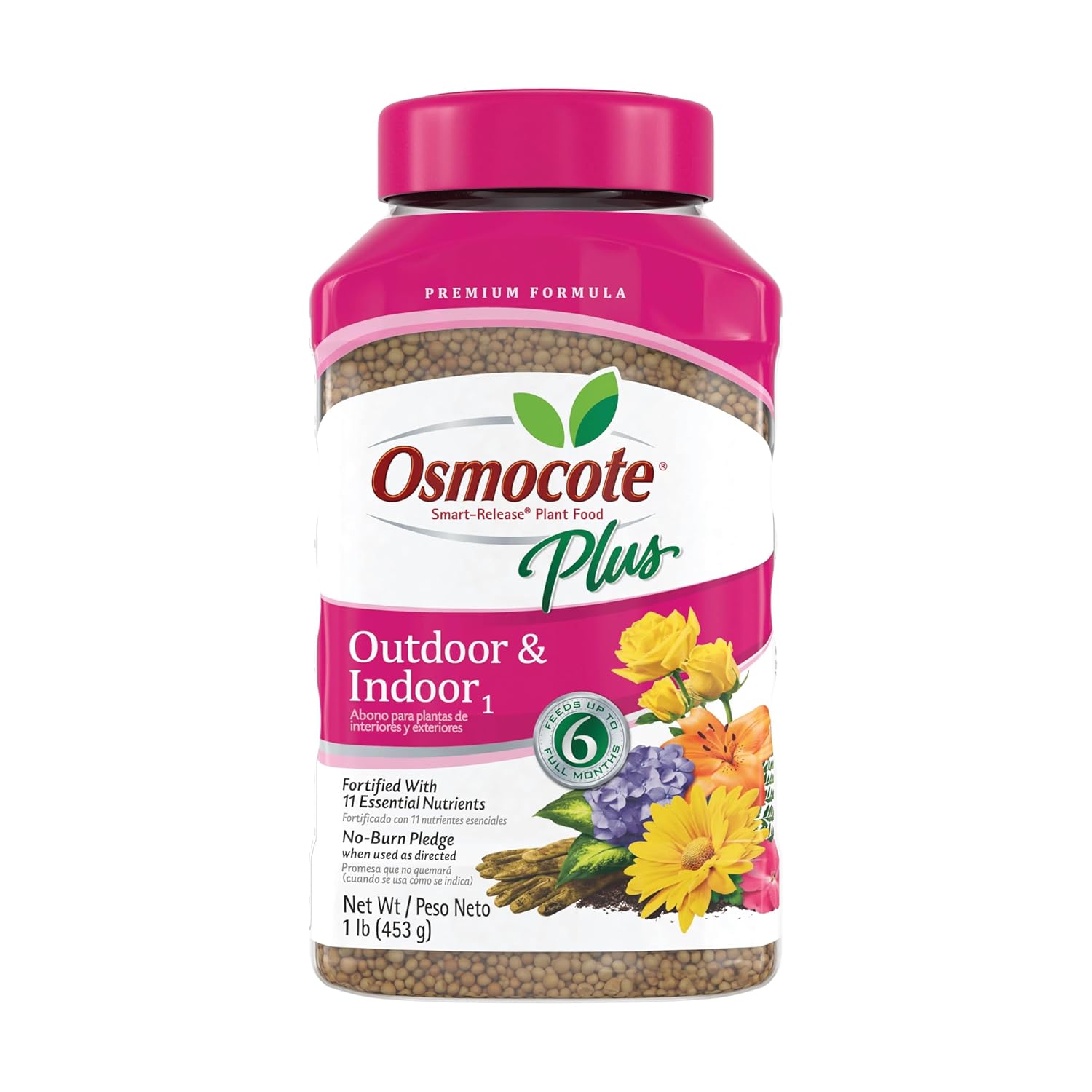
Osmocote Smart-Release Plant Food Plus Outdoor & Indoor, 1 lb
| Item Form | Granules |
|---|---|
| Specific Uses For Product | Plant Food |
| Application Method | sprinkle around the base and work into the soil |
| Unit Count | 16 Ounce |
Osmocote Smart-Release Plant Food Plus is a resin-coated granular fertilizer designed to deliver steady nutrition to a wide range of plants for up to six months from a single application. You apply it by sprinkling the recommended scoop into the top inch or so of potting mix for containers or around plants in garden beds, then watering to activate the coating. The product contains 11 essential nutrients and is formulated to release based on soil temperature, which helps reduce overfeeding and supports consistent bloom and foliage performance in hanging baskets. Its no-burn pledge makes it easy to use at the recommended rates for mixed annuals, trailing plants, and container veggies. Limitations are that coverage is modest from a 1 lb. container so frequent use on many large baskets will require buying more, and release timing still depends on temperature so plants in cool, shaded spots may receive nutrients more slowly than those in warm sun.
Best for: Gardeners who prioritize steady, low-maintenance feeding for hanging baskets and containers and want consistent bloom and foliage without frequent fertilizing.
Less Ideal for: Those who need immediate, short-term nutrient boosts or precise liquid feeding schedules for plants that demand fast correction.
- Resin-coated granules provide controlled release of nutrients for up to six months
- Formulated with 11 essential nutrients suitable for a wide variety of plants
- No-burn pledge when used as directed reduces risk of damaging roots in containers
- Simple sprinkle-and-water application works well for hanging baskets and pots
- 1 lb container covers a limited area so multiple baskets will need additional product
- Release rate depends on temperature so nutrient delivery can be slower in cool conditions
Verdict: An easy, low-maintenance slow-release fertilizer that keeps hanging baskets fed for months with minimal effort.
RAINFLOW Slow‑Release All‑Purpose Fertilizer 14-13-13 (11.28 oz)

| NPK | 14-13-13 |
|---|---|
| Format | Granular slow release |
| Coverage duration | Up to 180 days |
This RAINFLOW granular fertilizer delivers balanced nutrition (14-13-13) in a slow‑release form intended to feed plants for up to 180 days. It is applied by spreading or mixing into potting mix or garden soil and is suitable for ornamental bulbs, vegetables, succulents and other container or garden plants. The slow‑release technology reduces how often you need to reapply, which is helpful for busy or budget‑minded gardeners. Its organic labeling and small 11.28 ounce package make it convenient for testing on a few caladium pots or small beds before committing to larger quantities. Practical benefits include improved root development and support for flowering and foliage when used at recommended rates. Limitations are the small package size if you care for many caladiums or larger beds, and because the label lists general application rather than caladium‑specific rates you will need to follow standard dilute guidelines for tender, high‑nitrogen foliage plants to avoid overfeeding.
Best for: Gardeners looking for an affordable, low‑maintenance fertilizer to feed a few potted caladiums or small beds who prefer infrequent applications and want to try a balanced slow‑release product first.
Less Ideal for: Those managing large caladium collections or commercial beds that require bulk fertilizer or precise, crop‑specific feeding schedules should look for larger or specialized formulations.
- Balanced 14-13-13 NPK supports foliage and flowering
- Slow‑release formula claims up to 180 days of nutrient delivery
- Granular form is easy to spread or mix into potting mix
- Small package lets you try it on a few caladiums without large expense
- Small 11.28 oz size is not economical for larger plant collections
- Label gives general usage guidance rather than caladium‑specific instructions
Verdict: A budget‑friendly, small‑package slow‑release fertilizer that makes it easy to feed a few caladiums with minimal reapplication.
Miracle-Gro Water Soluble All Purpose Plant Food, 1.5 lb

| Item Form | Powder |
|---|---|
| Application Method | Watering Can |
| Target Species | For all flowers, vegetables, trees, shrubs and houseplants |
| Mixing Ratio | 24-8-16 |
Miracle-Gro Water Soluble All Purpose Plant Food is a powder concentrate you mix with water to give a quick nutrient boost to flowers, vegetables, houseplants, shrubs and trees. It is typically dissolved in a watering can or used with a compatible garden feeder to soak soil at the base of plants, delivering nitrogen-heavy nutrition that shows effects faster than granular fertilizers. Notable features include an easy scooping method for indoor and outdoor dosing, compatibility with containers and in-ground planting, and clear directions for feeding every one to two weeks. In practice this makes the product a convenient option when you want visible growth and greener foliage quickly, and the 1.5 lb container covers roughly 600 sq. ft. Important limitations are that it is a fast-release, high-nitrogen formula best used as a regular quick feed rather than a long-term slow-release solution, and it requires careful measuring to avoid overfeeding. For routine maintenance combine with good watering and follow the label to avoid nutrient imbalance.
Best for: Buyers who prefer proven, easy-to-use feeding routines and want noticeable growth quickly for a variety of garden and houseplants, guided by established usage directions and broad user experience.
Less Ideal for: Gardeners seeking a single, long-term slow-release solution or those who prefer organic or low-nitrogen fertilizers for sensitive plantings should consider alternative products.
- Water-soluble powder starts working quickly at the roots when mixed and applied
- Clear, simple dosing for indoor and outdoor use with included scoop guidance
- Suitable for a wide range of plants including vegetables, flowers, shrubs and houseplants
- Covers a large area from a small container (about 600 sq. ft. per 1.5 lb)
- Fast-release formula means benefits are short-term compared with slow-release granular fertilizers
- Requires precise measuring and regular reapplication to avoid overfeeding
Verdict: A reliable, fast-acting water-soluble plant food for gardeners who want easy, repeatable feeding and quick visible results.
TPS NUTRIENTS Indoor Plant Food Liquid Fertilizer, 8 fl oz

| Item Form | Liquid |
|---|---|
| Specific Uses For Product | Plant Food |
| Application Method | Watering can |
| Mixing Ratio | 2:1 (oz/gallon) or 1:64 (tbsp/gallon) |
TPS NUTRIENTS Indoor Plant Food is a concentrated liquid fertilizer made for regular use with houseplants. You mix the measured dose into water and apply it with your usual watering can; the label gives an easy mixing ratio for household use. Its kelp-enriched formula is pitched at improving leaf color, encouraging steady new growth, and supporting root health, so expect glossier foliage and more frequent leaf production when plants are fed consistently. The 8 fl oz bottle is portable and fits on a plant shelf or utility area, and the liquid form dissolves readily for even application. It is intended for medium coverage and labeled as gentle for weekly feeding, which simplifies care for busy owners. Important limitations are that this is a small bottle meant for regular top-up feedings rather than long-term bulk use, and it assumes you will follow dilution directions to avoid overfeeding. Keep it away from children and pets and avoid skin or eye contact when handling.
Best for: Plant owners who want a simple, low-effort weekly fertilizer to keep indoor foliage vibrant and encourage steady new leaf growth. Good for people who prefer an easy liquid mix applied during regular watering routines.
Less Ideal for: Gardeners needing a bulk or multi-season fertilizer for outdoor beds or large collections should consider larger-capacity or specialized products instead.
- Liquid concentrate mixes easily for even application with a watering can
- Kelp-enriched formula aimed at improving foliage color and encouraging new growth
- Gentle enough for weekly feedings according to product guidance
- Clear mixing instructions for home use
- Small 8 fl oz volume limits how many plants you can feed before repurchasing
- Not formulated or labeled for outdoor or large-scale garden use
Verdict: A convenient kelp-enriched liquid concentrate that makes weekly feeding easy for anyone who wants healthier, more vibrant indoor foliage.
Choosing the Right Fertilizer for Caladiums: Key Factors to Consider
Nutrient Ratio and Balance
Caladiums are valued for their foliage, so a fertilizer that favors balanced nutrients with slightly moderated nitrogen often gives the best color without encouraging weak, floppy growth. Phosphorus is important for tuber formation, and potassium helps stress tolerance and overall plant vigor. A fertilizer labeled with an NPK that leans toward moderate nitrogen and adequate phosphorus is a practical choice.
Beyond NPK, trace elements like magnesium and iron can influence leaf pigmentation in caladiums. If your plants show pale or yellowing veins, a formula that includes micronutrients or allows for compatible supplements will help maintain the saturated tones these plants are grown for.
Formulation Type and Application Method
Liquid concentrates, water-soluble powders, slow-release granules, and organic blends each behave differently in containers and garden beds. Liquids and water-solubles let you correct nutrient needs quickly and are easy to apply at each watering, which suits container-grown caladiums. Slow-release granules reduce hands-on feeding but may be harder to calibrate for shallow pots.
Consider how you water and where the caladiums sit. Hanging baskets and small pots dry faster, so a fertilizer that dissolves readily and can be applied with each watering is often more reliable than a granular product that sits dry below the soil surface.
Feeding Frequency and Longevity
How often you want to feed affects which product is best. Caladiums typically need regular, moderate feeding through the active growing season. Quick-acting water-soluble fertilizers require more frequent applications, sometimes every one to two weeks, while slow-release products can extend to several months between feeds.
If you prefer minimal maintenance, opt for a longer-lasting formulation labeled for extended feeding. If you want tighter control over leaf color and growth speed, a more frequent liquid schedule allows you to adjust rates based on observed response.
Container Suitability and Salt Sensitivity
Plants in containers are more sensitive to salt buildup from fertilizers because salts concentrate as water evaporates. Caladiums in pots and mixed media need formulations that are low-salt or designed for regular flushing. Soluble fertilizers with clear dilution instructions and lower recommended concentrations reduce the risk of tip burn and foliage damage.
For long-term container plantings, consider products that state safe rates for repeated use or that pair well with periodic leaching to remove salt buildup.
Compatibility With Soil and Potting Mix
Caladiums are commonly grown in rich, well-draining mixes that hold moisture without staying waterlogged. Some fertilizers interact with soil amendments, especially those containing lime or organic matter, changing nutrient availability. Choose a fertilizer whose form and pH range match your potting medium to avoid nutrient lockout or excess acidity.
If you use compost or slow-release organic amendments, plan feeding so you do not double up on certain nutrients. Organic feeds release slowly and may be best paired with light liquid supplements during peak season.
Safety for Foliage and Pet Considerations
Caladium leaves are delicate and can scorch if fertilizer contacts foliage at full concentration. Products with clear foliar-safety guidance and low burn risk are preferable for overhead applications. Always follow dilution directions and avoid applying concentrated solutions to wet leaves during bright sun.
If pets or children have access to planted areas, check product labels for toxicity and choose pet-safer formulations or store and apply fertilizers where exposure is minimized.
When to Start and Stop Feeding
Begin fertilizing caladiums after the first true leaves appear and new growth is active. Feeding too early, when plants are still establishing, can encourage soft growth that is prone to collapse. For overwintered tubers kept dormant, stop feeding once foliage dies back and store the bulbs dry.
Adjust the frequency and strength of feeds as the season changes. In mid-summer, when growth is strongest, follow the label rates for regular feeding. As temperatures cool and growth slows, taper off to reduce nutrient buildup in the tubers before dormancy.
- Start feeding when new leaves are 2 to 3 inches long
- Reduce or stop feeding as foliage senesces in fall
- Flush pots occasionally to prevent salt accumulation
Feeding Schedules for Different Plantings
Container caladiums need more frequent, lighter feedings than those planted in rich garden beds. A typical approach is a quarter to half-strength liquid feed every 7 to 14 days for pots, while garden beds may only need monthly applications or supplemental feeding if soil is poor.
For mixed containers with other shade plants, choose a schedule and dilution that favor the most nutrient-sensitive species. If using slow-release granules, match the product's release interval to your container size and reapplication timeline.
- Small pots: light liquid feeds every 1 to 2 weeks
- Large containers and beds: monthly or slow-release options
Organic Vs Synthetic: Pros and Cons
Organic fertilizers improve soil structure and feed soil life, which over time supports tuber health and sustained color. They tend to release nutrients more slowly and are less likely to cause salt build-up, but results take longer to appear.
Synthetic fertilizers provide predictable nutrient ratios and fast results, which is useful for correcting deficiencies quickly or when you want immediate leaf vibrancy. They require careful dilution and attention to avoid overfertilization, especially in containers.
- Organics: gentler, build soil over time, slower response
- Synthetics: faster correction, precise NPK, need careful use
Adjusting Feed Based on Leaf Symptoms
Leaf color and vigor give clear clues about nutrient needs. Pale, washed-out leaves may indicate low nitrogen or iron issues, while poor tuber formation after a full season may point to insufficient phosphorus. Brown leaf edges or tip burn often signal salt stress or overfertilization.
Before increasing feed strength, check watering practices and pot drainage. Many foliar issues resolve with adjusted irrigation and a light flush of the potting mix rather than stronger fertilizer doses.
- Pale leaves: consider balanced liquid feed with micronutrients
- Brown edges: flush soil and reduce feed concentration
- Poor tubers: ensure adequate phosphorus in the regimen
Storage and Dormancy Feeding Considerations
Caladiums enter dormancy after frost or seasonal dieback. Stop fertilizing as foliage fades and allow the plant to harden off. For tubers lifted and stored, do not feed during dormancy. Instead, focus on keeping stored bulbs dry and cool until replanting.
If you overwinter caladiums in pots indoors where growth continues lightly, use very low-strength feeds sparingly to avoid leggy, weak growth before the normal growing season.
- Stop feeding during natural dormancy
- Do not apply fertilizer to dry, resting tubers
- If indoor growth continues, use minimal feeding
How We Chose the Best Fertilizer for Caladiums
We focused on the feeding needs and cultural habits unique to caladiums and selected products that match those demands. Evaluation prioritized nutrient ratios suited to leafy, shade-loving tuberous plants, including moderate nitrogen, adequate phosphorus for tuber development, and potassium for overall vigor. We also checked formulation type and application flexibility because many gardeners grow caladiums in pots, hanging baskets, or mixed shade beds. Ease of use was a filter: simple dilution rates, compatibility with common watering routines, and clear labeling earned higher marks. Safety for foliage and minimal leaf burn risk under shady conditions were considered. Longevity of effect and how often repeat applications are needed mattered for practical maintenance over a growing season. Exclusions included products formulated only for heavy-flowering bulbs, specialty amendments that do not supply balanced macronutrients, and fertilizers that require complex, professional calibration. Ultimately, we prioritized options that deliver reliable foliage color and support tuber size while fitting typical home gardener practices.
FAQ
How often should I fertilize caladiums in containers?
Container-grown caladiums typically do best with light liquid feeds every one to two weeks during active growth. Use weaker than label-strength in small pots to avoid salt buildup and flush the soil periodically.
What NPK ratio is best for promoting caladium leaf color?
A balanced NPK with moderate nitrogen, adequate phosphorus, and good potassium is ideal. Avoid very high nitrogen formulas that can produce lush but floppy foliage; slightly higher phosphorus helps tuber development.
Can I use slow-release granular fertilizer for caladiums?
Yes, slow-release granules can work well, especially in garden beds or larger containers where frequent feeding is inconvenient. Match the product's release interval to the container size and monitor for salt buildup.
Are organic fertilizers suitable for caladiums?
Organic fertilizers are suitable and beneficial over time because they build soil biology and reduce salt risk. Expect slower, steadier results, and supplement with light liquid feeds if quicker leaf response is needed.
How do I avoid fertilizer burn on caladium leaves?
Avoid applying concentrated solutions directly to foliage, especially in strong light. Use recommended dilutions, apply to moist soil rather than wet leaves, and water in lightly after application to move nutrients into the root zone.
Should I change feeding when repotting caladiums?
When repotting into fresh, nutrient-rich mix, reduce or skip feeding for a few weeks while roots re-establish. If the new mix is low in nutrients, start a light feeding schedule after plants show active new growth.
Final Verdict
Choose a feeding plan that matches how you grow caladiums and how hands-on you want to be. Prioritize nutrient ratios that support foliage color and phosphorus for tuber development, then match formulation and frequency to containers or beds. Expect tradeoffs between fast results from soluble feeds and the lower maintenance of slow-release or organic options. With the right balance of nutrients and sensible application, you can keep caladium leaves vibrant while building healthy tubers for the next season.
