

Note: This article contains affiliate links. If you click on these links and make a purchase, I may earn a small commission at no extra cost to you. This helps support my research and content. Read my full affiliate disclosure here.
If you are just getting into backyard composting, picking the right beginner compost bin makes the difference between a system you actually use and one that becomes a neglected pile. A beginner-friendly bin should be easy to load, control odors and moisture, and fit the space you have-whether a small patio, a suburban yard, or a community garden plot. This guide covers seven shortlisted options that meet those needs and explains the practical tradeoffs gardeners face when starting composting. We evaluated each option for usability, aeration, moisture management, and maintenance. Read on to find the style and features that match your daily routine and garden goals.
Top Picks at a Glance
| Best Overall The best all-around choice for most situations | FCMP Outdoor IM2000 Tumbling Composter (22.5 gal) |  |
| Best Quality Built to a higher standard if you want something more solid | VIVOSUN Outdoor Tumbling Composter, Dual-Chamber 43 Gallon |  |
| Best Value The sweet spot between price and what you get | Nazhura Dual-Chamber 43 Gallon Compost Tumbler Bin |  |
| Best Budget The cheapest option that still gets the job done reliably | JupiterForce 80 Gallon Garden Compost Bin (Polypropylene) |  |
| Highest Rated A top-rated pick with lots of positive feedback | Reli. 1.3‑Gallon Stainless Steel Kitchen Compost Bin with Charcoal Filters |  |
| Most Popular A crowd favorite that many people choose with confidence | Epica Kitchen Compost Bin, 1.3 Gallon Stainless Steel |  |
| Best Seller A high-volume bestseller chosen again and again | GEOBIN Backyard Compost Bin, Expandable Plastic Composter |  |
FCMP Outdoor IM2000 Tumbling Composter (22.5 gal)

| Capacity | 22.5 gallons |
|---|---|
| Material Type | Polypropylene (PP) |
| Model Number | IM2000 |
The FCMP Outdoor IM2000 is a compact tumbling composter that lets you mix kitchen scraps and yard trimmings without turning a pitchfork. Its single rotating chamber and deep fins give good aeration and make manual tumbling straightforward—turn the drum several times every few days to speed decomposition. The large door and removable access make loading and harvesting finished compost easy for beginners, and the body is made from UV-inhibited, post-consumer recycled polypropylene so it resists weathering and avoids rust. A galvanized steel frame adds structural support but the unit is light enough to move if needed. Because capacity is about 22.5 gallons, it is best for small households or gardeners who compost in batches rather than large-volume producers. Expect faster results in warm, active piles; cold or very wet climates will slow breakdown. Assembly and regular turning are required to get the two-week turnaround quoted under ideal conditions.
Best for: Best for pragmatic gardeners who want a low-fuss way to produce small, frequent batches of compost without manual digging and who value recycled materials and straightforward operation.
Less Ideal for: Not a good fit for gardeners who need to process large volumes of yard waste or want a passive, no-turn composting system.
- Easy tumbling design speeds mixing and improves aeration
- Large opening and removable door simplify loading and harvesting
- Made from 100% post-consumer recycled, UV-inhibited polypropylene for durability outdoors
- Galvanized steel frame provides sturdy support while keeping overall weight low
- Relatively small 22.5 gallon capacity not suited for large families or heavy yard waste producers
- Performance depends on consistent turning and warm conditions to achieve fastest compost times
Verdict: A compact, easy-to-use tumbling composter that delivers faster, well-aerated compost for small-scale gardeners who want efficient, repeatable results.
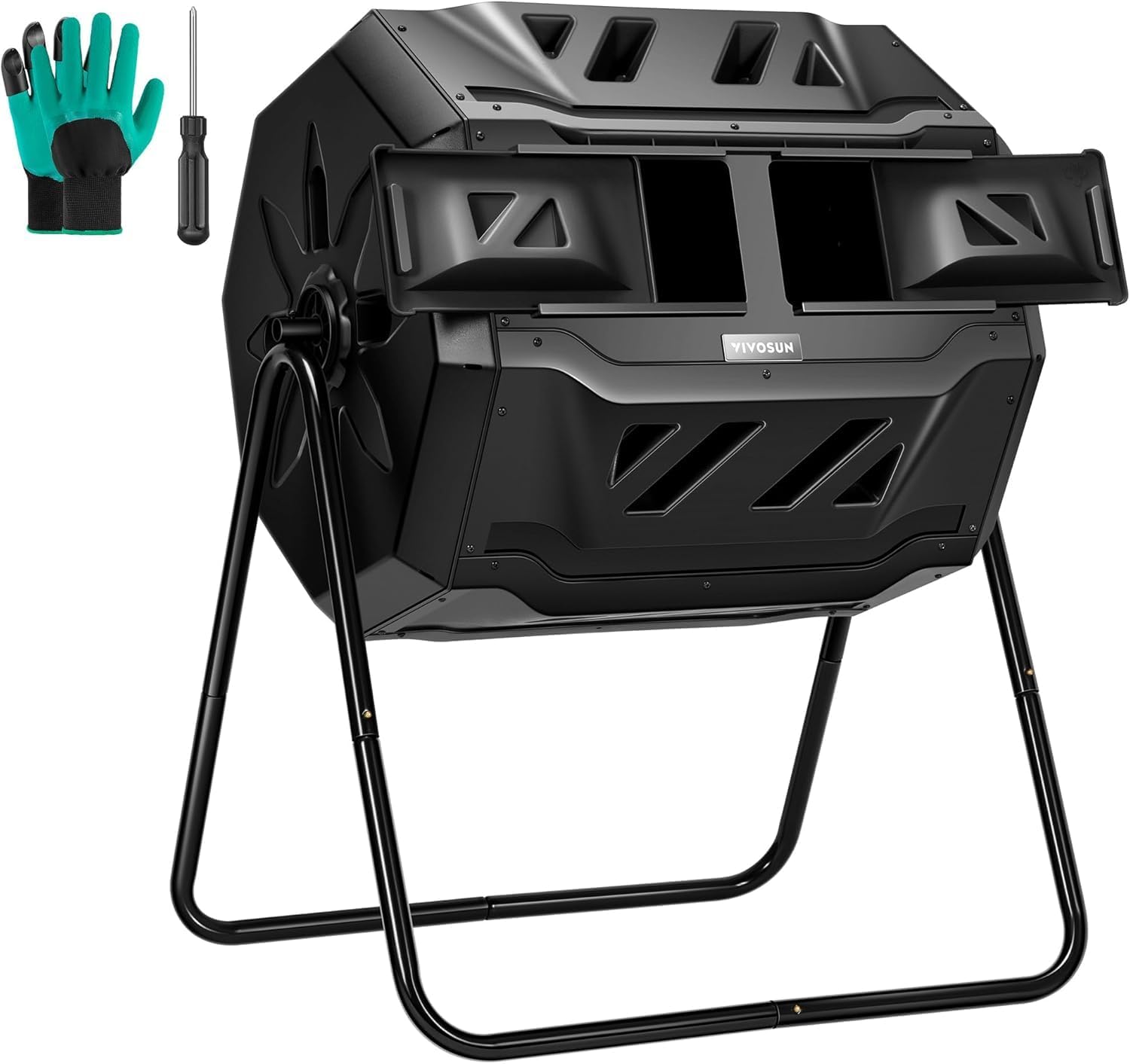
VIVOSUN Outdoor Tumbling Composter, Dual-Chamber 43 Gallon
| Material Type | galvanized steel |
|---|---|
| Capacity | 43 gallons |
This VIVOSUN tumbling composter is a practical backyard unit built around two rotating chambers so you can add fresh waste to one side while the other finishes breaking down. The 360 degree tumbling design with deep internal fins makes turning the pile simple and helps break up clumps without digging. Ventilation slots around the drum promote airflow for aerobic decomposition, and the metal frame with a PP plastic barrel is designed to resist corrosion and outdoor weathering. It comes with waterproof garden gloves and small digging claws to make loading and aerating easier. At 43 gallons it is sized for a family garden or vegetable patch but is compact enough for a patio or small yard. Limitations to note are that it requires occasional manual turning to maintain activity and that the plastic drum means it will warm less in cold climates than insulated models, so composting speed will vary by season. Assembly and placement on a level spot are also important for smooth rotation.
Best for: Gardeners who want a hands-on, efficient system to produce regular batches of compost without digging a pile and who prioritize continuous output and easy turning.
Less Ideal for: People who need a completely hands-off hot composter or who compost only very large volumes; those in very cold climates seeking year-round rapid breakdown should consider insulated or electric options.
- Dual chambers let you load new material while another batch finishes, ensuring continuous compost production
- 360 degree tumbling with deep fins makes mixing and aeration easy without manual digging
- Galvanized steel frame and PP plastic barrel designed for outdoor durability and corrosion resistance
- Ventilation slots support aerobic breakdown for faster, less smelly composting
- Plastic drum offers less insulation than insulated or fully metal units, slowing composting in cold weather
- Requires manual turning and regular management to maintain heat and moisture for fast results
Verdict: If you want steady, manageable batches of compost with easy tumbling and continuous use, this dual-chamber VIVOSUN tumbler delivers practical, durable performance.
Nazhura Dual-Chamber 43 Gallon Compost Tumbler Bin

| Capacity | 43 gallons |
|---|---|
| Material Type | Plastic and Galvanized Steel |
| Manufacturer Warranty Description | 1 Year |
The Nazhura dual-chamber compost tumbler is a practical outdoor bin that speeds up backyard composting by combining insulated rotating chambers with internal mixing when turned. You load kitchen scraps and yard waste into either chamber, let material heat and break down, then rotate the tumbler occasionally to aerate and mix the pile; one chamber can be active while the other finishes so you can compost continuously. Notable features include the side-by-side dual chambers for staggered batches, a slide-open access door for easy removal of finished compost, and construction using plastic with galvanized steel supports for weather resistance. In practice the unit makes managing smaller household volumes straightforward and keeps material off the ground to reduce pests and mess. Limitations are its 43 gallon capacity, which suits small to medium households but may require more frequent emptying for heavy gardeners, and the plastic body means very hot internal temperatures are harder to maintain than in larger insulated systems. Assembly and periodic turning are required to get the fastest results.
Best for: Gardeners who want a tidy, space-efficient way to turn household scraps into usable compost on an ongoing schedule and who value ease of use and continuous batches.
Less Ideal for: People with very large yards, frequent high-volume green waste, or those who need professional-scale hot composting results should consider larger or purpose-built insulated systems instead.
- Dual-chamber design allows continuous composting by loading one side while the other finishes
- Rotating tumbler and internal mixing accelerate decomposition compared with static bins
- Slide-open access door makes removing finished compost quick and tidy
- Plastic body with galvanized steel support resists outdoor weathering and reduces direct contact with pests
- 43 gallon capacity may be small for large yards or heavy kitchen waste producers
- Plastic construction limits maximum internal heat compared with larger insulated or insulated-metal systems
Verdict: A compact, easy-to-use dual-chamber tumbler that lets practical gardeners run continuous small-batch composting with minimal mess and effort.
JupiterForce 80 Gallon Garden Compost Bin (Polypropylene)

| Capacity | 80 gallons |
|---|---|
| Material Type | Polypropylene (PP) |
| Compost Completion Time | 4 to 5 weeks |
This JupiterForce compost bin is a basic, budget-friendly outdoor composter designed to turn kitchen scraps and yard waste into usable soil over several weeks. It assembles without tools and sits directly on the ground so you load materials through the top lid, rely on molded ventilation panels for airflow, and retrieve finished compost via a sliding bottom door. The molded polypropylene construction makes the unit lightweight and weather resistant while the included gloves are a helpful touch for handling material. Because it lacks a base, the bin depends on contact with soil and moisture for decomposition and will be easiest to use on bare ground rather than a hard patio. The relatively large 80 gallon capacity means less frequent emptying for small to medium gardens, but the plastic construction is basic compared with heavier-duty metal or insulated tumblers, so it will not retain heat as well in cold climates. For gardeners who want an inexpensive, simple way to compost and collect finished material, this does the job with minimal fuss.
Best for: Gardeners on a tight budget who need an easy, low-maintenance way to compost kitchen scraps and yard waste and who will place the bin on soil or garden beds.
Less Ideal for: People who need a compost system for a paved patio, require rapid high-heat composting year-round, or prefer heavy-duty insulated tumblers for faster results.
- Generous 80 gallon capacity reduces how often you need to empty it
- Tool-free assembly makes setup quick and straightforward
- Top lid plus sliding bottom door simplifies loading and removing finished compost
- Molded ventilation on each side improves airflow to speed decomposition
- Lightweight, weather-resistant polypropylene construction resists rot and rust
- No integrated base so it must sit on soil to compost efficiently
- Plastic construction offers limited insulation so composting slows in cold weather
Verdict: A simple, inexpensive 80‑gallon polypropylene composter that lets budget-minded gardeners turn yard and kitchen waste into usable compost with minimal setup.
Reli. 1.3‑Gallon Stainless Steel Kitchen Compost Bin with Charcoal Filters

| Capacity | 1.3 gallons |
|---|---|
| Material Type | Stainless Steel |
| Included Components | Bags |
This Reli. 1.3‑gallon compost bin is built for everyday kitchen use where odor control and durability matter. Made from stainless steel with an airtight, vented lid and two activated charcoal filters, it keeps food waste discreet on a countertop and resists rust and staining. The compact footprint fits in tight kitchens and the ergonomic handle makes transferring scraps to an outdoor pile or larger bin simple. In practice the charcoal filters and vented lid noticeably reduce smells, though the filter needs replacing every 2 to 3 months for best performance. The small capacity means it suits singles, couples, or light kitchen use rather than large families or heavy cooking days. Cleaning is straightforward because of the smooth steel interior, but you will still need to empty and rinse regularly to avoid buildup. Overall this is a practical, low-maintenance choice if you want a dependable indoor compost container that prioritizes odor control and long-term material performance.
Best for: Buyers who want a no-fuss, durable countertop compost solution that reliably controls smells and is easy to maintain in small kitchens.
Less Ideal for: Homes that produce large volumes of food scraps, need a hands-off continuous composter, or prefer a larger-capacity indoor system.
- Stainless steel construction resists rust, stains, and odor absorption
- Airtight vented lid combined with charcoal filters reduces kitchen odors
- Compact size fits small countertops and includes an ergonomic pour handle
- Comes with two activated charcoal filters so a replacement is included
- 1.3 gallon capacity is small for large households or heavy food waste producers
- Filters require replacement every 2 to 3 months to maintain odor control
Verdict: A sturdy, compact stainless steel countertop bin that reliably keeps kitchen scraps contained and odors down for small household composting.
Epica Kitchen Compost Bin, 1.3 Gallon Stainless Steel

| Capacity | 1.3 gallons |
|---|---|
| Material Type | Stainless Steel |
| Item Type Name | Compost Bins |
This Epica countertop compost bin is built for everyday kitchen use: it holds about 1.3 gallons of food scraps and sits neatly on a counter or under the sink. The stainless steel body resists rust and is easy to hand wash, and the one-piece design helps prevent leaks. An airtight, leak-resistant lid plus a replaceable activated charcoal filter reduce odors during short-term indoor storage, and filters can be rinsed gently or swapped every few months. It is straightforward to use—drop scraps in, close the lid, empty weekly into an outdoor compost pile or municipal bin, and wash as needed. The unit is compact enough for small households but will require frequent emptying for larger families. The filter helps with smells but will need periodic replacement and gentle care to avoid saturating it. If you want a stylish, low-maintenance indoor holding container for vegetable peels, coffee grounds, and other kitchen scraps, this model performs well; it is not a processing device and is meant only for temporary storage before transfer to an outdoor or municipal compost system.
Best for: Buyers who want a tidy, low-profile way to store daily vegetable scraps and coffee grounds indoors and who prioritize odor control and a durable, easy-to-clean container.
Less Ideal for: Those looking for a unit that composts or processes waste indoors or households that generate large volumes of food waste without frequent emptying.
- Stainless steel construction resists rust and is easy to clean
- Airtight, leak-resistant lid minimizes drips and mess
- Replaceable activated charcoal filter reduces kitchen odors
- Compact 1.3 gallon capacity fits on countertops and under sinks
- Small capacity requires frequent emptying for larger households
- Filters need periodic replacement and careful rinsing to extend life
Verdict: A durable, compact countertop compost bin that keeps daily kitchen scraps contained and largely odor-free until you transfer them to your outdoor compost or waste collection.
GEOBIN Backyard Compost Bin, Expandable Plastic Composter

| Capacity | 216 gallons |
|---|---|
| Material Type | Plastic |
| Shape | Cylindrical |
The GEOBIN Backyard Compost Bin is a lightweight, cylindrical plastic composter designed for straightforward backyard use. It assembles quickly with a few closure keys and expands to increase capacity, so you can start with a small footprint and add volume as your kitchen scraps and yard waste grow. The open-structure design gives excellent ventilation, which helps speed up decomposition when you layer greens and browns and turn the pile occasionally. Because it is low-tech and portable, it is easy to move, empty, or reassemble if you relocate it in the yard. The practical benefits are its affordability, ease of setup, and versatility for beginners and experienced gardeners who want a no-fuss system. Limitations are that it is a basic ring-style bin with no insulated walls or built-in access door, so it will not retain heat as well as tumblers or insulated bins and requires manual turning and occasional maintenance to keep the process active.
Best for: Budget-conscious gardeners who want a low-cost, low-effort way to compost yard trimmings and kitchen scraps without complicated setup.
Less Ideal for: People who need fast, high-temperature composting or a bin with a convenient bottom access door for frequent harvests should consider other designs.
- Expandable capacity up to 216 gallons (listed) to handle increasing compost volume
- Very easy assembly with simple closure keys
- Lightweight and portable for repositioning or storage
- Good ventilation that helps organic material break down faster
- No insulated walls or built-in access door for easy compost removal
- Basic plastic construction offers less heat retention than enclosed designs
Verdict: A very affordable, easy-to-assemble composter that gives budget gardeners a simple, expandable solution for backyard composting.
Choosing the Right Beginner Compost Bin: Key Factors to Consider
Size and Capacity
Choose a bin size that matches the amount of kitchen and yard waste you generate. A unit that is too large can be hard to fill and maintain active decomposition, while one that is too small will require constant emptying. Consider seasonal variations: leaves in autumn or large harvests in summer increase volume.
Think about where you will put the bin. A compact tumbler or small enclosed bin suits balconies and small patios, while larger stationary bins work well for medium yards. Capacity also affects heat retention: moderately sized masses break down faster because they hold warmth, but very large piles can be difficult to turn and manage for a beginner.
Aeration and Design
Aerobic decomposition needs regular air circulation. Look for bins with vents, perforated walls, or tumbling mechanisms that expose material to air without requiring complicated manual turning. Passive-vent designs are low effort but may need some occasional hand mixing to avoid anaerobic pockets.
Design also affects pest exclusion. Secure lids and elevated bases help keep rodents and insects out while still allowing airflow. Consider how easy it is to check internal conditions; sight-lines or access panels let you inspect the pile without fully disassembling the unit.
Moisture Control
Moisture balance is critical. Compost that is too wet becomes smelly and anaerobic; too dry, and decomposition slows. Beginner bins that include drainage, covered tops, or rain shields make moisture easier to manage. Some designs allow you to add water directly or capture excess liquid for use as compost tea.
Pay attention to how the bin handles kitchen scraps that are high in moisture, like fruit peels. A unit with a slightly elevated base or a sump for leachate will protect the pile from becoming overly soggy during rainy periods and simplifies moisture adjustments.
Maintenance and Access
How you access finished compost and turn active material will determine how often you interact with the system. Bins with a bottom access door or removable panels let you remove finished compost without disturbing the rest of the pile. Tumblers reduce the need for manual shoveling but require room to rotate and occasional effort to tumble.
Also consider cleaning and winter care. Smooth interior surfaces reduce material sticking and make harvesting easier. For cold climates, insulation or a design that retains heat can keep microbes active longer, but may need extra attention during freezing weather.
Materials and Durability
Durable materials extend the life of the bin and reduce maintenance. UV-resistant plastics and powder-coated metals resist weathering and rust, while untreated wood may rot over a few seasons unless it is designed for outdoor use. Lightweight materials are easier to move but can shift in wind; heavier designs stay put but are harder to relocate.
Also consider how the materials affect temperature and pest resistance. Dark-colored, insulated sides can help retain warmth; tight seams and secure fastenings resist opportunistic pests. The tradeoff is usually between longevity and initial ease of use.
Location and Placement
Where you place your bin affects performance and convenience. Situate it on well-draining ground close enough to the kitchen to encourage regular use, but not so close that odors become bothersome. Partial shade often helps maintain moisture and microbial activity without overheating the pile on hot afternoons.
Accessibility for turning or emptying is important. Ensure there is clearance for a tumbler to rotate or room to open doors and remove finished compost. Proximity to a water source makes moisture adjustments simpler, especially in dry climates.
Types of Beginner Compost Bins and How They Behave
Beginner systems generally fall into a few familiar forms: enclosed stationary bins, tumblers, and simple worm or vermicompost setups. Enclosed bins are low-tech and rely on occasional manual mixing. They retain heat well and are often compact, but require hand-turning to aerate. Tumblers make turning easier and more frequent, which speeds decomposition if you tumble regularly. Worm bins suit indoor or small-space composting and are excellent for food scraps, but they require different feeding and moisture habits.
Consider how each type behaves in your climate and routine. Tumblers can dry out faster and may need extra watering. Enclosed stationary bins retain moisture but can compact and smell if not aerated. Worm boxes are sensitive to temperature swings and require some attention to bedding and drainage.
- Enclosed bins: steady heat retention, low visibility of contents, occasional hand mixing needed
- Tumblers: easy turning to mix and aerate, faster results with regular tumbles
- Worm bins: ideal for kitchen scraps, produces nutrient-rich castings, needs stable indoor or sheltered conditions
Setting Up Your Beginner Compost Bin
Choose a level, well-drained spot with partial shade and good access. If using a tumbler, allow clearance for rotation. Place the bin on soil, gravel, or a stand that permits drainage. Start with a base layer of coarse brown material like twigs or straw to promote airflow.
Build a balanced mix of greens and browns as you add waste. Chop or shred large items to speed breakdown. Monitor moisture by squeezing a handful of the material; it should feel like a wrung-out sponge. Adjust with dry browns when wet, or add water if it is too dry.
- Position bin near kitchen but not under eaves that dump rain directly on it
- Layer materials and avoid large clumps to keep air moving
- Check moisture weekly and adjust as seasons change
Common Problems and Simple Fixes
If your pile smells, it is often too wet or compacted. Mix in dry brown material and increase aeration with turning. For persistent odors, open the bin and fluff the material to reintroduce oxygen. If pests are a problem, secure lids, bury food scraps deeper, and avoid meat or oily foods.
Slow decomposition usually indicates low moisture or insufficient surface area. Add water if it is dry, and chop or shred bulky materials. Cold weather slows microbial activity; cover the bin or add more material to retain heat during winter.
- Smells: add dry browns and increase airflow
- Pests: secure the bin and avoid attractive food items
- Slow breakdown: increase moisture and chop material finer
Harvesting Finished Compost
Finished compost looks dark, crumbly, and earthy. For bins with bottom access, remove the finished material and leave active scraps to continue decomposing. If your system lacks a harvest door, remove the top layers and sift or screen material on a tarp to separate usable compost.
Mature compost can be used as a soil amendment, mulch top dressing, or mixed into potting blends. Allow coarse, unfinished pieces more time in the bin before applying directly to sensitive seedlings.
- Use a bottom door when possible to harvest without disturbing the whole pile
- Screen coarse bits back into the bin for another cycle
- Apply finished compost to beds or mix with potting soil for container plants
Winter Care for Beginner Compost Bins
Cold temperatures slow decomposition but do not ruin the compost. Add more material in autumn to build a larger mass that retains heat. Insulating the bin with straw bales or placing it against a south-facing wall can help maintain microbial activity.
For tumblers, continue tumbling occasionally to prevent freezing into a solid block. Worm bins are most vulnerable: bring them indoors or insulate to keep the worm population active. Expect slower breakdown and plan to harvest less finished material until spring.
- Add volume before winter to preserve heat
- Insulate or shelter sensitive systems in cold climates
- Reduce feeding of green scraps if microbial activity plummets
How We Chose the Best Beginner Compost Bin
We prioritized features that matter to gardeners who are new to composting: simple loading and access, reliable aeration, straightforward moisture control, durable materials for outdoor use, and manageable size or capacity for common household waste. Usability scored highly; we favored bins with easy-turning lids or access panels and low-maintenance designs that reduce the chance of operator error. We tested selection logic against real-world constraints like limited yard space and minimal tool ownership, so options that required complex assembly or frequent turning without an included mechanism were deprioritized. Materials and build quality were evaluated for weather resistance and pest exclusion. We also considered how well designs separate finished compost from active material to simplify harvesting. Exclusions: we excluded bulk or commercial-scale systems that need heavy equipment or advanced management, and we did not include specialized hot compost setups that require constant monitoring. The final criteria focused on features that reliably help beginners maintain aerobic, moist-but-not-soggy compost and retrieve usable compost with minimal fuss.
FAQ
How often should I turn a beginner compost bin?
Often turning speeds decomposition but the frequency depends on the system. Tumblers benefit from turning every few days; enclosed stationary bins can be turned every one to two weeks. If the material smells or becomes compacted, turn more frequently.
Can I compost all kitchen scraps in a beginner bin?
Most vegetable and fruit scraps are fine. Avoid large amounts of meat, dairy, or oily foods in beginner systems because they attract pests and can cause odors. Chop scraps into smaller pieces to accelerate breakdown.
How do I know if my compost is too wet or too dry?
Squeeze a handful of material: it should feel like a wrung-out sponge. If water streams out, it is too wet; add dry browns and increase aeration. If it falls apart and looks dusty, add water and more green material.
Will a beginner compost bin attract pests?
It can, depending on how it is managed. Secure lids, bury fresh food under cover material, and avoid meat or fatty scraps to reduce attraction. Elevated bases and fine mesh vents help keep rodents and larger pests out.
How long before compost is ready to use?
Time varies with system, materials, and climate. With regular turning and a balanced mix, you can see usable compost in a few months. Passive systems or cold seasons can extend that timeline to six months or longer.
Final Verdict
For beginner compost bins, prioritize ease of use, good airflow, and simple moisture control. Decide first where you will place the bin and how much material you will add seasonally, then choose a design that matches your routine-whether you want minimal handling or a system that makes turning easy. Accept tradeoffs: compact bins save space but may need more attention to aeration, while larger bins hold heat but require effort to manage. Focus on systems that make regular care simple and you will be more likely to maintain an active composting habit that benefits your garden.
