

Note: This article contains affiliate links. If you click on these links and make a purchase, I may earn a small commission at no extra cost to you. This helps support my research and content. Read my full affiliate disclosure here.
Choosing the right liquid fertilizer for hibiscus matters because these shrubs need a steady supply of accessible nutrients to set big blooms and keep foliage healthy. Inconsistent feeding or the wrong N-P-K balance can lead to lots of leaves and few flowers, or to weak stems that attract pests. This guide covers six shortlisted liquid options suited for hibiscus in containers and garden beds. We evaluate each pick on the attributes that affect bloom production and plant vigor so you can pick the feeding approach that fits your watering routine and growing situation.
Top Picks at a Glance
| Best Quality Built to a higher standard if you want something more solid | TPS NUTRIENTS Hibiscus Liquid Fertilizer, 1 Gallon |  |
| Best Value The sweet spot between price and what you get | TPS Nutrients Hibiscus Liquid Fertilizer, 32 oz |  |
| Best Budget The cheapest option that still gets the job done reliably | Leaves and Soul Hibiscus Liquid Fertilizer, 3-5-4, 8 oz |  |
| Highest Rated A top-rated pick with lots of positive feedback | HiThrive Hibiscus Liquid Fertilizer, 16 oz |  |
| Most Popular A crowd favorite that many people choose with confidence | TPS NUTRIENTS Hibiscus Liquid Fertilizer, 8 oz |  |
| Best Seller A high-volume bestseller chosen again and again | HiThrive Hibiscus Liquid Fertilizer, 32 oz |  |
TPS NUTRIENTS Hibiscus Liquid Fertilizer, 1 Gallon

| Item Form | Liquid |
|---|---|
| Target Species | Hibiscus |
| Unit Count | 128 Fluid Ounces |
| Mixing Ratio | 1:64 |
| Specific Uses For Product | Plant Food |
This TPS NUTRIENTS hibiscus fertilizer is a one-gallon liquid concentrate designed to promote larger, more colorful blooms and healthier foliage on hibiscus grown in containers or in the garden. It mixes at 1:64 and can be applied with a watering can, hose-end sprayer, or used as a foliar mist, so it fits into weekly or biweekly feeding routines during the growing season. The formula emphasizes quick uptake and root support, which helps reduce bud drop and encourages fuller branch and leaf growth. Practical benefits include easy dilution, flexible application methods, and a volume that lasts through multiple seasons for hobbyists with several plants. Important limitations are that the product requires regular dosing to see results and it must be stored and used with care to avoid contact or runoff into waterways. Follow the mixing and safety directions to prevent overfeeding and protect pets and children.
Best for: Gardeners who want a straightforward, bloom-focused feeding program for outdoor or container hibiscus and prefer an easy-to-mix liquid they can apply on a schedule.
Less Ideal for: People looking for an all-in-one slow-release granular solution or those who prefer a zero-maintenance feeding option.
- Formulated specifically for hibiscus to encourage bigger, more colorful blooms
- Liquid concentrate with a clear 1:64 mixing ratio for consistent dosing
- Multiple application options: watering can, hose-end sprayer, or foliar mist
- One-gallon volume provides enough product for repeated feedings across a season
- Requires regular scheduled applications to maintain results
- Contains concentrated fertilizer that needs careful storage and handling to avoid exposure or runoff
Verdict: Choose this product if you want an easy-to-mix liquid fertilizer that reliably promotes bigger, more colorful hibiscus blooms.
TPS Nutrients Hibiscus Liquid Fertilizer, 32 oz

| Brand | TPS NUTRIENTS |
|---|---|
| Unit Count | 32 Fluid Ounces |
| Item Highlight | Supports Vibrant Flower Color, Helps Reduce Bud Drop, For Potted & Outdoor Plants |
This TPS Nutrients liquid fertilizer is formulated for hibiscus and other tropical flowering plants and is meant to be diluted and applied to the soil every 4 to 6 weeks. In use it supplies readily available nutrients that support stronger root development, fuller foliage and more frequent, vibrant blooms, which is helpful for both potted and outdoor hibiscus. The fast-absorbing formula and clear directions make it easy to mix and water in at the plant base without contacting leaves or flowers. Practical benefits include targeted bloom support and reduced bud drop when used as directed, plus a single 32 oz bottle covers multiple applications for container or small garden use. Limitations are that it is a single-purpose hibiscus formulation rather than a balanced all-season feed, and it requires regular repeat applications during the growing season to maintain results.
Best for: Gardners who want a simple, targeted solution to increase hibiscus flowering and are comfortable with a regular liquid feeding schedule for potted or garden plants.
Less Ideal for: People seeking a multi-use, slow-release or low-maintenance fertilizer for mixed beds or for fertilizing infrequently should consider broader-spectrum or slow-release options instead.
- Formulated specifically to boost hibiscus blooms and reduce bud drop
- Fast-absorbing liquid that is easy to dilute and apply to the root zone
- Suitable for both potted and outdoor hibiscus
- Single 32 oz bottle provides multiple applications for regular feeding
- Not presented as an all-purpose, season-long fertilizer for varied nutrient needs
- Requires repeat applications every 4–6 weeks during active growth
Verdict: A straightforward, easy-to-use liquid feed that reliably encourages larger, more colorful hibiscus blooms when applied every few weeks.
Leaves and Soul Hibiscus Liquid Fertilizer, 3-5-4, 8 oz

| Item Form | Liquid |
|---|---|
| Target Species | Flowers |
| Unit Count | 8 Fluid Ounces |
| Mixing Ratio | 3:5:4 |
This 8 oz Leaves and Soul liquid fertilizer is a concentrated hibiscus plant food with a 3-5-4 NPK ratio aimed at boosting blooms and supporting root and foliage health. It mixes with water using the provided 3:5:4 mixing ratio and is designed for both potted and garden hibiscus. The liquid form means nutrients are immediately available to roots, so you can expect quicker visible responses compared with slow-release granules. For routine use it is easy and mess-free to apply during normal watering and the small bottle is convenient for balcony gardeners or anyone managing a few plants. As an 8 oz concentrate it goes a fair distance if diluted correctly, but heavy feeders or large beds will need more frequent purchases. The formula is specialized for flowering plants so it favors bloom and root development over high nitrogen-driven leaf growth. If you want a simple, fast-acting hibiscus booster that is straightforward to use, this product delivers predictable bloom support, though its small size means budget buyers should factor in refill frequency for larger planting areas.
Best for: Best for gardeners managing a few hibiscus plants who want a focused, easy-to-use liquid boost for bigger blooms and faster results without complex feeding schedules.
Less Ideal for: Not a good fit for large gardens or heavy-feeding plantings where bulk or long-term slow-release fertilization is preferred.
- 3-5-4 NPK formula tailored to encourage flowering and root strength
- Liquid concentrate for fast nutrient uptake and easy mixing
- Suitable for indoor and outdoor hibiscus in pots or garden beds
- Compact 8 oz bottle is convenient for small-scale or balcony gardeners
- Small 8 oz size may require frequent repurchasing for multiple plants or larger beds
- No detailed nutrient breakdown beyond the NPK ratio is provided
Verdict: A compact, fast-acting liquid concentrate that makes it easy for small-scale growers to boost hibiscus blooms quickly.
HiThrive Hibiscus Liquid Fertilizer, 16 oz

| Item Form | Liquid |
|---|---|
| Target Species | Hibiscus |
| Unit Count | 16 Fluid Ounces |
| Coverage | Full |
HiThrive Hibiscus Liquid Fertilizer is a concentrated 16 oz bottle that mixes with water to make up to 16 gallons of feed solution for hibiscus plants. It supplies macronutrients nitrogen, phosphorus, and potassium plus six micronutrients to encourage greener leaves, stronger roots, and larger blooms. Typical use is diluting the product for regular watering, foliar spray, or a hose-end applicator following the label: feed every 1–2 weeks in spring and summer and monthly in cooler seasons. The liquid format is fast-acting and easy to measure so you can correct nutrient deficiencies quickly and treat a range of hibiscus types from tropical to hardy varieties. Limitations are that specific N-P-K ratios are not shown on the product page here and a small 16 oz bottle is designed for occasional treating rather than season-long heavy feeding without buying extras. If you want a straightforward, ready-to-mix hibiscus feed that integrates with standard watering routines, this product is convenient and effective for keeping plants vigorous and flowering.
Best for: Gardeners who prioritize reliable, repeatable feeding routines and want an easy-to-mix, purpose-built liquid fertilizer to keep hibiscus healthy and flowering.
Less Ideal for: Those managing very large beds or commercial plantings who need bulk, long‑lasting granular feeds or prefer fully specified formulations with published N-P-K ratios.
- Concentrated liquid that mixes to make up to 16 gallons, giving clear measurement and economy
- Formulated specifically for hibiscus with macro and micronutrients to support blooms, roots, and foliage
- Multiple application methods supported: watering can, foliar spray, or hose-end sprayer instructions provided
- Fast-acting liquid form that helps correct nutrient deficiencies more quickly than slow-release granules
- Product listing does not display a detailed N-P-K ratio on the visible information
- 16 oz size may require repurchasing for gardeners who feed large numbers of plants frequently
Verdict: A convenient, hibiscus-specific liquid fertilizer that makes a measurable feed solution to keep plants reliably vigorous and in bloom.
TPS NUTRIENTS Hibiscus Liquid Fertilizer, 8 oz

| Unit Count | 8 Fluid Ounces |
|---|---|
| Brand Name | TPS NUTRIENTS |
| Item Highlight | Supports Vibrant Flower Color, Helps Reduce Bud Drop, For Potted & Outdoor Plants |
| Manufacturer | TPS Nutrients |
This 8-ounce liquid hibiscus fertilizer is a concentrated plant food meant for regular feeding of potted and outdoor hibiscus. It is formulated to encourage large, colorful blooms, reduce bud drop, and support fresh leaf and branch growth, so you would typically dilute and apply it on the schedule recommended for tropical and flowering plants. The fast-absorbing formula makes nutrients available quickly, which is useful when you want visible bloom improvement during the growing season. It is compact and easy to store, which suits gardeners who rotate treatments between containers and garden beds. Important practical limits are its small bottle size, which means frequent purchases or careful measuring for larger planted areas, and the safety precautions required to keep it away from children and pets. For hobbyists seeking a targeted bloom booster for hibiscus and similar ornamentals, this product offers a straightforward, easy-to-use option that focuses on flower color and consistent blooming rather than broad-spectrum feeding.
Best for: Gardeners who prioritize getting consistent, showy blooms from hibiscus and other tropical ornamentals and who prefer an easy-to-apply liquid feed for containers and small beds.
Less Ideal for: Those managing large landscapes or many plants at once who need bulk fertilizer solutions or a general-purpose, all-season feed.
- Formulated specifically for hibiscus and tropical flowering plants to support bigger, more colorful blooms
- Fast-absorbing liquid makes nutrients available quickly after application
- Suitable for both potted and outdoor plants, offering flexible use around the garden
- Compact 8 oz bottle is easy to store and handle for intermittent feeding
- Small unit size may not be economical for large gardens or frequent feeding schedules
- Safety warnings require keeping the product away from children and pets and avoiding skin or eye contact
Verdict: Use this compact, fast-absorbing liquid fertilizer when you want an easy, targeted boost to produce more vibrant hibiscus blooms in containers or small garden beds.
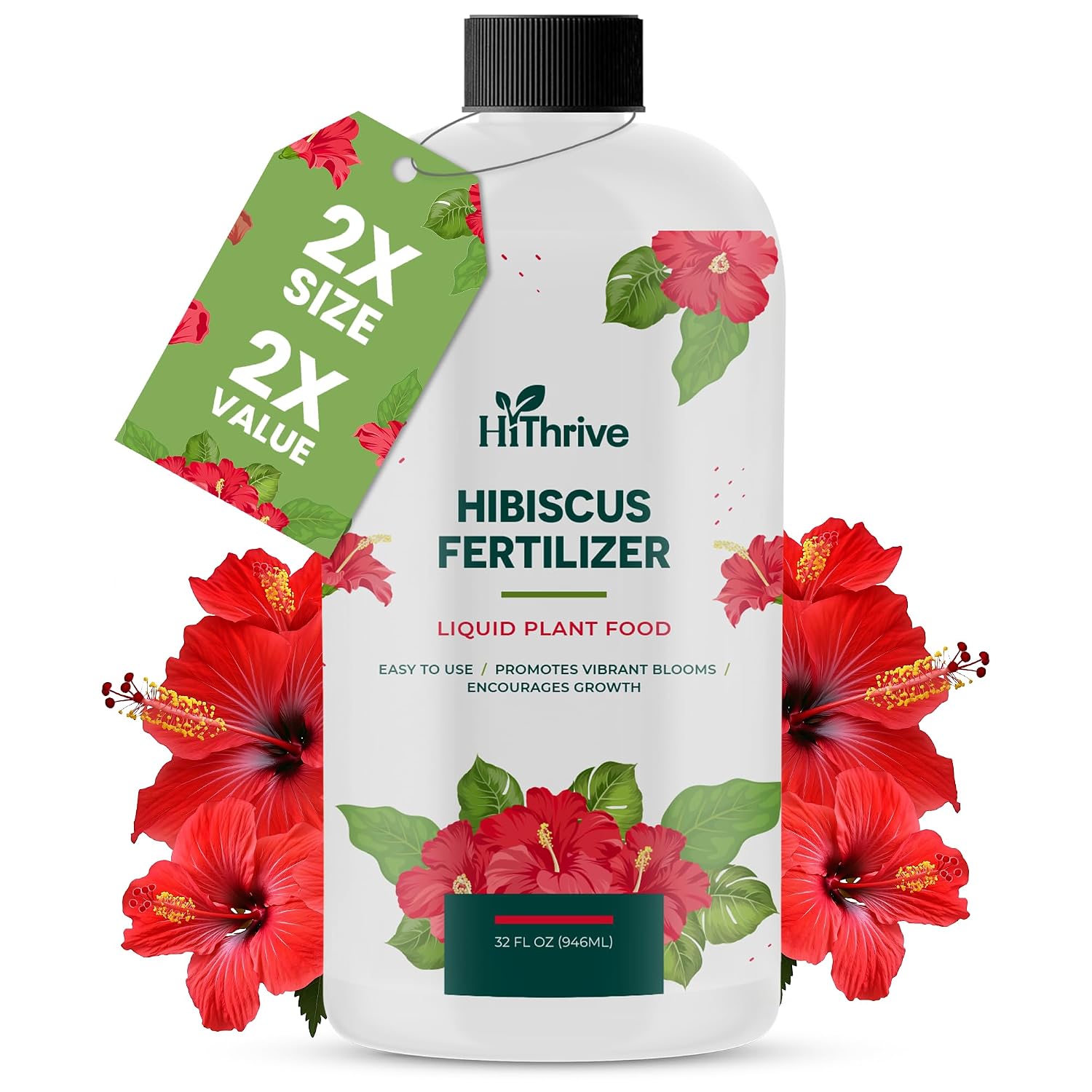
HiThrive Hibiscus Liquid Fertilizer, 32 oz
| Item Form | Liquid |
|---|---|
| Specific Uses For Product | Plant Growth |
| Target Species | Hibiscus |
| Unit Count | 32 Fluid Ounces |
This HiThrive hibiscus liquid fertilizer is a concentrated plant food designed to mix with water and feed hibiscus plants regularly through the growing season. It supplies macronutrients nitrogen, phosphorus and potassium plus six micronutrients in a single bottle; the 32 oz size dilutes to make up to 32 gallons of solution so one bottle covers multiple applications. Typical use is mixing the recommended dose into a watering can, hose-end sprayer, or as a foliar spray and applying every 1–2 weeks in spring and summer and monthly in cooler months. The practical benefit is straightforward dosing instructions and a formula aimed at boosting leaf health, root strength and flower size across hibiscus varieties. Important limitations are the need for careful measurement to avoid overfeeding and the safety precautions; the label warns of skin and eye irritation and environmental harm if misused. This is a standard, easy-to-use liquid feed best suited to gardeners who follow label directions and want predictable bloom and foliage improvement.
Best for: Gardeners who want a ready-to-mix liquid feed to reliably improve hibiscus foliage and blooms and who follow label directions for safe application.
Less Ideal for: People who prefer organic or slow-release granular fertilizers or who do not want to handle concentrated liquid products around children or pets.
- Concentrated formula that dilutes to make up to 32 gallons of feed, giving long usage per bottle
- Balanced NPK plus six micronutrients targeted for hibiscus growth and flowering
- Multiple application methods supported: watering can, hose-end sprayer, or foliar spray
- Clear dosing schedule for frequent summer use and reduced winter feeding
- Contains ingredients that can irritate skin and eyes and may harm the environment if applied improperly
Verdict: A practical, concentrated liquid feed that reliably supports bigger hibiscus blooms and greener leaves when mixed and applied as directed.
Choosing the Right Liquid Fertilizer for Hibiscus: Key Factors to Consider
Nutrient Ratio and N-P-K Balance
Hibiscus responds to a fertilizer ratio that supports flowering rather than excessive leaf growth. Look for formulas with moderate nitrogen, higher phosphorus relative to nitrogen, and adequate potassium to support bloom set and overall plant strength.
The ratio you choose affects feeding frequency. A balanced or bloom-focused liquid allows shorter, more frequent feedings typical for container plants, while high-nitrogen mixes will push foliage at the expense of flowers. Consider seasonal needs too: increase bloom-focused feeding during the active flowering season and reduce it during slow growth.
Micronutrients and Chelated Trace Elements
Micronutrients like iron, magnesium, manganese, and zinc prevent common hibiscus problems such as yellowing between veins and poor bud formation. Chelated forms of iron and manganese stay available in a wider pH range, which is useful when growing in container mixes or alkaline soils.
A liquid fertilizer that lists these trace elements gives you a safety net against subtle deficiencies. Even when macro nutrients are correct, missing micronutrients can limit bloom quality, so prioritize formulas that include a broad trace element profile.
Solubility, Mixing Ease, and Dosing Accuracy
Liquid fertilizers should dissolve cleanly and allow precise measurement. Products that leave residues can clog watering nozzles and foliar sprayers or cause inconsistent dosing that harms delicate container roots.
Clear mixing instructions and flexible concentration ranges are helpful. For hibiscus in pots you will often use weaker, more frequent feedings, so a product that measures well at low dilution rates reduces the risk of overfeeding and root burn.
Container Safety and Salt Accumulation
Many hibiscus are grown in pots where salt can build up quickly. Choose a liquid fertilizer with a formulation and recommended schedule that minimize salt stress. Look for guidance on leaching frequency and whether the product is safe for frequent, low-dose applications.
Some liquids are high in soluble salts and require occasional flushing of containers. A product that explicitly addresses container use makes it easier to avoid leaf tip burn and declining vigor from salt buildup.
Application Flexibility and Foliar Use
Hibiscus can benefit from both root feeding and foliar sprays, especially when rapid correction of deficiencies is needed. A liquid fertilizer that is labeled for foliar application and root drench gives gardeners options for fast-acting feeding or routine soil applications.
Foliar applicability is helpful during the growing season when you want to correct yellowing or deliver a quick nutrient boost. Ensure the product provides safe dilution rates for foliar use and avoid spraying in hot sun to reduce leaf scorch.
Storage Stability and Season-Long Use
Liquid fertilizers vary in how long they remain effective after opening and how they handle storage temperatures. A stable concentrate keeps its nutrient balance through the growing season and reduces waste.
Consider shelf life if you feed intermittently or maintain only a few hibiscus. Products that separate or require vigorous shaking can be inconvenient and lead to inconsistent applications. Favor liquids with clear storage instructions and reasonable stability for seasonal gardeners.
Feeding Frequency for Potted Versus In-Ground Hibiscus
Container-grown hibiscus need more frequent, lighter feedings because nutrients wash out faster and root zones are smaller. Expect to feed diluted liquid fertilizer every one to two weeks during active growth for containers, and reduce to every three to four weeks for established plants in ground beds.
In-ground plants benefit from the buffering capacity of soil and organic matter, so a less frequent schedule is appropriate. Monitor bloom set and leaf color; adjust frequency if flowers decline or foliage shows deficiency signs.
- Containers: weak solution more often to avoid salt buildup
- In ground: stronger, less frequent feedings when soil fertility is low
- Always flush containers periodically to prevent salt accumulation
Using Liquid Fertilizer as a Foliar Spray
Foliar feeding supplies nutrients directly to leaves and can quickly correct deficiencies like iron chlorosis. Use a mild dilution and apply in the cool part of the morning or late afternoon to avoid leaf scorch.
Foliar sprays are not a full replacement for root feeding but are an excellent supplement when you need fast improvement in leaf color or bud development. Avoid spraying the flowers to prevent residue on blooms.
- Apply during cooler hours to reduce evaporation
- Do not exceed recommended foliar dilution rates
- Rinse off salt-prone leaves occasionally if buildup appears
Adjusting Feedings Through the Bloom Cycle
Hibiscus typically flower most heavily during warmer months. Increase bloom-focused feeding at the start of the flowering season and reduce as bloom intensity wanes. If plants become too vegetative, shift to a lower nitrogen or bloom-enhancing maintenance ratio.
Track bud formation and adjust phosphorus levels modestly rather than dramatically. Overfeeding to force blooms often causes more problems than it solves, including weak stems and increased pest attraction.
- Start bloom-focused feeding as buds form
- Scale back nitrogen if excessive leaf growth appears
- Keep a consistent, moderate schedule rather than sporadic strong feedings
Preventing and Correcting Common Deficiencies
Yellowing between veins, pale new growth, and stunted buds are common signs of trace element shortages. Use a liquid fertilizer with chelated micronutrients or apply a targeted foliar spray to correct shortages quickly.
Before increasing macronutrients, rule out pH or drainage issues. Poor nutrient uptake is often a soil or potting mix problem rather than a lack of fertilizer. Adjust pH and improve drainage if deficiencies persist despite regular feeding.
- Check soil pH if micronutrient issues recur
- Use foliar corrections for fast response, then follow with root feeding
- Improve drainage and refresh potting mix for persistent problems
Practical Tips for Mixing and Application
Measure carefully and use clean water at moderate temperature to dissolve concentrates. Mix only what you will use in a single session if the product has short post-dilution stability.
Label your dilution ratios and application dates on the bottle or in a garden log. This helps maintain consistent feeding across the season and prevents accidental overfeeding when multiple caregivers tend the plants.
- Use a measuring cup or syringe for accuracy
- Rinse sprayers and watering cans after use to prevent clogging
- Record feeding schedule and concentration for each plant group
How We Chose the Best Liquid Fertilizer for Hibiscus
We focused on attributes that directly influence hibiscus performance and gardener convenience. Key evaluation criteria included nutrient ratio and elemental balance to judge whether a formula favors flowering versus vegetative growth; micronutrient content, since iron, magnesium, and trace elements prevent chlorosis in hibiscus; solubility and mixing ease to ensure accurate dosing without clogging sprayers; and the safety margin for container-grown plants to reduce burn risk. We also assessed application flexibility, including whether products suit foliar feeding and root drench, and measured concentration so gardeners can tailor frequency for potted versus in-ground specimens. Longevity and stability in storage were reviewed to favor products that retain potency across a season. We excluded granular and slow-release formats, bespoke fertilizer blends for unrelated crops, and products lacking clear nutrient labeling. Our final list includes liquid fertilizers that matched these practical performance and handling filters.
FAQ
How often should I feed hibiscus with a liquid fertilizer?
For potted hibiscus, a weak, regular feeding every one to two weeks during the growing season is common. In-ground plants usually need feedings every three to four weeks unless soil tests show low fertility.
Can I use foliar feeding instead of soil feeding?
Foliar feeding gives a fast corrective boost but does not replace root feeding long term. Use foliar sprays for quick correction of deficiencies and follow with routine root applications for sustained nutrition.
What N-P-K ratio is best for promoting hibiscus blooms?
A moderate nitrogen level with relatively higher phosphorus and adequate potassium supports bloom production. Avoid very high nitrogen formulas that encourage leafy growth at the expense of flowers.
How do I avoid fertilizer burn on container hibiscus?
Use diluted solutions, apply more frequently at lower strengths, and flush containers periodically to remove salt buildup. Follow label dilution guidance and reduce concentration if plants show tip browning.
Are chelated micronutrients necessary for hibiscus?
Chelated micronutrients can be beneficial because they remain available across a broader pH range, helping prevent common deficiencies like iron chlorosis. They are especially helpful when growing in alkaline soils or recycled potting mixes.
Should I change fertilizing routine when hibiscus is not flowering?
Yes. Reduce bloom-focused feeding during dormancy or slow growth periods. Maintain a lighter maintenance feeding to support plant health and resume stronger bloom-focused nutrients as active growth and bud set return.
Final Verdict
Choosing the right liquid fertilizer for hibiscus means balancing bloom-promoting nutrients with micronutrients that keep foliage green and roots safe in containers. Prioritize a formula with a bloom-friendly N-P-K ratio, chelated trace elements, and clear dilution guidance so you can feed frequently without causing salt stress. Match feeding frequency to your planting situation and use foliar sprays for quick corrections. With consistent, measured applications and attention to container leaching and pH, you can keep hibiscus flowering vigorously and maintain healthy, glossy foliage.
