

Note: This article contains affiliate links. If you click on these links and make a purchase, I may earn a small commission at no extra cost to you. This helps support my research and content. Read my full affiliate disclosure here.
When you prune bonsai, the tool you use changes how a branch heals and how the final nebari or jin looks. A bonsai concave cutter removes stubs with a recessed cut that encourages quick callus growth and a low scar profile, which is why picking the right cutter matters. This guide covers seven shortlisted options gardeners rely on for bonsai shaping and maintenance, with attention to blade geometry, handle ergonomics, durability, and ease of sharpening. Use the evaluation notes to match a cutter to your bonsai style and pruning frequency.
Top Picks at a Glance
| Best Overall The best all-around choice for most situations | Wazakura Bonsai Concave and Knob Branch Cutter Set (Made in Japan) |  |
| Best Quality Built to a higher standard if you want something more solid | Wazakura Hand-Forged Bonsai Concave Branch Cutter, 8-inch (200mm) |  |
| Best Value The sweet spot between price and what you get | Bonfino 8.3" Bonsai Concave Cutter (Manganese Steel) |  |
| Best Budget The cheapest option that still gets the job done reliably | M METERXITY 8.3" High Carbon Steel Bonsai Concave Cutter |  |
| Highest Rated A top-rated pick with lots of positive feedback | tianbonsai 205 mm Round Edge Bonsai Cutter |  |
| Most Popular A crowd favorite that many people choose with confidence | VOUIU 8-inch Concave Cutter Bonsai Tool |  |
| Best Seller A high-volume bestseller chosen again and again | VOUIU 4-Piece Bonsai Tool Set (8-inch Concave Cutter, Knob Cutter, Trunk Splitter, Scissors) |  |
Wazakura Bonsai Concave and Knob Branch Cutter Set (Made in Japan)

| Blade Length | 25 millimeters |
|---|---|
| Cutting width | 0.98 inches |
| Blade Type | Bypass |
| Hand Orientation | Ambidextrous |
| Blade Material | Carbon Steel |
This Wazakura set pairs a concave branch cutter with a knob cutter to handle the common pruning needs of bonsai work. The concave cutter removes branches flush with a shallow hollow that promotes neat wound closure, while the knob cutter is shaped to remove trunk knobs, roots, and thicker limbs with a rounded cut. Both tools are hand forged in Sanjo, Japan, from high-carbon steel so the blades arrive sharp, hold an edge well, and can be resharpened when needed. Alloy-steel handles feel sturdy and the ambidextrous bypass-style blades make controlled cuts on small to medium bonsai branches. Practical benefits include cleaner healing for aesthetic trees and a durable build that fits repeated use. The set is compact for a bonsai bench and doubles as a thoughtful gift for enthusiasts. Limitations are that carbon steel requires drying and occasional oiling to prevent rust, and the cutters are specialized tools that do not replace general pruning shears for thicker outdoor branches.
Best for: A buyer who wants reliable, artisan-made bonsai tools that produce clean cuts and support long-term tree health, suitable for hobbyists and intermediate growers focused on styling and maintenance.
Less Ideal for: Gardeners who need general-purpose pruning tools for large branches or those who prefer stainless, low-maintenance blades should look elsewhere.
- Includes both concave and knob cutters to tackle flush cuts and rounded removals
- Hand forged in Japan from high-carbon steel for sharp edges and resharpening ability
- Ambidextrous bypass blades provide precise, clean cuts suited to bonsai shaping
- Sturdy alloy-steel handles and compact size fit bench work and packing for shows or classes
- Carbon steel blades need regular drying and oiling to resist corrosion
- Specialized cutters only for bonsai/precision work and not intended for large outdoor pruning
Verdict: Buy this set if you want precision, long-lasting, Japanese-forged concave and knob cutters that produce clean wounds for better bonsai healing.
Wazakura Hand-Forged Bonsai Concave Branch Cutter, 8-inch (200mm)

| Blade Material | Carbon Steel |
|---|---|
| Material Type | S55C Carbon steel |
| Blade Length | 25 millimeters |
| Cutting width | 0.5 inches |
| Size | 8inch (200mm) |
The Wazakura 8-inch concave cutter is built for precise branch removal on bonsai where minimal scarring matters. Its S55C carbon steel jaws are hand forged in Sanjo, Japan, producing strong, closely mating cutting surfaces that make slightly hollow concave cuts so wounds close smoothly. You use it for finishing cuts on small to medium branches roughly 8 to 13 mm in diameter; the 25 mm blades and bypass-style action deliver a clean shearing motion while the hollow blade edge helps shape the cut. Wave-shaped handles provide a secure grip and extra leverage when tackling thicker material, and ambidextrous orientation suits either hand. Because the tool is carbon steel it will hold a keen edge but needs routine cleaning and occasional sharpening to prevent rust and maintain performance. Also it is sized for fine bonsai work, so it is not suitable for larger pruning tasks. For someone focused on performance and clean results, this cutter gives durable, artisan-quality cutting power in a compact package.
Best for: A buyer who prioritizes cutting performance and clean healing on bonsai will appreciate this tool for precision finishing cuts and ongoing maintenance of small to medium branches.
Less Ideal for: Not a good choice for gardeners who need a general-purpose pruner for larger branches or who want stainless low-maintenance tools.
- Hand-forged S55C carbon steel blades for strong, long‑lasting cutting edges
- Designed to make a slightly hollow concave cut that promotes cleaner healing and less scarring
- Wave grip handles deliver secure, comfortable hold and good leverage
- Ambidextrous bypass design suitable for precise bonsai finishing cuts
- Made in Sanjo, Japan by traditional artisans, reflecting consistent craftsmanship
- Carbon steel requires regular cleaning and sharpening to prevent rust and retain edge
- Cutting capacity limited to about 8–13 mm so not suitable for larger branches
Verdict: Choose this Wazakura concave cutter if you want a performance-focused, hand-forged tool that produces clean, slightly hollow cuts for minimal scarring on small to medium bonsai branches.
Bonfino 8.3" Bonsai Concave Cutter (Manganese Steel)

| Cutting width | 8 millimeters |
|---|---|
| Blade Type | Anvil |
| Hand Orientation | Ambidextrous |
| Blade Material | Alloy Steel |
The Bonfino 8.3" concave cutter is a purpose-built bonsai tool for making recessed cuts that encourage quick healing and minimal scarring. It is forged from manganese alloy steel with an anvil-style blade and a concave jaw that bites cleanly into 8–13 mm branches, so it handles routine branch removal, deadwood work, and trimming of training wire without crushing the wood. The ergonomic handles and ambidextrous orientation make it comfortable for extended shaping sessions, and the rust-resistant finish helps in outdoor use. Practical benefits include precise recessed cuts that leave a neat silhouette and a durable edge that holds up to regular maintenance. Limitations are the cutter's size and cutting range, which restricts it to small-to-medium branches and routine bonsai work rather than heavy pruning, and users who need a full pruning set will still need shears or saws for larger material.
Best for: A buyer who prioritizes precise, low-scar cuts and durable construction for regular bonsai maintenance and shaping. Ideal for hobbyists and practical gardeners who want a reliable standalone concave cutter to perform routine branch work efficiently.
Less Ideal for: Not a good fit for someone who needs tools for heavy pruning, large-diameter branches, or a complete bonsai toolkit for varied tasks.
- Concave jaw creates recessed cuts that promote faster healing and less scarring.
- Hard manganese alloy steel blade is rust-resistant and holds a sharp edge for precise cuts.
- Ergonomic, ambidextrous handles reduce hand fatigue during detailed wiring and pruning.
- Cleanly cuts branches and can trim training wire without crushing the wood.
- Limited cutting diameter (8–13 mm) so not suitable for larger limbs.
- Anvil blade type may require occasional sharpening to maintain factory edge.
Verdict: Buy this if you want a durable, ergonomically shaped concave cutter that delivers neat, recessed cuts for everyday bonsai pruning.
M METERXITY 8.3" High Carbon Steel Bonsai Concave Cutter

| Blade Material | High Carbon Steel |
|---|---|
| Blade Edge | Hollow |
| Blade Type | Anvil |
| Hand Orientation | Ambidextrous |
This 8.3-inch M METERXITY concave cutter is a straightforward bonsai pruning tool for removing knobs and cutting small branches to create neat, recessed wounds that heal with minimal scarring. The high carbon steel blade and hollow concave edge produce clean, curved cuts useful when carving trunk knobs or smoothing pruning points. The ambidextrous handles combine plastic and rubber for a grippy feel during detail work, and the tool’s small footprint makes it easy to maneuver around tight branching. It is best used for routine sculpting and maintenance on small to medium bonsai where precise concave cuts are needed. Expect to occasionally sharpen or oil the blade to prevent rust and keep the edge responsive, and the plastic handle will not provide the premium balance or longevity of full-metal grips. For a buyer focused on economy, this tool delivers the essential cutting geometry without extra bells and is practical for both beginners and hobbyists.
Best for: Practical bonsai owners on a tight budget who need a capable concave cutter for routine shaping and knob removal; good for beginners and hobbyists prioritizing function over premium finish.
Less Ideal for: Professional bonsai artists seeking top-grade balance and all-metal construction or those who work on very large trunks should consider heavier-duty cutters instead.
- Concave hollow blade produces clean recessed cuts for faster healing
- High carbon steel blade offers good edge retention when maintained
- Ambidextrous design suits left- and right-handed users
- Compact length and slim profile for working in tight bonsai branches
- Plastic and rubber handle may wear faster than all-metal alternatives
Verdict: A budget-friendly concave cutter that gives clean, practical cuts for bonsai shaping without the cost of premium all-metal tools.
tianbonsai 205 mm Round Edge Bonsai Cutter

| Blade Material | Alloy Steel (3Cr13) |
|---|---|
| Overall Length | 205 mm |
| Cutting width | 8 millimeters |
| Edge Hardness | HRC50 |
| Hand Orientation | Ambidextrous |
This 205 mm tianbonsai cutter is built for routine bonsai pruning and precision branch work. Made from 3Cr13 alloy steel with HRC50 edge hardness and a sanded finish, it combines a straight cutting edge and a round knob-style edge so you can make flush cuts that encourage clean healing. The ambidextrous, all-steel construction feels sturdy in hand and is sized for controlled one-handed use; the maker specifies wet-branch cutting up to 8 mm, which suits most small branch and twig work on young or medium bonsai. Because the tool is a simple single-piece steel design it is easy to clean, sharpens predictably, and should hold an edge for regular maintenance tasks. Limitations are its modest 8 mm cutting capacity and that it is not a dedicated concave cutter with deep-curving jaws, so heavier pruning or removing large wounds will require a separate concave-specific tool.
Best for: Buyers who prioritize a reliable, durable tool for regular bonsai maintenance and want a single cutter that handles most small-branch pruning tasks with predictable performance.
Less Ideal for: People who need to remove thicker branches or create deep concave wounds for advanced shaping should choose a dedicated concave cutter or larger pruning tools.
- Durable 3Cr13 alloy steel construction with HRC50 heat-treated edge for lasting sharpness
- Dual-edge design offers both straight and round cutting surfaces for versatile bonsai cuts
- Ambidextrous steel handle and 205 mm length provide secure, controlled one-handed use
- Sanded surface finish improves grip and is easy to clean after sap and soil exposure
- Rated for wet-branch cuts only up to 8 mm, unsuitable for larger branches
- Not a true concave cutter so it will not create deep recessed cuts for larger wound healing
Verdict: A sturdy, heat-treated alloy-steel cutter that reliably handles routine small-branch bonsai pruning with clean, predictable cuts.
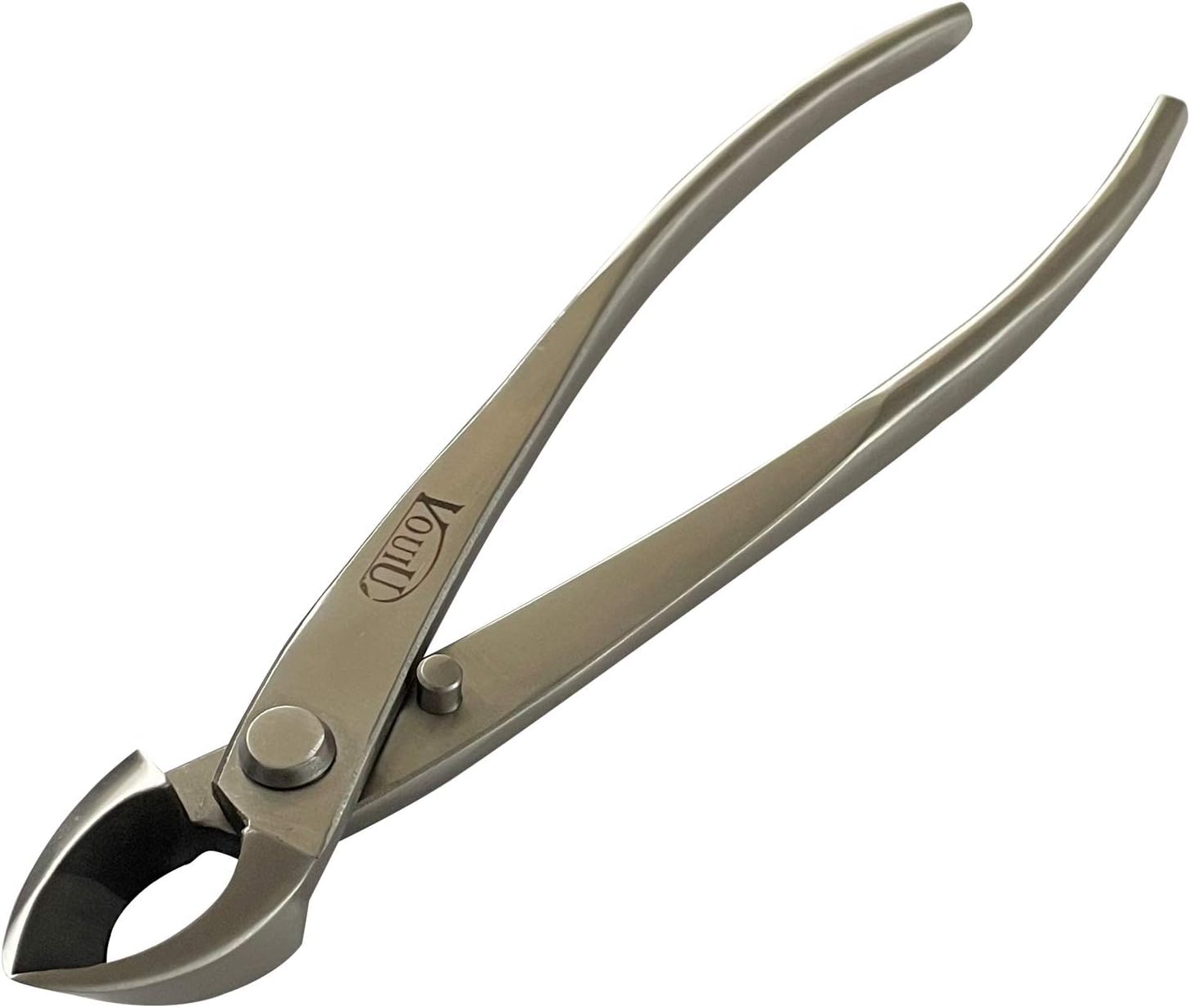
VOUIU 8-inch Concave Cutter Bonsai Tool
| Blade Type | Anvil |
|---|---|
| Hand Orientation | Ambidextrous |
| Blade Material | Stainless Steel |
| Handle Material | Stainless Steel |
The VOUIU 8-inch concave cutter is a stainless steel pruning tool made for cleanly removing bonsai branches and creating recessed cuts that promote faster healing. It is typically used to pare back stubs after wiring or branch removal; the concave shape helps leave a slightly hollowed cut that reduces the need for heavy carving. The anvil blade design and all-stainless construction mean it can handle tougher wood without rusting when rinsed and dried after use. At 8 inches it gives good leverage for controlled cuts while remaining compact for working on small trees. Practical benefits include ambidextrous handling and durable blades that stay sharp for routine bonsai maintenance. Important limitations are that an anvil-style cutter can compress softer wood more than bypass cutters, so it is better suited to woody branches rather than very green shoots, and precise finishing may still require a chisel or concave cutter for final shaping.
Best for: Buyers who want a reliable, rust-resistant concave cutter for regular bonsai branch removal and prefer tools with positive user feedback and practical durability.
Less Ideal for: Collectors who need ultra-fine finishing tools for delicate green shoots or those seeking a bypass-style shear for the cleanest cuts on live growth.
- Stainless steel blade and handle for corrosion resistance and durability
- Concave cutter shape produces recessed cuts that heal well on bonsai trunks
- Ambidextrous design works comfortably for left- or right-handed users
- 8-inch length offers good leverage while remaining manageable for detailed work
- Anvil blade can crush soft green wood rather than slicing cleanly
- Not a finishing tool for detailed trunk shaping after large cuts
Verdict: A sturdy stainless-steel concave cutter that delivers durable, recessed cuts ideal for routine bonsai branch removal.
VOUIU 4-Piece Bonsai Tool Set (8-inch Concave Cutter, Knob Cutter, Trunk Splitter, Scissors)

| Blade Material | Stainless Steel |
|---|---|
| Blade Edge | Straight |
| Blade Type | Anvil |
| Hand Orientation | Ambidextrous |
This VOUIU set combines an 8-inch concave cutter, knob cutter, trunk splitter, and long‑handled bonsai scissors to handle most routine bonsai pruning and shaping. The stainless steel blades and anvil/straight cutting styles are suited for removing branches, trimming knobs and buds, and splitting trunks for wiring or bending. Resin handles keep the tools lightweight and ambidextrous, and the concave and knob cutters leave recessed cuts that encourage cleaner healing on bonsai wounds. For everyday use it is convenient to have the four tools matched in size so you can move between shaping and fine pruning without swapping vastly different tools. Limitations are that the set does not list blade steel grade or corrosion treatment, so extra care and drying after use will extend life, and the handles are resin rather than wood or ergonomic rubber which some users prefer for long sessions.
Best for: Buyers who want a complete, ready-to-use bonsai pruning kit that covers common shaping and wound-cutting tasks and prefer a straightforward, no-frills toolset.
Less Ideal for: Professional bonsai artists seeking premium heat-treated steel, specialty handle ergonomics, or a wider range of blade sizes should consider higher-end individual tools.
- Includes the four core bonsai tools needed for pruning and shaping: concave cutter, knob cutter, trunk splitter, and long‑handled scissors.
- Stainless steel blades suitable for clean cuts on branches and buds.
- Ambidextrous design works for left- and right-handed users.
- Matched 8-inch length across tools simplifies handling and storage.
- Blade steel grade and any corrosion resistance are not specified so blades may need regular cleaning and oiling.
- Resin handles lack the cushioning or traditional feel of wooden or rubber grips.
Verdict: A practical four-piece bonsai set that gives risk-averse buyers a cohesive kit for clean concave cuts and everyday bonsai shaping.
Choosing the Right Bonsai Concave Cutter: Key Factors to Consider
Blade Geometry and Cut Profile
The concave shape and bevel of the cutter blade determine how much wood is removed and the angle of the resulting wound. A well-formed concave profile trims close to the trunk without gouging living tissue, leaving a shallow recess that calluses over cleanly. Thinner bevels cut with less tearing but can dull faster; steeper bevels stay sharper longer but risk leaving a more pronounced scar. Consider how the blade profile matches the species you prune and whether you prefer a slightly conservative cut that preserves cambium or an aggressive cut for quick shaping.
Steel Type and Heat Treatment
Steel composition and how it is heat-treated impact edge retention, toughness, and the tool's resistance to chipping. High-carbon steels often take a sharper edge and are easier to resharpen, but they need regular care to prevent rust. Stainless alloys resist corrosion but can be harder to sharpen to a razor finish. Heat treatment quality controls how the blade balances hardness with toughness; poorly treated steel will either blunt quickly or chip under stress. Pick a balance that fits your sharpening habits and how often you prune.
Handle Comfort and Grip
Ergonomic handles reduce hand fatigue when you prune many branches or work for extended sessions. Look for shapes that fit your hand size and grips that provide traction when wet or when sap is present. Rigid handles transmit cutting force efficiently but can be uncomfortable over time; slightly cushioned grips absorb shock but may collect debris. Consider whether you need a short, compact handle for tight knob work or a longer handle for extra leverage on thicker stubs.
Joint Construction and Pivot Quality
The pivot determines how reliably the blades align and how much wobble develops with use. A solid rivet or bolt with proper tolerances keeps the cutting edges aligned for consistent concave cuts. Poorly made pivots introduce play that leads to uneven cuts and more bark tearing. Some designs offer adjustable tension or replaceable bushings that extend the tool's useful life. Think about whether you prefer a sealed pivot to keep dirt out or a user-serviceable joint you can tighten later.
Sharpening and Long-Term Maintenance
How easy a cutter is to sharpen and maintain affects its lifetime performance. Straightforward bevel angles and accessible edges make honing quicker. Tools that disassemble easily let you clean sap and grit from the pivot and inner faces, preventing corrosion and keeping the cut smooth. Consider whether you have the skills and tools to resharpen high-hardness steel, or if you prefer a softer alloy that is forgiving to maintain. Regular lubrication, drying after use, and occasional tune-ups will keep any cutter functioning well.
Size and Cutting Capacity
Cutting capacity determines the maximum branch diameter you can remove with a single clean concave cut. Smaller cutters excel on fine ramification and twig work, offering precision in tight areas. Larger cutters provide leverage for thicker stubs but are heavier and less nimble. Choose a size that matches the typical branch thickness you prune and the scale of your bonsai. If you work across a range of sizes, consider keeping two cutters or selecting a mid-size tool that balances reach and control.
When to Use a Concave Cutter
Use a concave cutter for removing branch stubs and shaping where you want the scar to heal flush with the trunk. The tool is meant to excise the wood cleanly, leaving a slightly recessed surface that encourages callus tissue to form evenly.
Avoid using concave cutters for greenwood whips or extremely flexible shoots where a bypass shear or snip is more appropriate. Reserving concave cuts for woody stubs helps maintain the intended wound profile and speeds cosmetic recovery.
- Best for woody stubs and structural pruning
- Not ideal for soft, leafy shoots
- Pairs well with grafting knives and rasps for finishing
How to Make a Proper Concave Cut
Position the cutter so the concave face sits just outside the branch collar and squeeze firmly in a single, decisive motion. Aim to leave the smallest possible recess without damaging surrounding bark. Clean, decisive cuts reduce the chance of tearing and produce a scar that heals more predictably.
After cutting, remove any jagged fibers with a curved carving knife or fine rasp if needed, then keep the wound clean and dry while it calluses. Avoid painting wounds unless treating a specific pest or disease, since many species heal best naturally.
- Seat blade outside the branch collar
- Use a single decisive squeeze
- Touch up only to remove torn fibers
Maintaining Your Concave Cutter
Wipe sap and debris from blades after each session and open the pivot occasionally to clear trapped material. Apply a light film of oil to pivot points to prevent stiffness and to the blades to reduce corrosion risk. Store the cutter dry and away from moisture.
Sharpening should match the original bevel angle. Use fine stones or files and finish with a leather strop if possible. For stainless alloys, diamond hones are often more effective; for high-carbon steel, oil stones give a clean edge.
- Clean sap after use
- Oil pivot and blades lightly
- Sharpen to original bevel and strop for finish
Choosing Size and Weight for Your Bonsai Style
If you focus on smaller styles such as shohin or mame, prioritize compact, lightweight cutters that let you work in tight spaces without disturbing surrounding foliage. For larger bonsai or more heavy-handed structural work, choose a tool with greater leverage and a robust pivot.
Balance the tradeoff between reach and control. Heavier tools give power but tire your hands faster; lightweight tools give precision but may require more effort on thicker wood.
- Small cutters for fine ramification
- Mid-size for general-purpose pruning
- Large cutters for thicker stubs and structural work
Common Mistakes to Avoid
Cutting too close and damaging the branch collar will slow healing and increase the visibility of scars. Leaving too much stub forces an uneven callus and creates a noticeable bump. Learn to judge the branch collar and adjust your cut accordingly.
Using a dull or misaligned cutter leads to tearing rather than clean removal. If you notice fraying or bark pull, stop and sharpen or service the pivot before continuing.
- Do not damage the branch collar
- Avoid leaving large stubs
- Sharpen or service tools when cuts start to fray
How We Chose the Best Bonsai Concave Cutter
We focused on characteristics that affect pruning outcomes and long-term tool performance for bonsai care. Key evaluation dimensions included blade geometry and bevel profile to assess how cleanly a cutter removes stubs and how little bark tearing occurs. Handle ergonomics and grip material were rated for comfort during repetitive pruning and for control when working on delicate branches. Steel composition and heat treatment were considered to estimate edge retention and how often sharpening is needed. Joint stability and pivot design were inspected for consistent closed-cut alignment and minimal play over time. Ease of maintenance covered how simple it is to disassemble, clean, and sharpen the tool. We excluded shears and general-purpose pruners that do not have a true concave cutting edge, plus folding multi-tools that compromise geometry. The final list favoured tools that balance precise cutting geometry with durable construction and user comfort.
FAQ
How often should I sharpen a concave cutter?
It depends on how frequently you prune and the species you cut. For regular hobbyists, a light touch-up every few months of active use is common. If you prune hardwoods or work often, sharpen more frequently to maintain clean cuts.
Can I use a concave cutter on live green shoots?
Generally no. Concave cutters are optimized for woody stubs; green shoots are better handled with bypass shears or snips to avoid crushing and tearing softer tissue.
Is a stainless blade better than high-carbon for bonsai cutters?
Each has tradeoffs. Stainless resists corrosion and needs less surface care in humid environments. High-carbon steels can take a sharper edge and are easier to resharpen but require more diligent drying and oiling to prevent rust.
How do I know if the pivot needs adjustment?
If you see uneven cuts, blade overlap, or a loose feel when closing, the pivot likely needs tightening or servicing. A properly adjusted pivot will allow smooth, aligned cutting with minimal side play.
Should I disinfect my cutter between trees?
Often it depends on the situation. For healthy routine pruning it may not be necessary, but disinfect between trees if you suspect disease or when working on plants with known infections to reduce pathogen spread.
Final Verdict
Prioritize a cutter with the right blade geometry, reliable pivot, and comfortable handle for the scale of bonsai you work on. Expect tradeoffs between edge retention and ease of sharpening when choosing steel type, and match size to the typical branch diameters you remove. With routine maintenance and proper cutting technique, the right concave cutter will produce cleaner wounds and speed aesthetic recovery, letting you shape trees more confidently.
