

Note: This article contains affiliate links. If you click on these links and make a purchase, I may earn a small commission at no extra cost to you. This helps support my research and content. Read my full affiliate disclosure here.
Fig trees in containers demand a feeding plan different from those in the ground. Container soil holds limited nutrients and washes out faster with regular watering, so the right fertilizer helps maintain leaf color, steady growth and reliable fruiting without burning roots. This guide covers six top fertilizer options shortlisted for potted fig trees and explains why each type works in a container setting. We evaluate nutrient balance, application method, and how each formula behaves in potting mixes to help you pick the best fit for your growing situation. Read on for feeding strategies, timing tips, and product characteristics that matter for potted figs.
Top Picks at a Glance
| Best Overall The best all-around choice for most situations | Wellspring Gardens Fig Fuel Liquid Fertilizer (32 fl oz) |  |
| Best Quality Built to a higher standard if you want something more solid | GARDENWISE Olive Tree Fertilizer (8 fl. oz.) |  |
| Best Value The sweet spot between price and what you get | TPS Nutrients Fig Tree Liquid Fertilizer, 8 fl oz |  |
| Best Budget The cheapest option that still gets the job done reliably | Jobe's Organics Granular Fruit & Citrus Fertilizer, 4 lb |  |
| Most Popular A crowd favorite that many people choose with confidence | TPS Nutrients Fiddle Leaf Fig Liquid Fertilizer, 8 oz |  |
| Best Seller A high-volume bestseller chosen again and again | TPS NUTRIENTS Indoor Plant Food Liquid Fertilizer, 8 fl oz |  |
Wellspring Gardens Fig Fuel Liquid Fertilizer (32 fl oz)

| Item Form | Liquid |
|---|---|
| Specific Uses For Product | Plant Growth |
| Target Species | Fig |
| Liquid Volume | 32 fluid ounces |
| Mixing Ratio | 1 tablespoon per 2 gallons |
Wellspring Gardens Fig Fuel is a 3-3-3 liquid concentrate designed to give fig trees steady, balanced nutrition during active growth. You mix 1 tablespoon per 2 gallons of water and apply to container or in-ground figs, so it is straightforward to use on patio specimens as well as landscape trees. The even NPK ratio supports leafy growth, root development, and overall vigor without pushing excessive foliage at the expense of fruiting. As a liquid concentrate it is fast-acting and easy to measure, which makes seasonal feedings simple to schedule. Important practical notes: the product is a fertilizer concentrate labeled for figs and carries standard safety warnings to avoid skin or eye contact. It does not include an analysis of secondary nutrients or micronutrients on the listing, so gardeners seeking a specialized micro-nutrient program or slow-release feeding may need to supplement or rotate products. For routine, balanced feeding of fig trees this delivers predictable, easy-to-use nutrition.
Best for: Gardeners who want a simple, balanced fertilizer tailored to fig trees and prefer a fast-acting, easy-to-mix liquid for both containers and landscape specimens.
Less Ideal for: Growers seeking a tailored micronutrient program, organic-only inputs, or a single-application slow-release solution should consider other specialized products.
- Balanced 3-3-3 NPK suitable for general fig health and fruiting
- Liquid concentrate mixes easily for quick application
- Formulated specifically for fig trees and labeled for both potted and landscape use
- Simple, easy-to-follow mixing rate (1 tablespoon per 2 gallons)
- Listing does not detail micronutrient or secondary nutrient content
- Not a slow-release formula so more frequent applications may be needed for season-long feeding
Verdict: Use this easy-to-mix 3-3-3 liquid concentrate when you want straightforward, balanced nutrition to keep potted and landscape fig trees healthy and productive.
GARDENWISE Olive Tree Fertilizer (8 fl. oz.)
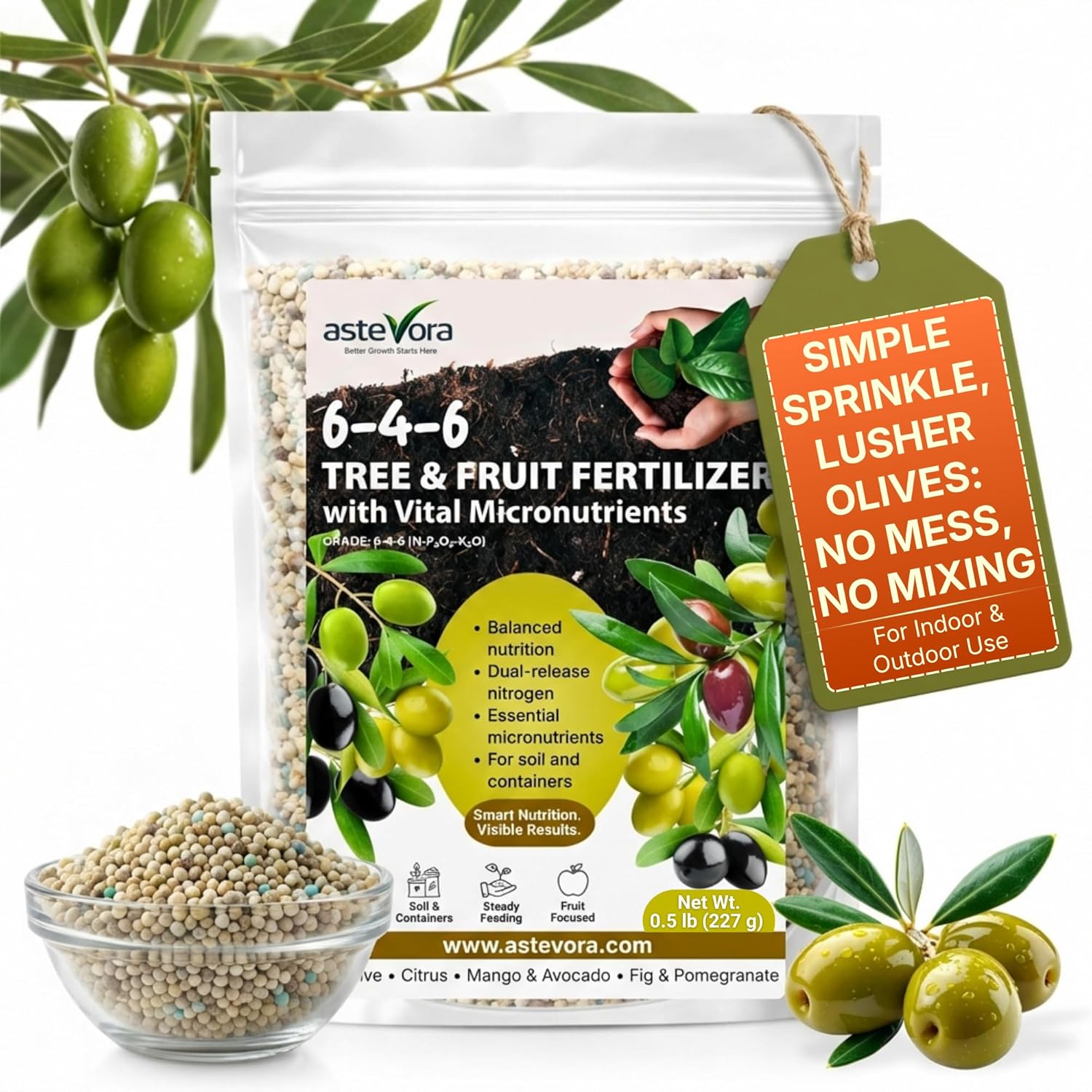
| Item Form | Granules |
|---|---|
| Mixing Ratio | 6:4:6 |
| Specific Uses For Product | Olive tree fertilizer, Plant Growth, Root Development, Seed Development |
| Unit Count | 8 Fluid Ounces |
| Ingredients | NPK, mineral fertilizer, Slow-Release Nitrogen |
This granular 6-4-6 fertilizer is designed for olive and other fruit trees in pots or the ground and delivers both water-soluble and slow-release nitrogen for immediate and sustained feeding. You apply the granules directly to the soil and water them in, which makes dosing straightforward for potted plants and in-ground specimens; the manufacturer recommends feeding containers every 6 to 8 weeks during active growth. The formula includes 1% iron and 1% magnesium plus micronutrients to help maintain leaf color and overall vigor, and the no-mix granules reduce mess compared with liquid feeds. For reliability-minded gardeners, the dual-release N and clear application schedule mean predictable, steady nutrition through the season. Limitations to note are the small 8 fl. oz. unit size, which may require multiple purchases for larger trees or orchards, and the product information does not list complete micronutrient concentrations or an exact application table for mature pomegranate trees specifically.
Best for: Gardeners who prioritize predictable, low-fuss nutrient delivery for single potted fruit trees or a few young in-ground specimens and who want an easy apply-and-water routine.
Less Ideal for: Large-scale growers or those managing multiple mature pomegranate trees who need bulk quantities and detailed application rates for big specimens.
- Dual-release nitrogen combines quick feeding with controlled-release for steady nutrition
- Granular no-mix form is easy to apply and avoids measuring liquids
- Includes iron and magnesium to help maintain deep green foliage
- Clear feeding interval for potted plants (every 6–8 weeks)
- Small 8 fl. oz. unit may be insufficient for mature or multiple trees
Verdict: A compact, easy-to-use granular feed that gives reliable immediate and sustained nutrition for single potted or small-scale fruit trees.
TPS Nutrients Fig Tree Liquid Fertilizer, 8 fl oz

| Item Form | Liquid |
|---|---|
| Specific Uses For Product | Plant Growth |
| Coverage | Medium |
| Target Species | Fig Trees |
| Liquid Volume | 8 fluid ounces |
This 8 fl oz liquid from TPS Nutrients is a targeted plant food for fig trees that you mix into watering or apply with a hose-end sprayer from spring through late summer. It is designed to encourage stronger shoots, denser foliage, deeper roots, and improved fruit set and sweetness, so it fits into a regular feeding routine for patio or container figs. The liquid form makes it easy to dose into irrigation or water cans and the label recommends feeding every two weeks, which helps maintain steady nutrient availability without large granular applications. Practical benefits include ease of application, suitability for both potted and in-ground specimens, and a formulation intended to avoid overfeeding. Limitations are the small 8 ounce bottle size if you have multiple or large containers and the need to follow dilution directions carefully to avoid under- or over-application. Also it does not list an NPK breakdown on the provided details, so buyers wanting exact nutrient ratios will need to seek that information before committing.
Best for: A practical gardener with one or a few potted fig trees who wants a straightforward, easy-to-apply liquid feed to maintain steady growth and fruiting without complex fertilizing schedules.
Less Ideal for: Not the best choice for large orchards, commercial growers, or gardeners who need detailed NPK specifications for precision fertilizing.
- Liquid form for easy mixing and hose-end or watering-can application
- Formulated specifically for fig trees, supporting fruit set and sweeter fruit
- Suitable for both potted and in-ground fig trees
- Intended to strengthen roots and encourage fuller foliage
- Small 8 fl oz volume may require frequent repurchasing for multiple or large trees
- No NPK ratio listed in the provided product details
Verdict: A convenient liquid feed made for home and container fig trees that simplifies biweekly feeding to boost roots, foliage, and fruit set.
Jobe's Organics Granular Fruit & Citrus Fertilizer, 4 lb

| Item Form | Granules |
|---|---|
| Specific Uses For Product | Plant Growth, Root Development, Seed Development, Soil Conditioning |
| Application Method | Spread evenly around base |
| NPK | 3-5-5 |
| OMRI Listed | Yes |
This granular Jobe's Organics fertilizer is designed to feed fruit and citrus trees with a slow-release, root-targeted NPK of 3-5-5. It is typically applied by measuring and spreading the granules evenly around the base of the tree, then watering in; applications are recommended every 4 to 8 weeks during the growing season. Notable features include OMRI listing for organic gardening, a blend of feather meal, bone meal and processed poultry manure for organic nutrient sources, and a resealable bag for convenient storage. In practice the formula supports root development and fruit set without synthetic chemicals, and the slow-release nature reduces the need for very frequent feeding. Limitations are that the lower nitrogen level makes it better suited for fruiting and flowering stage nutrition rather than rapid leafy growth, and larger trees will require repeated applications or larger quantities. For gardeners aiming for an organic, low-fuss feed for citrus, this provides predictable, targeted nutrition, but it is not a quick-fix soluble feed for immediate green-up.
Best for: Gardeners who prefer organic, low-maintenance feeding for citrus and fruit trees and want a slow-release product that focuses on fruit and root health.
Less Ideal for: Growers needing fast, high-nitrogen correction or a soluble foliar feed; landscapers managing many mature trees who need bulk quantities more often.
- OMRI listed organic formula suitable for certified organic gardens
- Balanced 3-5-5 NPK aimed at improving flowering and fruit production
- Slow-release granules that feed roots over time and reduce application frequency
- Resealable packaging keeps product fresh between uses
- Lower nitrogen content means it will not rapidly promote leafy growth
- 4 lb bag may be insufficient for mature trees or larger plantings
Verdict: A reliable OMRI-listed granular fertilizer that delivers slow-release, fruit-focused nutrition for organic citrus gardeners.
TPS Nutrients Fiddle Leaf Fig Liquid Fertilizer, 8 oz

| Item Form | Liquid |
|---|---|
| Application Method | Dilute and apply to soil |
| Coverage | Medium |
| Target Species | Fig |
| Mixing Ratio | 1:32 |
This 8 oz liquid fertilizer is formulated specifically for fiddle leaf figs and designed to be diluted and applied to the soil. It contains an NPK profile aimed at supporting foliage and new growth and includes kelp to help reduce yellowing and leaf drop. Typical use is straightforward: mix according to the listed 1:32 ratio and water the potting mix every few weeks to provide steady nutrition without granular mess. The liquid format absorbs quickly so symptoms of nutrient deficiency can respond faster than with slow-release products, and the gentle formula reduces the risk of burning when used as directed. Limitations are the small bottle size for larger or multiple trees and the product does not give precise per-plant dosing beyond the mixing ratio, so careful measuring is necessary to avoid overfeeding.; frequent feeders or big specimens will need repeated purchases.
Best for: Buyers who want a fiddle leaf fig–focused, easy-to-apply liquid feed and who prefer products with many user reviews to confirm consistent results.
Less Ideal for: Those managing large collections or very large indoor trees who prefer bulk or slow-release fertilizers that require less frequent reapplication.
- Formulated specifically for fiddle leaf figs to support leaf size and color
- Liquid concentrate absorbs quickly for faster correction of deficiencies
- Kelp-enriched formula adds natural growth stimulants
- Gentle feeding profile reduces risk of fertilizer burn if mixed properly
- Small 8 oz bottle may not last long for medium to large plants or multiple specimens
- Product directions do not include precise per-pot dosage guidance beyond the mixing ratio
Verdict: A fiddle leaf fig–targeted liquid concentrate that delivers fast-acting, kelp-enriched nutrition in a compact, easy-to-mix bottle.
TPS NUTRIENTS Indoor Plant Food Liquid Fertilizer, 8 fl oz

| Item Form | Liquid |
|---|---|
| Specific Uses For Product | Plant Food |
| Application Method | Watering can |
| Mixing Ratio | 2:1 (oz/gallon) or 1:64 (tbsp/gallon) |
TPS NUTRIENTS Indoor Plant Food is a concentrated liquid fertilizer made for regular use with houseplants. You mix the measured dose into water and apply it with your usual watering can; the label gives an easy mixing ratio for household use. Its kelp-enriched formula is pitched at improving leaf color, encouraging steady new growth, and supporting root health, so expect glossier foliage and more frequent leaf production when plants are fed consistently. The 8 fl oz bottle is portable and fits on a plant shelf or utility area, and the liquid form dissolves readily for even application. It is intended for medium coverage and labeled as gentle for weekly feeding, which simplifies care for busy owners. Important limitations are that this is a small bottle meant for regular top-up feedings rather than long-term bulk use, and it assumes you will follow dilution directions to avoid overfeeding. Keep it away from children and pets and avoid skin or eye contact when handling.
Best for: Plant owners who want a simple, low-effort weekly fertilizer to keep indoor foliage vibrant and encourage steady new leaf growth. Good for people who prefer an easy liquid mix applied during regular watering routines.
Less Ideal for: Gardeners needing a bulk or multi-season fertilizer for outdoor beds or large collections should consider larger-capacity or specialized products instead.
- Liquid concentrate mixes easily for even application with a watering can
- Kelp-enriched formula aimed at improving foliage color and encouraging new growth
- Gentle enough for weekly feedings according to product guidance
- Clear mixing instructions for home use
- Small 8 fl oz volume limits how many plants you can feed before repurchasing
- Not formulated or labeled for outdoor or large-scale garden use
Verdict: A convenient kelp-enriched liquid concentrate that makes weekly feeding easy for anyone who wants healthier, more vibrant indoor foliage.
Choosing the Right Fertilizer for Potted Fig Tree: Key Factors to Consider
Nutrient Ratio and Timing
Fig trees respond to a balanced diet but container-grown trees need a tailored ratio to avoid excessive vegetative growth or poor fruit set. A moderate nitrogen level encourages healthy leaves without making the tree leggy, while available phosphorus and potassium help flower and fruit production. Look for fertilizers that state their N-P-K clearly and match the season.
Timing matters because potted soil has limited buffering capacity. Slow-release formulations can provide steady supply through the growing season, while water-soluble feeds allow quick correction of deficiencies. Match the feed schedule to pot size and growth rate to prevent nutrient shocks.
Salt Index and Root Safety
Containers concentrate salts more quickly than in-ground planting, and fig roots are sensitive to high soluble salt levels. A fertilizer with a low salt index reduces the risk of root burn and leaf tip scorch, especially in smaller pots or when irrigation is inconsistent.
When using higher-salt feeds, flush pots periodically with plain water to leach accumulated salts. Consider formulations labeled for container use or designed for acid-sensitive plants if you are unsure about salt management.
Release Type and Predictability
Fertilizers come as quick-release, slow-release, or blended products. Quick-release (water-soluble) feeds give immediate nutrients and are useful for correcting yellowing or jump-starting growth, but they require more frequent applications and can spike salt levels. Slow-release granules or coated pellets supply nutrients steadily and reduce the risk of overfeeding in pots.
Predictability is critical for container figs because inconsistent supply leads to uneven leaf flushes and variable fruiting. Choose a release profile that matches how closely you will monitor and water your plants.
Micronutrients and Chelation
Figs need more than N-P-K. Iron, magnesium, manganese and boron can affect leaf color and fruit set when deficient. In container mixes, micronutrient availability shifts with pH and watering, so fertilizers that contain chelated or stabilized micronutrients offer more reliable uptake.
Regular visual checks for interveinal chlorosis or poor fruit development can indicate micronutrient gaps. If deficiencies appear, a targeted micronutrient spray or a fertilizer with a broader trace element package will be more effective than additional N-P-K alone.
Form and Ease of Application
How you apply fertilizer matters for potted figs. Granules and slow-release spikes are low-maintenance but can concentrate near the pot edge if not mixed into the topsoil. Liquid concentrates and water-soluble powders distribute evenly when dissolved and poured, which is good for uniform feeding but requires more frequent dosing.
Choose a form that fits your routine. If you have many containers, a slow-release option reduces labor. For precise control or quick fixes, choose a soluble feed and keep a consistent dilution chart to avoid overfeeding.
Interaction with Potting Mix and Watering
Potting mixes vary in organic matter, drainage, and cation exchange capacity, all of which affect how fertilizer behaves. High-organic mixes may hold nutrients longer, while coarse, fast-draining mixes will flush nutrients quickly. Water quality also affects nutrient availability; alkaline irrigation can lock up iron and cause chlorosis.
Consider how the fertilizer will perform in your mix and whether you need to adjust watering frequency or perform occasional leaching. Matching fertilizer choice to your specific potting medium prevents surprises in growth and leaf health.
When to Start Feeding a Potted Fig Tree
Begin feeding after the tree breaks dormancy and shows active new growth. For most climates that means starting in spring when temperatures and soil warming promote root activity. Avoid heavy feeding in late fall or early winter when the tree begins to slow; excess nutrients then can spur tender growth that is vulnerable to cold.
If you repot or refresh the potting mix, delay feeding for a few weeks if the new mix contains starter nutrients. Monitor leaf color and new shoot development to time your first application.
- Start feeding with a mild dose once active growth begins
- Hold back on heavy feeds late season or before dormancy
- Wait a short interval after repotting if starter fertilizer is present
Feeding Schedule for Different Pot Sizes
Smaller pots lose nutrients faster and usually need more frequent, lighter feedings. Large containers buffer nutrients better and can go longer between applications. Adjust both concentration and frequency to avoid salt buildup in small containers and nutrient gaps in large ones.
A common approach is monthly slow-release for large pots and biweekly diluted liquid feed for small to medium pots. Always reduce dose if you see leaf tip burn or slowed growth.
- Small pots: lighter, more frequent feeds
- Large pots: lower frequency, longer-release options
- Monitor plant response rather than sticking strictly to a calendar
Correcting Common Nutrient Symptoms
Yellowing between veins often indicates iron or manganese deficiency, especially in alkaline potting mixes. Pale overall growth with thin new shoots suggests general N deficiency. Poor flowering or small, sparse figs can signal low phosphorus or potassium relative to nitrogen.
Address specific symptoms with targeted feeds or foliar corrections. A general balanced feed can help ambiguous cases, but persistent problems are best treated after checking pH and watering practices to ensure nutrients are available.
- Interveinal chlorosis: consider chelated iron
- Pale overall growth: check nitrogen levels and watering
- Poor fruiting: ensure sufficient phosphorus and potassium
Organic Vs Synthetic Fertilizers for Containers
Organic fertilizers release nutrients more slowly and add organic matter that benefits soil biology. In containers, they can improve long-term potting mix health but may not supply nutrients as predictably. Synthetic fertilizers provide precise N-P-K ratios and faster correction of deficiencies, which many container growers prefer for predictable results.
Both approaches can work for potted figs. Choose organic when you want to improve soil structure and microbial life and are prepared for slower responses. Choose synthetic when you need quick, measurable changes or you prefer exact dosing schedules.
- Organic: builds soil biology, slower release
- Synthetic: predictable, faster correction
- Combine approaches cautiously to avoid overlapping salt effects
Winter Feeding and Dormancy Care
Most potted fig trees enter a period of reduced growth in winter and require little or no fertilizer during dormancy. Continuing to feed during cold months can encourage tender growth that will not harden off and may be damaged by cool temperatures. If you keep figs in a warm indoor spot with active growth year-round, reduce feed strength and frequency compared with summer rates.
Use this rest period to flush salts from the pot if buildup occurred during the season and to reassess your fertilization plan for the next growing cycle.
- Stop or significantly reduce feeding during dormancy
- Flush pots if salts have accumulated
- Adjust winter feeding only if plants stay actively growing indoors
How We Chose the Best Fertilizer for Potted Fig Tree
We focused on fertilizers that suit the special needs of fig trees grown in containers. Selection prioritized nutrient formulations appropriate for fig physiology, delivery methods gardeners can manage easily in pots, and safety for root zones that sit close to pot walls. Concrete evaluation criteria included nitrogen-phosphorus-potassium balance for leafy growth versus fruiting, presence and stability of micronutrients, salt index and burn risk for container roots, ease and precision of application in pots, and how fertilizer interacts with common potting mixes and watering schedules. We also checked for predictable release behavior over weeks to months so you can match feeding frequency to pot size and season. Excluded items were fertilizers designed only for turf, large orchard soil applications, or products requiring professional equipment not typical for home container gardening. We did not include soil amendments that cannot reliably supply measured nutrients for repeat feedings.
FAQ
How often should I feed a potted fig tree during the growing season?
Frequency depends on fertilizer type and pot size. Slow-release products often work on a monthly to three-month schedule, while water-soluble feeds are typically applied every two to four weeks at a reduced strength. Watch leaf color and growth to adjust timing.
Can I use a general houseplant fertilizer on a potted fig tree?
Houseplant fertilizers can work in a pinch, but they may have formulations tailored to leafy indoor plants rather than fruiting trees. Choose a balanced formula and adjust dose to avoid excessive nitrogen that favors foliage over fruiting.
What signs show my fig needs more fertilizer?
Slow or stunted new growth, pale leaves, and reduced fruit set are common signs of nutrient shortage. Confirm by checking potting mix condition and watering practices before increasing fertilizer strength to rule out non-nutrient causes.
Should I flush my potting mix to remove excess fertilizer?
Yes, periodic flushing with clear water helps remove accumulated soluble salts, especially after heavy feeding or if leaves show tip burn. Ensure good drainage and let the pot drain fully to avoid waterlogged roots.
Are micronutrients necessary for potted figs?
Often they are. Micronutrients like iron, magnesium and manganese influence leaf color and fruit development. In container culture these elements can become unavailable due to pH and watering, so a fertilizer with chelated trace elements or occasional foliar sprays can prevent deficiencies.
Final Verdict
For potted fig trees, prioritize a fertilizer that matches your pot size, watering habits and desired balance between canopy growth and fruiting. Focus first on an appropriate N-P-K ratio and a release profile you can manage, then check for micronutrient completeness and a low salt index to protect container roots. Adjust feeding frequency seasonally, watch plant response, and be ready to flush pots if salts build up. With those tradeoffs in mind you can pick a feeding strategy that keeps container figs vigorous and productive year after year.
