

Note: This article contains affiliate links. If you click on these links and make a purchase, I may earn a small commission at no extra cost to you. This helps support my research and content. Read my full affiliate disclosure here.
If you grow roses, the right natural fertilizer can change how they bloom, resist pests, and recover after pruning. Natural fertilizers feed plants while building soil life, so you get bigger flowers without harsh salts or synthetic residues. This guide reviews six top natural options specifically for roses and explains how we evaluated nutrient ratios, soil benefits, and application practicality. Below you will find our shortlisted picks for different rose planting situations and a practical breakdown of the factors that matter when choosing a natural fertilizer for roses.
Top Picks at a Glance
| Best Overall The best all-around choice for most situations | Espoma Organic Rose-Tone 4-3-2 Granular Rose Fertilizer (4 lb, 2-Pack) |  |
| Best Quality Built to a higher standard if you want something more solid | Dr. Earth Total Advantage Rose & Flower Fertilizer, 4 lb |  |
| Best Value The sweet spot between price and what you get | Jobe's Organics Granular Rose & Flower Fertilizer, 4 lb |  |
| Best Budget The cheapest option that still gets the job done reliably | Down To Earth Organic Rose & Flower Mix Fertilizer 4-8-4, 1 lb |  |
| Highest Rated A top-rated pick with lots of positive feedback | Espoma Rose-Tone Organic Rose Fertilizer, 18 lb |  |
| Best Seller A high-volume bestseller chosen again and again | Burpee Organic Rose + Bloom Granular Plant Food, 4 lb |  |
Espoma Organic Rose-Tone 4-3-2 Granular Rose Fertilizer (4 lb, 2-Pack)

| Item Form | Granules |
|---|---|
| Specific Uses For Product | Plant Growth |
| Coverage | Medium |
| Target Species | Roses, Viburnum, Bougainvillea, Clematis |
| Mixing Ratio | 4-3-2 |
Espoma Rose-Tone is a ready-to-use granular organic fertilizer designed specifically for roses and other flowering shrubs. You apply it around the drip line and water it in, typically once a month during the growing season, to feed plants with a 4-3-2 nutrient balance and added calcium. The formula combines feather meal, poultry and bone meals, alfalfa and greensand, so it releases nutrients gradually to encourage steady green growth, stronger stems and more abundant blooms rather than a quick flush. It is approved for organic gardening and has a medium coverage rating, making it suitable for beds and individual shrubs. Practical benefits include ease of use, a slow-release feed that lowers the risk of burn, and organic inputs that improve soil over time. Limitations are that results are slower compared with synthetic quick-release fertilizers and monthly application is needed through the season for best performance. This is primarily a soil-applied maintenance feed rather than a fast corrective treatment for severely deficient plants.
Best for: Gardeners who prioritize consistent bloom performance and soil health and prefer an organic, low-risk monthly feed for roses and flowering shrubs.
Less Ideal for: Gardeners seeking rapid correction of acute nutrient deficiencies or immediate green-up should consider a faster-acting synthetic product instead.
- Specifically formulated for roses and common flowering shrubs so nutrient balance targets bloom production
- Organic, slow-release ingredients that feed steadily and help build soil health
- Ready-to-use granular form that is easy to apply around the drip line and does not require mixing
- Contains added calcium which can improve cell strength and reduce blossom problems
- Slower to show results compared with synthetic fast-release fertilizers
Verdict: Choose this if you want an easy, organic monthly feed that promotes steady growth and better blooms in roses and flowering shrubs.
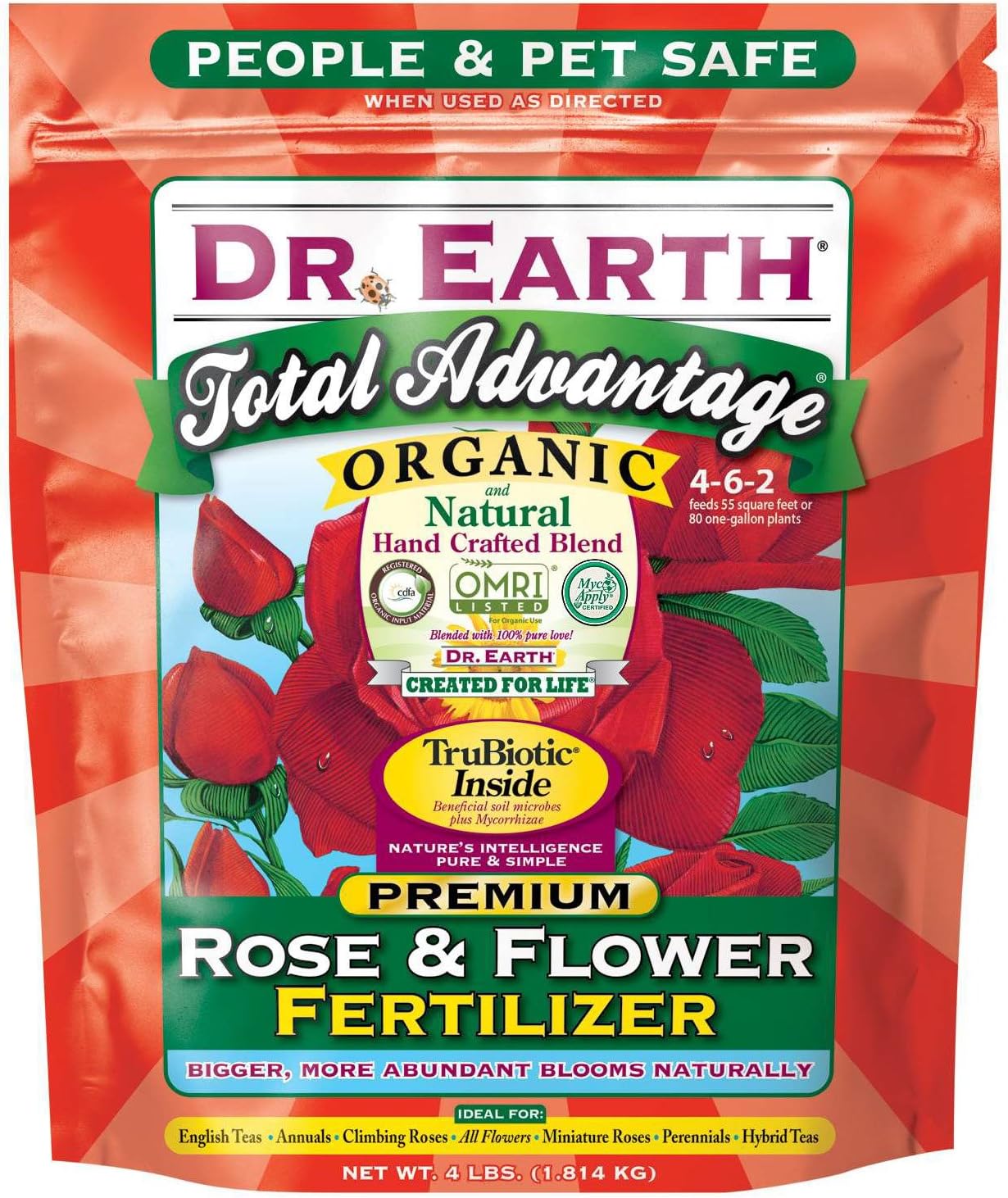
Dr. Earth Total Advantage Rose & Flower Fertilizer, 4 lb
| Item Form | Granules |
|---|---|
| Specific Uses For Product | Organic |
| Coverage | Medium |
| Target Species | flowers, roses, flowering trees, shrubs, annuals & perennials |
| Unit Count | 64 Ounce |
This Dr. Earth granular fertilizer is formulated specifically for roses and flowering plants and is intended to encourage larger, more frequent blooms by supplying a steady organic nutrient source. Typical use is sprinkling or incorporating into beds at planting, adding mid-season feeds, or using as a compost-tea drench or foliar spray; the product notes container feeding every six weeks. Notable features include an organic ingredient list with added humic acids, trace minerals and proteins, Non-GMO Project verification and multiple organic certifications that support clean, soil-building nutrition. Practically, it promotes healthier soil biology rather than quick synthetic feeding so results appear over weeks as plants respond with fuller growth and improved bloom set. Limitations are that it is not a fast-release synthetic fertilizer so gardeners seeking immediate, dramatic color boosts or rapid green-up will see slower changes, and application near water sources should be avoided to prevent runoff. Follow the package directions for timing and mixing ratios to get the intended steady feeding effect.
Best for: Roses and flower gardeners who prioritize organic, soil-building nutrition and steady bloom improvement over rapid synthetic results.
Less Ideal for: Gardeners who need quick, immediate feeding responses or instant visual changes after application should consider faster-acting alternatives.
- Formulated specifically for roses and flowering plants to promote bigger blooms
- Certified organic and Non-GMO Project verified for clean inputs
- Contains humic acids and trace minerals to support soil health and microbial activity
- Versatile application methods including broadcast, compost tea drench, foliar spray and container feeding
- Slow-release organic formula produces gradual results rather than immediate color or growth spikes
- Instructions caution against applying near water sources to avoid runoff
Verdict: Choose this product when you want a certified organic, soil-focused fertilizer built to improve rose blooms through steady, long-term nourishment.
Jobe's Organics Granular Rose & Flower Fertilizer, 4 lb

| Item Form | Granules |
|---|---|
| Specific Uses For Product | Plant Growth,Root Development,Seed Developmen,tSoil Conditioning |
| Target Species | roses, hydrangeas, hibiscus, azaleas, and other flowering shrubs |
| Mixing Ratio | 3-5-3 |
| Unit Count | 64 Ounce |
This granular organic fertilizer is designed for roses, hydrangeas and other flowering shrubs and supplies balanced nutrients in a 3-5-3 NPK formula. It is OMRI listed so it can be used in organic gardens and is supplied as easy-to-scatter granules that you work into the soil or apply around the drip line every six weeks during the blooming season. Key ingredients listed include nitrogen, phosphate, potash and essential secondary nutrients like calcium and magnesium, which help blooms and overall plant vigor. The packaging size and medium coverage make it practical for small to medium beds or several container hydrangeas, and the granular form reduces mess and runoff compared with liquid feeds. Limitations are that the bag is only 4 pounds so larger hydrangea plantings will require frequent repurchase, and the fixed 3-5-3 ratio may not match specialty needs for acid-loving hydrangea color manipulation. Follow the product directions and wear gloves when handling.
Best for: Gardeners who want a straightforward, organically approved granular feed for hydrangeas and other flowering shrubs and prefer simple, scheduled applications during the bloom season.
Less Ideal for: Growers managing large beds or commercial plantings who need bulk fertilizer or gardeners seeking a product specifically formulated to alter hydrangea flower color.
- OMRI listed and suitable for certified organic gardening
- Balanced 3-5-3 NPK tailored to promote flowering and root development
- Granular form is easy to measure and apply with reduced runoff and mess
- Contains secondary nutrients like calcium and magnesium to support plant vigor
- 4 lb bag provides limited coverage for larger gardens
- Fixed NPK ratio limits flexibility for gardeners who need different nutrient balances
Verdict: A small, OMRI-listed granular fertilizer that reliably feeds hydrangeas and other flowering shrubs with a bloom-focused 3-5-3 formula for easy, organic seasonal applications.
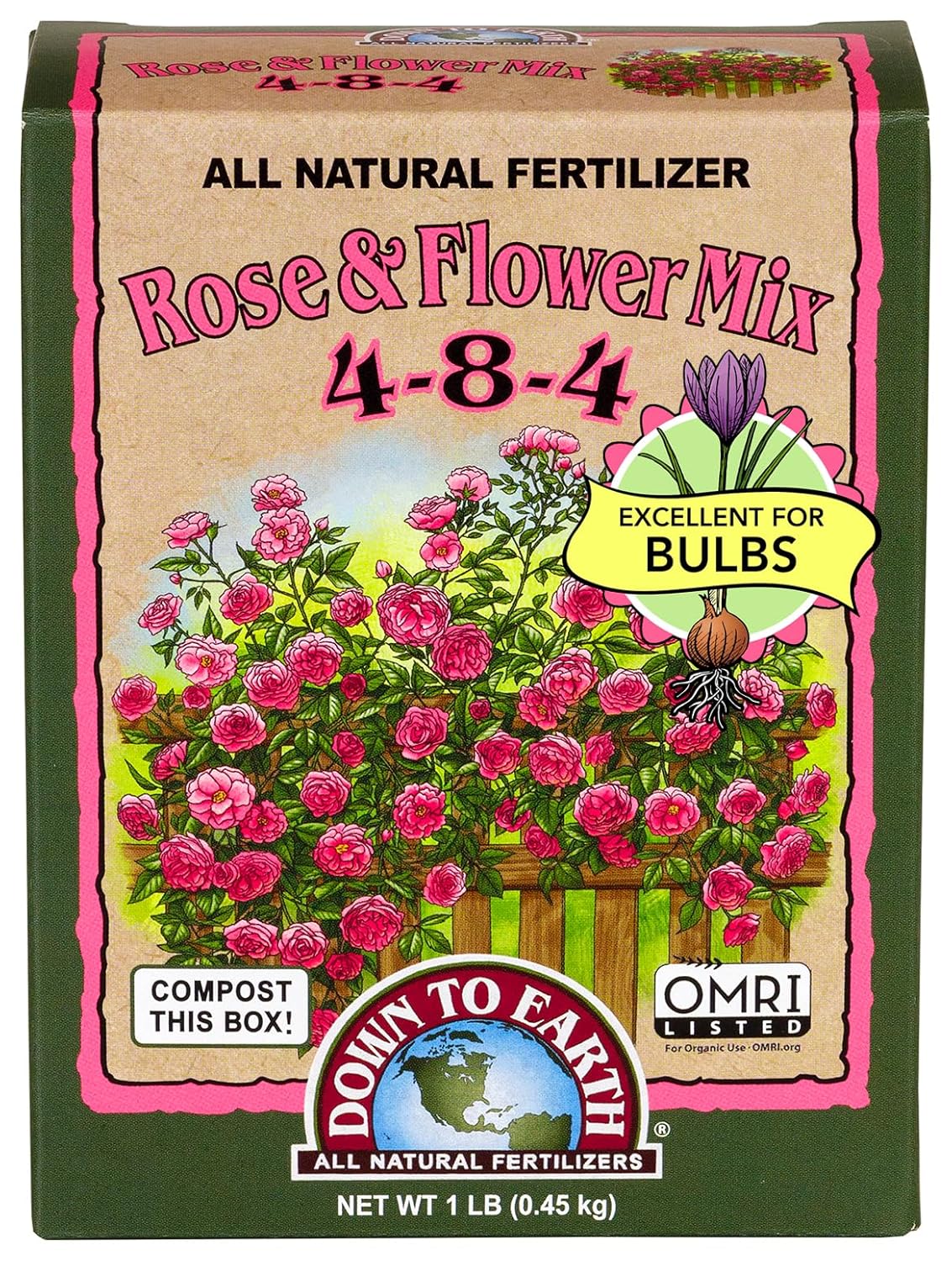
Down To Earth Organic Rose & Flower Mix Fertilizer 4-8-4, 1 lb
| NPK | 4-8-4 |
|---|---|
| Item Form | Granules |
| Specific Uses For Product | Plant Growth |
| Coverage | Medium |
| Mixing Ratio | 2 tbsp per gallon of soil |
This 1 lb box of Down To Earth Organic Rose & Flower Mix is a granular, OMRI-listed fertilizer designed specifically to encourage flowering and healthier root systems in roses and other ornamentals. Gardeners typically work it into the soil around established plants or use the brand mixing guidance for containers and small beds to provide periodic feeding. The relatively high middle number (phosphorus) helps stimulate prolific blooms while the balanced nitrogen and potassium support foliage and overall plant vigor. Because it is derived from natural plant, animal, and mineral resources it also contributes organic matter that supports soil microorganisms over time. The mini box size is convenient for trialing on a few plants or for container and patio gardens, but it means frequent reorders or multiple boxes are needed for larger beds. Users should follow the recommended mixing ratio and avoid overapplication since organic granules release nutrients more slowly than synthetic feeds and are best used as part of a regular feeding schedule.
Best for: Practical gardeners who prioritize organic inputs and want a bloom-focused feed for a few roses, containers, or small flower beds and who prefer predictable, soil-building nutrition over quick synthetic fixes.
Less Ideal for: Gardeners managing large rose borders or commercial plantings who need fast-acting, high-volume feeding or a single large-bag supply.
- Phosphorus-forward 4-8-4 formula supports larger and more frequent blooms
- OMRI-listed organic formulation suitable for organic rose care
- Granular form adds organic matter that benefits soil microbial activity
- Compact 1 lb size is convenient for containers, patio gardens, and small beds
- Small package size requires multiple purchases for larger rose gardens
- Slower nutrient release compared with synthetic fertilizers, so results take longer to appear
Verdict: A compact, OMRI-listed granular fertilizer that favors bloom production and soil health, making it a sensible organic choice for home rose growers with small gardens or containers.
Espoma Rose-Tone Organic Rose Fertilizer, 18 lb

| Item Form | Granules |
|---|---|
| Target Species | roses, flowering plants |
| Mixing Ratio | 4:3:2 |
| Unit Count | 288 Ounce |
Espoma Rose-Tone is a ready-to-use granular organic fertilizer designed specifically for roses and other flowering shrubs. It is typically applied monthly around the plant drip line during the growing season and then watered in, supplying steady nutrition without needing on-site mixing. The 4-3-2 formulation with 5% calcium and Bio-tone microbial amendment supports green growth and bloom production while also being certified for organic gardening. In practice this product is easy to store and broadcast or side-dress around beds; the coarse granules spread evenly and break down to feed plants over time. Because it is an organic blend rather than a fast-release synthetic, results accumulate over weeks rather than hours, so expect gradual improvement in vigor and flower set. The large 18 lb bag covers multiple plants for a season, but the granule form means you should reapply monthly during active growth. If you need immediate, dramatic leaf green-up, a soluble synthetic will act faster, but for reliable, low-maintenance seasonal feeding this formula is a solid choice for organic rose care.
Best for: Gardeners who prioritize dependable, organic feeding for roses and want a low-fuss monthly fertilizer that supports sustained bloom and plant health.
Less Ideal for: Growers who need quick-acting, soluble fertilizers for instant green-up or rapid correction of severe nutrient deficiencies should consider a fast-release alternative.
- Formulated specifically for roses and flowering plants for targeted nutrition
- Organic certified blend with Bio-tone microbial amendment
- Includes 5% calcium to support plant structure and bloom development
- Ready-to-use granular form requires no mixing and is simple to apply
- Large 18 lb bag supplies multiple applications across the season
- Slow-release organic action means results appear over weeks rather than immediately
- Granules require monthly reapplication during the growing season
Verdict: Choose this organic Rose-Tone if you want a reliable, ready-to-use monthly fertilizer that steadily improves rose vigor and bloom quality.
Burpee Organic Rose + Bloom Granular Plant Food, 4 lb

| Item Form | Granules |
|---|---|
| Specific Uses For Product | Plant Food |
| Coverage | 213 Square Feet |
| Target Species | roses and other flowering plants |
This Burpee Organic Rose + Bloom granular plant food is made for gardeners who want an organic, easy-to-apply fertilizer for roses and other flowering plants. The granules spread evenly in beds or containers and deliver a quick nutrient flush followed by slow-release feeding that the manufacturer says lasts up to three months. The formula includes beneficial microbes aimed at supporting root health and stronger blooms, and the product is OMRI-listed for organic use, which will reassure cautious gardeners. Typical use is to apply around established bushes, in containers, or across flower beds every eight weeks during the growing season and water in thoroughly. Practical benefits are straightforward: simple application, multi-month feeding so you do not need to reapply frequently, and compatibility with organic gardens. Important limitations are that specific N-P-K numbers are not listed in the product text here so you cannot fine-tune feeding by nutrient ratio, and the 4 lb bag covers a modest area so larger gardens will need multiple bags.
Best for: Gardeners who prefer organic, low-risk products and want a straightforward granular fertilizer to feed roses and flowering plants with minimal fuss.
Less Ideal for: Gardeners who need precise N-P-K formulations for targeted nutrient management or those tending very large beds who need bulk fertilizer options.
- OMRI-listed formula suitable for organic rose and flower gardens
- Granular form spreads easily in beds and containers
- Provides immediate nutrients plus slow-release feeding up to three months
- Includes beneficial microbes to support root health and bloom production
- Nutrient ratio (N-P-K) is not specified in the provided product details
- 4 lb bag provides limited coverage for larger gardens
Verdict: A reassuring OMRI-listed granular plant food that delivers immediate and slow-release nutrients to support healthier blooms with simple, low-effort application.
Choosing the Right Natural Fertilizer for Roses: Key Factors to Consider
Nutrient Balance and Ratios
Roses need a mix of nitrogen, phosphorus, and potassium that supports strong stems, abundant blooms, and overall plant health. Too much nitrogen pushes rapid leafy growth at the expense of flowers, while too little phosphorus can limit bloom size and color intensity.
When choosing a natural fertilizer for roses, look for products or blends that emphasize bloom-supporting phosphorus and potassium with moderate nitrogen. Fertilizers derived from bone meal, rock phosphate, kelp, or certain composts deliver phosphorus and trace minerals slowly and steadily without the spike a synthetic formula might produce.
Soil Biology and Organic Matter
Natural fertilizers often bring more than nutrients; they can add organic matter and microbes that improve soil structure, water retention, and nutrient cycling. Healthy soil biology helps roses access locked-up nutrients and builds resiliency against stress and disease.
Consider amendments that include compost, well-aged manure, humic substances, or microbe-rich mulches. These inputs feed soil life and create a long-term fertility foundation rather than only providing a short-term nutrient boost.
Application Method and Timing
How a fertilizer is applied affects convenience and plant response. Granular organic products, liquid teas, and slow-release pellets each behave differently in beds and containers. Granules are good for slow feeding in beds, teas and liquid feeds give quick uptake for container roses, and slow-release forms reduce labor.
Timing also matters: feed in early spring as new growth begins, again after the first flush of blooms, and avoid late-season high-nitrogen applications that can prevent proper hardening before winter. Think about the product's recommended schedule and whether it matches your gardening routine.
Compatibility With Soil pH and Existing Amendments
Roses prefer slightly acidic to neutral soil, so the fertilizer you choose should not dramatically push pH in the wrong direction. Some natural inputs, like wood ash, are alkaline and can raise pH over time, while others slightly acidify the root zone.
Test or know your soil pH before committing to a long-term amendment program. Pick natural fertilizers that complement your current soil mix and avoid chemical interactions that lock up nutrients, such as applying phosphorus sources into very alkaline soils where availability is limited.
Safety and Environmental Impact
Natural does not automatically mean safe for pollinators, pets, or beneficial insects. Some organic products can be high in salts if not well-aged, or they might contain contaminants if sourced poorly. Consider labeled safety, odor, and the potential for runoff into nearby beds or water features.
Look for materials with clear sourcing and minimal dust, and apply according to instructions to reduce exposure to pollinators during bloom. For home gardens, choose products that pose low risk to pets and children and that break down cleanly in the soil.
Cost Efficiency and Longevity
Natural amendments can vary widely in how long they feed and how much material you need to apply. Bulk compost or well-rotted manure often provides broad benefits for many seasons, while some packaged organic fertilizers require more frequent reapplication.
Factor in how often you want to fertilize, the size of your rose beds or number of containers, and whether you prefer a one-time soil-building approach versus a regular feeding schedule. Longevity affects both budget and labor over the gardening season.
How Natural Fertilizers Influence Rose Flowering
Natural fertilizers provide nutrients more slowly than synthetic options, which affects how roses allocate energy. Steady nutrient release favors consistent bloom cycles and stronger root systems rather than flash growth followed by nutrient dips.
Materials rich in phosphorus and potassium support flower bud formation and color intensity, while organic matter improves moisture retention that reduces stress during hot spells. Over time, building soil organic matter leads to healthier, longer-lived roses.
- Slow release supports more frequent, sustainable blooms
- Improved water retention reduces drought stress on flower set
- Balanced feeding prevents excessive leafy growth that reduces bloom production
Best Practices for Feeding Container Roses
Container-grown roses have less buffer for nutrients and often need more frequent feeding than those in beds. Use lighter, more frequent applications of liquid or soluble organic feeds, and refresh potting mix with compost or slow-release granules each season.
Ensure good drainage and avoid overapplying to prevent salt buildup. Because containers concentrate inputs, choose natural fertilizers with predictable release rates and check for signs of nutrient deficiency or excess.
- Apply diluted liquid feeds every 2 to 4 weeks during the growing season
- Top-dress containers with a thin layer of compost in spring
- Repot or refresh media every 1 to 2 years to reset nutrient balance
Timing and Seasonal Feeding Schedule
A simple seasonal routine keeps roses productive without overfeeding. Start with a moderate feed at bud break, a follow-up after the first major bloom flush, and a lighter application in midsummer if the plants show need. Stop high-nitrogen feeding about 6 to 8 weeks before expected first frost to encourage hardening.
Mulching with compost or well-rotted organic material in late fall protects roots and slowly feeds the plants over winter. Adjust timing for your climate zone and local frost dates.
- Feed at bud break and again after first bloom
- Use lighter midsummer feeds only if plants show decline
- Pause late-season nitrogen-rich applications to prepare for dormancy
Mixing Natural Amendments With Existing Fertility Plans
Natural fertilizers work best when they complement existing soil fertility rather than duplicate or contradict it. If you already add compost annually, choose bloom-focused supplements that add phosphorus and potassium without excessive nitrogen.
Combine granular organics with occasional liquid feeds to hit both slow soil-building goals and quick corrections. Keep a simple log of what you apply so you can judge how the roses respond over several seasons.
- Layer compost first, then apply bloom-focused amendments
- Use a balance of slow-release and quick-acting feeds for best results
- Record applications to avoid overfeeding across seasons
Dealing With Common Rose Nutrient Problems
Yellowing leaves, weak stems, or poor bud set can indicate nutrient imbalances or poor soil biology. A soil test helps pinpoint deficiencies, but targeted organic inputs often correct mild issues: compost and kelp for trace elements, bone meal or rock phosphate for phosphorus, and greensand or wood ash sparingly for potassium needs.
Addressing soil structure through organic matter often fixes multiple symptoms at once by improving root function and nutrient uptake. Avoid repeated high-nitrogen treatments for what may be a micronutrient or microbial problem.
- Use soil testing for persistent issues
- Prefer organic corrections that improve soil life
- Avoid quick-fix high-nitrogen feeds for non-nitrogen problems
How We Chose the Best Natural Fertilizer for Roses
We focused on attributes that matter to rose gardeners who prefer natural inputs. Evaluation centered on nutrient balance relevant to flowering shrubs, the fertilizer's contribution to long-term soil biology, ease and flexibility of application across beds and containers, and the safety profile for pollinators and pets. We also considered how quickly results appear in bloom frequency and leaf health, along with product consistency and sourcing transparency. Excluded items were synthetic or chemically concentrated fertilizers, products aimed solely at lawns or vegetables without rose-specific guidance, and any inputs that rely on harsh salts or heavy metals. Final selections emphasized materials that supply phosphorus and potassium for blooms, modest nitrogen to avoid legginess, organic matter to improve structure, and microbial or humic additions that support soil life. These criteria align with the scoring metrics used across each shortlisted natural fertilizer for roses.
FAQ
How often should I feed roses with natural fertilizers?
Often feeding depends on the product type: slow-release organics or compost may only need seasonal application, while liquid feeds work every 2 to 4 weeks during active growth. Monitor bloom performance and leaf color to adjust frequency.
Can I use compost alone as a natural fertilizer for roses?
Compost is a great foundation because it improves soil structure and supplies a broad mix of nutrients, but it may not supply enough phosphorus for big blooms. Many gardeners use compost plus a bloom-focused amendment for best results.
Are natural fertilizers safe for pollinators around roses?
Usually natural fertilizers are safe when used as directed, but some freshly manured materials or unprocessed inputs can harm beneficials. Apply granular or compost materials to the soil and avoid spraying during peak pollinator activity.
Will natural fertilizers change my soil pH?
Some natural amendments can shift pH over time. For example, wood ash raises pH while sphagnum peat acidifies. It usually takes repeated applications to move pH significantly, so test soil before making large changes and choose materials accordingly.
How quickly will I see results after applying a natural fertilizer?
Speed varies with material: liquid feeds can show leaf and bloom changes within days to a couple of weeks, while granular organics and compost act over weeks to months as they break down and feed soil life. Expect both immediate and long-term benefits.
Can I switch between different natural fertilizers during the season?
Yes, rotating between compost, liquid kelp feeds, and slow-release bloom amendments is common. Just avoid layering too many high-nitrogen products and keep a record so you can judge which combinations support better blooms.
Final Verdict
Prioritize fertilizers that support blooms while building soil life. For roses, choose inputs with bloom-focused nutrient balance, organic matter to improve root health, and application methods that fit your beds or containers. Expect a tradeoff between quick-acting liquids for fast corrections and slow-release amendments that improve soil over seasons. Make decisions based on your soil test, planting situation, and how much hands-on feeding you want to do. A combined approach of compost plus a targeted natural bloom supplement and occasional liquid feeds will cover most gardening situations and help you choose confidently.
