

Note: This article contains affiliate links. If you click on these links and make a purchase, I may earn a small commission at no extra cost to you. This helps support my research and content. Read my full affiliate disclosure here.
If you maintain a medium to large yard, a gas handheld leaf blower can cut cleanup time and handle heavier debris that electric models struggle with. You want a tool that starts reliably, delivers steady airflow for wet or compacted leaves, and stays comfortable during longer jobs. This guide shortlists seven top-performing gas handheld leaf blowers and explains why each made the cut. We focus on practical gardener concerns like usable airflow, vibration and weight, engine reliability, and maintenance needs to help you choose the right blower for your landscape and routine.
Top Picks at a Glance
| Best Overall The best all-around choice for most situations | PROYAMA 29cc Gas Handheld 3-in-1 Leaf Blower, Vacuum & Mulcher (PHB290V) |  |
| Best Quality Built to a higher standard if you want something more solid | ECHO PB-2620 X Series 25.4cc Handheld Gas Leaf Blower |  |
| Best Value The sweet spot between price and what you get | Relxxon R1 26cc 2-Cycle Handheld Gas Leaf Blower |  |
| Best Budget The cheapest option that still gets the job done reliably | WXLTSGM Handheld Gas Leaf Blower, 25.6-inch Single Cylinder, 750W |  |
| Highest Rated A top-rated pick with lots of positive feedback | Pazcii EB-260 25.4CC 2-Stroke Handheld Gas Leaf Blower |  |
| Most Popular A crowd favorite that many people choose with confidence | Husqvarna 125B Gas Handheld Leaf Blower |  |
| Best Seller A high-volume bestseller chosen again and again | ECHO PB-2520 25.4cc Handheld Leaf Blower |  |
PROYAMA 29cc Gas Handheld 3-in-1 Leaf Blower, Vacuum & Mulcher (PHB290V)

| Power Source | Gas Powered |
|---|---|
| Form Factor | Handheld |
| Additional Features | Leaf Vacuum |
| Engine | 29CC 2‑cycle (1.2 HP at 7,500 RPM) |
The PROYAMA PHB290V is a gas-powered handheld 3-in-1 unit that functions as a high‑airflow blower, a vacuum, and an onboard mulcher. Its 29cc two‑cycle engine delivers strong airflow (about 480 CFM at 175 MPH), making quick work of leaves on lawns, patios, and driveways. Swap between the flat and round nozzles to target gutters and tight spaces or sweep broad areas, and engage the vacuum tubes to collect debris into the included 10‑gallon bag where sharp internal blades shred material to reduce volume. Practical features include an auto‑lock cruise control throttle to cut hand fatigue during longer jobs, an easy‑start smart starter design, and reachable service points like the air filter and spark plug. The unit is portable for residential and light professional use, but as a gas tool it requires 50:1 gas/oil premix, routine maintenance, and produces exhaust and noise like other two‑cycle blowers. The 10‑gallon bag and shredding lower disposal trips, though heavier users may prefer a backpack model for extended commercial work.
Best for: Buyers who want a capable all‑around handheld gas blower that also vacuums and mulches for routine yard cleanup and occasional heavier jobs, prioritizing power and versatility over ultra‑lightweight operation.
Less Ideal for: People who need a quiet, zero‑emissions option or who will run the tool for long commercial shifts should consider electric or backpack models instead.
- Powerful 29cc engine producing around 480 CFM and 175 MPH for efficient leaf clearing
- Three functions in one unit: blower, vacuum, and mulcher to reduce debris volume
- Variable speed with cruise control reduces hand fatigue during longer sessions
- Includes a 10‑gallon collection bag so vacuumed material is contained and easier to dispose of
- Serviceable design with quick‑access air filter and accessible spark plug for basic maintenance
- Requires 50:1 gas to oil premix and regular two‑cycle engine maintenance
- Handheld form and 12.3 lb weight can be tiring for extended professional use
Verdict: A powerful, versatile handheld gas blower that adds vacuum and mulching capability for efficient, mixed residential yard cleanup.
ECHO PB-2620 X Series 25.4cc Handheld Gas Leaf Blower
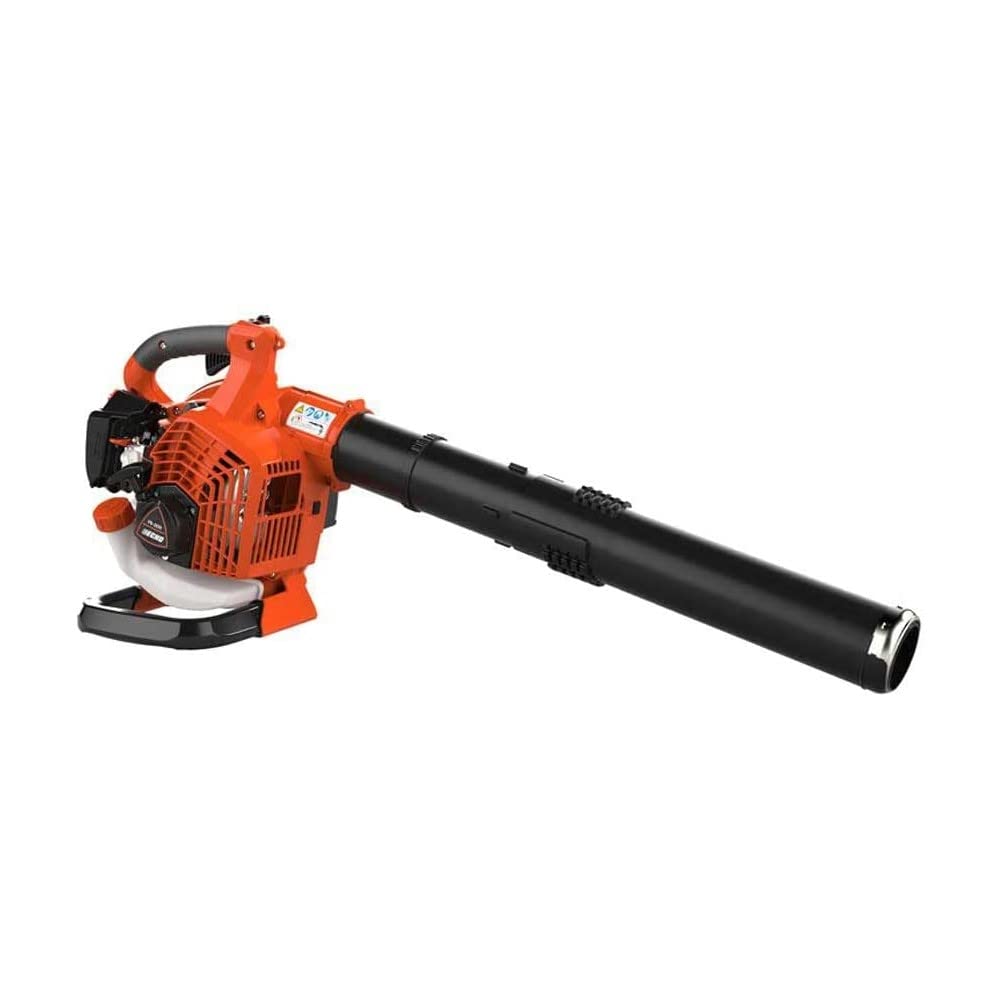
| Power Source | gasoline-powered |
|---|---|
| Form Factor | Handheld |
| Air Flow Capacity | 456 cfm |
| Noise Level | 69 db |
The ECHO PB-2620 X Series is a gas-powered handheld blower designed for fast, performance-focused yard cleanup. With a 25.4 cc two-stroke engine and a reported 456 cfm airflow, it moves large volumes of leaves and debris quickly and is suited to driveways, patios, and medium lawns. Notable features include a compact lightweight design for easier handling, a throttle lock for steady high-speed operation, and a noise rating listed around 69 dB which is moderate for a gas unit. Because it runs on gasoline, expect strong, sustained power compared with cordless models, but you will need fuel mixing, routine engine maintenance, and occasional tune-ups. The blower is portable and straightforward to use for quick blow-offs and more demanding clearing, though its handheld format can become tiring on extended jobs compared with backpack models. Overall it delivers the kind of raw airflow performance a buyer focused on speed and clearing capability will appreciate, while requiring the usual upkeep of a small gas engine.
Best for: Ideal for buyers who prioritize raw clearing power and speed for home yards, driveways, and patios and who are comfortable with routine small-engine maintenance.
Less Ideal for: Not the best choice for users who want the quietest or lowest-maintenance option or who need to clear very large properties without shoulder or arm strain.
- High reported airflow (456 cfm) for fast leaf and debris clearing
- Gas power provides sustained high output for heavier tasks
- Compact and lightweight handheld design improves maneuverability
- Throttle lock enables steady high-speed operation
- Requires gasoline fueling and two-stroke maintenance
- Handheld design can be tiring on large or prolonged jobs
Verdict: Buy this blower if you want a compact gas handheld that delivers strong airflow for fast residential leaf and debris clearing.
Relxxon R1 26cc 2-Cycle Handheld Gas Leaf Blower

| Power Source | Gas Powered |
|---|---|
| Form Factor | Handheld |
| Air Flow Capacity | 380 cfm |
| Noise Level | 60 db |
| Maximum Speed | 180 miles_per_hour |
The Relxxon R1 is a lightweight 26cc gas handheld blower designed for weekend yard cleanup where battery runtime is a concern. Its 2-cycle engine produces up to 180 MPH and 380 CFM, which is enough to move damp leaves, grass clippings, sawdust, and light snow from driveways, patios, and sidewalks. The blower uses a reduced-pull recoil system to make starting easier and a soft-grip handle to reduce vibration during use. Because it is gas powered you get continuous runtime without battery swaps, and the focused tube lets you direct airflow into tight spots around beds and vehicles. Practical limitations are the typical fuel mixing and maintenance required for 2-cycle engines, and the 60 dB noise rating is moderate but louder than many battery models. The unit is sold with an extension nozzle and basic manual support and is best for homeowners who need stronger, on-demand power for occasional heavy clearing rather than quiet daily tidying.
Best for: Buyers who prioritize continuous, stronger on-demand power for weekend or seasonal yard cleanup and who prefer proven tool types over the newest battery models.
Less Ideal for: People who need the quietest option, want low maintenance, or prefer zero-emission electric tools for daily light tidying.
- Strong airflow for a handheld gas model at 380 CFM and 180 MPH for moving damp or compacted debris
- Reduced-pull recoil system that lowers effort when starting the 2-cycle engine
- Lightweight handheld control and soft-grip handle for easier maneuvering and reduced vibration
- Gas power provides continuous runtime without battery charging or mid-job swaps
- Concentrated nozzle design for precise airflow in tight spaces
- Requires fuel mixing and routine maintenance typical of 2-cycle gas engines
- Higher noise level and emissions compared with battery-powered blowers
Verdict: Choose the Relxxon R1 when you want a compact, gas-powered blower that delivers strong, uninterrupted airflow for budget-conscious weekend yard work.
WXLTSGM Handheld Gas Leaf Blower, 25.6-inch Single Cylinder, 750W

| Power | 0.75 kW |
|---|---|
| Engine speed | 7500 rpm |
| Airflow | 0.13 m³/s |
| Noise level | 90 dB(A) |
This small gas blower packs a 2-stroke single-cylinder engine that produces up to 7000 rpm and about 0.13 m3/s of airflow, enough for routine leaf clearing, light snow removal, and blowing dust from hard surfaces. Its lightweight, compact form and molded handle with anti-slip grip make it easy to carry around yards and start with one hand using the large recoil pulley and handle-mounted switch. Practical touches include three anti-slip feet for stable storage, a tube connection design that resists separation during use, and a protective housing around the intake for safer operation and better cooling. Noise is relatively low for a gas unit according to the spec, and the blower claims straightforward mechanics that are attractive if you prefer a simple petrol tool. Expect typical 2-stroke maintenance such as fuel mixing, periodic spark plug and air filter care, and the usual vibration and exhaust of a gas engine, which may be less convenient than electric or battery options for frequent short jobs.
Best for: Buyers looking for an affordable, no-frills petrol blower to handle occasional yard cleanup who prioritize portability and raw blowing power over cordless convenience.
Less Ideal for: People who need a near-silent, maintenance-free solution for frequent small jobs or those who prefer electric or battery-powered tools for zero-emission operation should look elsewhere.
- Compact and lightweight for easy carrying and maneuvering
- High engine speed and decent airflow for clearing leaves and light debris
- One-handed operation with large recoil pulley and handle switch
- Anti-slip feet and reinforced handle improve storage and handling stability
- Two-stroke gas engine requires fuel mixing and routine maintenance
- Noise and exhaust inherent to petrol engines may be undesirable for frequent neighborhood use
Verdict: A budget-friendly, portable gas blower that gives strong airflow for routine yard cleanup when you want petrol power without extras.
Pazcii EB-260 25.4CC 2-Stroke Handheld Gas Leaf Blower

| Engine displacement | 25.4CC |
|---|---|
| Engine power | 0.75 kW |
| Impeller speed | 7000 rpm |
| Airflow | 0.13 m³/s |
| Fuel tank capacity | 0.9 L |
The Pazcii EB-260 is a straightforward 2-stroke handheld gas blower built for quick clearing of leaves, debris, light snow, and dust around yards or driveways. Its 25.4cc, 0.75 kW engine drives an impeller rated at 7000 rpm to deliver a continuous airflow of 0.13 m3/s, which is suited to routine outdoor cleanups rather than heavy-duty professional tasks. A 0.9 liter fuel tank and modest fuel consumption support longer runs between fills, and a translucent tank lets you check fuel level at a glance. The unit is relatively light and compact with two handle holes for carrying or attaching a shoulder strap, and it includes a silencer to reduce operating noise to about 90 dB(A). Safety features like a 360° anti-suction cover reduce the risk of debris ingestion and help with cooling. Expect typical 2-stroke maintenance and occasional starting effort with a rope pulley; the blower favors homeowners who want dependable gas power but not commercial-grade thrust.
Best for: A homeowner or property caretaker who prioritizes a reliable, gasoline-powered blower for regular yard cleanup and occasional heavier debris removal, and who values simple maintenance and portability.
Less Ideal for: Commercial landscapers or users who need very high blow force and long continuous heavy-use performance should consider higher-power professional models.
- Compact and lightweight for easy transport and storage
- Decent continuous airflow for routine yard and driveway cleanup
- Large translucent 0.9 L fuel tank for longer run times and easy fuel monitoring
- Silencer reduces operating noise to around 90 dB(A) for quieter neighborhood use
- 360° anti-suction cover improves safety and cooling during operation
- 2-stroke engine requires mixed fuel and regular maintenance
- Airflow and power are modest compared with professional commercial blowers
Verdict: A dependable, portable gas blower that gives homeowners reliable clearing power and longer run times without stepping up to commercial machines.
Husqvarna 125B Gas Handheld Leaf Blower

| Power Source | Gas Powered |
|---|---|
| Form Factor | Handheld |
| Air Flow Capacity | 470 cfm |
| Maximum Speed | 170 miles_per_hour |
| Noise Level | 94 db |
The Husqvarna 125B is a compact gas handheld blower aimed at homeowners who need reliable clearing power for leaves, grass clippings, and sidewalks. It pairs a 28‑cc 2‑cycle engine with an adjustable tube and a flare nozzle to produce 470 CFM and wind speeds up to 170 MPH, which moves large piles and wet debris more effectively than light electric models. The unit is designed to be user-friendly: an ergonomic in-line tube and soft-grip handle reduce wrist twist, an air purge eases starting, and cruise control on the throttle helps maintain steady speed during longer runs. Practical benefits include strong clearing performance for driveways and beds and an adjustable tube for different tasks. Expect the usual gas-blower tradeoffs though — it requires fuel mixing, produces more noise than battery models, and needs routine maintenance on the engine. For routine homeowner jobs it offers a dependable balance of power and handling but it is not intended for heavy professional landscaping shifts.
Best for: Buyers who prioritize proven performance and want a handheld gas blower that handles regular homeowner cleanup with reliable starting and strong clearing power.
Less Ideal for: People who prefer very quiet, low-maintenance equipment or who need zero-emission tools for small urban yards should consider battery or electric models instead.
- High airflow (470 CFM) and strong wind speed (170 MPH) clear leaves and wet debris efficiently
- Ergonomic in-line tube and soft-grip handle reduce wrist torque and improve comfort
- Adjustable tube length and flare nozzle let you tailor airflow for different jobs
- Air purge and auto-reset stop switch simplify starting and restarts
- Gas 2-cycle engine requires fuel mixing and periodic maintenance
- Louder operation (about 94 dB) compared with battery blowers
Verdict: Choose the Husqvarna 125B if you want a compact gas blower that reliably delivers professional-level airflow for routine homeowner leaf and debris cleanup.
ECHO PB-2520 25.4cc Handheld Leaf Blower

| Power Source | Manual |
|---|---|
| Form Factor | Handheld |
| Additional Features | Lightweight |
The ECHO PB-2520 is a compact, handheld gas leaf blower intended for routine homeowner cleanup like blowing leaves, grass clippings, and light debris from driveways and lawns. It uses a small 25.4cc engine in a simple handheld form that makes it easy to maneuver around beds, walkways, and tight spaces. Notable features in the listing emphasize a lightweight construction, which reduces arm fatigue during short to medium jobs and helps with portability and storage. In practice this unit is best for homeowners who need dependable, no-frills power for seasonal cleanups rather than commercial workloads. Expect straightforward starting and operation typical of small two-stroke blowers, but also routine maintenance such as fuel mixing and spark plug care. The blower’s limited size means it will struggle with very heavy, wet leaves or long continuous use, so users should plan for occasional rest and basic upkeep to keep it reliable over time.
Best for: Homeowners who prioritize a reliable, easy-to-use blower for regular yard cleanups and want a portable, lightweight gas option for sidewalks, driveways, and small yards.
Less Ideal for: Property owners with large acres, heavy wet leaves, or commercial clearing needs should choose a higher-powered or backpack blower instead.
- Lightweight handheld design reduces operator fatigue for short jobs
- Simple gas power for cordless operation and good mobility
- Compact size makes storage and maneuvering around tight spaces easy
- Small-displacement engine limits power for heavy or wet debris
- Requires routine two-stroke maintenance such as fuel mixing and spark plug checks
Verdict: A simple, lightweight gas handheld blower that gives homeowners dependable portability and ease of use for routine yard cleanups.
Choosing the Right Gas Handheld Leaf Blower: Key Factors to Consider
Airflow Power and Nozzle Design
Airflow determines how effectively a gas handheld leaf blower moves grass clippings, wet leaves, and heavier debris. Look beyond peak CFM numbers and consider nozzle design because a tapered or focused nozzle increases airspeed for stubborn debris while a wider nozzle covers more ground per sweep. Higher airspeed helps dislodge soaked leaves from crevices but can reduce coverage area, so balance between CFM and nozzle shape matters depending on your yard.
If your landscape includes dense beds, gravel, or wet material, prioritize blowers with higher concentrated airspeed and nozzle options. For open lawns where coverage is more useful than concentrated force, a wider nozzle or variable airflow setting will speed the job.
Engine Reliability and Starting
A dependable pull-start and steady idling matter when you use the blower sporadically through the season. Engines that are easy to prime and start reduce frustration, especially in cool or humid conditions. Consistent throttle response and stable RPM under load let you keep control when blowing into piles or clearing around hard surfaces.
Also consider how the engine handles choke settings, warm-up time, and whether basic maintenance points are easy to reach. Poorly accessible carburetors or awkward primer bulbs become recurring annoyances that affect long-term reliability.
Weight, Balance, and Vibration
Handheld gas blowers are carried for minutes at a time, often while bending or reaching. Overall weight is important, but balance and vibration transmission are equally critical for comfort. A lightweight unit that vibrates heavily can cause quicker fatigue compared with a slightly heavier blower that has good anti-vibration mounts and a shaped handle.
Check handle ergonomics and whether controls are reachable without changing your grip. Models with isolated handles or softer grip materials reduce hand numbness and make extended use feasible for homeowners who clear large driveways, gutters, or patios.
Fuel Economy and Tank Capacity
Fuel efficiency affects how often you must stop to refuel during larger jobs. A larger fuel tank extends runtime but adds weight; a more efficient engine reduces consumption but may sacrifice peak power. Consider the size of the areas you clear and whether you prefer fewer refueling stops or lighter handling.
Also factor in the convenience of fuel mixing and how clearly fill marks are indicated. Spillage-prone caps or awkward filler necks can make refueling messy, so look for practical tank layouts that suit typical backyard refills.
Control Features and Variable Speed
Variable throttle and cruise control let you match airflow to the task, from delicate edging around plants to vigorous clearing on pavement. A steady cruise setting reduces wrist strain on longer runs and improves efficiency when moving long lines of debris.
Easy-to-use speed controls that respond predictably under load are important. If you frequently switch tasks-clearing gutters, blowing mulch around beds, or cleaning gravel-prioritize intuitive controls and multiple speed ranges.
Durability and Serviceability
A blower built with accessible maintenance points will last longer in a garden environment. Durable housing, corrosion-resistant fasteners, and replaceable wear parts such as mounts and nozzles extend service life. Consider whether routine items like air filters, spark plugs, and recoil starters are straightforward to access and replace.
Garages and sheds expose tools to dust and temperature swings, so rugged construction and simple upkeep make the difference between seasonal headaches and years of reliable use.
When to Choose a Gas Handheld Blower
Gas handheld leaf blowers are best when you need extra force for dense or wet debris and when run time matters. Gas engines provide continuous power and quick refilling, making them suitable for larger yards, long driveways, or properties with heavy tree cover that drops wet leaves and larger twigs.
- Prefer gas if you regularly clear damp leaves or heavy debris
- Gas models are a strong choice for extended runtimes without recharging
- Handheld gas blowers are lighter than backpack units while still delivering high airspeed
Tips for Using a Gas Handheld Blower Safely
Operate at lower speeds near fragile plants and use higher power on paved surfaces to avoid spraying debris into beds. Keep nozzles angled to direct debris away from people, vehicles, and windows. Wear eye protection and hearing protection; gas engines are louder than most battery models.
- Avoid blowing debris toward neighbors or busy streets
- Let the engine warm up briefly before heavy use to ensure stable throttle response
- Refuel outdoors on a cool surface and store mixed fuel in approved containers
Routine Maintenance to Keep Performance Consistent
Perform simple maintenance after every season to preserve starting reliability and airflow. Clean or replace the air filter, inspect the spark plug, and check the recoil starter for wear. Clear any debris from the air intake and inspect the nozzle and housing for cracks or clogged vents.
- Replace air filter if visibly dirty or per interval recommendations
- Inspect fuel lines annually for cracks or leaks
- Keep spare spark plugs and a small toolkit handy for field adjustments
Noise Considerations and Community Etiquette
Gas handheld blowers can be loud, so consider time of day and local noise rules. Use lower throttle settings near neighbors and avoid early morning or late evening operation when possible. If noise is a concern, select models with mufflers designed to lower perceived sound while maintaining airflow.
- Schedule major cleanup for mid-morning or early afternoon
- Use ear protection to prevent hearing damage
- Communicate with neighbors if you plan extended work sessions
Storage and Winter Care
Empty or stabilize fuel before long storage to prevent gum and varnish buildup in the carburetor. Run the engine briefly after adding stabilizer to circulate treated fuel. Store the blower in a dry place off the floor to reduce exposure to moisture and pests that can nest in openings.
- Drain fuel or add stabilizer before storing for more than 30 days
- Remove the battery if the model has an electric start to prevent corrosion
- Cover the blower with a breathable cover to keep dust out while avoiding trapped moisture
How We Chose the Best Gas Handheld Leaf Blower
Our selection process focused on attributes gardeners rely on for consistent yard work. We evaluated airflow output and nozzle design because raw CFM and MPH only tell part of the story; nozzle shape and airspeed distribution determine how well a blower moves damp leaves, pine needles, and grass clippings. Engine starting and run stability were assessed to reflect real-world usability when you return to the tool after storage. Ergonomics and weight distribution were major filters. A blower that is hard to hold or transmits excessive vibration will slow work and cause fatigue, so we looked for manageable vibration levels, comfortable grips, and balanced weight for one-handed use. Fuel efficiency and tank capacity were considered to minimize frequent refueling during long jobs. Maintenance accessibility and serviceability were counted as practical scoring dimensions since carburetor access, air filter replacement, and spark plug access affect ownership experience. We excluded recreational or backpack units outside the handheld category, electric or battery models, and units intended for industrial landscaping. The remaining shortlisted options demonstrate a mix of usable airflow, sensible ergonomics, durable construction, and reasonable fuel economy-criteria we used to rank and present the top handheld gas blowers.
FAQ
How much airflow do I need for a typical suburban yard?
It depends on debris type. For dry leaves on a lawn, moderate airflow is often sufficient. If you have wet leaves, compacted debris, or gravel areas, higher airspeed and concentrated nozzle designs are usually necessary to get effective clearing.
Are gas handheld blowers hard to maintain?
They require basic seasonal maintenance like air filter cleaning, spark plug checks, and occasional carburetor attention. With straightforward upkeep and proper winterization, most homeowners find maintenance manageable.
Can I use a gas handheld blower near garden beds without damaging plants?
Yes if you use lower speed settings and a careful angle. Keep the nozzle pointed away from crowns and tender seedlings, and use sweeping motions to avoid uprooting loose mulch or lightweight seedlings.
How often will I need to refuel during a big cleanup?
Runtime varies with engine size and throttle but many handheld units run long enough for most residential jobs on a single tank. If you have extensive areas or high-throttle use, expect to stop and refuel once or twice during a prolonged session.
Is vibration a sign of a problem?
Mild vibration is normal on gas engines, but excessive or worsening vibration can indicate loose fasteners, a worn mount, or engine issues. Addressing vibration early protects your hands and reduces strain over time.
Final Verdict
Choose a gas handheld leaf blower that balances the power you need with manageable weight and comfortable controls. Prioritize airflow and nozzle efficiency for the debris types you face, and factor in engine starting reliability and maintenance accessibility. Tradeoffs are inevitable: the most powerful units can be heavier and louder, while lighter models may sacrifice concentrated airspeed. Decide which dimensions matter most for your yard and use the evaluation criteria in this guide to pick the blower that fits your routine and landscape.
