

Note: This article contains affiliate links. If you click on these links and make a purchase, I may earn a small commission at no extra cost to you. This helps support my research and content. Read my full affiliate disclosure here.
If you maintain large yards, commercial properties, or demanding landscapes, a professional leaf blower cuts cleanup time and reduces physical strain. The right professional leaf blower moves more debris with fewer passes, stands up to long daily use, and manages a mix of wet and dry leaves without stalling. This guide shortlists the top seven options for heavy-duty outdoor work and explains the practical differences that matter in the field. We evaluate power delivery, airspeed, runtime or fuel endurance, build durability, and maintenance needs to help you find the blower that fits your workload and crew.
Top Picks at a Glance
| Best Overall The best all-around choice for most situations | ECHO PB-9010T X Series 79.9cc Backpack Gas Blower |  |
| Best Quality Built to a higher standard if you want something more solid | Husqvarna 580BTS III 75.6cc Gas Backpack Leaf Blower |  |
| Best Value The sweet spot between price and what you get | Greenworks 80V Cordless Axial Leaf Blower with 2.5Ah Battery and Charger |  |
| Best Budget The cheapest option that still gets the job done reliably | DOWILIN 63cc Gas Backpack Leaf Blower, 665 CFM 200 MPH |  |
| Highest Rated A top-rated pick with lots of positive feedback | Schröder SR4800 Gas Backpack Leaf Blower |  |
| Most Popular A crowd favorite that many people choose with confidence | Husqvarna 350BT 50.2-cc Gas Backpack Leaf Blower |  |
| Best Seller A high-volume bestseller chosen again and again | DEWALT 60V Axial Handheld Blower (DCBL772B, Tool-Only) |  |
ECHO PB-9010T X Series 79.9cc Backpack Gas Blower
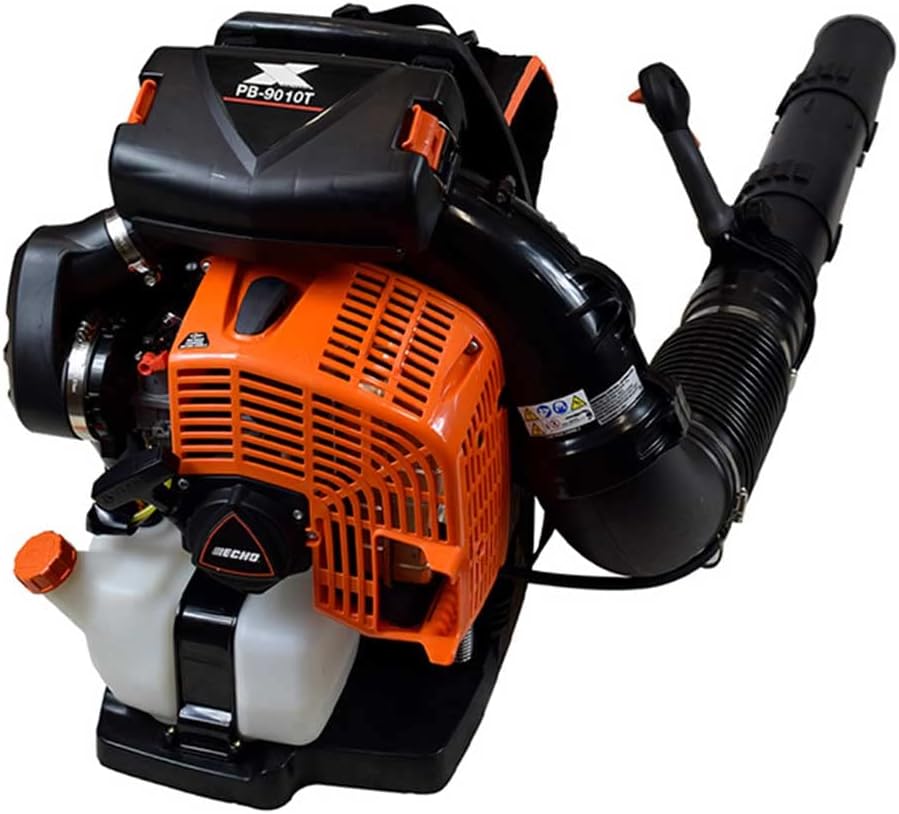
| Power Source | gasoline-powered |
|---|---|
| Form Factor | Backpack |
| Additional Features | Throttle Lock |
| Noise Level | 48 db |
| Maximum Speed | 220 miles_per_hour |
The ECHO PB-9010T X Series is a professional-style backpack blower built for heavy yard work and extended runs. Its 79.9 cc two-stroke engine produces up to 220 mph airspeed and a high airflow so you can move large piles of leaves, debris, and grass clippings quickly. The backpack form factor distributes the engine weight across the shoulders and hips for longer use than handheld units, and the tube-mounted throttle plus throttle lock help maintain a steady output during repetitive jobs. Practical benefits include strong clearing power for lawns, driveways, and beds and a design aimed at home users who need commercial-level performance. Limitations are the usual ones for gas backpack blowers: it requires fuel mixing and periodic engine maintenance, it is heavier and louder than electric alternatives, and it may be overkill for very small yards or infrequent light tasks.
Best for: Homeowners who need a reliable, high-power blower for frequent or large-area cleanup and who prioritize continuous performance over minimal maintenance.
Less Ideal for: Casual users with small yards, those who prefer low-maintenance electric equipment, or anyone seeking the quietest option for noise-sensitive neighborhoods.
- High reported maximum speed of 220 mph for strong clearing power
- Backpack form factor for longer, more comfortable operation than handheld blowers
- Tube-mounted throttle with throttle lock for steady speed control during extended use
- Gasoline power allows untethered operation and sustained output for large properties
- Requires fuel mixing and routine engine maintenance inherent to two-stroke gas engines
- Heavier and louder than electric or battery backpack models
- Likely more power than needed for very small yards or occasional use
Verdict: Buy this if you want a dependable, high-speed gas backpack blower that handles large yards and frequent heavy-duty cleanup.
Husqvarna 580BTS III 75.6cc Gas Backpack Leaf Blower

| Max air flow at nozzle | 1000 CFM |
|---|---|
| Max air speed | 220 MPH |
| Max blow force | 47 N |
| Engine displacement | 75.6 CC |
| Engine cycle | 2-Cycle |
The Husqvarna 580BTS III is a commercial-style backpack blower built to move large volumes of debris quickly. It pairs a 75.6 cc two-stroke X-TORQ engine with an efficient fan to produce up to 1000 CFM and 47 N of blow force, making it well suited to clearing heavy leaves, grass clippings, and wet debris across large properties. The ventilated, load-reducing harness and padded hip belt improve weight distribution so operators can work longer with less fatigue, and the tube-mounted throttle gives straightforward control while walking. A larger fuel tank reduces refueling stops during long shifts and the two-stage commercial air filter helps protect the engine in dusty conditions. Expect loud operation typical of powerful gas blowers and plan for regular 2-stroke maintenance and fuel mixing. This unit favors contractors or experienced homeowners who need sustained power and durability rather than occasional light-use tasks.
Best for: Buyers who need a rugged, high-output blower for frequent or large-area clearing—commercial landscapers and homeowners with extensive properties who prioritize performance and uptime.
Less Ideal for: Those with small yards, infrequent need for a blower, or who prefer quieter, low-maintenance electric models should consider smaller or battery-powered alternatives.
- Very high airflow and blow force suitable for commercial clearing (1000 CFM, 47 N)
- Ergonomic ventilated backpack harness and padded hip belt reduce operator fatigue
- Large fuel tank supports longer run times between refuels
- Tube-mounted throttle and adjustable speed give straightforward control during use
- Commercial two-stage air filter for better engine protection in dusty conditions
- High noise and typical 2-stroke maintenance requirements
- Backpack format and power are oversized for small yards or occasional light use
Verdict: Choose the 580BTS III when you need professional-level blowing power and endurance for large or frequent cleanup jobs.
Greenworks 80V Cordless Axial Leaf Blower with 2.5Ah Battery and Charger

| Power Source | Battery Powered |
|---|---|
| Voltage | 80 volts |
| Air Flow Capacity | 700 cfm |
| Noise Level | 74 db |
| Additional Features | Adjustable Speed, Turbo |
The Greenworks 80V Axial Blower aims to replace gas models by pairing a brushless 80V motor with an included 2.5Ah battery and rapid charger to deliver up to 700 CFM airflow and 170 MPH wind speed. It is used like a typical handheld blower for clearing leaves, light snow, driveway debris, and gutters, with variable speed, cruise control, and a Turbo mode that bumps power for stubborn, compacted material. The brushless motor and cordless design mean quieter operation and less maintenance than gas units, and compatibility with Greenworks 80V batteries gives flexibility if you own other tools in the ecosystem. Practical benefits include strong airflow for large yards, cruise control for less hand fatigue during long runs, and a tapered nozzle to focus air for targeted clearing. Limitations are expected runtime reductions at high power or Turbo mode on the 2.5Ah battery, and heavier users should plan to buy higher-capacity batteries for extended commercial-style work; it also remains a handheld tool, which can be tiring on very large properties compared with backpack blowers.
Best for: Homeowners who prioritize performance and want gas-level clearing power without the noise and maintenance of gas engines, especially for large yards and seasonal heavy leaf cleanup.
Less Ideal for: Buyers who need continuous, all-day commercial use without swapping batteries or those who prefer lighter-duty, infrequent yard care where lower-power cordless models would suffice.
- High airflow and speed: 700 CFM and 170 MPH handle dense debris and wet leaves effectively
- Brushless 80V motor: more torque and longer motor life compared with brushed designs
- Variable speed with cruise control and Turbo mode for precise control or extra power on demand
- Includes 2.5Ah battery and 4A rapid charger and is compatible with Greenworks 80V ecosystem
- 2.5Ah battery limits full-power runtime so heavier jobs may need additional batteries
- Handheld form can be tiring over very long sessions compared with backpack blowers
Verdict: If you want near-gas power in a cordless blower for serious home yard work, this 80V Greenworks delivers strong airflow, useful controls, and battery ecosystem flexibility.
DOWILIN 63cc Gas Backpack Leaf Blower, 665 CFM 200 MPH

| Power Source | Gas Powered |
|---|---|
| Form Factor | Backpack |
| Additional Features | Lightweight |
This DOWILIN backpack blower pairs a 63cc two-stroke engine with a padded harness to deliver professional-level airflow for large properties and commercial chores. It produces up to 665 CFM and over 200 MPH, so it moves wet leaves, grass clippings, and heavier debris much faster than household handheld units. The backpack form factor distributes weight across shoulders and hips, and adjustable straps plus generous padding make longer jobs more comfortable than carrying a handheld blower. A thumb-controlled variable throttle gives precise power control from gentle clearing near beds to full power for driveways. The blower also uses vibration-damping mounts and an easier pull-start system to reduce operator fatigue and the frustration of hard starts. Expect the usual two-stroke trade-offs of engine noise, fumes, and the need to mix fuel, and note that this is a substantial gas machine intended for regular heavy use rather than occasional small-yard tidy-ups.
Best for: Buyers who need a powerful, workhorse blower for large lawns, commercial properties, or frequent heavy cleanup and who prioritize runtime and raw blowing power over electric convenience.
Less Ideal for: Casual homeowners with small yards, users who prefer low-noise or zero-emission tools, or anyone who wants a lightweight, grab-and-go blower for short tasks.
- High airflow (665 CFM) and strong wind speed (200+ MPH) for moving heavy, wet debris quickly
- Backpack design with padded straps spreads weight for more comfortable long-duration use
- Variable thumb throttle allows precise control for delicate or heavy tasks
- Easy-start system reduces the effort required to pull-start the two-stroke engine
- Gas two-stroke engine requires fuel mixing and produces noise and emissions
- Heavier and bulkier than handheld models, less convenient for small yards or short jobs
Verdict: Pick this blower when you need commercial-scale blowing power and comfortable backpack endurance for large or frequent cleanup jobs.
Schröder SR4800 Gas Backpack Leaf Blower

| Power Source | Gas Powered |
|---|---|
| Form Factor | Backpack |
| Maximum Speed | 270 miles_per_hour |
| Additional Features | Lightweight |
| Included Components | Extension Nozzle |
The Schröder SR4800 is a gas backpack leaf blower built to handle large yards and professional jobs while keeping operator fatigue low. It moves air at over 220 MPH from a high‑output 2‑stroke engine, which makes short work of wet leaves, matted clippings, and heavy debris that smaller handheld units struggle with. The backpack form shifts weight to the shoulders and hips, and adjustable padded straps and a hip belt help keep the unit steady on uneven ground. Tube-mounted throttle controls let you dial back airflow for delicate areas or bump it up for packed piles, and the slim, well-balanced tube improves maneuverability around landscaping and tight spaces. As a gas model it runs continuously without battery swaps, which suits long sessions, though it does require fuel and routine engine maintenance. The blower is designed with durable components for regular use, but it is louder and needs more upkeep than cordless electric alternatives. Overall, this is a dependable, high‑power choice when you need sustained performance and less physical strain during extended cleanup tasks.
Best for: Buyers who prioritize consistent, all‑day performance and durability for large yards or frequent professional use and want a lightweight harnessed blower to reduce operator fatigue.
Less Ideal for: Those who need a quiet, low‑maintenance solution for small yards or who prefer cordless, emissions‑free equipment.
- High airspeed and volume from a 2‑stroke gas engine for moving wet or matted debris
- Backpack harness with padded, adjustable shoulder straps and hip belt to reduce arm fatigue
- Tube-mounted throttle for on-the-fly power control between delicate and heavy tasks
- Lightweight backpack construction and balanced tube improve maneuverability during long jobs
- Requires gasoline and routine engine maintenance typical of 2‑stroke power units
- Gas engine operation is louder than electric or battery models
Verdict: Choose the Schröder SR4800 when you need a lightweight, reliability‑focused backpack blower that delivers sustained gas‑engine power for large or demanding cleanup jobs.
Husqvarna 350BT 50.2-cc Gas Backpack Leaf Blower

| Power Source | Gas Powered |
|---|---|
| Form Factor | Backpack |
| Air Flow Capacity | 692.17 cfm |
| Maximum Speed | 180 miles_per_hour |
| Additional Features | Anti-Vibration |
The Husqvarna 350BT is a purpose-built backpack leaf blower for regular yard cleanup on medium to large properties. Its 50.2-cc X-Torq two-cycle engine produces up to 180 MPH and about 692 CFM, giving it the power to move leaves, grass clippings and light debris quickly. The unit uses a padded ergonomic harness, hip belt and weight-leveling system so you can run it for extended periods with less strain, and LowVib technology reduces felt vibration. Practical features include an air purge for easier starting, tube-mounted throttle and cruise control for steady operation. The blower favors dependable, proven gas power over quieter electric alternatives, so you should expect regular fuel mixing, periodic two-cycle maintenance and typical engine noise. For buyers who prioritize robust clearing performance and an established brand, the 350BT balances power and operator comfort, but it is not the quietest or lowest-maintenance option available.
Best for: A cautious buyer who wants a reliable, proven gas backpack blower for regular yard maintenance and values operator comfort during longer jobs.
Less Ideal for: Those who need a near-silent, low-maintenance solution or who prefer cordless electric operation for small urban yards.
- Strong clearing power (around 692 CFM and 180 MPH) suitable for medium to large yards
- Ergonomic harness with padded straps and hip belt reduces operator fatigue during long runs
- LowVib technology and weight-leveling harness for improved comfort and control
- Air purge system and tube-mounted throttle with cruise control make starting and steady operation easier
- Gas two-cycle engine requires fuel mixing and routine maintenance
- Significant engine noise compared with battery-powered blowers
Verdict: Choose the Husqvarna 350BT if you want a comfortable, dependable gas backpack blower that delivers professional-level clearing power for medium to large properties.
DEWALT 60V Axial Handheld Blower (DCBL772B, Tool-Only)

| Power Source | Hand_powered |
|---|---|
| Voltage | 60 volts |
| Air Flow Capacity | 600 cfm |
| Form Factor | Handheld |
The DEWALT 60V axial handheld blower is built to move large volumes of leaves and debris quickly using a brushless 60V motor that produces up to 600 CFM and about 125 MPH airspeed. It is typically used for yard cleanup, driveway and patio sweeping, and light commercial jobs where cordless convenience matters. Notable features include a throttle lock for sustained use, a lightweight handheld form factor for easier maneuvering, and compatibility with DEWALT 60V battery platforms when purchased with batteries. In practice the blower's high airflow clears piles and wet leaves faster than most small cordless units, and its axial design keeps the tool compact for tight spaces. Limitations are that this listing is tool-only so you must have or buy a compatible 60V battery and charger separately, and runtime will depend on battery capacity and load. Noise and vibration are typical for high-power blowers so expect to use hearing protection during extended runs.
Best for: Buyers who want a powerful cordless blower from a reputable tool brand for fast, reliable yard cleanup and who prefer buying into a battery platform for future tools.
Less Ideal for: If you need an all-in-one kit with battery and charger included or require the longest continuous runtime without swapping batteries, consider bundled or gas-powered alternatives.
- High airflow capacity (600 CFM) for fast clearing of leaves and debris
- Cordless 60V platform offers portable, tether-free operation
- Throttle lock for continuous use reduces trigger fatigue
- Handheld, relatively lightweight design improves maneuverability
- Sold as tool-only so battery and charger are not included
- Runtime varies with battery choice and is not specified in the listing
Verdict: Choose this DEWALT 60V blower if you want compact, high-airflow cordless performance and already use or plan to adopt DEWALT 60V batteries.
Choosing the Right Professional Leaf Blower: Key Factors to Consider
Airspeed and Air Volume
Airspeed (mph) determines how effectively the blower dislodges packed or damp leaves, while cubic feet per minute (CFM) controls how much material moves per pass. Both numbers matter because a high-speed, low-volume unit may scatter debris rather than move it efficiently, whereas a high-volume, low-speed blower can shift piles but struggle with stuck material.
For professional use you want a balance that matches common tasks: clearing turf, moving heavy wet leaves, or handling light dry debris. Consider peak and sustained output, not just the top number, because real jobs require consistent performance over long runs.
Runtime, Fuel Type, and Refill Logistics
How long a blower runs between refuels or battery swaps directly affects productivity on large sites. Gas models typically refill faster but require proper fuel handling and maintenance. Battery systems avoid fuel mixing and can reduce vibration and emissions, but you must plan for battery changeover and charging infrastructure.
Think about your typical shift length and whether swapping batteries or carrying spare fuel is faster on your routes. Also consider cold-weather starts and how fuel type or battery chemistry performs in lower temperatures.
Durability and Construction
Professional equipment faces frequent transport, drops, and dusty environments, so housing materials, reinforced mounting points, and weather resistance matter. Metal-reinforced components and heavy-gauge plastics last longer under constant use. Pay attention to intake and exhaust protective screens and seals that keep debris out of the engine or motor.
Durability also affects long-term service costs; more robust construction usually reduces downtime and repair frequency for crews that use blowers daily.
Ergonomics, Weight, and Vibration Control
Operator comfort influences how long someone can work without fatigue and how precise they can be around plantings and hardscape. Grip design, handle position, and overall weight distribution change how controllable the nozzle is during extended passes. Vibration damping and anti-vibration mounts protect hands and shoulders and help prevent repetitive strain.
For professionals who use blowers for hours, small ergonomic improvements can translate into fewer breaks and a lower risk of injury, so consider both absolute weight and how the machine balances in use.
Serviceability and Parts Availability
Routine maintenance keeps a professional blower on the job. Easy access to filters, spark plugs, or motor brushes speeds inspections and repairs. Standardized fasteners, clear service manuals, and widely available replacement parts reduce downtime.
If a unit requires special tools or has hard-to-reach components, you will spend more time and money on upkeep. For fleet operations, commonality of parts across machines simplifies inventory and training.
Noise, Emissions, and Site Restrictions
Noise limits, local ordinances, and client expectations often constrain which blowers you can use on certain sites or during specific hours. Battery blowers typically run quieter and produce no exhaust, which matters for noise-sensitive neighborhoods and indoor or covered spaces. Gas blowers offer high power but come with higher noise and emissions.
Balance raw performance against operational constraints. If you work in noise-controlled areas or near hospitals and schools, quieter options may be required even if they mean different fueling logistics.
How Performance Differs Between Gas and Battery Options
Gas and battery blowers can both be professional tools, but they behave differently in the field. Gas blowers generally offer long continuous runtime and strong peak power, which makes them dependable for remote sites where charging is impractical. Battery blowers provide instant throttle response, quieter operation, and simpler starting, but you must plan battery changes and charging cycles.
Think about your route, access to power, and tolerance for noise and emissions when choosing a fuel type. In many fleets, mixed setups deliver flexibility: gas units for long, remote runs and battery units for early-morning or noise-sensitive jobs.
- Gas: longer single-run endurance, higher noise, routine engine maintenance required
- Battery: quieter, lower vibration, needs battery management and charging
Matching Blower Nozzles and Accessories to Tasks
Nozzle shape and length change airflow concentration and handling. Narrow nozzles concentrate air for stubborn, packed debris and curbs, while wider nozzles move more volume for open lawns. Curved or angled attachments help reach under shrubs or between tight plantings.
Also plan for useful accessories such as shoulder straps, reduction nozzles for mulch blowing, or vacuum kits if you need leaf collection. The right accessories reduce work time and make the machine more adaptable across site types.
- Narrow nozzles for cutting through packed leaves and debris
- Wide nozzles for moving large volumes on open surfaces
- Vacuum or collection attachments for tidy disposal
Maintaining Peak Output During Long Shifts
Maintain filters, inspect intakes for blockages, and follow recommended spark plug and oil schedules to keep a blower performing consistently over long days. For battery units, monitor pack health, avoid deep discharges, and store batteries at recommended temperatures to extend cycle life.
A small maintenance kit with spare filters, common fasteners, and basic hand tools prevents small issues from turning into long delays. Scheduled mid-shift inspections help catch problems early when crews are on tight time windows.
- Check and clean air intakes daily
- Carry spare batteries or fuel depending on your fleet
- Follow a simple checklist for pre-shift inspections
Operating Techniques for Efficient Cleanup
Use path planning to minimize back-and-forth passes. Move debris in deliberate lines toward a collection point rather than scattering it. When dealing with dense or wet leaves, make overlapping passes at a slightly higher throttle rather than trying to blast material from a single position.
Maintain consistent nozzle height and angle for even clearing and reduce the need for rework. Use a slower walk speed and steady hand position to keep control near plant beds and hardscape.
- Plan straight passes toward a designated pile
- Overlap passes slightly to avoid missed strips
- Adjust airspeed for wet versus dry material
Fleet Management and Inventory Considerations
For commercial operations, consistency across a fleet simplifies training and maintenance. Standardizing on a few platform types reduces spare-part inventory and allows technicians to swap components quickly. Track runtime and maintenance intervals to schedule preventive service before failures occur.
Consider total lifecycle costs including maintenance hours, parts replacement frequency, and expected equipment life rather than only upfront acquisition. A slightly more expensive unit that requires less downtime can be cheaper over multiple seasons.
- Standardize platforms where possible
- Record runtime and maintenance events for each unit
- Keep a minimal spare-parts kit for fast repairs
How We Chose the Best Professional Leaf Blower
We focused on features and real-world durability that matter for professional maintenance tasks. Editorial filters prioritized machines with proven airspeed and volume performance, robust housings and components built for heavy use, and clear serviceability for routine maintenance. We also considered runtime and fuel or battery endurance, how the machine handles wet versus dry debris, and vibration or ergonomic features that reduce operator fatigue. Excluded from consideration were hobby-grade models and small handheld units designed only for occasional home use. We did not include one-off experimental designs or machines without clear manufacturer serviceability. The final selection balanced raw clearing power, consistent output over long shifts, ease of upkeep, and operator comfort. Those evaluation dimensions align with the scoring criteria listed below and reflect what professionals need from a blower in daily landscape and groundskeeping work.
FAQ
How much airspeed and CFM do I really need for commercial properties?
It depends on the substrate and debris. For large lawns and light dry material, higher CFM speeds up work. For packed or wet leaves, higher airspeed helps break free material. Aim for a balance that delivers sustained output rather than only peak numbers.
Are battery blowers suitable for full day commercial use?
Battery blowers can be suitable if you plan battery swaps and charging. For continuous all-day remote jobs, gas offers longer single-run endurance, but battery systems work well for scheduled routes with charging infrastructure.
What maintenance should crews perform daily?
Daily checks should include cleaning air intakes and screens, inspecting for loose fasteners, and verifying throttle response. Gas units also need fuel checks and occasional oil inspections. For battery units, check charge level and pack temperature before starting.
How important is vibration control in a professional blower?
Very important. Reduced vibration lessens operator fatigue and risk of repetitive strain injuries. For crews using blowers many hours a day, anti-vibration features and comfortable grips improve productivity and reduce downtime from injuries.
Can I use a leaf blower to move wet leaves effectively?
Wet leaves are heavier and adhere to surfaces, so they require more airspeed and sometimes a concentrated nozzle. Multiple overlapping passes at higher throttle often work better than trying to clear everything in a single pass.
What should I keep in a field maintenance kit?
Carry spare filters, common fasteners, basic hand tools, a small supply of replacement spark plugs or motor brushes, and spare batteries or fuel. A checklist and simple cleaning brush help crews perform quick mid-shift maintenance.
Final Verdict
Choose a professional leaf blower by matching real-world demands to the machine characteristics that affect daily productivity. Prioritize consistent airspeed and volume that suit your typical debris, plus runtime and serviceability that fit your route and maintenance capacity. Factor in ergonomics and noise constraints so operators can work longer and more safely. With those tradeoffs in mind, focus on durability and easy maintenance to minimize downtime and keep crews moving efficiently.
