

Note: This article contains affiliate links. If you click on these links and make a purchase, I may earn a small commission at no extra cost to you. This helps support my research and content. Read my full affiliate disclosure here.
If you manage fields, large overgrown yards, or rough terrain, a rough cut lawn mower changes how you maintain vegetation. These machines are built to chew through tall grass, brush, and uneven ground that typical lawn tractors struggle with. Choosing the right one matters because blade design, cutting width, and drivetrain determine how fast you can finish a job and how often you need to service the machine. This guide shortlists seven top options suited for rough mowing and evaluates them on the features gardeners and landowners care about. Read on to understand the practical tradeoffs so you can pick the right rough cut mower for your property and workload.
Top Picks at a Glance
| Best Overall The best all-around choice for most situations | Swisher RC15544BS 44 in. 15.5 HP Tow-Behind Rough Cut Mower |  |
| Best Quality Built to a higher standard if you want something more solid | EARTHQUAKE Acreage Tow-Behind Rough Cut Mower, 44" Steel Deck, 17.5 HP Briggs & Stratton |  |
| Best Value The sweet spot between price and what you get | AIWEIYA Remote Control 39.4" Hybrid Flail Mower (459cc Gas-Electric, Crawler Tracks) |  |
| Best Budget The cheapest option that still gets the job done reliably | Swisher Predator 11.5 HP 24 in. Walk-Behind Rough Cut Mower |  |
| Highest Rated A top-rated pick with lots of positive feedback | Swisher RC11544CL 11.5 HP 44 in. Tow-Behind Rough Cut Mower |  |
| Most Popular A crowd favorite that many people choose with confidence | INFRONT Remote Control All-Terrain Track Lawn Mower (Gas Hybrid, 9HP) |  |
| Best Seller A high-volume bestseller chosen again and again | Swisher RC11544BS 11.5 HP 44" Rough Cut Tow-Behind Mower |  |
Swisher RC15544BS 44 in. 15.5 HP Tow-Behind Rough Cut Mower

| Power Source | Gas Powered |
|---|---|
| Engine | 15.5 HP Briggs & Stratton electric-start |
| Cutting Width | 44 inches |
| Blade Type | Two heavy-duty swinging blades |
| Tires | 16 in. sealant-filled |
The Swisher RC15544BS is a tow-behind rough-cut mower built to clear brush, tall grass, and saplings rather than provide a manicured finish. It connects to an ATV or lawn tractor via a universal articulating hitch and is powered by a 15.5 HP Briggs & Stratton electric-start engine for reliable starting and sustained power. The 44-inch welded, 11-gauge deck with rear discharge and two heavy-duty swinging blades handles woody growth up to about 3 inches in diameter, and the stump jumper protects the blades when hitting uneven terrain. Height is adjusted with a single-point control that moves the deck through a 4 inch range for quick changes on the fly. Sealant-filled 16-inch tires improve traction and resist flats during rough jobs, and a remote operator control console lets you engage blades from the towing vehicle. This is a purpose-built, rugged tool for large properties and heavy vegetation; it is not intended for fine lawn edging or finish mowing and requires a towing vehicle and a standard lawn and garden battery for the electric start.
Best for: Buyers who need a durable, tow-behind cutter for clearing overgrown fields, fence lines, and brushy areas on medium to large properties and prioritize power and reliability over a manicured cut.
Less Ideal for: Homeowners who want a finish mower for turf care, small urban yards, or users without an ATV or lawn tractor to tow the unit.
- Robust 15.5 HP Briggs & Stratton electric-start engine for strong, consistent power
- 44-inch welded 11-gauge deck and swinging blades that cut brush and saplings up to 3 inches
- Remote operator control console allows blade engagement from the towing vehicle
- Sealant-filled 16-inch tires reduce downtime from punctures on rough terrain
- Single-point height adjustment makes raising or lowering the deck quick and simple
- Designed for rough cutting only and will not produce a fine finish on lawns
- Requires a towing vehicle and a separate lawn and garden battery for electric start
Verdict: Choose the Swisher RC15544BS when you need a tough, tow-behind mower that reliably clears heavy brush and saplings across large, rough properties.
EARTHQUAKE Acreage Tow-Behind Rough Cut Mower, 44" Steel Deck, 17.5 HP Briggs & Stratton
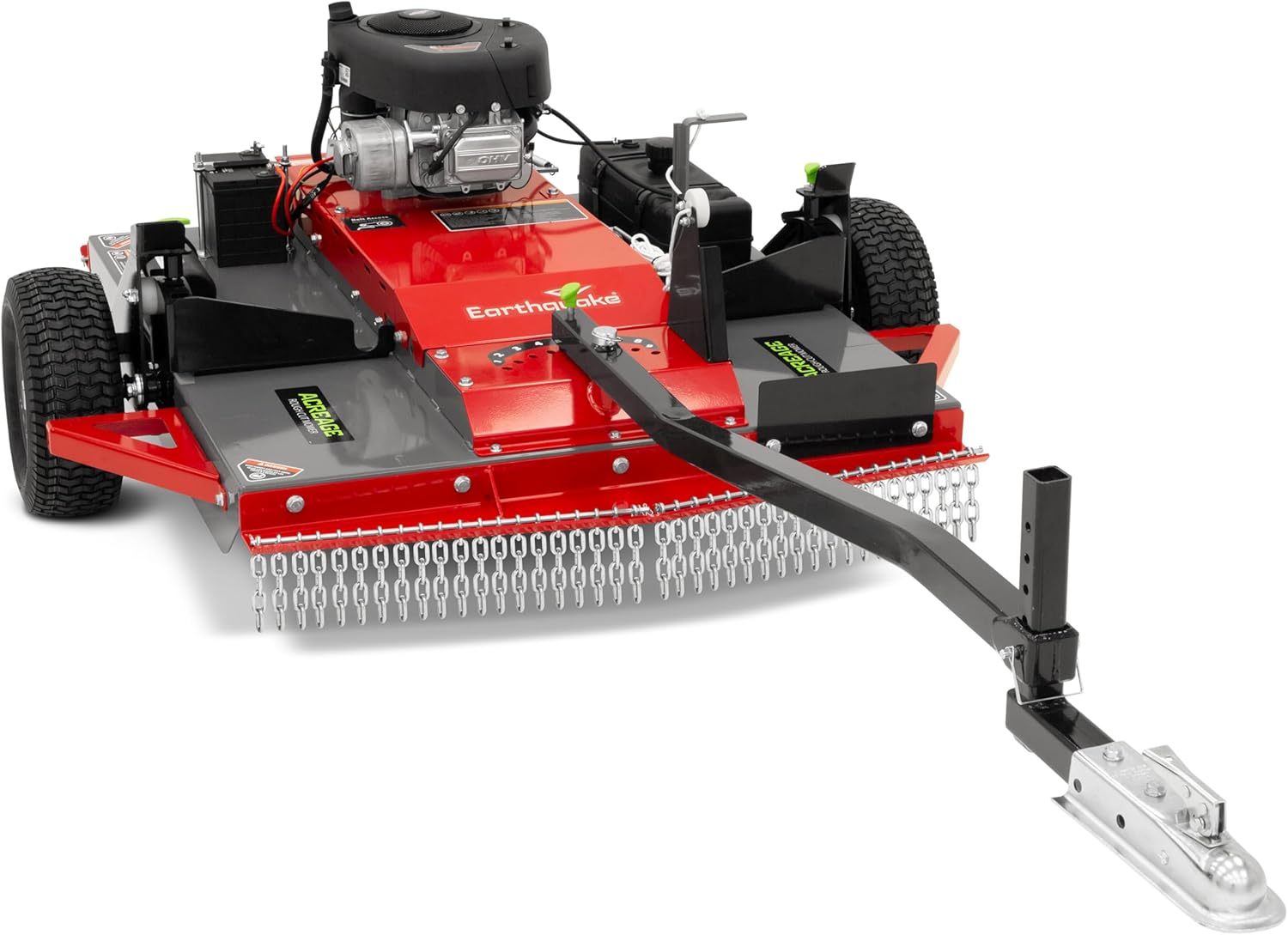
| Power Source | Gas Powered |
|---|---|
| Cutting width | 44 inches |
| Maximum Adjustable Cutting Height | 7.5 inches |
| Minimum Adjustable Cutting Height | 3.5 inches |
| Number of Positions | 9 |
The EARTHQUAKE Acreage is a purpose-built tow-behind rough cut mower for clearing overgrown fields, trails, and food plots. It delivers a 44-inch swath powered by a 17.5 HP Briggs & Stratton engine with keyed electric start and an Advanced Debris Management System to help keep the engine cleaner during heavy use. The mower’s 11-gauge steel deck and dual breakaway blades can handle tall grass, thick weeds, and saplings up to 3 inches while pivoting on impact to reduce damage. Operators can offset the deck up to 4 feet to reach edges and adjust cutting height tool-free from 3.5 to 7.5 inches across nine positions. The 2-inch ball coupler with 10 hitch heights makes hookup to ATVs or UTVs straightforward and towing smoother. Practical limitations are its heavyweight construction that requires appropriate towing equipment and the need for careful transport logistics given crate shipping size and weight. For someone managing rough acreage rather than mowing fine turf, it is a robust, low-fuss machine that prioritizes cutting power and durability.
Best for: Buyers who need a rugged, no-nonsense mower to manage large overgrown acres, trails, or food plots and who prioritize cutting power and long-term durability over fine lawn finish. Ideal for landowners who already use ATVs or UTVs for property work and want a mower that tolerates tough vegetation.
Less Ideal for: Not a good fit for homeowners seeking a precise, manicured lawn mower or anyone without access to a rated tow vehicle and appropriate transport equipment.
- 44-inch cutting width clears wide swaths in a single pass
- 17.5 HP Briggs & Stratton engine with electric start for reliable ignition
- 11-gauge steel deck and dual breakaway blades built for heavy-duty rough cutting
- Adjustable offset up to 4 feet and tool-free height changes for flexible trimming
- 2" ball coupler with multiple hitch heights for easy hookup to ATVs/UTVs
- Very heavy and requires a suitably rated tow vehicle and trailer for transport
- Crate dimensions and weight make pickup and storage more logistically demanding
Verdict: If you need a durable, high‑power tow‑behind mower to clear tall grass, brush, and saplings across large acres, this model delivers reliable cutting performance and heavy-duty construction.
AIWEIYA Remote Control 39.4" Hybrid Flail Mower (459cc Gas-Electric, Crawler Tracks)

| Power Source | Gas Powered |
|---|---|
| Operation Mode | Automatic |
| Material Type | Iron |
| Cutting width | 39.4 inches |
This AIWEIYA remote-control flail mower pairs a 459cc commercial gas engine with an electric drive for the tracks to deliver heavy-duty cutting and reliable traction on uneven ground. It uses a flail head designed to shred dense grass, weeds, brush, and light saplings into fine debris in a single pass, so jobs that would take multiple passes with a rotary deck can be completed faster. The tracked hybrid chassis provides stability and grip on steep slopes, ditches, mud, and rough landscapes while the industrial remote lets an operator control movement and cutting from a safe distance, including an obvious one-touch emergency stop. Practical benefits include reduced operator fatigue, less risk when working steep grades, and commercial-grade construction meant to withstand demanding use. Trade-offs are its large size and weight that limit maneuverability in tight yards and require transport equipment, and maintenance needs typical of gas engines and heavy tracked drivetrains.
Best for: Buyers who need a performance-focused machine to clear overgrown, rough or sloped acreage and prioritize power, traction, and remote operation over compact size.
Less Ideal for: Homeowners with small lawns, tight gardens, or those who want a lightweight, low-maintenance mower should consider simpler walk-behind or push models instead.
- High-power 459cc gas engine and flail head for aggressive cutting and mulching of thick vegetation
- Tracked hybrid drive offers superior traction and stability on steep slopes, mud, and uneven terrain
- Remote control operation with one-touch emergency stop improves safety and allows operation from a distance
- Commercial-grade chassis construction built to handle heavy, professional use
- Very heavy and large, requiring trailers or heavy equipment for transport and limiting use in tight spaces
- Gas engine and tracked drivetrain increase maintenance complexity compared with simple walk-behind mowers
Verdict: If you need a heavy-duty remote-control mower that can mulch dense growth and tackle steep, rough terrain, this hybrid tracked flail mower is built for that job.
Swisher Predator 11.5 HP 24 in. Walk-Behind Rough Cut Mower

| Power Source | Gas Powered |
|---|---|
| Engine HP | 11.5 HP (344cc) |
| Cutting width | 24 inches |
| Cutting Height Range | 3 to 4.75 inches |
| Transmission | 4‑speed with reverse |
The Swisher Predator WRC11524BS is built for tackling thick undergrowth and rough terrain rather than neat lawn finishing. It pairs an 11.5 HP Briggs & Stratton recoil engine with a 24 inch fabricated rough‑cut deck and a fixed hardened‑steel blade that will chew through brush and saplings up to about 1.5 inches in diameter. Large pneumatic chevron tires and a four‑speed transmission with reverse help you move over rutted or uneven ground, while an adjustable handlebar and operator‑presence controls improve comfort and safety during long runs. Height is adjustable across four positions roughly between 3 and 4.75 inches, suitable for clearing tall grass and light woody growth. Expect a workhorse that is heavy and purpose‑built, so it is less convenient for precision mowing, narrow gates, or frequent trailering. Assembly, occasional maintenance of the recoil start, and managing curbside freight delivery are practical details to plan for with this machine.
Best for: A buyer who needs a durable, no‑frills machine to clear overgrown lots, trails, or fields and prioritizes cutting power and durability over convenience features.
Less Ideal for: Homeowners who want a tidy, manicured lawn, need frequent transport through narrow gates, or prefer electric/keyed start and lighter equipment should look elsewhere.
- Powerful 11.5 HP Briggs & Stratton engine for cutting heavy brush
- 24 in. rough‑cut fabricated deck clears saplings up to 1.5 in.
- Self‑propelled with 4‑speed transmission plus reverse for improved maneuverability
- Large pneumatic chevron tires provide traction on uneven terrain
- Recoil (manual) engine start rather than an electric/keyed start
- Heavy overall weight makes it cumbersome to move or load
- Not designed for fine lawn finish or tight, delicate areas
Verdict: Buy this if you need a rugged, high‑torque rough‑cut mower that powers through heavy brush and saplings on uneven ground.
Swisher RC11544CL 11.5 HP 44 in. Tow-Behind Rough Cut Mower

| Engine power | 11.5 HP |
|---|---|
| Cutting width | 44 in. |
| Cutting height | 3 in. – 7 in. |
| Max brush diameter | 3 in. |
The Swisher RC11544CL is a purpose-built tow‑behind rough‑cut mower designed to tackle overgrown fields, fencerows, and heavy brush rather than finish lawns. It mounts to a towing vehicle and uses a remote operator control console that lets you engage the blades from the vehicle, which keeps the operator out of the cutting zone and simplifies starting and stopping. The offset hitch lets you tow from either side to reach edges and tight areas, and a single‑point height adjustment ranges from 3 to 7 inches so you can quickly change cutting height for varying conditions. This cutter is rated to handle brush and saplings up to 3 inches in diameter, so it can replace multiple passes with a trimmer in rough terrain. Expect a robust, no‑frills machine focused on durability and field performance rather than precision finish. It is large and job‑oriented, so storage, transport, and maneuvering require planning and a capable tow vehicle.
Best for: Someone who needs a durable, straightforward mower to clear overgrown fields, fence rows, and brush and who values reliable, heavy‑duty performance over a fine cut.
Less Ideal for: Homeowners seeking a precise, finish‑grade lawn mower or anyone without an appropriate towing vehicle or storage space should look elsewhere.
- Remote blade engagement lets the operator control blades from the towing vehicle for safer operation
- Offset hitch provides flexibility to tow left or right for better access to edges and fence lines
- Single‑point height adjustment (3–7 in.) allows quick changes to match field conditions
- Can cut brush and saplings up to 3 inches in diameter for heavy‑duty rough mowing
- Designed for rough cutting not finish mowing so it will not produce a manicured lawn appearance
- Requires a towing vehicle and space for storage and transport
Verdict: Buy this if you need a dependable, heavy‑duty tow‑behind cutter that quickly clears thick brush and saplings without fuss.
INFRONT Remote Control All-Terrain Track Lawn Mower (Gas Hybrid, 9HP)

| Power Source | fuel_powered |
|---|---|
| Operation Mode | Automatic |
| Cutting width | 19.68 inches |
| Maximum Adjustable Cutting Height | 5.9 inches |
| Minimum Adjustable Cutting Height | 0.79 inches |
This INFRONT tracked mower is built for rough terrain and professional-style jobs where stability and climbing ability matter. It uses a 9 HP/225cc gasoline engine with electric start and a rubber track drive so it can climb slopes up to about 40 to 45 degrees and cross soft soil, ditches, and dense vegetation that wheeled mowers struggle with. The roughly 21.7-inch cutting deck with dual alloy/manganese blades gives a wide, efficient pass and offers remote-adjustable cutting height for different grass and weed conditions. A remote controller provides long-range operation for safer use on embankments and steep areas, and spare blades and a tool kit are included for field maintenance. The machine’s blade-retract feature on impacts helps protect components when encountering hidden obstacles. Expect a heavy, farm-style unit that trades portability for durability and power; it is overbuilt for small, manicured lawns and requires fuel, storage space, and occasional mechanical upkeep like any gas engine machine.
Best for: Ideal for landowners, orchard managers, and contractors who need a reliable, high‑power mower to clear steep, uneven, or overgrown properties without constant manual supervision.
Less Ideal for: Not a good fit for homeowners with small, formal lawns or those who need a lightweight, quiet electric mower for suburban yards.
- Rubber track drive and differential zero-turn design for excellent slope climbing and maneuverability
- Powerful 9HP/225cc gasoline engine with electric start for sustained heavy use
- Wide cutting deck with dual alloy/manganese blades for efficient mowing and mulching
- Remote control operation allows safe, hands-off control on hazardous slopes
- Includes spare blades and a tool kit for on-site maintenance
- Very heavy and large, making transport and storage more demanding
- Gas engine requires fuel, routine maintenance, and more noise than electric alternatives
Verdict: Buy this if you need a rugged, remotely operated track mower that climbs steep slopes and handles rough, overgrown terrain reliably.
Swisher RC11544BS 11.5 HP 44" Rough Cut Tow-Behind Mower

| Power Source | Gas Powered |
|---|---|
| Engine HP | 11.5 HP (344cc) |
| Cutting width | 44 inches |
| Cutting height range | 3–7 inches |
| Material Type | Alloy Steel |
The Swisher RC11544BS is a heavy-duty tow‑behind trailcutter intended for clearing overgrown fields, pastures, and brush rather than producing a fine lawn finish. It mounts to an ATV or UTV using an articulating hitch with a 2-inch ball coupler and folds for compact storage. Powered by an 11.5 HP (344 cc) Briggs & Stratton recoil engine, the unit uses two swinging blades and a stump jumper to handle saplings up to about 3 inches in diameter while rear discharge spreads cut material. Height is set with a single-point adjustment from 3 to 7 inches, and two 16-inch pneumatic sealant-filled tires help the deck track over rough ground. Practical benefits include a robust 44-inch 11-gauge welded deck and remote blade engagement for safer operation from the towing vehicle. Downsides to expect are the recoil-only engine start, limited fuel capacity compared with larger commercial models, and that it is purpose-built for rough cutting so it will not deliver mower-deck quality finish on lawns.
Best for: Buyers who need a reliable, built‑for‑work tow‑behind mower to clear overgrown pastures, trails, or brush and who prioritize rugged construction and straightforward, safe operation.
Less Ideal for: Homeowners who want a manicured lawn appearance or users who need a keyed/electric start and larger commercial fuel capacity should consider other mower types.
- Sturdy 44-inch welded 11-gauge deck designed for thick brush and rough terrain
- 11.5 HP Briggs & Stratton engine provides reliable power for heavy cutting
- Articulating hitch with 2-inch ball coupler allows tool-free offset adjustment and folds for storage
- Remote operator control console lets you engage blades from the towing vehicle for safer operation
- Recoil-only engine start rather than electric/keyed start
- Designed for rough cut work and will not produce a finish-quality lawn
- Relatively small fuel capacity compared with larger commercial rough-cut mowers
Verdict: Choose the Swisher RC11544BS if you need a rugged, tow‑behind rough cutter that reliably clears thick grass and saplings on fields and pastures.
Choosing the Right Rough Cut Lawn Mower: Key Factors to Consider
Cutting Deck Construction and Blade Type
A robust deck and appropriately shaped blades determine how effectively a rough cut mower handles tall grass, light brush, and saplings. Heavier steel decks resist dents and vibration better than thin stamped alternatives, and reinforced welds around the spindle and mounting points reduce the chance of misalignment after an impact.
Blade geometry matters because high-lift blades create more suction and discharge for bagging or mulching, while mulching or heavy-duty flail-style blades hold up better when you encounter woody stems. Consider whether the deck offers replaceable wear plates or easy access to the spindle for quicker field repairs.
Engine Power and Torque Delivery
Peak horsepower is less important than usable torque at lower engine speeds when cutting dense or tall vegetation. Engines with stronger torque let you maintain blade speed under load, preventing bogging and providing a cleaner cut. A mower with a responsive throttle and appropriate gearing reduces the need to rev the engine constantly and helps when climbing slopes or pulling through thicker stands of grass.
Also factor in the fuel system type and accessibility for routine checks; simple carbureted engines and accessible filters are easier to service in remote settings.
Durability of Drive Components and Chassis
The drivetrain, transaxle, and chassis see a lot of stress during rough mowing. Heavy-duty transmissions or hydrostatic drives designed for load resistance will last longer than undersized gearboxes. Solid axle designs and reinforced frame junctions resist bending when the mower strikes rocks, stumps, or ruts.
Look for protective guards over belts and pulleys and for accessible grease points. Corrosion-resistant finishes and drain paths in decks also reduce long-term degradation if the mower is stored outdoors or used in damp conditions.
Serviceability and Maintenance Requirements
Frequent maintenance can become a chore on large properties, so ease of routine service is important. Simple access to oil filters, spark plugs, air filters, and spindle grease points reduces downtime. Models with tool-free deck removal or hinged access panels make blade sharpening and belt replacement faster.
Also consider how common replacement parts are and whether the design allows basic repairs with common hand tools. Mowers that require specialized service equipment will increase ownership complexity for owners who prefer DIY upkeep.
Operator Comfort and Control
Rough cutting often takes place over long periods and uneven ground, so operator ergonomics matter. Comfortable seating with vibration isolation reduces fatigue and helps maintain control on bumpy terrain. Intuitive control layouts for throttle, brake, and deck lift let you make quick adjustments while on the move.
Good visibility forward and to the deck edges aids precise navigation around obstacles. Suspension of the seat and a stable platform for feet also improve long-session comfort and safety.
Cutting Width, Maneuverability, and Transport
Wider decks reduce job time by covering more ground, but they can be harder to maneuver around trees, fence lines, and tight gateways. Narrower, more nimble machines may take longer but allow access to confined areas without repeated repositioning.
Consider how you will transport the mower between sites: fold-down parts, towability, and overall width when folded or parked affect trailering. Balance cutting width against storage space and the typical obstacles on your property.
When a Rough Cut Mower Is the Right Choice
Choose a rough cut mower when you need to reclaim fields, maintain fencerows, or manage variable terrain where regular lawn mowers stall or suffer damage. These machines are designed for durability and to tolerate taller vegetation and occasional impacts that would damage lighter equipment.
If your site mixes open meadows with isolated trees, brush patches, or gravel ruts, a rough cut mower will save time and reduce the risk of blade and deck damage compared with standard turf equipment.
- Best for tall grass, light brush, and neglected lots
- Designed to withstand occasional knocks and debris
- Ideal for larger areas where speed matters more than fine finish
Preparing the Area and Safe Operation
Before mowing, walk the planned area and remove obvious hazards such as fencing wire, large branches, and loose debris. Hidden rocks and metal can cause serious damage when thrown by a blade.
Always use appropriate personal protective equipment and follow manufacturer safety guidance for shields, guards, and operator distance. Work at a steady speed and avoid sudden jerks that can transmit shock loads through the deck and drivetrain.
- Clear large obstacles by hand before mowing
- Check shields and blade condition daily in rough conditions
- Reduce cutting height gradually rather than trying to scalpe very tall growth in a single pass
Adapting Mower Settings for Tall or Woody Growth
When tackling very tall or semi-woody vegetation, use a slightly higher deck setting and make multiple passes to reduce stress on the engine and blades. This approach prevents overloading the drive and yields a more uniform finish.
If your mower supports reversible blades or different blade types, choose blades intended for heavy cut conditions. Also consider slower ground speed and slightly higher engine RPM to keep blade tip speed sufficient under load.
- Set deck higher for first pass, then lower for follow-up passes
- Slow ground speed preserves blade tip speed and reduces stalling
- Inspect and sharpen or replace blades after heavy duty use
Storage, Winterizing, and Long-Term Care
Store the mower in a dry, ventilated area to prevent corrosion and degradation of belts and electrical components. If indoor storage is not available, use breathable covers and keep fuel stabilized according to engine recommendations.
Perform seasonal maintenance such as oil and filter changes, belt inspections, and a thorough deck cleaning to remove plant residue. Regularly greasing spindles and pivot points extends component life and keeps the machine ready for the next season.
- Drain or stabilize fuel for long-term storage
- Clean clippings and debris from the deck after every heavy use
- Replace worn belts and blades promptly to avoid secondary damage
Accessory and Attachment Options
Some rough cut mowers accept add-ons that increase versatility, such as ballast weights for traction, tow hitches for trailers, or brush guards for front protection. Selecting compatible accessories can expand how you use the machine beyond straight mowing.
Consider attachments that match your most common tasks rather than buying for occasional needs. Durable attachments with straightforward mounting systems are easier to install in the field and reduce downtime.
- Weight kits improve traction on slopes and with heavy loads
- Brush guards protect the front end from saplings and impact
- Tow hitches and cargo racks turn the mower into a light utility vehicle
How We Chose the Best Rough Cut Lawn Mower
We prioritized features that directly affect performance and day-to-day ownership in rough mowing conditions. Key evaluation criteria included cutting deck design and blade robustness for reliable vegetation clearance, engine and powertrain torque for climbing and dense growth, build materials and chassis durability for resistance to impacts and corrosion, ease of maintenance for routine servicing in remote or field conditions, operator comfort and control for long sessions, and cutting width versus maneuverability to balance job time and access. We examined listed specifications, user-reported durability patterns, and manufacturer maintenance guidance to judge serviceability and expected longevity. Exclusions included machines intended only for fine turf or ornamental lawns and units lacking adequate safety features for brush cutting. The result is a list of machines that meet practical expectations for heavy-duty rough mowing across different property sizes and terrain types.
FAQ
How often should I sharpen blades when using a rough cut mower?
It often depends on how abrasive the vegetation and terrain are. For heavy or woody cutting, inspect blades after every few hours of use and resharpen or replace when you see nicks, bending, or reduced cutting performance.
Can I use a rough cut mower on sloped ground?
You usually can, but slope capability depends on the mower's center of gravity, traction system, and operator skill. Take slower passes, avoid sudden turns on slopes, and follow safety guidelines for maximum safe incline.
Will a rough cut mower leave a fine finish like a lawn tractor?
Not typically. Rough cut mowers prioritize durability and speed over a manicured finish. Expect a coarser, more natural look; finer finishing usually requires a follow-up with a dedicated turf mower.
How much maintenance do rough cut mowers require compared with standard mowers?
They often require similar routine maintenance but more frequent inspections due to operating conditions. Frequent greasing, belt checks, and blade inspections are common when cutting heavier growth or encountering debris.
Are there special tires or traction aids I should consider?
Tread pattern and tire size affect traction on soft or uneven ground. Heavier tread and wider tires improve flotation and reduce slippage. In some cases, adding rear ballast or chains can help but may increase wear on driveline components.
Is fuel type or engine size critical for rough cutting tasks?
Engine torque and cooling capacity matter more than sheer displacement. Diesel or larger gasoline engines with good low-end torque perform better under load. Ensure the cooling system is adequate if you frequently operate at low speed in heavy vegetation.
Final Verdict
Prioritize a Rough Cut Lawn Mower that balances a heavy-duty cutting system with durable drivetrain components and straightforward maintenance. Decide whether you need a wider deck to speed up work or a narrower, more maneuverable unit for confined areas, and match engine torque to the density of the vegetation you typically encounter. By focusing on deck construction, serviceability, and operator comfort, you can choose a machine that reduces downtime and handles rugged mowing tasks reliably.
