

Note: This article contains affiliate links. If you click on these links and make a purchase, I may earn a small commission at no extra cost to you. This helps support my research and content. Read my full affiliate disclosure here.
Choosing the right mulch for pine trees matters for root health, soil acidity, and moisture retention around trunks. Pine trees have specific needs: they prefer slightly acidic, well-drained soil and a protective layer that does not smother roots or encourage fungal problems. This guide covers six top mulch options suited for pine trees and explains why each was shortlisted. We evaluate materials for acidity effects, longevity, drainage, and ease of maintenance so you can pick the right mulch for your yard or landscape.
Top Picks at a Glance
| Best Overall The best all-around choice for most situations | USA Pine Straw Premium Pine Needle Mulch, 210 sq ft bale |  |
| Best Quality Built to a higher standard if you want something more solid | Mid-Atlantic Carolina Longleaf Pine Straw Mulch Bale Box (covers up to 75 sq. ft.) |  |
| Best Value The sweet spot between price and what you get | USA PINESTRAW Long Needle Pine Straw Mulch, Square Bale |  |
| Best Budget The cheapest option that still gets the job done reliably | Home and Country USA Pine Needle Mulch 1 lb Bag |  |
| Highest Rated A top-rated pick with lots of positive feedback | Mid-Atlantic Shredded Longleaf Pine Straw Mulch, 2 bags (2 cu ft each) |  |
| Most Popular A crowd favorite that many people choose with confidence | Longleaf Pine Straw Roll for Landscaping (Non-Colored) |  |
USA Pine Straw Premium Pine Needle Mulch, 210 sq ft bale

| Coverage | 210 Sqft. |
|---|---|
| Item Weight | 35 pounds |
| Manufacturer | USA PINESTRAW |
This pine straw bale is a straightforward, no-frills mulch for gardeners who want a natural groundcover around pine trees, shrubs, and flower beds. It spreads easily by hand to form a breathable layer that helps retain soil moisture and reduce weed growth while maintaining good drainage around roots. The product is promoted as 100 percent organic and sourced from U.S. pine forests, which makes it a low-maintenance choice for creating a tidy, long-lasting appearance along beds and pathways. It also doubles as bedding for backyard poultry because it improves drainage and reduces odor. Practical limitations are that coverage depends on bale density and layering needs vary by soil and slope, so you may need multiple bales to reach a 2 to 3 inch recommended depth across larger areas. There are no added fertilizers or moisture crystals, so expect purely physical benefits rather than nutrient enhancement.
Best for: Gardeners who want a low-maintenance, natural mulch specifically to protect and beautify beds around pine trees while reducing watering and weeding effort.
Less Ideal for: People who need an all-in-one soil amendment or fertilizer replacement, or those seeking an inorganic or colored decorative mulch.
- Retains soil moisture to reduce watering frequency
- Long needle straw forms a neat, natural-looking bed that resists compaction
- Helps suppress weeds by blocking sunlight without chemicals
- Sustainably sourced 100% organic material from U.S. pine forests
- Coverage per bale can vary so multiple bales may be needed for full 2–3 inch depth
- Provides no direct soil nutrients or fertilizer benefits
Verdict: Choose this pine straw bale for a natural, sustainable mulch that keeps soil moist and beds tidy around pine trees.
Mid-Atlantic Carolina Longleaf Pine Straw Mulch Bale Box (covers up to 75 sq. ft.)

| Brand Name | Mid-Atlantic Pine Straw Mulch |
|---|---|
| Number of Packs | 1 |
| Item Weight | 16 pounds |
This product supplies clean, OMRI-listed longleaf pine straw delivered loose in a box sized to cover roughly 75 sq. ft. It is intended to be spread as a mulch layer around trees, shrubs, and garden beds to suppress weeds, conserve soil moisture, and insulate roots against temperature swings. The straw is described as inspected to federal and state guidelines, free of visible weed seed and common debris, and light enough to spread by hand, which makes quick work of mid- to large-scale beds without specialized equipment. Because it decomposes slowly, it provides longer-lasting coverage than many wood chip mulches and contributes organic matter as it breaks down. Important limitations are that the boxed bale may require handling assistance at around 16 pounds and you may need several boxes for larger areas; also its loose form can be more susceptible to wind displacement on exposed slopes compared with heavier mulches. For planting and maintenance around pine trees this is a practical, low-maintenance option that emphasizes sustainability and ease of use.
Best for: Gardeners and landscapers who prioritize natural, low-maintenance mulching that conserves moisture and improves soil health around pine trees and beds.
Less Ideal for: People needing a heavy, erosion-resistant mulch for very windy slopes or those who want a single bulk delivery for very large properties.
- OMRI listed organic and USDA-compliant longleaf pine straw
- Clean, inspected straw marketed free of weed seed and common debris
- Lightweight loose straw that is easy and quick to spread by hand
- Decomposes slowly to provide longer-lasting mulch and adds organic matter to soil
- Loose straw can blow away on exposed or steep sites unless anchored
- Single box covers limited area so larger projects require multiple boxes
Verdict: A lightweight, OMRI-listed longleaf pine straw that delivers clean, easy-to-spread organic mulch ideal for maintaining moisture and soil health around pine trees.
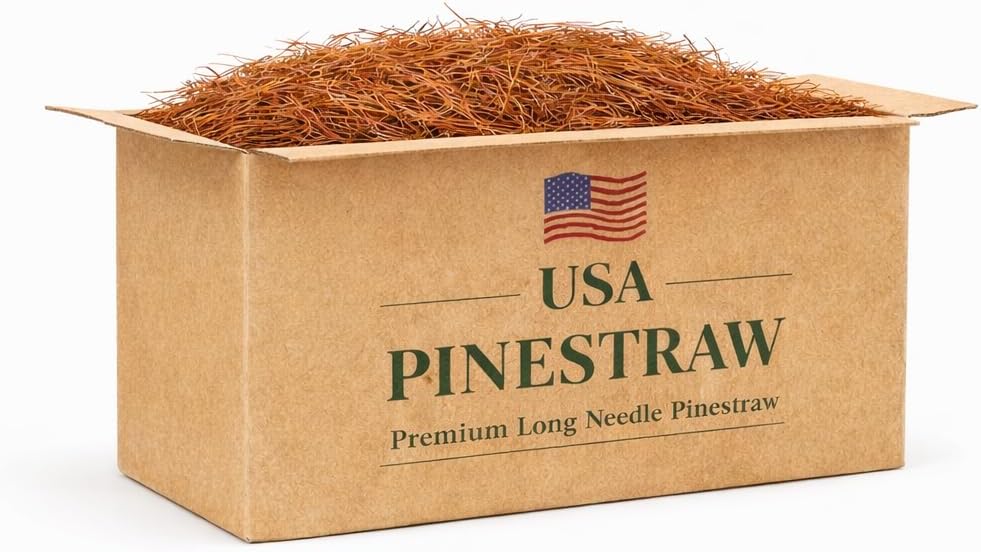
USA PINESTRAW Long Needle Pine Straw Mulch, Square Bale
| Material Type | Pine |
|---|---|
| Other Special Features of the Product | Organic |
| Package Size Name | Square Bale |
| Unit Count | 1 Count |
This product is a single premium square bale of long-needle pine straw intended for use as organic mulch around beds and shrubs. It is typically spread 2 to 4 inches deep around plants, pathways, and trees to suppress weeds, retain soil moisture, and protect roots from temperature swings. Because it is long-needle pine straw, it interlocks well and resists blowing away better than chopped mulches, and it decomposes slowly to add organic matter without dramatically altering soil texture. Practical benefits for blueberry plantings include good acidifying potential over time and excellent moisture retention, both helpful for blueberry health. Limitations are that you will need multiple bales for larger beds and periodic top-ups each season as the straw settles and decomposes. Also pine straw can be bulky to handle compared with bagged compost or wood chips, and it does not provide immediate nutrient boosts the way composted mulches do.
Best for: Gardeners seeking a low-maintenance, organic mulch for acid-loving shrubs who want better moisture retention and natural weed suppression in small to medium beds.
Less Ideal for: People who need a sterile, compacted mulch for container-grown blueberries or those wanting immediate nutrient-rich soil amendments rather than a slow-decomposing cover.
- Organic long-needle pine straw that naturally suppresses weeds
- Good moisture retention that reduces watering frequency
- Interlocking needles resist wind displacement better than loose shredded mulches
- Slow decomposition adds organic matter over time without rapid nutrient release
- Sold as single square bale so multiple purchases needed for larger beds
- Bulky to handle and store compared with bagged options
Verdict: Choose this long-needle pine straw bale if you want an organic, moisture-retaining mulch that stays put and supports acid-loving plants like blueberries.
Home and Country USA Pine Needle Mulch 1 lb Bag

| Manufacturer | Home and Country USA |
|---|---|
| Item model number | PN1 |
| Product Dimensions | 15 x 10 x 3 inches |
This 1 lb bag of pine needle mulch is pure pine straw packaged for small-scale landscaping and garden projects. It is typically used as a decorative top layer around flower beds, shrubs, and pine trees to retain soil moisture, suppress weeds, and slowly add organic matter as it decomposes. Notable features include its natural pine composition and a consistent color and texture that resists compaction compared with bark mulches. Practical benefits for home gardeners include easier watering efficiency, reduced need for chemical weed control when applied in a thick, interlocking layer, and gradual improvement of soil structure over time. The small bag size makes it easy to handle for spot applications, containers, or to trial pine straw before committing to bulk purchases. The primary limitations are the small quantity provided per bag, which means multiple bags are required for larger beds, and the product is best suited to areas where pine straw is appropriate rather than for heavy-duty erosion control on steep slopes.
Best for: Gardeners looking for a low-maintenance, natural mulch to use around pine trees, flower beds, or containers who want to try pine straw in small quantities before buying in bulk.
Less Ideal for: Property owners needing to cover large landscapes or control severe erosion should choose bulk straw, larger bales, or dedicated erosion-control products instead.
- Made from pure pine straw that breaks down to add organic matter to soil
- Helps retain moisture and reduce watering frequency
- Forms an interlocking layer that suppresses weed growth without chemicals
- Consistent color and texture that resists compaction compared with some bark mulches
- Sold in a small 1 lb bag, not economical for covering large areas
- Not designed for heavy erosion control or steep slopes
Verdict: A convenient small bag of pure pine straw for trying or spot-treating beds that improves moisture retention and soil health around pine trees.
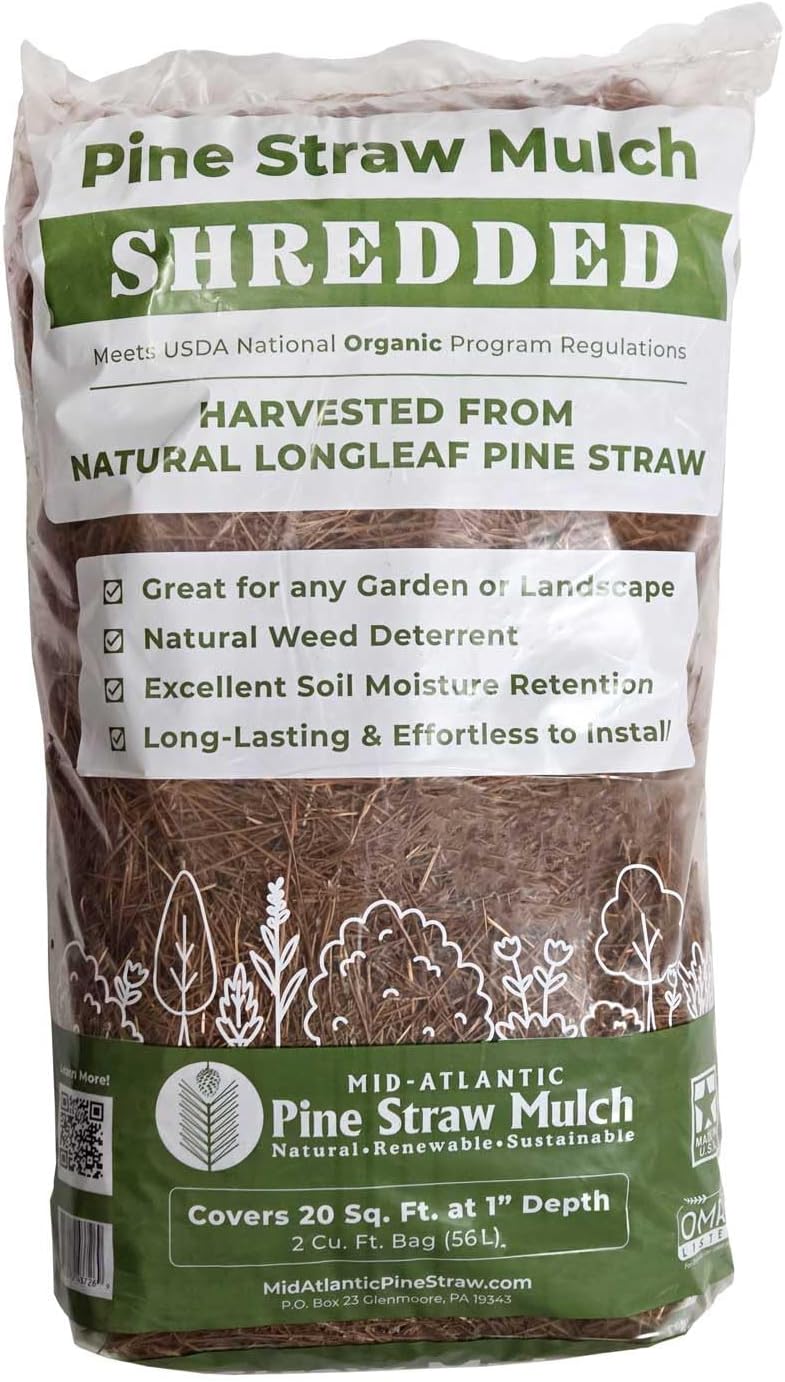
Mid-Atlantic Shredded Longleaf Pine Straw Mulch, 2 bags (2 cu ft each)
| Number of Packs | 2 |
|---|---|
| Unit Count | 2 Count |
| Volume | 6 cubic feet |
| Item Weight | 15 pounds |
This shredded longleaf pine straw is a lightweight, bagged mulch designed for easy handling and straightforward application. Gardeners spread it around beds and shrubs to form a dense mat that suppresses weeds, conserves soil moisture, and insulates roots against temperature swings. The product is OMRI listed for organic gardening and is described as clean and free of weed seeds and common hardwood debris, which makes it suitable for use around fruit bushes. Because the needles are shredded to 3–4 inches, the mulch lays flatter immediately and is easier to distribute evenly than full-length straw. It breaks down slowly to add organic matter over time, reducing how often you need to replace it. Limitations are that pine straw does not provide the same decorative look as bark in some landscapes and can shift on steep slopes if not anchored, so occasional top-ups or light anchoring may be needed in exposed sites.
Best for: Gardeners who want a low-maintenance, organic mulch that is easy to spread and supports plant health, especially those planting edible shrubs who prioritize soil moisture retention and weed suppression.
Less Ideal for: Homeowners seeking a formal, bark-style aesthetic or who need a heavy, erosion-resistant mulch for steep slopes should consider other mulch types.
- OMRI listed organic material suitable for organic gardens
- Lightweight, shredded form for easy carrying and faster laying
- Helps retain soil moisture and suppress weeds by forming a dense mat
- Slow decomposition adds organic matter and reduces replacement frequency
- Less formal decorative appearance compared with hardwood bark mulch
- Can shift on steep or very windy sites without anchoring
Verdict: Choose this shredded longleaf pine straw if you want an easy-to-spread, OMRI-listed organic mulch that conserves moisture and suppresses weeds for blueberry beds.
Longleaf Pine Straw Roll for Landscaping (Non-Colored)

| Indoor Outdoor Usage | Outdoor |
|---|---|
| Other Special Features of the Product | organic |
| Sunlight Exposure | Full Sun |
| Moisture Needs | Moderate Watering |
| Material Features | Natural |
This longleaf pine straw roll is a natural mulch made from long needles native to the Southeastern United States and is intended for outdoor landscaping and ground cover. It is typically laid around trees, shrubs, and planting beds to suppress weeds, conserve soil moisture, and provide a neat, natural appearance. Notable features include organic, natural material and long needles that interlock to form a stable mat that resists wind displacement better than shorter-needle straw. Practical benefits include improved moisture retention for roots, reduced weed pressure, and an attractive, low-maintenance surface that complements pine tree landscapes. Because it is non-colored and untreated, it integrates well into native plantings and does not introduce synthetic dyes. Limitations are that it is a seasonal, organic product so it will slowly decompose and need replenishing over time, and it can harbor insects or seeds if not inspected before installation. For planting beds under pine trees it performs well, but expect periodic top-ups to maintain depth and coverage.
Best for: Gardeners and homeowners who want a natural, low-maintenance mulch specifically suited for pine tree landscapes and native planting beds and who prioritize materials that blend with the environment.
Less Ideal for: People seeking a permanent, low-replacement synthetic mulch or those who need a sterile, seed-free option for newly established beds without inspecting organic material.
- Long needles form an interlocking mat that resists wind displacement
- Organic and natural material suitable for native plantings
- Helps retain soil moisture and suppress weeds around trees
- Non-colored, untreated finish avoids synthetic dyes
- Will decompose over time and requires periodic replenishment
- May contain insects or seeds if not cleaned before use
Verdict: Choose this longleaf pine straw if you want a natural, native-looking mulch that holds in place well and supports pine tree landscapes.
Choosing the Right Mulch for Pine Trees: Key Factors to Consider
Soil Acidity and pH Effects
Mulch can influence the acidity of the topsoil over time as it decomposes. For pine trees, which typically prefer slightly acidic conditions, choose a mulch whose breakdown products do not cause large or sudden pH swings. Organic bark or needle mulches usually trend toward acidity but do so gradually. A mulch that dramatically lowers pH can change nutrient availability and encourage or discourage certain soil organisms.
Testing your soil pH before mulching and monitoring it annually helps you spot changes early. If pH shifts are a concern, select neutral-to-slightly-acidic materials and avoid amendments that contain lime or alkaline fillers.
Moisture Retention Versus Drainage
Pine trees need consistent moisture but dislike standing water at the root crown. The ideal mulch holds enough moisture to reduce irrigation frequency while allowing excess water to drain through. Coarse wood chips and shredded bark tend to balance retention and airflow, while very fine mulches or compacted layers can trap water and cause root problems.
Consider local climate and root depth when choosing mulch depth. In wetter climates use a lighter, coarser layer to promote drainage. In dry regions, a slightly thicker layer that retains moisture will reduce drought stress.
Decomposition Rate and Maintenance Frequency
Different mulch materials break down at different speeds. Fast-decomposing mulches add organic matter and nutrients to the soil more quickly but require more frequent top-ups. Slow-decomposing materials provide longer-lasting coverage and more stable rooting conditions but add organic matter more slowly.
Factor in how often you want to refresh mulch. If you prefer low-maintenance beds, select a durable mulch. If improving soil organic content is a priority, a quicker-decomposing mulch may be beneficial but will need regular replacement.
Weed Suppression and Groundcover Competition
A good mulch reduces weed emergence, limiting competition for water and nutrients. Dense, coarse mulches and thick layers (when properly applied) are effective at blocking light and preventing weed seeds from germinating. However, avoid piling mulch against the trunk, which can trap moisture and invite pests and disease.
Combine mulch with pre-planting weed control and spot-weeding as needed. Consider using a landscape fabric only in situations where it will not inhibit soil organisms or drainage; many gardeners prefer organic mulches alone for long-term soil health.
Surface Aeration and Root Health
Air exchange at the soil surface supports healthy microbial communities and root respiration. Mulches that compact or form a dense mat can reduce oxygen flow and create anaerobic pockets that stress roots. Materials with mixed particle sizes and coarser textures maintain air spaces better than fine, powdery mulches.
When applying mulch, fluff and avoid compressing it, and maintain an even layer around the dripline while keeping mulch away from direct trunk contact to preserve trunk bark and prevent rot.
Benefits of Mulching Pine Trees
Mulching conserves soil moisture, cuts down on weed pressure, buffers soil temperature swings, and slowly adds organic matter as it decomposes. Around pine trees these benefits help young roots establish and reduce stress during hot, dry periods.
A properly applied mulch layer also protects the trunk base from mechanical damage caused by lawn mowers and trimmers. For mature pines, mulch placed beyond the root flare can support feeder roots and improve overall tree vigor.
- Reduces evaporation and watering needs
- Moderates soil temperature extremes
- Limits grass and weeds near the trunk
- Protects trunk from mechanical injury
Common Mulch Types and How They Behave
Organic mulches such as wood chips, shredded bark, and pine needles each decompose at different rates and influence soil differently. Coarse hardwood chips last a long time and promote drainage while shredded bark provides a tidy appearance and moderate longevity.
Pine needles are lightweight and acidic as they break down, making them a commonly recommended choice near pines, though they can be slow to settle into a uniform layer and may blow away in windy sites. Compost and leaf mulch add nutrients faster but need more frequent replenishment.
- Wood chips: durable, good drainage
- Shredded bark: neat look, medium longevity
- Pine needles: acidic, lightweight
- Compost/leaf mulch: nutrient-rich, fast to decompose
Proper Mulch Application and Depth
Apply mulch in a donut shape around the tree, keeping it pulled back 2 to 4 inches from the trunk to prevent moisture buildup and bark decay. Spread mulch evenly to the desired depth without creating a volcano mound against the trunk.
A depth of 2 to 4 inches is usually recommended for pine trees. Lighter, coarser materials can be applied a bit deeper in windy or very dry sites, while finer mulches should be shallower to avoid compaction.
- Keep mulch 2-4 inches away from trunk
- Use 2-4 inch depth for most materials
- Avoid compacting mulch; fluff yearly
Seasonal Mulch Care and Renewal
Inspect mulch annually for signs of compaction, fungal fruiting bodies, or excessive settling. Rake or aerate the surface if it forms a dense mat, and replenish with a thin layer rather than a deep reapplication to avoid suffocating roots.
In regions with heavy winter moisture, thinner layers applied in fall help prevent prolonged wet conditions at the root collar. In warmer climates, thicker layers can be maintained to conserve moisture through dry seasons.
- Check for compaction and rot each year
- Top-dress with small amounts rather than deep re-layering
- Adjust depth seasonally based on climate
How Mulch Interacts with Fertilization and Soil Amendments
Mulch affects nutrient cycling. Fast-decomposing mulches release nutrients quickly and can reduce the need for supplemental feeding, while slow-decomposing wood chips tie up nitrogen initially as microbes process carbon-rich material. If using high-carbon mulches, plan for a spring feeding or include a nitrogen-rich amendment to balance decomposition.
When applying soil amendments, remove mulch from the treatment area so the amendment contacts soil directly. Replace mulch after the amendment has been incorporated to keep nutrient exchange focused where roots can access it.
- Fast-decomposing mulch releases nutrients sooner
- High-carbon mulch may temporarily immobilize nitrogen
- Remove mulch before applying soil amendments
How We Chose the Best Mulch for Pine Trees
We shortlisted mulches that are appropriate for planting around pine trees and assessed them using practical, garden-focused criteria. Criteria included acidity impact because pine roots can respond poorly to large shifts in pH; moisture retention and drainage since pine trees need consistent but not waterlogged soil; and decomposition rate because how fast a mulch breaks down affects how often you need to refresh it. We also evaluated weed suppression and how the material affects airflow at the soil surface, since compacted or impermeable layers can harm roots. Durability and maintenance were considered so options that need frequent replenishing or heavy upkeep were scored lower for longevity. Exclusions included mulches designed primarily for vegetable beds, heavy rubber or synthetic mulches that impede water exchange, and any products with known persistent chemical residues. Our process favored materials that gardeners can source locally and that perform reliably in typical landscape and yard conditions.
FAQ
Are pine needles a good mulch for pine trees?
Pine needles are a suitable mulch because they are slow to decompose and trend slightly acidic, which aligns with many pine preferences. They can be light and may need periodic redistribution to maintain an even layer, and they are less likely to compact than fine bark.
How close to the trunk should mulch be placed?
Keep mulch pulled back 2 to 4 inches from the trunk to prevent moisture buildup and bark rot. Leaving a clear space helps air circulation at the trunk base while still protecting roots out to the dripline.
What depth of mulch is best for pine tree roots?
A depth of 2 to 4 inches is generally recommended. Coarser materials can be slightly deeper in dry, windy areas, while fine mulches should be kept shallower to avoid compaction and reduced aeration.
Will mulch change the soil pH around pine trees?
Some mulches, especially pine needles and certain bark types, can slowly influence soil acidity as they decompose. Changes are usually gradual, but it is wise to test soil pH periodically if you are concerned about nutrient availability.
How often should mulch be refreshed around pine trees?
Refresh frequency depends on material. Fast-decomposing mulches may need topping every year, while coarse wood chips can last several years before replenishment. Inspect the layer annually and add a light top-dress when coverage thins.
Can mulch cause pests or disease on pine trees?
Mulch piled against the trunk can trap moisture and create conditions that favor pests and disease. Keeping mulch away from direct trunk contact and avoiding overly thick or compacted layers minimizes these risks.
Final Verdict
When choosing mulch for pine trees, prioritize materials that balance moisture retention with good drainage and that decompose at a rate that matches your maintenance preferences. Pay attention to how a mulch may influence soil acidity and avoid piling material against the trunk. By matching texture, depth, and renewal schedule to your climate and tree size, you will protect roots, reduce weeds, and support long-term tree health.
