

Note: This article contains affiliate links. If you click on these links and make a purchase, I may earn a small commission at no extra cost to you. This helps support my research and content. Read my full affiliate disclosure here.
Growing a banana tree in a container or small patio bed means giving it a potting mix tuned for big leaves, steady moisture, and regular feeding. The right potting soil for banana tree affects root oxygen, water holding between irrigations, and how nutrients are released during the growing season. In this guide we shortlisted five top-performing mixes that suit potted banana plants, from fast-draining blends to richer, moisture-retentive mixes for warm, humid setups. Each pick was evaluated on moisture control, nutrient profile, and ease of use to help you choose the right mix for your site and watering habits.
Top Picks at a Glance
| Best Quality Built to a higher standard if you want something more solid | E.B. Stone Organics Citrus & Palm Mix Potting Soil, 1.5 cu ft |  |
| Best Value The sweet spot between price and what you get | Gardenera Banana Tree Potting Mix, 3 Quart |  |
| Best Budget The cheapest option that still gets the job done reliably | Doter Banana Tree Potting Mix, 10 qt |  |
| Highest Rated A top-rated pick with lots of positive feedback | Gardenera Banana Tree Potting Mix (1 quart) |  |
| Most Popular A crowd favorite that many people choose with confidence | Soil Sunrise Banana Tree Potting Soil Mix (12 Quarts) |  |
E.B. Stone Organics Citrus & Palm Mix Potting Soil, 1.5 cu ft

| Brand Name | E.B. Stone Organics |
|---|---|
| Unit Count | 1536 Ounce |
| Volume | 1.5 cubic feet |
| Style Name | Potting Soil |
E.B. Stone Organics Citrus & Palm Mix is a ready-to-use organic soil blend designed for container and in-ground planting of citrus, palms, avocados and tropical foliage. The mix pairs aged fir bark and pumice to keep the root zone well aerated and fast-draining so plants that dislike soggy feet avoid root rot, while added mycorrhizae improve nutrient and water uptake. It is intended to be used straight from the bag for potting or worked into beds when planting, which simplifies planting and repotting tasks. For gardeners seeking reliability, this blend delivers consistent structure and moisture retention without heavy amendments, and the organic base supports longer-term soil biology. Limitations are the single bag volume of 1.5 cubic feet, which means larger projects will require multiple bags and mixing on site, and it does not list N-P-K numbers or slow-release fertilizer content so supplemental feeding may be needed for heavy-feeding specimens.
Best for: Gardeners who prioritize reliable, low-maintenance potting media for citrus and tropical plants and want a ready-made organic blend that supports healthy roots.
Less Ideal for: People who need large volumes for landscaping projects or who prefer a potting mix with specified fertilizer content and tailored nutrient ratios.
- Formulated specifically for citrus, palms and tropicals to match their root needs.
- Aged fir bark and pumice provide good drainage and aeration to reduce risk of root rot.
- Contains beneficial mycorrhizae to enhance root nutrient and water uptake.
- Ready-to-use bag simplifies repotting or planting without on-site blending.
- Single bag is only 1.5 cubic feet so multiple bags are required for larger trees or beds.
- No detailed fertilizer analysis provided so additional feeding may be necessary for heavy feeders.
Verdict: Choose this mix when you want a consistent, ready-to-use organic soil that promotes healthy, well-aerated roots for citrus and tropical plants.
Gardenera Banana Tree Potting Mix, 3 Quart
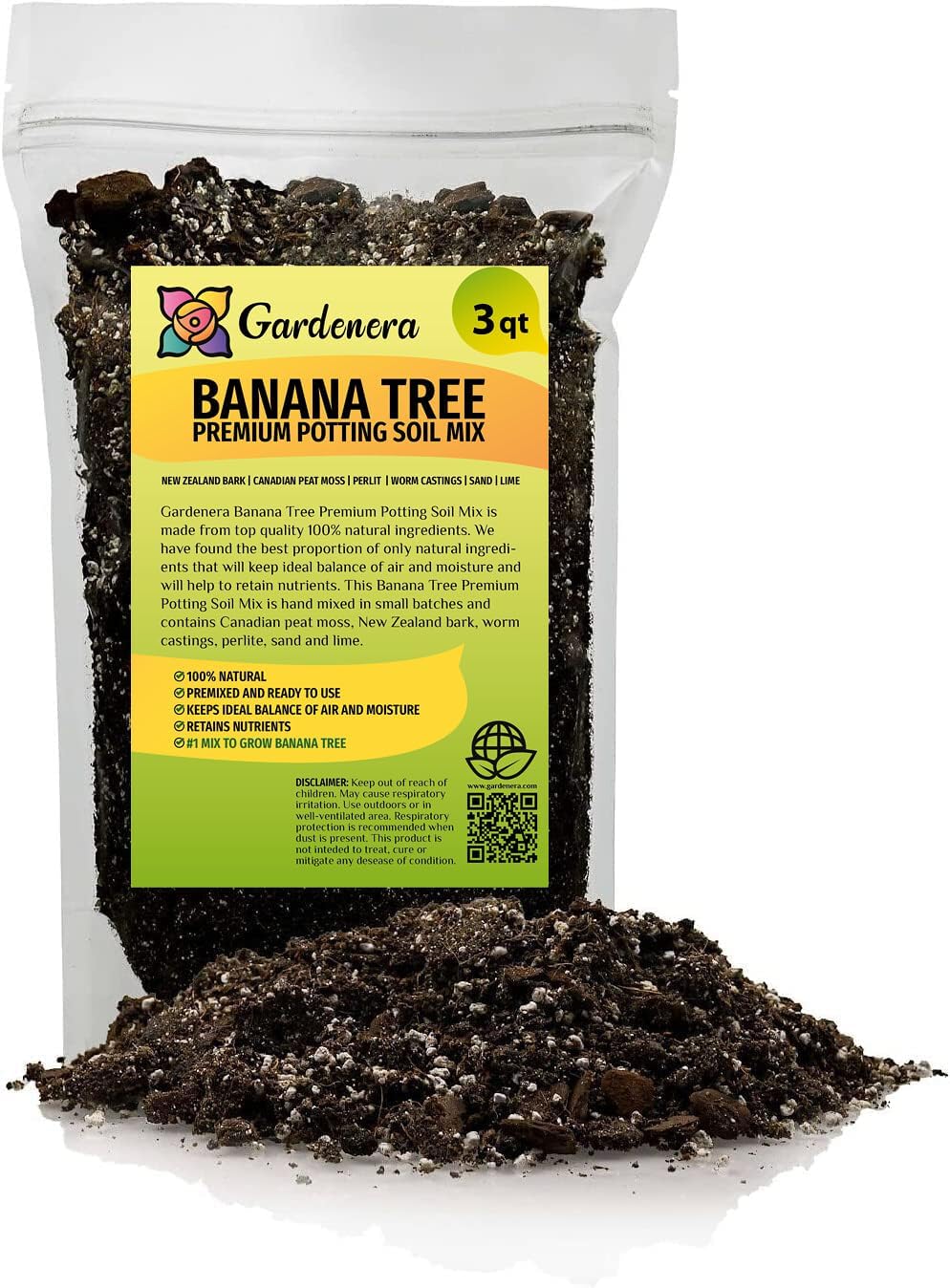
| Brand Name | Gardenera |
|---|---|
| Item Type Name | Banana Tree Soil Blend |
| Style Name | Bark,Peat Moss,Potting Mix |
| Volume | 3 quarts |
Gardenera's Banana Tree Potting Mix is a preblended soil designed to give banana plants a balanced root environment in containers or beds. It combines peat moss and bark for moisture retention and aeration, with perlite and sand to improve drainage so roots are less likely to sit in water. Worm castings add organic nutrients and beneficial microbes while lime helps stabilize pH for better nutrient availability. In practice this mix speeds establishment of young banana transplants and reduces common problems like compacted soil or slow root growth. The 3 quart size is convenient for repotting individual plants or topping off large containers, but gardeners growing multiple trees will need several bags. The mix is ready to use out of the bag and works well with a regular feeding program; pairing it with a balanced fertilizer will support strong foliage and fruiting. Note the product warnings about handling and allergens and ensure good drainage in your container system to get the best results.
Best for: Practical gardeners who want a ready-made, banana-specific mix to speed repotting and encourage reliable root development in single containers or a few plants.
Less Ideal for: Large-scale growers or anyone needing bulk soil for multiple mature trees should choose a larger volume commercial mix or formulate their own blend.
- Formulated for banana plants with peat moss and bark to retain moisture while allowing aeration
- Perlite and sand improve drainage to reduce risk of waterlogged roots
- Includes worm castings for organic nutrients and beneficial microorganisms
- Contains lime to help stabilize pH and improve nutrient uptake
- Small 3 quart volume requires multiple bags for larger plants or groups of trees
Verdict: Buy this if you want a compact, ready-to-use potting mix that balances moisture retention, drainage, and organic fertility specifically for banana trees.
Doter Banana Tree Potting Mix, 10 qt

| Brand Name | Doter |
|---|---|
| Unit Count | 128 Ounce |
| Item Type Name | Garden soil |
| Volume | 10 quarts |
This Doter banana tree potting mix is a ready-to-use 10 qt blend aimed at supporting banana seedlings and container-grown plants. The formulation emphasizes balanced moisture retention and improved drainage so roots avoid waterlogging while still holding enough moisture between waterings. It is enriched with organic matter and nutrients to encourage vigorous leaf growth and fruiting, making it suitable for planting directly into pots or amending garden beds. For everyday use you simply fill a container or topdress a planting hole and monitor moisture; the mix is light enough to handle and should help reduce the need for frequent watering compared with plain garden soil. Limitations are that exact ingredient proportions and pH are not listed, so growers who need specific control over acidity or tailored fertilization will want to test and adjust. Also 10 quarts is a modest volume for larger banana varieties, so multiple bags will be required for big plants or full repotting projects.
Best for: Buyers looking for an affordable, plant-focused potting mix to start or maintain banana plants in containers or small garden plots who prefer a ready-made blend over building a custom mix.
Less Ideal for: Growers who need bulk volumes for large trees or who require exact pH and ingredient control for specialized cultivars should consider professional soil blends or custom mixes.
- Formulated specifically for banana plants to support leaf and fruit development
- Balanced drainage and moisture retention reduces risk of waterlogged roots
- Contains organic matter and nutrients for healthier root establishment
- Ready-to-use mix suitable for containers and garden beds
- Ingredient ratios and pH are not specified for precise soil management
- 10 quarts is a small volume for mature banana trees so additional bags are needed
Verdict: A convenient, banana-focused potting mix that gives beginner and budget-minded growers a nutrient-rich, well-draining base for healthy container banana plants.
Gardenera Banana Tree Potting Mix (1 quart)
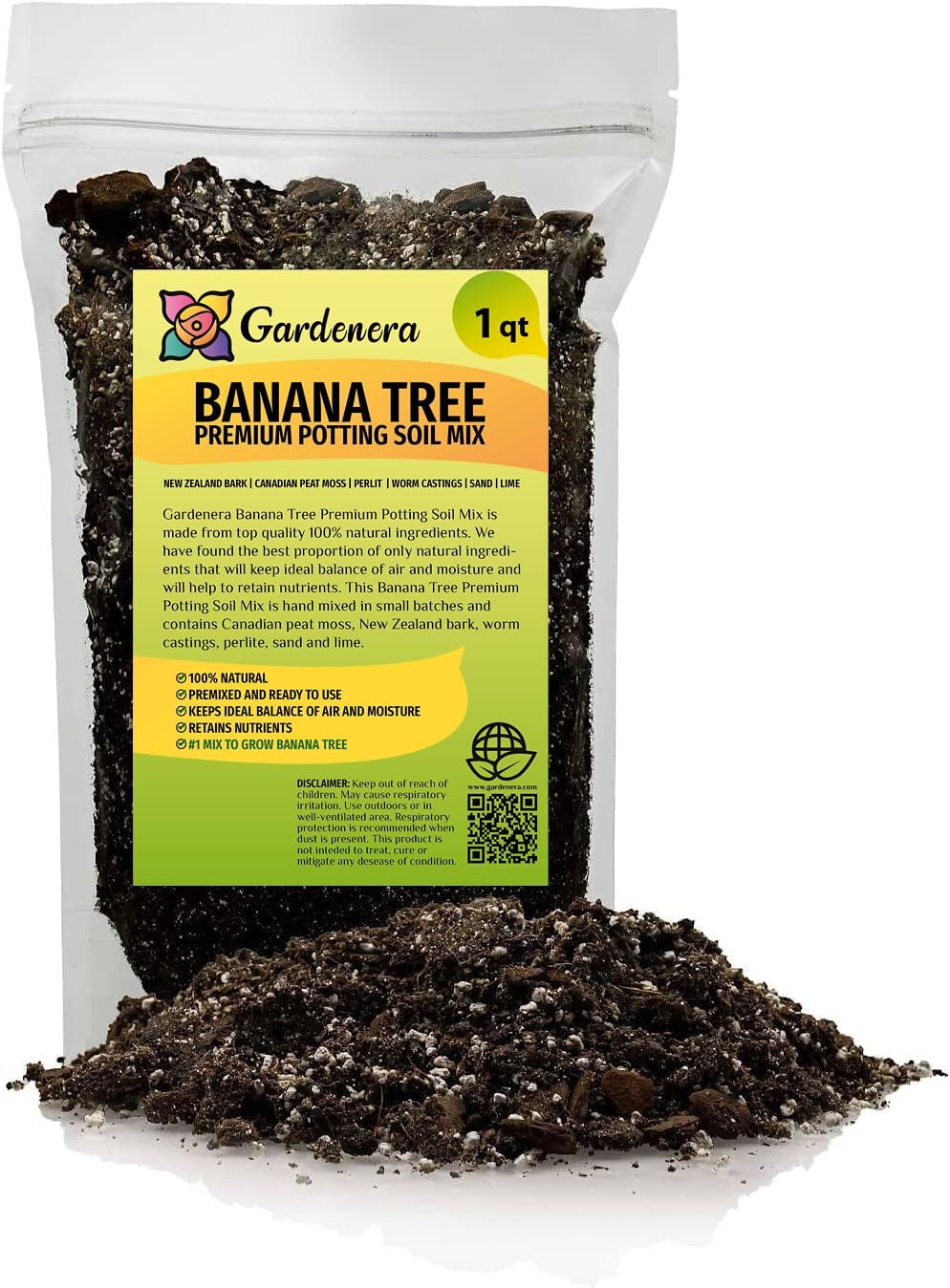
| Brand Name | Gardenera |
|---|---|
| Unit Count | 64 Ounce |
| Item Type Name | Banana Tree Potting Mix |
| Volume | 1 quarts |
This Gardenera Banana Tree Potting Mix is a ready-to-use blend aimed at giving potted banana plants the water retention and drainage they need. It combines Canadian peat moss and New Zealand bark to hold moisture without becoming compacted, plus perlite and sand to improve aeration and speed drainage—helpful for avoiding root rot in larger pots. Worm castings supply organic nutrients that support foliage and fruiting, and added lime helps keep pH in a range more favorable for nutrient uptake. In practice it works well for planting or repotting single banana specimens in containers and makes potting straightforward with no ingredient mixing required. The package is small at one quart so it is best used for seedlings, root ball topping, or as part of a custom potting recipe rather than filling large containers by itself. Expect consistent, reliable structure and modest nutrient support, but plan to supplement with larger volumes or regular fertilizer for maturing trees and heavy fruit production.
Best for: Buyers who want a purpose-formulated, ready-made mix to repot or top-dress banana seedlings and smaller container specimens and who prioritize predictable, consistent growing media.
Less Ideal for: Gardeners planning to fill large pots or plant mature fruiting banana trees without additional soil or repeated fertilization should choose a larger-volume mix or bulk soil instead.
- Balanced ingredient mix (peat moss, bark, perlite, sand) for both moisture retention and drainage
- Includes worm castings to add organic nutrients and improve soil fertility
- Added lime to help stabilize pH for better nutrient availability
- Lightweight, airy texture reduces compaction and supports healthy root aeration
- Small 1 quart volume is not adequate alone for potting medium in large containers
- Contains peat which may compress over time and require refresh or amendment
Verdict: A convenient, banana-focused potting mix that delivers reliable structure and nutrient support for repotting seedlings and small container plants.
Soil Sunrise Banana Tree Potting Soil Mix (12 Quarts)

| Volume | 12 quarts |
|---|---|
| Ingredients | Peat moss, perlite, worm casting, sand, pine bark, lime |
| Unit Count | 1 Count |
This Soil Sunrise mix is a banana-specific potting soil designed for container-grown tropicals. It combines peat moss, perlite, sand, pine bark, worm castings, and lime to create a loose, fast-draining medium that helps prevent root rot while supplying organic nutrients. Use it when repotting or planting banana varieties in patio containers or large indoor pots; the texture makes watering more forgiving and the worm castings provide a natural nutrient boost that supports vigorous leaf and root growth. Notable features include pH adjustment with lime and added coarse components for improved aeration. The 12-quart bag is convenient for one or two repots of small to medium specimens but may be small for mature or multiple large plants, so plan supply accordingly. Expect good short-term growth response for healthy bananas in full sun with regular watering, but heavy feeders may still need supplemental fertilization over the growing season. The mix is practical for growers who want a ready blend tailored to tropical needs without custom mixing.
Best for: Buyers who want a ready-made, banana-focused potting mix that reduces root-sogginess and supplies organic matter for container-grown tropicals and prefer a product with visible ingredient sourcing and user feedback.
Less Ideal for: Gardeners growing full-size outdoor banana clumps or those wanting an all-in-one fertilized soil for long-term feeding should consider bulk mixes or soils with built-in fertilizers instead.
- Formulated ingredients (peat, perlite, sand, pine bark) create a loose, fast-draining structure that reduces risk of soggy roots
- Includes worm castings to supply organic nutrients and improve soil biology
- Lime added to balance pH for better nutrient uptake by tropical banana plants
- Hand-blended small-batch presentation and resealable bag make it easy to use for potting and repotting
- 12-quart volume is limited for larger banana varieties and may require multiple bags for big containers
- No complete N-P-K fertilizer included, so additional feeding will be needed for heavy growth over a season
Verdict: A convenient, banana-specific potting mix that gives container-grown banana plants improved drainage and organic nutrition for healthier root and leaf growth.
Choosing the Right Potting Soil for Banana Tree: Key Factors to Consider
Moisture Balance
Banana trees like consistent moisture without sitting in water. A potting soil that holds enough water to feed the plant between irrigations but also drains excess quickly prevents root rot and leaf yellowing.
Look for mixes that combine water-retentive components such as coir or compost with coarse particles like perlite or bark. The proportion of those ingredients determines how often you must water and how tolerant the plant is of missed waterings.
Nutrient Profile and Release
Bananas are heavy feeders with rapid leaf and pseudostem growth, so the potting soil should either contain an adequate baseline of nutrients or be easy to amend. Slow-release organic fertilizers blended into the mix provide steady feeding, while mineral fertilizers offer quick correction.
Consider whether you prefer a pre-fertilized mix for low-maintenance care or a plain, stable medium that you control with scheduled feedings. The soil's pH and base mineral levels affect micronutrient availability and should be near neutral for best uptake.
Aeration and Root Space
Good pore structure is critical for banana roots, which need oxygen to support fast growth. Soils with a mix of fine and coarse particles maintain air pockets and resist compaction.
Coarse elements such as pumice, perlite, or chunky bark keep channels open while finer organic matter supplies moisture and nutrients. For large containers, a looser mix reduces the risk of waterlogging in the bottom and helps roots spread vigorously.
Organic Matter Quality and Stability
Organic matter feeds soil life and improves water retention and structure, but low-quality or very fine composts can break down quickly and cause compaction. Stable organic fractions, like well-aged compost or coir fiber, support long-term structure and slow nutrient release.
Assess the origin and particle size of organic components. Long-lasting materials reduce the need for frequent repotting and keep drainage consistent across seasons.
Compatibility With Fertilization and Amendments
Think about how the mix works with the fertilizers and soil amendments you plan to use. Some pre-mixed soils already include slow-release nutrients or lime to adjust pH; others leave the chemistry neutral for full control.
If you use frequent liquid feeds, choose a stable physical mix that tolerates salt buildup or plan regular flushes. If you prefer organic feeding, opt for mixes with higher organic content that support microbial breakdown of amendments.
Ease of Handling and Potting
Practical handling matters when you are filling large containers. Dusty, very fine mixes are messy and can compact when watered. Heavy mixes make moving pots difficult, while overly light mixes may float out of drainage holes.
Choose a product with workable moisture content, acceptable bag weight, and particle sizes that make potting straightforward. Consider whether the mix rehydrates easily after drying and whether it forms a stable root ball for repotting.
Best Mixes for Different Watering Styles
Banana trees are grown successfully with a range of watering frequencies. If you water daily or have automatic irrigation, a more free-draining mix with higher coarse fraction prevents saturation. If you water less often, a blend with more water-retentive components will keep the plant hydrated between sessions.
Match the potting soil to your schedule rather than forcing a single ideal. Also consider container size and sun exposure; larger pots and shadier spots hold moisture longer and may need a drainier mix.
- Frequent watering: increase perlite, pumice, or coarse bark for quick drainage
- Infrequent watering: add coir or well-aged compost to boost water retention
- Automatic systems: choose mixes that resist compaction and tolerate steady moisture
Adjusting pH and Nutrients for Pot Culture
Bananas prefer a slightly acidic to neutral root zone. If your potting mix does not state a pH, you can test the soil after potting and adjust with lime or sulfur sparingly. Most container-friendly mixes aim for near-neutral pH to maximize nutrient availability.
Regular feeding is essential in pot culture since nutrients leach out with drainage. Use periodic balanced feeds or targeted potassium and nitrogen applications during active growth, and monitor leaf color as a quick indicator of deficiencies.
- Test potted soil pH after two to three waterings for an accurate reading
- Plan a feeding schedule because container soils have limited nutrient reserves
- Flush containers occasionally to prevent salt buildup from fertilizers
Repotting and Long-term Soil Management
As banana trees grow, they will eventually need fresh media or topdressing. A full repot is usually needed every one to three years depending on root development and substrate stability. When repotting, loosen compacted soil and refresh the root zone with a mix that restores aeration and nutrients.
You can topdress with compost or replace a portion of the old soil to renew fertility without fully repotting. Monitor drainage and root crowding; poor drainage or densely packed roots are the most common reasons to repot.
- Inspect roots during repotting for rot or congestion
- Replace or amend compacted soil with coarser material to restore aeration
- Topdress with slow-release organic fertilizer when repotting to reduce transplant stress
Container Choices That Work With Potting Soil
The pot material and size change how a soil behaves. Unglazed clay pots dry faster, so a more moisture-retentive mix helps. Plastic or glazed containers retain moisture longer, so choose a drainier mix or increase drainage material at the bottom.
Always use adequate drainage holes and consider a coarse base layer only if it will not trap water against the soil column. The ideal soil should work with the container to create a balanced wet-dry cycle appropriate for your climate.
- Clay pots: boost water retention in the mix
- Plastic/glazed pots: favor better drainage
- Large containers: provide deep loose mixes to encourage root expansion
Disease and Pest Prevention Through Soil Choice
Well-structured potting soil reduces disease risk by avoiding chronic wet conditions that favor root pathogens. Choose mixes with good drainage and stable organic matter to prevent anaerobic pockets where pathogens thrive.
Inspect stored bagged soil for signs of contamination and avoid very wet or moldy product. Sterilized mixes can reduce initial pathogen load but will need thoughtful reintroduction of beneficial microbes through compost teas or organic amendments.
- Avoid mixes that compact and hold water against roots
- Store opened soil bags off the ground and protected from rain
- Consider occasional biological inoculants if growing in reused media
How We Chose the Best Potting Soil for Banana Tree
We focused on attributes that directly affect banana tree health in containers. Key evaluation criteria included water retention versus drainage to match different watering routines, nutrient content and release characteristics for steady leaf and stem growth, and organic matter composition for root development and soil structure. We also considered particle size and aeration to ensure roots get enough oxygen in deeper pots, plus mix stability so the soil does not compact quickly over a season. Practical handling factors such as dust level, ease of rewetting after drying, and compatibility with fertilization schedules were applied. Products were excluded if they were formulated only for seedlings or herbs, if they relied solely on peat with poor drainage, or if they lacked clear composition information. The result is a list of versatile potting soils suited to potted banana trees across different climates and watering habits, with emphasis on moisture balance, nutrient availability, and root aeration.
FAQ
How often should I repot a potted banana tree?
Usually every one to three years depending on how quickly roots fill the container and whether the soil has compacted. Repot sooner if drainage slows or you see circling roots at the drainage holes.
Can I use garden soil for a banana plant in a container?
Garden soil is often too dense for containers and can compact, reducing aeration. It is better to use a purpose-made potting mix or amend garden soil heavily with coarse materials to improve drainage and pore space.
Should potting soil for banana trees contain fertilizer already?
Pre-fertilized mixes save time because they supply initial nutrients, but they can limit your control over feeding. Many growers prefer a stable base mix and a separate fertilization schedule to match growth and seasonal needs.
Is peat or coir better for banana potting mixes?
Coir is more sustainable and rehydrates well, while peat holds water tightly and may compact. Either can work if balanced with coarse components, but coir often provides a lighter, easier-to-manage base for containers.
How do I know if my potting mix is waterlogged?
Signs include yellowing lower leaves, a sour smell from the root zone, and sluggish growth. Check the root ball by gently removing the plant; healthy roots should be firm and white, while rotten roots are brown and mushy.
Final Verdict
Choose a potting soil that balances water retention with adequate drainage to match your watering habits and container type. Prioritize a stable organic fraction, good aeration, and a nutrient profile you can manage with your preferred feeding routine. By matching the mix to your irrigation frequency, container material, and repotting plan, you will reduce common problems like rot and nutrient stress and keep your potted banana tree growing vigorously.
