

Note: This article contains affiliate links. If you click on these links and make a purchase, I may earn a small commission at no extra cost to you. This helps support my research and content. Read my full affiliate disclosure here.
Replacing or repairing lawn sod usually means working against compacted, low-organic soils that limit root growth and water infiltration. Picking the right compost for sod helps loosen heavy soils, retain moisture around young roots, and add the slow-release nutrients turf needs during establishment. This guide covers five shortlisted composts chosen for common sod projects and explains why each dimension matters for real-world lawn repair. Below you will find practical evaluation criteria and decision guidance so you can pick compost that suits your soil type, installation method, and maintenance plan.
Top Picks at a Glance
| Best Overall The best all-around choice for most situations | Espoma Organic Land and Sea Gourmet Compost with Lobster & Crab Meal, 1 cu ft |  |
| Best Quality Built to a higher standard if you want something more solid | Coast of Maine Quoddy Blend Organic Compost (1 cu ft, 2 pack) |  |
| Best Value The sweet spot between price and what you get | Garden Magic Michigan Peat Compost & Manure Blend, 40 lb |  |
| Highest Rated A top-rated pick with lots of positive feedback | Wiggle Worm Pure Worm Castings Organic Fertilizer, 30 lb |  |
| Most Popular A crowd favorite that many people choose with confidence | Brut Organic Worm Castings, 5 lb |  |
Espoma Organic Land and Sea Gourmet Compost with Lobster & Crab Meal, 1 cu ft

| Item Form | Granules |
|---|---|
| Specific Uses For Product | Soil Conditioning, Plant Growth, Seed Development, Root Development |
| Included Components | Lobster and crab meal |
| Ingredients | Aged forest products, sphagnum peat moss, humus, limestone, lobster meal & crab meal |
Espoma Organic Land and Sea is a premium, ready-to-use compost intended for amending garden beds, planters, and transplant holes. The mix combines aged forest products, sphagnum peat moss, humus, limestone for pH adjustment, and lobster and crab meal to deliver organic nutrients and slow-release nitrogen. It also includes a mycorrhizae blend to help root establishment and nutrient uptake. In practice this product is mixed into native soil when planting or used to refresh container mixes, and it noticeably improves moisture retention and soil texture while adding a food source for vegetables, flowers, trees, and shrubs. Because it is a finished compost you do not need to wait for further decomposition before planting. Limitations are typical of peat-containing mixes: it is somewhat bulky to handle and not a concentrated fertilizer for rapid greening, so heavy feeders may still need supplemental feedings during the season. Overall it is a convenient, performance-focused soil amendment for gardeners who want an organic, biologically active boost at planting time.
Best for: Gardeners who prioritize reliable, organic soil improvement at planting time and want a biologically active amendment that supports root development and steady plant performance.
Less Ideal for: Buyers seeking an instant, high-nitrogen fertilizer or those who strictly avoid peat-based products should consider alternatives.
- Finished, ready-to-use compost suitable for immediate planting
- Contains lobster and crab meal for slow-release organic nutrients
- Includes endo and ecto mycorrhizae to support root growth and nutrient uptake
- Improves soil texture and moisture retention for containers and beds
- Contains peat moss which some gardeners avoid for sustainability reasons
- Not formulated as a high-concentration fertilizer for rapid greening
Verdict: A ready-to-use organic compost that boosts soil biology and root performance at planting for gardeners focused on steady, long-term results.
Coast of Maine Quoddy Blend Organic Compost (1 cu ft, 2 pack)

| Unit Count | 768 Ounce |
|---|---|
| Volume | 1 cubic feet |
| Style Name | 2 Pack |
Coast of Maine Quoddy Blend is a bagged organic compost mix intended for improving garden soil and supporting healthier plant growth. It combines compost, sphagnum peat moss, aged bark and chitin-rich lobster and crab meal to add organic matter, feed soil microbes and improve drainage in beds or containers. Typical uses are top-dressing vegetable plots, amending in-ground garden soil before planting and mixing into raised beds to increase water retention without creating heavy, poorly draining soil. Notable features include OMRI-listed organic inputs, a formula that encourages microbial life and inclusion of marine-derived nutrients that release slowly. Practical benefits are richer soil structure, better root development and a sustainable ingredient profile that reuses byproducts. Limitations are typical of bagged mixes: one cubic foot per bag covers a small area so larger projects need many bags, and peat content means gardeners concerned about peat extraction may prefer peat-free alternatives. Also the product is a soil amendment rather than a complete potting mix, so additional fertilizer may be needed for high-demand crops.
Best for: Gardeners who prioritize reliable, organic soil improvement for vegetables, flowers or raised beds and want a proven amendment that supports soil life.
Less Ideal for: People doing large-scale landscaping who need bulk volume or gardeners seeking a peat-free amendment should consider alternative products.
- OMRI-listed organic ingredients that support sustainable gardening
- Contains compost and chitin-rich lobster and crab meal to feed microbes and provide slow-release nutrients
- Loose texture that improves drainage and root penetration
- Suitable for in-ground beds and raised beds as a soil amendment
- Small volume per bag makes it less efficient for large landscape projects
- Contains peat moss which some gardeners avoid for environmental reasons
Verdict: A dependable organic compost blend that reliably improves soil structure and feeds soil biology for healthier garden beds.
Garden Magic Michigan Peat Compost & Manure Blend, 40 lb

| Unit Count | 640 Ounce |
|---|---|
| Included Components | Michigan Peat – 5240 – 40lb |
| Item Type Name | Manure |
| Manufacturer | Michigan Peat |
This 40 lb Garden Magic Michigan Peat Compost & Manure Blend is a pre-mixed, odor-reduced soil amendment intended to boost nutrients and organic matter in raised beds and containers. It combines reed sedge peat with composted animal manure so you can work it into existing bed soil or use it to refresh potting mixes without additional processing. The bag is easy to scoop and spread around planting holes, top-dress beds, or mix into the top few inches of soil for vegetables, flowers, and lawns. Notable features are the organic compost content, manure-derived nutrients, and the claim of being odor-free, which makes handling more pleasant than raw manure. Because it is a blend rather than a complete potting soil, expect it to act as an amendment that improves texture and fertility rather than a standalone, soilless potting mix. If you need large volumes for deep beds you will likely need multiple bags, but for small raised beds and container refreshes this provides a straightforward, no-mix option to add organic matter and feed plants.
Best for: Ideal for gardeners updating small raised beds or refreshing container soil who prioritize value and a simple, ready-to-use organic amendment.
Less Ideal for: Not the best choice for growers who need a full premium potting mix formulated for seed starting or for large-scale bed builds where bulk soil or compost deliveries are more economical.
- Ready-to-use blend that can be applied directly to raised beds and containers
- Contains composted animal manure for added nutrients to support plant growth
- Odor-reduced reed sedge peat makes handling more pleasant than raw manures
- 40 lb bag provides a manageable amount for small beds and planter refreshes
- Sold as a soil amendment rather than a complete soilless potting mix
- One 40 lb bag covers a limited volume so larger projects require multiple bags
Verdict: A convenient, budget-friendly organic amendment that quickly boosts fertility and structure in small raised beds and containers.
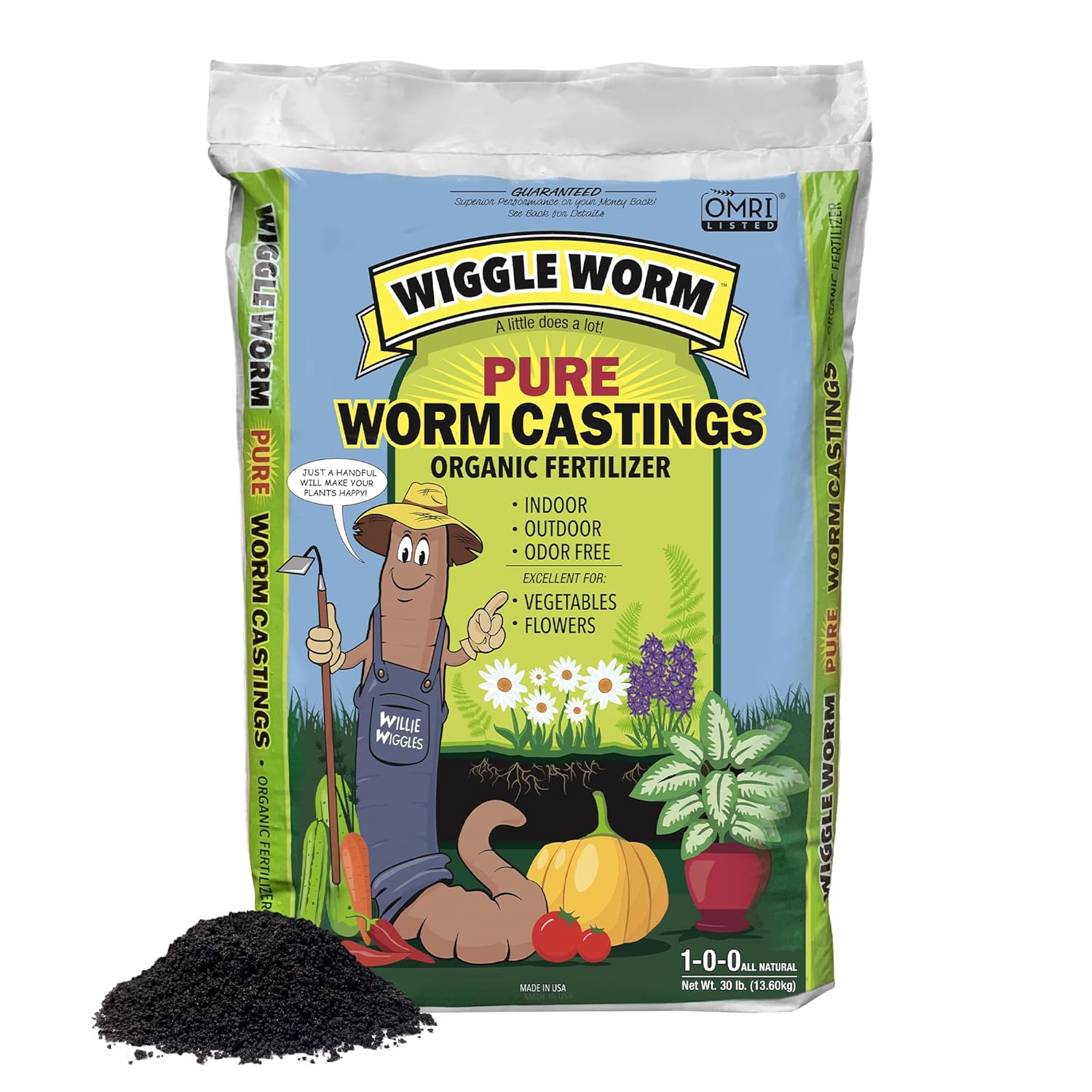
Wiggle Worm Pure Worm Castings Organic Fertilizer, 30 lb
| Item Form | Granules |
|---|---|
| Specific Uses For Product | Soil Conditioning |
| Application Method | Apply to soil |
| Unit Count | 480 Ounce |
Wiggle Worm Pure Worm Castings are a ready-to-use organic soil amendment made from concentrated earthworm castings. Gardeners typically mix a portion into potting mixes, top-dress established plants, work it into transplant holes, or brew it as a nutrient tea; the product page includes specific dosing for vegetables, containers, lawns, and roses. The castings are odorless, non-burning, and OMRI listed for organic use, so they supply water-soluble nutrients plus microbes that improve aeration, water retention, and root development without synthetic chemicals. Practical benefits include easy application, safe use on seedlings and mature plants, and versatility across raised beds, container gardens, and lawns. The main limitation is that this is a concentrated soil builder rather than an all-in-one fertilizer with NPK labels, so users seeking precise, fast-acting nutrient ratios may need to supplement for specific deficiencies; also a 30 lb bag is bulky to handle for small-space gardeners. For gardeners focused on long-term soil health and organic production, it functions as a low-risk, effective amendment.
Best for: Gardeners who prioritize building long-term soil health and want a safe, organic amendment for vegetables, ornamentals, and containers; buyers who value proven, low-risk inputs backed by strong user feedback.
Less Ideal for: Gardeners who need targeted, rapid nutrient correction based on precise NPK values or those who only want a lightweight product for very small balconies or indoor micro-gardens.
- OMRI listed organic and made from 100% worm castings
- Provides beneficial microbes that improve soil structure and water retention
- Odorless and non-burning so safe for seedlings and established plants
- Versatile dosing for containers, raised beds, lawns, and making worm casting tea
- No standard NPK nutrient label so not a precise standalone fertilizer for targeted feeding
- Large 30 lb bag can be heavy and awkward for gardeners with limited storage or mobility
Verdict: Choose this product when you want a proven, OMRI-listed worm casting that builds soil biology and improves plant health across beds and containers.
Brut Organic Worm Castings, 5 lb

| Item Form | Granules |
|---|---|
| Specific Uses For Product | Gardening,Organic |
| Target Species | All plants |
| Mixing Ratio | 1:5 |
Brut Organic Worm Castings function as a concentrated, natural soil amendment you mix into potting mixes or top-dress garden beds and raised beds. Typical use is mixing at the recommended 1:5 ratio for new indoor plants, sprinkling a cup around established houseplants, or working into outdoor planting holes and beds according to the brand directions. The product is OMRI/CDFA listed and produced in controlled conditions, which supports consistent nutrient content and beneficial microbial life that help roots establish, improve soil structure, and increase moisture retention without burning plants. Practical benefits for raised garden beds include improved aeration, slow-release nutrients, and a boost in microbial activity that supports long-term fertility. Limitations are that it is not a complete NPK fertilizer for immediate heavy feeding needs and larger beds require significant quantities to hit the suggested per-square-foot rates, so frequent applications or bulk purchases may be needed for big projects.
Best for: Gardeners who prioritize dependable, organic soil improvement for raised beds and container gardens and prefer predictable, low-risk amendments that support long-term soil health.
Less Ideal for: Those needing immediate, high-NPK feeding for heavy-feeding crops or gardeners who want to amend very large beds without buying supplemental bulk material.
- Certified organic and produced indoors for consistent purity
- Rich in beneficial microbes that improve soil structure and plant vigor
- Easy-to-use granular form suitable for mixing or top-dressing
- Not a standalone high-NPK fertilizer for rapid nutrient correction
- Five-pound bag may be small for large raised beds and repeated seasonal use
Verdict: Use this OMRI/CDFA-listed worm castings product to reliably build long-term fertility and microbial health in raised beds and containers.
Choosing the Right Compost for Sod: Key Factors to Consider
Texture and Particle Size
Texture controls how well the compost mixes with existing soil and how easily sod roots can penetrate. Fine, well-screened compost fills small pore spaces and improves seed-to-soil contact when overseeding or the contact between sod and soil during laying. Coarse compost with large wood chips can create air pockets or prevent close contact, causing uneven rooting.
Inspect particle size for your project: a fine screened compost is better for topdressing and thin mixes, while a slightly coarser blend can be fine for deeper incorporation before installing sod.
Nutrient Content and C:N Ratio
Compost supplies a slow-release source of nitrogen, phosphorus, and potassium as well as micronutrients that support new turf growth. The carbon-to-nitrogen ratio affects how quickly microbes will immobilize or release nitrogen; a balanced C:N ratio helps avoid short-term nitrogen drawdown that can starve establishing sod.
Look for composts with a moderate, plant-available nutrient profile rather than extremely high raw nutrient spikes. For sod, steady nutrient availability over several weeks is preferable to a quick flush that can scorch young grass or cause uneven growth.
Moisture Retention Vs Drainage
Good compost improves moisture-holding capacity without becoming waterlogged. For sod, you need a compost that cushions soil moisture swings so roots stay damp between irrigations but still allows excess water to drain away.
Materials high in fine organic matter and humus hold water well, which helps during hot spells. However, if your site already struggles with poor drainage, choose a mix with more coarse particles or sand to maintain porosity and avoid anaerobic conditions under the sod.
Weed Seed and Pathogen Risk
Compost quality varies by feedstock and processing. Properly managed hot composting reduces viable weed seeds and pathogens, lowering the chance that your new lawn will inherit a weed problem. Compost made from municipal green waste or properly composted yard trimmings typically has lower weed-seed loads than unprocessed manures or raw municipal biosolids.
Buy compost that lists processing standards or has been produced to industry guidelines. When in doubt, use a screened, certified product or consider a short solarization step on the soil surface before laying sod.
Ease of Application and Workability
Compost that spreads and levels easily makes sod installation faster and more consistent. Light, free-flowing compost is easier to broadcast and rake into a final grade, while sticky, wet clumps slow work and produce uneven thickness under sod.
Consider delivery and handling for the scale of your project. Bulk loads work well for large areas, but smaller, bagged options may be easier for tight yards or spot repairs. Also think about how the compost will mix if you plan to incorporate it into the top few inches rather than simply topdressing.
Preparing the Lawn Bed for Sod
Proper bed preparation determines how well sod roots establish into the underlying soil. Remove debris and old thatch, grade to ensure proper surface drainage, and loosen compacted soil in the top 2 to 4 inches to encourage root penetration. If the existing soil is very poor, plan to blend compost into the top 3 to 4 inches rather than just surface dressing.
- Rake the final surface smooth and firm but not compacted
- Ensure slope and grading direct water away from foundations
- Lightly tamp high spots and loosen low spots to create a uniform bed
How Much Compost to Use with Sod
Compost rates depend on your soil condition and installation method. For minor repairs or topdressing before laying sod, a thin 1/4 to 1/2 inch layer can improve contact and moisture retention. When improving a poor or compacted soil, mix compost into the top 3 to 4 inches at a ratio of roughly one part compost to three parts existing soil for meaningful structural improvement.
Choosing higher incorporation depths or heavier rates makes the soil more hospitable for roots but also increases material and handling needs.
- Topdressing: 1/4 to 1/2 inch
- Incorporation for poor soils: mix into top 3-4 inches at about 1:3 compost to soil
Timing and Watering After Laying Sod
Sod needs consistent moisture to knit into the soil. Water newly laid sod thoroughly so water reaches the soil beneath the compost layer. For the first two weeks, keep the sod consistently moist with frequent light irrigations. After roots begin to anchor, gradually reduce frequency and increase depth of watering to encourage deeper root growth.
Monitor for pooling or soggy spots which indicate too much water retention beneath the sod and may require reducing irrigation or improving drainage.
- Initial soak immediately after installation
- Frequent light irrigation for first 10-14 days
- Transition to deeper, less frequent watering as roots establish
Adjusting Compost Choice for Soil Types
Sandy soils benefit from composts with higher organic matter and finer particles to boost water-holding capacity and nutrient retention. Conversely, clay soils often need compost that improves aggregation and adds porosity; blends with some coarser particles or small amounts of sand can prevent compaction when mixed in.
If your site has chronic drainage problems, prioritize compost blends designed to boost porosity rather than those that emphasize maximum water retention.
- Sandy soil: choose finer, higher-organic blends
- Clay soil: choose compost that improves aggregation and includes coarser particles for porosity
- Poor drainage: favor mixes that enhance drainage rather than solely holding moisture
How We Chose the Best Compost for Sod
Our selection focused on compost types and blends that perform well when installed beneath or mixed with sod. We gave priority to physical texture, nutrient profile, and screening consistency because these directly affect how compost integrates with native soil and supports new turf roots. Moisture retention and drainage balance were measured because compost that holds too little water will leave young sod stressed, while overly water-retentive materials can create anaerobic pockets. We also considered contamination risk and weed seed content, favoring materials produced under controlled composting processes with adequate heat cycles. Ease of spreading and compatibility with common sod installation methods influenced choices, since heavy, clumpy compost is difficult to work into a turf bed. Products that were primarily raw manure, uncomposted green waste, or obviously coarse mulch were excluded. The final shortlist reflects blends that match the practical needs of typical sod repair and installation projects.
FAQ
Can I use raw manure as compost for sod?
Raw manure can be high in salts and may contain viable weed seeds or pathogens if not fully composted. Properly composted manure that has reached sufficient temperatures and been cured is safer for sod; raw, uncomposted manure is usually not recommended.
How long should I wait after applying compost before laying sod?
If you are topdressing lightly, you can lay sod the same day. When incorporating compost into the top several inches, allow a few days to a week for the mix to settle and for you to fine-grade the surface before installing sod.
Will compost change how often I need to water new sod?
Compost typically increases water-holding capacity, which can reduce watering frequency slightly, but new sod still needs frequent, light irrigation initially. Adjust schedules based on soil moisture and avoid letting the root zone dry out during establishment.
Is screened compost necessary for small repair spots?
Screened compost produces a smoother surface and better contact with sod, which is helpful for small repairs and thin topdressing. For deeper soil improvement, a less-screened blend can be worked in, but screened material is easier to finish for sod laying.
Final Verdict
Choose compost for sod based on how it will interact with your existing soil and your installation method. Prioritize texture and screening if you need a smooth finish and close contact with the turf, or choose a more humus-rich blend when improving sandy sites. Balance moisture retention with drainage needs and avoid materials with high weed-seed risk. Focus on practical tradeoffs: easier-to-spread, well-screened compost makes installation smoother, while deeper incorporation rates deliver better long-term soil improvement. Use the evaluation criteria earlier in this guide to pick a material that fits your soil type and watering plan so your new sod establishes quickly and evenly.
