

Note: This article contains affiliate links. If you click on these links and make a purchase, I may earn a small commission at no extra cost to you. This helps support my research and content. Read my full affiliate disclosure here.
Sandy soil drains quickly, leaches nutrients, and warms fast in spring, which can frustrate gardeners trying to grow anything beyond drought-tolerant plants. Choosing the right compost for sandy soil helps address these problems by increasing water retention, building soil structure, and adding organic matter that holds nutrients longer. This guide presents seven shortlisted compost options chosen for those exact challenges. We evaluated candidates on factors that matter in the garden, including moisture-holding ability and the quality of organic matter, so you can pick a compost suited to your beds, containers, or raised planters. Read on for practical notes on use, application rates, and how to match compost characteristics to your sandy site.
Top Picks at a Glance
| Best Overall The best all-around choice for most situations | Front Porch Farms Premium Organic Compost, 1.5 cu ft |  |
| Best Quality Built to a higher standard if you want something more solid | Organic Mechanics Biochar Blend Soil Amendment, 1 cu ft | 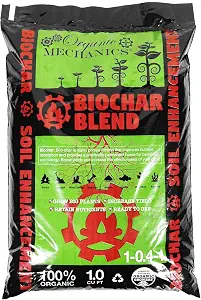 |
| Best Value The sweet spot between price and what you get | Black Kow Composted Cow Manure Fertilizer, 8 qt |  |
| Best Budget The cheapest option that still gets the job done reliably | Gantessa Stone Premium Organic Compost, 2 lb |  |
| Highest Rated A top-rated pick with lots of positive feedback | Coast of Maine Cobscook Blend In-Ground Garden Soil, 1 cu ft |  |
| Most Popular A crowd favorite that many people choose with confidence | Wiggle Worm Pure Worm Castings Organic Fertilizer, 4.5 lb |  |
| Best Seller A high-volume bestseller chosen again and again | Plantonix Compost Bliss — 100% Natural Compost (8 qts) |  |
Front Porch Farms Premium Organic Compost, 1.5 cu ft

| Volume | 1.5 cubic feet |
|---|---|
| Style Name | Compost |
This Front Porch Farms compost is a ready-to-use organic soil amendment formulated for sandy or well-tilled garden beds. The bag contains a blended mix of composted alfalfa, grain by-products, composted manure, forest humus, peat and wood fiber that brings organic matter and microbial life back into depleted soil. Typical use is spreading 1 to 3 inches as a topdressing or mixing into the top 6 to 9 inches when preparing vegetable beds or raised beds; it can also be used around shrubs and flowers as a mulch. For gardeners with sandy ground it helps hold moisture and improve nutrient retention, and the aged, cured blend minimizes fresh-waste issues. It is not recommended for heavy clay since it is aimed at loosening and water-holding sandy mixes rather than breaking up dense soil. The 1.5 cu ft bag is convenient for spot applications and small beds but may require multiple bags for larger areas.
Best for: Gardeners with sandy or well-drained beds who want a balanced, organic amendment to improve water retention and soil life for vegetables, flowers, and lawns.
Less Ideal for: Homeowners with heavy clay or compacted soils seeking a product to break up dense ground should look for amendments formulated for clay improvement.
- Formulated blend of composted alfalfa, manure, forest humus and wood fiber to boost organic matter and microbial diversity
- Designed specifically to improve moisture retention and nutrient availability in sandy or well-tilled soils
- Aged and cured material reduces risk of nitrogen drawdown and fresh-waste odors
- Versatile use as a topdressing, mulch around plants, or mixed into raised bed topsoil
- Small 1.5 cu ft bag means several bags are needed for larger gardens
- Not recommended for heavy clay soils where different amendments are more effective
Verdict: A ready-to-use, microbially rich compost designed to rebuild sandy garden soils and improve moisture retention in small beds and raised boxes.
Organic Mechanics Biochar Blend Soil Amendment, 1 cu ft
| Unit Count | 1 Count |
|---|---|
| Item Type Name | Biochar Blend Soil Enhancement |
| Manufacturer | ORGANIC MECHANICS |
| Volume | 1 cubic feet |
| Item Weight | 20 pounds |
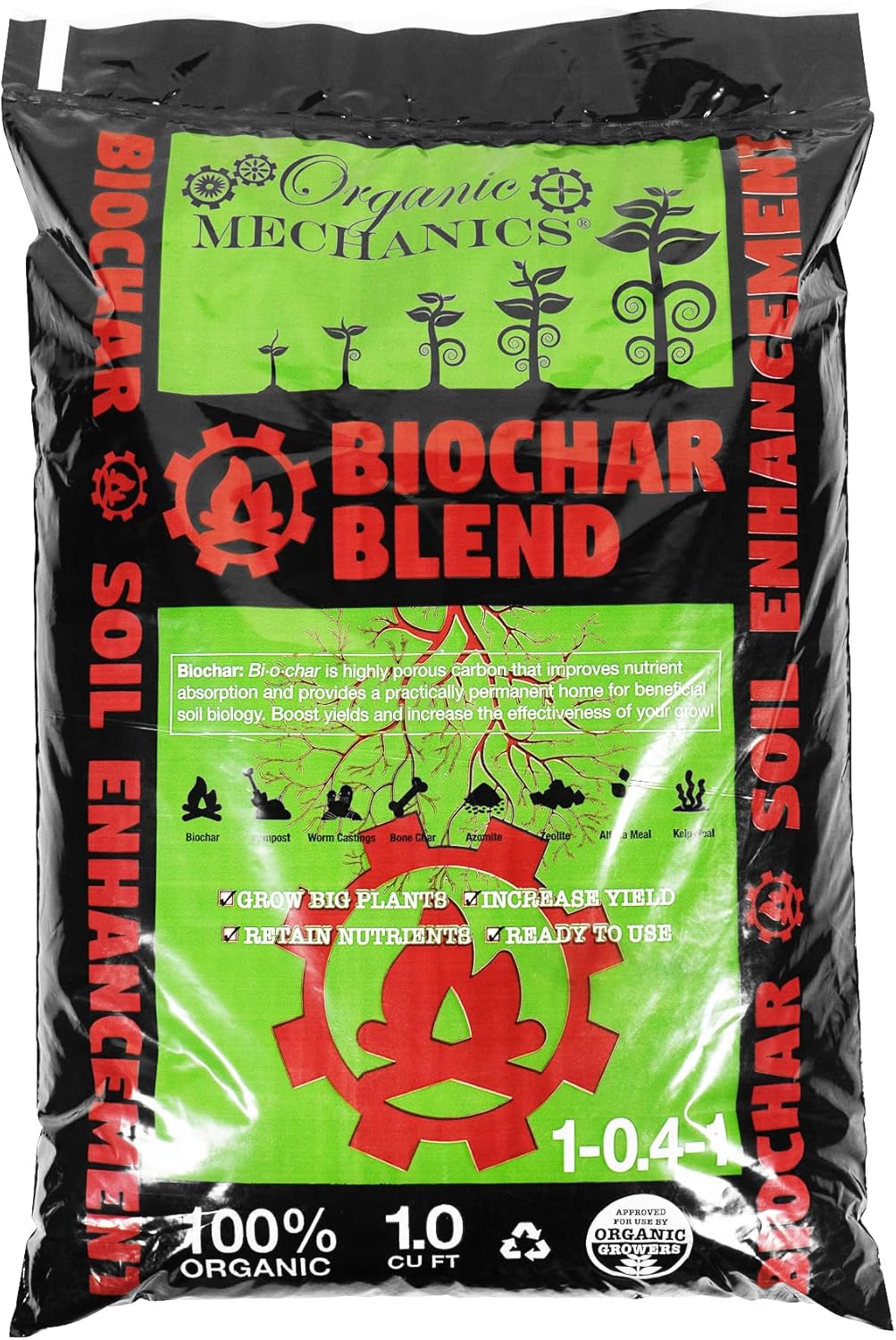
Organic Mechanics Biochar Blend is a one-bag soil amendment designed to boost plant growth and long-term soil health by adding biochar, compost, worm castings, bone char and mineral meals. You typically work it into raised beds, containers, or garden rows to increase water retention, microbial activity and available calcium and phosphorus. The biochar provides stable carbon that helps hold nutrients and moisture in sandy soils, while compost and worm castings seed beneficial microbes. Bone char and azomite supply phosphorus, calcium and trace minerals that can be scarce in washed-out sandy sites. Because it is a concentrated amendment rather than a complete bulk topsoil, gardeners will still want to mix it into existing soil rather than using it as a sole planting medium and may add a targeted fertilizer during active growth. The 1 cubic foot bag is convenient for spot treatments and bed top-dressing, but heavier applications over large areas require many bags or a bulk source. For performance-focused gardeners working to improve poor sandy soil, this blend delivers measured, science-backed ingredients that support bigger roots and higher yields.
Best for: Gardeners focused on improving soil performance in beds or containers who want a concentrated, biologically active amendment to build fertility and moisture retention over time.
Less Ideal for: People needing bulk topsoil or one-step potting mixes for filling large areas or for immediate transplanting without soil mixing.
- Contains biochar to increase nutrient and moisture retention in sandy soils
- Includes compost and worm castings to promote beneficial soil microbes
- Mineral-rich ingredients like bone char and azomite supply calcium, phosphorus and trace elements
- Ready-to-use 1 cu ft bag suitable for spot improvements, containers and raised beds
- Not formulated as a complete potting mix or standalone planting medium
- 1 cu ft bag size makes large-scale applications labor intensive and potentially costly
Verdict: A targeted biochar-plus-compost amendment that boosts nutrient retention and soil biology to improve yields in sandy beds and containers.
Black Kow Composted Cow Manure Fertilizer, 8 qt

| Item Form | Granules |
|---|---|
| Unit Count | 256 Fluid Ounces |
| Included Components | Cow Manure |
| Mixing Ratio | 1:1 |
Black Kow composted cow manure is a ready-to-use organic soil amendment formulated to improve moisture retention, aeration, and nutrient availability in planting areas. Gardeners typically mix it into raised bed soil before planting or use it as a top dressing and it can also be brewed into compost tea using the 1:1 mixing ratio supplied. The product is granular and contains beneficial microbes that help convert nitrogen into plant-available forms, so it feeds slowly without burning young roots. Practical benefits for raised vegetable beds include better water-holding in sandy mixes and improved crumb structure in heavier soils, which helps root development and reduces nutrient leaching. Important limitations are that nutrient content is not given as an N-P-K analysis and dosing is less precise than bagged balanced fertilizers, so heavy feeders may still need supplemental fertilizers. The safety notes mean you should handle with gloves and a mask and avoid direct contact with edible harvests immediately after fresh application.
Best for: Home gardeners building or refreshing raised vegetable beds who want an affordable, organic soil conditioner to improve texture, water retention, and microbial activity.
Less Ideal for: Gardeners who need a precise, high-analysis fertilizer program for heavy-feeding crops or who prefer fully screened, potting-grade composts for container vegetables.
- Organic composted manure improves soil structure and moisture retention
- Contains beneficial microbes that help make nutrients available to plants
- Versatile use as soil amendment, top dressing, or compost tea ingredient
- Granular form is easy to mix into raised bed mixes and garden soil
- No detailed N-P-K nutrient breakdown provided for precise feeding
- May require supplementary fertilizer for heavy-feeding vegetables
Verdict: A budget-friendly organic soil amendment that improves structure and moisture retention in raised vegetable beds while supplying slow-release nutrients.
Gantessa Stone Premium Organic Compost, 2 lb
| Item Form | Solid |
|---|---|
| Application Method | Soil Amendment, Top Dressing, Compost Tea |
| Coverage | Medium |
| Target Species | flowers, vegetables, herbs, and more |
| Unit Count | 32 Ounce |
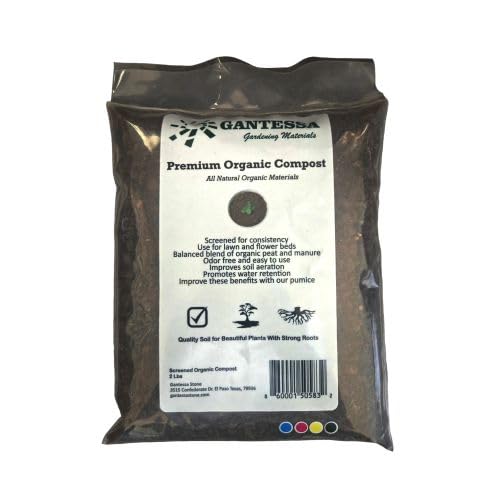
This 2 lb bag of Gantessa Stone premium organic compost is a screened, manure-based amendment meant to boost soil structure and moisture retention in small vegetable garden beds or containers. Typical uses are mixing into potting mixes at the recommended 1:2 ratio, top-dressing established beds, or brewing compost tea. The product emphasizes improved porosity and water holding capacity and supplies a range of organic nutrients and beneficial microbes rather than concentrated NPK values. Because it is screened and sold in a compact unit, it is handy for hobby gardeners, balcony growers, and patch repairs where hauling large bags is impractical. Limitations are the small unit size and lack of guaranteed nutrient analysis, so it is best used to build organic matter rather than as a primary fertilizer for heavy-feeding crops. For larger beds you will need multiple bags or a bulk compost source, but for spot applications and seedling mixes this is a convenient, low-effort option.
Best for: Gardeners working on small vegetable beds, containers, or seedlings who want an easy-to-use organic amendment without hauling bulk compost.
Less Ideal for: Large-scale vegetable gardeners or those who need a measured fertilizer program for heavy-feeding crops should choose bulk compost or a product with a guaranteed nutrient analysis.
- Screened organic compost improves soil structure and water retention
- Suitable for multiple application methods: soil amendment, top dressing, or compost tea
- Compact 2 lb bag is convenient for container gardeners and small repairs
- Small 2 lb unit requires buying multiple bags for larger vegetable beds
- No detailed NPK or guaranteed nutrient analysis provided
Verdict: A handy screened organic compost for small vegetable gardens and containers when you want to quickly add organic matter without buying bulk.
Coast of Maine Cobscook Blend In-Ground Garden Soil, 1 cu ft

| Unit Count | 1 Count |
|---|---|
| Included Components | SOIL |
| Item Type Name | Plant Food |
| Brand Name | Coast of Maine |
Coast of Maine Cobscook Blend is an OMRI-listed, organic in-ground soil mix designed to revitalize existing garden beds. It combines compost, sphagnum peat moss, and aged bark plus ocean-derived amendments so it helps improve drainage, moisture retention, and aeration when worked into sandy or compacted soils. Typical use is mixing several inches into the topsoil when planting new beds or top-dressing established areas to rebuild fertility and microbial life. Notable features are its organic ingredients and focus on supporting beneficial soil organisms rather than supplying quick-release synthetic nutrients. Practical benefits include better root development, improved texture in heavy soils, and a safer formula for families and pets. Limitations are the small bag size for large projects and the absence of guaranteed NPK numbers for feeding heavy feeders, so you may need additional amendments or repeat applications for nutrient-hungry crops. It is best used as a soil conditioner and long-term soil-building component rather than an all-in-one fertilizer for a single season’s maximum yield.
Best for: Gardeners who prioritize consistent, long-term soil health and prefer organic, sustainable amendments for in-ground beds. Good for people reconditioning compacted, sandy, or depleted garden beds who value reliability over one-off quick fixes.
Less Ideal for: Those needing a single-season high-nitrogen boost for heavy-feeding annuals or anyone wanting a large-volume, ready-to-use soil supply without frequent bag handling.
- OMRI-listed organic formulation suitable for in-ground vegetable and flower beds
- Blend of compost, peat moss, and aged bark improves structure, drainage, and moisture retention
- Includes ocean-sourced amendments that support soil microbes and biodiversity
- Safe for families and pets due to organic ingredients
- Sold in 1 cu ft bags which makes covering large beds labor intensive
- No detailed NPK or guaranteed nutrient analysis provided
Verdict: Choose this blend if you want a trusted organic soil conditioner that rebuilds garden beds and supports long-term plant health.
Wiggle Worm Pure Worm Castings Organic Fertilizer, 4.5 lb

| Item Form | Granules |
|---|---|
| Specific Uses For Product | Soil Conditioning |
| Target Species | Houseplants, vegetables, flowers |
| Unit Count | 72 Ounce |
Wiggle Worm Pure Worm Castings are finely screened, 100% worm castings sold in a resealable 4.5 lb pouch for easy use around the garden or in containers. You sprinkle a small handful or up to a half cup around transplants, work a bit into planting holes, or mix one part castings to four parts potting soil for container plants. The material is odorless and non-burning so it is safe for vegetables, flowers, houseplants, and established perennials. Notable features include OMRI listing for organic use, a mineral-dense formula that supports microbial activity, and a multi-screened product that is free of debris and worm eggs. Practically, that means faster nutrient uptake from water-soluble forms, improved soil aeration and water retention, and a low-risk way to boost root health without synthetic fertilizers. Limitations are mostly practical: the 4.5 lb bag is small for larger beds or repeated top-dressing on lawns, and results are gradual rather than instant like some high-N synthetic feeds. The pouch is convenient for storage but you will need larger quantities for expansive gardens.
Best for: Buyers who prefer low-risk, natural soil amendments and want an easy-to-use organic option for containers, vegetables, and ornamental beds that supports long-term soil health.
Less Ideal for: Gardeners who need a quick, high-nitrogen boost or those with large lawns and beds who would prefer bulk-sized amendments for cost efficiency.
- OMRI listed organic product safe for certified organic gardens
- 100% pure, finely screened castings with minimal debris
- Odorless and non-burning so safe for seedlings and houseplants
- Improves soil structure, microbial activity, and water retention
- Small bag size may not be economical for large beds or frequent top-dressing
- Provides gradual, long-term nutrition rather than a fast-acting nutrient spike
Verdict: Choose this product if you want a proven, OMRI-listed pure worm casting that's safe and effective for building healthy soil in containers and small to medium garden beds.
Plantonix Compost Bliss — 100% Natural Compost (8 qts)

| Brand | plantonix |
|---|---|
| Unit Count | 160 Ounce |
| Volume | 8 quarts |
| Style Name | 100% Natural Compost |
Plantonix Compost Bliss is a ready-to-use, 100% natural compost designed to be mixed into garden soil, potting mixes, or used when starting seed and laying grass seed. It arrives fully cured so you can open the bag and blend it immediately with topsoil or seed-starting mixes to improve aeration and water retention while adding organic nutrients. Practical benefits include easier soil crumbling, better moisture holding for young grass roots, and a way to avoid synthetic fertilizers since the product is OMRI-listed and made from plant-based materials. For lawn repair or overseeding, a light incorporation with topsoil can help seed-to-soil contact and give seedlings a nutrient-rich environment without burning tender roots. The main limitation is bag size and volume: at 8 quarts this is convenient for small patches, pots, or starter mixes but you will need multiple bags for larger lawn projects. Also there are no added controlled-release nutrients, so for longer-term fertility planning you may still need scheduled feeding.
Best for: Gardeners who prefer low-risk, natural amendments for seed starting and small lawn repairs and who value an immediately usable compost they can mix into soil without extra steps.
Less Ideal for: Large-scale lawn projects or homeowners who need a one-step granular fertilizer with specified N-P-K values for season-long feeding.
- Fully composted and ready to use with no curing or preparation required
- Made from 100% plant-based materials for a natural, OMRI-friendly amendment
- Improves soil structure and moisture retention useful for seed germination
- Suitable for both containers and small garden or lawn repair projects
- Small 8 quart volume means multiple bags are required for larger lawn areas
- No added slow-release or specific fertilizer ratios for long-term feeding
Verdict: A ready-to-use, plant-based compost that gives seed and small lawn patches a natural nutrient and moisture boost with minimal risk.
Choosing the Right Compost for Sandy Soil: Key Factors to Consider
Moisture Retention and Water-Holding Capacity
Sandy soils shed water quickly, so the compost you add must compensate by retaining moisture between irrigations. Coarser, highly fibrous compost and well-decomposed leaf mold both hold water better than dry, woody chips because they create more micropores and increase surface area for capillary action.
How much moisture the compost contributes depends on particle size and organic matter type. Finer, humus-rich compost will increase water-holding capacity faster but may compact over time if too fine. Balancing texture helps maintain porosity while improving retention.
Organic Matter Type and Carbon Quality
Not all organic matter behaves the same in sand. Compost derived from leaves, vegetable residues, and finely composted manure tends to break down into stable humus that binds soil particles and improves nutrient-holding capacity. Coarse wood chips add long-term structure but contribute little immediately to nutrient retention.
Consider the carbon-to-nitrogen balance of the feedstock. High-carbon materials like fresh wood can temporarily lock up nitrogen during decomposition, which is a particular concern in nutrient-poor sandy soil. Look for composts described as fully cured and balanced for garden use.
Degree of Decomposition and Stability
Well-decomposed compost integrates with sandy soil without causing short-term nitrogen drawdown. Immature compost continues breaking down and can steal nitrogen from plant roots, reducing growth. Fully finished compost will be crumbly, dark, and smell earthy rather than sour or ammonia-like.
Stability also affects how long the compost will persist in the soil. More stable humus provides lasting benefits, whereas very fresh inputs may need follow-up feeding as microbes consume available nitrogen.
Nutrient Profile and Release Pattern
Sandy soils are low in cation exchange capacity, so compost should supply both immediately available nutrients and slow-release reserves. Compost with a modest, balanced nutrient profile reduces the need for frequent fertilizer, while materials high in available nitrogen can kick-start growth after incorporation.
Assess whether the compost specifies tests for phosphorus, potassium, and micronutrients. A mix that combines instant-available nitrogen with slow mineralization supports steady plant development in free-draining sand.
Salt Levels, Contaminants, and Weed Seeds
Because sandy sites do not retain ions well, compost with high soluble salt can stress seedlings and salt-sensitive plants. Avoid composts with elevated conductivity or that list salty feedstocks unless you plan to leach the area thoroughly before planting.
Contaminants such as persistent herbicide residues or abundant weed seed can create long-term problems. Choose composts with feedstock transparency and quality controls to minimize these risks.
How Much Compost to Use and How to Apply It
For established beds, incorporate a 1 to 3 inch layer of compost into the top 6 to 8 inches of soil to improve structure and moisture retention. Lighter applications repeated annually often work better in sandy sites than a single deep dressing, because repeated additions build organic matter without causing sudden shifts in nutrient dynamics.
For new beds or planting areas, mix 25 to 40 percent compost by volume into the root zone to give seedlings a more forgiving environment. In containers, use blends that include compost plus a lighter inert component to prevent waterlogging at the pot base.
- Top-dress established beds with 1 inch in spring and another inch in fall for gradual improvement
- Work compost into the top 6 to 8 inches for vegetables and annuals
- Use higher incorporation rates when starting new beds or reclaiming severely depleted sand
Timing Compost Additions and Seasonal Considerations
Add compost in spring or fall when soil is workable. Incorporating in late fall gives microbes time to begin integrating organic matter before the growing season, while spring additions support rapid early-season growth.
Avoid heavy applications immediately before transplanting frost-sensitive seedlings unless the compost is fully cured and well mixed into the bed. In hot climates, mulch on top of compost can reduce evaporation from sandy soil during summer months.
- Fall incorporation helps capture winter precipitation
- Spring top-dressing supports warm-season crops
- Mulch after compost application to reduce surface evaporation
Compost Texture and How It Affects Soil Structure
Texture determines how compost interacts with sand. Fine, crumbly humus fills gaps and increases water-holding capacity, while coarser materials improve long-term porosity and root penetration. A mix that includes both fine humus and some fibrous material often gives the best balance for sandy soils.
Avoid mixes dominated by large, undecomposed wood chips for immediate benefits. If you want the long-term structural benefits of coarse material, mix it with well-decomposed compost so plants do not experience nutrient drawdown.
- Fine humus increases moisture retention quickly
- Coarse fibers maintain aeration and drainage
- Aim for a heterogeneous mix for both short- and long-term benefits
Using Compost with Fertilizers and Soil Amendments
Compost supplies some nutrients but rarely covers all needs in sandy soil. Pair compost with periodic, low-dose fertilizer applications or slow-release formulas to maintain steady nutrient levels. Split fertilizer applications reduce leaching losses in fast-draining sand.
Consider combining compost with mineral amendments that increase cation exchange capacity, such as clay-rich topsoil or specific minerals, when a long-term change in nutrient retention is desired. Gypsum and lime should be used based on soil test results rather than assumed needs.
- Use split fertilizer doses to minimize leaching
- Test soil before adding lime or gypsum
- Mix compost with mineral amendments when rebuilding very poor sandy profiles
Practical Tips for Container Gardening on Sandy Mixes
Containers made from sandy mixes dry out faster than garden beds. Use compost-rich potting blends that include water-retentive components such as coconut coir, composted bark, or peat alternatives to extend irrigation intervals. Ensure containers have good drainage so added water does not pool at the bottom.
Top-dress containers with a thin layer of compost every few months during the growing season to replenish organic matter lost through frequent watering and harvesting.
- Choose potting blends with both compost and a moisture-retentive component
- Top-dress pots lightly rather than mixing heavy amounts into every repotting
- Monitor moisture with a finger test or meter because container conditions fluctuate
How We Chose the Best Compost for Sandy Soil
We focused on attributes that directly affect how compost behaves in sandy soil rather than general gardening claims. Selection criteria included moisture retention capacity measured by organic matter type and particle size, nutrient content and nitrogen availability, degree of decomposition and stability to avoid nitrogen drawdown, contamination risk including weed seeds and pathogens, and salt content which can stress plants in well-draining soils. We also considered physical texture and how easily compost blends into loose sand without washing away. Exclusions removed products lacking clear feedstock information, untested municipal mixes with unknown contaminants, and any composts designed solely for heavy clay or highly acidic soils because their characteristics do not translate well to sandy conditions. The final shortlist emphasizes composts that demonstrably increase water-holding capacity, supply slow-release nutrients, and integrate into sandy profiles without causing short-term nitrogen deficiency or salt stress.
FAQ
Can compost alone fix nutrient leaching in sandy soil?
Compost improves nutrient retention but usually does not eliminate leaching entirely. It increases cation exchange capacity gradually and supplies some slow-release nutrients, so combine compost with targeted feeding and regular top-dressing for best results.
How often should I add compost to sandy beds?
Annual light applications are effective for building organic matter over time. Apply a thin layer each spring or fall and work it into the topsoil, with deeper incorporation when preparing new beds.
Will compost make my sandy soil compact or waterlogged?
Properly balanced compost rarely causes compaction in sandy soil because sand retains porosity. Very fine, high-clay amendments can reduce drainage if overapplied, so aim for mixes that include both humus and fibrous components to preserve aeration.
Can I use fresh manure-based compost in sandy soil?
Fresh manure that is not fully composted can tie up nitrogen and potentially burn plants. Use fully cured manure compost and allow it to stabilize before heavy use in sandy beds to avoid short-term nutrient imbalances.
Does compost help with drought tolerance in sandy soil?
Yes. Compost increases the soil's capacity to hold water and makes moisture more available between irrigations. Over time, improved structure and organic matter also help roots access moisture more effectively.
Final Verdict
When working with sandy soil, prioritize composts that increase moisture retention, supply steady nutrients, and are fully stabilized to avoid nitrogen drawdown. Balance fine humus for immediate water-holding improvements with fibrous material for long-term structure. Expect to apply compost regularly in smaller amounts rather than relying on a single heavy dressing. By focusing on moisture-holding capacity, organic matter quality, and low salt content, you can rebuild sandy soil into a more productive growing medium that supports a wider range of plants.
