

Note: This article contains affiliate links. If you click on these links and make a purchase, I may earn a small commission at no extra cost to you. This helps support my research and content. Read my full affiliate disclosure here.
Growing roses in containers concentrates both opportunity and risk. The right compost controls moisture, supplies steady nutrients, and supports air around roots so potted roses can bloom well without becoming waterlogged or root-bound. This guide shortlists six top composts chosen for container rose use and evaluates them on drainage, nutrient profile, and texture stability. Below we explain what to look for and how each shortlisted compost performs against the criteria that matter most to container-grown roses.
Top Picks at a Glance
| Best Overall The best all-around choice for most situations | Coast of Maine Quoddy Blend Organic Compost (1 cu ft, 2 pack) |  |
| Best Quality Built to a higher standard if you want something more solid | Coast of Maine Roses & Flowers Planting Soil, 20 qt (2-Pack) |  |
| Best Value The sweet spot between price and what you get | Plantonix Compost Bliss — 100% Natural Pre-Made Compost (8 qts) |  |
| Best Budget The cheapest option that still gets the job done reliably | Gantessa Stone Premium Organic Compost, 2 lb |  |
| Highest Rated A top-rated pick with lots of positive feedback | DEEP ROOTS Living Soil Soil Reviver All-in-One Soil Amendment, 2 qt |  |
| Most Popular A crowd favorite that many people choose with confidence | Miracle-Gro Potting Mix, 16 qt. (2-Pack) |  |
Coast of Maine Quoddy Blend Organic Compost (1 cu ft, 2 pack)

| Unit Count | 768 Ounce |
|---|---|
| Volume | 1 cubic feet |
| Style Name | 2 Pack |
Coast of Maine Quoddy Blend is a bagged organic compost mix intended for improving garden soil and supporting healthier plant growth. It combines compost, sphagnum peat moss, aged bark and chitin-rich lobster and crab meal to add organic matter, feed soil microbes and improve drainage in beds or containers. Typical uses are top-dressing vegetable plots, amending in-ground garden soil before planting and mixing into raised beds to increase water retention without creating heavy, poorly draining soil. Notable features include OMRI-listed organic inputs, a formula that encourages microbial life and inclusion of marine-derived nutrients that release slowly. Practical benefits are richer soil structure, better root development and a sustainable ingredient profile that reuses byproducts. Limitations are typical of bagged mixes: one cubic foot per bag covers a small area so larger projects need many bags, and peat content means gardeners concerned about peat extraction may prefer peat-free alternatives. Also the product is a soil amendment rather than a complete potting mix, so additional fertilizer may be needed for high-demand crops.
Best for: Gardeners who prioritize reliable, organic soil improvement for vegetables, flowers or raised beds and want a proven amendment that supports soil life.
Less Ideal for: People doing large-scale landscaping who need bulk volume or gardeners seeking a peat-free amendment should consider alternative products.
- OMRI-listed organic ingredients that support sustainable gardening
- Contains compost and chitin-rich lobster and crab meal to feed microbes and provide slow-release nutrients
- Loose texture that improves drainage and root penetration
- Suitable for in-ground beds and raised beds as a soil amendment
- Small volume per bag makes it less efficient for large landscape projects
- Contains peat moss which some gardeners avoid for environmental reasons
Verdict: A dependable organic compost blend that reliably improves soil structure and feeds soil biology for healthier garden beds.
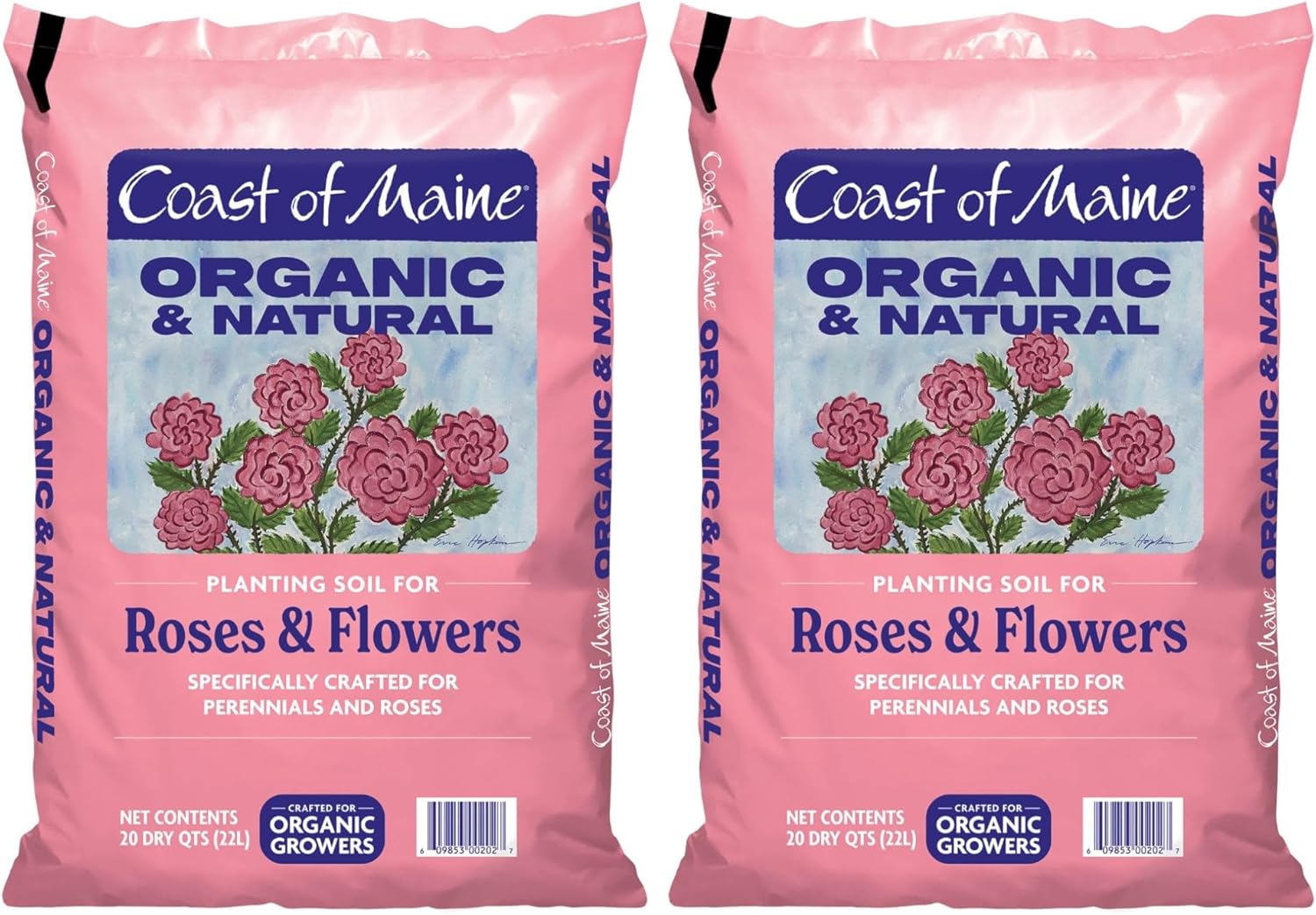
Coast of Maine Roses & Flowers Planting Soil, 20 qt (2-Pack)
| Unit Count | 2 Count |
|---|---|
| Volume | 20 quarts |
| Brand Name | Coast of Maine |
This Coast of Maine Roses & Flowers planting soil is an organic compost blend designed to revive planting mixes for roses, annuals, and perennials. Gardeners typically use it as a top dressing, a soil amendment mixed into existing bed soil, or straight into containers when repotting roses and flowering plants. Notable features include OMRI listing for organic use and a formula that uses seaweed, lobster meal, and composted materials to boost microbial life and supply slow-release nutrients. In practice the mix improves moisture retention while offering adequate drainage, which helps reduce watering frequency without waterlogging root crowns in containers. The product supports soil biodiversity and is safe around children and pets when used as directed. Important limitations are that this is a 20 quart bag sold in a two pack so it is best for small-scale container work or targeted amendments rather than large landscaping projects, and heavier organic mixes like this can compact over time compared with lightweight potting mixes formulated solely for container aeration.
Best for: Buyers who want an organic, nutrient-rich amendment for container roses and flowering pots and who value soil health and sustainable ingredients.
Less Ideal for: Anyone needing a lightweight commercial potting mix optimized only for maximum aeration or gardeners tackling large in-ground areas who need bulk volume.
- OMRI listed organic formula made from seaweed, lobster meal, and compost
- Balanced moisture retention and drainage suitable for container roses
- Supports soil microbiology and biodiversity for healthier root systems
- Safe for use around kids and pets when handled per instructions
- 20 quart bags are small for large projects so multiple bags are needed for beds
- Denser compost-rich mix can compact in containers over time compared with lighter potting-only mixes
Verdict: A small-batch organic soil blend that revitalizes container roses and flower pots by adding slow-release nutrients and supporting soil life.
Plantonix Compost Bliss — 100% Natural Pre-Made Compost (8 qts)

| Brand Name | plantonix |
|---|---|
| Unit Count | 160 Ounce |
| Manufacturer | Plantonix |
| Style Name | 100% Natural Compost |
Compost Bliss is a ready-to-use, fully cured organic compost designed to be mixed into potting soil, raised beds, and container mixes to improve texture, water retention, and nutrient content. You simply open the bag and blend it with your garden soil or potting mix; it is free of synthetic additives and made from plant-based materials so it functions as a natural slow-release nutrient source and soil conditioner. Notable features include OMRI listing and a dark, crumbly texture that helps loosen heavy soils and hold moisture better than bare soil. In practice it is useful for seed starting mixes, refreshing potting media, or top-dressing vegetable beds and planters. The main limitations are the small 8-quart volume, which makes it more suited to small containers, raised bed amendments, or spot treatments rather than large-scale soil replacement, and the lack of added specific nutrient analysis for planning precise feeding schedules. For gardeners who prefer organic inputs and want an easy way to boost soil structure and moisture retention, this compost is a low-effort, reliable option.
Best for: Gardeners who want an easy organic soil amendment to improve potting mixes, containers, and small raised beds and who prioritize verified organic inputs and proven product performance.
Less Ideal for: People who need large quantities for full garden renovations or who require exact nutrient numbers for regimented fertilizing programs should look for bulk compost or amendments with lab-analyzed nutrient data.
- Fully cured and ready to use with no on-site composting required
- 100% natural compost made from plant-based materials with no synthetic ingredients
- Improves soil structure, aeration, and moisture retention when mixed with soil or potting mix
- OMRI-listed, suitable for organic gardening practices
- Small 8-quart volume limits usefulness for large beds or wholesale soil replacement
- No detailed nutrient analysis provided for precise fertilization planning
Verdict: Choose this ready-to-use organic compost when you want a simple, OMRI-listed way to boost soil texture and moisture retention in containers and small beds.
Gantessa Stone Premium Organic Compost, 2 lb

| Item Form | Solid |
|---|---|
| Application Method | Soil Amendment, Top Dressing, Compost Tea |
| Coverage | Medium |
| Target Species | flowers, vegetables, herbs, and more |
| Unit Count | 32 Ounce |
This 2 lb bag of Gantessa Stone premium organic compost is a screened, manure-based amendment meant to boost soil structure and moisture retention in small vegetable garden beds or containers. Typical uses are mixing into potting mixes at the recommended 1:2 ratio, top-dressing established beds, or brewing compost tea. The product emphasizes improved porosity and water holding capacity and supplies a range of organic nutrients and beneficial microbes rather than concentrated NPK values. Because it is screened and sold in a compact unit, it is handy for hobby gardeners, balcony growers, and patch repairs where hauling large bags is impractical. Limitations are the small unit size and lack of guaranteed nutrient analysis, so it is best used to build organic matter rather than as a primary fertilizer for heavy-feeding crops. For larger beds you will need multiple bags or a bulk compost source, but for spot applications and seedling mixes this is a convenient, low-effort option.
Best for: Gardeners working on small vegetable beds, containers, or seedlings who want an easy-to-use organic amendment without hauling bulk compost.
Less Ideal for: Large-scale vegetable gardeners or those who need a measured fertilizer program for heavy-feeding crops should choose bulk compost or a product with a guaranteed nutrient analysis.
- Screened organic compost improves soil structure and water retention
- Suitable for multiple application methods: soil amendment, top dressing, or compost tea
- Compact 2 lb bag is convenient for container gardeners and small repairs
- Small 2 lb unit requires buying multiple bags for larger vegetable beds
- No detailed NPK or guaranteed nutrient analysis provided
Verdict: A handy screened organic compost for small vegetable gardens and containers when you want to quickly add organic matter without buying bulk.
DEEP ROOTS Living Soil Soil Reviver All-in-One Soil Amendment, 2 qt

| Net volume | 2 qt |
|---|
Soil Reviver is designed as a ready-to-use soil conditioner you can mix into beds or use as a top-dressing to rebuild tired planting media. It combines living compost and worm castings to add organic matter and slow-release nutrients, biochar and humic substances to help soils hold water and move nutrients, plus mycorrhizal fungi to boost root access to moisture and nutrients. In practice this product is most useful when working into rose beds or renewing container mixes where improved structure and microbial activity are priorities. Because it targets biology and moisture retention rather than fast-release fertilizer, you should expect gradual improvements over weeks to months rather than immediate leaf greening. The 2 qt size is convenient for spot applications or small beds but may require multiple bags for larger gardens. Easy to apply and versatile, it is a practical choice for gardeners who want a single organic amendment to support longer term soil health in rose plantings.
Best for: Gardeners who prioritize building reliable, long‑term soil health for roses and want a single organic amendment to improve structure, moisture retention, and root function.
Less Ideal for: Growers needing a quick, high‑nitrogen boost for rapid top growth or those managing large beds who prefer bulk commercial amendments.
- Contains living compost and worm castings to increase organic matter and slow‑release nutrients
- Includes biochar and humic acids to improve water retention and nutrient availability
- Contains mycorrhizal fungi to support stronger root development and nutrient uptake
- Versatile for garden beds, containers, or as a top‑dressing
- Small 2 qt package means multiple purchases for larger rose beds
- Formulated to improve soil biology slowly so plants may not show immediate nutrient responses
Verdict: Choose Soil Reviver when you want a compact, organic all‑in‑one amendment to steadily rebuild soil biology and moisture retention for healthier rose roots.
Miracle-Gro Potting Mix, 16 qt. (2-Pack)

| Feeds Plants | Up to 6 months |
|---|---|
| Volume | 16 quarts |
| Number of Packs | 2 |
| Intended Use | Outdoor containers |
| Ingredients | Sphagnum Peat Moss, Peat, Perlite, Compost, Fertilizer |
Miracle-Gro Potting Mix is a general-purpose container soil designed for outdoor pots, planters, and hanging baskets. It combines peat-based media, perlite, compost, and built-in fertilizer so you can pot vegetables, herbs, annuals, perennials, and shrubs without blending amendments. Typical use is straightforward: fill a pot about one third, set the plant at nursery depth, top off, and water until excess drains. Notable features are fast drainage to prevent root rot, an all-purpose nutrient charge that feeds plants for up to six months, and a texture that helps roots establish quickly. In practice this means less upfront prep and fewer immediate feedings compared with plain soil, and it is handy for seasonal repotting and new container plantings. Important limitations are that it is formulated for containers only (not in-ground beds) and the nutrient boost will diminish after the stated feeding period so you will need to supplement or repot for long-term specimens. Also peat-based mixes can compress over time and require refreshing each season.
Best for: Gardeners who want a low-effort, dependable potting soil for seasonal container planting and quick repots, especially those optimizing time and results across many pots.
Less Ideal for: Those wanting a soil to amend in raised beds or long-term in-ground planting should choose a garden soil formulated for in-ground use instead.
- Ready-to-use mix with built-in fertilizer that feeds up to six months
- Formulated for fast drainage to reduce risk of overwatering and root rot in containers
- Versatile for a wide range of outdoor container plants including vegetables, herbs, and flowers
- Not intended for in-ground garden beds
- Fertilizer effect is temporary and requires refeeding or repotting after about six months
Verdict: A convenient, fast-draining potting mix that simplifies container planting while providing up to six months of built-in nutrition.
Choosing the Right Compost for Roses in Containers: Key Factors to Consider
Moisture Management and Drainage
Container-grown roses sit in a finite volume of media and are more prone to both drought stress and waterlogging. Compost that holds some moisture is valuable, but if it compacts or retains water excessively the root crown can suffocate and disease risk rises. Evaluate particle size and the presence of coarse components such as bark, coco coir, or perlite that improve drainage.
Consistent moisture retention without ponding helps regular feeding schedules and produces steadier bloom cycles. Think about how often you want to water and pick a compost that matches that rhythm: mixes with higher coarse fraction need more frequent watering but reduce root rot risk, while finer, highly humic composts hold water longer but can require added aeration when used alone.
Nutrient Profile and Release Pattern
Roses are heavy feeders at flowering time but container roots can be overwhelmed by a sudden flush of salts. Compost for container roses should supply a balanced suite of micro and macronutrients and ideally release them moderately over several weeks. Look for information on nitrogen, phosphorus, and potassium levels as well as whether the compost is primarily mature humus or mixed with fresh amendments.
A compost that provides slow-release nutrition reduces the frequency of corrective fertilizing and makes bloom production more consistent. Avoid composts described as 'high-nitrogen' if they do not specify a balanced NPK pattern because too much nitrogen promotes foliage over flowers and can make plants leggy.
Texture Stability and Longevity
Repeated watering, potting, and seasonal cycles break down compost over time. Choose a compost that resists rapid decomposition in containers so structure and drainage last through a growing season. Texture stability depends on initial particle mix, lignin content, and degree of decomposition; too-mature, overly fine compost will compact, while very fresh compost can settle unevenly.
Stable texture means you will need to top-dress or refresh less often and the root environment stays airy. If you plan multi-year use in the same containers, prioritize composts formulated to retain structure or plan to amend with coarse components each season.
pH Compatibility and Salt Content
Roses prefer a slightly acidic to neutral root environment. Compost pH influences nutrient availability and should sit in a range that does not lock out iron or other micronutrients. Additionally, some composts contain elevated soluble salts from manures or synthetic additives, which can stress container plants where leaching is limited.
Check product information for pH or salt warnings if your water is hard or you fertilize heavily. A low-salt, near-neutral compost reduces the need for frequent leaching and helps young plants establish roots without foliar burn or tip scorch.
Organic Matter Quality and Biological Activity
High-quality compost supplies beneficial microbes that help nutrient cycling and can suppress some soil-borne pathogens. Compost maturity is critical: fully stabilized humus encourages healthy root function, while immature material can tie up nitrogen as microbes finish decomposition and may generate heat that stresses roots.
Consider whether the compost lists aerobic composting, screened fines, or ensured maturity. For container roses, biologically active but stable compost supports nutrient uptake and contributes to longer-term pot health when combined with periodic feeding.
Practical Handling and Preparation
How easy a compost is to store, transport, and mix affects everyday gardening. Light, dust-prone composts can be messy when filling many pots, while very heavy or wet blends are harder to move. Also consider whether the compost is ready to use straight from the bag or whether it needs pre-mixing with coarser amendments.
Good handling reduces the time between repotting cycles and makes seasonal maintenance simpler. Look for composts packaged in workable formats and check whether minor additions like grit or slow-release pellets are recommended for container use.
Preparing a Container Mix for Roses
Compost is rarely used alone for container roses. Combine a stable compost with coarse elements such as pine bark fines, horticultural grit, or perlite to tune drainage and reduce compaction. Aim for a mix that drains freely but still holds moisture near the root zone.
When repotting, lift the rootball slightly to avoid burying the crown and backfill with the prepared mix, tamping gently to eliminate large air pockets but keeping the media loose around fine roots.
- Use about 25 to 40 percent compost in most mixes for balanced nutrition and water retention.
- Add coarse material if your potting mix compacts quickly or if you live in a wet climate.
- Top-dress annually with fresh compost or a thin layer of composted bark to renew nutrients.
Adjusting Watering and Feeding for Container Roses
Compost that holds more moisture will reduce watering frequency but may require adjustments to fertilizing routines. Monitor pot weight and soil moisture rather than relying solely on a fixed schedule.
Feed container roses with a balanced fertilizer during the active growing season, but reduce or pause nitrogen-heavy feeds late in the season to encourage hardening off. Compost supplies baseline nutrients, so feed lighter if you use a nutrient-rich compost.
- Check moisture at root depth by probing the media or using a meter.
- Flush containers lightly a few times per season in areas with elevated salts.
- Match fertilizer strength to compost fertility to avoid overfeeding.
Seasonal Care and Reusing Compost
At the end of the growing season, remove spent top layer compost and replace it with fresh mix to restore nutrients and structure. For roses that will remain in pots over winter, ensure the media drains well to prevent freeze-thaw damage to roots.
You can reuse aged compost from containers if it still has structure and shows no signs of disease, but refresh it with additional coarse material and new compost to rebuild nutrient content before reuse.
- Inspect old compost for compaction, sour smell, or pest signs before reuse.
- Sterilize or discard media that shows root disease or persistent pests.
Choosing Compost Based on Climate
In hotter, drier climates prioritize compost blends that retain moisture without becoming dense, pairing them with mulches to reduce surface evaporation. In cool, wet climates emphasize drainage and aeration to avoid root rot.
Adjust particle size and amendment ratios to match local rainfall patterns and the frequency with which you can water.
- Dry climates: increase organic matter that holds moisture but add more coarse grit.
- Wet climates: increase coarse fractions and consider raised or elevated pots for extra drainage.
Sourcing and Certification Signals to Watch
Look for compost labeled as fully composted or mature and check for basic analysis data such as pH and salt content when available. Certifications or third-party testing can provide extra confidence in maturity and contaminant screening.
Avoid composts that lack basic composition information if you plan to use them in delicate container situations where roots are limited.
- Search labels for maturity indicators and basic nutrient or pH values.
- Prefer screened composts for container work to reduce clogging and uneven settling.
How We Chose the Best Compost for Roses in Containers
We focused on attributes that directly affect container-grown roses and practical garden performance. Evaluation criteria included moisture management, nutrient balance and release, texture stability and aeration, organic matter quality and maturity, and ease of handling for mixing or top-dressing. We favored composts that maintain structure in pots rather than compacting, that supply both immediate and longer-term nutrients without forcing excessive nitrogen, and that support beneficial soil life. Products were excluded if they were designed exclusively for in-ground beds, heavily amended with synthetic fertilizers only, or lacked clear information on particle size and stability. Sources consulted included manufacturer composition data and common horticultural standards for container substrates. The final list reflects composts suited to repeated container use, good drainage, and steady bloom support.
FAQ
Can I use garden compost straight from my pile for container roses?
Often garden compost is fine if it is fully mature and well screened. Immature or chunky compost can retain heat or decompose in the pot, tying up nitrogen and stressing roots. Screen or age pile compost before using it in containers.
How often should I top-dress container roses with compost?
Usually a light top-dress once per growing season is sufficient to refresh nutrients and organic matter. Heavy refreshes or full repots are typically done every one to three years depending on container size and plant vigor.
Will compost alone provide enough drainage for container roses?
Not always. Many composts compact over time, so mixing in coarse materials like grit or bark ensures consistent airflow and drainage. Choose a compost formulated for containers or amend it before potting.
Does compost affect how often I should fertilize container roses?
Yes. A nutrient-rich compost reduces the need for frequent feeding, while a low-nutrient compost will require supplemental fertilizer. Match feed schedules to the compost's nutrient content and plant performance.
What signs show that compost in a pot needs replacing?
Signs include poor drainage, a sour odor, compacted texture, stunted growth, or visible salt buildup on the pot rim. If roots are circling and the medium is depleted, repotting with fresh mix is advisable.
Final Verdict
Pick compost for container roses by balancing moisture retention with drainage and choosing mixes that release nutrients steadily. Prioritize mature, screened composts with stable texture so roots have air and steady food through the season. Decide based on your climate, watering routine, and how often you want to repot. Focus on drainage, nutrient pattern, and handling ease to keep potted roses blooming reliably year after year.
