

Note: This article contains affiliate links. If you click on these links and make a purchase, I may earn a small commission at no extra cost to you. This helps support my research and content. Read my full affiliate disclosure here.
If you garden in a small yard, on a patio, or in a narrow urban lot, the right compost bin makes it easy to turn kitchen scraps and yard trimmings into usable compost without taking over limited space. You want a container that processes material efficiently, controls odors and pests, and fits the footprint you have available. This guide covers five shortlisted compost bins tailored for small gardens. Each option was chosen for practical performance in tight spaces and evaluated on capacity, airflow, material, and ease of maintenance. Read on to find compact composting solutions that match how you garden and where you keep your bin.
Top Picks at a Glance
| Best Overall The best all-around choice for most situations | Nazhura Dual-Chamber 43 Gallon Compost Tumbler Bin |  |
| Best Value The sweet spot between price and what you get | Nouva 18.5‑Gallon Tumbling Compost Bin with Steel Frame |  |
| Best Budget The cheapest option that still gets the job done reliably | ZZOFSWORM Inground Worm Farm Composter (Small) |  |
| Most Popular A crowd favorite that many people choose with confidence | VIVOSUN Outdoor Tumbling Composter, Dual-Chamber 43 Gallon |  |
| Best Seller A high-volume bestseller chosen again and again | TOP XIAN 2-Pack Inground Worm Composter (8 L) |  |
Nazhura Dual-Chamber 43 Gallon Compost Tumbler Bin

| Capacity | 43 gallons |
|---|---|
| Material Type | Plastic and Galvanized Steel |
| Manufacturer Warranty Description | 1 Year |
The Nazhura dual-chamber compost tumbler is a practical outdoor bin that speeds up backyard composting by combining insulated rotating chambers with internal mixing when turned. You load kitchen scraps and yard waste into either chamber, let material heat and break down, then rotate the tumbler occasionally to aerate and mix the pile; one chamber can be active while the other finishes so you can compost continuously. Notable features include the side-by-side dual chambers for staggered batches, a slide-open access door for easy removal of finished compost, and construction using plastic with galvanized steel supports for weather resistance. In practice the unit makes managing smaller household volumes straightforward and keeps material off the ground to reduce pests and mess. Limitations are its 43 gallon capacity, which suits small to medium households but may require more frequent emptying for heavy gardeners, and the plastic body means very hot internal temperatures are harder to maintain than in larger insulated systems. Assembly and periodic turning are required to get the fastest results.
Best for: Gardeners who want a tidy, space-efficient way to turn household scraps into usable compost on an ongoing schedule and who value ease of use and continuous batches.
Less Ideal for: People with very large yards, frequent high-volume green waste, or those who need professional-scale hot composting results should consider larger or purpose-built insulated systems instead.
- Dual-chamber design allows continuous composting by loading one side while the other finishes
- Rotating tumbler and internal mixing accelerate decomposition compared with static bins
- Slide-open access door makes removing finished compost quick and tidy
- Plastic body with galvanized steel support resists outdoor weathering and reduces direct contact with pests
- 43 gallon capacity may be small for large yards or heavy kitchen waste producers
- Plastic construction limits maximum internal heat compared with larger insulated or insulated-metal systems
Verdict: A compact, easy-to-use dual-chamber tumbler that lets practical gardeners run continuous small-batch composting with minimal mess and effort.
Nouva 18.5‑Gallon Tumbling Compost Bin with Steel Frame

| Capacity | 18.5 gallons |
|---|---|
| Material Type | Polypropylene (PP) |
| Sliding Door Size | 9.5"L x 7.4"W |
This Nouva tumbling composter is built for small gardens and balconies where space and ease matter. The hexagonal PP barrel sits on a powder‑coated steel frame and rotates 360 degrees so you can aerate material by tumbling instead of hand turning, which simplifies regular compost maintenance. Multiple vent holes and the tumbling action help speed decomposition, and the 9.5 by 7.4 inch access door makes loading kitchen scraps straightforward. Assembly is quick with included tools and parts. Because the body is plastic it resists weather and chemicals, but the 18.5 gallon capacity means it is best suited to households that generate modest amounts of yard and kitchen waste rather than large volumes. The steel frame improves stability and keeps animals away, though very heavy loads may make turning harder. For compact plots the unit saves space and reduces manual labor, but users wanting larger throughput or insulated winter composting may prefer a bigger or differently designed bin.
Best for: Gardeners who want a low‑effort composting solution for small outdoor spaces and who prioritize ease of use and compact footprint over high capacity.
Less Ideal for: If you regularly produce large volumes of garden waste or need a winter‑insulated composter, choose a larger or insulated model instead.
- Tumbling design provides easy aeration without manual digging or turning
- Polypropylene body and powder‑coated steel frame resist weathering
- Compact 18.5 gallon capacity fits small gardens, balconies, and patios
- Multiple ventilation holes improve airflow to speed decomposition
- Includes tools and parts for quick assembly
- Limited 18.5 gallon volume is not ideal for large amounts of yard waste
- Plastic barrel offers limited insulation for cold‑weather composting
Verdict: A space‑saving tumbling composter that makes aeration and regular upkeep simple for small gardens and apartment balconies.
ZZOFSWORM Inground Worm Farm Composter (Small)

| Capacity | 0.6 gallons |
|---|---|
| Material Type | Plastic |
| Item Type Name | Worm composting bin |
This small inground worm farm is a no-frills solution for turning kitchen waste into usable compost in tight garden spaces. You bury the cylindrical plastic bin in a raised bed or corner, add food scraps, close the locking lid and let red wigglers do the work. Notable features include a 360 degree ventilation system and a secure lid to limit odors and keep wildlife out, and the brand says the design supports year-round use outdoors. The unit is lightweight, easy to set up and requires no electricity or regular turning, which makes it low-maintenance for busy gardeners. Its 0.6 gallon capacity and compact footprint make it ideal for small gardens or balconies, but that same small size means it will need more frequent emptying or multiple units for larger households. Also worms are not included, and the plastic body will eventually show wear if exposed to direct sun despite manufacturer guidance to keep it shaded. For someone on a modest budget who needs a simple, space-saving compost option, this delivers practical performance with minimal fuss.
Best for: Gardeners with limited space and a tight budget who want a simple, low-effort way to recycle kitchen scraps into fertilizer for small beds or containers.
Less Ideal for: Households that produce large amounts of food waste or gardeners who want a high-capacity or heavy-duty composting system.
- Compact subterranean design fits into small raised beds or tight outdoor corners
- 360 degree ventilation and locking lid help control odors and deter pests
- Very low maintenance operation with no electricity or manual turning required
- Lightweight plastic construction is easy to install and move when needed
- Very small 0.6 gallon capacity requires frequent harvesting or multiple bins for steady output
- Worms are not included so you must purchase live red wigglers separately
- Plastic body should be kept out of direct sun and may wear over time
Verdict: A budget-friendly, space-saving inground worm composter that makes odor-controlled vermicomposting easy for small gardens.
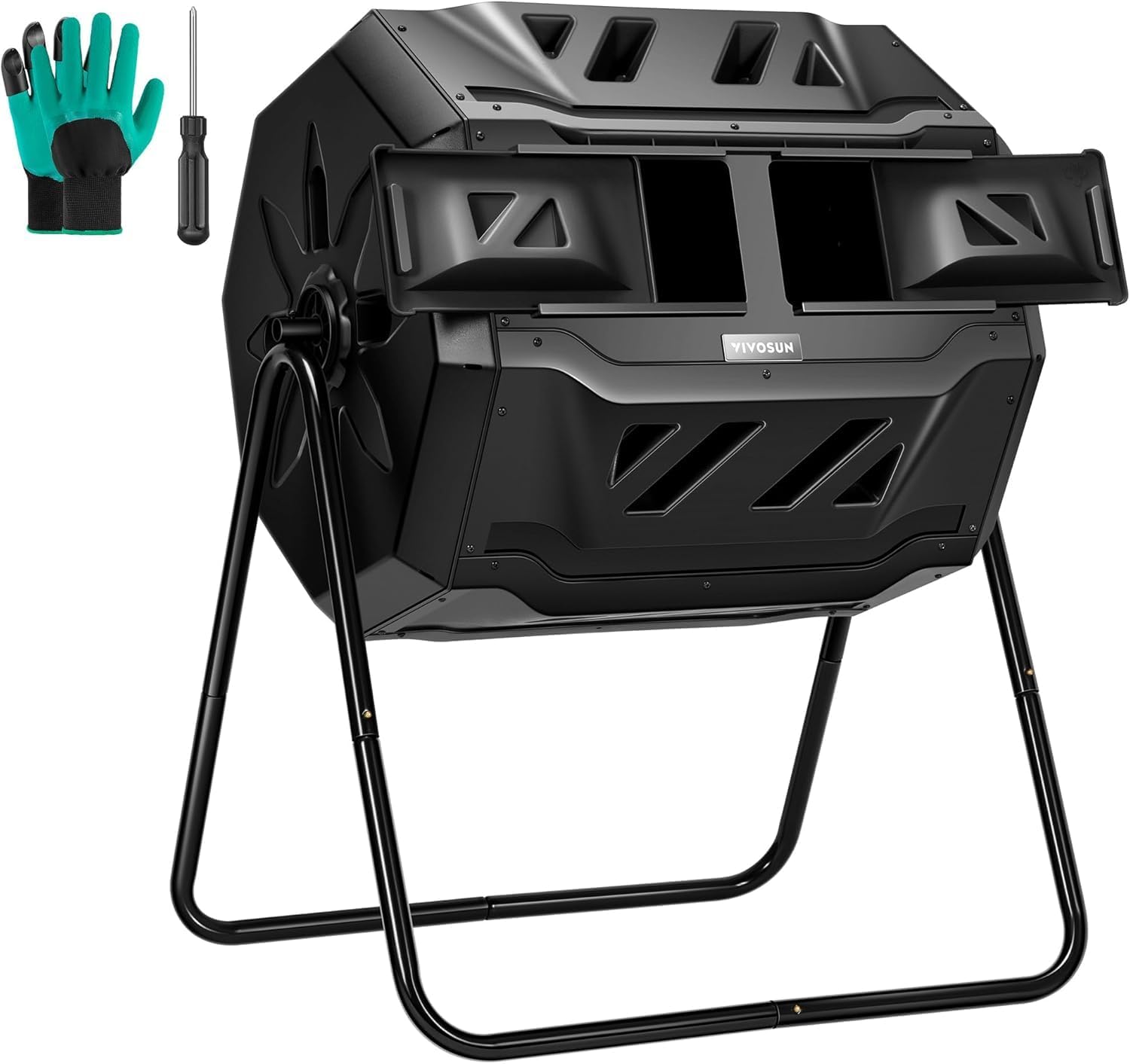
VIVOSUN Outdoor Tumbling Composter, Dual-Chamber 43 Gallon
| Material Type | galvanized steel |
|---|---|
| Capacity | 43 gallons |
This VIVOSUN tumbling composter is a practical backyard unit built around two rotating chambers so you can add fresh waste to one side while the other finishes breaking down. The 360 degree tumbling design with deep internal fins makes turning the pile simple and helps break up clumps without digging. Ventilation slots around the drum promote airflow for aerobic decomposition, and the metal frame with a PP plastic barrel is designed to resist corrosion and outdoor weathering. It comes with waterproof garden gloves and small digging claws to make loading and aerating easier. At 43 gallons it is sized for a family garden or vegetable patch but is compact enough for a patio or small yard. Limitations to note are that it requires occasional manual turning to maintain activity and that the plastic drum means it will warm less in cold climates than insulated models, so composting speed will vary by season. Assembly and placement on a level spot are also important for smooth rotation.
Best for: Gardeners who want a hands-on, efficient system to produce regular batches of compost without digging a pile and who prioritize continuous output and easy turning.
Less Ideal for: People who need a completely hands-off hot composter or who compost only very large volumes; those in very cold climates seeking year-round rapid breakdown should consider insulated or electric options.
- Dual chambers let you load new material while another batch finishes, ensuring continuous compost production
- 360 degree tumbling with deep fins makes mixing and aeration easy without manual digging
- Galvanized steel frame and PP plastic barrel designed for outdoor durability and corrosion resistance
- Ventilation slots support aerobic breakdown for faster, less smelly composting
- Plastic drum offers less insulation than insulated or fully metal units, slowing composting in cold weather
- Requires manual turning and regular management to maintain heat and moisture for fast results
Verdict: If you want steady, manageable batches of compost with easy tumbling and continuous use, this dual-chamber VIVOSUN tumbler delivers practical, durable performance.
TOP XIAN 2-Pack Inground Worm Composter (8 L)

| Capacity | 8 liters |
|---|---|
| Material Type | Polypropylene (PP) |
| Number of Items | 2 |
These two inground worm composters are compact, simple-to-use bins for gardeners who want to turn kitchen scraps and yard waste into nutrient-rich material without complex equipment. Each cylinder is made from polypropylene and includes a removable lid and many ventilation holes so buried organic matter stays aerated and relatively odor-free. Typical use is to dig two small holes, set the bins in place, add bedding and scraps, and let worms (not included) do the work; the twin‑pack lets you alternate chambers so one can be active while the other rests. The 8 liter capacity makes them best for small garden beds, balcony planters, or a household that produces limited food waste. Because they are lightweight plastic, they are easy to install and move if needed, but that also means they are not suited for heavy mechanical abuse or very cold climates where frost could make plastic brittle. Expect compost cycles measured in months rather than weeks and plan to supplement with bedding to keep moisture and odor balanced.
Best for: Buyers who want a low‑risk, low‑effort way to start vermicomposting in a small garden or planter and prefer a straightforward solution they can set and forget for months at a time.
Less Ideal for: People who produce large volumes of kitchen waste, need rapid high-volume composting, or who prefer metal or heavy‑duty bins for longevity and extreme weather resistance.
- Two small bins let you maintain continuous composting by alternating active chambers
- Durable polypropylene construction resists rot and is easy to clean
- Ventilated design and removable lid reduce odors and improve aeration
- Compact size fits small garden beds, balconies, and starter plots
- Small 8 L capacity requires more frequent emptying for larger households
- Plastic construction can be damaged by heavy impact or prolonged UV and freeze exposure
Verdict: A simple, low-maintenance two-pack inground worm composter ideal for small gardens and first-time vermicomposters.
Choosing the Right Compost Bin for Small Gardens: Key Factors to Consider
Bin Capacity and Physical Footprint
Bin capacity determines how much organic material you can hold and process between turnings. In a small garden you rarely need the large volumes suited to bigger yards, so choose a size that matches your household food-scrap output and seasonal yard waste. A compact bin that is too small will require frequent emptying and can slow decomposition, while one that is slightly larger than your immediate needs gives space for layering greens and browns and for heat buildup.
Physical footprint is equally important. Measure the available space where you plan to keep the bin, including access room for opening lids or doors. Tall, narrow bins save ground area but may be harder to turn manually, while squat tumblers are easier to access but need more surface area. Consider whether the bin will sit on a patio, balcony, or grass and whether you need a unit with a small base or a low profile for balcony railings or tight corners.
Aeration, Drainage, and Heat Retention
Good airflow and drainage keep compost piles active and reduce odors. For small volumes, airflow is critical because small piles lose heat faster and can become anaerobic. Look for bins with built-in vents, perforations, or designs that allow air circulation through the mass. Some compact designs use internal baffling or raised floors to improve ventilation.
Drainage prevents water from pooling at the bottom and turning the pile soupy, which stalls decomposition and attracts pests. Heat retention matters too; insulation or enclosed walls help sustain microbial activity in cooler months. Balance ventilation with the need to retain some warmth so microbes can work effectively in a small garden environment.
Material, Construction, and Longevity
Materials affect how long a bin lasts and how it performs outdoors. UV-stabilized plastics resist cracking and fading from sun exposure and are lightweight enough for balconies. Metal bins can be durable but may corrode unless coated or stainless; thin metal can also transfer heat away and cool the pile. Wood offers a natural look but requires rot-resistant species or treatment and can need more maintenance.
Construction details like reinforced seams, secure lids, and sturdy fasteners determine whether the bin will survive regular use. For small gardens you want a low-maintenance unit that resists warping and remains structurally sound over several seasons so you do not need frequent replacements.
Access and Ease of Harvesting
Harvesting finished compost should be straightforward in tight spaces. Look for bins with easy-access doors, removable bases, or tumbler designs that simplify the separation of finished material from active piles. If turning is required, consider whether the design allows the use of a fork or if a tumbling mechanism reduces the labor.
In a small garden, awkward access can make composting a chore and lead to neglected piles. Choose a unit that lets you reach finished compost without lifting heavy loads or dismantling the whole bin. Ease of cleaning is also important because small bins can accumulate residue that impacts future batches.
Pest Resistance and Odor Control
Pests and odors are a key concern in compact settings where bins sit near living spaces. Effective rodent-proofing includes tight-fitting lids, secure fasteners, and screened vents that keep small animals out while allowing air flow. A design that isolates food scraps from easy access will reduce the chance of visits from rodents and stray animals.
Odor control depends on turning frequency, layering of browns and greens, and how well the bin manages moisture and airflow. A well-ventilated, well-drained bin combined with proper composting practice will limit smells, making the system suitable for patios and small yards.
Placement, Stability, and Local Rules
Where you place the bin affects how it performs and whether it will be allowed. Check local ordinances or homeowners association rules about composting in small spaces, especially on balconies or in shared yards. Choose a stable base so the unit will not tip in wind or when accessed for turning. If placed on decking or a balcony, consider a mat or platform to protect the surface from moisture and staining.
Placement also interacts with sun exposure and access to water. A partly shaded spot helps prevent the bin from drying out in summer, while a sheltered location reduces wind-driven heat loss in cooler months. Ensure you can access the bin comfortably for adding materials and harvesting finished compost.
Best Placement Strategies for Small Spaces
Position the bin where it is easy to reach from your kitchen and garden but not so close that any occasional smells become a nuisance. For balconies, place the bin on a surface that can handle moisture and weight, and avoid blocking emergency egress or communal areas.
Think about sun exposure. Morning sun helps warm the pile and encourages microbial activity, but midday sun on a plastic bin can dry material too quickly. Partial shade or a location with morning sun and afternoon shade often works best.
- Keep the bin within a short walk of the kitchen to encourage regular additions.
- Provide a small work area nearby for chopping kitchen waste into smaller pieces.
- Avoid low spots that collect runoff and make the base soggy.
How to Balance Greens and Browns in Small Bins
Small bins are less forgiving about wet-to-dry ratios because excess moisture or too many fresh food scraps can quickly overwhelm the system. Chop kitchen waste and mix in dry materials like shredded paper, dry leaves, or small wood chips to maintain an even balance.
Layering helps. Add a base layer of coarse, dry browns to improve drainage, then alternate small amounts of greens and browns. Turn or tumble according to the bin design to keep materials evenly aerated.
- Aim for a mix that is damp like a wrung-out sponge, not dripping.
- Avoid adding large meat, dairy, or oily scraps that attract pests in small systems.
Low-Maintenance Methods for Urban Gardeners
If you have limited time or mobility, choose a setup that minimizes manual turning. Tumblers and enclosed bins with removable trays let you manage compost without heavy lifting. Smaller, continuous-feed designs allow you to add scraps gradually and harvest finished material from a lower door.
Use a kitchen scrap container with a tight lid to collect material between trips to the outdoor bin. Freezing meatless scraps until you are ready to transfer them is an option for pest control in tighter urban settings.
- Rotate several small batches to keep one side working while the other cures.
- Use coarse bulking agents like wood chips to reduce turning frequency.
Seasonal Care Tips for Small-Volume Composting
In colder months, decomposition slows. Insulate the bin or increase the size of the batch to retain heat, and avoid letting the pile become too small. In summer, monitor moisture more closely and add dry browns if the pile dries out.
Empty or process accumulated kitchen scraps more frequently during slow-decomposition periods to prevent odors and pest attraction. Consider storing finished compost sheltered from heavy rain so it does not leach.
- Add more greens in spring to kick-start microbial activity after winter dormancy.
- Cover fresh additions with a dry layer to limit flies and smells during warm weather.
Compost Uses and How to Apply Finished Material
After the compost is finished, it can be used as a soil amendment or a light topdressing for containers and garden beds. In small gardens, use finished compost sparingly to boost structure and nutrient content without overwhelming potted plants with too much organic matter.
Mix finished compost into potting mixes, sprinkle it thinly into vegetable beds before planting, or use it to top-dress established shrubs and perennials. Finished compost also helps retain moisture in small containers and promotes healthy root development.
- Blend compost with fresh potting mix at about 10 to 20 percent by volume for container plants.
- For vegetable beds, work compost into the top few inches of soil before planting.
How We Chose the Best Compost Bin for Small Gardens
We focused on factors that matter in compact garden settings and applied strict editorial filters to separate practical options from gimmicks. First, capacity and footprint were primary filters; we favored bins with usable volume appropriate to small households and modest yard waste streams. Second, aeration and airflow design were assessed because small piles can stagnate quickly without good oxygen exchange. Third, durability of materials and weather resistance were considered to ensure the unit stands up to wet seasons and sun exposure typical of backyard or balcony use. Fourth, maintenance features such as accessibility for turning, harvesting finished compost, and ease of cleaning were weighed heavily. Fifth, rodent- and pest-resistance features were examined for urban and suburban environments. We excluded overly large systems, complex multi-bin setups intended for heavy-duty backyards, and unproven DIY designs that require significant modification. Our selection prioritized compact, practical bins that perform reliably in constrained spaces and that make routine composting tasks straightforward.
FAQ
How big should a compost bin be for a household that cooks daily?
For a household that produces kitchen scraps every day, a compact bin with moderate capacity is usually sufficient. Aim for a bin that can hold several weeks of scraps so you can build a batch that maintains heat but does not require daily emptying. Frequency of turning and the amount of yard waste you add will also affect the ideal size.
Can I compost on a balcony without attracting pests?
Yes. Use a sealed or rodent-resistant bin and avoid adding meat, dairy, or oily foods. Layering with dry browns and keeping vents screened reduces odors and access for pests. Regularly transferring finished material and cleaning the bin base also helps.
Will a small compost bin heat up enough to break down materials quickly?
Smaller volumes lose heat faster than large piles, so decomposition is usually slower. You can improve heat retention by adding more material at once, insulating the bin, or using a design that traps warmth. Frequent mixing and appropriate moisture levels also speed breakdown.
How often should I turn or tumble a compact compost bin?
Turning frequency depends on the design and mix. Tumblers often benefit from a weekly rotation, while stationary bins can be turned less frequently if built with good aeration. Monitor moisture and smell; turning when the pile becomes compacted or starts to smell will keep decomposition aerobic.
Is it okay to use shredded paper in a small garden compost bin?
Shredded paper is an effective brown material that helps absorb moisture and adds carbon. Use it in moderation and mix it well with greens to avoid matting. Avoid heavily inked or glossy paper and favor plain office paper or cardboard pieces.
How do I prevent my small bin from getting too wet after heavy rain?
Place the bin on slightly raised ground or a platform to improve drainage and shelter it under partial cover if possible. Ensure the design has drainage openings and a lid that sheds rain. If the bin becomes waterlogged, add coarse dry browns and aerate to restore balance.
Final Verdict
When choosing a compost bin for small gardens, prioritize a balance between usable capacity and a small physical footprint. Good aeration, reliable drainage, and pest-resistant features will have the biggest impact on how smoothly your composting process runs in a confined space. Decide which tradeoffs matter most: easy access and low maintenance versus maximum heat retention and volume. With the practical criteria outlined here, you can pick a compact bin that fits your space and gardening routine and that reliably produces useful compost.
