

Note: This article contains affiliate links. If you click on these links and make a purchase, I may earn a small commission at no extra cost to you. This helps support my research and content. Read my full affiliate disclosure here.
Potted roses need a potting compost that balances moisture retention with good drainage while supplying steady nutrients for repeat blooms. Choosing the right compost for roses in pots affects root health, watering frequency, and how often you need to fertilize. This guide shortlists the top five composts suited to roses in containers and explains the practical tradeoffs gardeners face when growing roses on patios, balconies, and small yards. We evaluate each option for drainage, nutrient profile, and ease of use so you can pick a compost that fits your watering style and bloom goals.
Top Picks at a Glance
| Best Overall The best all-around choice for most situations | Coast of Maine Quoddy Blend Organic Compost (1 cu ft, 2 pack) |  |
| Best Quality Built to a higher standard if you want something more solid | Coast of Maine Roses & Flowers Planting Soil, 20 qt (2-Pack) |  |
| Best Value The sweet spot between price and what you get | Brut Organic Worm Castings, 5 lb |  |
| Best Budget The cheapest option that still gets the job done reliably | Omitgoter Rose Potting Soil — Natural Organic Mix (32 fl oz) |  |
| Highest Rated A top-rated pick with lots of positive feedback | DEEP ROOTS Living Soil Soil Reviver All-in-One Soil Amendment, 2 qt |  |
Coast of Maine Quoddy Blend Organic Compost (1 cu ft, 2 pack)

| Unit Count | 768 Ounce |
|---|---|
| Volume | 1 cubic feet |
| Style Name | 2 Pack |
Coast of Maine Quoddy Blend is a bagged organic compost mix intended for improving garden soil and supporting healthier plant growth. It combines compost, sphagnum peat moss, aged bark and chitin-rich lobster and crab meal to add organic matter, feed soil microbes and improve drainage in beds or containers. Typical uses are top-dressing vegetable plots, amending in-ground garden soil before planting and mixing into raised beds to increase water retention without creating heavy, poorly draining soil. Notable features include OMRI-listed organic inputs, a formula that encourages microbial life and inclusion of marine-derived nutrients that release slowly. Practical benefits are richer soil structure, better root development and a sustainable ingredient profile that reuses byproducts. Limitations are typical of bagged mixes: one cubic foot per bag covers a small area so larger projects need many bags, and peat content means gardeners concerned about peat extraction may prefer peat-free alternatives. Also the product is a soil amendment rather than a complete potting mix, so additional fertilizer may be needed for high-demand crops.
Best for: Gardeners who prioritize reliable, organic soil improvement for vegetables, flowers or raised beds and want a proven amendment that supports soil life.
Less Ideal for: People doing large-scale landscaping who need bulk volume or gardeners seeking a peat-free amendment should consider alternative products.
- OMRI-listed organic ingredients that support sustainable gardening
- Contains compost and chitin-rich lobster and crab meal to feed microbes and provide slow-release nutrients
- Loose texture that improves drainage and root penetration
- Suitable for in-ground beds and raised beds as a soil amendment
- Small volume per bag makes it less efficient for large landscape projects
- Contains peat moss which some gardeners avoid for environmental reasons
Verdict: A dependable organic compost blend that reliably improves soil structure and feeds soil biology for healthier garden beds.
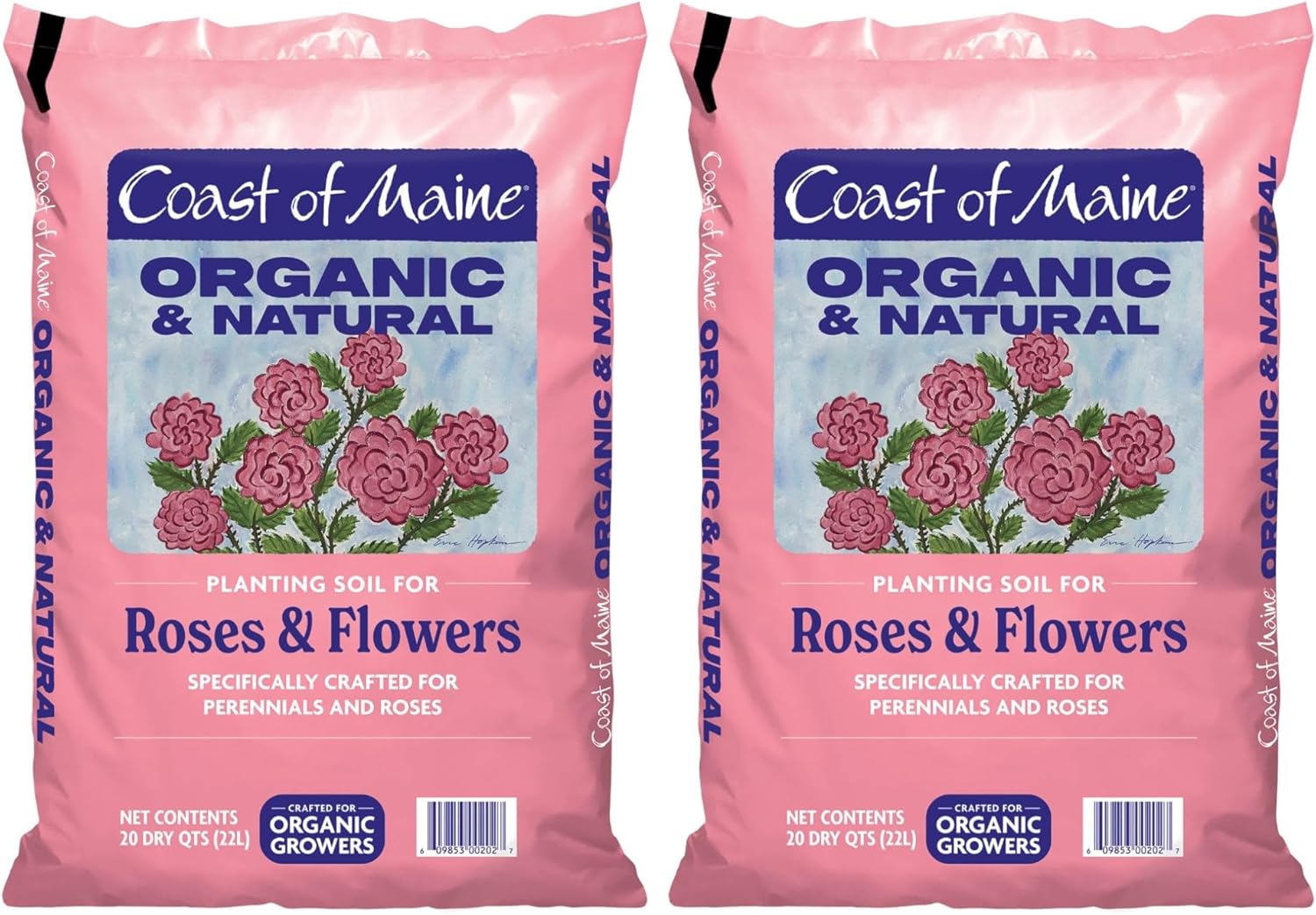
Coast of Maine Roses & Flowers Planting Soil, 20 qt (2-Pack)
| Unit Count | 2 Count |
|---|---|
| Volume | 20 quarts |
| Brand Name | Coast of Maine |
This Coast of Maine Roses & Flowers planting soil is an organic compost blend designed to revive planting mixes for roses, annuals, and perennials. Gardeners typically use it as a top dressing, a soil amendment mixed into existing bed soil, or straight into containers when repotting roses and flowering plants. Notable features include OMRI listing for organic use and a formula that uses seaweed, lobster meal, and composted materials to boost microbial life and supply slow-release nutrients. In practice the mix improves moisture retention while offering adequate drainage, which helps reduce watering frequency without waterlogging root crowns in containers. The product supports soil biodiversity and is safe around children and pets when used as directed. Important limitations are that this is a 20 quart bag sold in a two pack so it is best for small-scale container work or targeted amendments rather than large landscaping projects, and heavier organic mixes like this can compact over time compared with lightweight potting mixes formulated solely for container aeration.
Best for: Buyers who want an organic, nutrient-rich amendment for container roses and flowering pots and who value soil health and sustainable ingredients.
Less Ideal for: Anyone needing a lightweight commercial potting mix optimized only for maximum aeration or gardeners tackling large in-ground areas who need bulk volume.
- OMRI listed organic formula made from seaweed, lobster meal, and compost
- Balanced moisture retention and drainage suitable for container roses
- Supports soil microbiology and biodiversity for healthier root systems
- Safe for use around kids and pets when handled per instructions
- 20 quart bags are small for large projects so multiple bags are needed for beds
- Denser compost-rich mix can compact in containers over time compared with lighter potting-only mixes
Verdict: A small-batch organic soil blend that revitalizes container roses and flower pots by adding slow-release nutrients and supporting soil life.
Brut Organic Worm Castings, 5 lb

| Item Form | Granules |
|---|---|
| Specific Uses For Product | Gardening,Organic |
| Target Species | All plants |
| Mixing Ratio | 1:5 |
Brut Organic Worm Castings function as a concentrated, natural soil amendment you mix into potting mixes or top-dress garden beds and raised beds. Typical use is mixing at the recommended 1:5 ratio for new indoor plants, sprinkling a cup around established houseplants, or working into outdoor planting holes and beds according to the brand directions. The product is OMRI/CDFA listed and produced in controlled conditions, which supports consistent nutrient content and beneficial microbial life that help roots establish, improve soil structure, and increase moisture retention without burning plants. Practical benefits for raised garden beds include improved aeration, slow-release nutrients, and a boost in microbial activity that supports long-term fertility. Limitations are that it is not a complete NPK fertilizer for immediate heavy feeding needs and larger beds require significant quantities to hit the suggested per-square-foot rates, so frequent applications or bulk purchases may be needed for big projects.
Best for: Gardeners who prioritize dependable, organic soil improvement for raised beds and container gardens and prefer predictable, low-risk amendments that support long-term soil health.
Less Ideal for: Those needing immediate, high-NPK feeding for heavy-feeding crops or gardeners who want to amend very large beds without buying supplemental bulk material.
- Certified organic and produced indoors for consistent purity
- Rich in beneficial microbes that improve soil structure and plant vigor
- Easy-to-use granular form suitable for mixing or top-dressing
- Not a standalone high-NPK fertilizer for rapid nutrient correction
- Five-pound bag may be small for large raised beds and repeated seasonal use
Verdict: Use this OMRI/CDFA-listed worm castings product to reliably build long-term fertility and microbial health in raised beds and containers.
Omitgoter Rose Potting Soil — Natural Organic Mix (32 fl oz)

| Brand Name | Omitgoter |
|---|---|
| Unit Count | 32 Ounce |
| Style Name | Well-draining, Bonsai-specific |
| Volume | 32 fluid ounces |
This Omitgoter rose potting soil is a ready-to-use organic mix designed to make growing roses easier, especially in pots and bonsai containers. The formula combines peat moss, coco coir, perlite, bark, and humus to create a loose, well-draining medium that helps prevent waterlogging and root rot while keeping roots aerated. It is typically used straight from the bag for repotting rose bushes, topping up containers, or as the planting medium for new transplants. Practical benefits include built-in long-lasting nutrients that reduce the need for immediate fertilizer applications and a lightweight texture that improves root development and flowering. Because it is formulated specifically for roses, it suits both indoor potted roses and outdoor container plantings. Limitations to note are the small 32 fl oz volume, which means multiple bags will be needed for larger pots or several plants, and the product does not list specific nutrient analysis or feed schedules, so gardeners wanting precise fertilizer planning will need to supplement accordingly.
Best for: Gardeners on a budget who want an easy, natural potting mix for potted or container roses and prefer a ready-to-use product that improves drainage and bloom potential.
Less Ideal for: Large-scale rose beds or multiple full-size shrubs where bulk soil or custom mixes are more economical; growers who require exact nutrient breakdowns for fertilization planning should look elsewhere.
- 100% natural organic ingredients including peat, coco coir, perlite, bark, and humus
- Designed for superior drainage and aeration to reduce risk of root rot
- Contains long-lasting nutrients to support flowering without immediate additional feeding
- Ready to use with no mixing required, convenient for beginners
- Small 32 fl oz volume means limited coverage per bag
- No detailed N-P-K or nutrient analysis provided for precision feeding
Verdict: A convenient, natural potting mix that improves drainage and supports healthy blooms, perfect for budget-minded gardeners caring for potted roses.
DEEP ROOTS Living Soil Soil Reviver All-in-One Soil Amendment, 2 qt

| Net volume | 2 qt |
|---|
Soil Reviver is designed as a ready-to-use soil conditioner you can mix into beds or use as a top-dressing to rebuild tired planting media. It combines living compost and worm castings to add organic matter and slow-release nutrients, biochar and humic substances to help soils hold water and move nutrients, plus mycorrhizal fungi to boost root access to moisture and nutrients. In practice this product is most useful when working into rose beds or renewing container mixes where improved structure and microbial activity are priorities. Because it targets biology and moisture retention rather than fast-release fertilizer, you should expect gradual improvements over weeks to months rather than immediate leaf greening. The 2 qt size is convenient for spot applications or small beds but may require multiple bags for larger gardens. Easy to apply and versatile, it is a practical choice for gardeners who want a single organic amendment to support longer term soil health in rose plantings.
Best for: Gardeners who prioritize building reliable, long‑term soil health for roses and want a single organic amendment to improve structure, moisture retention, and root function.
Less Ideal for: Growers needing a quick, high‑nitrogen boost for rapid top growth or those managing large beds who prefer bulk commercial amendments.
- Contains living compost and worm castings to increase organic matter and slow‑release nutrients
- Includes biochar and humic acids to improve water retention and nutrient availability
- Contains mycorrhizal fungi to support stronger root development and nutrient uptake
- Versatile for garden beds, containers, or as a top‑dressing
- Small 2 qt package means multiple purchases for larger rose beds
- Formulated to improve soil biology slowly so plants may not show immediate nutrient responses
Verdict: Choose Soil Reviver when you want a compact, organic all‑in‑one amendment to steadily rebuild soil biology and moisture retention for healthier rose roots.
Choosing the Right Compost for Roses in Pots: Key Factors to Consider
Drainage and Aeration
Potted roses need a compost that drains freely so roots get oxygen between waterings. Poor drainage in a container quickly causes root suffocation and crown rot, especially in heavy clay pots or when watering frequently.
Look for a compost mix that includes chunky components such as coarse bark, perlite, or grit to create air pockets. Good aeration reduces the risk of overwatering damage and helps roots grow a robust feeder root system that supports repeat flowering.
Nutrient Balance and Release
Roses are relatively hungry for potassium and phosphorus during bloom development and need a steady supply of nitrogen for foliage. In pots, nutrients leach out with each watering, so compost should provide both immediate and slow-release nutrient sources.
A mix with well-decomposed composted organic matter and a modest amount of slow-release organic fertilizer supports sustained feeding. Avoid mixes that rely solely on fast-release mineral salts unless you plan frequent fertilization.
Moisture Retention Vs Watering Frequency
Containers dry out faster than garden soil, so compost must hold enough moisture to keep roots hydrated without staying soggy. The right balance reduces how often you must water while preventing root rot.
Components like coir or well-aged compost increase water-holding capacity, while grit and bark reduce soggy conditions. Consider your microclimate and how often you can water when choosing a mix.
Texture and Root Penetration
A friable, open texture helps new roots penetrate the compost and establish quickly. Compacted or fine-textured compost can impede root growth and lead to poor anchorage and reduced uptake of water and nutrients.
Choose a mix that remains crumbly after moistening and that retains structure season after season. This is especially important for larger roses or when repotting infrequently.
Cleanliness and Disease Risk
Pots concentrate pathogens, so using compost with low weed-seed content and minimal disease risk is critical. Compost that has been properly hot-composted or sterilized lowers the chance of introducing crown rot, black spot spores, or root pathogens.
Inspect labels for hygienic processing claims and avoid garden soil or raw manures that may carry pests or weed seeds into containers.
pH and Mineral Availability
Roses prefer a slightly acidic to neutral pH for optimal nutrient uptake. Compost that is too alkaline or too acidic can lock up certain nutrients, creating deficiencies even when the compost contains adequate minerals.
Consider mixes that state pH range or are known to be balanced for ornamental shrubs. If necessary, adjust pH with sulfur or lime treatments before planting based on a soil test of the compost.
Container Size and Compost Volume
The size of your pot changes how compost performs. A shallow or small container warms and dries quickly, so a mix with higher water retention is helpful. Larger pots allow for more structured mixes with chunks of bark or grit that improve drainage while still holding enough moisture.
When repotting, fill the root ball area with a similar texture to the original compost to avoid layering that can impede water movement. Match compost depth and structure to the pot dimensions to reduce watering issues and encourage stable root growth.
- Small pots: favor mixes with coir or aged compost for moisture retention
- Large pots: use chunkier mixes that combine aeration and moisture-holding components
- Ensure free-draining pot base with adequate hole size regardless of compost choice
Repotting and Top-Dressing Practices
Roses in pots benefit from periodic top-dressing with fresh compost rather than full repotting every season. Remove the top 2 to 3 inches of old compost and replace with a fresh layer to replenish nutrients and improve texture gradually.
When repotting every few years, inspect roots for girdling and refresh the entire root zone with a well-structured compost blend. This approach reduces transplant shock and sustains bloom performance without disturbing the plant frequently.
- Top-dress annually in spring with a fine, nutrient-rich compost
- Repot every 2 to 4 years depending on root crowding and growth vigor
- Avoid deep disturbance to established canes when replacing compost
Watering Techniques and Compost Interaction
How you water interacts directly with the compost choice. Slow, deep watering encourages roots to explore the full pot volume and is best when compost retains moisture. Frequent shallow watering is more likely to dry the center of the pot when using open, fast-draining mixes.
Use a moisture meter or finger test to find the watering rhythm that matches your compost. Mulching the top of the pot with a thin layer of compost or bark can reduce surface evaporation and moderate moisture swings.
- Deep soaking less often promotes deeper rooting
- Mulch lightly to stabilize surface moisture
- Adjust watering in hot weather or windy exposure
Supplemental Feeding and Compost Lifespan
Even a nutrient-rich compost will gradually deplete in pots. Plan a feeding schedule using liquid feeds or slow-release organic fertilizers to maintain bloom quality. The frequency depends on the compost's nutrient release profile and how much you water.
Recognize when compost has broken down into fine material and no longer provides structure. At that point a partial refresh or repot will restore aeration and rooting conditions.
- Top-feed every 2 to 4 weeks during the growing season if blooms decline
- Choose feeds high in potassium for better flowering
- Replace compost when it becomes compacted or drains poorly
Seasonal Care and Winter Considerations
Container roses face colder root environments in winter. Compost with good insulating properties and a stable structure helps protect roots while still allowing excess water to drain during wet freezes.
Reduce watering in dormancy but do not let compost fully desiccate. Move pots to sheltered positions or add insulating wraps if you expect hard freezes, and avoid heavy fertilization late in the season which can spur vulnerable new growth.
- Use chunkier mixes in winter to avoid waterlogging
- Consider insulating pots rather than changing compost seasonally
- Withhold high-nitrogen feeds late in the growing season
How We Chose the Best Compost for Roses in Pots
We selected composts that are appropriate for container-grown roses and screened options based on the needs of potted roses rather than in-ground beds. Our evaluation emphasized drainage and water-holding balance, available nutrients and slow-release organic matter, and physical texture suited to root aeration. We also considered disease hygiene and weed-seed cleanliness to reduce pests and pathogens in a confined pot environment, plus ease of use for repotting and top-dressing. Products that were overly dense, formulated solely for in-ground planting, or lacked basic labeling about nutrient content and organic matter were excluded. The result is a list that prioritizes root oxygenation, steady feeding, and manageable moisture for potted rose culture.
FAQ
How often should I repot roses in containers?
It usually depends on growth rate and pot size but repotting every 2 to 4 years is common. Top-dressing annually can postpone full repotting while replenishing nutrients and improving surface texture.
Can I use garden soil for roses in pots?
Garden soil is generally too dense for containers and can compact, reducing aeration. A purpose-made compost or a custom mix with coarse components provides better drainage and root environment for potted roses.
What compost components help with drainage without drying plants out?
Coarse bark, grit, and perlite create air spaces that improve drainage while coir and well-rotted organic matter maintain moisture. Balancing chunky and water-retentive ingredients gives both aeration and hydration.
Should I test the pH of compost for roses?
Testing is useful because roses prefer slightly acidic to neutral conditions. If the compost pH is outside the ideal range, modest adjustments can improve nutrient availability and bloom performance.
How can I reduce disease risk from compost in pots?
Choose compost processed with hygienic methods and avoid raw manures or un-composted garden waste. Clean pots, good drainage, and removing fallen debris from the pot surface also reduce pathogen buildup.
Final Verdict
For container roses, prioritize composts that balance drainage and moisture retention while providing steady nutrients. Match the mix texture to your pot size and watering routine, and plan for annual top-dressing with periodic repotting when the compost breaks down. Focus on aeration, pathogen-free materials, and a nutrient profile that supports flowering to get the most reliable bloom performance from potted roses.
