

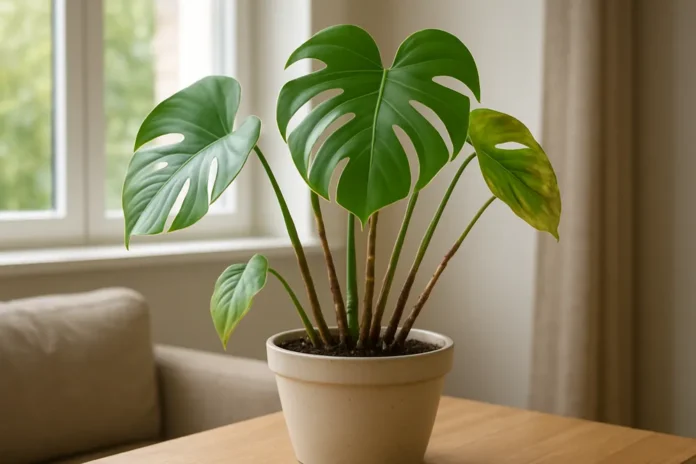
Monstera stems turn brown most often from normal aging, watering stress, rot, sun scorch, or physical damage. The cause usually depends on whether the brown area is dry, firm, soft, spreading, or limited to older growth.
Seeing monstera stems change color can be alarming, especially when the plant otherwise looks healthy. In some cases, stems that are turning tan or brown are part of the normal aging process. In others, brown stems can point to excess moisture, rot, too much direct sun, pest damage, or simple bruising.
The key is to look closely at the texture, location, and speed of the change. A dry, corky brown patch on an older stem means something very different from a soft, dark brown area near the soil line. Once you know what pattern you are seeing, it becomes much easier to decide whether your monstera needs treatment or just a little patience.
Below, you will learn the most common reasons monstera stems turn brown, how to tell harmless browning from serious problems, and what to do to help your plant recover.
When Brown Stems Are Normal
Not every brown stem is a sign of trouble. Monsteras naturally develop tougher, darker, more corky tissue as parts of the plant mature. Older stems can lose some of their green color and become tan, brown, or slightly woody over time. This is especially common on established plants with thick growth.
Aerial roots can also brown as they age, dry out, or harden. These are often mistaken for unhealthy stems, but they are normal structures that help the plant climb and absorb moisture from the air.
- The brown area is dry and firm, not soft or mushy
- The color change is on older growth rather than tender new stems
- There is no foul smell and no collapsing tissue
- Leaves still look healthy overall, with no rapid yellowing or wilting
- The browned area is stable and not spreading quickly
If that describes your plant, you may not need to do anything at all. Mature monsteras often show a mix of green and brownish stem tissue as they age.
Overwatering and Stem Rot
The most serious cause of brown monstera stems is usually too much moisture around the roots. When potting mix stays wet too long, oxygen levels drop and fungi or bacteria can begin to break down root and stem tissue. This often starts below the soil and moves upward.
How Overwatering Browning Looks
- Brown or blackish areas near the base of the stem
- Soft, wet, or mushy tissue
- A stem that feels weak, hollow, or collapses when touched
- Yellowing leaves, especially lower leaves
- Potting mix that stays soggy for many days
- A sour or rotten smell from the soil
This kind of browning is different from normal aging because the tissue loses structure. Instead of becoming dry and corky, it becomes waterlogged and unstable. If left alone, the brown area can spread and eventually kill that vine or the whole plant.
Why It Happens
Overwatering is not just about how often you pour water into the pot. It can also be caused by a container without drainage, dense soil that stays compacted, a pot that is too large for the root system, or a plant sitting in low light where it uses moisture slowly.
What To Do
- Remove the plant from the pot and inspect the roots if the base is soft or smelly.
- Trim away black, mushy roots and any clearly rotten stem tissue with clean scissors.
- Repot into a chunky, fast-draining indoor mix with materials like bark, perlite, and coco coir or peat.
- Use a pot with drainage holes.
- Wait to water again until the top few inches of the mix have dried appropriately.
Underwatering and Dry Stress
While overwatering gets more attention, underwatering can also cause stems to look brown or shriveled. When a monstera goes too dry for too long, tissues lose moisture and can harden, wrinkle, or dry out at the edges.
This is more likely to affect thinner stems, petioles, and aerial roots than thick main stems. You may also notice crispy leaf edges, drooping, slow growth, and a potting mix that pulls away from the sides of the container.
- Browning looks dry, papery, or shriveled
- The plant feels limp between waterings
- The soil becomes bone dry and hard to rewet
- Leaf edges may turn brown at the same time
- Aerial roots may become brittle
A plant that repeatedly swings between severe dryness and heavy soaking can also develop stem stress. Monsteras do best with a more even rhythm, where the mix dries partly but not to the point of chronic dehydration.
Sunburn and Heat Damage
Monsteras like bright light, but strong direct afternoon sun can scorch stems as well as leaves. If your plant was moved from a dim corner to a hot window, or placed outdoors without gradual adjustment, exposed tissue may bleach, tan, or turn brown.
Sun-related browning is usually found on the side facing the light source. It often appears dry and flat rather than mushy. Leaves may show pale patches, crisp scorch marks, or faded areas at the same time.
- Browning is concentrated on the sun-facing side
- The patch feels dry, not soft
- Leaf burn appears at the same time
- The change happened after moving the plant to brighter conditions
- The room or window area gets very hot during the day
In this case, the damaged tissue will not turn green again, but you can prevent more browning by moving the plant to bright, indirect light or filtering harsh sun with a sheer curtain.
Low Humidity and Environmental Stress
Monsteras tolerate average indoor humidity fairly well, but very dry air can contribute to browning, especially on new growth, aerial roots, and thinner stem sections. Dry winter air, heating vents, and air conditioning can all increase stress.
Humidity stress by itself does not usually cause deep stem rot, but it can make the plant more prone to crispy edges, stalled growth, and minor browning on exposed tissue. It often shows up alongside inconsistent watering.
Signs Dry Air May Be Involved
- Browning is mostly on aerial roots or outer stem surfaces
- Leaf tips or edges are also browning
- New leaves get stuck while unfurling
- The plant sits near a heater, vent, or drafty window
- Indoor humidity is consistently very low
Raising humidity modestly, keeping the plant away from blasts of dry air, and watering more consistently can reduce this kind of browning.
Pests That Can Lead To Brown Stems
Certain pests can weaken monstera stems and leave brown scars, patches, or rough areas. Sap-sucking pests such as spider mites, scale, and thrips feed on plant tissue and can cause discoloration over time. Heavy infestations stress the whole plant and may make stems look dull, bronzed, or damaged.
What Pest Damage Often Looks Like
- Small brown scabs or rough spots on stems
- Sticky residue from scale or honeydew
- Fine webbing in severe spider mite cases
- Silvery or bronzed leaf damage along with stem discoloration
- Tiny insects clustered near nodes or undersides of leaves
Pest-related browning usually develops gradually rather than overnight. If the rest of your care seems sound but the plant continues to decline, inspect nodes, leaf undersides, and stem crevices closely.
Mild infestations can often be managed by wiping the plant down and using insecticidal soap or horticultural oil, but treatment must be repeated thoroughly to catch newly hatched pests.
Mechanical Damage, Bruising, and Support Issues
Monsteras have thick but still vulnerable stems and petioles. If a stem gets bent, rubbed against a wall, pinched by a stake, or snapped partially during repotting, the injured area may turn brown as it heals. This can look dramatic but is often localized.
Browning from injury tends to be limited to one area and does not keep spreading unless rot sets in afterward. The tissue may scar over, becoming dry and firm. A heavy plant without support is more likely to suffer this kind of damage, especially if long vines shift or lean suddenly.
- The brown mark appeared after moving, repotting, or pruning
- Only one section is affected
- The area is firm and scar-like
- Nearby tissue remains green and healthy
- The plant has long, unsupported growth that flops or twists
A moss pole, plank, or sturdy stake can reduce future stem stress and help the plant produce stronger, more natural upright growth.
Brown Stem Bases From Buried Nodes or Poor Airflow
Another overlooked cause is when nodes or stems sit too deep in wet soil. Monsteras can root from nodes, but if too much stem is buried in dense, constantly moist mix, those sections may start to decay instead. Poor airflow around crowded stems can make the problem worse.
This is common in decorative planters where water lingers, or when multiple cuttings are packed tightly together. The surface may look harmless at first, but the buried tissue can begin turning dark brown below the soil line.
If you suspect this issue, unpot the plant and check whether healthy roots are forming from the nodes or whether the stem itself is softening. Repotting a little higher and using a chunkier mix often helps.
How To Tell Which Type Of Browning You Have
The appearance and feel of the stem are your best clues. Before making big changes, compare what you see with the patterns below.
- Dry, corky, and stable: usually aging, scarring, or normal hardening
- Soft, dark, and spreading: likely overwatering, rot, or decay
- Dry on the bright side of the plant: often sunburn or heat exposure
- Wrinkled, brittle, and paired with very dry soil: likely underwatering
- Scabby with visible insects or sticky residue: likely pest damage
- Localized after handling or bending: likely mechanical injury
Also pay attention to what the leaves are doing. Browning stems with healthy leaves can suggest aging or minor injury. Browning stems with yellowing, drooping, and foul-smelling soil point more strongly to root trouble.
What To Do Next Based On The Cause
If The Browning Is Normal Aging
Leave it alone. Mature stem tissue does not need treatment, and cutting it away only stresses the plant unnecessarily.
If The Stem Is Soft Or Rotting
Act quickly. Remove rotten tissue, inspect roots, repot if needed, and adjust your watering routine. If rot has spread far, take healthy cuttings above the damaged area to save the plant.
If The Plant Is Too Dry
Rehydrate thoroughly, then shift to a steadier schedule. Water until excess drains out, and do not let the mix remain bone dry for long stretches.
If Sun Or Heat Is The Problem
Move the plant to bright, indirect light. Damaged tissue will stay brown, but healthy new growth should improve.
If Pests Are Present
Isolate the plant, clean the stems and leaves, and use a suitable indoor plant treatment consistently until the infestation is gone.
If Injury Caused The Browning
Support the plant and monitor the scarred area. As long as the tissue stays dry and firm, it is usually just cosmetic.
How To Prevent Brown Monstera Stems In The Future
Most stem problems come down to moisture management, light, and general plant stability. A few care adjustments can prevent a repeat issue.
- Use a pot with drainage holes and a chunky, airy indoor aroid mix
- Water only when the potting mix has dried enough for your home conditions
- Keep the plant in bright, indirect light rather than intense direct afternoon sun
- Avoid placing the plant near heating vents, cold drafts, or harsh AC airflow
- Inspect regularly for pests, especially around nodes and leaf undersides
- Add a moss pole or other support so heavy stems do not bend and bruise
- Repot only when needed, and avoid burying too much stem below the soil line
- Empty decorative cachepots or saucers so roots are not left sitting in water
If you are unsure whether your monstera is too wet or too dry, err on the side of observation instead of constant intervention. Frequent small adjustments often create more stress than a consistent care routine.
FAQ
Should I Cut Off Brown Monstera Stems?
Only if the tissue is clearly dead, mushy, or rotting. If the brown area is dry, firm, and part of normal aging or scarring, it does not need to be removed.
Can a Brown Monstera Stem Turn Green Again?
Usually no. Once stem tissue has turned brown from aging, scarring, sun damage, or rot, that section typically stays brown even if the plant recovers.
Are Brown Aerial Roots on a Monstera Normal?
Yes, often they are. Aerial roots commonly darken, dry slightly, or become woody with age, especially in drier indoor air.
How Do I Know if My Monstera Stem Is Rotting?
Rotting stems usually feel soft, wet, or mushy and may smell bad. The browning often starts near the soil line and can spread quickly along the stem.
Can Low Humidity Alone Make Monstera Stems Brown?
Low humidity can contribute to minor browning, especially on aerial roots and tender growth, but it is less likely to cause deep stem damage by itself. Severe stem browning usually involves watering issues, rot, injury, or sun stress.
Why Is Only One Monstera Stem Turning Brown?
A single brown stem often points to localized damage, such as bruising, rot on one vine, or a stem that is older than the rest. Compare the texture and location to see whether it is dry and scarred or soft and spreading.
Is Cinnamon Useful on a Brown Monstera Stem?
Cinnamon is sometimes used by plant owners on small cuts, but it is not a reliable fix for stem rot. If rot is present, removing damaged tissue and correcting the moisture problem matters far more.
Need help fixing a struggling houseplant fast? Read our guide to the best monstera soil mixes, watering tools, and indoor plant treatments so you can stop stem damage before it spreads.
