

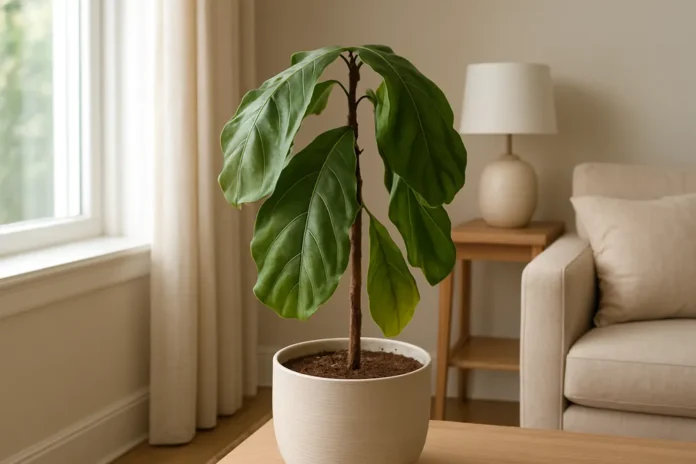
A Fiddle Leaf Fig usually starts wilting because its roots are stressed by too much water, too little water, poor drainage, or sudden environmental changes. Low light, temperature swings, and root damage can also make the leaves droop.
fiddle leaf fig wilting is usually a sign that the plant is struggling to move water properly from the roots to the leaves. Even though drooping foliage can look dramatic, the cause is often something fixable, especially if you catch it early.
In most homes, wilting happens because of watering mistakes, compacted or soggy soil, root problems, or stress from low light and sudden temperature changes. The challenge is that underwatering and overwatering can both make a fiddle leaf fig look limp, so you need to look at the soil, the pot, and the overall growing conditions together.
The good news is that once you match the symptom pattern to the real cause, this plant often rebounds well. A few leaves may not fully recover, but healthy new growth is a strong sign that your care routine is back on track.
What Wilting Means In A Fiddle Leaf Fig
Wilting means the leaves and sometimes the stems have lost their normal firmness. Instead of holding themselves upright, the foliage may hang down, curl slightly, feel limp, or look tired even when the color still seems fairly normal.
This happens when the plant cannot maintain enough internal water pressure, called turgor pressure, inside its cells. In simple terms, the plant is not taking up water fast enough, is losing it too quickly, or has roots that are too damaged to keep the leaves supported.
- A thirsty plant often has dry soil, drooping leaves, and edges that may start to crisp.
- An overwatered plant may also droop, but the soil tends to stay wet and leaves may turn yellow or develop brown patches.
- A rootbound or root-damaged plant can wilt even when watering seems normal.
- Cold drafts, heat, and sudden moves can cause temporary loss of firmness.
Because several problems create the same general symptom, wilting is best treated as a warning sign rather than a diagnosis by itself.
The Most Common Causes Of Wilting
Underwatering
If the soil has become very dry, the roots cannot supply enough moisture to the leaves. Fiddle leaf figs often respond by drooping quickly, especially in bright rooms, warm weather, or when they are actively growing. The pot may feel unusually light, and the soil may pull away from the sides of the container.
Overwatering
Too much water is one of the most common reasons for a wilting fiddle leaf fig. When soil stays wet for too long, air spaces disappear and roots begin to suffocate. Those stressed roots cannot absorb water efficiently, so the plant wilts even though the pot is moist.
Poor Drainage
A pot without drainage holes, a heavy soil mix, or a saucer that keeps refilling the root zone with water can create chronic moisture problems. In that situation, the plant behaves as if it is thirsty because its roots are unhealthy, not because it lacks water.
Low Light
Fiddle leaf figs need strong, indirect light to use water well and maintain sturdy growth. In dim corners, the soil dries slowly and the roots stay wetter longer. That often leads to a cycle of overwatering, weak growth, and drooping leaves.
Temperature Stress
Sudden cold drafts from doors, winter windows, or air conditioning vents can shock the plant. Excess heat near radiators or hot glass can also increase water loss faster than the roots can keep up. Either extreme may show up as wilting.
Rootbound Growth
When roots fill the pot tightly, water may rush through too fast or become difficult for the root mass to absorb evenly. The plant may droop soon after watering or need water much more often than it used to.
How To Tell If It Is Too Little Water Or Too Much
The fastest way to narrow the problem is to compare leaf symptoms with soil moisture. Many gardeners assume drooping always means the plant is thirsty, but with fiddle leaf figs, soggy roots are just as likely.
- Signs of underwatering: dry soil several inches down, a light pot, leaves that feel limp and may develop crispy edges, faster recovery after a thorough watering.
- Signs of overwatering: wet or cool soil that stays damp for days, yellowing lower leaves, soft brown spots, musty smell, slow decline instead of sudden collapse.
- Signs of root rot: persistent wilting despite moist soil, black or mushy roots, sour-smelling mix, leaf drop alongside drooping.
- Signs of rootbound stress: roots circling the inside of the pot, water running straight through, rapid drying, wilting returning quickly.
If the top inch is dry but the lower half of the pot is still saturated, your plant may be in a misleading in-between stage. That often happens in dense potting mix where the surface dries first but the root zone remains too wet.
What To Check Right Away
Before you change anything, inspect the plant methodically. A quick check of the root environment and the room can prevent the wrong fix.
- Feel the soil 2 to 3 inches deep, not just the surface.
- Lift the pot to judge whether it feels unusually light or heavy.
- Confirm the container has open drainage holes.
- Empty any standing water from the saucer or cachepot.
- Look for yellowing, black spots, crisp margins, or leaf drop in addition to wilting.
- Check whether the plant sits near a drafty door, HVAC vent, radiator, or very cold window.
- Think back to any recent move, repotting, or major change in light.
This quick review usually reveals whether the issue is mainly moisture stress, environmental shock, or developing root damage.
How To Fix A Wilting Fiddle Leaf Fig
If The Plant Is Too Dry
Water thoroughly until excess drains out of the bottom. If the potting mix has become so dry that water runs around the root ball instead of soaking in, water slowly in stages or bottom-water briefly so the mix can rehydrate evenly. After that, wait until the top couple of inches dry again before watering.
If The Plant Is Too Wet
Stop watering until the upper root zone has dried appropriately. Make sure the plant is in bright, indirect light and never left sitting in drained water. If the mix is dense and soggy for a week or more, you may need to repot into a chunkier, faster-draining blend.
If Root Rot Is Suspected
Slide the plant out of its pot and inspect the roots. Healthy roots are usually firm and light colored. Rotten roots are dark, mushy, or stringy and may smell bad. Trim off damaged roots with clean pruners, then repot in fresh potting mix with excellent drainage. Keep the plant evenly moist, not soaked, while it recovers.
If The Plant Is Rootbound
Move it up only one pot size, usually 1 to 2 inches wider. Loosen any tightly circling roots so they can grow outward into the new mix. Oversized pots can create fresh overwatering problems, so bigger is not always better.
If Light Is Too Low
Relocate the plant to a spot with bright, indirect light near a large window. A little gentle morning sun is often fine indoors, but harsh afternoon sun can scorch stressed leaves. Better light helps the plant regulate moisture and grow stronger roots.
If Temperature Or Drafts Are The Issue
Keep the plant away from heating vents, AC blasts, frequently opened exterior doors, and cold glass in winter. Fiddle leaf figs prefer stable indoor temperatures, generally around 60 to 85 degrees Fahrenheit, with as few sudden swings as possible.
When Wilting Comes With Other Symptoms
Extra symptoms often point you much closer to the cause. The combination matters more than any single sign.
Wilting And Yellow Leaves
This commonly suggests overwatering, poor drainage, or low light. When roots stay wet, older leaves often yellow before they fall.
Wilting And Brown Crispy Edges
Dry soil, low humidity, strong sun, or hot air can all contribute. If the leaves feel papery rather than soft, dehydration is more likely than root rot.
Wilting And Soft Brown Spots
Soft or water-soaked spots often line up with excess moisture and root trouble. If those spots spread while the soil stays wet, act quickly to prevent further root loss.
Wilting After Repotting
A brief droop after repotting is common because the roots were disturbed. The plant should start stabilizing within a week or two if the new mix drains well and watering is careful. Extended wilting suggests transplant stress, overpotting, or damaged roots.
Wilting After Moving The Plant
Fiddle leaf figs dislike sudden changes. A move to a darker room, a colder hallway, or a sunnier window can trigger drooping and even leaf drop while the plant adjusts.
Should You Remove Wilting Leaves?
Usually, no. Leaves that are still mostly green can continue helping the plant photosynthesize while it recovers. Remove leaves only if they are badly damaged, mostly brown, diseased, or clearly dead.
Pruning too aggressively during stress can slow recovery because the plant loses useful leaf area. Focus first on correcting the root and environmental issue.
How Long Recovery Usually Takes
Recovery time depends on the cause. Mild underwatering may improve within a day after a full watering. Stress from overwatering or minor root damage can take several weeks to show steady improvement. Root rot recovery often takes longer, especially if the plant lost a large portion of its root system.
Do not expect every wilted leaf to spring back perfectly. Watch for these better indicators instead:
- Leaves stop drooping further
- No new yellowing or soft spotting appears
- Soil begins drying at a normal pace between waterings
- New growth emerges firm and upright
How To Prevent Future Wilting
The best prevention is consistency. Fiddle leaf figs are much easier to keep healthy when their light, watering, and temperature remain steady.
- Water when the top 2 inches of soil are dry rather than on a rigid calendar.
- Use a pot with drainage holes every time.
- Choose a loose indoor potting mix that does not stay soggy.
- Give the plant bright, indirect light for most of the day.
- Rotate it occasionally for even growth, but avoid frequent relocation.
- Keep it away from heating vents, AC vents, and cold drafts.
- Repot when roots are crowded, but only one size up.
- Reduce watering in winter when growth naturally slows.
If you tend to overwater, a moisture meter can help, but your finger and the pot's weight are still useful basic tools. The goal is not perfectly dry soil or constantly moist soil. It is a balanced wet-dry cycle with enough air around the roots.
When Wilting Means The Plant May Not Recover Fully
A severely wilted fiddle leaf fig can still recover, but some signs suggest the damage is advanced. Extensive root rot, stem softening, widespread leaf drop, and a trunk that feels mushy near the base are all serious problems.
If the roots are mostly gone, recovery becomes much less likely. Even then, it may be worth saving any healthy portion of the plant if the upper stem remains firm. In some cases, growers take a cutting from healthy top growth and restart the plant rather than trying to save a badly rotted root system.
FAQ
Can a Fiddle Leaf Fig Recover From Wilting?
Yes, if the cause is corrected before major root damage sets in. Plants stressed by mild underwatering or temporary environmental shock often recover well, while severe root rot takes much longer and may not fully reverse.
Should I Water My Fiddle Leaf Fig as Soon as I See Drooping Leaves?
Not automatically. Drooping can come from both dry and waterlogged soil, so watering first without checking moisture may make the problem worse.
How Often Should I Water a Fiddle Leaf Fig Indoors?
There is no perfect schedule for every home. Most indoor plants do best when watered after the top 2 inches of soil dry out, which may be every 1 to 2 weeks depending on light, temperature, pot size, and season.
Why Is My Fiddle Leaf Fig Wilting After Repotting?
Repotting disturbs the roots, and fiddle leaf figs often react by drooping for a short time. If the new pot drains well and you did not overwater, the plant should gradually settle in over the next week or two.
Can Low Light Make a Fiddle Leaf Fig Wilt?
Yes. Low light weakens growth and slows water use, which often leads to wet soil and stressed roots that cause drooping leaves.
What Does Root Rot Look Like in a Fiddle Leaf Fig?
Root rot usually shows up as persistent wilting, wet soil that does not dry normally, yellowing or brown spotting on leaves, and roots that are dark, mushy, or foul-smelling instead of firm and pale.
Is Misting Helpful for a Wilting Fiddle Leaf Fig?
Usually not much. Wilting is most often tied to root and watering issues, not a lack of moisture on the leaf surface, so misting rarely solves the main problem.
Still troubleshooting a droopy houseplant? Read our fiddle leaf fig care guide and top-rated indoor potting mix roundup to choose the right fix faster and avoid repeat stress.
