

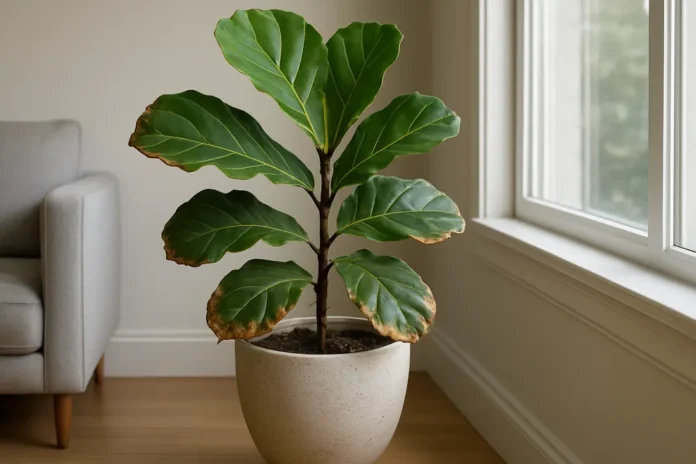
Brown edges on fiddle leaf fig leaves are most often caused by inconsistent watering, low humidity, or salt buildup in the soil. They can also appear when roots are stressed by poor drainage, compacted soil, or environmental shock.
Brown, crispy margins on a fiddle leaf fig usually mean the plant is losing moisture faster than it can replace it, or the roots are struggling to move water well. When leaves develop brown edges, the problem often starts below the soil line or in the plant's indoor environment rather than on the leaf surface itself.
This symptom is common in homes because fiddle leaf figs are sensitive to swings in watering, humidity, light, and temperature. The good news is that brown edges are often easier to correct than widespread yellowing or stem rot, especially if you catch the issue before large sections of the leaf dry out.
The exact pattern matters. Crisp tan edges usually suggest dryness or salt stress, while dark brown edges with soft patches can point to overwatering and root damage. Once you match the symptom to the cause, you can adjust care and help new growth come in healthy.
What Brown Edges Usually Mean
Leaf edges are often the first part of a fiddle leaf fig to show stress because they are farthest from the plant's water supply. When moisture movement becomes uneven, the margins dry out before the rest of the leaf. That is why edge browning is commonly linked to watering problems, dry air, root stress, or fertilizer salts.
Brown edges do not always mean the same thing. A crispy, papery edge usually signals dehydration, low humidity, or salt buildup. A darker edge with softness, yellowing, or spotting near the base of the leaf often suggests roots have been sitting too wet. If only one or two older leaves are affected while the rest of the plant looks strong, the issue may be mild or temporary.
- Crispy light brown edges: underwatering, dry air, or salt accumulation
- Dark brown or blackish edges with softness: overwatering or root decline
- Edges on the sunniest side only: leaf scorch from harsh direct light
- New leaf damage after a move: environmental shock from drafts, heat, or changing conditions
Inconsistent Watering Is the Most Common Cause
Underwatering and Drought Stress
If the soil gets too dry between waterings, the plant cannot keep enough moisture moving to the leaf margins. The edges then turn tan or medium brown and feel crisp. This is especially common when a fiddle leaf fig is watered lightly, watered on an irregular schedule, or planted in a very fast-draining mix that dries out before the root ball is fully rehydrated.
Sometimes the plant is technically watered often enough, but the water is not soaking the root zone. Water may run down the sides of a dry root ball and out the drainage holes while the center stays dry. In that case, the plant acts thirsty even though you watered it recently.
Overwatering Can Cause Brown Edges Too
Too much water can lead to the same visible symptom for a different reason. Roots need oxygen as well as moisture. When soil stays wet too long, roots weaken and stop absorbing water efficiently. The leaves then show stress along the edges because the plant cannot supply moisture properly, even though the pot is wet.
- Underwatered plants often have dry soil, drooping leaves, and crisp edges.
- Overwatered plants often have heavy, damp soil, yellowing, softer brown areas, and sometimes a musty smell.
- Both problems disrupt water flow, so checking soil condition matters more than guessing from the leaf alone.
Low Humidity and Dry Indoor Air
Fiddle leaf figs tolerate average indoor humidity better than some tropical plants, but very dry air can still damage leaf margins. This is most common during winter when heating systems lower indoor humidity and warm air pulls moisture from the leaves. Brown edges from dry air are usually crisp and gradual rather than spotty and wet-looking.
Dry air becomes more damaging when it combines with other stressors like underwatering, strong afternoon sun, or a plant placed near a heating vent. In other words, humidity alone may not be the whole problem, but it can push a mildly stressed plant over the edge.
- Plants near radiators, forced-air vents, fireplaces, or drafty windows are more likely to brown at the edges.
- Large leaves lose moisture faster in bright rooms with moving air.
- A humidity level around 40 to 60 percent is usually comfortable for fiddle leaf figs indoors.
Salt Buildup and Fertilizer Burn
Brown edges can also come from excess salts in the soil. These salts build up from fertilizer, softened water, or tap water with a high mineral load. As salts accumulate around the roots, they interfere with water uptake and can literally pull moisture away from root tissues. The result is leaf tip and edge burn that looks dry and crisp.
This cause is especially likely if you fertilize often, use a strong concentration, or rarely flush the pot thoroughly with water. White crust on the soil surface or around the pot rim is another clue that mineral residue is building up.
- Too much fertilizer can burn roots and cause tan or brown margins.
- Water that is high in salts can gradually create the same effect.
- Sensitive plants may react after repeated small doses, not just after one heavy feeding.
Root Problems and Poor Drainage
Compacted Soil and Root Stress
If the potting mix has broken down into a dense, compact mass, roots may struggle to get both air and water. Compacted soil can stay soggy in some areas and bone dry in others, creating uneven stress that shows up as edge browning. Older houseplants that have been in the same pot for a long time often develop this problem.
Root Rot
When roots remain wet for too long, fungal and bacterial rot can set in. At that stage, brown edges are only one symptom. You may also see leaf drop, yellowing, dark patches, stunted growth, or a sour smell from the soil. Root rot is more serious because the plant cannot recover until damaged roots are removed and growing conditions improve.
Rootbound Plants
A severely rootbound fiddle leaf fig may also develop brown edges because the dense root mass dries out quickly and sheds water unevenly. Water can rush through the pot while the roots still stay thirsty. If the plant needs water much more often than before and roots circle the bottom of the pot, crowding may be part of the issue.
Light, Heat, and Environmental Stress
Fiddle leaf figs like bright light, but sudden exposure to harsh direct sun can scorch the leaves. Scorched edges often appear on the side facing the window and may look bleached before turning brown. This is more likely after moving the plant outdoors, placing it in a west-facing window, or shifting it from a dim area into intense sun too quickly.
Heat stress and drafts can create a similar pattern. Hot air from vents, cold blasts from doors, and sudden temperature swings all increase moisture loss and disturb normal leaf function. A plant that was healthy in one spot may start browning soon after being moved if the new location has stronger sun or more temperature fluctuation.
- Bright indirect light is usually safest indoors.
- A few hours of gentle morning sun are often fine.
- Harsh afternoon sun through glass can scorch leaf edges.
- Keep the plant away from direct blasts of hot or cold air.
Less Common Causes
Not every case of brown edges comes from watering or humidity. Pests, mechanical injury, and natural aging can also play a role. Spider mites, for example, can cause fine stippling and dry-looking damage, especially in dry rooms. Leaves that rub against walls, get bent during cleaning, or are bruised during transport may also dry out at the margins afterward.
Older lower leaves sometimes decline as the plant adjusts to indoor conditions or puts energy into new growth. If only one old leaf has a narrow brown edge and the rest of the plant looks vigorous, the issue may not require major intervention.
- Spider mites can worsen edge browning in dry environments.
- Physical damage often turns brown after the tissue dries.
- Aging leaves may decline naturally, especially lower leaves.
How to Tell Which Cause You Are Dealing With
The best way to diagnose brown edges is to compare the leaf pattern with the condition of the soil and the plant's recent environment. A quick look at the potting mix, pot drainage, room conditions, and watering habits usually tells you more than the leaf color alone.
- If the soil is very dry several inches down and the edges are crisp, underwatering or low humidity is likely.
- If the soil stays wet for many days and leaves also yellow or soften, overwatering or root damage is more likely.
- If brown edges appear soon after feeding, fertilizer burn or salt buildup may be the issue.
- If damage is strongest on the window side, sun scorch or heat stress may be involved.
- If the plant sits near a vent or draft, environmental dryness may be contributing.
It is common for more than one factor to be involved. For example, a rootbound plant in dry winter air may develop brown edges faster even if your watering is only slightly inconsistent. Aim to identify the main stressor first, then correct any secondary issues that keep the plant from recovering.
How to Fix Brown Edges on a Fiddle Leaf Fig
Improve Watering Technique
Water thoroughly until excess drains from the bottom, then let the top inch or two of soil dry before watering again. Avoid tiny sips of water that only moisten the surface. If the root ball has become very dry and water runs off the sides, soak the soil slowly so it can absorb evenly.
Check Drainage and the Potting Mix
Make sure the pot has drainage holes and the plant is not sitting in collected water. If the mix stays wet for too long or feels dense and muddy, repot into a chunky indoor plant mix with better aeration. If roots are black, mushy, or foul-smelling, trim damaged roots before repotting.
Reduce Dry Air Stress
Move the plant away from heating vents, fireplaces, and cold drafts. If your home is very dry, a humidifier can help more than occasional misting. Grouping plants together may also slightly improve the local humidity around the leaves.
Flush Excess Salts
If fertilizer buildup is likely, run room-temperature water through the pot several times to wash out accumulated salts, then pause feeding for a few weeks. Resume fertilizer only during active growth and use a diluted houseplant formula rather than full-strength feedings every time.
Adjust Light Gradually
Give your fiddle leaf fig bright, indirect light and introduce stronger sun slowly. If it is getting scorched in a hot window, pull it back a bit or soften the light with a sheer curtain. Sudden big changes are harder on the plant than a slow transition.
- Match watering to actual soil dryness, not just the calendar.
- Improve drainage if the pot stays wet too long.
- Raise humidity or reduce exposure to hot, dry air.
- Flush the soil if salts or fertilizer are building up.
- Protect the plant from harsh direct sun and sudden temperature swings.
Will the Brown Edges Turn Green Again?
No. Brown leaf tissue is dead and will not turn green again. Once the cause is corrected, the goal is to stop the damage from spreading and help future leaves emerge healthy.
If the rest of the leaf is still attractive, you can leave it in place because it still photosynthesizes. If the brown margin bothers you visually, you can trim off the dead tissue with clean scissors, following the leaf's natural shape and leaving a very thin brown line so you do not cut into healthy green tissue.
How to Prevent Brown Edges in the Future
Prevention comes down to consistency. Fiddle leaf figs do best when their soil moisture, light, and room conditions stay fairly stable. They dislike abrupt swings more than minor imperfections.
- Use a pot with drainage holes and a well-aerated indoor potting mix.
- Water deeply, then wait until the top layer dries before watering again.
- Keep the plant in bright light without exposing it to sudden harsh sun.
- Avoid placing it beside vents, exterior doors, or drafty windows.
- Feed lightly during spring and summer, not heavily year-round.
- Flush the soil occasionally if you fertilize regularly or have hard water.
- Inspect leaves now and then for spider mites and other pests.
A steady routine does more for this plant than frequent tinkering. Once you find the right balance, your fiddle leaf fig usually responds with cleaner leaf margins and stronger new growth.
FAQ
Should I Cut Off Leaves with Brown Edges on My Fiddle Leaf Fig?
Only if the leaf is badly damaged or you dislike the appearance. Slightly browned leaves can still help the plant by photosynthesizing, but you can trim dead edges neatly with clean scissors.
Can Low Humidity Alone Cause Brown Edges?
Yes, especially in winter or in rooms with forced-air heat. Low humidity is even more likely to cause damage when paired with underwatering, strong light, or drafts.
How Often Should I Water a Fiddle Leaf Fig with Brown Edges?
There is no fixed schedule that works in every home. Water when the top inch or two of soil has dried, then water thoroughly so the root ball is evenly moistened.
Do Brown Edges Mean My Fiddle Leaf Fig Has Root Rot?
Not always. Brown edges are more often tied to inconsistent watering or dry air, but if the soil stays wet and leaves also yellow or soften, root rot becomes more likely.
Can Tap Water Cause Brown Leaf Edges?
Yes. In some homes, minerals and salts in tap water can build up in the soil over time and contribute to edge burn, especially if the plant is fertilized often.
Will New Leaves Be Healthy After I Fix the Problem?
Usually, yes. If you correct the main stressor and the roots are still in decent shape, new growth should come in with normal green margins.
Is Misting Enough to Stop Brown Edges?
Usually not. Misting gives only brief humidity relief, while better watering habits, steadier room conditions, and a humidifier are more effective long-term fixes.
Want to stop fiddle leaf fig problems before they spread? Read our care guide and top-rated soil, fertilizer, and humidifier picks to keep new leaves lush and green.
