

Note: This article contains affiliate links. If you click on these links and make a purchase, I may earn a small commission at no extra cost to you. This helps support my research and content. Read my full affiliate disclosure here.
If you grow Asiatic lilies you already know they respond fast to the right feeding. Picking the correct fertilizer affects bulb health, stem strength, and how many and how long the flowers last. This guide covers six top fertilizer options suited for Asiatic lilies, shortlisted for real garden performance rather than marketing claims. We evaluate each choice for nutrient balance, bloom promotion, ease of use, and how it performs in typical garden soils and containers. Read on to understand which feeding approach fits your planting style and seasonal routine.
Top Picks at a Glance
| Best Overall The best all-around choice for most situations | Lilly Miller Bulb & Bloom Food 4-10-10 (4 lb) |  |
| Best Quality Built to a higher standard if you want something more solid | Espoma Bulb-Tone Organic Fertilizer 3-5-3, 4 lb |  |
| Best Value The sweet spot between price and what you get | Jack's Classic Blossom Booster 10-30-20 Water-Soluble Fertilizer, 8 oz |  |
| Best Budget The cheapest option that still gets the job done reliably | Miracle-Gro Pour & Feed Singles Ready-to-Use Plant Food |  |
| Highest Rated A top-rated pick with lots of positive feedback | Espoma Bulb-Tone Organic Fertilizer (3-5-3), 4 lb. bag (Pack of 2) |  |
| Best Seller A high-volume bestseller chosen again and again | Espoma Bulb-Tone Organic Fertilizer (3-5-3), 4 lb | |
Lilly Miller Bulb & Bloom Food 4-10-10 (4 lb)

| Item Form | Powder |
|---|---|
| Specific Uses For Product | plant care |
| Coverage | Medium |
| Target Species | bulbs |
| Mixing Ratio | 4:10:10 |
Lilly Miller Bulb & Bloom Food is a slow-release powder fertilizer formulated as a 4-10-10 blend aimed at boosting bloom strength and vigor in bulbous plants. It is typically worked into the soil around the base of bulbs at the start of the growing season or mixed according to the manufacturer mixing ratio for ongoing feeding. Notable features include its higher middle number phosphorus content to support flower development and potassium for overall plant health, and a powder form that mixes readily with soil and potting mixes. Practical benefits for Asiatic lilies include clearer flower set and sustained bloom energy over the season without needing weekly feedings. Important limitations are that it contains phosphorus so local regulations may restrict its use on turf or near waterways, and users should follow safety directions to avoid inhalation and wear gloves during application. This product is best used as a targeted seasonal feed rather than a continuous high-nitrogen growth fertilizer.
Best for: Gardeners who want a no-fuss seasonal bloom booster for Asiatic lilies and other flowering bulbs and prefer a slow-release feed to reduce application frequency.
Less Ideal for: People seeking a high-nitrogen fertilizer for leafy growth or those who must avoid phosphorus inputs due to local restrictions or proximity to sensitive waterways.
- Formulated with higher phosphorus and potassium to support stronger, longer-lasting blooms
- Slow-release powder reduces the need for frequent applications
- Easy to incorporate into soil or potting mix using the provided mixing ratio
- Designed specifically for bulbs so it matches the nutrient needs of flowering bulbs
- Contains phosphorus which may be restricted in some areas and requires careful application to avoid runoff
- Powder form can be dusty and requires protective equipment to avoid inhalation
Verdict: A purpose-built slow-release bloom fertilizer that gives Asiatic lilies stronger flowers with less frequent feeding.
Espoma Bulb-Tone Organic Fertilizer 3-5-3, 4 lb

| Item Form | Granules |
|---|---|
| Specific Uses For Product | Gardening,Organic,Plant Food |
| Coverage | Medium |
| Target Species | bulbs |
| Mixing Ratio | 3:5:3 |
Espoma Bulb-Tone is an organic granular fertilizer designed primarily for planting and feeding spring and fall bulbs, but it can be applied to other allium crops like onions when a balanced, natural boost is desired. It is ready to use out of the bag and recommended for placing in the planting hole for new bulbs or sprinkling on the soil surface for established plants then watering in. Notable features include its 3-5-3 NPK ratio, inclusion of calcium, and Espoma's Bio-tone formula made from organic ingredients approved for organic gardening. In practice this product provides steady nutrient release and helps support root development and flowering; for onions that translates to healthier sets and improved bulb formation when applied at planting and during early growth. Limitations are that it is formulated for bulbs rather than specifically for vegetable onions, so growers seeking higher nitrogen for heavier foliage or a slow-release formulation tailored to vegetable production may want a fertilizer made for vegetables. For gardeners who prioritize natural inputs and predictable, gentle feeding, Bulb-Tone is a dependable choice.
Best for: Gardeners who prefer organic, reliable products and want a gentle, easy-to-apply fertilizer to support bulb and bulb-like crops during planting and early growth.
Less Ideal for: Growers who need a vegetable-specific fertilizer with higher nitrogen or a targeted slow-release program for commercial onion production.
- Organic formula approved for organic gardening
- Ready-to-use granular form that can be placed at planting or sprinkled on soil
- Balanced 3-5-3 NPK with added calcium to support root and bulb development
- Produces steady, gentle nutrient release suitable for sensitive bulb roots
- Formulated for ornamental bulbs rather than specifically for vegetable onions
- Not a high-nitrogen feed if you want vigorous foliage growth
Verdict: Choose Bulb-Tone when you want an organic, ready-to-use granular fertilizer that reliably supports bulb and bulb-like crops with balanced nutrients.
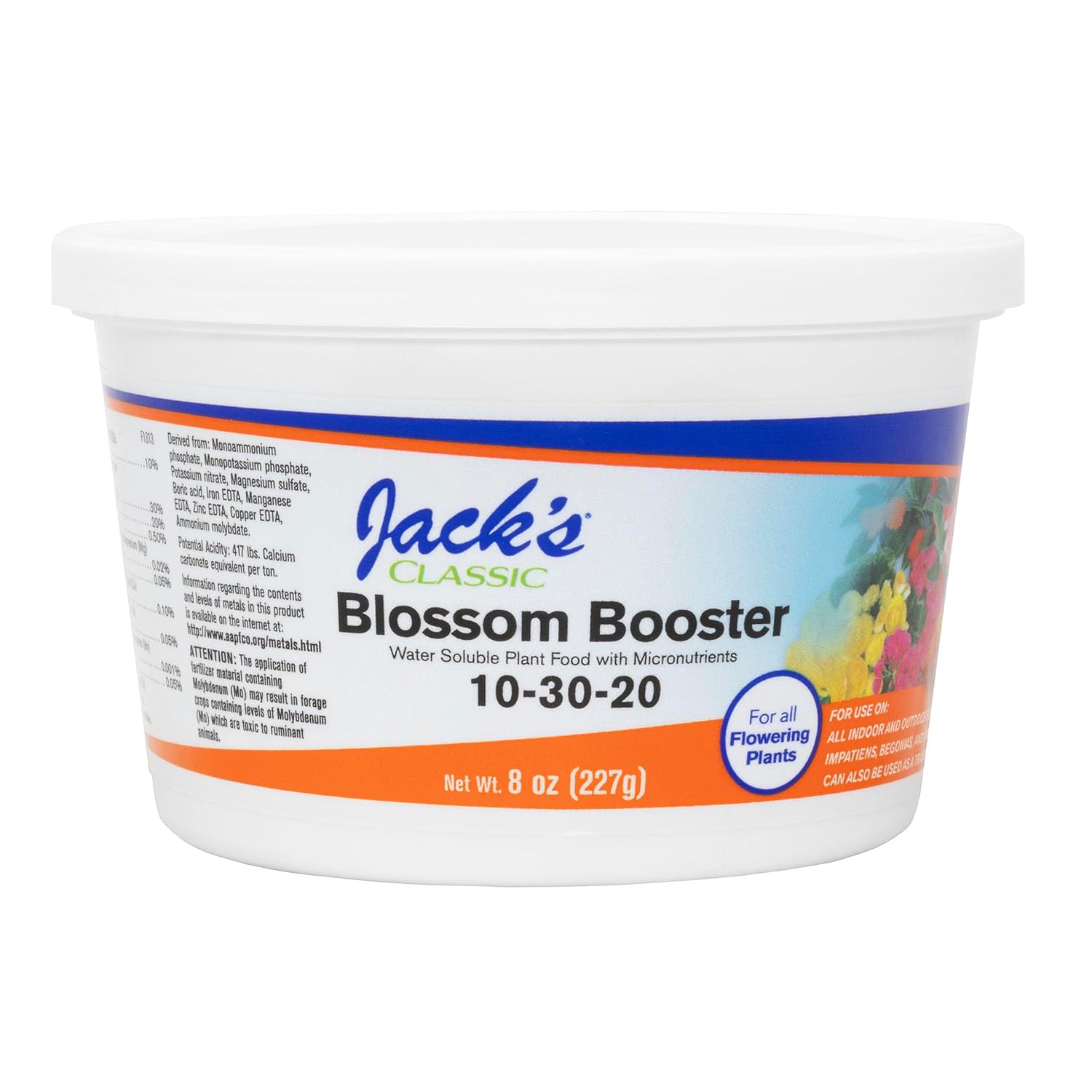
Jack's Classic Blossom Booster 10-30-20 Water-Soluble Fertilizer, 8 oz
| Item Form | Powder |
|---|---|
| Application Method | watering or spraying on leaves |
| Target Species | flowering plants |
| Mixing Ratio | 10-30-20 |
Jack's Classic Blossom Booster is a powdered, water-soluble fertilizer with a 10-30-20 N-P-K ratio designed to increase flowering and improve bloom color. You mix the powder with water using the included scoop and apply it as a root feed or foliar spray, which makes it flexible for container-grown or garden-planted Asiatic lilies. The high middle number (phosphorus) supports bud set and flower production while added micronutrients help overall plant health. Because it is a concentrated powder, a small tub makes multiple gallons of feed, which is economical for seasonal bloom feeding. Important limits to note are that it is a targeted bloom formula rather than an all-purpose grower, so use during vegetative growth should be balanced with a general-purpose fertilizer if strong foliage development is needed. Also follow mixing directions carefully since water-soluble concentrates require correct dilution to avoid leaf burn when used as a foliar spray.
Best for: Gardeners who want a practical, cost-effective bloom booster to increase flower quantity and color on Asiatic lilies and who will follow mixing instructions for seasonal feeding.
Less Ideal for: Growers who need a single all-purpose fertilizer for vigorous leaf and root development throughout the season should consider a balanced general-purpose formula instead.
- High phosphorus (10-30-20) encourages bud formation and fuller blooms
- Water-soluble powder stretches further than liquids so a small tub makes many gallons
- Can be applied as root feed or foliar spray for flexible use on lilies
- Includes a measuring scoop for consistent mixing and dosing
- Formulated specifically for flowering so it is not ideal as a stand-alone vegetative fertilizer
Verdict: Use this concentrated 10-30-20 water-soluble powder when you want a straightforward, economical bloom booster to produce bigger, brighter flower displays on Asiatic lilies.
Miracle-Gro Pour & Feed Singles Ready-to-Use Plant Food

| Item Form | Liquid |
|---|---|
| Application Method | Pour |
| Coverage | Medium |
| Unit Count | 2 Ounce |
| Specific Uses For Product | Plant Food |
Miracle-Gro Pour & Feed Singles are single-use, pre-measured liquid doses that you snap open and pour onto the soil of container plants, so there is no mixing, measuring, or long-term storage. Each 2-ounce single is formulated for potted plants and is intended to feed 12 to 18-inch containers every 10 to 14 days, making it convenient for quick top-ups on vegetables grown in pots. The cap-measure instructions and pour application simplify regular feeding, and the ready-to-use format reduces the chance of over- or under-dosing. Practically, these work well for growers who rotate several small vegetable containers or need an easy solution when juggling many plants. Limitations are that the singles are sized for medium pots only, so very small or very large containers may need adjusted amounts or additional applications, and the format creates more single-use packaging than bulk concentrates. For gardeners prioritizing simplicity and predictable dosing, the product streamlines weekly feeding for container vegetables, but those managing large numbers of pots may prefer a concentrated liquid or granular option for lower per-application cost and less waste.
Best for: Ideal for hobby gardeners growing a few container vegetables who want a no-fuss, predictable feeding routine and value convenience over lowest cost.
Less Ideal for: Not the best choice for producers managing many pots or those focused on minimizing packaging waste or per-application cost.
- Ready-to-use pre-measured singles eliminate mixing and measuring
- Simple pour application designed for container plants
- Labels recommend a clear 10 to 14 day feeding schedule for consistency
- Portable single doses are convenient for spot feeding or travel
- Singles are sized for 12–18 inch pots and may not match very small or very large containers
- Single-use packaging generates more waste than concentrated formulas
Verdict: An easy, no-mix feeding solution that makes consistent fertilizing of medium container vegetables fast and foolproof.
Espoma Bulb-Tone Organic Fertilizer (3-5-3), 4 lb. bag (Pack of 2)

| Item Form | Powder |
|---|---|
| Specific Uses For Product | Plant Food |
| Coverage | 60 Sq. Ft. |
| Target Species | Fall and spring flowering bulbs |
| Mixing Ratio | 3-5-3 |
Espoma Bulb-Tone is an organic bulb fertilizer designed to feed spring and fall bulbs and encourage strong blooms. It is applied at planting by placing granules in the planting hole for new bulbs or sprinkled on the soil surface and watered in for established bulbs. The 3-5-3 formula emphasizes phosphorus for bloom development while added calcium and Espoma’s Bio-tone support root establishment and soil biology. Because it is ready to use and approved for organic gardening, it is convenient for gardeners who prefer natural inputs and do not want to mix solutions. Coverage is listed at about 60 sq ft per 4 lb bag, so larger beds will require multiple bags. It is focused on bulb flowering rather than general-purpose feeding, so gardeners needing balanced, continuous feed for foliage or non-bulb ornamentals may need a supplemental product. Overall this is a straightforward, reliable option when you want an organic, bloom-focused fertilizer for bulbs like ranunculus, tulips and daffodils.
Best for: Gardeners who prioritize consistent, organic bloom feeding for bulbs and want a low-effort product they can rely on each planting season.
Less Ideal for: People seeking a general-purpose fertilizer for foliage-heavy or non-bulb plants should consider a different balanced or slow-release formula.
- Organic formula approved for organic gardening and safe for use in ornamental beds
- Ready-to-use granular form requires no mixing and is easy to apply at planting or post-bloom
- Higher phosphorus ratio (3-5-3) and added calcium support bloom development and root health
- Coverage per bag is modest so multiple bags are needed for large beds
Verdict: Choose this for an easy, certified-organic bloom booster that reliably supports bulbs like ranunculus at planting and post-bloom.
Espoma Bulb-Tone Organic Fertilizer (3-5-3), 4 lb
| Item Form | Granules |
|---|---|
| Specific Uses For Product | Gardening, Organic, Plant Food |
| Coverage | Medium |
| Target Species | Bulbs |
| Mixing Ratio | 3:5:3 |
Espoma Bulb-Tone is an easy-to-use granular organic fertilizer designed for planting and feeding bulb crops. You apply it directly in the planting hole for new bulbs or sprinkle on the soil surface for established plants and water it in. Its 3-5-3 analysis supplies a higher middle number that supports flowering and bulb development while added calcium and Espoma’s Bio-tone microbes help soil health. Because it comes in granules and is ready to use, it is convenient for small-scale vegetable beds of onions or garlic where you want a gentler, organic feed rather than a quick synthetic boost. The product is approved for organic gardening and contains no fillers. Limitations are that its NPK is formulated for flowering bulbs, not high-nitrogen leafy growth, so it will not drive rapid top growth the way a fertilizer higher in nitrogen would; also a 4 lb bag covers a moderate area so heavier feeders or larger beds may require additional product or repeat applications.
Best for: Buyers who want an organic, low-fuss fertilizer for small onion or garlic beds and prefer soil-friendly inputs over fast-acting synthetic feeds.
Less Ideal for: Growers who need rapid, high-nitrogen feeding for large-scale leafy production or who manage extensive beds where larger quantity or concentrated nitrogen is required.
- Organic formulation approved for organic gardening
- 3-5-3 formula that supports bulb development and flowering
- Ready-to-use granules that are easy to apply in planting holes or as a top dressing
- Contains calcium and beneficial microbes to improve soil health
- NPK balance favors flowering bulbs so it provides less quick nitrogen for fast leafy growth
- 4 lb bag provides medium coverage and may be small for larger vegetable beds
Verdict: A compact organic granular fertilizer that gives bulb crops like onions and garlic a soil-friendly feed to support bulb formation without synthetic inputs.
Choosing the Right Fertilizer for Asiatic Lilies: Key Factors to Consider
Nutrient Ratio and Timing
Asiatic lilies benefit from a balanced approach that changes over the season. Early spring feeding that favors nitrogen helps produce strong leaves and stems so plants can carry large flower heads. As buds form, a shift toward phosphorus and potassium supports flower development and stem strength.
Look for fertilizers that list N-P-K values and give guidance on seasonal application so you can adjust feedings rather than relying on a single, static formula. Timing matters nearly as much as ratio because overfeeding at the wrong stage can encourage foliage at the expense of blooms or increase disease susceptibility.
Release Type and Feeding Frequency
Granular slow-release fertilizers provide steady nutrition and reduce the chance of burn, which is helpful in mixed beds or when you will be away for a while. Water-soluble options give a faster, more noticeable bloom response but require more frequent applications and careful measuring.
Consider your gardening routine and whether you prefer steady maintenance or targeted bloom boosts. Slow-release is low-effort and forgiving; soluble feeds are best for gardeners who monitor plants and water regularly.
Salt Index and Soil Safety
Some concentrated fertilizers can raise soluble salts in the root zone and cause bulb or root damage, especially in light, well-drained soils or when irrigation is irregular. Bulbs are sensitive to salt stress; symptoms include scorched leaf tips and reduced flowering.
Choose formulas with lower salt index or follow dilution and application instructions strictly. If you garden in containers or heavy sand, flush soils occasionally and avoid back-to-back high-rate applications to protect bulbs.
Compatibility With Soil Amendments
Many gardeners add compost, bone meal, or other organic amendments when planting lilies. These materials change nutrient availability and pH, so your fertilizer choice should complement, not duplicate, what is already in the soil.
If you use an organic-rich planting mix, a milder synthetic or organic feed applied at bloom initiation may be all you need. In depleted soils, a more complete fertilizer or a planned program of base and bloom feeds will give better long-term results.
Application Method and Garden Logistics
How you apply fertilizer affects both results and convenience. Top-dressing granular products is straightforward in established beds. Liquid feeds are handy in containers and allow targeted foliar sprays when plants are actively growing.
Think about access to plants, whether lilies are mixed with other perennials, and how much disturbance the bed can tolerate. Choose a method that fits your watering schedule and minimizes root disturbance during critical growth stages.
Environmental and Maintenance Concerns
Runoff and over-application can affect nearby plants and water features. Slow-release options reduce runoff risk by releasing nutrients gradually, while highly soluble feeds are more likely to leach if irrigation is heavy.
Also consider residue buildup in containers and long-term soil salt accumulation. If you practice regular fall cleanup and bulb lifting, maintenance needs and residual fertilizer effects should factor into which product you select.
When to Feed Asiatic Lilies During the Season
Start feeding when shoots are 2 to 4 inches tall to support leaf and stem development. A light early application supports vigorous vegetative growth that sets the stage for stronger flowering.
Apply a bloom-focused feed as buds begin to swell, then finish with a lighter feed after petals fall to help bulbs store energy for the next year. Avoid heavy late-season nitrogen that delays dormancy.
- Early spring: balanced or slightly higher nitrogen
- Pre-bloom: higher phosphorus and potassium for flower development
- Post-bloom: light feed to replenish bulb reserves
Feeding Lilies in Containers Versus In-Ground Beds
Containers dry and leach nutrients faster than garden beds, so container-grown Asiatic lilies typically need more frequent, diluted liquid feeds. Check moisture and avoid concentrated granular applications directly against bulbs in pots.
In-ground lilies benefit from a base feeding at planting and periodic top-dressings. Soil microbes and organic matter in beds buffer nutrient release, making slow-release or granular feeds a practical option.
- Containers: smaller doses more often, monitor salt buildup
- Beds: slow-release or pre-plant soil amendment for steady supply
Organic Versus Synthetic Options
Organic fertilizers release nutrients gradually through microbial action and improve soil structure, which is useful for long-term bulb health. They are less likely to cause burn but can be slower to affect blooming.
Synthetic fertilizers act quickly and are easier to calibrate for bloom-specific needs. Gardeners seeking rapid bloom response often use a soluble synthetic at bloom initiation, then switch to gentler feeds later.
- Organic: soil-building, lower burn risk, slower results
- Synthetic: fast response, precise dosing, requires care
Testing Soil and Adjusting Feeding Plans
A simple soil test guides whether to add phosphorus or lime to correct pH before relying on fertilizer alone. Knowing baseline levels prevents over-application and helps target what the bulbs actually need.
After testing, tailor feeding rates and timing. Adjust frequency if foliage shows tip burn, yellowing, or overly lush growth with poor flowering, which are signs your plan needs recalibration.
- Get baseline soil nutrient and pH readings
- Adjust fertilizer type and rate based on test results
Safety and Storage Advice for Gardeners
Store fertilizers in a cool, dry place in sealed containers to prevent caking and moisture absorption. Keep products away from children and pets according to label directions.
Follow label mixing instructions exactly to avoid concentrated solutions that can harm bulbs and surrounding plants. Rinse applicators after use to prevent cross-contamination between different feed types.
- Seal products and keep dry
- Measure and mix according to directions
- Clean tools and applicators after use
How We Chose the Best Fertilizer for Asiatic Lilies
We focused on criteria that matter to gardeners growing Asiatic lilies in beds, borders, and containers. Primary evaluation points were nutrient ratio and timing because lilies have distinct needs through growth, bloom, and bulb-rest stages. We also assessed delivery method and ease of application since granular, soluble, and slow-release forms behave differently in the garden. Soil compatibility and salt risk were evaluated to avoid burn or poor uptake in a range of soil types. Practical performance factors such as bloom response and foliage vigor were considered from verified user experiences and horticultural guidance. Exclusions: we excluded products aimed exclusively at other plant groups, specialist bulb mixes for non-lily species, and fertilizers with incomplete nutrient labeling. The shortlist favors formulas and formats that reliably supply phosphorus for flowering while supporting healthy stems and bulbs, and that are easy for an average gardener to use.
FAQ
How often should I fertilize Asiatic lilies?
Frequency depends on product type. Slow-release granules often need only one application in spring, while water-soluble feeds are typically applied every 2 to 4 weeks during active growth. Adjust based on plant response and soil fertility.
Can I use bulb-specific fertilizer on Asiatic lilies?
Bulb-specific formulas are usually appropriate because they target flowering and bulb development. Check the N-P-K and application timing to make sure it matches the growth stage of your lilies.
Will too much fertilizer make lilies produce more flowers?
Excess fertilizer, especially high nitrogen, usually produces lush foliage at the expense of blooms and can weaken bulbs over time. Balanced feeding at the right stages promotes better flowering than simply increasing quantity.
Is bone meal necessary for lily flowering?
Bone meal supplies phosphorus and can help where soil phosphorus is low, but it releases slowly and depends on microbial activity. A soil test will show if bone meal or a bloom-focused feed is needed.
How do I avoid fertilizer burn on bulbs?
Avoid placing undiluted granules directly against bulbs, follow label rates, and water after application to move nutrients into the root zone. In containers, flush occasionally to prevent salt buildup.
Should I fertilize after flowers fade?
A light post-bloom feed helps bulbs replenish energy stores for next season. Use a low-nitrogen option so the plant focuses on bulb recovery rather than renewed vegetative growth late in the season.
Final Verdict
Choose a fertilizer strategy that matches your soil, planting situation, and gardening routine. Prioritize a nutrient ratio and release type that support early stem growth, targeted bloom promotion, and safe bulb storage. Balance convenience and responsiveness: slow-release products reduce maintenance and risk, while soluble formulas let you target blooms when you monitor plants closely. With attention to timing, soil compatibility, and salt management, you can increase flowering reliability and keep bulbs healthy for seasons to come.
