

Note: This article contains affiliate links. If you click on these links and make a purchase, I may earn a small commission at no extra cost to you. This helps support my research and content. Read my full affiliate disclosure here.
Picking the right fertilizer for air plants matters because these epiphytes absorb everything through leaves rather than soil. The wrong mix or frequency can scorch foliage, stunt growth, or reduce flowering, while the right formula supports vibrant color, steady growth, and regular blooms. This guide covers seven top-rated fertilizers shortlisted for air plants and explains the criteria we used to evaluate them. You will see practical notes on nutrient balance, application methods, and safety so you can pick a product that fits how you care for your Tillandsia and similar species.
Top Picks at a Glance
| Best Overall The best all-around choice for most situations | Grow More Bromeliad Tillandsia Food (17-8-22) 20 oz. |  |
| Best Quality Built to a higher standard if you want something more solid | GARDENWISE Organic Marina Mist Kelp Spray for Air Plants (8 oz) |  |
| Best Value The sweet spot between price and what you get | TPS NUTRIENTS Air Plant Fertilizer Liquid, 8 oz |  |
| Best Budget The cheapest option that still gets the job done reliably | Grow More Air Plant Fertilizer (Tillandsia & Bromeliad) 16-9-25 |  |
| Highest Rated A top-rated pick with lots of positive feedback | TPS NUTRIENTS Air Plant Fertilizer Spray (16 fl oz) |  |
| Most Popular A crowd favorite that many people choose with confidence | Cute Farms Tillandsia Air Plant Fertilizer (8 fl oz) |  |
| Best Seller A high-volume bestseller chosen again and again | The Grow Co Organic Ready-to-Spray Air Plant Food (8 oz) |  |
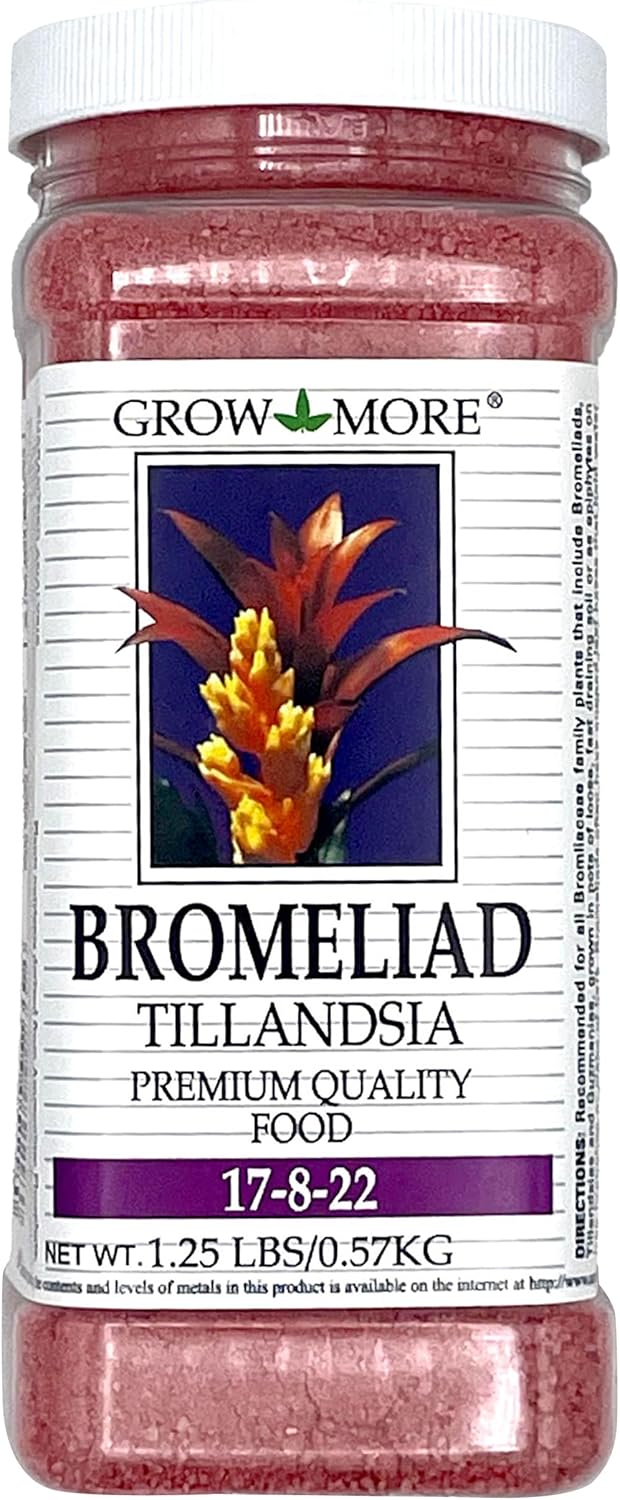
Grow More Bromeliad Tillandsia Food (17-8-22) 20 oz.
| Item Form | Granules |
|---|---|
| Specific Uses For Product | Bromeliad Fertilizer, Orchid Food, Plant Food |
| Application Method | Drenching spray or with a sprinkler can |
| Mixing Ratio | 17-8-22 |
| Unit Count | 20 Ounce |
This Grow More formula is a water-soluble, granulated fertilizer aimed at bromeliads, tillandsias and other air plants and epiphytes. You mix the granules into water (manufacturer recommends about 1/4 teaspoon per gallon) and apply as a drench, spray or with a sprinkler can to saturate leaves, bark or the surrounding area. The 17-8-22 NPK with added micronutrients such as iron, manganese and zinc is designed to support leafy growth and promote flowering while the slow-release formulation gives a steadier nutrient supply than a one-off feed. In practice it is convenient for routine feeding of potted bromeliads and mounted air plants and can be used indoors or outdoors. The granule form stores easily and dissolves for foliar or substrate application, but the specific mixing and application schedule is not detailed here so beginners should follow conservative dilution and observe plant response. Pack size is modest for hobby collections so frequent users may prefer larger quantities for heavy use.
Best for: For plant owners who want a single, bromeliad-focused fertilizer that can be used both on mounted air plants and potted specimens and who prefer an all-purpose, steady-release feed.
Less Ideal for: Not the best choice for growers who need very large-volume supplies or those seeking ultra-specific microdosing guidance for beginners.
- Formulated specifically for bromeliads and air plants with suitable micronutrients
- Water-soluble granules allow foliar spraying or drenching for mounted and potted plants
- Balanced 17-8-22 NPK supports both foliage and bloom development
- Slow-release action provides steadier nutrient delivery than an instant-dose product
- Small 20 oz. pack may require frequent replacement for larger collections
- Manufacturer guidance on feeding frequency is limited so users must establish a schedule by observation
Verdict: A focused, easy-to-use water-soluble fertilizer that gives bromeliads and air plants a reliable, balanced feed for healthier foliage and better blooms.
GARDENWISE Organic Marina Mist Kelp Spray for Air Plants (8 oz)

| Item Form | Liquid |
|---|---|
| Specific Uses For Product | foliar spray |
| Application Method | Spray |
| Liquid Volume | 8 fluid ounces |
| Guaranteed Analysis | Total N 0.3% K2O 0.6% |
This 8 oz GARDENWISE Marina Mist is a ready-to-use organic kelp foliar spray made for air plants. You apply it as a fine mist to leaves 1 to 2 times per week (manufacturer guidance) to supply trace nutrients and surface moisture without submerging the plants. Notable features include an ocean-sourced kelp base, a very low guaranteed analysis of nitrogen and potassium, and directions that favor morning or late afternoon application when stomata are open. In practice the spray helps keep air plants from drying out between soakings, can stimulate blooms and pup production for collections, and makes mounted or decorative displays easier to maintain. Limitations are its low nutrient concentration, so it is a maintenance and bloom support product rather than a replacement for occasional deeper soak feedings, and the spray is intended only for foliar use on air plants rather than soil applications. For growers who use frequent misting as their main care method, this provides an organic way to add nutrients and improve vigor.
Best for: Serious air-plant caretakers who prioritize plant performance and want a convenient organic foliar feed to boost blooms, pup production, and overall vigor during regular misting routines.
Less Ideal for: People who rely solely on heavy soil or water-based fertilization methods or those with very large collections who need concentrated, high-volume feeding solutions.
- Formulated specifically for air plants with foliar spray application
- 100% organic kelp base provides trace minerals and natural growth stimulants
- Ready-to-use spray simplifies regular application without mixing
- Directions support regular maintenance dosing to encourage blooms and pups
- Low nutrient concentrations mean it cannot replace occasional soak feedings with richer fertilizers
- Small 8 oz volume may require frequent repurchase for larger collections
Verdict: If you want an easy organic foliar boost that supports blooms and pup growth in air plants, this kelp mist is a practical performance-focused choice.
TPS NUTRIENTS Air Plant Fertilizer Liquid, 8 oz

| Item Form | Liquid |
|---|---|
| Specific Uses For Product | Plant Food |
| Coverage | Tillandsia air plants and Bromeliads |
| Unit Count | 8 Fluid Ounces |
| Mixing Ratio | 1:0 |
This liquid formula is made for air plants and Tillandsia and is designed to be used as a gentle foliar spray or for occasional soak feedings. You dilute it with water per the directions and apply a light mist a couple times a month or soak briefly for deeper feeding. The formulation highlights kelp and trace minerals, which support fuller rosettes, encourage pups, and help maintain vibrant color in delicate, soil-free mounts and terrariums. Its small 8 ounce size is convenient for hobbyists and indoor displays and the product is labeled for safe handling with standard precautions. Limitations to note are that the bottle is relatively small for larger collections and you must follow dilution guidance closely since concentrated plant foods can harm sensitive species if misused. This is a straightforward, plant-specific feed that simplifies regular nutrient care for air plant enthusiasts who prefer a liquid foliar option.
Best for: Buyers who keep a modest collection of air plants or who want a simple, targeted liquid feed for mounted displays and terrariums and prefer low-effort foliar or soak applications.
Less Ideal for: Large-scale growers or anyone needing a concentrated, high-volume fertilizer solution should look for bulk or more concentrated commercial formulas.
- Formulated specifically for Tillandsia and air plants for targeted nutrition
- Can be applied as a gentle foliar mist or used for occasional soak feedings
- Contains kelp and trace minerals to support fuller rosettes and pup production
- Compact 8 fl oz size is easy to store and suitable for small to medium collections
- Limited volume may require frequent repurchase for larger collections
Verdict: A simple, air-plant–specific liquid feed that makes regular foliar or soak feeding easy for hobbyists with small to medium collections.
Grow More Air Plant Fertilizer (Tillandsia & Bromeliad) 16-9-25

| Item Form | Liquid |
|---|---|
| Specific Uses For Product | Plant Food |
| Application Method | Soak |
| Target Species | Tillandsia |
| Mixing Ratio | 1:4032 |
This Grow More liquid fertilizer is designed specifically for air plants (Tillandsia) and other bromeliads and arrives as a highly concentrated formula (16-9-25) with clear dilution guidance. It is typically used by diluting 1/4 teaspoon per gallon of water and either soaking plants for 20 to 40 minutes once a month or applying the well-diluted mix as a mist. The kit is aimed at encouraging blooming and reproduction and is presented as a one year supply when used at the recommended mixing ratio. Practical benefits include a tailored nutrient balance for epiphytic plants, an easy-to-measure dosing regimen, and flexible application by soak or spray. Because it is liquid and concentrated, small amounts treat many plants, which suits growers who maintain multiple air plants. Limitations are its single-use liquid format with a very high dilution ratio that requires careful measuring and mildly precise handling to avoid overfeeding, and the packaging does not list multiple dosing scenarios for different growth stages.
Best for: Budget-minded growers who keep several air plants and want a targeted, economical fertilizer that treats many plants from a small bottle and supports blooming.
Less Ideal for: People who prefer granular or slow-release fertilizers, or those who want separate formulations for different growth stages and feeding frequencies.
- Formulated specifically for Tillandsia and bromeliads with an N-P-K of 16-9-25
- Highly concentrated so small amounts treat many plants
- Can be used for both monthly soaks and as a diluted foliar mist
- Comes with clear mixing and application directions
- Very high dilution ratio requires precise measuring to avoid overfeeding
- Single liquid format may be less convenient than slow-release options
Verdict: A concentrated, cost-effective liquid fertilizer tailored for air plants that treats many specimens from a small amount and supports blooming.
TPS NUTRIENTS Air Plant Fertilizer Spray (16 fl oz)

| Item Form | Liquid |
|---|---|
| Application Method | Spray |
| Target Species | Air Plants |
| Liquid Volume | 16 fluid ounces |
| Mixing Ratio | 1:0:0 |
This TPS NUTRIENTS Air Plant Fertilizer Spray is a liquid foliar feed designed specifically for Tillandsia. You apply it as a fine mist to mounted or displayed air plants, terrariums, and decorative arrangements to supply nutrients that air plants cannot get from soil. The spray format makes routine feeding quick and precise, and the 16 fl oz bottle is large enough for multiple applications across a collection. Notable features include a formulation aimed at promoting stronger, more vibrant leaves and an easy spray application method that integrates into regular care. In practice it helps maintain leaf structure and color when used as directed, and the low coverage rating suggests concentrating the spray on individual plants rather than broad-area misting. Limitations are that it is specialized for air plants only and does not replace good environmental care like adequate light and humidity, and frequent heavy spraying may be unnecessary given the mixing ratio provided. For growers seeking a straightforward foliar feed, this product offers reliable, purpose-built nutrition for Tillandsia collections.
Best for: Plant owners who want a simple, dependable foliar feed for Tillandsia collections and prefer an easy spray-on routine to maintain leaf health and color.
Less Ideal for: Gardeners seeking a multi-purpose fertilizer for mixed indoor plants or those who rely primarily on soil-based feeding methods should consider broader-use products instead.
- Formulated specifically for air plants so nutrients are targeted to Tillandsia needs
- Spray application delivers foliar nutrition directly and is easy to use on mounted or displayed plants
- Generous 16 fl oz volume suitable for multiple feedings across a small to medium collection
- Supports stronger leaf structure and more vibrant foliage when used regularly
- Intended only for air plants and not suitable for soil-grown species
- Coverage described as low so you must target sprays rather than mist large areas
Verdict: A purpose-built, easy-to-use spray that reliably delivers foliar nutrition to keep Tillandsia collections healthy and vibrant.
Cute Farms Tillandsia Air Plant Fertilizer (8 fl oz)

| Item Form | Liquid |
|---|---|
| Specific Uses For Product | Air Plants |
| Application Method | Spray |
| Coverage | More than 6 months of weekly use for multiple air plants |
| Liquid Volume | 8 fluid ounces |
This is a ready‑to‑use liquid fertilizer made specifically for Tillandsia and other air plants, supplied in an 8 fl oz bottle with an ultra‑fine mist sprayer. You use it by applying 3–5 light sprays once a week directly onto the plants in addition to your usual watering or misting routine. The formula lists nitrogen, phosphoric and potash as ingredients and is intended to encourage leaf growth, pup development, color vibrancy and blooms while being gentle enough for delicate epiphytes. A single bottle is sized to last more than six months for multiple plants when used weekly. Practical benefits include the convenience of a premixed spray, a nozzle designed for fine misting, and targeted labeling for common Tillandsia types and display methods like terrariums and frames. Limitations are that the product is a general balanced feed rather than a bloom booster with specific N-P-K ratios shown, and it requires regular weekly application to deliver benefits rather than a slow‑release option.
Best for: Buyers who want a simple, low‑risk care boost for indoor air plants and prefer an easy spray routine backed by many user reviews.
Less Ideal for: Growers seeking concentrated concentrates to mix, slow‑release feeds, or precise N‑P‑K formulations for advanced nutrient tuning should look elsewhere.
- Premixed spray formula ready to use with no dilution needed
- Ultra‑fine mist sprayer suited to delicate air plant leaves
- Labelled specifically for Tillandsia and common air plant varieties
- One 8 fl oz bottle provides over six months of weekly applications for multiple plants
- No detailed N‑P‑K ratio or ingredient concentrations provided
- Not a slow‑release formula so requires ongoing weekly applications
Verdict: An easy, premixed weekly spray that gives air plant owners a simple, proven way to boost growth and color.
The Grow Co Organic Ready-to-Spray Air Plant Food (8 oz)

| Item Form | Liquid |
|---|---|
| Application Method | Spray |
| Specific Uses For Product | Organic,Plant Food,Root |
| Liquid Volume | 8 fluid ounces |
| Mixing Ratio | 4:1 |
This ready-mixed plant mister is designed for gentle, weekly feeding of air plants such as tillandsia and small bromeliads. The fine spray delivers a light NPK formulation intended to promote root support, leaf color and occasional blooms without the need to dilute or mix. It is convenient for indoor or outdoor setups and works on plants mounted on driftwood, shells, terrariums, or metal holders. The organic ingredients and urea-free formula reduce risk of harsh fertilizer burn when used as directed, and the bottle advises filtered water and weekly application for best results. Practical limitations are the small 8 ounce volume, which means frequent replacement for larger collections, and the product is formulated specifically for air plants and similar epiphytes so it does not replace balanced feeds for rooted houseplants or outdoor garden beds. Users should follow the mixing guidance on the label and avoid storing diluted excess solution.
Best for: Buyers who want a low-risk, easy maintenance feed for air plants and prefer a gentle, ready-to-use product they can apply weekly without measuring or mixing.
Less Ideal for: People who maintain large collections or who need a general-purpose fertilizer for potted or garden plants should look for larger-volume or multi-purpose formulas.
- Ready-to-use mister simplifies weekly feeding with no dilution required
- Organic, urea-free formula designed to be gentle on sensitive air plants
- Fine spray promotes even coverage on mounted and terrarium-grown epiphytes
- Suitable for both indoor and outdoor air plant setups
- Small 8 fl oz bottle can run out quickly for collectors with many plants
- Formulated specifically for epiphytes so not suitable as a general houseplant or garden fertilizer
Verdict: A convenient, low-risk ready-to-spray organic mister that makes weekly feeding simple for air plants and other epiphytes.
Choosing the Right Fertilizer for Air Plants: Key Factors to Consider
Nutrient Balance and Ratios
Air plants require a mild, balanced nutrient mix with lower nitrogen than many houseplants. Too much nitrogen can lead to soft, overly lush leaves that are prone to rot and reduced flowering. Look for formulas that include phosphorus and potassium in amounts that encourage rootless flowering and structural strength without pushing excessive vegetative growth.
Micronutrients like iron, magnesium, and trace elements matter because air plants rely on foliage uptake. Balanced chelated micronutrients are preferable because they remain available at typical household pH levels. Avoid products with very high NPK numbers intended for heavy feeders; those concentrations are unnecessary and can harm epiphytes over time.
Dilution Clarity and Ease of Measurement
Because air plants take up nutrients through leaf surfaces, correct dilution is critical. A product is only as good as its instructions. Clear, simple concentration guidance and properly sized measuring tools make it straightforward to mix safe batches for misting or soaking. Products that list parts-per-million or provide specific measurements for common container sizes reduce the risk of accidental overdosing.
Also consider whether the fertilizer mixes cleanly in water without leaving gritty residues that can settle on leaves. Formulas that dissolve fully and state recommended soak or spray concentrations save time and reduce foliar spotting risks.
Application Flexibility
Air-plant care routines vary from frequent misting to weekly soaks. Ideal fertilizers work across these methods. Some gardeners prefer a dilute foliar spray after regular misting while others give a longer soak monthly to flush nutrients through leaf bases. A flexible product will state acceptable spray and soak concentrations and how to adjust frequency for seasonal growth changes.
Compatibility with common delivery methods, including water-soluble powders, concentrated liquids, and ready-to-use sprays, lets you choose based on habit and convenience. If you travel frequently, a concentrated bottle with long shelf life and clear dilution steps is particularly useful.
Foliage Safety and Residue
Air plants are sensitive to leaf burn and residue build-up. Fertilizers with high salt content or sticky carriers can leave deposits that attract pests or block trichomes, reducing the plant's ability to absorb moisture. Non-staining, low-residue formulas reduce the need for rinsing and lower long-term maintenance.
Look for products that explicitly note low salt index or are formulated for foliar feeding. Also consider whether the fertilizer recommends rinsing after a soak to remove any concentrated residues; this guidance helps prevent buildup and keeps leaves healthy.
Compatibility with Water Quality
Water hardness and chemistry affect how fertilizers behave. High-calcium or hard water can precipitate some formulations, making them less effective and leaving white deposits on leaves. If your tap water is hard, choose a fertilizer that dissolves well in a range of water types or use filtered/rain water for mixing.
Manufacturers that provide mixing advice for different water qualities help you avoid clogs in sprayers and reduce residue risks. This factor influences product choice more than raw nutrient numbers for gardeners using varied water sources.
Environmental and Safety Considerations
Many gardeners prefer low-impact formulations that break down safely and do not harm nearby plants, pets, or beneficial insects. Look for fertilizers with minimal persistent synthetic additives and clear labeling about environmental safety. Biodegradable carriers and reduced-phosphate formulations are gentler on the surrounding environment.
Safety also extends to packaging and concentration. Small, easy-to-measure bottles reduce spills and accidental over-application. If you keep pets or children around your plants, choose products with safe handling instructions and child-resistant packaging when available.
Why Air Plants Need Different Fertilizer
Air plants are epiphytes that gather moisture and nutrients through leaf trichomes rather than roots in soil. That makes their nutrient uptake slower and more surface-dependent, so concentrated soil fertilizers will often harm them. A tailored approach uses diluted solutions and occasional feeding to mimic the light, nutrient-sparse conditions they evolved in.
Feeding goals for air plants focus on encouraging flowering, maintaining firm foliage, and supporting new pup development. Regular low-dose feeding during active growth seasons is generally more effective and safer than infrequent heavy applications.
- Air plants absorb through leaves, not roots
- Low-concentration, regular feeding supports blooms
- Avoid high-salt, soil-centric fertilizers
Practical Application Methods
Two common methods work well: dilute foliar spraying and monthly soaks. Spraying provides light nutrition between soaks and reduces the risk of residue buildup. Soaks give a deeper dose and are useful for supporting growth spurts or after repotting into a new display.
When spraying, use a fine mist and aim for even coverage without drenching in concentrated solution. For soaks, place plants in a shallow bowl of diluted fertilizer for the recommended time, then allow them to dry upside down to prevent trapped water at the base.
- Spray with a fine mist on a weekly to biweekly schedule
- Soak monthly for 20 to 30 minutes when active
- Always allow plants to dry fully after watering or feeding
Seasonal Feeding Rhythms
Air-plant nutrient needs change with growth cycles. During spring and summer growth, feed more often with a mild concentration to support new leaves and pups. In cooler months, reduce frequency and dilution to avoid encouraging tender growth that will not withstand lower light and temperatures.
Adjust application based on visible plant response. Brightening leaf color and increased pup production are signs your schedule is appropriate. Leaf yellowing or spotting can signal overfeeding or unsuitable water quality.
- Increase feeding in active growth seasons
- Cut back in winter or during dormancy
- Monitor foliage for signs of over- or under-feeding
Mixing Tips and Sprayer Maintenance
Always measure fertilizers precisely and dissolve completely before transfer to a sprayer. Use clean containers and mixing spoons dedicated to plant products to avoid contamination. If using concentrated liquids, dilute to the lower end of recommended ranges for first applications to test plant tolerance.
Sprayer upkeep matters. Rinse sprayers between uses, and flush lines with clean water after a soaking cycle to prevent buildup. Replace clogged nozzles and avoid using metal tools that could introduce contaminants.
- Start with the lowest recommended concentration for new products
- Dissolve fully and strain if needed before adding to sprayer
- Rinse equipment after each use to prevent residue
Troubleshooting Common Feeding Problems
Leaf burn, spotting, or a white crust often indicate overconcentration or hard water reactions. If you notice these issues, stop fertilizing, rinse foliage gently with soft water, and switch to a lower concentration. Allow plants several weeks to recover before resuming a reduced feeding schedule.
If plants show no visible response after several months of feeding, reassess light, humidity, and watering frequency. Nutrients cannot fix poor cultural conditions; they support healthy growth only when basic care is in place.
- Rinse and reduce concentration if leaf damage appears
- Check cultural care if no improvement occurs
- Use rain or filtered water if hard water causes residue
How We Chose the Best Fertilizer for Air Plants
We focused on attributes that affect air-plant health in real-world care routines. Key evaluation criteria included nutrient formulation, application flexibility, dilution clarity, and safety for delicate foliage. Nutrient formulation looks at ratios and micronutrients that promote leaf health and flowering without excess salts. Application flexibility covers whether a product works as a spray, soak, or occasional drench and how easy it is to integrate into typical misting or soaking schedules. Dilution clarity assesses labeling and how simple it is to achieve safe concentrations for air plants. Safety for foliage examines whether the product minimizes burn risk and leaves no residue that attracts pests or causes spotting. We also considered environmental stewardship, such as biodegradability and low-impact ingredients, plus packaging that allows precise measurement. Exclusions included fertilizers formulated exclusively for heavy feeders, hardy outdoor shrubs, or that require soil-based application methods unsuitable for epiphytic plants. The final shortlist represents products that matched these practical care needs while offering clear instructions for air-plant use.
FAQ
How often should I fertilize air plants?
Usually feed air plants lightly every two to four weeks during active growth and cut back to once every one to two months in cooler, slower seasons. Frequency depends on light levels and growth rate.
Can I use regular houseplant fertilizer on air plants?
Some houseplant fertilizers can be used if diluted heavily and applied as a foliar spray or soak, but many are designed for soil feeding and have higher salt levels. Choose a formulation or dilution suited to epiphytic plants to avoid damage.
Will fertilizer make air plants bloom?
Fertilizer can encourage blooming by providing phosphorus and potassium that support flower development, but flowering also depends on adequate light and correct temperature cycles. Fertilizer helps when cultural conditions are otherwise appropriate.
Is it safe to mist air plants with fertilizer daily?
Daily misting with a highly diluted foliar fertilizer is often safe, but concentrated solutions or daily heavy applications raise the risk of residue and leaf damage. Keep concentrations low and alternate with plain water misting.
What water should I use to mix fertilizer?
Use rainwater, distilled, or filtered water when possible, especially if your tap water is hard. Hard water can precipitate minerals and leave deposits on leaves that reduce nutrient uptake and cause spotting.
How can I tell if I am overfeeding my air plants?
Signs of overfeeding include leaf browning or crisping at tips, spotting, a sticky or white crust on leaves, and slowed growth. If you see these, stop fertilizing, rinse the plants with soft water, and resume with a much more dilute schedule.
Final Verdict
Choose a fertilizer that supports leaf health and flowering with a low-concentration, clearly instructed formula that fits your misting or soaking routine. Prioritize products that dissolve cleanly, include essential micronutrients, and offer guidance for different water qualities. Balance feeding frequency with seasonal growth and always err on the side of a weaker solution to avoid foliar damage. With careful dilution and consistent application aligned to light and humidity, you can boost blooms and pup production without stressing delicate air-plant foliage. Focus on nutrient balance, dilution clarity, and application method when deciding which option to use.
