

Note: This article contains affiliate links. If you click on these links and make a purchase, I may earn a small commission at no extra cost to you. This helps support my research and content. Read my full affiliate disclosure here.
New sod needs consistent, gentle moisture during the first few weeks to root in without washing out soil or drowning tender shoots. Choosing the right garden sprinkler for new sod matters because improper spray intensity or uneven coverage can create dry patches or runoff that undo your work. This guide gathers seven shortlisted garden sprinklers suited to new turf, focusing on even coverage, adjustable output, and footprint control. We evaluate each option against practical gardener concerns such as spray intensity, pattern control, build resilience, and ease of setup. Read on to find the style of sprinkler that matches your lawn size and site conditions, plus the features to prioritize during installation.
Top Picks at a Glance
| Best Overall The best all-around choice for most situations | Melnor XT Turbo Oscillating Sprinkler (4,500 sq ft) |  |
| Best Quality Built to a higher standard if you want something more solid | Eden 94110 Heavy-Duty Metal Oscillating Sprinkler with Quick Connect Set |  |
| Best Value The sweet spot between price and what you get | Melnor MiniMax Turbo Oscillating Sprinkler with Metal Spike |  |
| Best Budget The cheapest option that still gets the job done reliably | Rocky Mountain Goods Rotary Circle Sprinkler (plastic) |  |
| Most Popular A crowd favorite that many people choose with confidence | Eden Weighted Essential Oscillating Sprinkler with Quick Connect Starter Set |  |
Melnor XT Turbo Oscillating Sprinkler (4,500 sq ft)

| Coverage | 4,500 sq. ft. |
|---|---|
| Nozzles | 20 precision nozzles |
| Maximum Pressure | 90 psi |
| Material Type | Plastic |
The Melnor XT Turbo Oscillating Sprinkler is a user-friendly lawn sprinkler designed to water medium to large yards up to about 4,500 square feet. It uses 20 precision nozzles and TwinTouch width and range controls so you can set left, right or both-side coverage and change the length of the spray pattern. The Zoom Flow Control lets you reduce output for newly seeded areas or increase it to reach farther sections of lawn. A durable InfinityDrive Turbo Motor and dirt-resistant drive are built to keep the oscillation smooth even if your water contains grit. Practical benefits include clear watering-width indicators for repeatable settings and a QuickConnect starter set for fast hookup to hoses and accessories. Limitations are that the unit is plastic so it is best stored indoors through winter, and like most oscillating sprinklers it delivers a broad, gentle spray rather than a narrow high-pressure jet for very long reach or targeted irrigation.
Best for: Homeowners who want a reliable, easy-to-adjust sprinkler for broad, repeatable coverage of medium to large lawns and prefer straightforward controls over complex programming.
Less Ideal for: Gardeners who need a sprinkler for very long, targeted spray distances or a permanently installed, heavy-duty metal irrigation head should consider other options.
- Covers up to 4,500 sq ft with 20 precision nozzles for even distribution
- Three-way adjustment (width, range, flow) for flexible watering patterns
- Dirt-resistant drive and InfinityDrive motor for reliable operation with sedimented water
- Watering width indicators make it easy to reproduce preferred settings
- Includes QuickConnect starter set for fast hose and accessory changes
- Plastic construction requires winter storage to avoid cracking in freezing conditions
- Not suitable if you need a very narrow high-pressure stream for long, targeted reach
Verdict: Choose this sprinkler if you want dependable, easy-to-adjust long-range coverage for up to 4,500 sq ft with clear controls and sediment-tolerant operation.
Eden 94110 Heavy-Duty Metal Oscillating Sprinkler with Quick Connect Set

| Material Type | Aluminum |
|---|---|
| Maximum Pressure | 100 psi |
| Maximum Flow Rate | 30 gpm |
| Number of Nozzles | 18 |
| Coverage | Up to 3,315 sq. ft. |
The Eden 94110 is a performance-focused oscillating sprinkler built around a sturdy aluminum base and a turbo drive motor that keeps the spray consistent across varying household water pressures. It uses 18 precision, clog-resistant nozzles and an adjustable sliding range control so you can shape a rectangular pattern and water up to about 3,315 sq. ft. under ideal conditions. The metal base and anti-rust coating give the unit stability on the lawn and help it withstand season-to-season use, while a built-in nozzle cleaning tool makes maintenance straightforward. The included quick connect starter set adds a water-stop feature and secure twist-and-lock adapters so you can swap hoses or nozzles without shutting off the tap and avoid hose twisting with the 360 degree swivel. Expect reliable, even coverage for vegetable beds, flower borders, and medium to large lawns, though actual reach depends on your water pressure and wind; very irregular terrain may still need multiple positions for uniform watering.
Best for: Buyers who prioritize reliable, uniform watering performance for medium to large lawns or productive garden beds and want a durable, serviceable sprinkler they can depend on season after season.
Less Ideal for: Not the best choice for very small patios, narrow strips, or highly irregular landscapes where targeted hand-watering or drip irrigation is more efficient.
- Durable metal base with anti-rust coating for stable, long-lasting use.
- Eighteen precision, clog-resistant nozzles deliver even coverage across a rectangular area.
- Turbo drive motor maintains smooth operation and improves gear life under varying pressures.
- Quick Connect Starter Set with water-stop and twist-lock makes tool changes fast and leak-resistant.
- Built-in nozzle cleaning tool simplifies maintenance and restores spray performance.
- Coverage claim (3,315 sq. ft.) depends on ideal water pressure and calm conditions so real-world range may be less.
- Made for flat lawns and gardens so irregular slopes or obstacles may require repositioning for full coverage.
Verdict: Choose this sprinkler if you want a durable, performance-oriented oscillating sprinkler that delivers even coverage and fast tool changes for medium to large lawns.
Melnor MiniMax Turbo Oscillating Sprinkler with Metal Spike

| Maximum Flow Rate | 15 gpm |
|---|---|
| Material Type | Plastic |
| Coverage | 4,000 sq. ft. |
| Features | Dirt-Resistant Drive, 360° Adjustability, QuickConnect Set |
The Melnor MiniMax Turbo is a compact oscillating sprinkler built to give the control of a larger unit in a smaller footprint. It mounts on a metal step spike so you can position it quickly in new sod or garden beds and adjust width, range, and flow to match the area you need to keep moist. The sprinkler covers up to 4,000 sq. ft. and includes a 360 degree top that lets you redirect spray without moving the spike. Practical features include a dirt-resistant drive that tolerates grit in well water and a flow-through base so multiple units can be linked for continuous coverage. The QuickConnect starter set makes swapping hoses and tools fast. Expect reliable, customizable watering for establishing new sod, but be aware the unit is plastic-bodied so long-term durability will depend on care and storage; it also lacks fine mist settings for very delicate seedlings. For homeowners who want precise coverage and easy repositioning, this delivers sensible performance without unnecessary complexity.
Best for: Homeowners who want efficient, adjustable coverage to establish new sod and prefer tools that are easy to position and tune for different lawn shapes.
Less Ideal for: Gardeners needing a gentle mist for very young seedlings or those seeking an all-metal, heavy-duty permanent fixture for commercial use.
- Adjustable width, range, and flow for tailored watering of new sod
- Covers up to 4,000 sq. ft. so fewer units are needed for medium lawns
- Metal step spike holds the sprinkler steady in turf and beds
- Dirt-resistant drive keeps it operating reliably with gritty water
- Flo-through base and QuickConnect make linking and swapping hoses easy
- Primarily plastic construction that can degrade if left in sun or freezing conditions
- No very fine mist option for extremely delicate seedings or seedlings
Verdict: Choose this sprinkler if you want precise, adjustable coverage to get new sod established with minimal repositioning and easy hose hookups.
Rocky Mountain Goods Rotary Circle Sprinkler (plastic)
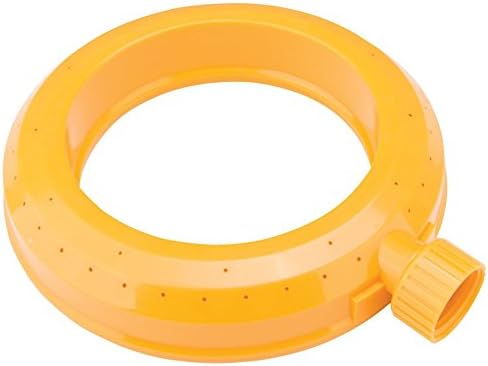
| Material Type | Plastic |
|---|---|
| Maximum Flow Rate | 2 gpm |
| Style Name | Rotary |
This rotary circle sprinkler is a basic, budget-friendly option for watering new sod and medium-sized lawns. Made from high-impact plastic, it is lightweight and easy to move so you can position it where young grass needs the most attention. The sprinkler throws water up to about 30 feet across, producing a fixed, consistent spray pattern that helps establish even moisture without complicated settings. It is rated to run with both low and high household water pressure and has a modest maximum flow rate of 2 gpm, which helps keep water use reasonable. Because it is a straightforward rotary head with no adjustable diffusers or multiple spray modes, you trade advanced customization for simplicity and reliability. Expect good performance for regular coverage on a budget, but plan to reposition it for irregular lawn shapes or to avoid overwatering in one spot.
Best for: Homeowners laying or caring for new sod who want an inexpensive, no-frills sprinkler that is easy to move and use regularly.
Less Ideal for: People with large or unusually shaped lawns who need adjustable spray patterns or automated coverage should consider more versatile sprinkler heads or timed systems.
- Covers up to 30 foot diameter suitable for establishing new sod
- High-impact plastic resists outdoor wear while keeping cost low
- Works with low and high household water pressure for flexible use
- Fixed spray style with no adjustable patterns limits fine-tuning of coverage
Verdict: A low-cost, easy-to-use rotary sprinkler that reliably wets new sod across a roughly 30-foot area without fuss.
Eden Weighted Essential Oscillating Sprinkler with Quick Connect Starter Set

| Maximum Pressure | 60 psi |
|---|---|
| Maximum Flow Rate | 30 gpm |
| Nozzle Count | 16 precision nozzles |
| Coverage | Up to 3,600 sq. ft. |
The Eden Weighted Essential Oscillating Sprinkler delivers steady, even watering across mid‑to‑large lawns and garden beds up to about 3,600 square feet. It mounts on a weighted base so it stays put while a sealed turbo drive motor oscillates a bar with 16 precision nozzles for consistent spray distribution. Sliding range tabs let you limit how wide the spray is, and a built‑in nozzle cleaning tool helps clear clogs without disassembly. The included quick connect starter set and stainless steel filter washers simplify hookups and let you swap tools without shutting off the water. In practice this model is quiet, simple to position, and keeps water patterns uniform on level turf. Expect best results on relatively flat lawns where the coverage matches the stated footprint; very large properties will need multiple units or a different sprinkler type to avoid gaps. The unit is plastic, so durability under heavy seasonal use may lag behind metal alternatives, but the design and filters reduce maintenance and leaks for routine garden watering needs.
Best for: Buyers who want a reliable, easy‑to‑use sprinkler that produces uniform coverage for medium to large lawns and value social proof and low maintenance features when choosing a dependable product.
Less Ideal for: Not a great choice for very large estates or professional irrigation needs where metal, higher‑capacity, or multi‑zone systems are preferred.
- Even coverage from 16 precision nozzles for consistent watering patterns
- Weighted base provides stability during operation
- Adjustable range tabs allow precise area control to target lawns or beds
- Quick connect starter set and stainless steel filters simplify hookups and reduce leaks
- Built‑in nozzle cleaning tool makes maintenance fast and simple
- Plastic construction may wear faster than metal sprinklers under heavy seasonal use
- Coverage limited to about 3,600 sq. ft., so large properties may need multiple units
Verdict: A user‑friendly oscillating sprinkler that combines even coverage, a stable weighted base, and quick‑connect hookups for dependable mid‑sized lawn watering.
Choosing the Right Garden Sprinkler for New Sod: Key Factors to Consider
Spray Intensity and Flow Control
New sod is vulnerable to being dislodged or washed if the sprinkler delivers a high-velocity jet or concentrated stream. Look for sprinklers that allow you to reduce flow or soften the spray so water lands gently instead of blasting the turf. A model with a fine mist option or multiple nozzles that diffuse water will help settle soil around roots without creating channels that carry soil away.
Flow control also matters for managing run times. Lower intensity means you can run shorter cycles more frequently, which promotes root growth close to the soil surface without oversaturating the top layer. Conversely, some situations benefit from a slightly stronger soak to push moisture deeper; having a controllable flow means you can adapt to weather, soil type, and how well the sod drains.
Coverage Pattern and Uniformity
Even coverage prevents the patchy establishment that leads to weak spots in a new lawn. Sprinklers that offer predictable, consistent patterns-such as adjustable arcs, sector control, or overlapping spray heads-make it easier to avoid both dry areas and double-wetted zones that puddle. Circular heads can work well for small, regular areas, while oscillating or multi-pattern heads are better for rectangles and irregular shapes.
Practical testing in a small area during setup helps reveal real-world uniformity. Pay attention to how the spray behaves at the outer edge of the range; some heads thin out and produce uneven droplets that evaporate before reaching turf, which requires repositioning or overlapping coverage.
Range Flexibility and Footprint Control
New sod jobs vary from small patches to full lawns, so a sprinkler that can scale its radius and sector coverage is valuable. Range flexibility lets you water narrow strips without soaking flower beds or sidewalks. Look for adjustable arc settings, multiple range nozzles, or attachments that limit spray distance.
Controlling the footprint also reduces water waste and runoff. If your lawn has slopes or nearby hard surfaces, being able to dial back reach prevents water from running off the turf and carrying soil with it. Flexible-range designs are more likely to serve multiple sites around the yard without buying additional gear.
Durability and Materials
During the establishment period you will likely run sprinklers frequently, sometimes daily, so materials need to tolerate UV exposure, water pressure, and occasional knocks. Components such as sturdy bases, corrosion-resistant fittings, and resilient plastic or metal heads will keep spray patterns reliable over weeks of intensive use.
Also consider connectors and seals. A leaky connection changes water delivery and can reduce pressure to the head, altering spray quality. Designs that let you replace worn nozzles or seals extend the useful life of a sprinkler and maintain consistent performance across the crucial rooting period.
Ease of Setup and Adjustment
Gardeners often deploy temporary sprinklers right after sod installation, so straightforward setup matters. Quick-attach hoses, tool-free adjustment knobs, and clear markings for range and arc make it easier to place sprinklers correctly on the first try. Models that let you change settings without stopping the water are especially convenient for fine-tuning coverage while observing how water lands on the turf.
Simple setup reduces mistakes that can harm sod, like leaving a high-pressure setting in place or positioning a head where runoff will occur. Ease of maintenance and the ability to clear clogs without disassembly also keeps watering consistent throughout the establishment phase.
Compatibility With Timers and Multiple Heads
Many gardeners use timers to provide short, frequent watering cycles for new sod. Ensure the sprinkler works with common inline timers or backflow-safe attachments so you can automate early-morning or late-evening runs. If you need to cover larger lawns, check that multiple identical heads can be used together without starving each other for pressure.
Compatibility considerations include thread standards for hose connectors and whether the sprinkler's flow characteristics pair well with a timer's runtime and surge behavior. A mismatch can lead to inadequate coverage or too-intense short cycles, both of which affect sod establishment.
Sprinkler Styles That Work Best for New Sod
Different sprinkler styles behave very differently on fragile new turf. Oscillating sprinklers provide a soft, overlapping sheet of water that is gentle on roots and excellent for rectangular areas. Pulsing impact-style heads can be too forceful unless they include a low-pressure setting or specialized nozzles that diffuse the stream.
Stationary multi-nozzle or micro-spray heads give precise control over where water lands and are useful along edges or narrow strips. For small patches, a misting or low-pressure rotary head can keep moisture even without moving the sod or washing soil. Match the style to your lawn shape and slope to minimize disturbance and runoff.
- Oscillating heads: gentle, broad coverage for rectangles
- Rotary/micro-spray: precise footprint control for borders
- Stationary multi-nozzle: good for mixed shapes and edges
Timing and Routine for Establishing New Sod
New sod typically needs short, frequent watering in the first two weeks, then gradually less often with longer soakings as roots deepen. Early mornings and late evenings are best to reduce evaporation and fungal risk. Use multiple short cycles rather than a single long run to keep the topsoil consistently moist without puddling.
Adjust frequency based on weather and soil. Sandy soils dry out faster and may need more frequent cycles at lighter intensity, while clay holds moisture longer but risks surface runoff. Observe the sod after watering; if water beads on the surface or runs off, reduce intensity or split the run into two shorter cycles.
- Water 2-4 times daily initially, then taper
- Prefer low-intensity runs to prevent washout
- Monitor runoff and adjust timing accordingly
Placement Tips to Avoid Washout and Puddling
Position sprinklers so the spray lands on turf rather than hard surfaces. Hard surfaces create splashback and carry soil away from the root zone. Where possible, use barriers or temporary shields to block overspray onto walkways and beds.
On slopes, place heads upslope and use lower-intensity settings with more frequent cycles to allow absorption. Overlap sprays slightly to ensure uniformity, but avoid large overlaps that create puddles. Small test runs and visual checks during the first days after laying sod identify trouble spots early.
- Keep spray off hardscapes
- Use short cycles on slopes
- Run test patterns before leaving sprinklers unattended
Maintaining Consistent Performance During Heavy Use
Frequent operation can expose weaknesses like clogged nozzles or loose fittings. Inspect connectors and heads regularly and clear debris from filters or screens to keep spray patterns stable. Replacing worn seals and tightening hose threads prevents pressure drops that change how the sprinkler behaves.
Store portable sprinklers out of direct sun between intensive watering periods when possible to reduce plastic fatigue. If you need to run multiple heads from one hose, stagger runs to preserve pressure and ensure each head sustains a gentle, effective spray.
- Check nozzles and filters weekly
- Tighten fittings to prevent leaks
- Stagger multiple heads to maintain pressure
When to Transition From Frequent to Deep Watering
As roots begin to establish, you should shift from very frequent light watering to fewer, deeper soakings. A common sign is that the sod resists light tugging and the soil beneath the turf feels moist several inches down after a cycle. At that point, extend runtimes and reduce frequency to encourage deeper root growth.
Make the transition gradually rather than abruptly. Increasing soak depth too fast can create saturation near the surface and leave the new roots exposed. Monitor root development and soil moisture to tailor the schedule for your specific conditions.
- Look for resistance to light tugging as a sign of establishment
- Gradually increase run time and reduce frequency
- Check moisture several inches below the surface
How We Chose the Best Garden Sprinkler for New Sod
We prioritized features that directly affect how newly laid sod establishes in the soil. Evaluation centered on spray intensity control to prevent washout, pattern adjustability for matching irregular lawns, and moisture distribution uniformity to avoid dry or puddled zones. Durability and materials were considered to ensure consistent performance through frequent, daily watering early in the establishment period. Ease of setup and simple flow adjustment mattered because many users will run sprinklers on timers or by hand several times a day. Lastly, footprint and range flexibility were used to determine whether a sprinkler can cover common lawn sizes without overspray onto beds or walkways. We excluded products designed only for heavy-duty irrigation or agricultural use that deliver high-pressure output inappropriate for new sod. Items that require advanced installation, like in-ground pop-up systems, were not considered here because the focus is on portable, aboveground sprinklers gardeners can deploy immediately after laying turf. The selected criteria align with the scoring metrics used across the shortlist so gardeners can compare options on the attributes that matter for successful sod establishment.
FAQ
How often should I water new sod during the first week?
Usually you will water multiple short cycles per day for the first week, often two to four times depending on temperature and soil. The goal is to keep the topsoil consistently moist without creating runoff or puddles.
What spray pattern is safest for delicate new turf?
Gentle, overlapping sheet-like patterns such as those from oscillating or fine-mist rotary heads are safest. Avoid concentrated high-velocity jets that can displace soil and damage new roots.
Can I use a regular high-pressure sprinkler if I reduce the time?
Sometimes lowering runtime helps, but high-pressure heads may still dislodge soil even on short cycles. It is better to use a sprinkler with an adjustable low-intensity or diffusion option to protect the sod.
How do I prevent runoff on a slope when watering new sod?
Reduce spray intensity and run shorter, more frequent cycles to allow water to soak in. Position heads upslope and use smaller footprints or a series of lower-range stations to move water down the slope gradually.
When can I stop protecting the sod from foot traffic?
Wait until the sod resists light tugging and roots feel anchored, typically after two to four weeks depending on species and weather. Avoid heavy traffic until the turf shows clear signs of establishment.
Will using multiple sprinklers improve uniformity?
Using multiple heads can improve coverage if they are positioned to overlap correctly and the water supply maintains adequate pressure. Staggering run times or using separate outlets helps preserve consistent spray quality.
Final Verdict
For new sod, prioritize gentle, controllable water delivery and predictable coverage rather than raw range or heavy-duty output. Focus first on spray intensity control, pattern uniformity, and ease of setup so you can position heads and run short, frequent cycles that protect tender roots. Durability and connector quality matter because you will operate sprinklers often during establishment. Choose a style that fits your lawn shape and slope, plan short cycles in cooler parts of the day, and adjust as roots develop toward deeper watering. By emphasizing gentle coverage and adaptability, you will give new sod the consistent moisture it needs to knit into the soil and form a healthy lawn.
