

Note: This article contains affiliate links. If you click on these links and make a purchase, I may earn a small commission at no extra cost to you. This helps support my research and content. Read my full affiliate disclosure here.
Ground cover plants respond differently than turf or shrubs, so the fertilizer you choose affects establishment, spread, and seasonal vigor. Whether you are filling bare patches, slowing weed invasion, or building dense foliage on a slope, the right feeding approach helps ground cover root out and stay healthy without encouraging excessive legginess. This guide covers six top fertilizers suited for ground cover situations and explains how we evaluated nutrient balance, release behavior, and ease of application. Read on to find options that fit quick establishment, low-maintenance beds, or persistent perennial mats.
Top Picks at a Glance
| Best Overall The best all-around choice for most situations | Jobe's Organics Granular All Purpose Fertilizer, 4 lb |  |
| Best Quality Built to a higher standard if you want something more solid | Suståne All Natural Lawn and Landscape Plant Food, 20 lb |  |
| Best Value The sweet spot between price and what you get | Milorganite 6-4-0 Slow-Release Fertilizer, 32 lb (with Feeding Tips Brochure) |  |
| Best Budget The cheapest option that still gets the job done reliably | Florida Foliage Color Pro Controlled-Release Fertilizer 20-6-9 (5 oz) |  |
| Highest Rated A top-rated pick with lots of positive feedback | Miracle-Gro Water Soluble All Purpose Plant Food, 1.5 lb |  |
| Most Popular A crowd favorite that many people choose with confidence | Miracle-Gro Water Soluble All Purpose Plant Food, 3 lb |  |
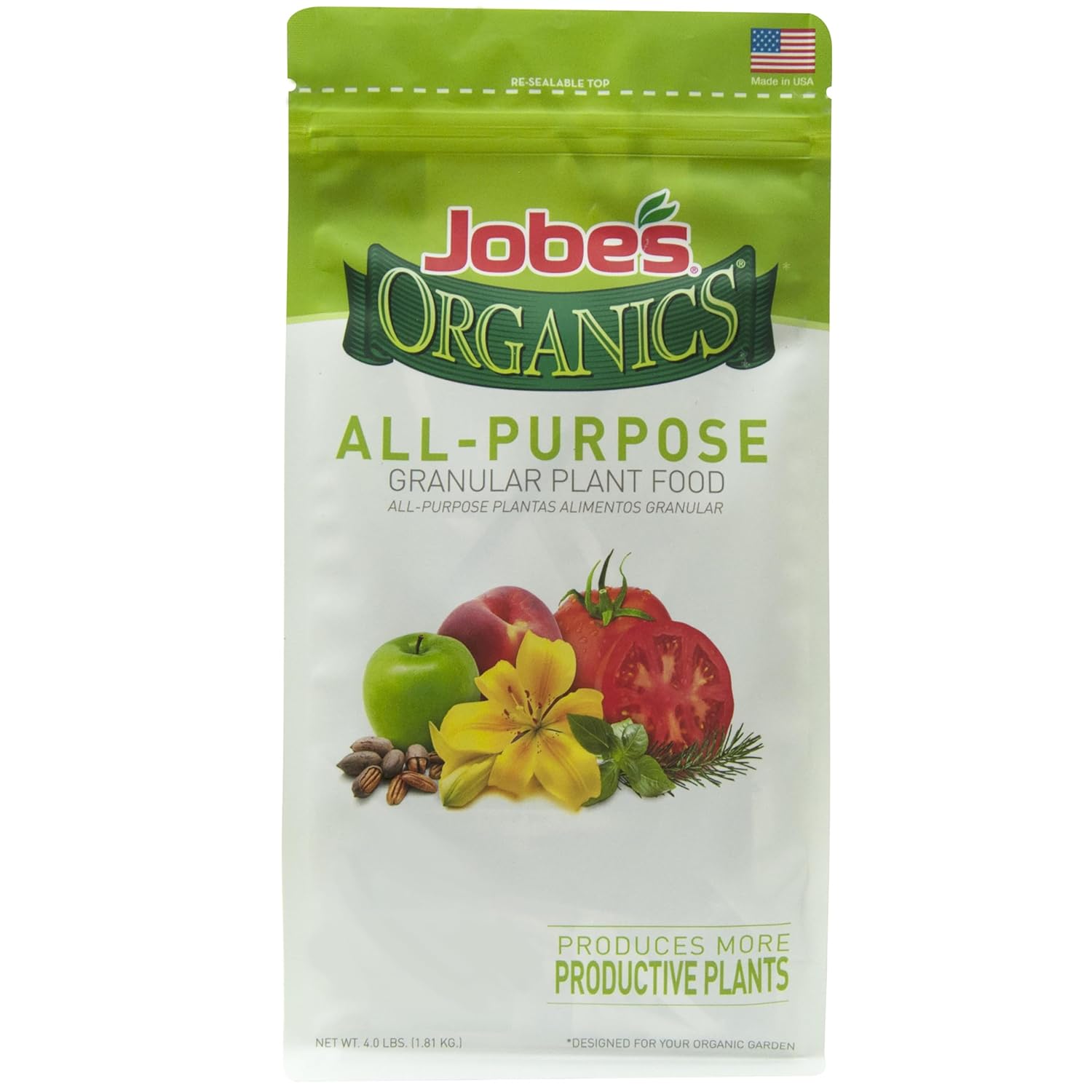
Jobe's Organics Granular All Purpose Fertilizer, 4 lb
| Item Form | Granules |
|---|---|
| Specific Uses For Product | Gardening |
| Coverage | Resealable |
| Mixing Ratio | 4-4-4 |
Jobe's Organics Granular All Purpose Fertilizer is a slow-release, OMRI-listed granular fertilizer designed for routine feeding of garden plants including young trees. You apply measured amounts around the root zone, water it in, and repeat every 2 to 3 weeks during the growing season. The 4-4-4 NPK balance with added calcium, magnesium, and sulfur supplies steady, mild nourishment without the burn risk of high-strength synthetic feeds, and the organic feedstocks encourage soil microbial activity that helps young root systems access nutrients. The resealable bag and granular form make it easy to portion and store, and directions are straightforward for gardeners who prefer repeat, low-effort applications. Limitations are that it is a light-strength general feed, so very nutrient-deficient soils or trees with established nutrient needs may require supplemental feeding or a specialized tree formula for faster correction. Also, granular organics act more slowly than soluble fertilizers, so expect gradual improvement rather than immediate greening.
Best for: Gardeners who prioritize safe, repeatable organic feeding and want a low-risk, easy-to-use fertilizer to support establishing root systems in young trees and mixed garden beds.
Less Ideal for: Users seeking fast, dramatic nutrient correction or a tree-specific high-nitrogen formulation for rapid canopy growth should consider more targeted or soluble products.
- USDA OMRI-listed organic formula suitable for organic gardening
- Balanced 4-4-4 NPK plus calcium, magnesium, and sulfur for steady, mild feeding
- Granular slow-release form reduces burn risk and supports soil microbes
- Resealable bag and simple application instructions make dosing and storage easy
- Lower NPK strength means slower visible results compared with soluble or high-N fertilizers
- Not targeted specifically to young trees so may need supplemental fertilization for deficient soils
Verdict: A gentle OMRI-listed granular fertilizer that is a practical, low-risk choice for regularly feeding young trees and maintaining soil health.
Suståne All Natural Lawn and Landscape Plant Food, 20 lb

| Item Form | Granules |
|---|---|
| Specific Uses For Product | Lawn,Organic,Plant Food |
| Application Method | Broadcast Spreading, Soil Incorporation |
| Target Species | all plant varieties |
| Mixing Ratio | 8:2:4 |
Suståne 8-2-4 is a granular, slow-release organic fertilizer designed for lawns and landscapes that supplies nitrogen from compost, feather meal, and natural potash. You use it by broadcasting over turf or incorporating into soil around shrubs, trees, beds and container mixes according to the label coverage and the provided 8:2:4 mixing ratio. Notable features include an organic source of nutrients suitable for certified organic management, sustained nutrient release for longer feeding intervals, and a formulation intended to promote root development and lush foliage. In practice it reduces the need for frequent feeding and supports steady, even green-up without a strong flush of growth, which is useful for performance-focused lawn care routines. Limitations are that it releases nutrients more slowly than soluble fertilizers so results appear over weeks rather than days, and handling precautions are needed to avoid contact with skin and eyes. For gardeners prioritizing lasting, research-backed organic performance, this product delivers dependable feeding for high-quality lawn results.
Best for: Gardeners and turf managers who want reliable, long-lasting organic nutrition to achieve consistent, high-quality lawns without frequent reapplication.
Less Ideal for: People seeking immediate quick-green results or who prefer liquid soluble fertilizers for rapid corrective feeding should consider other products.
- Slow-release organic nitrogen provides steady feeding over time
- Suitable for use on lawns, trees, shrubs, flowers, fruits and vegetables
- Formulation supports root development and sustained foliage color
- Allowed for use in organically managed landscapes
- Slow-release action means visible results take weeks rather than days
- Requires careful handling and protective gear to avoid skin or eye contact
Verdict: Choose Suståne if you want a proven, slow-release organic fertilizer that delivers steady, performance-level feeding for high-quality lawns and landscapes.
Milorganite 6-4-0 Slow-Release Fertilizer, 32 lb (with Feeding Tips Brochure)

| Item Form | Pelletized |
|---|---|
| Application Method | Broadcast, Rotary or Manual |
| Coverage | 2,500 Square Feet |
| Specific Uses For Product | Lawns, Flowers and Gardens, Education |
Milorganite 6-4-0 is an organic, pelletized slow-release fertilizer intended for routine lawn and garden feeding. It is typically broadcast with a rotary or manual spreader and provides nitrogen slowly over 8 to 10 weeks, which reduces the need for frequent applications and lowers burn risk. The product contains organically complex iron for greening without the strong staining associated with iron salts and is low in soluble salts, so it performs well in warm or drier conditions. The 32 lb bag covers roughly 2,500 square feet and comes with a printed feeding and spreader tips brochure to simplify seasonal timing and application rates. Because it is made from heat-dried microbes, it also adds organic matter to improve soil structure in heavy clay or sandy soils. Limitations are that nutrient release is gradual so it is not suited to quick color fixes or rapid turf recovery, and users seeking tightly controlled N-P-K ratios or fast-acting synthetic performance may prefer a different product.
Best for: Buyers who want a low-maintenance, environmentally minded fertilizer that steadily feeds established lawns and mixed garden beds with minimal risk of burn and fewer repeat applications.
Less Ideal for: If you need rapid turf recovery, immediate color correction, or precise synthetic nutrient control for athletic fields or newly sodded lawns, choose a fast-release or specialty fertilizer instead.
- Slow-release nitrogen feeds lawns and plants for 8–10 weeks, reducing application frequency
- Low-salt formulation minimizes fertilizer burn and streaking in hot or dry conditions
- Organically complex iron promotes deep greening without heavy staining of concrete
- Pelletized form works with broadcast, rotary, or manual spreaders for easy application
- Adds organic matter that can improve drainage and soil structure in clay or sandy soils
- Not fast-acting, so it will not deliver an immediate green-up after application
- Contains biosolids which some buyers may prefer to avoid for personal or local reasons
Verdict: Pick this if you want a reliable, low-salt slow-release fertilizer that feeds lawns and gardens for weeks with minimal maintenance.
Florida Foliage Color Pro Controlled-Release Fertilizer 20-6-9 (5 oz)

| Unit Count | 5 Ounce |
|---|---|
| Item Form | Granules |
| Target Species | Annuals |
| NPK | 20-6-9 |
This small 5-ounce pack of Florida Foliage Color Pro is a controlled-release granular fertilizer designed for annuals and ground covers in beds and containers. With a 20-6-9 NPK ratio and added micronutrients such as sulfur, magnesium, iron and manganese, it supplies steady nitrogen-rich nutrition over roughly 4–6 months. Typical use is top-dressing around established plants or incorporating into the soil at planting, followed by irrigation to activate the granules; the product notes it pairs well with a foliar feed for faster correction of deficiencies. The strengths are its long feeding interval and comprehensive micronutrient mix, which reduce how often you need to reapply and help maintain bloom and foliage color. Limitations are the small unit size here, which means it is best for spot treatments, sample trials, or small garden areas rather than blanket application across large beds. Also it is a general-purpose formula aimed at annuals and groundcovers rather than specialty feeds for lawns or woody shrubs.
Best for: Gardners on a budget who want a low-maintenance, long-lasting fertilizer for small groundcover beds or container groupings and prefer fewer applications per season.
Less Ideal for: Homeowners with large landscapes or those seeking specialized formulations for lawns, trees, or acid-loving plants should consider larger or targeted products instead.
- Controlled-release granules provide about 4–6 months of steady feeding
- Balanced 20-6-9 NPK suitable for promoting foliage and blooms on annuals and groundcovers
- Includes micronutrients (sulfur, magnesium, iron, manganese) to support overall plant health
- Pack size is small at 5 ounces so multiple units are needed for larger areas
- Not formulated specifically for lawns or woody plants
Verdict: A compact controlled-release 20-6-9 formula that keeps small groundcover and annual plantings fed for months with minimal reapplication.
Miracle-Gro Water Soluble All Purpose Plant Food, 1.5 lb

| Item Form | Powder |
|---|---|
| Application Method | Watering Can |
| Target Species | For all flowers, vegetables, trees, shrubs and houseplants |
| Mixing Ratio | 24-8-16 |
Miracle-Gro Water Soluble All Purpose Plant Food is a powder concentrate you mix with water to give a quick nutrient boost to flowers, vegetables, houseplants, shrubs and trees. It is typically dissolved in a watering can or used with a compatible garden feeder to soak soil at the base of plants, delivering nitrogen-heavy nutrition that shows effects faster than granular fertilizers. Notable features include an easy scooping method for indoor and outdoor dosing, compatibility with containers and in-ground planting, and clear directions for feeding every one to two weeks. In practice this makes the product a convenient option when you want visible growth and greener foliage quickly, and the 1.5 lb container covers roughly 600 sq. ft. Important limitations are that it is a fast-release, high-nitrogen formula best used as a regular quick feed rather than a long-term slow-release solution, and it requires careful measuring to avoid overfeeding. For routine maintenance combine with good watering and follow the label to avoid nutrient imbalance.
Best for: Buyers who prefer proven, easy-to-use feeding routines and want noticeable growth quickly for a variety of garden and houseplants, guided by established usage directions and broad user experience.
Less Ideal for: Gardeners seeking a single, long-term slow-release solution or those who prefer organic or low-nitrogen fertilizers for sensitive plantings should consider alternative products.
- Water-soluble powder starts working quickly at the roots when mixed and applied
- Clear, simple dosing for indoor and outdoor use with included scoop guidance
- Suitable for a wide range of plants including vegetables, flowers, shrubs and houseplants
- Covers a large area from a small container (about 600 sq. ft. per 1.5 lb)
- Fast-release formula means benefits are short-term compared with slow-release granular fertilizers
- Requires precise measuring and regular reapplication to avoid overfeeding
Verdict: A reliable, fast-acting water-soluble plant food for gardeners who want easy, repeatable feeding and quick visible results.
Miracle-Gro Water Soluble All Purpose Plant Food, 3 lb

| Item Form | Powder |
|---|---|
| Application Method | Mix with water in a watering can |
| Fertilizer Analysis (N‑P‑K) | 24-8-16 |
| Unit Count | 48 Ounce |
| Coverage | Feeds approximately 1,200 sq. ft. |
Miracle‑Gro Water Soluble All Purpose Plant Food is a powdered NPK 24‑8‑16 formula that dissolves in water to give plants a quick nutrient boost. You mix measured scoops into a watering can and apply to the soil at the base of plants every 7–14 days for outdoor use or every 14 days for houseplants. Notable features include a high nitrogen content for leafy growth, compatibility with containers and in‑ground beds, and guidance for use with a Miracle‑Gro Garden Feeder for larger areas. In practical terms this is a fast‑acting feed that encourages bigger, greener foliage and works well in regular maintenance of perennials like hostas. Limitations are that it is a fast‑release fertilizer rather than a slow‑release option, so it requires regular reapplication and careful measuring to avoid overfeeding. Also, the 24‑8‑16 balance is geared toward vegetative growth, so it is not optimized if you want to prioritize flowering or bloom boosting.
Best for: Buyers who want a reliable, fast‑acting feed to maintain lush, leafy perennials and container plants and who value proven products with broad user endorsement.
Less Ideal for: Gardeners seeking a single, long‑lasting granular fertilizer or a bloom‑focused formula should consider alternative slow‑release or high‑phosphorus products.
- Water‑soluble powder mixes easily for quick uptake by roots
- High nitrogen formula promotes robust leafy growth ideal for shade plants
- Clear mixing and application instructions for both indoor and outdoor use
- Suitable for containers and in‑ground gardens and compatible with garden feeders
- Requires frequent applications so it is not a low‑maintenance, slow‑release option
- High nitrogen ratio is less suitable when the primary goal is more flowers than foliage
Verdict: A fast‑acting, water‑soluble fertilizer that reliably produces bigger, greener hosta leaves when used as directed.
Choosing the Right Fertilizer for Ground Cover: Key Factors to Consider
Nutrient Ratio and Balance
Ground cover plants usually benefit from a moderate, balanced fertilizer ratio rather than a high-nitrogen formula aimed at rapid vertical growth. A balanced N-P-K supports leaf development and root expansion while avoiding lanky stems that can smother nearby plants.
Consider the specific needs of the species you are planting. Some ground covers need slightly higher phosphorus for root establishment, especially when planting into poor or compacted soil. Look for formulations that provide predictable amounts of each primary nutrient and that list secondary nutrients when possible.
Release Type and Longevity
Slow-release or controlled-release fertilizers provide a steady nutrient supply over weeks or months, which suits ground covers that grow steadily rather than in bursts. This reduces the risk of fertilizer burn on shallow-rooted plants and limits frequent reapplication.
Quick-release soluble fertilizers can help with immediate green-up during establishment but require careful dosing and more frequent applications. Match release type to your management style: choose slow-release for low-maintenance beds and soluble forms for targeted, short-term fixes.
Effect on Root Establishment
A fertilizer that supports root growth helps ground covers spread and anchor into the soil, which improves drought tolerance and crowding out weeds. Ingredients such as a modest phosphorus level and beneficial microbes in organic blends can aid early root development.
Avoid high-nitrogen feeds that push top growth at the expense of roots. When establishing new plants or plugs, prioritize products and application methods that encourage a strong root network for faster bed closure.
Application Method and Practicality
How you apply fertilizer matters in ground cover beds where plants are close together and often near paths or ornamental features. Granular products are easy to broadcast but can be messy and uneven if not spread correctly. Water-soluble fertilizers need irrigation for activation and offer more control for spot feeding.
Consider product form relative to bed size and access. Pellets or coated granules work well for larger areas with a spreader, while liquid or water-soluble mixes are better for small patches and delicate plantings. Ease of measuring, safety around children and pets, and cleanup are practical concerns.
Soil Biology and Long-Term Health
Ground covers often sit on the surface of compacted or low-organic soils. Fertilizers that support soil life, either through organic matter or microbial inoculants, improve structure and nutrient cycling over time. This can reduce future feeding needs and improve resilience.
Synthetic quick feeds can provide immediate nutrients but do not build soil organic content. If long-term bed health is a priority, look for products that include humates, composted materials, or beneficial microbes to enhance root zone biology.
Timing and Seasonal Needs
Ground cover feeding schedules vary by species and climate. Some plants need a spring boost to establish new growth, while others benefit from light fall feeding to build reserves before winter. Overfeeding late in the season can leave plants vulnerable to cold damage.
Plan fertilizer timing around planting, active growth, and dormancy periods. Consider slow-release options that match seasonal growth patterns and reduce the need for repeat applications in sensitive windows.
Preparing Soil Before Application
Test your soil or at least evaluate texture and organic matter before applying fertilizer. Ground covers perform much better when planted into a friable, well-draining medium. If soil is heavy clay or very sandy, amend with compost to improve rooting conditions and nutrient-holding capacity.
Apply starter nutrients at planting according to product directions and incorporate them lightly into the planting zone. Avoid placing concentrated granules directly against roots. After planting, water thoroughly to settle the soil and activate soluble nutrients.
- Collect a basic pH and nutrient test for long-term planning
- Work compost into the top few inches to support root spread
- Avoid overwetting newly planted areas immediately after fertilizing
Feeding Established Ground Cover
Established mats usually need light, infrequent feeding to maintain color and vigor. A single application of a balanced slow-release fertilizer in spring often suffices for many species.
Spot treat thin or struggling patches with a targeted soluble feed and additional mulch or compost to improve soil conditions. Monitor growth after feeding to ensure you are encouraging lateral spread rather than excessive vertical growth.
- Use light applications to avoid promoting weeds
- Consider topdressing with compost for gradual nutrient release
Organic Versus Synthetic Options
Organic fertilizers release nutrients more slowly and often improve soil structure and microbial life. They are a good fit for gardeners prioritizing long-term soil health and lower runoff risk. However, they may take longer to show visible results.
Synthetic fertilizers give predictable, quick nutrient availability and can be useful during establishment or to correct definite deficiencies. When using these products, follow label rates closely to prevent burning shallow-rooted plants and to avoid excess growth that reduces ground cover density.
- Match the product to your maintenance cadence and environmental priorities
- Combine a light synthetic feed with organic practices sparingly if you need both quick results and soil improvement
Application Tools and Techniques
Choose tools that match bed size and plant density. Hand spreaders or small handheld applicators work well for tight beds, while drop or broadcast spreaders speed application across larger areas. For liquids, use a pump sprayer or hose-end applicator for even coverage.
Measure carefully and follow label instructions. For granular products, rake or brush lightly to distribute evenly and reduce contact with foliage. Apply fertilizers on calm, dry days and water in as recommended to move nutrients into the root zone.
- Calibrate spreaders to avoid over-application
- Avoid walking through beds immediately after planting to reduce compaction
Safety and Environmental Considerations
Protect nearby water bodies by avoiding applications before heavy rain and by keeping fertilizers away from drainage channels. Use products with lower soluble salt levels near sensitive sites and choose slow-release formats when surface runoff is a concern.
Store fertilizers in a dry, secure location away from pets and children. Wear gloves and avoid inhaling dust when handling dry products. Dispose of unused or empty product packaging according to local regulations to prevent contamination.
- Follow label setbacks for water features and storm drains
- Use mulches to reduce runoff and hold nutrients in the root zone
How We Chose the Best Fertilizer for Ground Cover
We shortlisted fertilizers that match the needs of low-growing, spreading plants rather than high-maintenance lawns or heavy-feeding shrubs. Selection emphasized formulations and formats that support steady root development and even foliage without promoting vertical stretch. Key evaluation criteria included nutrient balance and ratio, release type and predictability, ease of application across bed sizes, and compatibility with common ground cover species. We also assessed how a product affects soil biology and whether it supports long-term soil structure. Practical handling issues like dust, odor, and mixing requirements were considered because many ground cover beds are near patios and walkways. We excluded products designed exclusively for turf, container houseplants, or high-nitrogen bloom-boosters that drive tall growth. Products that required specialized equipment were deprioritized unless their benefits clearly benefited ground cover planting. The final list focuses on options gardeners can realistically use to establish and maintain dense, even ground cover.
FAQ
How often should I fertilize ground cover beds?
Frequency depends on the product and plant. Slow-release formulas often only need one application in spring, while soluble feeds may be applied every 4 to 6 weeks during active growth. Monitor plant vigor and soil tests to adjust timing.
Can I use lawn fertilizer on ground cover?
Some lawn fertilizers have high nitrogen levels that encourage vertical growth rather than lateral spread. If using lawn formulas, choose a balanced or lower-nitrogen option and apply at reduced rates to avoid legginess.
Is organic fertilizer good for establishing new ground cover?
Organic fertilizers supply nutrients more slowly and support soil life, which helps long-term establishment. They may not produce rapid green-up, so consider pairing with a mild starter feed if quick early growth is needed.
Will fertilizer make ground cover invasive?
Fertilizer can encourage faster spread in vigorous species, but it will not change a plant's inherent growth habit. Use conservative feeding to manage spread and choose species suited to the space if invasiveness is a concern.
What is the safest way to apply fertilizer near a patio or path?
Use precise application methods such as hand spreaders or liquid sprayers to limit drift. Sweep or rinse any granules off paved surfaces promptly and water the bed after application if the product requires activation.
Final Verdict
When choosing a fertilizer for ground cover, prioritize steady nutrient supply, support for root development, and application methods that suit the scale of your beds. Decide whether you need quick establishment or longer-term soil improvement and pick a release type that matches that goal. Balance tradeoffs between immediate results and soil health, and time applications to active growth windows. With the right approach you can encourage dense, even coverage without excessive top growth or recurring maintenance.
