

Note: This article contains affiliate links. If you click on these links and make a purchase, I may earn a small commission at no extra cost to you. This helps support my research and content. Read my full affiliate disclosure here.
If squirrels are digging up bulbs, stealing fruit, or chewing young shoots, the right garden netting can be the simplest fix. You want netting that actually blocks determined rodents without turning your beds into inaccessible cages. This guide shortlists five top garden netting options for squirrels and explains practical tradeoffs like mesh size, strength, and how the material behaves around plants. We evaluated each type for durability, ease of use, and impact on plant health. Read on for the decision points gardeners use to choose netting that protects produce while keeping maintenance manageable.
Top Picks at a Glance
| Best Overall The best all-around choice for most situations | AlpineReach Garden Netting 7.5 x 100 ft Heavy Duty Black Woven Mesh |  |
| Best Quality Built to a higher standard if you want something more solid | AlpineReach Garden Netting 7.5 x 65 ft Heavy Duty Woven Mesh | |
| Best Budget The cheapest option that still gets the job done reliably | Garden Plant Fruit Protective Mesh Netting, 6.56 x 9.84 ft |  |
| Highest Rated A top-rated pick with lots of positive feedback | YUESHUNSLL Garden Bird and Pest Netting, 13 x 33 ft |  |
| Most Popular A crowd favorite that many people choose with confidence | Feitore 7 x 100 ft Polypropylene Garden Netting with Reinforced Edges |  |
AlpineReach Garden Netting 7.5 x 100 ft Heavy Duty Black Woven Mesh

| Unit Count | 750 Square Feet |
|---|---|
| Item Highlight | Deer Fence, Plant Protection, Extra Strong Woven Mesh |
| Material Type | Composite |
This AlpineReach woven garden netting is a large, heavy-duty mesh roll intended to keep squirrels and other small critters away from plants and fruit trees. Unroll, cut to length, and secure with the included zip ties or stakes to create a protective barrier over beds, individual trees, or around shrubs. The tightly woven 5/8 inch mesh gives the net good tensile strength and a small enough gap to deter squirrels while remaining flexible and gentle on foliage. Because it is lightweight and weather-resistant, it is easy to handle during installation and can be layered for extra protection where squirrels are persistent. The net covers a lot of area at 7.5 by 100 feet, so it works well for larger plots without frequent seams. Limitations are that the material still requires anchors or support structure to keep clever squirrels from reaching underneath and that cutting and shaping for awkward plant layouts takes time. For gardeners who want a reusable, robust barrier, this netting is a practical choice for reducing squirrel damage.
Best for: Gardeners who want a reusable, high-coverage barrier to reduce squirrel damage across beds and small trees and prefer a solution that can be cut and layered to fit different layouts.
Less Ideal for: People who need a ready-made rigid frame or pop-up solution for single plants or those who prefer a decorative, permanently installed fencing option.
- Tightly woven 5/8 inch mesh small enough to block squirrels and most birds
- Large coverage of 7.5 x 100 ft suits beds, orchards, or multiple trees
- Weather-resistant composite material designed for seasonal use
- Flexible and lightweight for easy cutting, layering, and installation
- Requires anchors or a support frame to prevent animals from reaching under the edges
- Shaping around irregular plantings can be time-consuming
Verdict: A high-coverage, durable woven net that gives balanced protection against squirrels and other garden pests for larger beds and fruit trees.
AlpineReach Garden Netting 7.5 x 65 ft Heavy Duty Woven Mesh
| Unit Count | 487.5 Square Feet |
|---|---|
| Item Type Name | Garden Mesh Kit 7.5 x 65 ft. |
| Item Highlight | Deer Fence, Plant Protection, Extra Strong Woven Mesh for Fruits Trees, Reusable Kit with Zip Ties |
| Material Type | Composite |
The AlpineReach 7.5 x 65 ft woven garden net is built as a tough, weather-resistant barrier to keep birds, squirrels, rabbits, and deer away from plants. In practice you unroll the net, cut to length, and secure it with the included zip ties or stakes to cover raised beds, fruit trees, or shrubs; the 5/8 inch fine mesh can be layered for added protection. Its tightly woven composite material gives the net notable tensile strength and stretch so it resists tearing when animals press against it while remaining light enough for one person to handle. The kit approach with ties saves time on installation and makes temporary or seasonal use straightforward. Important limitations are that it is a flat net rather than a rigid fence so very determined larger animals can push through if not properly anchored, and the black mesh is visible in the landscape which may not suit every garden aesthetic. Cutting down the net is simple but permanent modifications require planning to avoid frayed edges.
Best for: Gardeners who prioritize effective animal exclusion and durability and want a ready-to-use net they can deploy quickly over beds, fruit trees, or shrubs.
Less Ideal for: People who need a permanent rigid fence solution or those seeking an invisible, low-visual-impact barrier for ornamental beds.
- Large coverage area suitable for beds or multiple trees
- Tightly woven 5/8 inch mesh blocks squirrels, birds, and small mammals
- Durable, weather-resistant composite material with good tensile strength
- Includes zip ties for quick setup and easy securing
- Lightweight and easy to cut to size for customized coverage
- Netting is flexible rather than rigid so it must be well anchored to stop persistent animals
- Black mesh is conspicuous and may not blend with all garden aesthetics
Verdict: Choose this heavy-duty woven net when you need a large, durable, and easy-to-install barrier to keep squirrels and other small critters off fruit trees and garden beds.
Garden Plant Fruit Protective Mesh Netting, 6.56 x 9.84 ft

| ASIN | B0F1F4X5ZS |
|---|---|
| Parent ASIN | B0H558MYL5 |
| Available images | 4 |
| Typical price from | USD 2.69 |
This garden protective mesh is a straightforward, budget-friendly netting intended to keep birds, squirrels, and other small wildlife away from fruit and plants. It is supplied in a roll sized roughly 6.56 by 9.84 feet, which you can drape over bushes, small trees, raised beds, or frame with stakes; the open weave lets light and water pass while creating a physical barrier. The material is lightweight and reusable, so it is easy to handle, cut to fit odd shapes, and store between seasons. Practical benefits include quick installation, minimal maintenance, and visibility so you can still inspect plants underneath. Limitations are typical for thin netting: it will not stop larger determined animals, it can tangle if not secured properly, and may need frequent repositioning in windy conditions. For small-scale gardens or temporary protection during fruiting season this mesh is an economical choice, but for heavy-duty or long-term exclusion you may want a stronger, more rigid option.
Best for: Gardeners on a tight budget who need temporary or seasonal protection for small fruiting plants, raised beds, or young trees and prefer a lightweight, easy-to-handle barrier.
Less Ideal for: Those needing a permanent, heavy-duty exclusion system for large animals or high-wind exposed sites should consider sturdier mesh or rigid cages.
- Affordable and cost effective for covering multiple small plants or a single tree
- Lightweight and easy to cut and shape to fit irregular plants
- Reusable and simple to store between seasons
- Permeable weave allows light, rain, and airflow to reach plants
- Thin material that may not deter larger or persistent animals
- Can shift or tangle in wind without secure fastening
Verdict: A very inexpensive, easy-to-use mesh that provides quick seasonal protection from squirrels and birds for small gardens or single trees.
YUESHUNSLL Garden Bird and Pest Netting, 13 x 33 ft

| Material Type | Polyethylene (PE) |
|---|---|
| Package contains | 13X33Ft Bird Netting |
This YUESHUNSLL garden netting is a large, cut-to-fit polyethylene mesh intended to keep birds and small pests away from fruit and vegetable plantings. In practice you drape it over trees, shrubs, cages, or raised beds or stretch it to a support frame and secure it with stakes or ties. The fine diamond mesh lets sunlight and rain through while creating a barrier that deters chickens, rabbits, and most birds and small climbing pests. The material is described as lightweight yet tear-resistant and reusable, so it can be trimmed to shape and reused season to season. Important limitations are that the mesh relies on proper installation — loose spots or gaps at the base invite determined squirrels or rodents — and very large or chewing rodents can gnaw through plastic netting over time. For reliability-focused gardeners this netting is a practical, economical option when used with firm anchoring and occasional inspection rather than a permanent heavy-duty barrier.
Best for: Gardeners who prioritize dependable seasonal protection for fruit trees and vegetable beds and who will install and maintain a anchored barrier to keep birds and small pests away.
Less Ideal for: People seeking a permanent, heavy-duty solution against larger chewing mammals or those who cannot routinely check and re-secure netting.
- Large 13 x 33 ft sheet can be cut to fit beds, trees, or rows
- Fine diamond mesh allows sunlight and rain while blocking birds
- Lightweight polypropylene/polyethylene resists rot and corrosion
- Reusable and easy to trim and secure with stakes or zip ties
- Plastic mesh can be chewed through by persistent rodents over time
- Effectiveness depends on careful anchoring to eliminate gaps
Verdict: A large, reusable polyethylene netting that provides reliable seasonal protection from birds and small pests when properly anchored and inspected.
Feitore 7 x 100 ft Polypropylene Garden Netting with Reinforced Edges
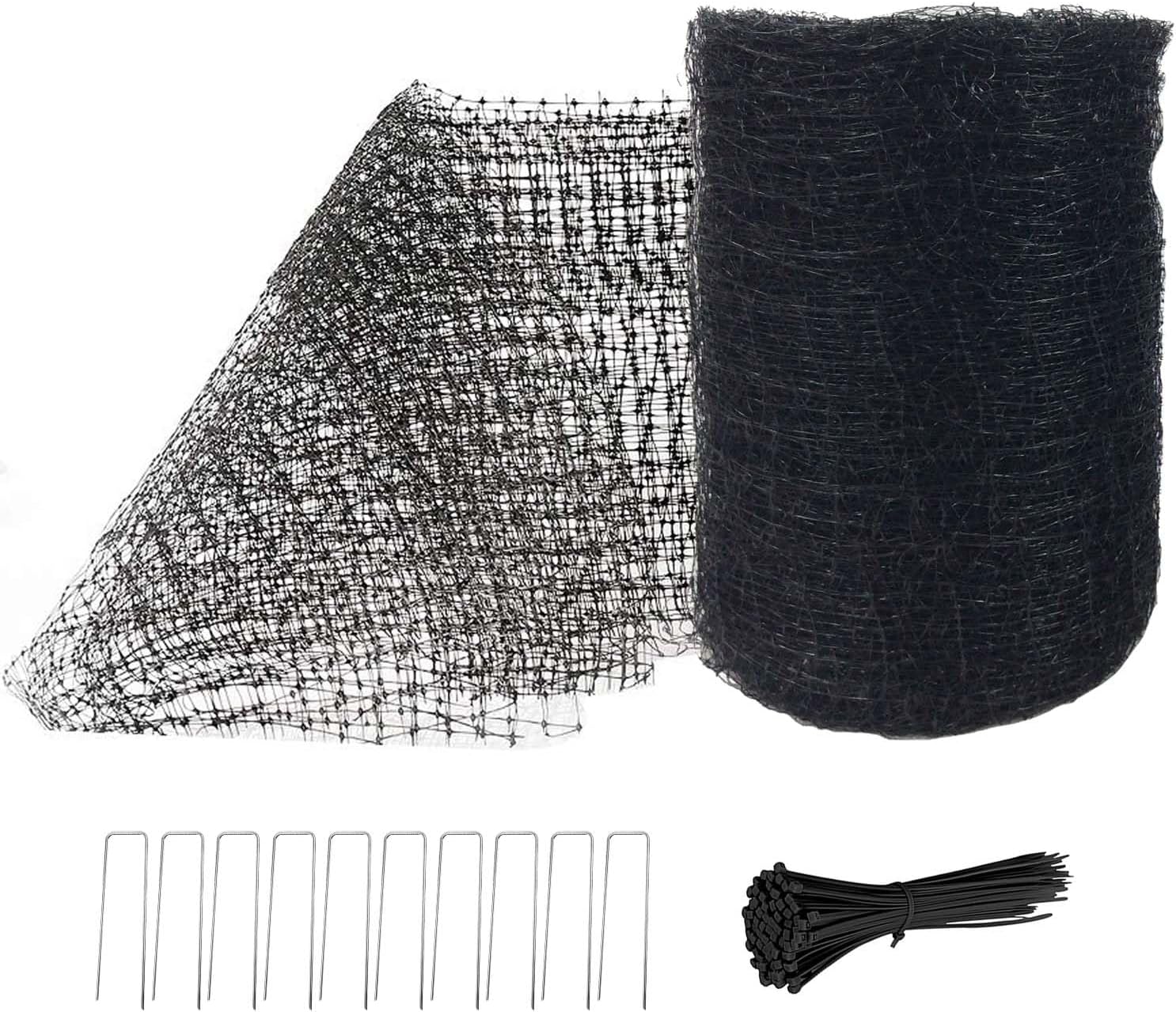
| Unit Count | 100 Feet |
|---|---|
| Mesh Opening | 3/4" square mesh |
| Material Type | Polypropylene |
| Included Accessories | 10 stakes and 50 zip ties |
This polypropylene garden netting unrolls to cover a large area and is intended to keep birds, rabbits and other small animals away from fruiting plants and raised beds. Typical use is to drape or surround plants and secure the top and bottom edges with stakes, U-shaped staples or zip ties; the package includes 10 staples and 50 cable ties to simplify installation. The 3/4 inch square mesh stops pecking on berries and small fruit without tightly restricting plant growth, while the reinforced edge bands make it easier to anchor the net and reduce tearing. Because the material is UV-stabilized and rot resistant it can be reused season after season, and it is easy to cut to fit irregular beds or individual shrubs. Limitations are that the net is lightweight so very determined larger animals can push through unless supported by stakes or a frame, and it requires some effort to tension neatly over tall or heavily branched plants.
Best for: Buyers who want a low-maintenance, reusable way to protect fruits and vegetables from birds and small mammals and prefer a straightforward install with included accessories.
Less Ideal for: People who need a heavy-duty physical barrier against deer or large wildlife or who want a permanent, self-supporting fencing solution.
- Large 7 x 100 ft coverage suitable for protecting multiple beds or a small orchard area
- 3/4" square mesh that prevents bird pecking while allowing light and water through
- Reinforced top and bottom edges for easier anchoring and reduced tearing
- Made from UV-stabilized, rot-resistant polypropylene for seasonal reuse
- Includes installation accessories (U-staples and cable ties) to get started immediately
- Lightweight construction needs stakes or a frame to stop larger browsing animals
- Black color can absorb heat in full sun which may be noticeable on very hot days
Verdict: A simple, reusable large-roll net that reliably keeps birds and small animals off fruit and vegetable plantings when tensioned and anchored properly.
Choosing the Right Garden Netting for Squirrels: Key Factors to Consider
Mesh Opening Size
Mesh opening size determines what pests can get through. For squirrels you need a mesh small enough to prevent paws and noses from penetrating while still allowing airflow and sunlight to reach plants.
Too-large openings defeat the purpose and let squirrels grab fruit or pull at bulbs. Extremely fine meshes provide better exclusion but can increase shading and reduce airflow if used at large scale. Consider where you will use the netting: over low beds, around fruiting shrubs, or as a temporary cage for bulbs. Match mesh size to the target pest and the plant type to balance protection and plant health.
Tensile Strength and Construction
Tensile strength reflects whether netting will resist chewing, tugging, and repeated contact. Squirrels are persistent and can gnaw at weak fibers or create holes by pulling at edges.
Look for netting with strong woven or knotted construction rather than loosely extruded plastic. Reinforced edges and the option to anchor the netting reduce stress points that lead to tears. Stronger materials also tolerate repeated installation and seasonal storage without fraying.
UV and Weather Resistance
Netting used outdoors must withstand sun, rain, and temperature swings. UV exposure breaks down some plastics, making them brittle and prone to failure where squirrels can exploit tiny cracks.
UV-stabilized netting maintains flexibility and strength season after season. Resistance to moisture and mildew matters in humid climates and prevents rot-related failures. If you plan to leave netting up for months, choose materials specified for prolonged outdoor use to avoid mid-season replacement.
Ease of Installation and Removal
A netting solution is only useful if you can install and remove it without too much effort. Easy installation reduces gaps that squirrels use as entry points and makes routine tasks like harvesting or weeding less of a chore.
Consider how the netting attaches to supports or frames and whether it can be cut without unraveling. Reusable fasteners, hemmed edges, or built-in tie points speed setup. If you need to roll the netting back regularly for pollination or harvest, pick a style that folds or rolls cleanly and resists tangling.
Plant Safety and Crop Access
Netting must protect crops without harming foliage or fruit. Coarse, stiff materials can abrade leaves and damage tender stems if they rub during wind or growth.
Choose a material that rests lightly on plants or can be supported above the canopy. Consider how the netting affects pollination for flowering crops and whether it can be temporarily opened for beneficial insects. Plant-safe netting reduces accidental harm during routine garden work.
Size, Coverage, and Customizability
Consider the dimensions of the area you need to protect and whether the netting can be adapted. Large continuous rolls reduce seams but can be heavy; smaller panels are easier to handle but require joins that can become weak points.
Customizable netting that is easy to cut and fasten lets you tailor coverage to irregular beds or espaliered fruit. Look for netting that accepts common garden fasteners and can be reinforced at corners to keep squirrels from working loose edges.
How Mesh Size Affects Different Garden Uses
Mesh size matters differently depending on the target task. For protecting bulbs and seed trays, very fine mesh keeps small paws and noses out but may need a simple support frame so it does not rest on seedlings. For fruit trees and shrubs, a slightly larger mesh that blocks paws while allowing bees and light to pass is often a better tradeoff.
Raised beds and vegetable rows typically benefit from netting that stands a few inches above plants to avoid leaf abrasion. Netting over cages or hoops reduces plant contact and extends material life.
- Fine mesh for seedlings and bulbs
- Medium mesh for fruit and large vegetables
- Supported netting prevents foliage damage
Installation Techniques That Reduce Gaps
Squirrels exploit gaps at edges and corners, so focus on secure anchoring. Stakes, soil pegs, or clamping the netting to a wooden frame keeps edges tight. Where seams are needed, overlap and use zip ties or clips to prevent small openings.
If using netting on trees or tall shrubs, drape it over a simple support structure or build a removable frame that keeps the mesh off fruit. Regularly inspect for sagging or loose spots after storms.
- Anchor edges to soil or frames
- Overlap seams and secure with clips
- Support netting above fruiting zones
Temporary Vs Long-Term Use
Temporary netting is useful during vulnerable periods such as fruit ripening or spring bulb emergence. For seasonal use, prioritize portability and ease of removal. Long-term installations need better UV resistance and stronger anchoring to survive weather and repeated animal contact.
Decide whether you will remove netting for pollinators or leave it in place. Removable systems should be quick to open and reseal, while permanent setups can be more rigid and durable.
- Use light, easy-to-handle netting for seasonal needs
- Choose UV-stable, reinforced netting for year-round protection
Supporting Structures and Frames
Netting performs best when used with simple supports. Hoops, stakes, and lightweight frames keep mesh off plants and reduce rubbing. For small trees and espaliered shrubs, a removable cage-style frame lets you protect fruit without trapping it.
When planning supports, aim for materials you can anchor securely in wind-prone areas. Avoid sharp edges that could cut the netting and create entry points for pests.
- Hoops and cages reduce plant contact
- Secure anchors prevent wind-driven gaps
- Smooth frame edges extend net life
Maintaining Netting for Multi-Season Use
Routine inspections prolong netting life. Check for frayed areas, chewed holes, and UV-related brittleness at the start and end of each season. Repair small holes promptly with patching techniques to prevent enlargement.
Clean netting if it collects organic debris to avoid moisture retention and mildew. Store folded or rolled in a dry place away from direct sunlight to preserve flexibility for the next season.
- Inspect for damage after storms and heavy wildlife activity
- Patch small holes quickly
- Store dry and protected from sunlight
How We Chose the Best Garden Netting for Squirrels
We shortlisted durable, garden-ready netting options that match typical squirrel problems gardeners report: bulb digging, fruit pecking, and canopy chewing. Our evaluation emphasized mesh opening size and material strength because small-diameter rodents can squeeze through large gaps and chew weaker fibers. We also prioritized UV resistance and rot resistance so netting lasts multiple seasons exposed to sun and moisture. Practical installation and compatibility with common supports mattered, since awkward mounting quickly leads to gaps where squirrels can exploit weak points. Plant safety was another filter: we excluded materials that trap vines or abrade foliage during normal growth. Excluded items included decorative meshes not designed for outdoor pest exclusion and any netting that required specialty fasteners or heavy structural supports beyond typical backyard use. The final criteria focused on mesh size control, tensile durability, UV and moisture resistance, ease of installation and removal, and plant safety during growth and harvest.
FAQ
What mesh size is small enough to stop squirrels?
Mesh openings under about 1/2 inch usually prevent squirrels from reaching through with paws. The exact size depends on the animal behavior in your area and the plant parts you need to protect. For bulbs and very small fruit, finer mesh is safer.
Can netting harm birds or pollinators?
Netting can impede larger pollinators if it is draped directly over flowers. Use supported netting or temporarily open sections during peak bloom to allow pollinators access. Choose meshes that are large enough for insects but still block larger pests when possible.
How do I keep netting from blowing loose in wind?
Anchor netting with soil staples, stakes, or by tying it to a frame. Overlap seams and secure them with clips or ties. In windy sites, use stronger support frames and avoid leaving loose draped sections that act like sails.
Is netting reusable from season to season?
Many types of garden netting are reusable if they are UV-stabilized and stored properly. Inspect for brittleness and chewing damage before reusing and repair small holes to extend service life.
Will netting stop squirrels that climb trees onto fruit?
Netting can stop climbing squirrels if you drape it over the canopy and secure it so animals cannot access fruit from branches. However, squirrels can sometimes work edges, so use continuous coverage and secure all attachment points to reduce access.
Final Verdict
Prioritize mesh size and material strength when choosing garden netting for squirrels. Smaller openings and durable, UV-resistant construction reduce the chance of chewing and entry. Balance plant health by supporting the mesh above foliage and planning for pollinator access when needed. With secure anchoring and routine inspection, netting is an effective, low-maintenance strategy for protecting bulbs, fruits, and young plants.
