

Note: This article contains affiliate links. If you click on these links and make a purchase, I may earn a small commission at no extra cost to you. This helps support my research and content. Read my full affiliate disclosure here.
Choosing the right garden netting changes how well you protect vegetables, berries, and ornamentals without blocking sunlight or airflow. The right netting keeps birds, deer, and insect pests from damaging crops while still letting pollinators visit and plants breathe. This guide covers six top garden netting options vetted for common backyard and small-scale market gardens. We shortlisted nets that perform across key gardener concerns: mesh size for target pests, material strength and UV resistance, ease of installation and removal, and how the fabric affects light transmission and plant microclimate. Read on to understand the tradeoffs so you can pick a netting that suits your crop mix, season length, and mounting approach.
Top Picks at a Glance
| Best Overall The best all-around choice for most situations | FEED GARDEN 7 x 100 ft UV-Protected Deer and Bird Garden Netting with Stakes and Zip Ties |  |
| Best Quality Built to a higher standard if you want something more solid | RIFNY Heavy-Duty Garden Bird Netting, 13 x 40 ft (HDPE) |  |
| Best Value The sweet spot between price and what you get | KLEWEE 10 x 50 ft Ultra-Fine Garden Mesh Netting |  |
| Best Budget The cheapest option that still gets the job done reliably | FARAER 10×10 ft Ultra Fine Garden Netting Cover |  |
| Highest Rated A top-rated pick with lots of positive feedback | Garden Tailor 4'x10' Fine Bug Netting (40 sq ft) HDPE Pest Barrier |  |
| Most Popular A crowd favorite that many people choose with confidence | Feitore 7 x 100 ft Polypropylene Garden Netting with Reinforced Edges |  |
FEED GARDEN 7 x 100 ft UV-Protected Deer and Bird Garden Netting with Stakes and Zip Ties

| Material Type | Polypropylene (PP) |
|---|---|
| Mesh Size | 3/4" fine mesh |
| Includes | 10 metal landscape staples, 50 zip ties |
| UV Protection | Enhanced UV-protected material |
This FEED GARDEN kit is a straightforward garden-protection solution: a large sheet of UV-treated polypropylene netting with 3/4" fine mesh plus ten metal landscape staples and fifty zip ties for installation. It is typically used to drape over raised beds, individual plants, fruit trees, or to create temporary fencing around garden rows. The UV protection and lightweight construction make it easy to cut to size and reuse season after season while still allowing light, air and water through. Included staples and ties speed up setup so one person can secure edges and reduce sagging that traps wildlife. Practical benefits include visible but unobtrusive protection for vegetables and berries, and the ability to create custom-sized covers without special tools. Limitations are that the fine mesh still needs to be pulled taut and fully secured to prevent animals from pushing through or getting tangled, and the lightweight material will not replace rigid fencing where big game pressure or livestock is present.
Best for: Gardeners who want a reusable, easy-to-install barrier to protect vegetables, berries and small fruit trees from common garden pests and prefer a flexible solution they can cut and reposition as needed.
Less Ideal for: Landowners needing permanent, heavy-duty fencing against large deer or livestock should choose a sturdier fence system instead.
- UV-protected polypropylene construction resists weathering for multi-season use
- 3/4" fine mesh blocks deer, rabbits, birds and small pests while letting light and water through
- Comes with landscape staples and 50 zip ties for immediate installation
- Lightweight and easy to cut to fit raised beds, fruit trees, or temporary fences
- Requires careful securing and tensioning to avoid loose sections that can trap wildlife or allow entry
- Not a substitute for rigid or electrified fencing where large deer or livestock are present
Verdict: A practical, ready-to-install netting kit that gives flexible, reusable protection for vegetables and fruit from deer, rabbits and birds.
RIFNY Heavy-Duty Garden Bird Netting, 13 x 40 ft (HDPE)

| Material Type | High Density Polyethylene (HDPE) |
|---|---|
| Mesh Size | 5/8 inch |
| Weight | 30 g |
| UV Resistant | Yes |
This RIFNY garden bird netting is a flexible, heavy-duty HDPE mesh sized 13 x 40 feet that creates a lightweight physical barrier to keep birds, squirrels and other small garden pests away from raised beds, fruit trees and ponds. The 5/8-inch diamond mesh balances exclusion and airflow so sunlight and rain still reach plants while preventing most garden birds from landing on fruits and berries. It is UV treated and rated for wide temperature ranges, so it can be re-used season to season without quickly degrading. Installation is straightforward: cut to size with scissors, drape or stretch over a support, then secure with the included staples and twist ties. Because the net stretches, avoid over-tension lengthwise or the width will narrow; it is best used draped loosely over plants or supported by stakes. The material is lightweight which makes handling easy but means you should anchor it well against persistent wind and larger animals. For gardeners who need a practical, reusable barrier for vegetables and small fruit, it delivers reliable protection at a modest weight.
Best for: Gardeners who prioritize dependable, season-to-season pest exclusion and want a reusable, easy-to-handle net for protecting vegetables, berries and small fruit trees.
Less Ideal for: People needing a heavy-duty barrier against deer or large mammals or those who require a rigid framed system rather than a draped net.
- UV-resistant HDPE construction designed for repeated seasonal outdoor use
- Fine 5/8-inch mesh keeps birds and small animals away while allowing light and water through
- Comes with staples and twist ties for straightforward installation and cutting to fit
- Flexible, tangle-resistant weave that stretches to cover irregular shapes
- Lightweight fabric requires good anchoring and can be vulnerable to persistent wind or larger animals
Verdict: A practical, UV-stable HDPE bird netting that gives performance-focused gardeners an easy, reusable way to protect produce and small plants from birds and small animals.
KLEWEE 10 x 50 ft Ultra-Fine Garden Mesh Netting

| Material Type | Polyethylene (PE) |
|---|---|
| Mesh Size | 0.8mm x 0.8mm |
| Unit Count | 1 Count |
| Item Type Name | Garden Netting |
This KLEWEE garden netting is a large, see-through polyethylene sheet designed to protect raised beds, bushes and small fruit trees from birds, rabbits, deer and insect pests. Typical use is to drape or cut the sheet to size, secure edges with soil, stones or stakes, or build simple hoop frames for raised beds. The 0.8 mm (about 80 mesh per inch) ultra-fine weave keeps out small insects and cicadas as well as larger pests while remaining permeable to rain, light and airflow so plants can be watered and monitored without removing the cover. The material is lightweight and UV-stabilized PE for seasonal reuse and easy handling, and the 10 x 50 ft size covers larger beds or multiple plants and can be trimmed where needed. Limitations are that the single-sheet format needs fastening to resist wind and will require replacement or repair if torn, and it does not include built-in fasteners or hoops so you may want stakes or clips for a durable installation.
Best for: Gardeners who prioritize practical, cost-effective protection for vegetables and small fruit plantings and want a large, adaptable cover they can cut and secure themselves.
Less Ideal for: People looking for a ready-made framed or hooped enclosure or those who need a heavy-duty permanent fence solution for large deer pressure.
- Very fine 0.8 mm mesh blocks small insects and cicadas as well as birds and larger pests
- Generous 10 x 50 ft sheet can cover multiple beds or be cut to custom sizes
- Lightweight, transparent PE lets rain, air and sunlight reach plants so regular care can continue without removing the net
- UV-stabilized polyethylene construction is suitable for seasonal reuse and easy handling
- No integrated fasteners or frame components so additional stakes or clips are needed for secure installation
- Single sheet can tear if snagged and will require patching or replacement
Verdict: Buy this if you want a large, ultra-fine, reusable PE sheet that you can cut and secure yourself to protect beds and fruiting plants from insects and small animals.
FARAER 10×10 ft Ultra Fine Garden Netting Cover

| Net dimensions | 10 x 10 ft |
|---|---|
| Mesh size | 0.8mm x 1mm |
| Material | UV-stabilized polyethylene |
This 10×10 ft garden netting is a simple, low-cost barrier for small beds, containers and young trees. The ultra-fine 0.8 x 1 mm mesh keeps out birds and many small insects while remaining see-through so you can monitor plants underneath. Made from UV-stabilized PE, the fabric is breathable and lets water, light and liquid feed pass through without removing the cover. It is lightweight and easy to drape directly over plants, then secure with soil, stones or stakes, and it can be cut to fit irregular shapes. Because it is reusable and intended for general orchard, raised bed and greenhouse use, it is a practical option for seasonal protection. Expect limitations on heavy-duty durability where frequent abrasion or very sharp edges occur, and it does not provide structural support on its own so you may need hoops or frames for taller crops.
Best for: Buyers looking for an affordable, reusable way to protect small vegetable beds, container gardens and fruit bushes from birds and pests in seasonal use.
Less Ideal for: Gardeners who need rigid, structural covers for tall crops, permanent installations, or heavy-duty pest control should consider framed netting or mesh with stronger materials.
- Ultra-fine 0.8mm x 1mm mesh blocks birds and many small insects
- Breathable and see-through so light, air and water pass through
- UV-stabilized polyethylene for season-to-season reuse
- Can be cut to fit beds, containers or irregular shapes
- Lightweight material offers no built-in support for tall plants and can wear faster with abrasion
Verdict: A budget-friendly, reusable ultra-fine net that lets water and light through while protecting small beds and fruit from birds and many tiny pests.
Garden Tailor 4'x10' Fine Bug Netting (40 sq ft) HDPE Pest Barrier

| Unit Count | 40 Square Feet |
|---|---|
| Material Type | High Density Polyethylene (HDPE) |
| Mesh | 40 Mesh |
| UV | UV stabilized |
This Garden Tailor fine bug netting is a simple, reliable pest barrier for vegetable beds, raised beds, small orchards, and greenhouse frames. Made from 100% new HDPE with a 40-mesh weave, the fabric keeps out common pests such as aphids, cabbage white butterflies, carrot flies, and small mammals while still passing rain, light, and airflow. In practice you drape or staple it over hoops, frames, or cages and leave it in place during the growing season since the material is UV-stabilized and described as permeable enough to water through. The net is lightweight and easy to cut to custom sizes, and the tightly finished edges reduce fraying. Expect straightforward protection without complex installation, but note this size is best for small to medium projects rather than covering large fields. For gardeners prioritizing a durable, low-maintenance insect barrier, this product delivers predictable protection season after season.
Best for: Gardeners who want a dependable, low-maintenance insect barrier for small to medium vegetable beds, raised beds, or hoop frames and value long-term outdoor durability and predictable protection.
Less Ideal for: Large-scale growers who need to cover extensive row lengths or people who need a rigid or permanent cage solution for heavy wildlife exclusion.
- 40-mesh HDPE blocks a wide range of small insects and some small animals
- UV-stabilized material designed for outdoor durability
- Permeable to water, air, and most sunlight so plants can be watered and ventilated without removal
- Tightly finished selvedge reduces unraveling and makes edges easier to secure
- Can be cut to fit custom shapes and sizes for beds and frames
- Single 40 sq ft piece may be too small for large beds or multiple rows
- Fine mesh can slightly reduce very intense sunlight, which may matter in low-light sites
Verdict: A durable, UV-stabilized fine-mesh net that provides reliable, low-effort protection for small to medium garden beds.
Feitore 7 x 100 ft Polypropylene Garden Netting with Reinforced Edges
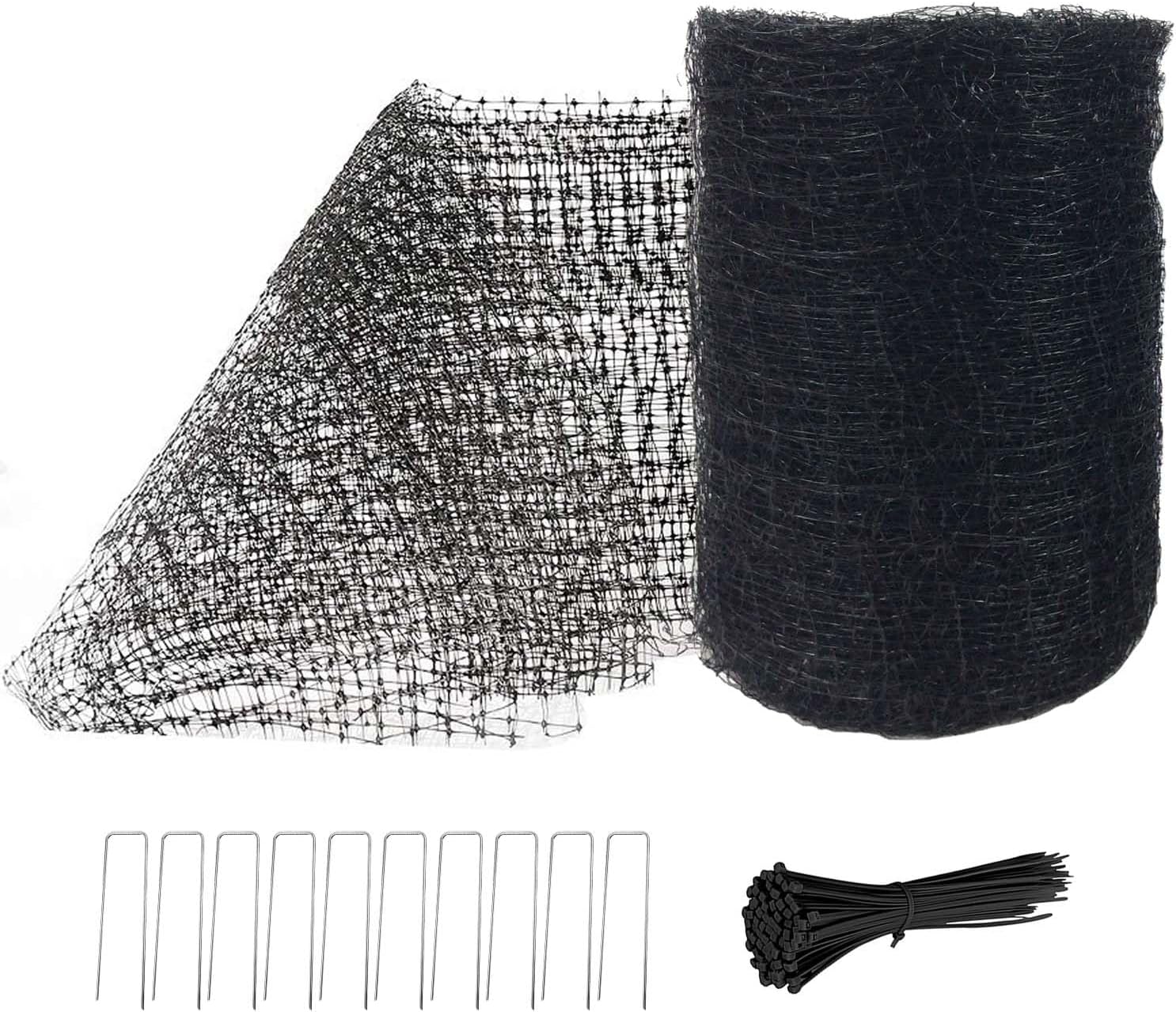
| Unit Count | 100 Feet |
|---|---|
| Mesh Opening | 3/4" square mesh |
| Material Type | Polypropylene |
| Included Accessories | 10 stakes and 50 zip ties |
This polypropylene garden netting unrolls to cover a large area and is intended to keep birds, rabbits and other small animals away from fruiting plants and raised beds. Typical use is to drape or surround plants and secure the top and bottom edges with stakes, U-shaped staples or zip ties; the package includes 10 staples and 50 cable ties to simplify installation. The 3/4 inch square mesh stops pecking on berries and small fruit without tightly restricting plant growth, while the reinforced edge bands make it easier to anchor the net and reduce tearing. Because the material is UV-stabilized and rot resistant it can be reused season after season, and it is easy to cut to fit irregular beds or individual shrubs. Limitations are that the net is lightweight so very determined larger animals can push through unless supported by stakes or a frame, and it requires some effort to tension neatly over tall or heavily branched plants.
Best for: Buyers who want a low-maintenance, reusable way to protect fruits and vegetables from birds and small mammals and prefer a straightforward install with included accessories.
Less Ideal for: People who need a heavy-duty physical barrier against deer or large wildlife or who want a permanent, self-supporting fencing solution.
- Large 7 x 100 ft coverage suitable for protecting multiple beds or a small orchard area
- 3/4" square mesh that prevents bird pecking while allowing light and water through
- Reinforced top and bottom edges for easier anchoring and reduced tearing
- Made from UV-stabilized, rot-resistant polypropylene for seasonal reuse
- Includes installation accessories (U-staples and cable ties) to get started immediately
- Lightweight construction needs stakes or a frame to stop larger browsing animals
- Black color can absorb heat in full sun which may be noticeable on very hot days
Verdict: A simple, reusable large-roll net that reliably keeps birds and small animals off fruit and vegetable plantings when tensioned and anchored properly.
Choosing the Right Garden Netting: Key Factors to Consider
Mesh Size and Target Pests
Mesh size is the single most important determinant of what the netting will keep out. Fine mesh under a few millimeters will block small insects such as midges and thrips, while larger meshes exclude birds and deer but allow pollinators through. Choosing the wrong mesh either leaves crops vulnerable to the pest you care about or blocks beneficial insects that pollinate and control pests.
Think through the pest profile in your garden and the crops you grow. For fruiting vegetables and flowering plants where pollination is required, select a mesh that blocks pests but still permits bees and larger beneficial insects access. For seed-saving beds or delicate seedlings, a tighter mesh is often worth the tradeoff in reduced airflow.
Material Durability and UV Resistance
Netting used outdoors needs to withstand sunlight, wind, and repeated handling. Materials with UV stabilizers resist breakdown and retain strength season after season. Look for polypropylene or polyethylene fabrics specified for UV protection rather than untreated knits that can become brittle and tear after one season.
Durability determines long-term cost and labor. A slightly heavier, UV-stable net can be recycled across seasons and reused on rotating beds, while flimsy netting may need replacement frequently and create recurring setup work. Also consider how the net resists fraying at attachment points and whether edges are reinforced to reduce tear propagation.
Light Transmission and Microclimate Effects
All netting reduces incoming light to some degree and can alter airflow. Lightweight, open-weave netting transmits most daylight and keeps humidity closer to ambient, whereas denser fabrics create shade and trap moisture. For sun-loving vegetables and fruiting crops, prioritize nets with high light transmission to avoid slowed growth or reduced yields.
Assess how much shade your plants tolerate and whether reduced light could impact flowering and ripening. In humid climates, choose netting that preserves airflow to limit fungal and bacterial disease development. If you plan to use nets for frost protection or windbreak purposes as well, consider fabric choices that balance light with the specific protective benefit you need.
Attachment Method and Ease of Use
How you anchor and remove netting affects how often you will actually use it. Nets that work with simple clips, staples, or under-hoop installations save time compared with those that need custom framing or knotting. Look for nets with hemmed edges, grommets, or reinforced borders to speed attachment and reduce tearing during handling.
Consider the size of the area you need to cover and whether you will remove nets frequently for harvest or maintenance. Lightweight nets are easier to drape and fold but may require more attachment points to prevent sagging. Heavier nets hold shape better but add labor when installing over longer runs.
Size, Weight, and Storage
Netting comes in rolls and sheets with varying weights and packed volumes. Heavier, tightly woven fabrics occupy more storage space and are harder to handle alone, while ultralight nets fold compactly but can tangle and catch on plants when removed. The right balance depends on the scale of your garden and how many hands you have available for setup.
Also consider how you will store netting between seasons. Clean, dry storage preserves material life. If you need to transport nets to multiple sites, choose lighter options or segment the netting into manageable lengths. Labels or color-coded edges can help keep track of mesh types and sizes during seasonal rotation.
Compatibility With Garden Structures
Netting must work with your existing hoops, frames, trellises, or crop rows. Stretchy netting can be draped across hoops for quick tunnels, while stiffer nets are better when tied to fixed frames. Consider whether you need a net that tolerates being stapled to wooden frames or one that pairs with pipe fittings and clips.
Consider the clearance needed for tall crops and how the net will be supported to avoid crushing foliage. If using netting over fruit trees or berry canes, look for fabrics that distribute load so ripening fruit does not puncture the fabric and cause damage to both fruit and net.
Garden Uses and When to Deploy Netting
Garden netting has multiple practical uses beyond simple bird exclusion. Use fine-mesh nets at seedling and transplant stages to shield young plants from flying pests and heavy egg-laying insects. Larger mesh sizes work well for bird and deer deterrence around vegetable patches and small fruit trees. Seasonal timing matters: install netting before pests arrive or before flowers open to prevent damage and ensure pollination timing makes sense with your mesh choice.
- Fine mesh for insects and small flies
- Medium mesh for birds and large insects
- Heavy-duty meshes for deer and larger wildlife
Mounting Options: Hoops, Frames, and Drape Methods
Netting can be draped directly over plants, supported by flexible hoops, or attached to rigid frames. Hoops allow quick tunnels that are easy to open for maintenance, while rigid frames give a neat, long-term structure for perennial beds. Draping is fastest for small beds but may require more clips to prevent sagging and plant contact, which can cause abrasion and disease in wet weather.
- Hoop tunnels for quick seasonal use
- Frames for permanent or multi-year installations
- Draping for temporary or irregularly shaped areas
Maintenance and Repair Tips
Small tears and snags are normal. Reinforce tears with UV-resistant tape or stitch repairs using UV-stable thread to extend service life. Clean nets after the season by removing soil and plant debris and hang them to dry; mold and trapped moisture will degrade fibers faster. Inspect attachment points and edges before redeploying to prevent larger failures during wind events.
- Patch small holes promptly to stop tear propagation
- Store dry and folded in a breathable container
- Inspect hems and grommets each season
Netting and Pollination Strategies
When crops require insect pollinators, plan net use so pollination is not impeded. One approach is to cover plants for pest-free vegetative growth, then remove nets briefly during peak bloom or provide controlled openings for pollinators. Another option is to use mesh sizes that block pests but allow larger pollinators such as bumblebees and honeybees to enter. Time your covers around daily pollinator activity to minimize disruption.
- Remove or open nets during peak bloom when needed
- Use medium mesh to allow larger pollinators
- Supplement with hand-pollination if access is limited
How We Chose the Best Garden Netting
We selected garden netting candidates using criteria that reflect practical garden use rather than marketing claims. We prioritized mesh size because it determines which pests are excluded and how pollinators and beneficial insects interact with crops. Material durability and UV resistance were essential to estimate how long a net will last in sun and repeated handling. Ease of installation and attachment options were included because most gardeners need fast setup and seasonal removal with minimal tools. Light transmission and airflow were evaluated to ensure nets do not create excessively shaded or humid microclimates that encourage disease. Weight and stretch characteristics were considered for compatibility with hoops, frames, and trellises. We excluded nets intended only for industrial or construction uses and any fabric with insufficient mesh specifications for backyard horticulture. Products that required specialized fasteners or professional installation were also filtered out to focus on gardener-friendly options.
FAQ
Will garden netting block pollinators?
It depends on mesh size. Very fine meshes can block small pollinators and beneficial insects, while medium meshes allow larger bees and hoverflies through. Match mesh size to your pollination needs and consider temporary removal during bloom.
How long does typical garden netting last outdoors?
Lifespan varies by material, UV protection, and handling. UV-stabilized polyethylene or polypropylene netting often lasts multiple seasons when stored and maintained properly. Untreated or thin fabrics may degrade within a single season.
Can I use netting to protect fruit trees from birds?
Yes. Larger-mesh nets are commonly draped over individual trees or branches to keep birds away. Make sure the netting is secured so birds cannot get trapped and so fruit does not press into the fabric and cause punctures.
Will netting cause humidity problems and disease?
Denser netting can reduce airflow and raise humidity under the cover, which may increase disease risk in wet climates. Choose open-weave netting for humid areas and monitor plants for signs of fungal issues, adjusting coverage as needed.
How should I store netting between seasons?
Clean nets of soil and plant debris, let them dry completely, then fold or roll them loosely and store in a cool, dry place out of direct sunlight. Proper storage helps preserve UV stabilizers and prolongs usable life.
Can I cut netting to size without losing strength?
You can cut netting but expect edges to fray unless finished. Hemming, adding grommets, or using UV-resistant tape along cut edges prevents tear propagation and makes attachment easier.
Final Verdict
Choosing the right garden netting is a balance of mesh size, durability, and how the fabric affects light and airflow in your beds. Prioritize the pest threats you face and the crops you grow when selecting mesh, and favor UV-stable materials if you plan to reuse nets across seasons. Consider how you will mount and maintain the fabric because ease of handling often determines whether nets are used consistently. Decide first which pests are the priority, then match mesh and material to that task while keeping pollination and microclimate needs in mind. With those tradeoffs clear, you can pick a netting option that provides season-long protection without compromising crop health.
