

Note: This article contains affiliate links. If you click on these links and make a purchase, I may earn a small commission at no extra cost to you. This helps support my research and content. Read my full affiliate disclosure here.
If you grow fruit, berries, or young vegetable transplants, bird pressure can quickly turn a promising season into a string of losses. The right garden netting for birds keeps produce intact while letting pollinators and sunlight through, and it fits the scale of your planting area whether you garden in raised beds, containers, or small orchards. This guide covers seven top-rated netting solutions shortlisted for their coverage options, mesh size, and durability. We evaluate how each option performs in real gardens for installation, wildlife safety, and season-to-season reuse. Read on to find a netting approach that matches your planting layout and bird pressure, and then check the product list for specifics.
Top Picks at a Glance
| Best Overall The best all-around choice for most situations | Vocray Bird Netting for Chicken Coop 25 x 100 ft, 1" Mesh (HDPE) |  |
| Best Quality Built to a higher standard if you want something more solid | JUNKOGO Heavy‑Duty HDPE Bird Netting, 25 x 100 ft, 1" Mesh |  |
| Best Value The sweet spot between price and what you get | FEED GARDEN 7 x 100 ft Deer and Bird Garden Netting with Stakes and Zip Ties |  |
| Best Budget The cheapest option that still gets the job done reliably | Sukh Bird Netting for Garden 13 x 33 ft Polyethylene Mesh |  |
| Highest Rated A top-rated pick with lots of positive feedback | YUESHUNSLL Polyethylene Garden Bird Netting, 13 x 33 ft |  |
| Most Popular A crowd favorite that many people choose with confidence | Feitore 7 x 100 ft Polypropylene Garden Netting with Reinforced Edges |  |
| Best Seller A high-volume bestseller chosen again and again | KLEWEE 7.5 ft x 100 ft Garden Bird and Deer Netting (3/4" Mesh) |  |
Vocray Bird Netting for Chicken Coop 25 x 100 ft, 1" Mesh (HDPE)

| Material Type | High Density Polyethylene (HDPE) |
|---|---|
| Mesh Size | 1" |
| Available Size | 25×100 ft |
| Woven Weight | 0.6 oz/m |
| UV-Resistant | Yes |
This Vocray bird netting is a heavy-duty HDPE woven mesh sold as a 25 x 100 foot sheet with 1 inch openings that balance pest exclusion and airflow. It is used to drape over chicken runs, cover fruit trees or raised beds, and secure to fences or posts with zip ties, stakes, or stones. The woven construction resists tangling and is UV and weather resistant so it can stay in place through rain, sun, and seasonal temperature swings. Practical benefits include large coverage from a single piece that can be cut to size, enough strength to withstand predator contact, and openness that permits watering and pollination without removal. Limitations are that diamond-shaped mesh can change dimensions if overstretched so planning extra material is wise, and installation over tall trees or complex shapes requires additional supports and time. For most backyard growers this netting provides a durable, reusable barrier that keeps birds and small mammals out while letting plants get sunlight and water.
Best for: Gardeners and small flock keepers who want a durable, reusable net that protects fruit, berries, and chicken runs without blocking light or water, and who are willing to plan and secure a single large sheet to fit their layout.
Less Ideal for: People needing a ready-made rigid frame or pre-sized covers for complex canopies or very tall trees, or those who prefer instant pop-up enclosures rather than cutting and fastening netting.
- Woven HDPE construction for UV and weather resistance
- Large single-sheet coverage that can be cut to custom sizes
- 1" mesh effectively excludes many birds and small mammals while allowing light and water
- Thicker strands reduce tangling compared with fine nets
- Diamond-shaped mesh can distort if unevenly stretched which affects coverage dimensions
- Requires external supports or fastening hardware for secure installation over tall or irregular areas
Verdict: Choose this netting when you need a strong, weatherproof, large-area cover that keeps birds and small predators out while allowing sunlight and water to reach your plants.
JUNKOGO Heavy‑Duty HDPE Bird Netting, 25 x 100 ft, 1" Mesh

| Material Type | High Density Polyethylene (HDPE) |
|---|---|
| Mesh Size | 1 inch |
| Unit Count | 1 Count |
| Number of Packs | 1 |
This JUNKOGO netting is a performance‑oriented garden barrier made from woven HDPE with a 1 inch mesh that blocks most birds while deterring squirrels, rabbits, raccoons and similar pests. It arrives as a large sheet that is easy to cut to size and drape over raised beds, fruit trees, or chicken runs and can be secured with stakes, ties, or hoops. Notable features include a heavier woven construction than many competitors, UV and cold resistance for seasonal use, and enough elasticity to conform to uneven plantings while still supporting incidental weight. In practice it lets sunlight and water through so you can irrigate without removing the cover, and its durability means it can be reused across seasons. The main compromises are handling and installation on large areas since the full roll is bulky and it requires anchoring to prevent sagging or wind lift. For gardeners who need a robust, reusable bird and small‑animal barrier, this netting delivers reliable protection with straightforward setup.
Best for: Gardeners who prioritize reliable, long‑lasting protection for berry patches, raised beds, and small orchards and who are comfortable investing time to cut and securely install a heavy‑duty barrier.
Less Ideal for: Casual gardeners who want a quick, temporary cover for a single season or those who need a pre‑formed frame system rather than loose netting.
- Woven HDPE construction offers higher tensile strength and durability versus lightweight nets
- 1 inch mesh effectively blocks most birds while deterring small mammals
- UV and cold resistant for year‑round seasonal use and reuse
- Breathable and water‑permeable so irrigation and sunlight reach plants
- Large roll can be bulky to handle and may need two people for installation over big areas
- Requires external anchors or supports to prevent sagging in wind
Verdict: Choose this heavy‑duty HDPE netting when you want a reusable, high‑strength barrier that reliably keeps birds and small animals out of garden beds and fruit trees.
FEED GARDEN 7 x 100 ft Deer and Bird Garden Netting with Stakes and Zip Ties

| Material Type | Polypropylene (PP) |
|---|---|
| Mesh Size | 3/4" fine mesh |
| Includes | 10 metal staples and 50 zip ties |
| UV Protection | Enhanced UV-protected |
This FEED GARDEN netting is a long, fine-mesh barrier intended to protect garden beds and small fruit plants from birds, deer, rabbits, and squirrels. It ships with 10 metal landscape staples and 50 zip ties so you can cut the roll to length, anchor the edges, and drape or wrap it over raised beds, frames, or young trees. The 3/4 inch mesh keeps most birds and small mammals out while still passing sunlight, water, and air, and the manufacturer says the polypropylene is UV-stabilized for multi-season outdoor use. Because it is lightweight and comes as a continuous roll, one person can install short runs quickly, and the included fasteners remove guesswork for a basic setup. Expect to check tension and re-secure loose spots in windy areas since the product is not a rigid fence, and very large ungulates may push through if not supported by posts or a frame. For gardeners who want a reusable, cut-to-fit solution to keep birds off fruit and vegetables, this netting is a straightforward, practical option.
Best for: Gardeners who prefer a practical, reusable, cut-to-fit solution to keep birds and small mammals off fruit and vegetable plantings without building permanent fencing.
Less Ideal for: People who need a permanent, heavy-duty fence to deter large deer or install in extremely windy, exposed sites should consider sturdier framed solutions.
- Includes 10 metal landscape staples and 50 zip ties for immediate installation
- 3/4 inch fine mesh that blocks birds and small mammals while allowing light and water through
- UV-protected polypropylene designed for multi-season outdoor use
- Lightweight roll is easy to cut to size and install by one person
- Not a rigid barrier so requires posts or frames in high-wind areas or against larger animals
- Mesh size may still allow very small birds or insects through on close inspection
Verdict: A practical, ready-to-use roll of UV-stabilized fine-mesh netting that makes short work of bird and small mammal protection for raised beds and fruit plants.
Sukh Bird Netting for Garden 13 x 33 ft Polyethylene Mesh

| Net size | 13 x 33 ft |
|---|---|
| Mesh spacing | 0.8 inch |
| Material Type | Polyethylene (PE) |
This polyethylene bird net provides an economical way to keep birds and small animals off fruit trees, raised beds, and chicken coops. It is supplied as a single 13 x 33 ft sheet that you can cut to fit fences, trellises, or wrap around individual plants. The 0.8 inch mesh blocks most common garden birds while still letting sunlight and rain through so plants keep growing normally. Practical features include easy cutting to size, low weight for simple handling, and a reusable material that resists tearing when stretched properly. Because the net is basic and unframed you will need staples, U-pins, cable ties, or a support structure to secure it and create a buffer so fruit does not press against the mesh. For denser protection the maker recommends doubling layers. Expect a no-frills, cost-conscious solution that covers a lot of area but requires some DIY installation and periodic adjustment in windy conditions.
Best for: Buyers who want an affordable, do-it-yourself barrier to protect fruit and vegetable patches without buying rigid frames or bespoke covers. Good for gardeners prioritizing coverage and flexibility over polished installation.
Less Ideal for: People who need a permanently mounted or decorative solution or those who want protection for very small birds or insects without additional layers or hardware.
- Large 13 x 33 ft coverage lets you protect multiple plants or a small orchard with one sheet
- 0.8 inch mesh blocks most garden birds while allowing sunlight and rain to pass
- Lightweight polyethylene is easy to cut and reposition for customized installations
- Reusable and relatively tear-resistant when properly stretched and secured
- Requires external fasteners or a support frame since the product is sold as an unframed sheet
- Mesh may need a double layer or closer fastening to stop very small birds or persistent pests
Verdict: A budget-friendly, easy-to-cut polyethylene net that covers a large area and keeps common birds and small animals away from fruit and vegetable plants.
YUESHUNSLL Polyethylene Garden Bird Netting, 13 x 33 ft

| Material Type | Polyethylene (PE) |
|---|
This polyethylene garden netting is a straightforward, no-frills barrier for keeping birds and small pests away from fruit trees, shrubs, and vegetable plots. It is sold as a 13 x 33 foot sheet that can be cut to size and draped over plants or stretched to a support frame; the diamond mesh stretches widthwise so installers should avoid excessive lengthwise tension. The open weave lets sunlight and rain pass through so plants continue to grow normally, while the fine mesh and durable weave resist tearing under normal garden use. It is lightweight and portable, so one person can deploy or remove it quickly for seasonal protection. Limitations are that it needs a supporting method to keep birds from reaching plants through gaps and it can tangle if not handled carefully during installation or removal. For gardeners who need a reusable, breathable screen to protect harvests, this netting is a practical, economical choice.
Best for: Gardeners who prioritize dependable, reusable protection for fruit and vegetable plantings and want a simple physical barrier that preserves light and water access.
Less Ideal for: People who need a rigid or permanent enclosure or who want an invisible anti-bird solution without any installation effort.
- Breathable mesh allows sunlight and rain to reach plants for normal growth
- Durable polyethylene construction resists rot and corrosion for reuse
- Cut-to-size flexibility fits raised beds, trees, and irregular spaces
- Lightweight and portable for one-person installation and seasonal storage
- Requires a frame or anchoring to prevent gaps where birds can reach plants
- Diamond-shaped weave stretches unevenly if pulled lengthwise, which can alter coverage
Verdict: A durable, breathable polyethylene net that reliably keeps birds and small pests off fruit and vegetable plantings while letting sunlight and rain through.
Feitore 7 x 100 ft Polypropylene Garden Netting with Reinforced Edges
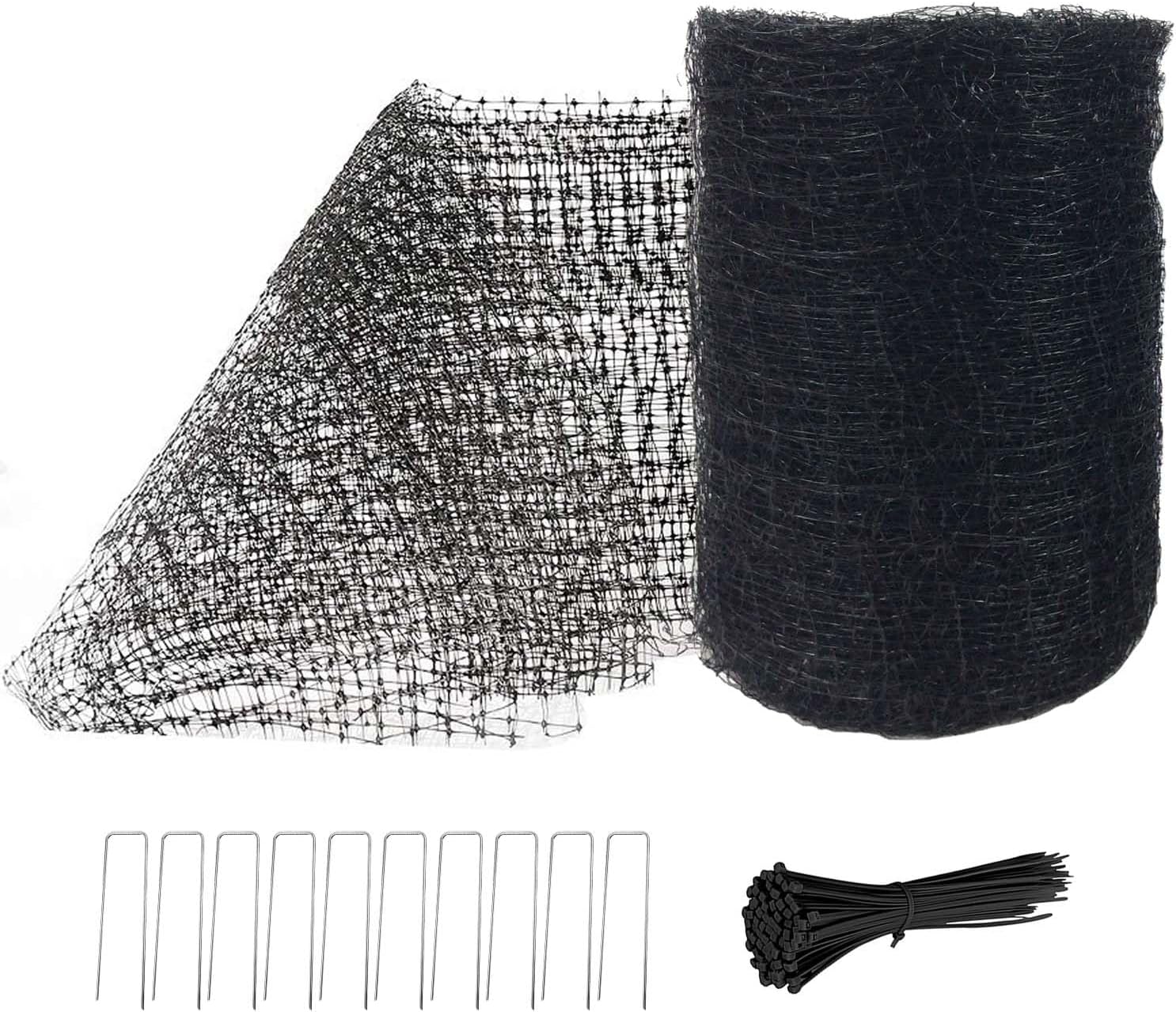
| Unit Count | 100 Feet |
|---|---|
| Mesh Opening | 3/4" square mesh |
| Material Type | Polypropylene |
| Included Accessories | 10 stakes and 50 zip ties |
This polypropylene garden netting unrolls to cover a large area and is intended to keep birds, rabbits and other small animals away from fruiting plants and raised beds. Typical use is to drape or surround plants and secure the top and bottom edges with stakes, U-shaped staples or zip ties; the package includes 10 staples and 50 cable ties to simplify installation. The 3/4 inch square mesh stops pecking on berries and small fruit without tightly restricting plant growth, while the reinforced edge bands make it easier to anchor the net and reduce tearing. Because the material is UV-stabilized and rot resistant it can be reused season after season, and it is easy to cut to fit irregular beds or individual shrubs. Limitations are that the net is lightweight so very determined larger animals can push through unless supported by stakes or a frame, and it requires some effort to tension neatly over tall or heavily branched plants.
Best for: Buyers who want a low-maintenance, reusable way to protect fruits and vegetables from birds and small mammals and prefer a straightforward install with included accessories.
Less Ideal for: People who need a heavy-duty physical barrier against deer or large wildlife or who want a permanent, self-supporting fencing solution.
- Large 7 x 100 ft coverage suitable for protecting multiple beds or a small orchard area
- 3/4" square mesh that prevents bird pecking while allowing light and water through
- Reinforced top and bottom edges for easier anchoring and reduced tearing
- Made from UV-stabilized, rot-resistant polypropylene for seasonal reuse
- Includes installation accessories (U-staples and cable ties) to get started immediately
- Lightweight construction needs stakes or a frame to stop larger browsing animals
- Black color can absorb heat in full sun which may be noticeable on very hot days
Verdict: A simple, reusable large-roll net that reliably keeps birds and small animals off fruit and vegetable plantings when tensioned and anchored properly.
KLEWEE 7.5 ft x 100 ft Garden Bird and Deer Netting (3/4" Mesh)
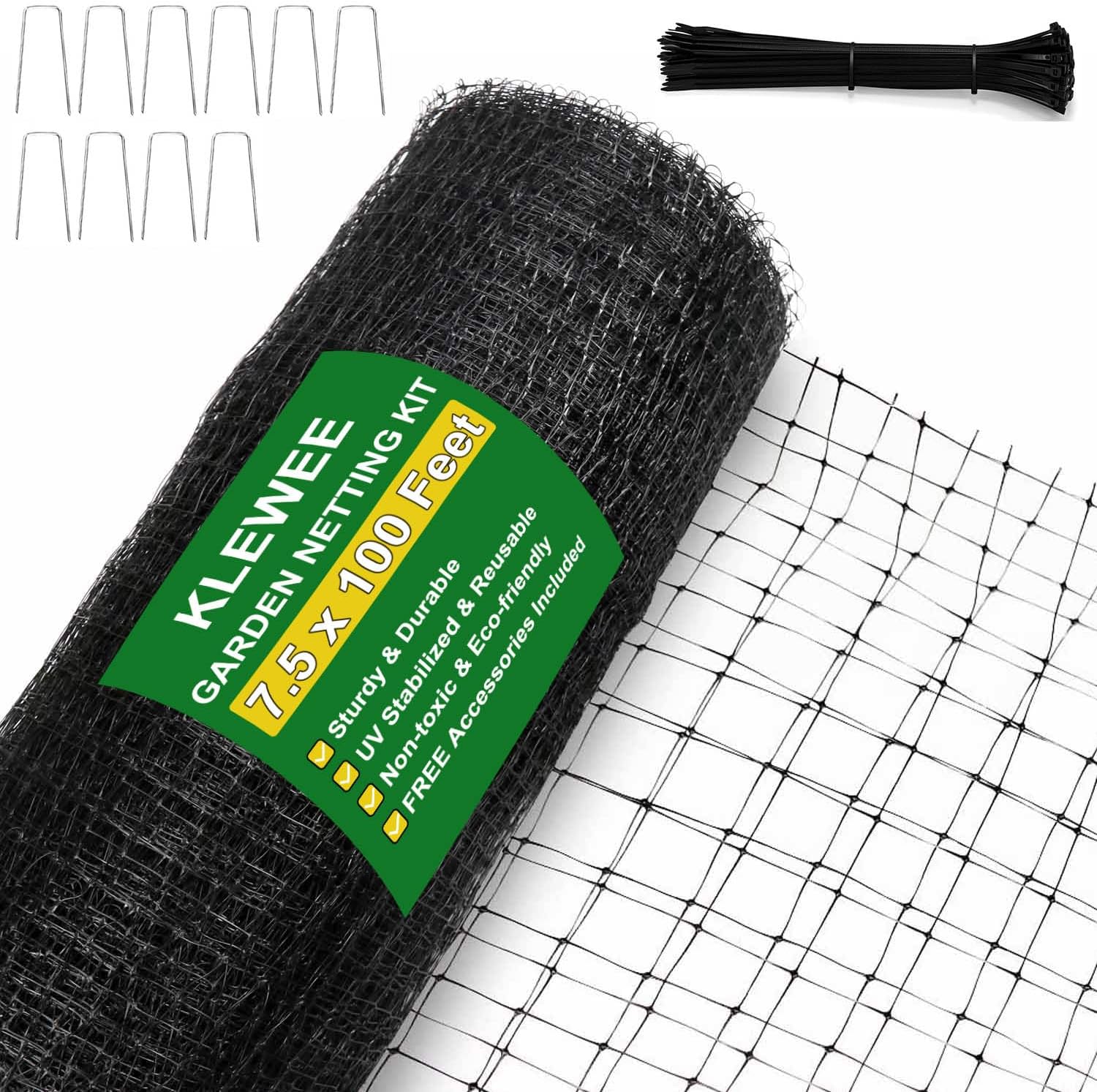
| Material Type | Polypropylene |
|---|---|
| Mesh Size | 3/4" square |
| Included Accessories | 10 metal U-stakes and 50 zip ties |
| UV Resistance | UV treated |
This KLEWEE garden netting is a heavy polypropylene mesh designed to keep birds and small animals away from ripening fruit, vegetable rows, and low shrubs. The 3/4" square mesh is fine enough to block small birds and squirrels while still allowing light and rain through. In use you can drape the netting over bushes, wrap it around small trees, or suspend it with stakes or hoops; the kit includes U-shaped metal stakes and zip ties to secure edges. The material is UV treated and described as weather resistant so it can be left in place through a season and reused. It is easy to cut to size with scissors without excessive fraying, which helps tailor coverage for irregular beds. Limitations to note are that this is a simple drape-style barrier rather than a rigid fence so very determined deer or larger animals could push through, and installation over larger trees requires additional supports. For gardeners who want a humane, reusable physical barrier against birds and small critters, this netting is a straightforward, durable option.
Best for: Gardeners who want a simple, low-risk physical barrier to protect fruit, berries, and vegetable rows from birds and small pests and prefer a reusable, humane solution.
Less Ideal for: Homeowners needing a permanent, rigid deer fence or protection against large wildlife should consider sturdier fencing systems rather than lightweight drape netting.
- 3/4" fine mesh blocks small birds and squirrels while allowing light and water through
- UV-treated polypropylene resists sun and weather for seasonal reuse
- Includes hardware (10 U-stakes and 50 zip ties) to secure netting without buying extras
- Can be cut to shape with scissors and will not fray easily
- Drape-style netting lacks rigid support so larger animals can push through if not properly staked
- Large single sheet can be unwieldy to position alone when covering bigger shrubs or trees
Verdict: A durable, reusable mesh netting kit that gives reliable protection from birds and small animals for gardeners seeking a low-risk, humane barrier.
Choosing the Right Garden Netting for Birds: Key Factors to Consider
Mesh Size and Wildlife Safety
Mesh size determines which species the netting blocks and how likely birds or other wildlife are to get entangled. Finer mesh keeps out small songbirds and some insects but increases the risk of entanglement if the net is loose or poorly supported. Larger mesh reduces snagging but may allow smaller birds to reach fruit. Inspect how the net drapes: taut, supported netting reduces contact and lowers the chance of birds getting trapped.
Also consider whether you can tension, elevate, or support the net above fruiting branches. Using hoops, frames, or suspended lines creates a barrier while reducing net-to-bird contact. Avoid nets with irregular or stretchy openings that can catch talons and beaks.
Material and UV Resistance
Netting used outdoors must resist sunlight, rain, and abrasion. Materials with UV stabilizers last multiple seasons, retain strength, and are less prone to becoming brittle. Thin untreated plastics fray quickly and can shed strands that entangle wildlife or tangle on trellises. Look for woven or knitted polyester or polyethylene rated for UV exposure, which hold up better under sun and repeated tension.
Durability also affects long-term cost and maintenance. Stronger fabrics resist tearing when pulled over branches or anchored to stakes, and they tolerate repeated removal and storage without losing shape.
Coverage Size and Shape Flexibility
Gardens come in many layouts, so netting that is available in multiple widths, lengths, or configurable panels is more useful. Large single-sheet netting covers multiple beds or small trees, while modular panels or smaller sections let you cover individual plants and work better on irregular shapes. Consider whether you need a roll for long rows or pre-cut sheets for smaller patches.
Flexible shapes also make it easier to avoid excess netting on the ground, which reduces wildlife interaction. If you plan to cover tall fruiting shrubs or small trees, check whether the netting can be supported off the crop rather than draped directly onto branches.
Attachment and Installation Methods
How you secure netting affects both its protection and the health of plants underneath. Options include ties to hoops, clips on frames, ground staples, or sandbagging the edges. Quick-release clips and reusable ties speed seasonal deployment. However, some fasteners can damage bark or tender stems if used incorrectly. Evaluate whether the netting works with common garden supports like cattle panels, hoop frames, or arbor structures.
Ease of installation also matters if you have limited mobility or garden alone. Lightweight panels and simple anchoring methods let one person cover and uncover plants without ladders or specialized tools.
Light Transmission and Airflow
Netting should protect crops without creating a microclimate that fosters disease or reduces fruit quality. Open-weave netting lets sunlight and breeze reach foliage, maintaining photosynthesis and drying wet surfaces after rain. Dense or opaque fabrics can reduce light and trap humidity, increasing fungal risk.
Consider seasonal timing too. Use denser covers only for short periods during peak bird pressure, and swap to more open netting when you need better pollinator access and airflow.
Storage, Reuse, and Maintenance
Netting that stores compactly and tolerates folding without tearing is more likely to be reused across seasons. Rinse off debris and let netting dry before storing to prevent mildew. Check seams and attachment points for fraying during seasonal inspection, and mend small holes promptly to preserve effectiveness.
Also think about ease of repair. Simple woven nets can often be stitched or patched in the garden, whereas bonded or coated fabrics may be harder to fix and more likely to be discarded after damage.
Common Installation Approaches
There are several practical ways gardeners install bird netting depending on plant type and site. For low beds and berry patches, nets can be laid over lightweight hoops or flexible PVC frames to create a tented space that keeps the fabric off the crop. For small fruit trees, use a tall frame or suspended line system so the net hangs above branches rather than resting on fruit.
Ground-anchoring with landscape staples or sandbags helps prevent birds from pushing under the edges, especially in windy sites. In tight spots like container gardens, smaller pre-cut panels clipped to pot rims or trellis frames make deployment quicker and reduce excess material that could snag on other plants.
- Use hoops to keep netting off fruit and reduce entanglement risk
- Anchor edges to soil or weights to stop birds from entering underneath
- Suspend netting from lines for taller shrubs and trees
- Trim away excess to avoid ground-level hazards for wildlife
Temporary Versus Season-Long Coverage
Decide whether you need protective netting only during ripening windows or across the whole growing season. Short-term netting deployed during peak ripening can protect harvests while keeping pollinators accessible earlier in the season. Season-long coverage may be needed where bird pressure is persistent, but that increases the importance of breathable netting and regular checks for trapped wildlife.
If using netting year-round, choose heavier-duty materials with stronger UV resistance and plan regular inspections to repair any damage promptly.
- Use removable netting to allow pollination when flowers are open
- Schedule regular checks to free any trapped animals and mend tears
- Store nets dry and flat to extend service life between seasons
Protecting Different Crop Types
Different crops need slightly different netting strategies. Small berries and cherries are often targeted by small songbirds and require finer mesh and closer coverage. Larger fruit like apples and pears can be protected with coarser mesh provided the net is supported away from the fruit. For vine crops, netting can be draped over trellises so fruit hangs inside the protected cavity.
Consider crop height and branch architecture when choosing net dimensions and support methods. Using removable panels allows selective protection of only the most vulnerable sections rather than covering an entire row.
- Use finer mesh for small berries and compact fruit clusters
- Use supported netting for tree fruit to prevent contact
- Trim netting to keep it off the ground around low-growing crops
Wildlife-Friendly Practices
Balancing crop protection with wildlife safety is key. Always avoid leaving loose netting on the ground where small mammals and birds can become entangled. Employ raised supports, taut edges, and visible boundary markers so birds do not try to land on the mesh. When checking nets, free any trapped animals promptly and inspect for holes that could allow repeated entanglements.
If you repeatedly see wildlife interactions, adjust your approach: increase elevation, change mesh type, or switch to rigid cages for particularly problematic trees. Combining visual deterrents with netting can reduce attempts to breach the barrier while keeping the netting safer for animals.
- Keep netting taut and elevated off plants when possible
- Avoid loose folds and exposed loops that can trap wildlife
- Inspect nets frequently during high-activity periods
Maintenance and Repair Tips
Regular care extends the usable life of garden netting and reduces wildlife hazards. After each season, clean debris off the fabric, let it dry, and fold it loosely to avoid sharp creases. Check seams and edges for wear and reinforce them before the next deployment.
Small holes can be patched by sewing with UV-resistant thread or using repair tape designed for outdoor fabrics. Replace fasteners that rust or lose elasticity and consider labeling nets by size and intended use to make future installation faster.
- Rinse and dry nets before storage to prevent mildew
- Patch small tears promptly to maintain effectiveness
- Rotate heavier-use nets to balance wear across seasons
How We Chose the Best Garden Netting for Birds
We prioritized features that matter in everyday gardening situations where birds are the primary pest. Key evaluation criteria included mesh size and safety to make sure nets keep birds out without entangling them; material durability against UV exposure and abrasion for multi-season use; available coverage sizes and shape options to suit beds, arbors, and fruit trees; and ease of installation and removal so gardeners can deploy nets quickly during peak feeding periods. We also considered breathability and light transmission because trapped heat or poor airflow can damage fruit and seedlings. Finally, we looked for products that allowed secure anchoring without damaging plants or soil. We excluded coverings intended primarily for insect exclusion, heavy-duty construction designed only for livestock containment, and flimsy decorative fabrics that lack UV resistance. The remaining selections are practical for small-scale and home orchard use and were filtered for mesh safety, usable coverage, and realistic installation approaches. The criteria described above directly map to the scoring labels used in each product card.
FAQ
What mesh size is safest for protecting berries without harming birds?
A mesh size that is small enough to keep birds from reaching fruit but not so fine that small feet or beaks can pass through is ideal. Mesh around 12 to 20 mm often balances exclusion and safety, but supporting the net so it does not sag is equally important to prevent entanglement.
Can I leave bird netting on all season?
You can leave netting on for an entire season if the material is breathable and UV rated, but you should check it regularly for trapped wildlife and signs of wear. For flowering periods that need pollinators, consider temporary removal or using panels that open for access.
How do I secure netting so birds cannot get under the edges?
Anchor edges with landscape staples, buried hems, sandbags, or heavy-duty clips attached to frames. Keeping the edges tight to the ground or weighted prevents birds from forcing their way under. Avoid burying netting beneath soil where it can be damaged or become a hazard.
Is there a difference between insect netting and bird netting?
Yes. Insect netting uses a much finer mesh to block small insects like aphids and flies, while bird netting has a coarser weave sized to exclude birds. Using insect netting for bird control may be unnecessary and can increase entanglement risk unless it is properly supported and tensioned.
How should I store netting between seasons?
Clean off soil and plant debris, let the net dry completely to avoid mildew, then fold loosely and store in a cool, dry place away from direct sunlight. Labeling the net by size and intended use speeds redeployment the next season.
Final Verdict
Prioritize mesh size and how you will support the net when choosing garden netting for birds. A net with the right mesh, good UV resistance, and compatible attachment options protects fruit without creating wildlife hazards. Weigh the tradeoffs between temporary panels and large-sheet covers: modular options are easier to handle and repair, while larger sheets are efficient for long rows. Pick the approach that fits your crop type, site layout, and how often you can inspect and maintain the netting, and you will protect yield while minimizing harm to birds.
