

Note: This article contains affiliate links. If you click on these links and make a purchase, I may earn a small commission at no extra cost to you. This helps support my research and content. Read my full affiliate disclosure here.
Choosing the right garden netting matters because the wrong mesh, material, or attachment method can harm plants, block light, or fail against local pests. You want netting that protects seedlings, fruit, and ornamentals while letting light, rain, and pollinators through where appropriate. This guide covers six shortlisted options tailored for garden use, with practical notes on materials, mesh sizes, and installation for common backyard situations. We evaluate each pick by durability, mesh suitability, and ease of use to help you match netting to your plants and pest challenges.
Top Picks at a Glance
| Best Overall The best all-around choice for most situations | RIFNY Ultra-Fine Mesh Garden Netting, 2-Pack 10 x 33 ft |  |
| Best Quality Built to a higher standard if you want something more solid | ORIVOGAS Heavy-Duty Deer Fence Netting, 6.5 x 50 ft, Reinforced Edges |  |
| Best Value The sweet spot between price and what you get | Jevrench Ultra-Fine Garden Netting, 4 x 25 ft |  |
| Best Budget The cheapest option that still gets the job done reliably | Garden Tailor Fine Mesh Garden Netting, 4 ft x 10 ft (40 sq ft) |  |
| Highest Rated A top-rated pick with lots of positive feedback | JTSIOV 10 x 50 ft Ultra-Fine Garden Netting (Polyethylene) |  |
| Most Popular A crowd favorite that many people choose with confidence | Feitore 7 x 100 ft Polypropylene Garden Netting with Reinforced Edges |  |
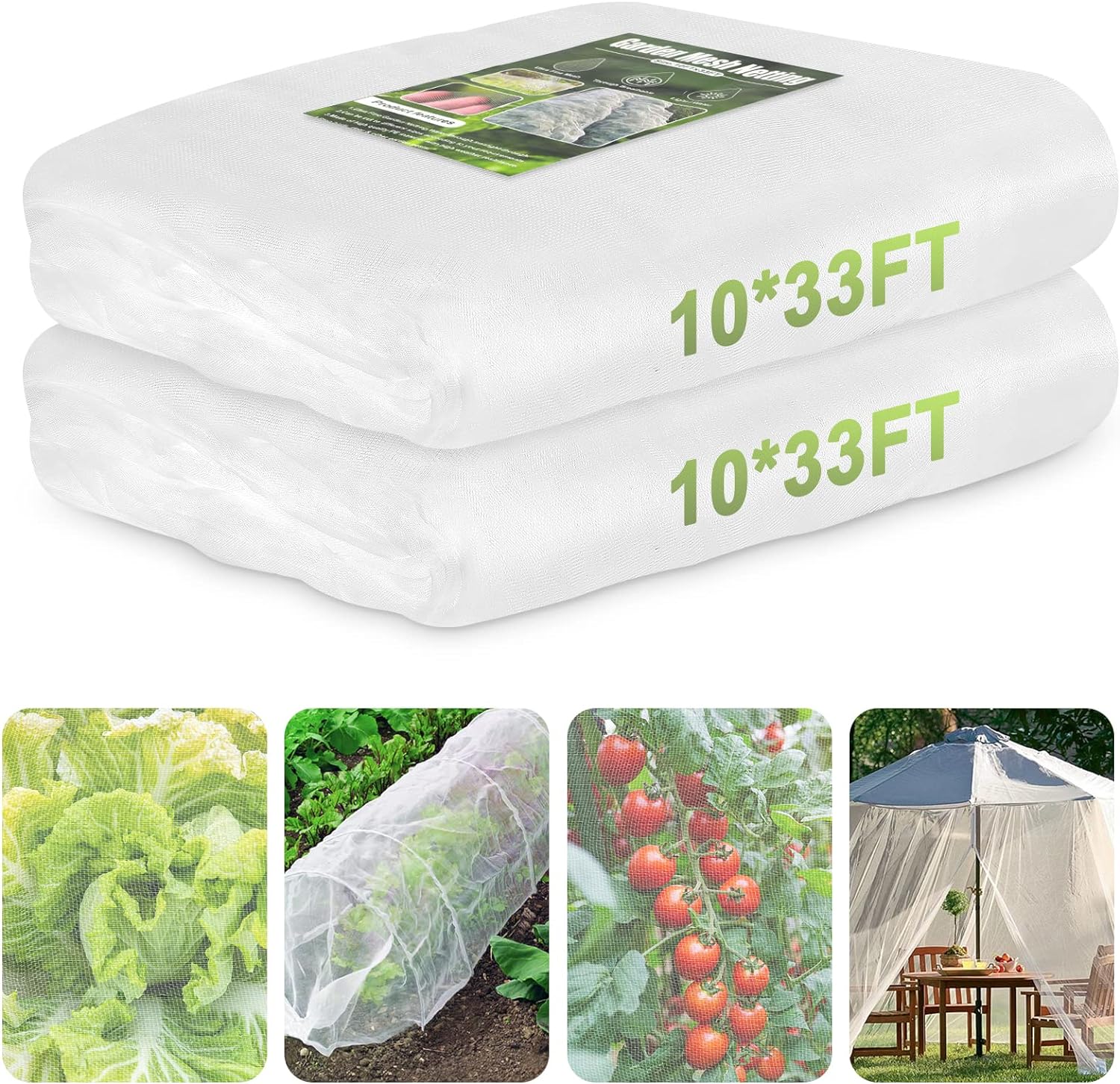
RIFNY Ultra-Fine Mesh Garden Netting, 2-Pack 10 x 33 ft
| Unit Count | 2 Count |
|---|---|
| Material Type | Polyethylene (PE) |
| Mesh size | 0.04 in ultra-fine mesh |
| Intended use | Insect and bird barrier for gardens |
This RIFNY two-pack of ultra-fine mesh garden netting is designed as a versatile pest barrier for raised beds, fruit bushes, and small trees. The 0.04-inch mesh keeps out small insects and birds while remaining breathable so rain, air, and sunlight reach plants without removing the cover. You can cut the sheets to size, drape them over hoops or stakes, and secure edges with soil, stones, or staples. The polyethylene material is lightweight and reusable from season to season when stored away from direct sunlight. Practical benefits include easy observation through the white mesh, no need to remove the cover for watering, and compatibility with simple supports to create tunnels or screens. Limitations are that the netting is a fabric barrier rather than a rigid structure so it needs additional hoops or fasteners to keep it off plant foliage, and fine mesh can be more fragile than larger-weave nets if snagged on branches or handled roughly.
Best for: Gardeners who want a simple, adaptable pest barrier for vegetables, berries, and small fruit trees and value a solution that protects plants while staying breathable and easy to inspect.
Less Ideal for: People who need a permanent, freestanding cage or heavy-duty windproof cover should consider framed or heavier netting systems instead.
- Ultra-fine 0.04-inch mesh blocks small insects and birds while allowing light and water through
- Large 10 x 33 ft sheets that can be cut to fit raised beds, bushes, or tree covers
- Lightweight polyethylene material that is reusable and easy to handle
- See-through white mesh lets you monitor plant growth without removing the cover
- Requires hoops, stakes, or heavy edging to keep the netting off plants because it is not a rigid frame
- Fine mesh can tear if caught on branches or handled roughly
Verdict: A roomy, reusable ultra-fine mesh cover that balances insect protection with breathability for everyday garden use.
ORIVOGAS Heavy-Duty Deer Fence Netting, 6.5 x 50 ft, Reinforced Edges

| Material Type | High Density Polyethylene (HDPE) |
|---|---|
| Mesh | 5/8 inch square |
| Weight | 55gsm |
| Included Components | zip tie,U shaped nail |
This ORIVOGAS deer fence is a woven HDPE net intended to protect gardens, small crops, and poultry from deer and other animals. It installs quickly by fastening the reinforced, rope-edged netting to stakes or T-posts with the included zip ties and ground nails and can be trimmed with scissors for custom runs. The 55gsm weave and 5/8-inch square mesh provide good tear resistance and UV protection compared with lightweight hobby netting, so it holds up to repeated seasonal use and sun exposure. Practical benefits include easy rolling for storage, a lightweight alternative to metal fencing that will not rust, and enough openness in the mesh to keep out deer while still letting light and water through. Limitations are that it is a temporary plastic barrier rather than a rigid fence so it can sag or be pushed by determined large animals and it requires regular tensioning and secure anchoring to remain effective over time.
Best for: Gardeners who want a durable, easy-to-install temporary barrier to protect vegetables and small fruit from deer and other medium-sized pests without the cost or permanence of metal fencing.
Less Ideal for: Those needing a permanent, high-security fence for large or persistent wildlife or for livestock containment should choose a rigid metal solution instead.
- 55gsm HDPE weave for improved tear resistance and UV protection
- Reinforced, rope-edged border for secure fastening to posts or stakes
- Includes zip ties and ground stakes for straightforward installation
- Rolls up compactly for easy storage and seasonal use
- Not rigid like metal fencing so can sag or be pushed by larger animals
- Requires careful anchoring and periodic tensioning to stay effective
Verdict: A practical, weather-resistant temporary deer barrier that balances durability and ease of installation for protecting a home garden.
Jevrench Ultra-Fine Garden Netting, 4 x 25 ft

| Material Type | Polyethylene (PE) |
|---|
This Jevrench garden netting is a simple reusable barrier for keeping insects, birds, and small animals off beds and fruit plants. The 4 x 25 ft sheet uses ultra-fine PE mesh (about 0.8 x 1 mm) that transmits sunlight, rain, and airflow so you can leave it over seedlings or mature crops and even water through the fabric. It is described as thicker than standard netting, which should improve tear resistance and let it last multiple seasons when stored and handled carefully. Typical use is draping or fastening the sheet over hoops, stakes, or frames to create a row cover or enclosing individual trees and raised beds. Because it is essentially a flat sheet, expect some work cutting and securing edges and fastening it against persistent pests or high winds. The netting is not rigid so it needs support for taller plants and will not exclude very small insects if complete sealing is required. For gardeners who want a low-cost, breathable pest barrier that can be reused across seasons, this is a practical option.
Best for: Gardeners who prioritize protecting yields with a low-effort, reusable physical barrier and who will use frames or stakes to secure a breathable cover over beds or trees.
Less Ideal for: Growers who need a rigid hoop house or an insect-proof enclosure that seals perfectly against tiny pests or who prefer a ready-made support structure included with the cover.
- Ultra-fine mesh blocks birds and larger insects while allowing light and water through
- Large 4 x 25 ft sheet covers multiple raised beds or several small plants
- PE material described as thicker than typical netting for better durability
- Breathable design lets you water plants through the fabric without removing it
- Requires external supports or fastenings since the sheet is not self-supporting
- Not a complete seal against very small insects if edges are not tightly secured
Verdict: Buy this if you want an inexpensive, large reusable ultra-fine mesh sheet to keep birds and larger pests off beds while preserving light and airflow.
Garden Tailor Fine Mesh Garden Netting, 4 ft x 10 ft (40 sq ft)

| Unit Count | 40 Square Feet |
|---|---|
| Material Type | High Density Polyethylene (HDPE) |
| Mesh | 40 Mesh |
| UV Stabilized | Yes |
This Garden Tailor fine bug netting is a simple, economical barrier for keeping common garden pests off vegetables, flowers, and small fruiting plants. Made from 100% new HDPE with a 40-mesh weave, it is lightweight and UV-stabilized so it can be draped over hoops, frames, or beds and left in place while you water and fertilize. The manufacturer says it allows most light and water through, so plants beneath still get rain and sun while being protected from aphids, cabbage butterflies, carrot flies, and small mammals such as rabbits. Its tight selvedge reduces fraying and the material is easy to cut to custom sizes. The main limitations are that this is a lightweight fabric so it will need secure anchoring in windy sites and it does not replace rigid structures for larger animals or heavy mechanical protection. For gardeners on a budget it is a practical, reusable option for season-long insect exclusion and quick spot coverage.
Best for: Budget-minded gardeners who need an affordable, reusable insect barrier for raised beds, row covers, or small fruit and vegetable plots and prefer quick on/off coverage without permanent structures.
Less Ideal for: Gardeners who need heavy-duty exclusion for large animals, permanent greenhouse glazing, or a rigid support system that prevents sagging in exposed sites.
- Fine 40-mesh weave blocks many insect pests while still permitting water and light
- Made from 100% new HDPE with UV stabilization for season-long outdoor use
- Lightweight and easy to cut to custom sizes for beds, hoops, or cages
- Tight selvedge reduces unraveling so edges stay intact with repeated use
- Lightweight fabric requires secure anchoring and can sag in wind or under heavy rain
- Not intended to stop larger animals or provide structural support
Verdict: A low-cost, easy-to-use fine-mesh netting that provides effective seasonal insect exclusion for small beds and hoop-covered plants.
JTSIOV 10 x 50 ft Ultra-Fine Garden Netting (Polyethylene)

| Material Type | Polyethylene (PE) |
|---|---|
| Item Dimensions L x W | 120"L x 600"W |
| Mesh opening | 0.04 inches (60 mesh per inch) |
This 10 x 50 ft polyethylene garden netting is a heavy-duty, ultra-fine-mesh cover intended to keep pests and larger animals away from rows, raised beds, and small fruit trees. The 60-mesh-per-inch weave blocks small insects like aphids and cicadas while still passing sunlight, rain, and air, so you can leave it in place for routine watering and most growth stages. The material is thickened and UV-treated for better tear resistance and seasonal reuse, and the roll can be cut to size to fit greenhouse frames, hoops, or simple stakes; edges are secured with soil, stones, or pegs. Practical benefits include clear pest protection without pesticides, moderate shading for heat-sensitive greens, and versatile uses across gardens and patios. Important limitations are that the fine mesh will block pollinators, so it should be removed during flowering when crops need bee access, and installation requires a frame or anchoring to keep the net from resting on plants.
Best for: Buyers who prioritize dependable, reusable pest protection for vegetable beds, small orchards, or greenhouse rows and want a low-maintenance physical barrier over multiple seasons.
Less Ideal for: Gardeners who rely on insect pollination for fruit set or who need a ready-made enclosure with frames or fasteners included.
- Ultra-fine 60 mesh per inch effectively excludes small insects and larger pests
- Thickened PE material with UV treatment for improved tear resistance and seasonal reuse
- Large 10×50 ft roll that can be cut to fit raised beds, hoops, greenhouses, or orchard rows
- High breathability lets sunlight, air, and water through so frequent removal is not required
- Fine mesh prevents pollinators from reaching flowering crops so it must be removed at bloom
- No built-in fasteners or weighted hem so you need stakes or weights to secure edges
Verdict: Choose this netting if you need a durable, UV-treated ultra-fine barrier that reliably protects crops from insects and animals while remaining breathable and reusable.
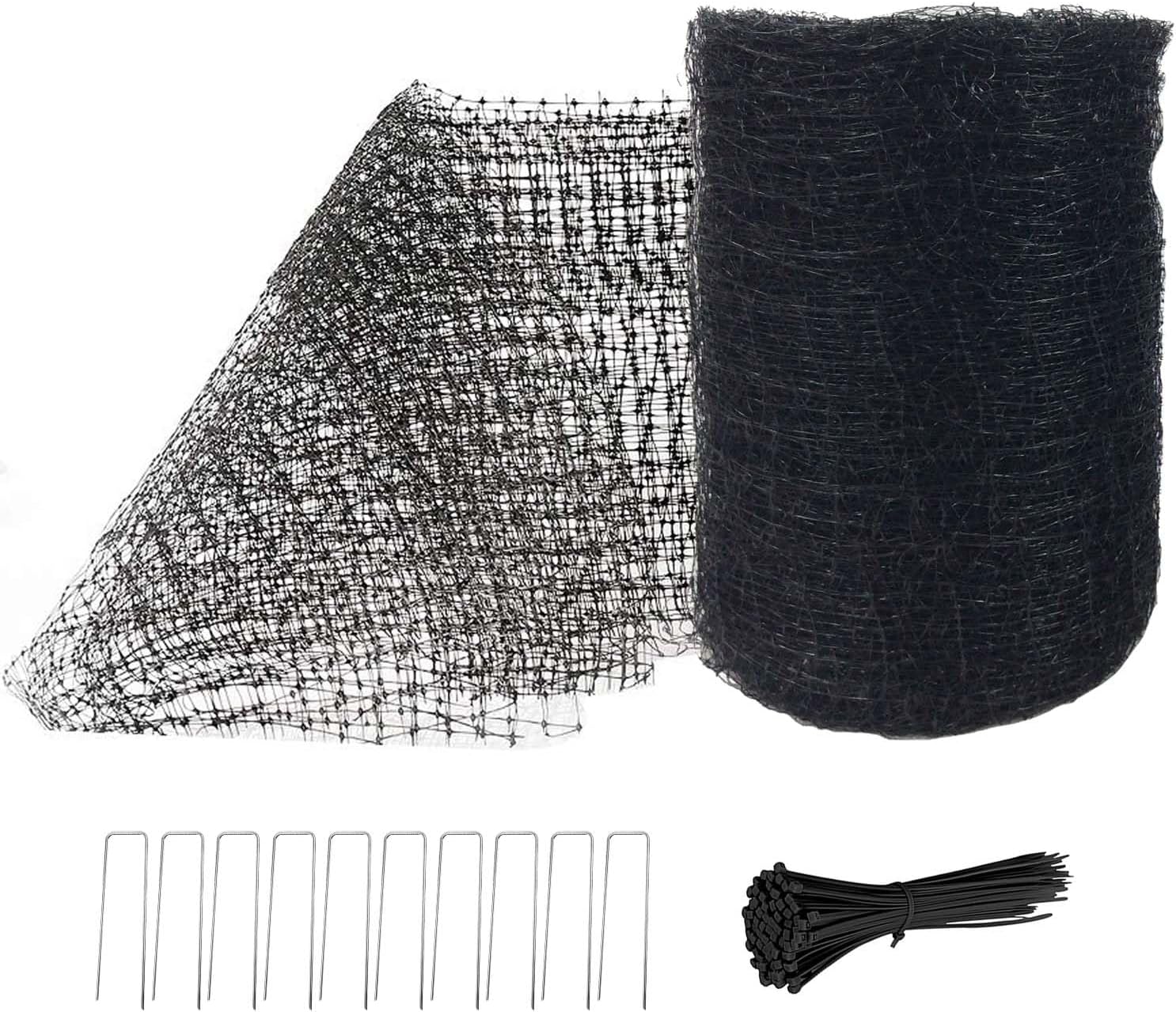
Feitore 7 x 100 ft Polypropylene Garden Netting with Reinforced Edges
| Unit Count | 100 Feet |
|---|---|
| Mesh Opening | 3/4" square mesh |
| Material Type | Polypropylene |
| Included Accessories | 10 stakes and 50 zip ties |
This polypropylene garden netting unrolls to cover a large area and is intended to keep birds, rabbits and other small animals away from fruiting plants and raised beds. Typical use is to drape or surround plants and secure the top and bottom edges with stakes, U-shaped staples or zip ties; the package includes 10 staples and 50 cable ties to simplify installation. The 3/4 inch square mesh stops pecking on berries and small fruit without tightly restricting plant growth, while the reinforced edge bands make it easier to anchor the net and reduce tearing. Because the material is UV-stabilized and rot resistant it can be reused season after season, and it is easy to cut to fit irregular beds or individual shrubs. Limitations are that the net is lightweight so very determined larger animals can push through unless supported by stakes or a frame, and it requires some effort to tension neatly over tall or heavily branched plants.
Best for: Buyers who want a low-maintenance, reusable way to protect fruits and vegetables from birds and small mammals and prefer a straightforward install with included accessories.
Less Ideal for: People who need a heavy-duty physical barrier against deer or large wildlife or who want a permanent, self-supporting fencing solution.
- Large 7 x 100 ft coverage suitable for protecting multiple beds or a small orchard area
- 3/4" square mesh that prevents bird pecking while allowing light and water through
- Reinforced top and bottom edges for easier anchoring and reduced tearing
- Made from UV-stabilized, rot-resistant polypropylene for seasonal reuse
- Includes installation accessories (U-staples and cable ties) to get started immediately
- Lightweight construction needs stakes or a frame to stop larger browsing animals
- Black color can absorb heat in full sun which may be noticeable on very hot days
Verdict: A simple, reusable large-roll net that reliably keeps birds and small animals off fruit and vegetable plantings when tensioned and anchored properly.
Choosing the Right Garden Netting for Garden: Key Factors to Consider
Material and Lifespan
Netting material determines how long it lasts outdoors. Polyethylene and polypropylene meshes are common because they resist rot and shed water, but lower-grade plastics can become brittle after a season in strong sun. Look for woven or knitted constructions that tolerate stretching without tearing.
Durability matters when you plan to leave covers in place across seasons or reuse netting for multiple beds. Reinforced edges and finished hems prevent fraying when you staple, clip, or tie the net to supports. Also consider storage: materials that compress small and dry quickly are easier to keep between seasons without mildew.
Mesh Size and Pest Pressure
Mesh size directly controls which pests are excluded and which beneficial insects can pass through. Fine mesh under 2 mm blocks tiny insects like aphids and whiteflies but will also limit pollinator access. Medium mesh around 5 to 10 mm excludes larger insects and small birds while allowing most bees to pass.
If your main problem is birds or larger pests, a coarse mesh or netting with larger openings offers protection without restricting airflow. For fruiting crops vulnerable to small chewing insects, choose a finer weave or plan for supplemental hand-pollination if pollinators are blocked.
UV Resistance and Outdoor Exposure
UV stabilizers in the polymer or UV-rated fabric prolong netting life under direct sunlight. Netting without UV protection will degrade and shred faster, especially in bright, hot climates. Check whether the product is rated for outdoor use and for how many growing seasons it is expected to last.
Think about orientation too. Netting stretched across south-facing beds receives more UV stress than items stored under a low sun angle. If you rely on the same netting year after year, invest in UV-rated materials and finished edges to reduce replacement frequency.
Attachment and Installation
How you secure netting affects both its effectiveness and the ease of daily garden tasks. Netting that tears when stapled or knotted can be difficult to use. Look for products with reinforced hems or the ability to accept clips and ties without ripping. Reusable attachment options like snaps, clips, or grommets simplify removal for harvest and maintenance.
Consider whether you will drape netting over hoops, frames, or directly over plants. Some nets are stiff enough to form a tunnel without additional support, while others must be tied to hoops or pegged to the soil. The installer should plan for anchor points to prevent netting from billowing in wind and allowing pests underneath.
Light Transmission and Breathability
Netting should protect without creating a dark, stagnant microclimate. Good garden netting transmits ample sunlight and allows rain and air to reach the canopy so plants continue normal growth. Dense or layered covers reduce light and can raise humidity, increasing disease risk on susceptible crops.
Match the netting density to plant needs. Shade-tolerant greens can handle denser fabric, while fruiting tomatoes and peppers need high light transmission. Also consider ventilation when draping netting tightly; leave space for airflow or use more open weave materials where disease pressure is a concern.
Size, Cutability, and Storage
Netting is offered in rolls, sheets, or pre-cut covers. Larger rolls allow coverage of multiple beds but require cutting and securing. Cutability without unraveling is important if you plan to shape netting around irregular beds or structures. Finished edges or reinforced hems make customization easier.
Storage affects long-term usability. Netting that folds compactly and resists mildew when stored in a dry place will survive more seasons. Consider labeling and keeping smaller offcuts for quick repairs.
Matching Mesh to the Pest Problem
Identify the pests you most commonly see and choose mesh accordingly. For slugs and snails you need ground-level strategies rather than fine mesh, while birds and larger insects are best handled with coarser coverings that keep pollinators active.
Observe at harvest time which damage is most common. Holes and peck marks suggest birds, small chewing and hole patterns imply caterpillars or beetles, and stippling or silvering can indicate tiny sap-sucking insects that may require finer exclusion.
- Fine mesh for tiny flying pests and seedling protection
- Medium mesh for most insect and small bird exclusion
- Large mesh for bird protection without blocking pollinators
Installing Netting Over Raised Beds and Rows
Raised beds and row covers are some of the easiest places to use netting because anchors and hoops can be added without staking into turf. Use simple PVC or metal hoops to create a tunnel and drape netting over them, securing edges with soil, landscape staples, or clips.
Leave enough headroom so plants do not rub against the netting, which can damage delicate leaves and create abrasion points. For taller crops, consider removable sections that allow pruning and harvest without collapsing the entire cover.
- Use clips or grommets where possible to avoid tearing netting
- Secure edges against wind to keep pests from crawling underneath
Seasonal Uses Beyond Pest Control
Netting can double as light freeze protection or hail guard if layered appropriately. A lightweight net will not offer much thermal insulation but can break up hail impact and reduce direct wind stress. For cold snaps, combine netting with frost cloth or fleece designed for thermal protection.
During pollination windows, remove or adjust netting to allow bee activity, or use partial panels that protect fruit at vulnerable stages while leaving flowers accessible. Planning temporary openings makes it possible to balance pest control and pollination needs.
- Combine with frost cloth for cold protection
- Use partial covers during peak bloom for pollinator access
Repair and Maintenance Tips
Small tears should be repaired promptly to stop pests from exploiting weak points. Use UV-resistant tape or overlap new netting patches and secure with clips or staples. Keep a repair kit with spare clips and short offcuts of netting.
At season end, clean netting of dirt and plant debris before storage. Dry it completely and fold loosely to avoid creasing that can create stress points. Store in a cool, dry place away from direct sunlight to maximize lifespan.
- Patch small holes with overlapping material
- Dry thoroughly before storing to prevent mold
Environmental and Pollinator Considerations
Netting can affect pollinator access and local ecology. Avoid covering entire flowering plantings during peak bloom unless you also provide unnetted patches or open the netting temporarily. Consider the timing of netting installation and removal so pollinators can do their work.
Choose materials that are inert and will not shed microplastics into soil. While many synthetic nets are practical, using them responsibly and minimizing unnecessary fragmentation helps protect beneficial organisms and soil health.
- Plan netting around bloom periods
- Avoid abrasive netting that can trap or injure wildlife
How We Chose the Best Garden Netting for Garden
We shortlisted products that fit real garden situations and practical installation methods. Primary evaluation criteria included material strength and UV resistance to estimate lifespan in sun-exposed outdoor beds. Mesh size and weave pattern were assessed to match different pest pressures, from small insects to birds and deer. Ease of installation covered how netting attaches to frames, hoops, and ground anchors and whether it can be cut and re-secured without fraying. Breathability and light transmission were measured to ensure netting does not reduce growth or pollinator access for flowering crops. Finally, multi-season versatility looked at whether the netting works for seasonal covers, frost protection, and storage. We excluded fragile indoor or craft netting and any product intended solely for structural shading rather than pest exclusion. The final list favors garden-appropriate specifications and real-world durability over marketing claims.
FAQ
What mesh size should I use to keep birds off my fruiting plants?
Use a coarse to medium mesh that prevents birds but still allows bees access. Mesh around 10 to 20 mm stops most small birds while maintaining airflow. Monitor flowering to ensure pollinators can still reach blossoms and open covers briefly if needed.
Can garden netting prevent insect pests completely?
Netting can significantly reduce many insect pests but rarely eliminates them entirely. Very small pests may pass through wider weaves, and some pests can enter before covers are installed. Combine netting with good cultural practices for best control.
How do I secure netting so wind does not blow it away?
Anchor edges with soil, landscape staples, or clips attached to frames. Reinforced hems and grommets make securing easier and reduce tearing. Adding weight at the base or using continuous anchors keeps wind from lifting edges and letting pests beneath.
Will netting harm my plants by reducing light?
Most purpose-built garden netting transmits ample light, but very dense or layered materials can reduce light levels and raise humidity. Choose an open weave for light-demanding crops and ensure good ventilation to avoid disease issues.
How long does outdoor netting typically last?
Lifespan depends on material quality and UV resistance. UV-stabilized nets can last several seasons, while lower-grade plastics may degrade within a year. Proper storage and avoiding prolonged sun exposure when not in use extend usable life.
Final Verdict
Prioritize mesh size and material durability when choosing garden netting. Match the weave to the specific pest pressure you face, and pick UV-resistant materials with finished edges if you want multi-season use. Consider how you will attach, remove, and repair the netting so it fits into your regular garden routines. Overall, focus on the tradeoff between exclusion and pollinator access: finer mesh increases protection but may limit beneficial insects, while coarser mesh preserves airflow and pollination. Use the evaluation criteria above to select netting that fits your crop types, climate, and maintenance habits for reliable garden protection.
