

Note: This article contains affiliate links. If you click on these links and make a purchase, I may earn a small commission at no extra cost to you. This helps support my research and content. Read my full affiliate disclosure here.
If you want a lawn that recovers fast and develops a deep green color, choosing the right fertilizer matters. Fertilizers for quick green grass are formulated to supply the nutrients turf needs for rapid leaf growth and color response while also fitting into your mowing and watering routine. This guide covers our five shortlisted options and explains how each one performs on nutrient balance, release behavior, and ease of use. Read on to understand which fertilizer fits your lawn type, timing window, and maintenance habits so you can get greener grass sooner.
Top Picks at a Glance
| Best Overall The best all-around choice for most situations | Scotts Liquid Green Max Lawn Food, 32 fl. oz. |  |
| Best Quality Built to a higher standard if you want something more solid | The Andersons PGF Balanced 10-10-10 Granular Fertilizer with Micronutrients and 2% Iron (18 lb, 5,000 sq ft) | 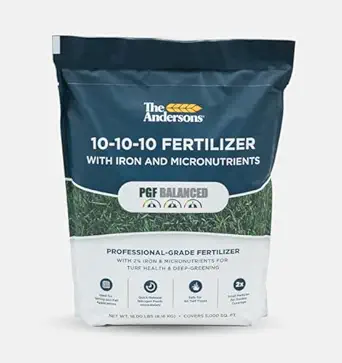 |
| Best Budget The cheapest option that still gets the job done reliably | GreenView Lawn Food 22-0-4, 16 lb bag |  |
| Highest Rated A top-rated pick with lots of positive feedback | AgChimp 24-0-11 Professional Lawn Maintenance Fertilizer, 16 lb |  |
| Most Popular A crowd favorite that many people choose with confidence | Scotts Green Max Lawn Food (16.67 lb) |  |
Scotts Liquid Green Max Lawn Food, 32 fl. oz.

| Item Form | Liquid |
|---|---|
| Application Method | Hose Sprayer |
| Target Species | Lawn Grass |
| Liquid Volume | 32 fluid ounces |
Scotts Liquid Green Max is a hose-end liquid lawn food formulated for fast greening and simple application. The bottle connects directly to a garden hose so you can spray while you water, which makes feeding a 2,000 sq ft lawn possible in roughly 10 minutes. The 29-0-0 high-nitrogen formula combined with added iron is aimed at producing visible deep greening within about three days and building turf that better tolerates heat, drought, and foot traffic. Notable features include a reusable applicator design, a translucent bottle to monitor usage, and guidance to apply up to four times per year for seasonal maintenance. Practical benefits are speed and ease of use for regular upkeep and targeted correction of yellowing from nitrogen deficiency. Limitations are that it is a high-nitrogen, phosphorus-free spray so it does not address soil nutrient imbalances beyond nitrogen and iron, and hose applicators can be less precise than granular spreaders on uneven terrain or windy days.
Best for: Homeowners who want a quick, low-effort solution to green up yellowing lawns and maintain seasonal feedings without complicated mixing. Ideal for people who prioritize visible results and convenience over tailoring a full soil nutrient program.
Less Ideal for: Gardeners who need a complete soil amendment plan or who prefer precise nutrient control and application on irregular terrain should consider alternative granular or soil-tested solutions.
- Very fast visible greening within days due to a high-nitrogen, iron-boosted formula
- Hose-end applicator makes coverage of a 2,000 sq ft lawn quick and low-effort
- Reusable applicator and translucent bottle let you monitor and refill easily
- Works on any grass type and supports regular seasonal feeding to strengthen turf
- Contains only nitrogen and iron so it will not correct phosphorus or other micronutrient deficiencies
- Hose sprayer can overspray or miss spots on uneven lawns compared with granular spreaders
Verdict: A fast, easy hose-end fertilizer that reliably greens yellowing lawns within days for homeowners who want quick visible results.
The Andersons PGF Balanced 10-10-10 Granular Fertilizer with Micronutrients and 2% Iron (18 lb, 5,000 sq ft)

| Item Form | Granules |
|---|---|
| Application Method | spreader |
| Coverage | 5000 square feet |
| Mixing Ratio | 10-10-10 |
| Target Species | Lawns and Gardens |
The Andersons PGF Balanced 10-10-10 is a fine-particle granular fertilizer designed for broad, even coverage across lawns and garden beds. It is typically applied with a broadcast spreader and then watered in to activate the quick-release nutrients. The unusually small particle size means a single 18 lb bag claims coverage up to 5,000 sq ft and helps reduce patchy feeding compared with coarse granules. The formula is balanced for nitrogen, phosphorus and potassium and includes micronutrients plus 2% iron for enhanced greening. It works well for spring and fall applications, for establishing new turf or boosting established lawns, and can be worked into soil for vegetable or flower beds. Users should sweep or blow product off paved surfaces to avoid iron staining and store any leftover in a dry area. Because the fertilizer is quick-release, expect faster visible response but shorter duration between applications than slow-release products.
Best for: Homeowners who prioritize consistent, dependable feeding and want a straightforward granular option that gives quick visible results across lawns and planting beds.
Less Ideal for: Gardeners seeking a long-duration, slow-release feeding program or those who need a no-iron product to avoid any risk of surface staining.
- Very fine particle size for more even coverage and less patchy feeding
- Balanced 10-10-10 formula with added micronutrients and 2% iron for deeper greening
- Suitable for lawns, gardens, trees and shrubs and can be applied at planting or during the season
- Covers up to 5,000 sq ft from a single 18 lb bag when applied as directed
- Quick-release nutrients mean results appear sooner but may require more frequent reapplication versus slow-release formulas
- Contains iron that can stain sidewalks and driveways if not cleaned off immediately
Verdict: Choose this fine-particle 10-10-10 if you want a reliable, fast-acting granular fertilizer that delivers even coverage and deeper greening for summer lawn care.
GreenView Lawn Food 22-0-4, 16 lb bag

| NPK | 22-0-4 |
|---|---|
| Form | Granules |
| Coverage | 5,000 sq. ft. |
| Application | Broadcast or drop spreader |
GreenView Lawn Food is a granular, broadcast-applied lawn fertilizer designed to boost root development, speed spring green-up, and maintain deeper green color through an eight-week controlled-release formula. You apply it with a broadcast or drop spreader over up to 5,000 sq. ft., and the MESA controlled-release nitrogen delivers both immediate and slow-release nutrition so you get quicker green-up without a surge of excessive top growth. The zero-phosphate 22-0-4 blend focuses on nitrogen and potassium to improve drought resistance and nutrient uptake in established turf. Practical benefits for summer care include longer feeding intervals, better water retention from improved root vigor, and fewer repeat applications compared with quick-release products. Limitations are that it is not a starter fertilizer for new seed because it contains no phosphorus and it requires a spreader for even coverage; hand spreading is discouraged. Also the 16 lb bag suits small to medium lawns rather than large properties where multiple bags would be needed.
Best for: Homeowners who want a low-maintenance summer feed that reduces how often you need to reapply and prioritizes steady green-up and root health.
Less Ideal for: Those establishing new lawns from seed or managing large commercial turf areas who need phosphorus or high-coverage bulk quantities.
- Controlled-release MESA nitrogen gives up to 8 weeks of feeding for fewer applications
- Applicable with common broadcast or drop spreaders for even coverage
- Zero-phosphate formula aligns with lawn-use restrictions and protects waterways
- 22-0-4 NPK focuses on root development and drought resilience
- Not suitable as a phosphorus-containing starter fertilizer for new seed
- 16 lb bag covers about 5,000 sq. ft. so larger lawns will need multiple bags
Verdict: A convenient, controlled-release summer lawn food that keeps small to mid-size lawns greener longer with fewer applications.
AgChimp 24-0-11 Professional Lawn Maintenance Fertilizer, 16 lb

| N-P-K | 24-0-11 |
|---|---|
| Unit Count | 256 Ounce |
| Application Method | broadcast spreader |
| Item Form | Granules |
| Coverage | Covers 5,000 sq ft |
AgChimp 24-0-11 is a granular lawn fertilizer formulated to deliver both immediate green-up and longer-term feeding for thicker turf. You apply it with a broadcast spreader during active growth periods to cover up to 5,000 sq ft per 16 lb bag. The blend pairs about 24% quick-release nitrogen for fast color and shoot growth with roughly 30% slow-release, polymer-coated nitrogen for steady feeding that reduces spikes and burn risk. Potassium and iron in the formula help with stress tolerance and deeper color, which supports a denser, more resilient lawn over repeated applications. Practical benefits include fewer applications needed compared with straight quick-release products and lower chance of fertilizer burn when used as directed. Limitations are that it is a general maintenance fertilizer rather than a starter or corrective product for severe nutrient imbalances, and results depend on following label rates and proper spreader calibration for even coverage.
Best for: Homeowners who prioritize consistent, reliable lawn maintenance and want a single product that gives immediate color plus controlled long-term feeding to thicken turf over time.
Less Ideal for: Gardeners establishing new seed or sod, or those needing a fertilizer targeted at correcting specific soil nutrient deficiencies should choose a specialized starter or corrective product instead.
- Dual-phase nitrogen (quick + polymer-coated slow release) for fast green-up and sustained feeding
- Includes potassium and iron to improve stress tolerance and deeper greening
- Designed for broadcast spreader application for even coverage up to 5,000 sq ft per bag
- Polymer-coated nitrogen reduces risk of burn and delivers predictable, extended feeding
- Not formulated as a starter fertilizer for new seed or to correct specific nutrient deficiencies
Verdict: Choose this if you want a dependable maintenance fertilizer that gives quick green-up and steady, low-risk feeding to thicken and improve lawn color.
Scotts Green Max Lawn Food (16.67 lb)

| Item Form | Granules |
|---|---|
| Coverage | 5000 square feet |
| Specific Uses For Product | Lawn |
| Target Species | lawn grass |
Scotts Green Max Lawn Food is a granular, all-purpose lawn fertilizer formulated to deliver fast greening with a 2-in-1 feed plus 5% iron supplement. It is applied with a broadcast or drop spreader to any grass type and is recommended for routine spring, summer, or fall applications. Notable features include a guaranteed nonstaining formula when used as directed and settings provided for Scotts spreaders to help get an even application across the advertised 5,000 sq ft coverage. The iron content speeds visible greening in as little as three days and the granules are ready to water in for faster uptake. For a risk-averse homeowner growing fescue in spring, the product is straightforward to use and safe to re-enter the lawn immediately after application. Limitations are that proper spreader settings and sweeping up excess product are important to avoid runoff and that it is a general lawn food rather than a specialized product for nutrient-deficient soils, so a soil test is still useful for targeted corrections.
Best for: Homeowners who want a low-risk, easy-to-apply lawn food that produces quick green results on fescue lawns in spring and prefer established brand guidance for application.
Less Ideal for: Gardeners seeking a product to correct a specific nutrient imbalance or those who prefer liquid or organic-only fertilizing approaches.
- Includes 5% iron for faster, deeper greening visible in about three days
- Premeasured granular form covers up to 5,000 sq ft from one bag
- Manufacturer provides spreader settings to simplify even application
- Formulated not to stain concrete or driveways when used as directed
- Not a tailored corrective fertilizer for specific soil deficiencies
- Requires correct spreader settings and cleanup to prevent runoff
Verdict: A simple, fast-acting granular lawn food with added iron that reliably greens fescue lawns when applied with a spreader.
Choosing the Right Fertilizer for Quick Green Grass: Key Factors to Consider
Nitrogen Form and Release Rate
Nitrogen is the primary driver of rapid greening because it fuels leaf production and chlorophyll formation. Fast-acting soluble nitrogen gives an almost immediate color boost but can burn if applied too heavily or without adequate watering. Controlled-release nitrogen provides steadier growth and reduces mowing spikes, but it may delay peak green-up by days or weeks.
When choosing a fertilizer for quick green grass, look at the label for types of nitrogen listed (for example urea, ammonium sulfate, or polymer-coated urea) and any stated release timing. Match release speed to your schedule: use faster-release products when you need an immediate cosmetic improvement and choose slower-release options when you want longer-lasting color with less frequent feeding.
Nutrient Ratio and Secondary Elements
The N-P-K ratio tells you how much nitrogen, phosphorus, and potassium the product supplies. For quick green-up, higher nitrogen relative to phosphorus and potassium is typical, but complete nutrition matters for turf resilience. Lawns already well established usually need minimal phosphorus, so excess phosphorus is rarely necessary and can be avoided.
Also check for secondary nutrients and micronutrients like iron, manganese, and sulfur. Iron in particular can darken leaf color quickly without forcing excessive growth, which is useful if you want a deep green look without aggressive top growth. Micronutrients support long-term turf health and can prevent deficiencies that make quick greening unsustainable.
Application Method and Spread Uniformity
How you apply fertilizer affects safety and visual results. Granular products require a compatible spreader and careful calibration to deliver uniform coverage. Liquid fertilizers offer fast uptake and even application when sprayed correctly, but they require dilution and equipment. Some granules are designed to resist bounce and wind drift, which improves uniformity on windy days.
Consider the shape and size of your lawn, existing equipment, and physical ability. A product that works with your spreader and has clear application rates reduces the chance of streaks, overapplication, or missed patches.
Salt Index and Turf Sensitivity
Fertilizer salt index affects root health and scorch risk. Products with high soluble salts can draw moisture from grass roots and cause browning, especially on newly sodded areas or drought-stressed lawns. Warm-season grasses and heat-stressed turf are particularly vulnerable to salt injury.
If your lawn is young, stressed, or in a dry spell, choose formulas labeled low-salt or follow conservative application rates and irrigate after feeding. Understanding the product's salt profile helps you avoid quick greening that is undone by edge burning or patchy damage.
Timing, Weather, and Watering Needs
When you fertilize is as important as what you use. Cooler seasons and wet weather alter nutrient uptake, while hot, dry conditions increase burn risk from fast-release fertilizers. Quick green-up products often need prompt watering to move soluble nutrients into the root zone and to reduce surface burn potential.
Plan feeding when rain or irrigation is available within 24 to 48 hours. For rapid visual improvement, apply a fast-release feed ahead of a light irrigation. For longer-term color with less frequent maintenance, schedule a controlled-release application during active growth periods.
Coverage, Packaging, and Cost Per Area
Know how much area a bag or jug covers at the recommended rate. Coverage efficiency affects how often you buy and how easy it is to treat larger yards. Labels should state square-foot coverage at given application rates; use that to calculate real-world needs.
Also consider storage and handling. Bulk bags and concentrated liquids require more storage space and care, while smaller packages are easier to manage for small lawns. Matching package size to lawn area reduces waste and makes applications more convenient.
How Fast-Release and Slow-Release Fertilizers Behave in the Lawn
Fast-release fertilizers dissolve quickly and deliver nitrogen to leaf tissue within days. That rapid uptake produces visible color improvement but also stimulates quick top growth that may require more mowing in the following weeks. These products are useful when you want a near-immediate cosmetic green-up before an event or to revive turf after a temporary yellowing.
Controlled-release fertilizers use coatings or chemical forms that release nitrogen over several weeks. They produce steadier, more uniform growth and reduce the risk of burn if used correctly. For gardeners who prefer lower-maintenance feeding and want fewer applications, controlled-release options often provide a more balanced long-term solution.
- Fast-release: quick color, higher burn risk if misapplied
- Controlled-release: gradual greening, fewer applications
- Use fast-release for immediate correction and controlled-release for maintenance
Using Iron and Chelates for Deeper Leaf Color
Iron supplements darken leaf color without large nitrogen doses and can be applied as foliar sprays or soil-applied formulations. They work quickly and are a good tool when the goal is color enhancement rather than stimulating heavy growth.
Chelated iron stays available to grass roots in a wider pH range than simple ferrous sulfate. For lawns with high pH or where iron deficiency signs show as uniform yellowing between veins, a chelated form is often more reliable. Apply sparingly and according to label directions to avoid staining hard surfaces.
- Foliar iron gives rapid color within days
- Chelated forms are more plant-available across soil pH ranges
- Iron is best for color without excessive top growth
Practical Application Tips to Avoid Burn and Streaking
Calibrate your spreader and test with a small dry-run area to check distribution. For granular products, walk at a steady pace and overlap passes slightly to avoid untreated bands. If using a handheld or push spreader, set the spreader to the manufacturer-recommended setting and maintain consistent speed.
Water in fast-release applications lightly within 24 hours to move nutrients into the root zone and reduce the chance of surface scorch. Avoid applying in the heat of the day or before extended drought. For liquid feeds, clean nozzles and mix at recommended dilution rates to prevent concentration hotspots.
- Calibrate spreader and maintain steady walking pace
- Overlap passes to ensure even coverage
- Irrigate lightly after application for fast-release feeds
When to Time Feeding for Different Grass Types
Cool-season and warm-season grasses have different active growth windows. For cool-season lawns, early fall and spring are peak uptake periods. A mid-spring fast-release feed can bring back green color after winter dormancy. Warm-season lawns respond best to feeding in late spring through summer when they are actively growing.
Adjust timing based on local climate and recent weather. Avoid heavy quick-release fertilization during heatwaves or drought, and favor smaller, more frequent treatments if you need steady color through stressful conditions.
- Cool-season grass: spring and early fall feedings are most effective
- Warm-season grass: late spring through summer for active uptake
- Shift timing if prolonged drought or unusual weather occurs
Eco-Friendly Practices When Seeking Quick Green-Up
Avoid overapplication by matching product coverage to lawn size and following label rates. Excess nitrogen can leach into waterways, so use the minimum effective dose and water smartly to keep nutrients in the root zone. Consider split applications of smaller doses rather than a single heavy feeding to reduce runoff risk.
Incorporate cultural practices like aeration, dethatching, and correct mowing height to improve root access to nutrients. Healthier turf requires less fertilizer to achieve the same green intensity, so combining inputs with good lawn care practices yields better and more sustainable results.
- Follow label rates and calculate coverage before spreading
- Use split, lighter applications to reduce runoff
- Combine feeding with aeration and correct mowing for best results
How We Chose the Best Fertilizer for Quick Green Grass
We evaluated products on performance in real lawn situations and on specification details gardeners can verify before buying. Key criteria included nutrient formulation and ratio so we prioritized fertilizers whose nitrogen, phosphorus, and potassium balance matched fast greening goals. Release rate and technology were assessed to separate quick-release formulas that produce immediate color from controlled-release options that sustain growth. Application ease and spread pattern mattered because even distribution reduces burn risk and produces uniform color. Turf-safe salt and soluble salt index were considered to avoid scorch on sensitive grass. Finally, packaging and coverage data were checked so gardeners know how much product they need for common yard sizes. We excluded products formulated exclusively for shrubs, trees, or specialty turf diseases and those lacking clear nutrient labeling. Poorly documented release timing or missing application instructions were also grounds for exclusion. The remaining shortlist reflects items that balance quick visible results with manageable safety and predictable coverage.
FAQ
How soon will I see greener grass after applying a quick-release fertilizer?
You can often notice color improvement within a few days, especially with liquid applications. Visible results depend on grass health, soil moisture, and temperature and may take longer if the lawn is stressed.
Can quick-release fertilizers damage my lawn?
They can if overapplied or not watered in. Fast-release products increase burn risk on dry or newly established turf. Follow label rates, irrigate lightly after application, and avoid treatment during extreme heat.
Is it better to use liquid iron or granular fertilizer for color only?
Liquid iron darkens leaf color quickly with minimal growth response, making it a good choice for color without extra mowing. Granular high-nitrogen feeds both color and growth. Choose based on whether you want appearance enhancement or increased top growth.
How often should I reapply a fertilizer aimed at quick greening?
Frequency depends on the product's release rate. Fast-release feeds may be repeated every 4 to 6 weeks if needed, while controlled-release products can last 8 to 12 weeks or more. Always follow label recommendations and monitor turf response.
Will quick greening products help if my lawn is thin or patchy?
They can boost leaf growth and color, but thin or patchy areas often need additional steps like overseeding, improved soil contact, or aeration. Fertilizer alone may not fill bare spots without addressing underlying issues.
Can I use a quick-green fertilizer on newly sodded or seeded lawns?
New seedling and newly sodded turf can be sensitive to strong soluble fertilizers. Use milder formulations or follow starter recommendations for young lawns to avoid root burn and to support establishment.
Final Verdict
Prioritize the nutrient form, release timing, and application method that match your immediate goals and lawn conditions. Fast-release formulas are the quickest route to visible green-up but require careful watering and accurate spreading to avoid scorch and uneven color. Controlled-release and iron supplements offer gentler, longer-lasting color with less frequent feeding. Decide based on how fast you need results, how much maintenance you can do afterward, and whether your lawn is stressed or well established. Use conservative rates, time applications to favorable weather, and combine feeding with cultural care for the most reliable quick green-up.
