

Note: This article contains affiliate links. If you click on these links and make a purchase, I may earn a small commission at no extra cost to you. This helps support my research and content. Read my full affiliate disclosure here.
If you want height and drama without a sunny window, picking tall indoor plants suited for low light makes all the difference. In dim hallways, north-facing rooms, and apartments with small windows, not every large houseplant will thrive. Choosing species with proven shade tolerance, slow growth habit, and forgiving water needs reduces stress and maintenance. This guide covers the top shortlisted tall indoor plants for low light and explains why each made our list. We evaluated ease of care, light tolerance, size control, and resistance to pests and common indoor issues to help you pick the right tall plant for your space.
Top Picks at a Glance
| Best Overall The best all-around choice for most situations | United Nursery ZZ Plant (Zamioculcas zamiifolia) in Decorative Pot |  |
| Best Value The sweet spot between price and what you get | Costa Farms Aglaonema (Chinese Evergreen), Live Indoor Plant, Potted |  |
| Highest Rated A top-rated pick with lots of positive feedback | Tropical Plants of Florida ZZ Plant (Zamioculcas zamiifolia) in 6" Nursery Pot |  |
| Most Popular A crowd favorite that many people choose with confidence | Costa Farms Snake Plant (Sansevieria), Live Floor Plant in Decorative Planter |  |
| Best Seller A high-volume bestseller chosen again and again | Costa Farms Monstera Deliciosa Live Indoor Plant in Decorative Pot |  |
United Nursery ZZ Plant (Zamioculcas zamiifolia) in Decorative Pot

| Indoor Outdoor Usage | Indoor |
|---|---|
| Other Special Features of the Product | Air Purification |
| Sunlight Exposure | Full Shade |
| USDA Hardiness Zone | 9-11 |
| Moisture Needs | Moderate Watering |
This United Nursery ZZ Plant is a low-maintenance indoor floor plant grown and delivered in a decorative pot. It produces upright stems with thick, glossy leaves that tolerate low to bright indirect light, making it suitable for bedrooms, offices, or dim living rooms. The plant stores moisture in its rhizomes so watering every 2 to 4 weeks is normally enough, which reduces the chance of overwatering for busy owners. Its hardiness listing (USDA zones 9–11) and notes about adapting to varying indoor light mean it will remain resilient when moved around the home. Practical benefits include air-purifying qualities and a tidy, architectural look that works with modern decor. Important limitations are that it is a tropical houseplant so it does not tolerate freezing outdoor conditions and its slow growth means it will not rapidly fill a large space. Buyers should also plan to remove yellow or damaged leaves as needed to keep the plant looking its best.
Best for: Buyers who prioritize a reliable, low-effort houseplant that stays attractive in low-light rooms and requires infrequent watering.
Less Ideal for: Gardeners who want fast-growing filler plants or who expect an outdoor-hardy specimen for cold climates should look elsewhere.
- Very low watering needs thanks to moisture-storing rhizomes
- Tolerates low to bright indirect light so placement is flexible
- Glossy, upright foliage provides a strong decorative presence
- Pre-potted and ready to display out of the box
- Slow grower so it will take time to become a large floor specimen
Verdict: A reliable, low-water ZZ plant that adds long-lasting, low-light greenery with minimal care.
Costa Farms Aglaonema (Chinese Evergreen), Live Indoor Plant, Potted

| Indoor Outdoor Usage | Indoor |
|---|---|
| Sunlight Exposure | Partial Sun |
| USDA Hardiness Zone | 3 |
| Moisture Needs | Moderate Watering |
This Costa Farms Chinese Evergreen is a straightforward, low-maintenance tall houseplant intended as an easy focal point for low-light rooms. It arrives in a grower pot and typically reaches around three feet tall, making it suitable for corners, entryways, or beside furniture. The plant is noted for two-tone variegated leaves that stay attractive in medium or indirect light and can tolerate periods without water, so it fits owners who prefer a low-effort plant. Practical benefits include tolerance for a range of indoor light levels, slow growth that reduces repotting frequency, and simple watering needs—water when the soil dries. Limitations are standard for live plants: appearance will vary between specimens and it does not thrive in cold conditions, so indoor placement away from drafts is important. Because it ships bare in a grower pot, you may want to transfer it into a decorative container for display.
Best for: Buyers who want a low-maintenance, decorative tall houseplant that performs reliably in low-light rooms and tolerates occasional missed waterings.
Less Ideal for: People seeking fast-growing statement trees or those who prefer fully potted, decorative planters straight away.
- Tolerates low to medium indoor light, good for dim rooms
- Low watering requirements and can go weeks without water
- Slow-growing so it stays manageable and needs less repotting
- Attractive variegated foliage suitable as a focal point
- Ships in a basic grower pot so you may want to replant for aesthetics
- Not cold-hardy and sensitive to freezing temperatures during delivery
Verdict: Choose this Aglaonema when you want a low-effort, attractive tall indoor plant that stays healthy in low to medium light.
Tropical Plants of Florida ZZ Plant (Zamioculcas zamiifolia) in 6" Nursery Pot

| Indoor Outdoor Usage | Indoor, Outdoor |
|---|---|
| Other Special Features of the Product | Air Purification, Compact, Drought Tolerant, Low Maintenance |
| Sunlight Exposure | Partial Sun |
| USDA Hardiness Zone | 9, 10, 11 |
| Moisture Needs | Little To No Watering |
The ZZ Plant (Zamioculcas zamiifolia) is a resilient, performance-focused houseplant suited to low- or no-sun interiors like offices, bathrooms, and windowless rooms. Arriving in a 6-inch grower pot, it produces upright stems of glossy green leaflets that keep their shape with minimal intervention. Care is straightforward: place in low to bright indirect light and water only when the top inch of soil is dry so the pot drains fully. Notable features include drought tolerance, low maintenance needs, and reported air-purifying qualities, which make it forgiving for busy owners or frequent travelers. Because it tolerates low light better than many houseplants, it functions well as a decorative, long-lived green accent where light is limited. Important limitations are that it prefers indirect light for best growth and is susceptible to overwatering, which causes yellowing; it is not a fast grower, so you should not expect rapid size gains. For someone prioritizing dependable, low-effort greenery in low-light spaces, the ZZ Plant delivers consistent, attractive results.
Best for: Buyers who want a dependable, low-effort green accent for low-light rooms and prioritize a plant that survives neglect while still looking polished.
Less Ideal for: People seeking a fast-growing statement plant or someone who wants flowering houseplants or bright direct-sun lovers.
- Tolerates low to bright indirect light making it suitable for windowless or dim spaces
- Very drought tolerant and forgiving of infrequent watering
- Compact size from the 6-inch nursery pot fits desks, shelves, and small corners
- Glossy, upright foliage provides year-round decorative interest and air-purifying benefits
- Slow grower compared with faster houseplants
- Sensitive to overwatering and root rot if not allowed to dry between waterings
Verdict: If you need a low-light, low-maintenance plant that stays healthy with minimal care, the ZZ Plant is a top practical choice.
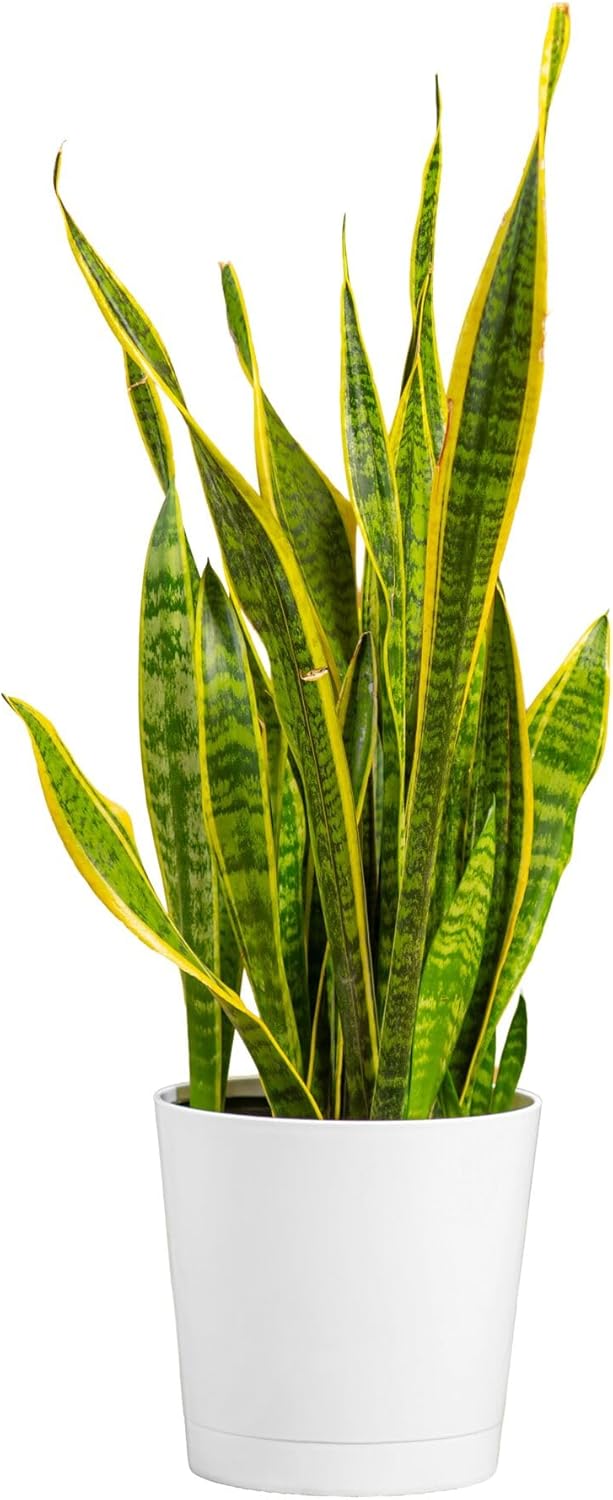
Costa Farms Snake Plant (Sansevieria), Live Floor Plant in Decorative Planter
| Indoor Outdoor Usage | Indoor |
|---|---|
| Other Special Features of the Product | Air Purification, Drought Tolerant, Low Maintenance |
| Sunlight Exposure | Partial Sun |
| Soil Type | Sandy Soil |
| Moisture Needs | Moderate Watering |
This Costa Farms Snake Plant is a tall, easy-care indoor plant meant to add architectural interest to low-light rooms while requiring minimal upkeep. Packaged in a decorative plastic planter, the plant arrives ready to display and is typically used as a floor accent in living rooms, entryways, or offices where vertical foliage adds height without taking much floor space. Notable features include drought tolerance, air-purifying qualities, and broad tolerance for partial and low light, which make it forgiving for new plant owners. Care guidance calls for bright indirect light when possible and light weekly watering, so it performs best when occasionally watered and not oversoaked. The plastic container and pre-potted presentation simplify setup but limit immediate customization of the planting medium or drainage if you prefer to repot right away. Overall this is a straightforward, low-effort choice for someone wanting a durable, statement indoor plant that fits into dimmer corners and busy lifestyles.
Best for: Buyers who want a tall, low-light tolerant houseplant that looks finished out of the box and requires minimal weekly care, especially those new to indoor plants who value reliability and ease.
Less Ideal for: People who want fully customizable planting conditions, specialty soils, or a permanently breathable ceramic or terracotta container without repotting.
- Tolerates low and partial light, suitable for dim rooms
- Low water needs and drought tolerant, easy for beginners
- Arrives potted in a decorative planter so it is display-ready
- Marketed for air purification which can improve indoor air quality
- Comes in a plastic planter that may offer limited drainage and might require repotting for long-term growth
Verdict: A dependable, low-light floor plant that delivers big visual impact with minimal care, ideal for buyers seeking a fuss-free tall houseplant.
Costa Farms Monstera Deliciosa Live Indoor Plant in Decorative Pot

| Indoor Outdoor Usage | Indoor |
|---|---|
| Sunlight Exposure | Partial Sun |
| Moisture Needs | Regular Watering |
| Other Special Features of the Product | Air Purification |
This Costa Farms Monstera Deliciosa is a ready-to-display, pre-potted tropical houseplant that brings large, dramatic leaves to low- to medium-light interiors. It is typically used as a living decor piece in living rooms, bedrooms, or offices where bright indirect light is available but it will tolerate lower light if growth slows. Notable features include its oversized fenestrated foliage that creates strong visual impact and the included decorative plastic pot for immediate placement. Practical benefits are simple weekly care guidance—medium indirect light and 2-3 cups of water once a week—and the plant’s natural air-purifying reputation, both of which make it approachable for cautious new plant owners. Important limitations are that Monsteras are fast growers and may need pruning or a support as they vine, and they prefer consistent watering so they are less forgiving of long droughts. Expect leaf development and fenestration to improve with better light, and plan for routine maintenance if you want to keep a compact, bushy shape.
Best for: Someone who wants a low-to-moderate care tall indoor plant that makes a strong decor statement while providing straightforward weekly upkeep and predictable performance.
Less Ideal for: Buyers who want a completely hands-off plant or who cannot provide occasional pruning and consistent watering should consider slower-growing, ultra-drought-tolerant species instead.
- Large, showy fenestrated leaves create an immediate decorative focal point
- Shipped pre-potted in a decorative plastic planter for easy placement
- Simple care instructions suitable for beginners: medium indirect light and weekly watering
- Described as having air-purifying qualities that can improve indoor air
- Can grow quickly and require pruning or a support structure to manage vining habit
- Less tolerant of long periods without water compared with some low-maintenance houseplants
Verdict: A bold, easy-to-care tall Monstera that delivers instant decorative impact and straightforward weekly maintenance for risk-conscious plant buyers.
Choosing the Right Tall Indoor Plants for Low Light: Key Factors to Consider
Light Tolerance and Placement
How much and what kind of light a tall indoor plant needs determines where it will survive and grow. Low-light tolerant species can photosynthesize in northerly windows, hallways, and rooms shaded by buildings or trees. Even so, "low light" is relative: a plant that tolerates dim conditions will typically grow more slowly and may need periodic rotation so lower leaves still receive some light.
Placement also affects leaf color and shape; plants kept in very low light often develop longer internodes and sparser foliage. Consider how close the plant will be to windows, artificial light sources, and reflective surfaces. Supplemental grow lights can help, but choosing species with natural shade tolerance reduces dependence on additional equipment.
Watering Needs and Drought Resilience
Tall plants in low light use water more slowly than those in bright light, so overwatering is a common problem. Look for species that tolerate brief dry periods and recover well after underwatering. Drainage and potting mix matter: a well-draining, aerated mix helps prevent root rot when light and evaporation are low.
Plan containers with drainage holes and monitor soil moisture at root level rather than judging by surface dryness alone. Consider plants that show clear, recoverable signs when thirsty, rather than species that decline quickly when conditions vary.
Size Management and Pruning
Tall indoor plants can outgrow their spots or develop legginess if light is limited. Choose plants with a naturally upright habit or those that respond predictably to pruning. Knowing a plant's typical mature height helps you avoid future rehoming or heavy pruning.
Pruning frequency, ease of stem removal, and whether the plant responds with bushier growth are all important. Also consider whether the plant tolerates staking or support if you want to train a columnar shape. A manageable pruning routine saves time and keeps the plant visually appropriate for indoor spaces.
Container and Root Behavior
Tall houseplants need stable, appropriately sized containers because a top-heavy plant in a small pot can tip over or become root-bound. Some tall species develop vigorous root systems that quickly fill containers and require repotting, while others remain relatively happy in the same pot for several seasons.
Consider root growth habit when selecting pot size and material. Heavier containers improve stability for tall plants, and breathable mixes reduce waterlogging risks. If you prefer less repotting, choose species known to tolerate slight root restriction.
Pest and Disease Susceptibility
Low light and high humidity can create conditions favorable to pests and fungal issues. When choosing a tall indoor plant, evaluate its typical resistance to common indoor pests such as spider mites, scale, mealybugs, and fungal leaf spots. Plants that show clear early-warning symptoms and are easy to treat reduce the risk of persistent infestations.
Also consider how easy it is to inspect and treat the plant. Tall, densely foliated specimens can hide pest activity, so ease of access for routine checks should influence your choice.
Growth Rate and Long-term Commitment
Growth rate affects how often you will need to prune, stake, repot, or move a tall plant. In low light, many tall species grow slowly, which can be an advantage if you want a low-maintenance specimen. However, fast-growing tall plants may quickly outgrow a room even if light is limited, requiring more frequent intervention.
Think about how long you plan to keep the plant in the same spot and whether you are prepared for periodic size management. A slower grower may be easier for casual plant owners, while a faster grower offers quicker visual impact but more ongoing care.
How to Assess Your Room's Actual Light
Evaluate light by observing the room at different times of day for several days. Note direction of windows, obstructions like buildings or trees, and any artificial light that stays on during evening hours. North-facing windows and rooms far from windows typically provide low ambient light suitable for tolerant species but not for sun-loving plants.
Use simple tests such as the shadow test: stand in the spot where the plant will live and check the sharpness of your shadow when the sun is out. A barely visible or soft shadow indicates low light. If you plan to use supplemental lighting, choose fixtures with full-spectrum output and place them so they reach the plant canopy without causing heat stress.
- Soft shadow or no shadow at midday suggests low light
- Rotate tall plants periodically so all sides receive some light
- Place taller specimens where they will not block light for other plants
Container Selection and Stability Tips
Choose a pot that balances stability and drainage. A heavy clay or ceramic pot lowers the center of gravity and reduces tipping risk for tall plants. Ensure the container has drainage holes and match pot size to root habit: slightly larger than the root ball but not excessively deep if the species prefers root restriction.
Add a layer of coarse material for weight if needed, but avoid blocking drainage. Use a well-draining potting mix formulated for houseplants and consider adding perlite or coarse bark to increase aeration in low-light situations where soil dries slowly.
- Use heavier pots for tall, top-heavy specimens
- Ensure reliable drainage to prevent root rot
- Consider saucers and trays to protect floors from occasional overwatering
Managing Legginess and Encouraging Fuller Growth
Legginess is common when a tall plant stretches toward scarce light. Pruning back long stems, pinching new growth, or selectively removing older leaves encourages branching and a denser silhouette. For plants that respond well, pruning a few inches above a node stimulates new side shoots.
Supplemental light placed closer to the canopy during darker months can reduce stretching. If pruning alone does not produce a fuller habit, consider training stems with stakes or support structures to improve aesthetics while new growth thickens.
- Prune above nodes to encourage branching
- Use gentle stakes to support upright growth
- Add low-profile grow lights in winter to limit stretching
Indoor Humidity and Temperature Considerations
Many low-light rooms are also cooler or less ventilated. Most tall indoor tropical plants prefer stable indoor temperatures and moderate humidity. Avoid placing sensitive specimens near cold drafts, radiators, or constantly running vents. Sudden temperature swings can stress a tall plant and make it more susceptible to pests.
If your home is dry, occasional misting, humidity trays, or grouping plants together raises local humidity without creating persistently wet conditions that encourage disease. Balance humidity measures with good air circulation to prevent fungal problems.
- Keep plants away from cold drafts and hot vents
- Use humidity trays or plant grouping to raise local moisture
- Ensure gentle air circulation to reduce disease risk
Seasonal Care Adjustments in Low Light
In winter months, light levels drop further and indoor temperatures fluctuate. Reduce watering frequency to match slower growth and avoid fertilizing heavily when the plant is not actively producing new shoots. You can resume a modest feeding schedule in spring when growth resumes.
Inspect tall plants for stress signs after seasonal transitions. Older leaves may yellow naturally in low light; remove these to redirect energy to newer growth. Consider moving the plant closer to a brighter window for winter months if practical.
- Water less in winter to prevent root rot
- Pause heavy feeding during dormancy
- Move plants slightly nearer windows in the darker months if needed
How We Chose the Best Tall Indoor Plants for Low Light
We focused on species and cultivars that reliably reach vertical height indoors while tolerating low to moderate light levels. Our selection filtered for plants that maintain upright form rather than sprawling, so they provide presence in small or dim spaces without requiring strong sunlight. We prioritized low to moderate watering needs and forgiving responses to occasional care lapses, since many low-light rooms have inconsistent light and humidity. Practical criteria included measurable light tolerance, predictable mature height and shape, watering frequency and drought resilience, susceptibility to common indoor pests and diseases, and ease of pruning or staking to manage size. We excluded plants that require high light, constant humidity control, or specialized greenhouse conditions. We also omitted species known for invasive root systems in indoor containers or those that need frequent repotting. The resulting list favors tall houseplants that perform well in typical low-light home conditions and are manageable for most gardeners.
FAQ
Can tall indoor plants survive without a sunny window?
Often yes. Several tall houseplants tolerate low to moderate light and grow slowly in shaded rooms. Success depends on selecting shade-tolerant species and adjusting watering, container choice, and occasional supplemental light.
How do I stop a tall plant from becoming leggy in low light?
Regular pruning, rotating the plant so all sides see light, and adding a small amount of supplemental light in winter help reduce stretching. Choosing species that naturally maintain an upright, compact form also minimizes legginess.
How often should I water tall plants in dim rooms?
Usually less often than bright-room plants. Check moisture a few inches below the surface and water only when the mix is beginning to dry. Overwatering is the most common issue in low light because evaporation and uptake are slower.
Do tall low-light plants need special soil or pots?
They need well-draining potting mixes and stable containers. Use a mix that retains some moisture but allows air to roots, and choose heavier pots or add weight for top-heavy specimens. Good drainage reduces the risk of root rot in low-light conditions.
Will low-light conditions increase pest problems?
It can. Plants stressed by insufficient light are more vulnerable to pests and fungal issues. Routine inspections, proper watering, and maintaining moderate humidity with good air circulation help prevent and manage infestations.
Final Verdict
Tall indoor plants that tolerate low light are a practical way to add vertical interest to dim rooms without demanding constant sun. Prioritize species with proven shade tolerance, manageable watering needs, and predictable mature size to minimize maintenance. Balance stability, container choice, and seasonal care to keep a tall plant healthy indoors. If you focus on light tolerance and ease of maintenance, you can confidently choose a tall specimen that adds presence to a low-light space while requiring only modest ongoing care.
