

Note: This article contains affiliate links. If you click on these links and make a purchase, I may earn a small commission at no extra cost to you. This helps support my research and content. Read my full affiliate disclosure here.
Choosing the right tree pole saw matters because pruning high limbs is both physically demanding and hazardous if you lack the right tool. The proper pole saw lets you work from the ground to cut limbs cleanly, control debris, and reduce the need for ladders or climbing. This guide covers our shortlisted options across different reach lengths and cutting systems so you can pick a saw that matches your yard, tree size, and preferred pruning technique. We evaluated reach, cutting power, durability, ease of use, and maintenance demands to highlight tools that perform reliably in real garden conditions. Read on for the shortlist and clear buying guidance.
Top Picks at a Glance
| Best Overall The best all-around choice for most situations | SEESII P6 Plus 2-in-1 Cordless Pole Saw and Mini Chainsaw (6" Bar) |  |
| Best Quality Built to a higher standard if you want something more solid | EGO Power+ 10" Cordless Telescopic Pole Saw with 56V 2.5Ah Battery (PS1001) |  |
| Best Value The sweet spot between price and what you get | LAANPOLE 26ft Telescoping Manual Pole Saw with 5–20ft Extension Pole |  |
| Best Budget The cheapest option that still gets the job done reliably | JAOTREL 7.5 ft Extension Pole Saw with Stainless Steel Blade |  |
| Highest Rated A top-rated pick with lots of positive feedback | TONYINGO 3-in-1 Manual Extendable Pole Saw with Double-Hook Saw and Pruner |  |
| Most Popular A crowd favorite that many people choose with confidence | BlumeTrec 14.5 ft Manual Pole Saw with Mn Steel Blade and Adjustable Sections |  |
| Best Seller A high-volume bestseller chosen again and again | Supstable S5 Sky 2‑in‑1 Cordless Pole Saw and Mini Chainsaw with 16 ft Reach |  |
SEESII P6 Plus 2-in-1 Cordless Pole Saw and Mini Chainsaw (6" Bar)

| Power Source | Battery Powered |
|---|---|
| Horsepower | 600 watts |
| Chain Speed | 26.2ft/s |
| Chain Length | 6 inches |
The SEESII P6 Plus is a 2-in-1 cordless tool that works as a handheld 6-inch mini chainsaw and quickly converts to an extension pole saw for trimming overhead branches. It is typically used for routine pruning, storm cleanup, and shaping small to medium trees without climbing. Notable features include a tool-free snap-and-lock pole attachment, a 120 degree adjustable cutting head for awkward angles, automatic chain oiling, and two 21V 2000mAh batteries that provide roughly 40 to 60 minutes of combined runtime. In practice the brush motor and 26.2 ft/s chain speed handle branches in the advertised 3/4 inch to 6 inch range cleanly, and the lightweight, ergonomic body helps reduce fatigue during extended sessions. Important limitations are that the kit is intended for residential pruning rather than heavy-duty felling and each battery run time is modest if you face many thick cuts. Buyers should also follow basic chainsaw safety and expect periodic chain maintenance despite the oiler system.
Best for: Homeowners and DIY gardeners who want a single, easy-to-use tool to handle routine pruning and reach low-to-mid height branches from the ground without using a ladder.
Less Ideal for: Professional arborists or anyone needing a high-capacity saw for frequent heavy felling or very large diameter trunks should look for a more powerful, commercial-grade option.
- 2-in-1 design converts quickly between handheld mini chainsaw and pole saw without tools
- 120° adjustable head improves access to awkward or overhead branches
- Automatic chain oiler reduces manual lubrication and wear
- Includes two batteries for immediate swap-and-go runtime
- Lightweight, ergonomic build reduces user fatigue during extended pruning
- Battery capacity (2×2000mAh) gives limited single-battery runtime for large jobs
- Designed for pruning and small branches rather than heavy tree felling
Verdict: An adaptable, homeowner-friendly cordless pole saw that turns a compact 6-inch chainsaw into a 10-foot reach pruning tool for most residential trimming tasks.
EGO Power+ 10" Cordless Telescopic Pole Saw with 56V 2.5Ah Battery (PS1001)

| Power Source | Battery Powered |
|---|---|
| Included Battery | 56V 2.5Ah ARC Lithium |
| Bar Length | 10-inch |
| Chain Pitch | 1/4-inch |
The EGO Power+ 10" pole saw is built for trimming branches without gas fumes or a long power cord. It uses a 56V ARC Lithium battery and a brushless motor to deliver smooth 1/4"-pitch cuts and up to about 100 small-to-medium cuts per included 2.5Ah charge. The telescopic carbon fiber shaft extends the tool to reach higher limbs while remaining lighter than many rivals, and the LED cut-line indicator helps line up accurate cuts in shaded canopy. Tool-free chain tensioning, a quick-adjust handle, and a shoulder strap hook make on-the-job adjustments and longer sessions less fatiguing. Notable limitations are runtime for heavy cutting—larger diameters or extended continuous use will need spare batteries—and the 10" bar limits maximum branch diameter compared with full-size chainsaws. The saw is best used for routine tree maintenance, pruning, and cutting smaller limbs from the ground and works well as part of a larger battery-powered toolset where battery swapping is available.
Best for: Buyers who prioritize strong cutting performance without gas, want a lightweight extendable tool for routine pruning, and plan to use it as part of a battery tool ecosystem.
Less Ideal for: Not the best choice for tree professionals or users who need to fell large limbs frequently or who require the longer runtime and larger bars of full-size chainsaws.
- Telescopic carbon fiber shaft for extended reach with reduced weight
- LED cut-line indicator improves accuracy in shaded or low-light conditions
- Brushless motor and 1/4" chain deliver smooth, consistent cuts
- Tool-free chain tensioning and quick-adjust handle speed up setup and adjustments
- 10" bar limits maximum branch diameter for very large pruning tasks
- Included 2.5Ah battery gives limited runtime for heavy or continuous cutting
Verdict: A high-performance cordless pole saw that delivers gas-like cutting power and lightweight reach for serious home tree trimming.
LAANPOLE 26ft Telescoping Manual Pole Saw with 5–20ft Extension Pole

| Power Source | Manual |
|---|---|
| Blade Material | Carbon Steel |
| Handle Material | Aluminum |
| Other Special Features of the Product | Lightweight |
The LAANPOLE telescoping pole saw is a manual tree pruner built to reach high branches without a ladder. It telescopes from a short working length up through a 5–20 foot adjustable extension and claims a 26 foot reach, so you can use it for trimming higher limbs, pruning lower shrubs and light trunk work while standing on the ground. The aluminum pole and safety locking joint keep the sections steady during use and the insulated anti-slip grip improves control in damp conditions. The blade is carbon steel and coated for corrosion resistance, and the hooked blade profile helps hold and pull cut branches for faster pruning. Because it is manual and lightweight, it is easy to carry and reduces fatigue during extended jobs. The main limitation is that it is hand-operated, so it requires physical effort and is best for small to medium branches rather than heavy, thick limbs; heavier professional cutting will need a powered saw or pole saw with a powered cutting head.
Best for: Buyers who want an affordable, easy-to-handle pole saw to do routine pruning and reach high branches from the ground without renting power equipment. It suits homeowners and gardeners doing intermittent trimming and light maintenance.
Less Ideal for: Landscapers or property owners who need to remove large, thick limbs or who prefer powered cutting tools for heavy daily use should look at motorized pole saws instead.
- Telescoping aluminum pole extends reach without ladders and locks securely for stability
- Carbon steel coated blade offers sharpness and corrosion resistance
- Lightweight construction reduces user fatigue during prolonged use
- Anti-slip insulated grip improves handling in wet conditions
- Manual operation limits cutting to small and medium branches and requires physical effort
- Not suitable for heavy professional pruning or very thick limbs
Verdict: A budget-friendly, lightweight telescoping manual pole saw that lets homeowners safely reach and trim higher branches from the ground without power tools.
JAOTREL 7.5 ft Extension Pole Saw with Stainless Steel Blade

| Blade material | Manganese steel |
|---|---|
| Pole material | Stainless steel |
| Handle | Soft non-slip grip |
| Sections | Multi-section (5, 7 or 10) |
This manual pole saw is a practical, budget-oriented tool for homeowners who need to prune small to medium branches without climbing. It assembles from multiple stainless steel pole sections to reach roughly 7.5 feet and can be used either extended for higher cuts or as a short hand saw for lower work. The manganese steel blade has a three-sided, double-barb tooth pattern and is roller-ground for sharper, cleaner cuts, while the non-slip soft grip makes handling more comfortable during repetitive use. Because the poles are thin and lightweight, the tool is easy to maneuver and reduces arm fatigue when working overhead, but it does require moderate user strength for larger-diameter branches and is best for limbs where manual sawing is practical. Assembly is straightforward and the rust-resistant finishes help for seasonal outdoor use, although very thick or hardwood branches will still need a powered saw or professional trimming. For simple yard maintenance and occasional pruning, this pole saw provides solid cutting performance at a low cost.
Best for: Homeowners on a tight budget who need an affordable tool for routine pruning and trimming of small to medium branches without using ladders.
Less Ideal for: Property owners who frequently cut large diameter limbs, need professional-grade durability, or require a powered solution for heavy-duty tree work.
- Lightweight multi-section pole for easier overhead reach and maneuvering
- Durable manganese steel blade with sharpened teeth for cleaner cuts
- Rust-resistant stainless steel sections suitable for outdoor use
- Non-slip soft grip improves comfort and control during use
- Manual cutting power limits effectiveness on very thick or hardwood branches
- Thin pole sections require good user leverage and can flex under heavy load
Verdict: A low-cost, lightweight pole saw that extends reach for routine yard pruning and delivers good cutting performance for small to medium branches.
TONYINGO 3-in-1 Manual Extendable Pole Saw with Double-Hook Saw and Pruner

| Power Source | Manual |
|---|---|
| Blade Material | Alloy Steel |
| Handle Material | Fiberglass |
| Included Components | Bag, Double-hook Saw, Fiberglass Pole, Gloves, Tree Pruner |
The TONYINGO 3-in-1 pole saw is a manual trimming system that converts between a double-hook saw and a pulley-assisted pruner to handle both thick limbs and thinner twigs from the ground. It ships as multiple fiberglass sections that lock together to reach long heights while remaining lightweight for overhead work. Notable features include a three-pulley pruner head that reduces cutting effort, a curved double-row saw blade with a chip-removal slot for smoother cutting, and an anti-slip handle with reinforced screw joints to keep the head secure. In practice the tool is useful for homeowners who want to prune oaks, maples, fruit trees and similar species without climbing a ladder or running a power tool. The included carry bag and gloves make transport and storage easier. Limitations are inherent to manual systems: longer reaches require more physical effort and rope maintenance for the pulley, and very large diameter trunks will still need a powered saw or professional service.
Best for: Homeowners who prioritize a dependable, ladder-free solution for routine tree maintenance and want a durable manual tool that handles both pruning and sawing tasks from the ground.
Less Ideal for: People who need to remove very large trunks, who prefer motorized tools to minimize physical effort, or professionals who require faster, high-volume cutting should consider a powered saw or professional service instead.
- Interchangeable heads let you switch between a pulley-assisted pruner and a double-hook saw for different branch sizes
- Lightweight fiberglass sections make extended reach manageable and rust-proof for outdoor use
- Three-pulley design reduces the force required to cut higher branches
- Curved, double-row alloy-steel blade with chip-removal slot for smoother, less-binding sawing
- Includes carrying bag and gloves for organized transport and storage
- Manual operation can be tiring for extended or frequent large-diameter cutting
- Rope and pulley system require occasional maintenance and replacement over time
Verdict: For reliable, ladder-free tree trimming, this lightweight, all-in-one manual pole saw gives homeowners a practical combination of pulley-assisted pruning and a robust double-hook saw.
BlumeTrec 14.5 ft Manual Pole Saw with Mn Steel Blade and Adjustable Sections
| Power Source | Manual |
|---|---|
| Blade Material | Alloy Steel |
| Blade Length | 16.7 inches |
| Included Components | Wrench |
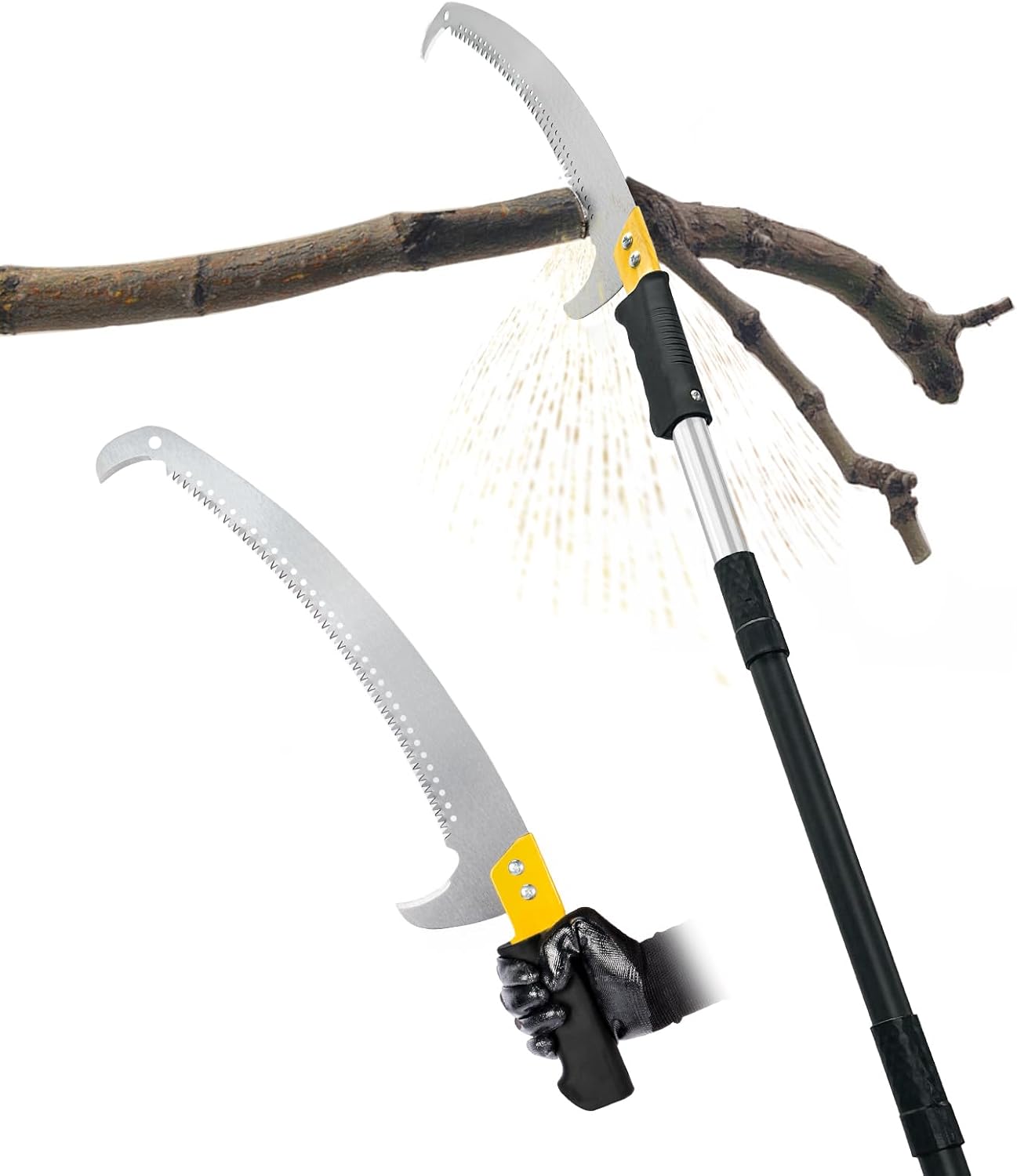
This BlumeTrec pole saw is a manual, multi-section pruning saw designed to let you trim high branches safely from the ground. The pole breaks down into sections so you can assemble it to three fixed lengths (8.5 ft, 11 ft, 14.5 ft) to match the task, and a manganese steel blade with a three-sided edge and double-sided barbs grips and slices branches for cleaner cuts. The stainless steel poles are powder-coated to resist rust and a tightening screw secures the saw head so it stays steady during use. In practice this is a basic, no-power tool that is quiet, low-maintenance, and lighter to carry than most motorized alternatives, making it easier for less experienced users to avoid ladders. Expect quicker work on small to medium branches but slower progress on very thick wood since it is manual. The plastic handle and anti-slip grip improve control but the modular pole means assembly time and storage space should be considered. Overall it is a straightforward, safety-minded option for everyday yard pruning when you want a simple, reliable tool rather than powered equipment.
Best for: Buyers who prioritize safety and simplicity and want to prune high branches from the ground without using power tools or climbing ladders; good for homeowners doing routine yard maintenance.
Less Ideal for: Professional arborists or anyone who needs to cut very large or numerous thick hardwood branches frequently should choose a powered pole saw or chainsaw instead.
- Adjustable multi-section pole offers three fixed reach lengths for flexible use.
- Mn steel blade with three-sided edge and barbs provides secure, clean cuts on small to medium branches.
- Powder-coated stainless poles resist rust for outdoor durability.
- Lightweight manual design reduces noise and maintenance compared with motorized saws.
- Anti-slip grip and extra screw to secure the saw head improve handling and safety.
- Manual cutting limits speed and effectiveness on very thick or hardwood branches.
- Plastic handle may feel less durable under heavy professional use.
Verdict: A simple, rust-resistant extendable manual pole saw that lets risk-conscious homeowners prune high branches from the ground without ladders.
Supstable S5 Sky 2‑in‑1 Cordless Pole Saw and Mini Chainsaw with 16 ft Reach

| Power Source | Battery Powered |
|---|---|
| Horsepower | 800 watts |
| Chain Speed | 30ft/s |
| Batteries Included | 2 × 4000mAh |
| Auto Lubrication | 30ml tank with window |
The Supstable S5 Sky combines a handheld 6-inch mini chainsaw with an extendable pole saw that reaches up to 16 feet, letting you trim high branches from the ground without a ladder. It uses a brushless motor and comes with two 4.0Ah batteries, which the manufacturer states provide extended runtime for larger yards and continuous work. Practical features include an automatic chain oiler with a transparent window, tool-free chain tensioning, and a 180 degree adjustable cutting head for angled cuts. The kit ships with an extra 8-inch bar, spare chain, gloves, goggles, and a charger so you have the consumables and safety gear to start working right away. For routine pruning, storm cleanup, and small firewood cutting the tool is convenient and reduces setup time compared with gas saws. Expect battery runtime and cutting power to limit very heavy cutting compared with full-size gas chainsaws, and the telescoping pole adds some leverage and balance challenges when fully extended. The unit is best for homeowners who want safer overhead trimming without climbing and who value the included accessories and maintenance conveniences.
Best for: Homeowners who want a safer way to prune tall branches and maintain trees without climbing or renting specialty equipment, and who prefer a ready-to-use cordless kit with batteries and safety accessories.
Less Ideal for: Arborists, professional landscapers, or anyone who regularly cuts large diameter hardwoods and needs continuous heavy-duty power from a gas or professional-grade electric saw.
- Two-in-one design lets you use it as a handheld mini chainsaw or a telescopic pole saw up to 16 feet
- Includes two 4.0Ah batteries for extended cordless runtime
- Automatic chain lubrication and transparent oil window reduce maintenance guesswork
- Tool-free chain tensioning and adjustable 180° cutting head simplify on-the-job adjustments
- Comes with extra bar, spare chain, gloves, goggles, and charger for immediate use
- Less cutting power and shorter continuous runtime than full-size gas chainsaws for very large or dense wood
- Long telescopic pole can feel unwieldy and harder to control when fully extended
Verdict: If you want a single cordless tool that replaces a small chainsaw and a pole saw for homeowner pruning, this complete kit delivers reach, convenient maintenance, and ready-to-use batteries and accessories.
Choosing the Right Tree Pole Saw: Key Factors to Consider
Reach and Extension Options
How far you can safely reach determines whether you can prune the branches you need without using a ladder. Different pole saws offer fixed lengths, telescoping sections, or multi-piece shafts. Telescoping poles let you fine-tune reach for varying tree heights but can add complexity at the joints. Multi-piece systems often store and transport more easily but require secure locking at each connection to prevent wobble while cutting.
Consider how high typical branches are in your yard and add a comfortable safety margin for arm extension and stance. Also think about storage and transport length since longer fixed poles can be awkward to move and store.
Cutting System and Blade Type
The cutting head design-manual saw blade, reciprocating blade, or small chainsaw head-affects cut quality, speed, and noise. A coarse-toothed manual blade provides quiet, controlled cuts and is easy to maintain, but it demands more physical effort on thick limbs. Powered cutting heads reduce effort and speed but add weight and require fuel, batteries, or cords.
Blade material and tooth geometry influence how cleanly the saw severs hardwood versus softwood. Smooth, well-aligned teeth reduce bark tearing and help the tree heal. If you plan to cut many large-diameter limbs, prioritize a system with robust cutting power rather than a lightweight trimming blade.
Weight, Balance, and Handling
Even modest weight at the pole tip translates into significant fatigue when extended overhead. Total tool weight matters, but so does balance between the cutting head and the shaft. A well-balanced pole saw transfers less torque to your arms and shoulders, making multiple cuts less tiring and safer.
Check how the saw handles at full extension and in typical pruning angles for your trees. Consider the grip design, presence of thumb rests or hand stops, and whether the pole provides a secure hold in damp or sweaty conditions.
Durability and Shaft Construction
Shaft materials range from aluminum and fiberglass to carbon fiber and reinforced composites, each with tradeoffs in stiffness, weight, and price. Stiffer shafts reduce bending when cutting at reach and improve cut accuracy, but some stiff materials are heavier. Corrosion resistance and strong joint fittings are important for longevity, especially if you store the saw outdoors or use it in wet conditions.
Look for reinforced collars, locking clamps with metal components, and shaft finishes that resist chips and scratches. These features reduce the chance of joint slippage and extend usable life under frequent use.
Maintenance, Sharpening, and Parts Availability
Regular maintenance keeps cuts clean and the tool safe. Manual blades need periodic sharpening and rust prevention, while powered heads require chain care, battery management, or engine maintenance. Ease of accessing replacement blades, chains, or drive components matters if you plan to use the pole saw frequently.
Consider whether blade changes are tool-free or need special wrenches, and whether replacement parts are standard sizes. Simpler maintenance lowers downtime and keeps the tool working reliably season after season.
Safety Features and Locking Mechanisms
Good safety design reduces the chance of sudden blade contact or pole collapse. Look for secure locking collars, positive blade engagement systems, and guards that limit kickback or accidental contact. Lightweight locking levers are convenient but should lock firmly without slipping under load.
Also pay attention to user controls and visibility. Clear hand positions, non-slip grips, and simple tension adjustments all help you maintain two-handed control during cuts and reduce the risk of accidents.
When to Use a Ground-Based Pole Saw Versus Climbing
A ground-based Tree Pole Saw is the right choice when branches are within safe reach and the cuts are straightforward. Using a pole saw avoids ladder use and climbing, which lowers the risk for most homeowners. It is particularly appropriate for thinning, removing small to moderate limbs, and trimming lower canopy branches.
Climbing or using professional rigging is still necessary for large, hazardous limbs, complex removals, or when precise limb placement is required. If a limb is heavy or likely to fall into structures, consider professional assistance.
- Use a pole saw for limbs you can access with a stable stance and comfortable reach.
- Avoid pole saws for very large-diameter cuts or limbs directly over structures.
- Plan cutting sequences to control where limbs fall and reduce surprise loads on the pole.
Setting Up Your Work Area and Pruning Plan
Before you cut, clear the ground area of people, pets, and obstacles. Mark escape routes so you can move quickly if a limb shifts unexpectedly. Inspect the target limb and its attachments to determine cutting order and whether an initial undercut is appropriate to prevent bark tearing.
When possible, make a three-step cut for larger limbs: an undercut to stop bark tear, a top cut to remove the limb weight, and a final cut near the trunk to finish the stub. Practicing this sequence with smaller limbs improves safety and cut quality.
- Wear eye and head protection and sturdy gloves.
- Work at a comfortable angle rather than forcing the pole into awkward positions.
- Keep bystanders well away from the drop zone.
Maintaining Blades and Drive Mechanisms
Clean blades after use to remove sap and debris; a light oil coating helps resist rust. For manual saw blades, sharpen teeth with a small file following the original tooth geometry. For chains or powered heads, follow manufacturer torque and tension specs to maintain safe cutting performance.
Inspect your pole joints and locking collars for wear before each season. Replace worn fasteners or seals and tighten connections to reduce wobble and extend the tool's service life.
- Use a brush to remove sawdust and wood chips from the blade and housings.
- Check chain tension frequently on powered heads, especially when warm.
- Store poles collapsed in a dry place to prevent shaft warping.
Transporting and Storing a Pole Saw Safely
Long poles require safe transport and storage. Break down multi-piece shafts and secure telescoping sections before moving. Protect blades with sheaths and fasten cutting heads to prevent accidental contact. A simple overhead or horizontal wall rack in a garage keeps poles out of the way and prevents damage from leaning against rough surfaces.
Avoid storing assembled, tensioned poles for long periods. Release clamps and tensioners to reduce stress on locking mechanisms and prolong their life.
- Always sheath the blade or chain before transport.
- Store in a dry location away from temperature extremes.
- Label battery packs and keep them charged at recommended levels for longer battery life.
Environmental and Tree Health Considerations
Prune with tree health in mind. Make clean cuts just outside the branch collar to promote faster healing and reduce disease risk. Avoid over-pruning in a single season; removing too much live canopy can stress trees and reduce vigor.
Consider seasonal timing: many species respond best to pruning in late winter or early spring when the tree is dormant, while some flowering species should be pruned after bloom to preserve blossoms for the next season.
- Disinfect blades between cuts on diseased trees to limit spread.
- Limit large cuts to essential removals and remove no more than recommended canopy percentage per year.
- Observe tree response after pruning and adjust future plans accordingly.
How We Chose the Best Tree Pole Saw
We focused on attributes that matter when using a Tree Pole Saw in real gardens. Primary evaluation criteria included reach and extension options because safe ground-based pruning depends on getting the cutting head high enough without overreaching. Cutting power and blade type were assessed to determine how well each saw severs hardwood limbs versus softwood, and whether it leaves a clean wound that promotes healing. Durability and build quality were checked for shaft materials and joint strength that resist flex and wear during repeated cuts. Ease of use covered weight balance, one-handed control, and tool setup so gardeners can prune longer without fatigue. Maintenance and serviceability considered how simple it is to change or sharpen blades and replace consumable parts. Safety features such as locking mechanisms, non-slip grips, and clear user controls were also weighed. We excluded specialized arborist climbing rigs and motorized chainsaw poles intended for professional crews. Our selections favor tools that a homeowner or serious gardener can operate safely from the ground. The final list balances reachable cutting height with dependable cutting performance and manageable maintenance requirements.
FAQ
What reach do I need for typical suburban trees?
Reach depends on the tallest branches you need to access plus a comfortable working buffer. For many suburban yards, a fully extended reach of 10 to 14 feet above your standing height covers common pruning tasks. Taller specimen trees may require 18 feet or more of reach or a multi-piece extension system.
Are powered pole saws worth the extra weight?
Powered pole saws reduce physical effort and speed up cutting, which is valuable for many heavy or frequent pruning jobs. They do add weight at the tip and require battery or fuel management. If you prune often or need to cut thicker limbs, the tradeoff often favors a powered head despite the extra handling demands.
How do I sharpen or replace the blade on a pole saw?
Manual saw blades are sharpened with a file following the tooth profile, while chains require a proper chain file and tension adjustments. Some powered heads use replaceable chains or bars that are replaced as a serviceable item. Check access to replacement parts and whether blade changes are tool-free for convenience.
Can I use a pole saw on wet or frozen wood?
You can cut wet or frozen wood, but the saw may clog more quickly with wet sap and produce different chip behavior on frozen limbs. Exercise caution because frozen limbs can be brittle and unpredictable when they break. Clean and dry blades promptly to prevent corrosion after cutting wet wood.
How often should I inspect pole joints and locking clamps?
Inspect joints and clamps before each pruning season and visually check them before longer jobs. Tighten loose fittings and replace worn parts to avoid unexpected slips while cutting. Regular checks keep the tool safe and performing as expected.
Final Verdict
Prioritize reach, cutting capability, and handling when choosing a Tree Pole Saw. Reach determines whether you can perform the job from the ground, while the cutting system and blade type affect how cleanly and quickly branches are removed. Balance a durable shaft and secure locks with a weight and balance profile that you can manage for extended pruning sessions. Decide which tradeoffs make sense for your yard: maximize reach for tall trees, choose powered heads for frequent heavy cuts, or select lighter manual options for occasional trimming. Focusing on the key criteria above will help you pick a pole saw that matches your pruning needs and keeps work efficient and safe.
