

Note: This article contains affiliate links. If you click on these links and make a purchase, I may earn a small commission at no extra cost to you. This helps support my research and content. Read my full affiliate disclosure here.
Picking the right soil for Areca Palm matters more than extra sunlight or frequent misting. These palms need a balance of quick drainage to avoid root rot and enough organic material to sustain steady growth. Whether you are potting a single specimen or repotting a large cluster, the soil you choose shapes root health, water routine, and how often you need to feed. This guide shortlists the top mixes and blends suited for Areca Palm use. We discuss the attributes that kept each option on the list and explain the evaluation criteria gardeners care about, including drainage, nutrient retention, texture, and disease resistance. Read on to understand which soil characteristics match your planting situation and how to use them effectively.
Top Picks at a Glance
| Best Quality Built to a higher standard if you want something more solid | LECHUZA PALMPON Palm and Mediterranean Potting Soil (2.7 US dry gal) |  |
| Best Value The sweet spot between price and what you get | Espoma Organic Cactus Potting Soil Mix, 4 qt |  |
| Best Budget The cheapest option that still gets the job done reliably | Miracle-Gro Organic Outdoor Potting Mix, 16 qt. |  |
| Highest Rated A top-rated pick with lots of positive feedback | E.B. Stone Organics Citrus & Palm Mix Potting Soil, 1.5 cu ft |  |
| Most Popular A crowd favorite that many people choose with confidence | Miracle-Gro Cactus, Palm & Citrus Potting Mix, 8 qt. |  |
| Best Seller A high-volume bestseller chosen again and again | Back to the Roots Organic Indoor Potting Mix, 6 Quart |  |
LECHUZA PALMPON Palm and Mediterranean Potting Soil (2.7 US dry gal)

| Brand Name | Lechuza |
|---|---|
| Item Highlight | peat-free mineral substrate; improves drainage and aeration |
| Volume | 12 liters |
LECHUZA PALMPON is a specialized, peat-free potting substrate designed for palms and other Mediterranean species that prefer moist but well-aerated roots. It is used as a repotting or top-up medium for plants such as areca palms, olive trees, and similar house or patio specimens. The mix emphasizes mineral components that improve drainage and root aeration to reduce waterlogging while retaining enough moisture for steady growth. It arrives pre-fertilized to supply nutrients for roughly six to eight months, which simplifies feeding during establishment. Practical benefits include reduced risk of yellowing from soggy soil, less frequent fertilizing, and a more sustainable peat-free composition. Limitations are the single bag volume, which is modest for larger palms and may require multiple bags for big pots, and the fixed pre-fertilized formula which may not suit growers who prefer to control exact fertilizer schedules or formulations. For performance-focused gardeners the product speeds healthier frond development but you may still need to amend or supplement for long-term container culture of large specimens.
Best for: Gardeners who prioritize plant performance and want a ready-to-use substrate that promotes steady frond growth and reduces waterlogging for areca and similar palms.
Less Ideal for: Growers who need large volumes for big specimens or who prefer to custom-blend their own fertilization and soil amendments.
- Formulated for palms and Mediterranean plants to balance moisture and aeration
- Peat-free mineral substrate improves drainage and reduces waterlogging risk
- Pre-fertilized to provide nutrients for about six to eight months
- Supports vigorous, green frond growth by holding and releasing nutrients gradually
- Small 2.7 dry gallon bag may be insufficient for repotting larger palms
- Pre-fertilized mix limits control over precise fertiliser composition or timing
Verdict: Choose PALMPON when you want a performance-focused, peat-free potting soil that promotes healthy, well-aerated roots and steady growth for areca and Mediterranean palms.
Espoma Organic Cactus Potting Soil Mix, 4 qt

| Brand | Espoma |
|---|---|
| Volume | 4 quarts |
| Unit Count | 128 Ounce |
| Contains | Peat moss, humus, perlite, mycorrhizae |
Espoma Organic Cactus Potting Soil Mix is a lightweight, peat-based blend designed to improve drainage and root aeration for container plants. Typical uses include repotting succulents, cacti, and smaller container palms and citrus where fast drainage is important. The mix contains sphagnum peat moss, humus and perlite, plus a mycorrhizal inoculant to support root establishment. In practice this means soil that dries out more quickly than all-purpose mixes, reducing the risk of root rot in drought-tolerant species and helping young palms settle after repotting. Because it is organic and free of synthetic fertilizers, gardeners who prefer natural inputs can use it without adding immediate chemical feeds. Limitations are its small 4 quart volume and peat-heavy base, which may require mixing with coarser materials or regular feeding for larger palms or long-term container culture.
Best for: Buyers looking for an organic, fast-draining potting mix to repot succulents or small container palms and who prefer natural ingredients over synthetic additives.
Less Ideal for: Gardeners needing large volumes for big specimen palms or long-term container culture should choose a coarser, larger-volume mix or blend this with chunky amendments.
- Formulated for drainage and aeration with peat moss and perlite
- Includes mycorrhizae to encourage root growth and establishment
- Organic blend with no synthetic fertilizers or chemicals
- Suitable for repotting succulents, cacti and smaller container palms
- Small 4 quart bag may not be cost-effective for large pots or multiple palms
- Peat-heavy mix can compress over time and may need amendment for long-term container use
Verdict: A compact, organic, fast-draining mix that helps establish roots in succulents and small container palms when you need a natural potting medium.
Miracle-Gro Organic Outdoor Potting Mix, 16 qt.

| Volume | 16 qt. |
|---|---|
| Item Highlight | Plant Soil For Outdoor Container Plants, Contains Quick-Release Natural Fertilizer, OMRI Listed |
| Manufacturer | Scotts Miracle Gro |
This 16 qt. Miracle-Gro Organic Outdoor Potting Mix is designed specifically for outdoor container plants and is useful for planting strawberries in pots. The mix contains responsibly sourced peat and upcycled green waste and includes a quick-release natural fertilizer that feeds for up to two months, which helps young strawberry plants establish and start producing. It is OMRI listed so it fits an organic container-gardening approach. Typical use is to partially fill a 12-inch pot, set the plant with a loosened root ball, add more mix, and water thoroughly; a single bag is sized to fill about one 12-inch container. Practical benefits include moisture retention suitable for exposed pots and a built-in starter nutrient charge so you may not need immediate additional feeding. Important limitations are that nutrients last about two months so plan a feeding schedule for fruiting plants and that peat-based mixes can compact over time, so repotting or refreshing the soil biannually is recommended for continued vigor.
Best for: Gardeners who want an organic-ready potting mix for outdoor container strawberries and prefer a product that gives an initial nutrient boost while simplifying first-season care.
Less Ideal for: Growers who need a long-term, self-sustaining soil blend for mature strawberry beds or those who avoid peat entirely should consider alternatives.
- OMRI listed and made with responsibly sourced peat suitable for organic container gardening
- Includes quick-release natural fertilizer that feeds plants for up to two months
- Formulated to retain moisture for outdoor containers exposed to sun and wind
- Contains upcycled green waste and is locally crafted to reduce transport distance
- Fertilizer effect is limited to about two months so additional feeding is needed for ongoing fruiting
- Peat-based mix can compact over time and requires bi-annual repotting to refresh structure
Verdict: A convenient OMRI-listed container potting mix that gives outdoor strawberry starters an organic nutrient boost and good moisture retention for the first months.
E.B. Stone Organics Citrus & Palm Mix Potting Soil, 1.5 cu ft

| Brand Name | E.B. Stone Organics |
|---|---|
| Unit Count | 1536 Ounce |
| Volume | 1.5 cubic feet |
| Style Name | Potting Soil |
E.B. Stone Organics Citrus & Palm Mix is a ready-to-use organic soil blend designed for container and in-ground planting of citrus, palms, avocados and tropical foliage. The mix pairs aged fir bark and pumice to keep the root zone well aerated and fast-draining so plants that dislike soggy feet avoid root rot, while added mycorrhizae improve nutrient and water uptake. It is intended to be used straight from the bag for potting or worked into beds when planting, which simplifies planting and repotting tasks. For gardeners seeking reliability, this blend delivers consistent structure and moisture retention without heavy amendments, and the organic base supports longer-term soil biology. Limitations are the single bag volume of 1.5 cubic feet, which means larger projects will require multiple bags and mixing on site, and it does not list N-P-K numbers or slow-release fertilizer content so supplemental feeding may be needed for heavy-feeding specimens.
Best for: Gardeners who prioritize reliable, low-maintenance potting media for citrus and tropical plants and want a ready-made organic blend that supports healthy roots.
Less Ideal for: People who need large volumes for landscaping projects or who prefer a potting mix with specified fertilizer content and tailored nutrient ratios.
- Formulated specifically for citrus, palms and tropicals to match their root needs.
- Aged fir bark and pumice provide good drainage and aeration to reduce risk of root rot.
- Contains beneficial mycorrhizae to enhance root nutrient and water uptake.
- Ready-to-use bag simplifies repotting or planting without on-site blending.
- Single bag is only 1.5 cubic feet so multiple bags are required for larger trees or beds.
- No detailed fertilizer analysis provided so additional feeding may be necessary for heavy feeders.
Verdict: Choose this mix when you want a consistent, ready-to-use organic soil that promotes healthy, well-aerated roots for citrus and tropical plants.
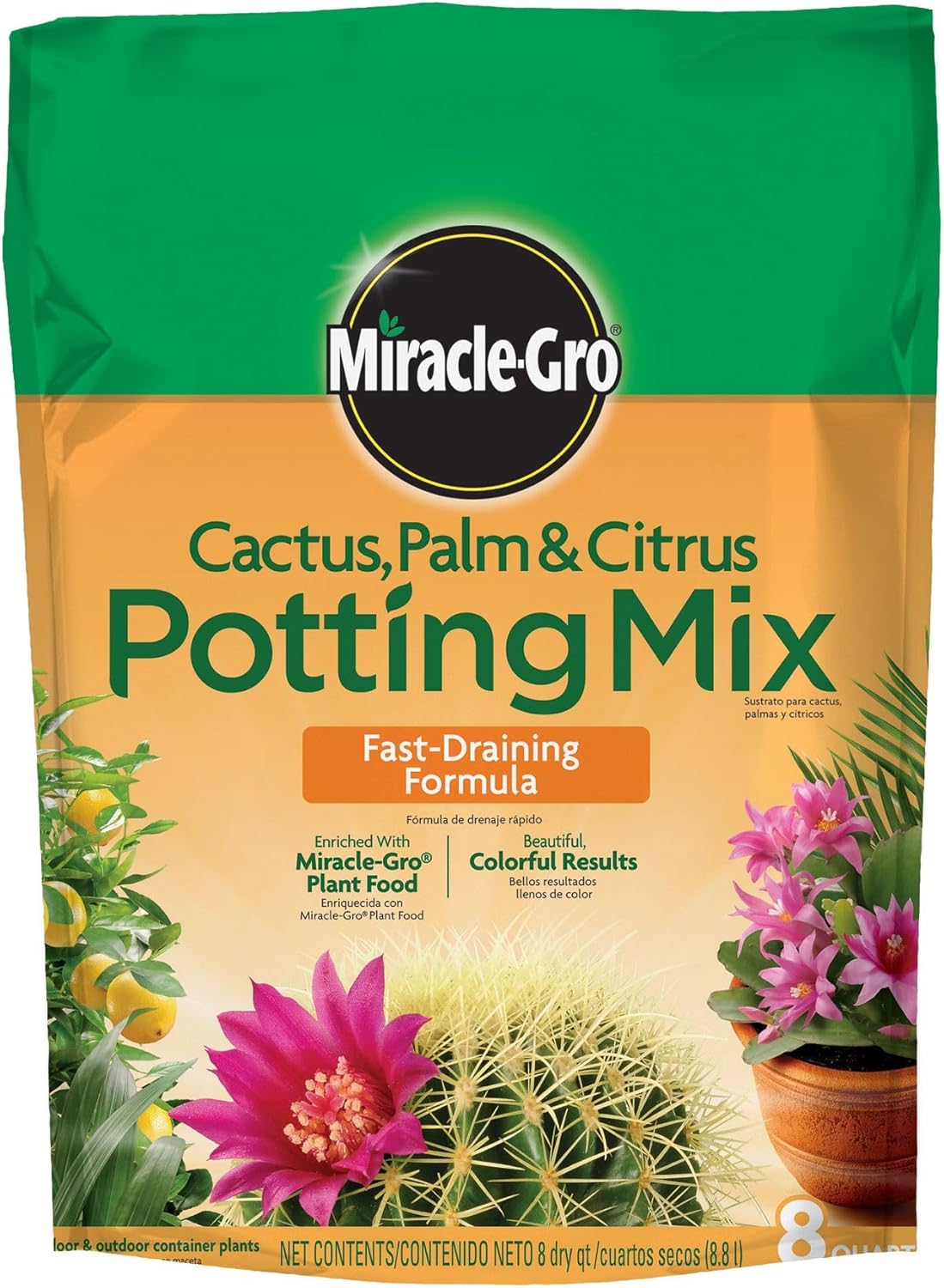
Miracle-Gro Cactus, Palm & Citrus Potting Mix, 8 qt.
| Brand Name | Miracle-Gro |
|---|---|
| Volume | 8 quarts |
| Unit Count | 1 Count |
This 8-quart Miracle-Gro potting mix is designed for container-grown cacti, palms, and citrus and combines peat moss, sand, perlite, and forest products for faster drainage and reduced compaction. It arrives ready to use and is enriched with Miracle-Gro plant food so newly potted citrus get an initial nutrient boost without immediate fertilizing. Typical use is straightforward: choose a pot with drainage, fill about one third, set the root ball and top up, then water and allow to drain. The formula helps soil dry between waterings, which is important for citrus root health in containers, and one bag is enough for two 8-inch pots. Limitations are the small volume for larger trees and the presence of peat moss if you prefer peat-free mixes; heavier or older citrus will need larger volumes and eventual repotting. For growers wanting a quick, reliable container medium that balances moisture retention with drainage, this mix performs as expected.
Best for: Growers who repot or maintain container citrus and want a ready-to-use mix that balances drainage and initial feeding for healthier root development.
Less Ideal for: Gardeners potting mature or large citrus specimens that need large volumes of soil or those seeking a peat-free or custom mineral-heavy citrus bonsai substrate.
- Fast-draining blend reduces risk of waterlogged roots for container citrus
- Pre-enriched with plant food to give newly potted plants an initial nutrient boost
- Contains perlite and sand to resist compaction and maintain aeration
- Formulated for indoor or outdoor containers so it works across sites
- 8-quart bag is small for larger or multiple citrus containers
- Contains peat moss which some buyers avoid for sustainability reasons
Verdict: A convenient, fast-draining, plant-food–enriched container mix that makes repotting small to medium citrus trees quick and reliable.
Back to the Roots Organic Indoor Potting Mix, 6 Quart

| Unit Count | 192 Fluid Ounces |
|---|---|
| Item Type Name | Indoor Potting Mix 6qt |
| Item Highlight | Peat-free, 100% organic, made in the USA |
| Ingredients | Coconut Coir, Yucca, Mycorrhizae, Perlite, Horticultural Sand |
This Back to the Roots indoor potting mix is a ready-to-use, 6-quart blend designed for common houseplants such as pothos, monstera and ferns. It combines coconut coir, yucca extract, mycorrhizae, perlite and horticultural sand to improve moisture retention, drainage and root development without peat. In practice it feels light and friable, so it is easy to pot seedlings or repot mature plants and it reduces compaction that can suffocate roots. The added mycorrhizae helps young roots establish and take up nutrients more efficiently while yucca extract helps the mix hold water between waterings, which is convenient for forgetful or busy plant owners. Because it is peat-free and made in the USA, it is a more sustainable choice versus traditional peat-based mixes. Limitations are the small 6-quart size, which means frequent repurchasing for larger collections, and the bag does not include fertilizer so you will need to feed plants separately as they grow.
Best for: Buyers who prioritize low-risk, easy-care houseplant solutions and want an organic, ready-to-use potting mix that reduces watering hassles and supports healthy root growth.
Less Ideal for: Not ideal for gardeners who need large-volume soil for many pots or for those expecting a mix that includes built-in fertilizer for long-term feeding.
- Peat-free organic formula that reduces environmental impact
- Yucca extract improves moisture retention between waterings
- Contains mycorrhizae to support root development and nutrient uptake
- Light, well-draining texture suitable for repotting seedlings and houseplants
- Small 6-quart volume may require frequent repurchasing for larger plant collections
- Does not include fertilizer so additional feeding is necessary
Verdict: A compact, peat-free potting mix that simplifies indoor plant care by holding moisture and boosting root establishment.
Choosing the Right Soil for Areca Palm: Key Factors to Consider
Drainage Rate
Areca palms are prone to root rot if their roots sit in water. A soil that sheds excess water quickly prevents oxygen depletion around roots and reduces fungal pressure.
Drainage rate is influenced by particle size and the proportion of coarse components such as perlite, pumice, or coarse sand. In containers, the pot design also affects drainage, but the soil mix is the primary control gardeners have. Aim for a mix that allows water to pass through within a few minutes after thorough watering to simulate the palm's natural free-draining tropical substrate.
Organic Matter and Nutrient Supply
Areca palms benefit from consistent, moderate nutrient availability rather than one-time heavy feeding. Organic components like aged compost, coconut coir, or leaf mold provide slow-release nutrients and help sustain microbial life.
Too much fresh compost or uncomposted amendments can hold excessive moisture and create hotspots. Look for well-decomposed organic matter that adds fertility without sacrificing drainage. This balance reduces the frequency of fertilizer applications and supports steady frond production.
Aeration and Root Texture
Fine, compacted soils restrict root growth and reduce oxygen flow. A loose, open texture encourages root branching and efficient uptake of water and nutrients.
In practice this means mixing in chunky, stable amendments such as bark fines, coarse perlite, or pumice to create pore space. These particles resist compaction over time and keep the root zone fluffy, which is especially important for potted palms that are handled or moved.
Moisture Retention Balance
The ideal soil holds enough moisture to avoid daily watering but releases it readily between waterings. Areca palms prefer a consistently damp but not waterlogged root zone.
Materials like coir or peat can increase water-holding capacity, but they must be paired with coarse elements to prevent sogginess. Consider the container size and indoor humidity: smaller pots dry out faster, so mixes for small containers should retain slightly more moisture than mixes for large planters.
pH and Mineral Availability
Soil pH affects nutrient availability. Areca palms typically do well in slightly acidic to neutral ranges where iron and micronutrients remain soluble.
Choosing components with stable pH profiles avoids sudden swings. Testable ingredients and the ability to amend pH with lime or sulfur make it easier to correct deficiencies. Gardeners should know how to monitor leaf color and perform a simple pH test if deficiencies appear.
Resistance to Compaction and Pathogens
Over time, some mixes settle and compress, reducing air space and holding water too long. Components that resist breakdown, such as coarse bark or mineral aggregates, maintain structure for multiple seasons.
Additionally, sterile or well-processed mixes reduce the chance of introducing root pathogens or soil-borne pests. For indoor palms, avoiding contaminated garden soil and choosing mixes with clean, processed ingredients decreases disease risk and the need for corrective treatments.
Best Soil Structure for Indoor Containers
Indoor areca palms perform best in a mix that mimics the light, fibrous forest floor: loose, slightly open, and rich enough to supply steady nutrients. Use a base of potting medium blended with coarse aggregates to create fast drainage while retaining some moisture.
Pay attention to container size and drainage holes. Large planters can hold more moisture and need proportionally more coarse material to keep the root ball airy. For smaller pots, increase the fraction of organic water-retaining components slightly to avoid overly frequent watering.
- Include coarse perlite or pumice for pore space.
- Use well-aged organic matter to avoid hot spots.
- Avoid pure peat or heavy clay in small pots.
Adjusting Mixes for High-Humidity Rooms
If your home or greenhouse stays humid, soils will dry more slowly and the risk of fungal problems rises. In those conditions, increase drainage by adding more mineral aggregate and reduce the proportion of moisture-holding fibers.
Elevating pots on feet or using trays that allow airflow underneath also helps the root zone dry more evenly. Consider more frequent checks for soggy spots and adjust your watering schedule rather than changing the entire mix.
- Favor pumice or coarse sand over extra coir in humid spaces.
- Raise pots to improve underside airflow.
When Repotting Is Necessary and How Soil Matters
Repotting is often needed when roots circle and the mix compacts. Fresh soil with better structure can revive a stressed palm by improving oxygen and nutrient access. Choose a fresh mix that emphasizes aeration and includes replenishing organic material.
When moving to a larger container, backfill with a similar texture to avoid creating a layered 'bathtub' effect where water pools at the interface. Mix the old root ball gently with new mix so roots can explore easily.
- Inspect roots for rot or girdling before repotting.
- Match texture between old and new media to prevent waterlogging.
Feeding and Soil Amendments Over Time
Soils alone do not supply all nutrients indefinitely. Even mixes with good organic content will need periodic fertilizer to replace what the plant uses. Slow-release granular feeds and regular liquid feeding both work when timed to the growing season.
Topdress with compost or well-rotted organic material annually and refresh the top few inches of soil. If you notice yellowing fronds or slowed growth, test soil moisture and pH before adding more fertilizer to avoid masking a physical-media problem.
- Use balanced fertilizers formulated for foliage plants during spring and summer.
- Topdress annually with small amounts of well-aged compost.
Dealing with Common Soil Problems
Compaction, poor drainage, and salt buildup from fertilizers are common issues. Flush containers occasionally with ample water to leach accumulated salts, and replace or amend compacted mixes to restore aeration.
If you suspect root disease, remove affected portions and repot into a sterile, well-draining mix. Preventative steps include avoiding overwatering and choosing mixes that resist compaction from the start.
- Flush pots to reduce salt accumulation every few months.
- Repot into fresh, airy soil if compaction or rot appears.
How We Chose the Best Soil for Areca Palm
We selected soils by focusing on the characteristics that most directly affect Areca Palm health in pots and indoor displays. Key evaluation criteria included drainage rate, organic matter content and nutrient availability, aeration and root-zone texture, and resistance to compaction and root disease. We favored mixes that balance quick runoff with enough water-holding capacity so growers do not need to water excessively often. We tested descriptions and composition claims against known horticultural principles rather than brand names. Exclusions included any product lacking clear ingredient breakdowns, mixes intended only for outdoor planting beds, or soils with additives unsuitable for container palms such as heavy clay concentrates. Final choices reflect materials and proportions that promote upright, feathery frond production and reduce the risk of overwatering problems. The scoring emphasized measurable, gardener-relevant dimensions: how the mix handles water, feeds the plant, supports roots, and resists compaction or pathogens.
FAQ
Can I use garden soil for an Areca Palm in a pot?
Garden soil is usually too dense for container Areca palms and can retain excess water. It tends to compact and restrict root growth. If you must use it, mix in coarse material and plenty of organic matter to improve drainage and aeration.
How often should I water Areca Palm in well-draining soil?
Watering frequency depends on pot size, light, and humidity, but in a well-draining mix you will generally water when the top inch or two feels dry. Smaller pots dry faster and need more frequent checks, while larger planters require less frequent watering.
Is coir a good ingredient for Areca Palm soil?
Coir provides stable moisture retention and is a sustainable option compared with some alternatives. It should be balanced with coarse elements so it does not create a waterlogged mix. Properly aged coir works well in many palm mixes.
What pH range should I aim for?
A slightly acidic to neutral pH generally keeps micronutrients available for Areca palms. Aim for a range that does not swing wildly; routine checks help diagnose nutrient issues before they affect foliage.
How can I tell if my soil is compacted?
Compaction shows as slow drainage, water pooling on the surface, and limited new root growth. You may also feel a dense, hard texture when you remove the root ball. If compaction is present, repot into a mix with larger particles to restore pore space.
Final Verdict
Focus on mixes that combine quick drainage with enough organic matter to feed Areca palms between feedings. Prioritize aeration and stable structure so roots can access oxygen and moisture without sitting in water. Consider container size, indoor humidity, and how often you want to water when selecting or customizing a mix. When in doubt, choose a balanced, well-described soil and adjust coarse and organic fractions to suit your pot and environment. That approach minimizes problems and keeps fronds green and vigorous over time.
