

Note: This article contains affiliate links. If you click on these links and make a purchase, I may earn a small commission at no extra cost to you. This helps support my research and content. Read my full affiliate disclosure here.
Picking the right soil for growing food changes how well your vegetables, herbs, and small fruits develop from seedling to harvest. The wrong mix can stunt roots, lock up nutrients, or hold too much water and invite rot. The soils we shortlisted here are chosen for gardens, raised beds, and containers where food production is the priority. This guide explains why certain soil properties matter in an edible garden, and summarizes how each top option performs on texture, nutrients, and drainage. Read on for practical notes that help you match a soil to your planting style and site conditions.
Top Picks at a Glance
| Best Overall The best all-around choice for most situations | Espoma Organic Vegetable & Flower Garden Soil Mix, 1 cu ft |  |
| Best Quality Built to a higher standard if you want something more solid | FoxFarm Ocean Forest Potting Soil, 12 Quart |  |
| Best Value The sweet spot between price and what you get | Burpee Premium Organic Potting Mix with Coco Coir (9 Quart) |  |
| Best Budget The cheapest option that still gets the job done reliably | SunGro Horticulture Organic Seedling Mix (8 Quart) |  |
| Highest Rated A top-rated pick with lots of positive feedback | Coast of Maine Tomatoes and Veggies Planting Soil, 20 qt (Pack of 8) |  |
| Most Popular A crowd favorite that many people choose with confidence | Miracle-Gro Organic Outdoor Potting Mix, 16 qt. |  |
| Best Seller A high-volume bestseller chosen again and again | ZeeDix 30mm Peat Seed Starter Pellets (55 pcs) |  |
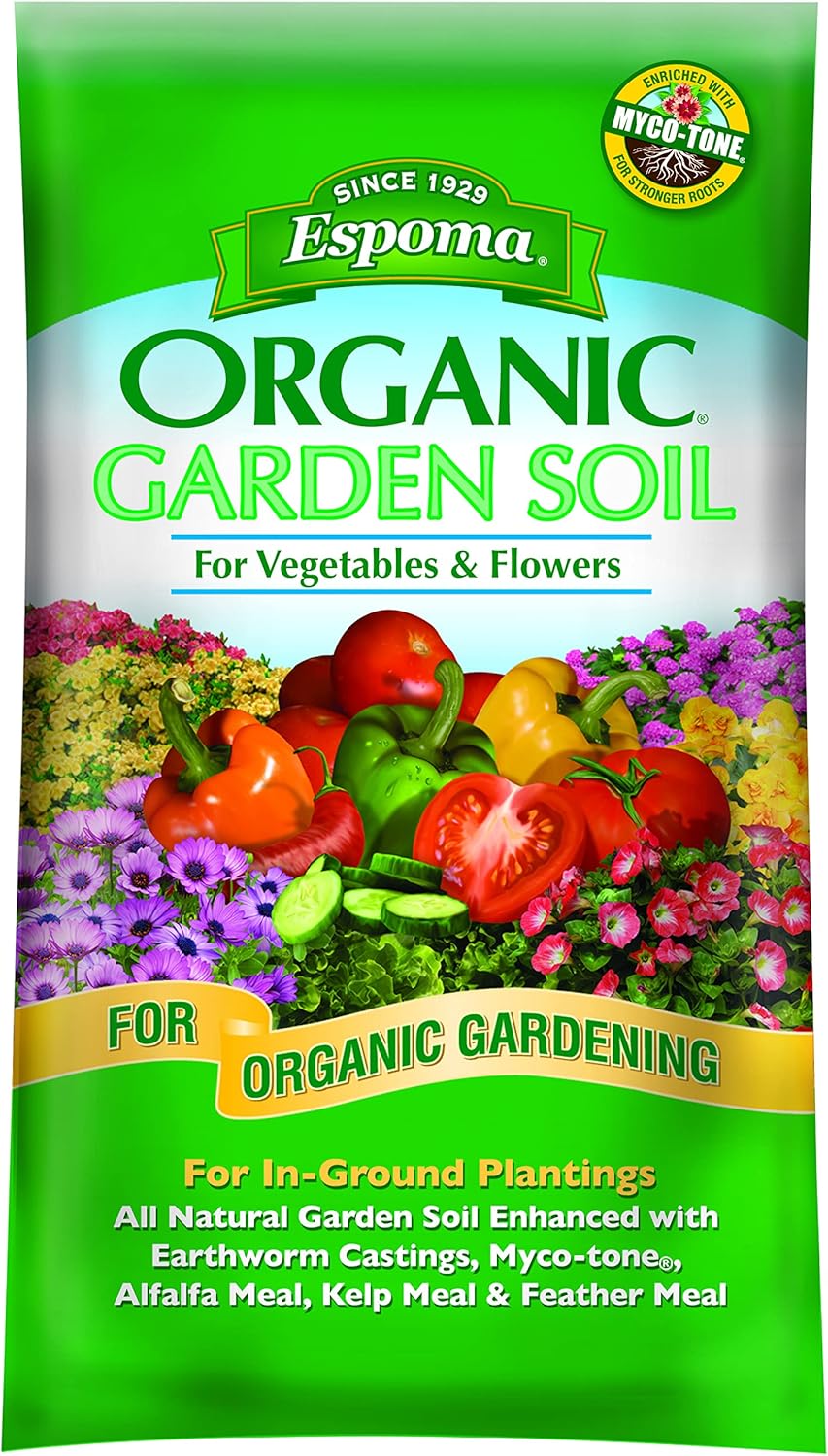
Espoma Organic Vegetable & Flower Garden Soil Mix, 1 cu ft
| Volume | 1 cubic feet |
|---|---|
| Style Name | Peat Moss |
| Unit Count | 1536 Ounce |
Espoma Organic Vegetable & Flower Garden Soil is a 1 cubic foot, peat-based planting mix designed to be blended into native garden soil at planting or transplanting. It contains Canadian sphagnum peat moss, earthworm castings, alfalfa meal, kelp meal, feather meal, limestone for pH adjustment, and a mycorrhizal blend to help root establishment. In practice you work a few inches of this mix into planting holes or rows to loosen dense soil, add organic matter, and give young squash transplants a nutrient-rich root zone. The organic amendments supply slow-release nutrients and biological activity that support early growth, while the mycorrhizae improve water and nutrient uptake. Limitations to note are the peat-heavy base, which dries faster than compost-rich mixes and may require more frequent watering, and the small 1 cu ft bag size that means multiple bags are needed for larger beds. For gardeners who prefer organic inputs and want an easy-to-use planting mix to boost transplant success, this product is straightforward and effective.
Best for: Gardeners who prioritize organic inputs and want a convenient planting mix to boost transplant success for vegetables like squash in established beds.
Less Ideal for: Large-scale landscapers or gardeners needing bulk soil amendments for entire raised beds who prefer compost-rich mixes or peat-free alternatives.
- Formulated with organic amendments like earthworm castings, alfalfa meal, kelp meal, and feather meal for slow-release nutrients
- Contains a mycorrhizal blend to support root establishment and improved nutrient uptake
- pH adjusted with limestone to better suit common garden plants
- Ready-to-use planting mix that blends easily with native soil when transplanting
- Peat-heavy base can dry out faster than compost-rich mixes, increasing watering frequency
- Small 1 cubic foot bag requires many bags for larger squash beds
Verdict: A compact, organic planting mix that makes transplanting squash easier by giving young roots nutrient-rich, biologically active soil.
FoxFarm Ocean Forest Potting Soil, 12 Quart

| Item Form | Granules |
|---|---|
| Specific Uses For Product | Dry Fertilizer |
| Coverage | 4.8 sq ft |
| Mixing Ratio | 1:1 |
FoxFarm Ocean Forest is a pre-mixed potting soil that combines aged forest products, sandy loam and sphagnum peat moss with organic amendments like fish meal, crab meal and earthworm castings. It is sold ready to use straight from the bag for planting in containers, seed starting or top dressing; the manufacturer recommends no additional nitrogen fertilizer for the first 30 days. The mix has a light, aerated texture that promotes drainage while still retaining moisture, and the built-in micronutrients make it practical for growers who want strong early growth without immediate feeding. Practical benefits include easy pot filling, good root zone aeration for roses in containers, and built-in organic fertility to support blooms. Limitations to consider are that the bag is best for containers or small beds only and heavier feeders may need supplemental feeding after the initial month; users should also follow handling precautions to avoid skin or eye irritation.
Best for: Gardeners who want a high-quality, nutrient-rich potting medium to get container roses or plant starts off to a strong, flowering start and prefer a ready-made organic blend.
Less Ideal for: Large in-ground rose beds or landscapers needing bulk soil amendments should look for bulk garden soil or custom rose mixes instead.
- Ready-to-use out of the bag so you can pot immediately
- Organic amendments (fish meal, crab meal, earthworm castings) supply early nutrients
- Light, aerated texture that supports drainage and root development
- pH adjusted for optimal nutrient uptake per product description
- Pack size (12 qt) covers a small area and may require multiple bags for several roses
- No long-term feeding provided after the first 30 days so additional fertilizer is needed for sustained heavy bloom
Verdict: Choose this soil if you want a ready-made, organically amended potting mix that jump-starts container roses and seedlings with good drainage and early fertility.
Burpee Premium Organic Potting Mix with Coco Coir (9 Quart)

| Item Form | Powder |
|---|---|
| Specific Uses For Product | Plant Growth, Root Development, Seed Development, Soil Conditioning |
| Coverage | 9 Qt Container |
| Liquid Volume | 9 quarts |
Burpee Premium Organic Potting Mix is a ready-to-use container soil designed for indoor and outdoor pots, seed starting, and raised bed containers. The mix combines coco coir for improved aeration and moisture retention with a nutrient blend that feeds plants for up to three months, making it useful for establishing seedlings or repotting established vegetables, herbs, and ornamentals. It is OMRI listed, which suits organic growers, and the bag is sold in a convenient 9-quart size that fits most small to medium containers. Practical benefits include reduced watering frequency thanks to the coir component and a balanced medium that promotes root development and germination. Limitations are the small bag size for larger projects and that it supplies nutrients for only a limited period, so longer-term containers will need supplemental fertilizer. The mix is powdery and light, so it is easy to handle but may compress over time in deep pots and benefit from occasional loosening.
Best for: Gardeners who want a compact, ready-made organic potting mix that reduces maintenance and supports reliable seed starting and container growth.
Less Ideal for: Those establishing large beds or filling many large containers at once should choose bulk soil or larger bags instead.
- OMRI listed organic blend suitable for organic container gardening
- Coco coir improves moisture retention while maintaining good aeration
- Includes slow-release nutrients that feed plants for up to three months
- Light, easy-to-handle texture ideal for seed starting and repotting
- 9-quart bag is small for larger containers or multiple pots
- Nutrient supply is temporary so additional fertilizer is required for long-season crops
Verdict: A compact OMRI-listed potting mix with coco coir that simplifies seed starting and short-term container growing by improving moisture balance and early root development.
SunGro Horticulture Organic Seedling Mix (8 Quart)

| Brand Name | SUN GRO |
|---|---|
| Style Name | Peat Moss |
| Volume | 8 quarts |
SunGro Horticulture Seedling Mix is a fine-textured, peat-based starting mix formulated to germinate seeds in flats, pots, and plug trays. It contains sphagnum peat moss, perlite for lightness and drainage, and an organic wetting agent to promote even water absorption, which helps maintain consistent moisture for small seeds. The mix also includes a silicon-enriched additive called RESiLIENCE intended to support stronger seedlings and reduce wilting during establishment. Typical use is filling trays or small pots, keeping the medium evenly moist but not waterlogged, then transplanting seedlings once roots are established. Practical benefits include predictable moisture retention, a clean fine texture that allows delicate roots to develop, and OMRI listing for organic onion transplants and other edible starts. Limitations are its small 8 quart volume for larger onion seed programs and that peat-based mixes dry out faster than heavier soils, so frequent monitoring is required; it also provides limited long-term nutrients so potting up into a richer mix or fertilizing before transplant is necessary.
Best for: Gardeners who want an organic, predictable seed starting medium for small to medium onion seed batches and who prioritize reliable germination over bulk volume.
Less Ideal for: Commercial growers or anyone starting very large quantities of onion seedlings should choose larger-volume or more nutrient-dense starting media.
- Fine, light texture suitable for delicate seed germination
- Organic wetting agent promotes uniform water absorption
- OMRI listed so safe for organic edible starts
- Contains perlite for improved drainage and root aeration
- Small 8 quart bag may not be cost-effective for starting large onion batches
- Peat-based mix has low long-term nutrient content and needs fertilizing before transplant
Verdict: A reliable OMRI-listed seed starting mix that delivers even moisture and a fine texture ideal for producing healthy onion seedlings in small home gardens.
Coast of Maine Tomatoes and Veggies Planting Soil, 20 qt (Pack of 8)

| Volume | 20 quarts per bag |
|---|---|
| Number of Packs | 8 |
| Brand Name | Coast of Maine |
This Coast of Maine planting soil is a purpose-built mix for vegetables and container-grown tomatoes, sold as eight 20-quart bags so you can top-dress or fill several raised beds. It is made with composted manure and sphagnum peat moss, which helps improve organic matter and moisture retention in garden beds and pots during seeding, transplanting, or as a dressing around established plants. The bulk pack makes it convenient for dependable, repeatable use across multiple beds, and the US-made formula is designed to revitalize tired soil rather than act as a concentrated fertilizer. Expect good structure and water-holding capacity for tomato root development, though you will still want to manage fertility with regular feeding because the product is a soil conditioner rather than a complete nutrient program. Bags are mid-sized and manageable for two-person handling but will require multiple bags to fill or top-dress standard raised beds. For gardeners prioritizing consistency and a tried-and-true organic base for tomatoes, this mix is a solid, low-risk choice.
Best for: Gardeners who need a dependable organic soil base for tomatoes in raised beds or containers and who value consistent, repeatable results across multiple plantings.
Less Ideal for: Growers looking for an all-in-one fertilized potting mix or those who want a single bag to fill very large raised beds without buying multiple units.
- Formulated specifically for vegetables and container tomatoes with composted manure and sphagnum peat moss
- Sold in an eight-pack of 20 quart bags for consistent coverage across multiple raised beds
- Improves soil structure and moisture retention to support tomato root development
- Made in the United States with recognizable organic ingredients
- Designed as a soil conditioner rather than a complete fertilizer so additional feeding is needed
Verdict: A reliable, organic soil conditioner sold in bulk that provides consistent structure and moisture retention for tomatoes in raised beds and containers.
Miracle-Gro Organic Outdoor Potting Mix, 16 qt.

| Volume | 16 qt. |
|---|---|
| Item Highlight | Plant Soil For Outdoor Container Plants, Contains Quick-Release Natural Fertilizer, OMRI Listed |
| Manufacturer | Scotts Miracle Gro |
This 16 qt. Miracle-Gro Organic Outdoor Potting Mix is designed specifically for outdoor container plants and is useful for planting strawberries in pots. The mix contains responsibly sourced peat and upcycled green waste and includes a quick-release natural fertilizer that feeds for up to two months, which helps young strawberry plants establish and start producing. It is OMRI listed so it fits an organic container-gardening approach. Typical use is to partially fill a 12-inch pot, set the plant with a loosened root ball, add more mix, and water thoroughly; a single bag is sized to fill about one 12-inch container. Practical benefits include moisture retention suitable for exposed pots and a built-in starter nutrient charge so you may not need immediate additional feeding. Important limitations are that nutrients last about two months so plan a feeding schedule for fruiting plants and that peat-based mixes can compact over time, so repotting or refreshing the soil biannually is recommended for continued vigor.
Best for: Gardeners who want an organic-ready potting mix for outdoor container strawberries and prefer a product that gives an initial nutrient boost while simplifying first-season care.
Less Ideal for: Growers who need a long-term, self-sustaining soil blend for mature strawberry beds or those who avoid peat entirely should consider alternatives.
- OMRI listed and made with responsibly sourced peat suitable for organic container gardening
- Includes quick-release natural fertilizer that feeds plants for up to two months
- Formulated to retain moisture for outdoor containers exposed to sun and wind
- Contains upcycled green waste and is locally crafted to reduce transport distance
- Fertilizer effect is limited to about two months so additional feeding is needed for ongoing fruiting
- Peat-based mix can compact over time and requires bi-annual repotting to refresh structure
Verdict: A convenient OMRI-listed container potting mix that gives outdoor strawberry starters an organic nutrient boost and good moisture retention for the first months.
ZeeDix 30mm Peat Seed Starter Pellets (55 pcs)

| Unit Count | 50 Count |
|---|---|
| Item Highlight | Easy Transplant & High Expansion, Ideal Seedling Soil for Vegetables, Herbs, Flowers, Succulents & Cacti, Cat Grass, Bonsai |
| Material | Organic sphagnum peat moss |
| Style Name | Indoor & Outdoor Gardening |
These ZeeDix peat pellets are ready-made seed-starting plugs designed for indoor germination. Each compressed pellet expands when watered into a loose, peat-based plug held in a non-woven net so you can sow seeds directly into the pellet, keep them moist while they germinate, then transplant the whole plug into a pot or garden without disturbing roots. The sphagnum peat composition provides good water retention and aeration that helps delicate seedlings and improves transplant survival. The netting keeps the medium intact and reduces mess on trays, which is handy for windowsill setups and beginner-friendly seed trays. They are simple to use for vegetables, herbs, flowers, succulents and grass, making them suitable for quick projects or parent-child planting activities. Limitations are that these are peat-based rather than a balanced potting mix so you may want to fertilize seedlings before long-term potting, and peat can compact if overwatered or used for very slow-growing plants that need more volume. For cautious indoor seed starting they offer a low-effort, low-mess option with reliable germination performance.
Best for: Buyers who want a simple, low-mess indoor seed-starting solution that minimizes handling of fragile seedlings and prioritizes reliable germination over tinkering with custom mixes.
Less Ideal for: Gardeners who prefer peat-free or DIY seed mixes, or those who need larger-volume plugs for slow-growing seedlings or extended nursery periods.
- Ready-to-use compressed plugs that expand with water for quick setup
- Non-woven netting allows transplanting the whole plug without root disturbance
- Peat-based medium holds moisture and supports early root development
- Compact and tidy for indoor trays and windowsill seed starting
- Made from sphagnum peat which may need supplemental fertilization for longer-term growth
- Smaller 30mm size offers limited growing volume for larger or slow-growing seedlings
Verdict: If you want a low-effort, low-mess indoor seed-starter that makes transplanting easy, these preformed peat pellets are a practical choice.
Choosing the Right Soil for Growing Food: Key Factors to Consider
Nutrient Content and Organic Matter
Soil for growing food should supply a baseline of plant-available nutrients and enough organic matter to feed soil biology. Organic matter decomposes slowly to release nitrogen, phosphorus, and potassium while improving cation exchange capacity. Rich, biologically active soils reduce the need for intensive synthetic feeding schedules and support stronger root systems.
When assessing mixes, look for clear listings of compost percentage, tested nutrient values, or added amendments like rock phosphate or greensand. High organic matter also improves moisture retention and aggregate stability, which helps seedlings and shallow-rooted crops establish quickly.
Drainage and Water-Holding Balance
Vegetable roots need both oxygen and moisture. A soil that drains too quickly will stress plants during hot spells and require frequent watering. A soil that holds too much water will cause root oxygen deprivation and increase disease risk. The ideal soil for food crops balances pore sizes: macropores for aeration and drainage and micropores for water storage.
Texture, organic amendments, and added mineral components like sand or perlite determine that balance. Consider your local climate and whether you garden in containers or in-ground beds; wetter climates and heavy feeders benefit from better drainage, while hot, dry sites need higher water-holding capacity.
Soil Texture and Structure
Texture refers to the percentage of sand, silt, and clay, while structure describes how those particles aggregate. For food production you want a loamy feel: friable enough to work, with stable aggregates that resist compaction. Good structure encourages deep rooting, even moisture distribution, and easier transplanting and cultivation.
Coarse, sandy mixes warm and dry quickly and are good for root crops in cool springs. Heavy clay soils pack and impede roots unless amended. Many preblended soils aim to mimic loam with a mix of mineral grit and compost to create a predictable planting medium.
pH and Nutrient Availability
Most vegetables prefer a near-neutral pH where macronutrients and micronutrients are readily available. Soil mixes labeled for edible gardens should state an approximate pH range or be formulated to sit near neutral. A highly acidic or alkaline soil will lock out specific nutrients and require correction before establishing sensitive crops.
Stable pH also matters when you are growing successive crops in the same bed or container. If the pH drifts with time or after heavy fertilizer use, you may need to plan amendments such as lime or sulfur and monitor with periodic testing.
Ingredient Transparency and Contaminant Risk
Because edible crops are for human consumption, ingredient transparency is important. Know whether a soil contains municipal compost, biosolids, mine spoils, or other recycled materials that may carry contaminants. Look for test certificates, supplier statements, or third-party screening that address heavy metals, persistent organic pollutants, and pathogen risk.
Transparent ingredient lists also make it easier to troubleshoot fertility issues and to plan supplemental feeding. When ingredient details are sparse, gardeners should be cautious and consider testing small batches before planting high-value crops.
Suitability for Containers Vs In-Ground
Soils behave differently in containers than they do in raised beds or native ground. Container mixes need lighter texture and faster drainage to avoid waterlogging, while in-ground garden soils can rely on surrounding native soil to moderate moisture and temperature.
If you plan to use the same soil across containers and beds, choose a versatile mix or plan to amend the medium accordingly. Container-grown vegetables also demand more frequent feeding, so consider how easily a soil accepts supplemental fertilizers and how quickly nutrients flush from the root zone.
Matching Soil to Your Garden Site
Assessing your site first will save work later. For in-ground beds, start by evaluating existing soil texture and drainage. If your native ground is heavy clay, incorporate generous organic matter and coarse material to improve structure. For raised beds on compacted sites, a loamy, well-aerating mix speeds root establishment.
For containers, prioritize mixes formulated to drain well while holding enough moisture between waterings. Consider local climate: gardeners in hot, arid areas want mixes with higher water retention and mulches to reduce evaporation; gardeners in wet regions should err on the side of faster drainage to prevent rot.
- Test small patches for drainage before filling large beds.
- Match soil weight expectations to the structure supporting it, especially for large containers or rooftop planters.
- Adjust organic amendments seasonally rather than rebuilding the entire bed.
How to Amend Soil for Heavy Feeders
Crops like tomatoes, squash, and brassicas benefit from soils with sustained nutrient release. Rather than relying solely on quick-release fertilizers, incorporate finished compost, well-aged manure, or slow-release organic amendments at planting time to build a steady nutrient supply.
Work amendments into the planting zone and top-dress midseason with compost or balanced organic feeds. Keep in mind that over-amending can lead to excessive vegetative growth at the expense of fruiting, so match amendment rates to crop needs and monitor plant health throughout the season.
- Blend 2 to 4 inches of compost into the top foot for new beds.
- Use lighter, more frequent feedings in containers to avoid salt buildup.
- Test soil nutrient levels if growth is weak or leaf symptoms appear.
Managing Moisture in Different Soil Mixes
Moisture management depends on both the soil mix and your irrigation approach. Drip irrigation and soaker hoses reduce surface evaporation and deliver water to the root zone efficiently, which is especially helpful in denser soils that retain moisture.
Mulching keeps the root zone cooler and evens out moisture swings. For sandy mixes, choose mulches that retain water without creating a barrier to air movement. For heavier mixes, thin organic mulches help prevent surface crusting and improve infiltration.
- Install simple moisture meters or use a finger test to guide watering.
- Allow the top inch to dry for many warm-season vegetables before rewatering.
- Adjust frequency rather than volume when switching between different soil mixes.
Testing and Correcting Soil pH
Use a reliable soil test to understand pH and nutrient status before planting a new bed or after several seasons of production. Many extension services and private labs offer tests that include pH, organic matter percentage, and elemental nutrient levels.
If pH correction is needed, apply amendments gradually and retest after several months. Lime raises pH slowly, while sulfur or acidifying fertilizers lower it over time. Avoid drastic, rapid changes that can shock soil life and plants.
- Test in late summer or early fall for the most representative results.
- Make conservative adjustments and re-evaluate before the next planting season.
- Consider crop choices that tolerate your native pH when quick correction is impractical.
Storing and Handling Soil Safely
Keep bagged soils dry and covered to preserve structure and prevent nutrient leaching. Store opened bags off the ground and out of direct sun when possible. For bulk deliveries, use breathable tarps that keep out excess rain but allow moisture exchange.
When transferring soil into beds or containers, avoid compacting it with heavy foot traffic. Lightly settle the soil and water to help aggregates form naturally. Wear gloves and a dust mask if handling large volumes to reduce exposure to dust or potential pathogens in raw amendments.
- Buy or amend soil close to the planting date when possible to preserve microbial life.
- Rotate stockpiled soil through the garden if it sits unused for extended periods.
- Label mixes if you manage different formulations across beds.
How We Chose the Best Soil for Growing Food
We focused on attributes that directly affect how well a soil supports edible plants from transplant through harvest. Primary evaluation criteria included nutrient profile and organic matter level to gauge fertility, drainage and water-holding balance to prevent drought stress or root rot, and texture and structure for root development and ease of planting. We also considered pH neutrality and buffering, which affect nutrient availability, and contamination risk, including heavy metals and persistent chemical residues. We excluded soils formulated only for ornamentals or specialized substrates that do not suit annual vegetables and herbs. We also filtered out mixes that rely primarily on untested proprietary amendments with no ingredient transparency. Shortlisted soils are those that provide clear composition information, realistic nutrient levels for food crops, and a balance of drainage and water retention suited to outdoor beds and common container sizes. Editorial judgment prioritized products that are practical to use in real gardens: easy to amend, compatible with common fertilizer plans, and unlikely to require frequent rebuilds or complex correction. These same dimensions form the scoring labels used in the product summaries.
FAQ
Can I use garden soil from my yard in containers for vegetables?
Garden soil from the yard is often too dense for containers because it compacts and holds water unevenly. It is usually better to use a lighter, well-draining container mix and amend with compost or other organic matter for fertility.
How often should I add compost to maintain fertile soil for food crops?
Adding a 1 to 2 inch layer of finished compost each year on top of beds is a common approach. For heavily cropped beds or high-demand vegetables, supplement with compost or organic fertilizers midseason as needed based on plant vigor and soil tests.
Do I need to test soil before planting a vegetable garden?
Testing is recommended because it clarifies pH and nutrient status and helps you target amendments. For new beds or when productivity declines, a test guides efficient corrections rather than guesswork.
How can I improve drainage in a raised bed that stays wet?
Improve drainage by mixing in coarse materials like horticultural grit or building in a coarser base layer. Increasing organic matter helps structure, but persistent waterlogging may also require raising the bed height or improving site grading.
Is sterilized or pasteurized soil better for starting vegetable seedlings?
Sterilized mixes reduce pathogen risk for seedlings but also remove beneficial microbes. Many growers use a blend of pasteurized base and live compost inoculant or rely on high-quality seed-starting mixes designed to balance disease suppression with healthy microbial life.
What pH range is best for most vegetable crops?
Most vegetables do best in a slightly acidic to neutral range, roughly pH 6.0 to 7.0. A few crops have different preferences, so check specific crop needs if you are growing many types in the same bed.
Final Verdict
Choosing soil for growing food means balancing fertility, drainage, texture, and safety. Prioritize mixes that provide clear information on organic matter and nutrient content, have a balanced drainage versus water-holding profile, and sit near neutral pH for the widest range of edible crops. Expect some seasonal amendment: building long-term soil health is an ongoing process rather than a single purchase. Focus on the factors that match your site and crops. For steady, high-yield production, favor soils that are easy to amend, testable, and transparent about ingredients. That approach helps you pick a starting soil that minimizes surprises and supports productive harvests year after year.
