

Note: This article contains affiliate links. If you click on these links and make a purchase, I may earn a small commission at no extra cost to you. This helps support my research and content. Read my full affiliate disclosure here.
Getting the soil right is one of the quickest ways to improve onion yields and bulb quality. Onions need friable, well-drained soil with a steady supply of sulfur and moderate nitrogen through the growing season. The wrong amendment can create compaction, lock up nutrients, or shift pH away from the slightly acidic range that onions prefer. This guide covers seven shortlisted soil amendments that suit typical backyard and small-scale market gardens, and explains the practical tradeoffs you should expect in the garden. We evaluated options for their nutrient contribution, effect on soil structure, and ease of use so you can pick an amendment that matches your soil test and planting plan.
Top Picks at a Glance
| Best Overall The best all-around choice for most situations | Wiggle Worm Pure Worm Castings Organic Fertilizer, 30 lb |  |
| Best Quality Built to a higher standard if you want something more solid | Azomite Micronized Organic Trace Mineral Powder, 44 lb |  |
| Best Value The sweet spot between price and what you get | Down To Earth Organic Fish Bone Meal Fertilizer 4-12-0, 1 lb |  |
| Best Budget The cheapest option that still gets the job done reliably | Farmer Brown's Walt's Dark Pure Earthworm Castings (4 lb) |  |
| Highest Rated A top-rated pick with lots of positive feedback | DEEP ROOTS Living Soil Soil Reviver All-in-One Soil Amendment, 2 qt |  |
| Most Popular A crowd favorite that many people choose with confidence | Wiggle Worm Pure Worm Castings Organic Fertilizer, 4.5 lb |  |
| Best Seller A high-volume bestseller chosen again and again | Farmer's Secret Soil Revitalizer Organic Liquid Compost (32 oz) |  |
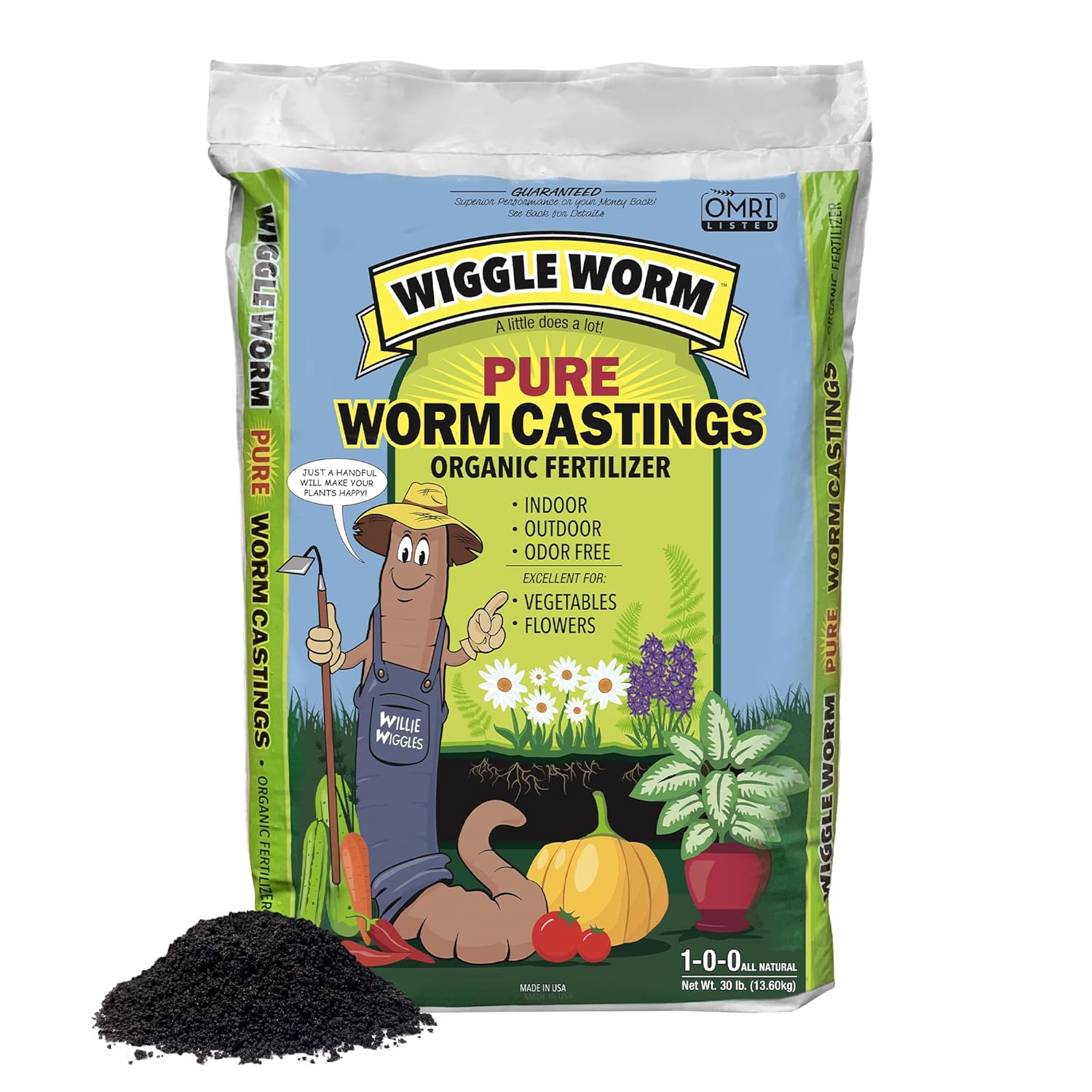
Wiggle Worm Pure Worm Castings Organic Fertilizer, 30 lb
| Item Form | Granules |
|---|---|
| Specific Uses For Product | Soil Conditioning |
| Application Method | Apply to soil |
| Unit Count | 480 Ounce |
Wiggle Worm Pure Worm Castings are a ready-to-use organic soil amendment made from concentrated earthworm castings. Gardeners typically mix a portion into potting mixes, top-dress established plants, work it into transplant holes, or brew it as a nutrient tea; the product page includes specific dosing for vegetables, containers, lawns, and roses. The castings are odorless, non-burning, and OMRI listed for organic use, so they supply water-soluble nutrients plus microbes that improve aeration, water retention, and root development without synthetic chemicals. Practical benefits include easy application, safe use on seedlings and mature plants, and versatility across raised beds, container gardens, and lawns. The main limitation is that this is a concentrated soil builder rather than an all-in-one fertilizer with NPK labels, so users seeking precise, fast-acting nutrient ratios may need to supplement for specific deficiencies; also a 30 lb bag is bulky to handle for small-space gardeners. For gardeners focused on long-term soil health and organic production, it functions as a low-risk, effective amendment.
Best for: Gardeners who prioritize building long-term soil health and want a safe, organic amendment for vegetables, ornamentals, and containers; buyers who value proven, low-risk inputs backed by strong user feedback.
Less Ideal for: Gardeners who need targeted, rapid nutrient correction based on precise NPK values or those who only want a lightweight product for very small balconies or indoor micro-gardens.
- OMRI listed organic and made from 100% worm castings
- Provides beneficial microbes that improve soil structure and water retention
- Odorless and non-burning so safe for seedlings and established plants
- Versatile dosing for containers, raised beds, lawns, and making worm casting tea
- No standard NPK nutrient label so not a precise standalone fertilizer for targeted feeding
- Large 30 lb bag can be heavy and awkward for gardeners with limited storage or mobility
Verdict: Choose this product when you want a proven, OMRI-listed worm casting that builds soil biology and improves plant health across beds and containers.
Azomite Micronized Organic Trace Mineral Powder, 44 lb

| Item Form | Powder |
|---|---|
| Specific Uses For Product | Lawn,Organic |
| Target Species | plants |
| Unit Count | 704 Ounce |
Azomite Micronized is a finely ground natural mineral powder intended to add a broad spectrum of trace elements back into garden soil. It is typically worked into beds, blended into potting mixes, or applied as a seed coating to support early root development and vigor. The product contains over 60 trace minerals and is micronized to pass a 200-mesh screen, which helps it mix evenly into soil and coat seeds for improved germination. Practical benefits for vegetables like onions include improved root health and subtle long-term soil remineralization that can support steady growth and yields. It is OMRI listed for organic use, so it fits into organic fertility programs as a complement to balanced NPK fertilization rather than a replacement for primary nutrients. Limitations are that Azomite supplies mainly trace elements at low concentration and offers minimal direct nitrogen, phosphorus, or potassium, so growers should plan primary fertilization separately and avoid expecting immediate dramatic results from a single application.
Best for: Gardeners focused on improving long-term soil health and steady crop performance who want an organic-approved trace mineral source to complement regular fertilization for vegetables like onions.
Less Ideal for: Growers seeking a fast-acting fertilizer to correct acute nitrogen or phosphorus deficiencies or those who need an all-in-one NPK product should consider targeted fertilizers instead.
- Micronized ultra-fine powder mixes evenly and can coat seeds to aid germination
- Provides a broad spectrum of trace minerals to remineralize depleted soils
- OMRI listed for use in organic production
- Large 44 lb bulk quantity suitable for treating multiple beds or seasons
- Contains very low amounts of primary nutrients so it does not replace balanced NPK fertilization
- Benefits are gradual and may not be obvious after a single application
Verdict: A practical organic trace-mineral supplement that quietly improves soil remineralization and root vigor when used alongside regular fertilization for onions.
Down To Earth Organic Fish Bone Meal Fertilizer 4-12-0, 1 lb

| Item Form | Granules |
|---|---|
| Mixing Ratio | 4-12-0 |
| Ingredients | 100% Fish Bone Meal |
| Coverage | Organic |
This fish bone meal is a slow-release, high-phosphorus granular fertilizer designed to strengthen roots and support flowering and fruit development. Typical use is to apply and mix it into the soil around the plant base, water it in, and reapply every 4 to 6 weeks during the growing season. Notable features include a 4-12-0 N-P-K ratio that gives a phosphorus boost, a natural source of calcium to help prevent blossom-end rot, and OMRI listing for organic gardens. Practically, it is a gentle option that feeds steadily without burning sensitive seedlings, and the granular form makes it easy to work into planting holes or topdress beds. Limitations are that it supplies little nitrogen or potassium so it is best paired with a complementary fertilizer if plants need balanced feeding, and the effects are gradual rather than immediate. Also the 1 lb package is convenient for small beds but will require multiple purchases for larger plots.
Best for: Home gardeners focused on improving bulb and root crops who prefer organic, steady-release amendments and want a targeted phosphorus and calcium boost.
Less Ideal for: Large-scale growers or gardeners seeking an all-in-one balanced fertilizer for foliage-heavy crops should consider broader N-P-K blends or larger-volume amendments.
- High phosphorus content (4-12-0) supports strong root development and bulb/flower formation
- Natural source of calcium that helps reduce blossom-end rot in fruiting crops
- OMRI-listed and made from 100% fish bone meal suitable for organic systems
- Granular, slow-release formula reduces risk of burning and is easy to incorporate into soil
- Provides minimal nitrogen and potassium so it does not replace a balanced fertilizer program
- Small 1 lb unit is not economical for large beds or repeated seasonal use
Verdict: Use this OMRI-listed fish bone meal when you need a targeted, slow-release phosphorus and calcium boost for onions and other bulb or bloom-focused crops.
Farmer Brown's Walt's Dark Pure Earthworm Castings (4 lb)

| Brand Name | Farmer Brown's |
|---|---|
| Unit Count | 64 Ounce |
| Manufacturer | Farmer Brown's |
These pure earthworm castings are a straightforward organic amendment for improving soil structure and supporting healthier root systems. Typically worked lightly into the top few inches of bed soil or used as a top dressing, they add beneficial microbes and absorbent organic matter that helps retain moisture while still allowing excess water to drain. For onions, the castings promote fibrous root growth and steady nutrient release without burning young bulbs, and they can be mixed into seedbeds or added around transplants. The product is pest free and easy to apply by hand, and the 4 pound bag is convenient for small vegetable beds or raised beds. Expect modest, gradual benefits rather than instant fertilizer spikes because this is an amendment rather than a high-analysis feed. If you need to treat a large plot frequently you may prefer a bulk option, but for budget-minded gardeners improving a few onion rows or a small garden, this is a simple, low-risk way to boost soil biology and water retention.
Best for: A gardener working small beds or raised rows who wants an affordable, low-risk organic amendment to improve soil and support onion root development without harsh fertilizers.
Less Ideal for: Growers managing large-scale plantings or those wanting a fast-acting high-nitrogen feed for rapid top growth should consider larger-volume or more concentrated products.
- Pure earthworm castings that add beneficial microbes and organic matter
- Improves soil structure and promotes fibrous root development
- Increases soil water retention while allowing excess drainage
- Pest-free and safe as a gentle amendment for young plants
- Only a 4 lb bag which may be insufficient for larger gardens
- Provides gradual nutrient release and is not a quick-acting fertilizer
Verdict: A convenient small-batch organic amendment that improves soil biology and root growth, ideal for boosting small onion beds.
DEEP ROOTS Living Soil Soil Reviver All-in-One Soil Amendment, 2 qt

| Net volume | 2 qt |
|---|
Soil Reviver is designed as a ready-to-use soil conditioner you can mix into beds or use as a top-dressing to rebuild tired planting media. It combines living compost and worm castings to add organic matter and slow-release nutrients, biochar and humic substances to help soils hold water and move nutrients, plus mycorrhizal fungi to boost root access to moisture and nutrients. In practice this product is most useful when working into rose beds or renewing container mixes where improved structure and microbial activity are priorities. Because it targets biology and moisture retention rather than fast-release fertilizer, you should expect gradual improvements over weeks to months rather than immediate leaf greening. The 2 qt size is convenient for spot applications or small beds but may require multiple bags for larger gardens. Easy to apply and versatile, it is a practical choice for gardeners who want a single organic amendment to support longer term soil health in rose plantings.
Best for: Gardeners who prioritize building reliable, long‑term soil health for roses and want a single organic amendment to improve structure, moisture retention, and root function.
Less Ideal for: Growers needing a quick, high‑nitrogen boost for rapid top growth or those managing large beds who prefer bulk commercial amendments.
- Contains living compost and worm castings to increase organic matter and slow‑release nutrients
- Includes biochar and humic acids to improve water retention and nutrient availability
- Contains mycorrhizal fungi to support stronger root development and nutrient uptake
- Versatile for garden beds, containers, or as a top‑dressing
- Small 2 qt package means multiple purchases for larger rose beds
- Formulated to improve soil biology slowly so plants may not show immediate nutrient responses
Verdict: Choose Soil Reviver when you want a compact, organic all‑in‑one amendment to steadily rebuild soil biology and moisture retention for healthier rose roots.
Wiggle Worm Pure Worm Castings Organic Fertilizer, 4.5 lb

| Item Form | Granules |
|---|---|
| Specific Uses For Product | Soil Conditioning |
| Target Species | Houseplants, vegetables, flowers |
| Unit Count | 72 Ounce |
Wiggle Worm Pure Worm Castings are finely screened, 100% worm castings sold in a resealable 4.5 lb pouch for easy use around the garden or in containers. You sprinkle a small handful or up to a half cup around transplants, work a bit into planting holes, or mix one part castings to four parts potting soil for container plants. The material is odorless and non-burning so it is safe for vegetables, flowers, houseplants, and established perennials. Notable features include OMRI listing for organic use, a mineral-dense formula that supports microbial activity, and a multi-screened product that is free of debris and worm eggs. Practically, that means faster nutrient uptake from water-soluble forms, improved soil aeration and water retention, and a low-risk way to boost root health without synthetic fertilizers. Limitations are mostly practical: the 4.5 lb bag is small for larger beds or repeated top-dressing on lawns, and results are gradual rather than instant like some high-N synthetic feeds. The pouch is convenient for storage but you will need larger quantities for expansive gardens.
Best for: Buyers who prefer low-risk, natural soil amendments and want an easy-to-use organic option for containers, vegetables, and ornamental beds that supports long-term soil health.
Less Ideal for: Gardeners who need a quick, high-nitrogen boost or those with large lawns and beds who would prefer bulk-sized amendments for cost efficiency.
- OMRI listed organic product safe for certified organic gardens
- 100% pure, finely screened castings with minimal debris
- Odorless and non-burning so safe for seedlings and houseplants
- Improves soil structure, microbial activity, and water retention
- Small bag size may not be economical for large beds or frequent top-dressing
- Provides gradual, long-term nutrition rather than a fast-acting nutrient spike
Verdict: Choose this product if you want a proven, OMRI-listed pure worm casting that's safe and effective for building healthy soil in containers and small to medium garden beds.
Farmer's Secret Soil Revitalizer Organic Liquid Compost (32 oz)

| Item Form | Liquid |
|---|---|
| Specific Uses For Product | Organic |
| Application Method | spray/pour |
| Coverage | 32,000 square feet |
| Mixing Ratio | 1:128 |
Farmer's Secret Soil Revitalizer is a concentrated liquid amendment that uses activated humics to improve soil structure, stimulate microbial activity, and make nutrients more available to plants. It is mixed at 1 ounce per gallon of water and can be applied with a watering can, sprayer, irrigation system, or as a foliar feed for houseplants. For clay soils the product's humic-rich formula helps loosen compacted particles over time and supports biological activity that improves drainage and root penetration. It is OMRI listed and made from organic sources, so it is suitable for edible gardens and safe around children and pets when used as directed. The effects are gradual rather than immediate because it works by rebuilding soil biology rather than supplying fast-release NPK, so gardeners should expect cumulative improvement after several applications every 2 to 4 weeks. Coverage claims are high for the bottle size, so plan dosing carefully if treating a large lawn or landscape.
Best for: Gardeners who want a low-risk, soil-first approach to improve compacted or nutrient-poor soils and are willing to use a repeat feeding schedule to build long-term soil health.
Less Ideal for: People seeking rapid green-up or instant high-amount nutrient feeds for heavy-feeding annuals or lawns should consider a supplemental synthetic fertilizer instead.
- OMRI listed organic formula safe for edible gardens when diluted as directed
- Activated humics increase microbial activity and long-term soil structure improvement
- Versatile application options: watering can, sprayer, hose-end or irrigation
- Concentrated mixing ratio (1:128) stretches one bottle over many applications
- Not a fast-acting synthetic fertilizer so visible results take multiple applications
- Coverage per bottle may be optimistic for large yards, requiring multiple bottles for whole-lawn use
Verdict: Use this organic, humic-rich liquid if you want to rebuild clay soil biology and structure over time rather than chase quick fertilizer results.
Choosing the Right Soil Amendment for Onions: Key Factors to Consider
Nutrient Profile With Emphasis on Sulfur
Onions have a particular nutrient need for sulfur, which influences flavor and bulb firmness. When choosing a soil amendment, look at the primary macronutrients and whether the amendment supplies or ties up sulfur. Some organic materials release sulfur slowly; others add organic matter that can help mineralize soil sulfur over time.
Balance matters because excess nitrogen late in the season can produce lush tops and small bulbs. A good amendment strategy provides an initial nutrient boost for establishment and a steady, moderate supply during bulb formation without large late-season nitrogen spikes.
Effect on Soil Texture and Drainage
Onions develop best in loose, friable soils where roots can expand and water drains freely. Amendments that improve soil structure can prevent bulb rot and reduce compaction from foot traffic or clay subsoil. Look for materials that increase porosity and tilth rather than those that compact or form crusts when dry.
Some amendments add bulk and organic matter that gradually integrate into the soil, improving structure over multiple seasons. Others change immediate drainage characteristics and are useful when preparing a new bed prior to planting.
pH Influence and Long-Term Soil Chemistry
Onions prefer slightly acidic to neutral soils. Some amendments are alkaline and will raise pH, while others acidify soil over time. Before applying any amendment, check your soil pH; an amendment that pushes pH outside the suitable range will reduce nutrient availability and harm bulb development.
Amendments with strong buffering capacity can be useful when you need gradual pH change. Avoid heavy application of materials that cause abrupt pH swings unless you plan to retest and correct pH before planting.
Nutrient Release Timing and Persistence
Different materials release nutrients at different rates. Fast-release amendments give an early push but may not sustain plants through bulb bulking. Slow-release or mineralizing organic amendments feed onions gradually and help maintain balanced growth.
Consider the length of your onion season and whether you can side-dress midseason. If you prefer a single pre-plant amendment, choose one with an appropriate release profile for the whole season.
Weed Seed Risk and Pathogen Safety
Some organic amendments can introduce weed seeds or carry pathogens if not properly composted or processed. This risk affects seedling competition and disease pressure in the bed. Use certified composts or well-treated materials to reduce the chance of introducing unwanted seeds or microbes.
When sourcing amendments, prefer materials with documented pasteurization or composting protocols for vegetable production. In high-risk situations, consider sterilized or mineral amendments to protect young onion plants.
Practical Handling and Application
How easily you can spread and incorporate an amendment matters for small-scale garden work. Lightweight, dusty materials can be hard to work with in windy conditions; heavy bulky materials require more labor to move. The required application depth and incorporation method should match the tools and helpers you have.
Also think about odor, storage needs, and how the amendment behaves when mixed with native soil. Some materials settle quickly and integrate with a single tilling, while others need repeated applications to build soil organic matter over years.
Interpreting Your Soil Test Before Amending
A soil test guides which amendment will help most. Focus on pH, available sulfur, organic matter percentage, and texture classification. These values point to whether your soil needs acidifying, sulfur supplementation, structure improvement, or simply more slow-release nitrogen.
If a test shows adequate organic matter but low sulfur, a sulfur-rich amendment is a better choice than adding bulk organic material. Conversely, if the soil is compacted clay with low organic matter, a structural amendment that increases porosity will benefit root expansion more than a straight nutrient source.
- Check pH and correct before large mineral or lime applications.
- Match amendment choice to the limiting factor from your test.
- Retest after the season to track changes and avoid over-application.
Timing Applications for Planting and Bulb Development
Apply primary amendments at bed preparation and incorporate to the root zone. Work-in organic matter several weeks before planting so mineralization can begin and the soil stabilizes. Fast-acting mineral supplements are better placed closer to planting or as a starter band.
Plan any midseason side-dressing with lower-nitrogen materials to avoid stimulating excessive top growth. For fall-planted or overwintered onions, consider the long cool period when nutrient mineralization slows and choose materials that remain available into spring.
- Incorporate bulk amendments 2 to 4 weeks before planting when possible.
- Reserve quick-release inputs for immediate preplant or starter use.
- Side-dress lightly during bulb enlargement rather than heavy late-season feeding.
Application Rates and Bed Preparation Tips
Spread amendments evenly and work them into the top 6 to 8 inches where onion roots concentrate. Avoid piling amendments directly where transplants will sit; broadcast and incorporate for even nutrient availability. On raised beds, aim for a uniform layer so drainage and texture improvements are consistent.
Use hand tools or a rototiller depending on bed size, and finish with a rake to create a fine seedbed. If amendments are bulky, distribute over multiple seasons to build soil without overwhelming microbial activity or causing temporary nutrient immobilization.
- Incorporate to 6 to 8 inches for most onion beds.
- Avoid concentrated patches that can burn seedlings or attract pests.
- Build organic matter gradually for long-term soil health.
Balancing Organic Matter With Mineral Supplements
Organic amendments improve soil biology and structure while mineral supplements supply specific nutrients. Use organic matter to build tilth and microbial activity, then target minerals to correct specific deficiencies such as sulfur. This two-pronged approach gives physical and chemical benefits without overloading either side.
When combining materials, allow for interactions. High-carbon materials can temporarily tie up nitrogen as microbes decompose them. Offset this by choosing balanced organic inputs or scheduling additional nitrogen applications if needed during establishment.
- Use organic matter for structure and long-term fertility.
- Target mineral supplements for specific nutrient gaps from testing.
- Watch for nitrogen immobilization after adding high-carbon materials.
Sustainability and Long-Term Soil Building
Think beyond a single season. Building stable organic matter improves water retention, nutrient holding capacity, and structure over years, reducing the need for frequent heavy amendments. Rotate amendment types to avoid accumulation of salts or minerals that can become problematic.
Compost and green manures are sustainable tools to maintain a healthy onion bed. They support beneficial soil life that helps cycle sulfur and other micronutrients naturally, leading to more resilient crops over time.
- Plan amendment rotations over multiple seasons.
- Use cover crops and compost to maintain organic matter.
- Avoid repeated heavy doses of a single mineral to prevent imbalances.
How We Chose the Best Soil Amendment for Onions
We limited our shortlist to amendments commonly used in vegetable and small-scale onion production and excluded experimental or unproven specialty mixes. Each product was judged against measurable, garden-relevant dimensions: nutrient composition with attention to sulfur and available nitrogen; impact on soil texture and drainage for root development; pH influence and buffering potential; persistence and release rate of nutrients over the onion growing season; and practical handling factors like application method and odor. We excluded amendments that require heavy processing or specialty equipment to apply, and those known to introduce persistent weed seeds or pathogens. The goal was to present amendments that a typical gardener can reasonably incorporate using hand tools or basic garden equipment. Our filters favored materials that help create loose seedbeds, provide predictable nutrient supply, and do not create long-term soil imbalances.
FAQ
How much amendment should I work into an onion bed?
Amounts depend on the amendment and your soil test, but a common approach is a light to moderate application spread evenly and incorporated to 6 to 8 inches. For heavy or high-salt materials apply more conservatively and retest soil after the season.
When is the best time to add a soil amendment for onions?
The best time is during bed preparation several weeks before planting to allow materials to integrate and begin mineralizing. Fast-acting mineral supplements can be placed closer to planting or used as a starter at transplanting.
Will adding organic matter change soil pH?
Some organic amendments have little immediate pH effect, while others can slowly acidify or buffer pH over time. Check your soil pH and choose amendments that will not push levels outside the slightly acidic to neutral range onions prefer.
Can I use compost alone to meet onion nutrient needs?
Compost improves structure and provides a broad nutrient base, but its nutrient concentrations vary. Compost alone may not supply sufficient sulfur or predictable nitrogen release for peak bulb development, so pair it with targeted supplements if tests indicate specific deficiencies.
How soon before harvest should I stop adding nitrogen amendments?
Avoid high-nitrogen inputs during late bulb enlargement because they encourage foliage growth instead of bulb bulking. Reduce or stop nitrogen-rich applications several weeks before the expected harvest to promote skin set and firm bulbs.
Final Verdict
Choose an amendment that addresses your soil's limiting factor rather than applying materials at random. Prioritize amendments that improve drainage and provide sulfur-friendly nutrition if your soil test shows those needs. Balance immediate nutrient needs with long-term soil building so you get both healthy bulbs this season and progressively better soil for future crops. Weigh the tradeoffs between fast-release minerals and slow mineralizing organics, apply with correct timing and incorporation depth, and retest soil periodically to refine your approach. That method will give you predictable, high-quality onion bulbs season after season.
