

Note: This article contains affiliate links. If you click on these links and make a purchase, I may earn a small commission at no extra cost to you. This helps support my research and content. Read my full affiliate disclosure here.
If you garden in limited space, the right vegetable choices make the difference between a few sad plants and a productive, year-round supply. Small raised beds change the rules: shallower soil, closer spacing, faster warming in spring, and easier pest monitoring. That means you want vegetables that tolerate compact roots, respond well to concentrated feeding, and can be trained or harvested frequently. This guide shortlists five top vegetables suited for small raised beds and explains why each type fits the constraints of shallow, confined planting. We evaluated candidates using practical garden-focused criteria like space efficiency, root depth needs, and maintenance demands. Read on to understand how each vegetable behaves in a small raised bed and what to expect for yields and care.
Top Picks at a Glance
| Best Overall The best all-around choice for most situations | Survival Garden Seeds Spacemaster Cucumber Seeds (1 Pack) |  |
| Best Quality Built to a higher standard if you want something more solid | Valley Greene Deluxe 30-Pack Heirloom Vegetable Seeds |  |
| Best Budget The cheapest option that still gets the job done reliably | RDR Seeds Little Gem Mini Romaine Lettuce Seeds — 1000 Heirloom Non-GMO |  |
| Highest Rated A top-rated pick with lots of positive feedback | SURVIVAL GARDEN SEEDS Tower Garden 15-Variety Heirloom Seed Collection |  |
| Best Seller A high-volume bestseller chosen again and again | SURVIVAL GARDEN SEEDS Tiny Tim Cherry Tomato Seeds (1 Pack) |  |
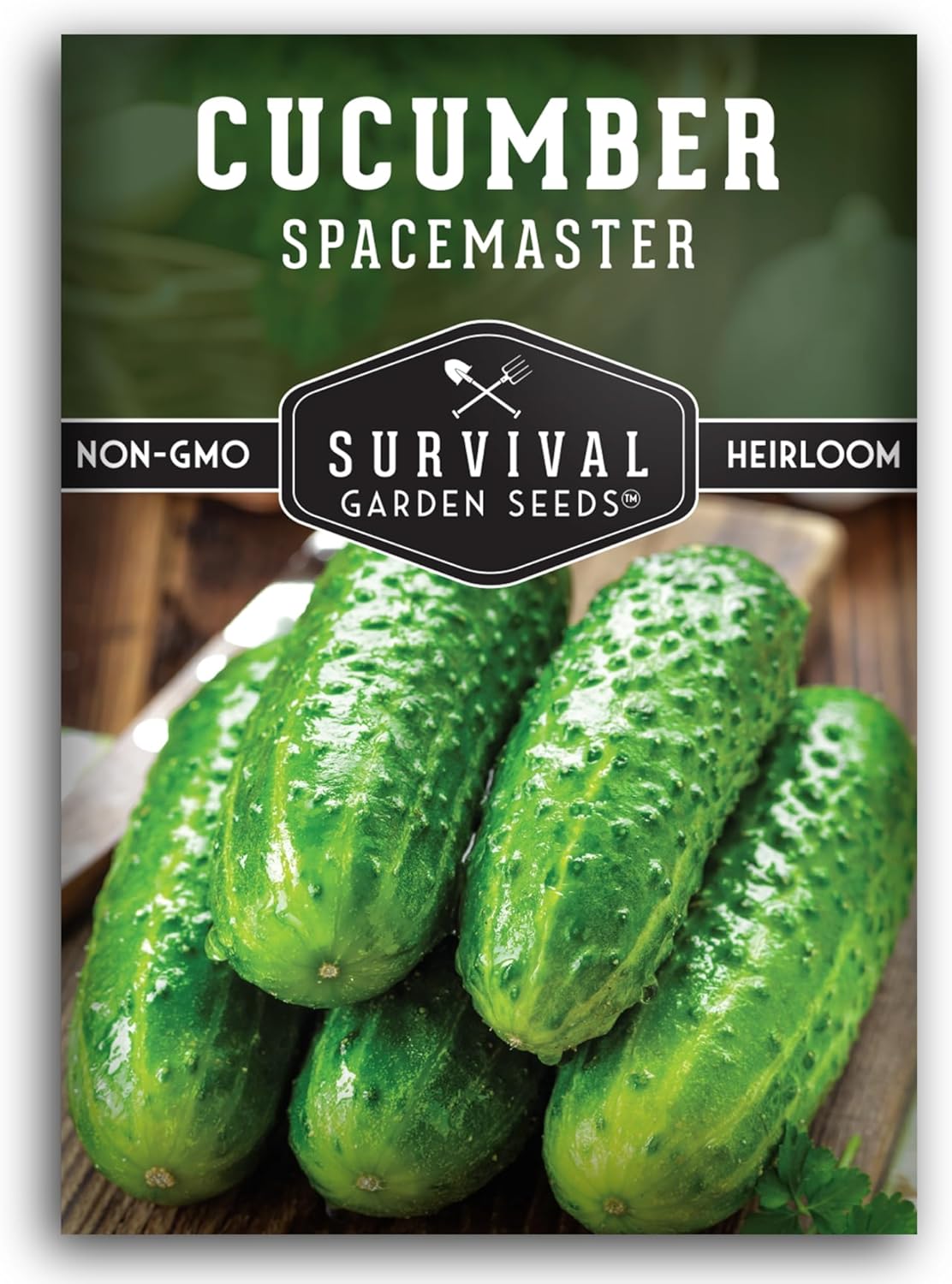
Survival Garden Seeds Spacemaster Cucumber Seeds (1 Pack)
| Indoor Outdoor Usage | Outdoor |
|---|---|
| Sunlight Exposure | Full Sun |
| USDA Hardiness Zone | 3-11 |
| Seed Treatment Method | Untreated |
| Material Features | GMO Free, Heirloom |
Spacemaster is a dwarf, bush-type cucumber bred for small spaces, containers, and raised beds. The packet contains untreated, open-pollinated heirloom seeds that germinate reliably and reach harvest in about 60 days. Plants grow 2 to 3 feet long, making them easy to manage without trellising while still producing high yields of 7–8 inch slicing or pickling cucumbers. They prefer full sun, loam soil, and regular watering, and the variety is marketed as disease and pest resistant which reduces routine maintenance. Because the seeds are non-GMO and untreated, they are fine for gardeners who want to save seed or avoid coated seeds. Limitations are the warm-season requirement and need for consistent moisture in raised beds, and gardeners in very short seasons may need to start indoors as recommended. For a balanced home gardener with limited bed space, Spacemaster offers a compact, productive cucumber that fits tight layouts and container setups.
Best for: Gardeners with limited raised-bed or container space who want a reliable, easy-care cucumber that produces slicing-size fruit quickly and can be grown without extensive support.
Less Ideal for: Growers who need a cold-hardy or very early-season cucumber for short summers or those who prefer vining varieties for trellised vertical production.
- Dwarf bush habit suits containers and small raised beds without trellising
- Fast to maturity around 60 days for a single-season harvest
- Heirloom, non-GMO untreated seeds suitable for seed saving
- Marketed disease and pest resistance reduces maintenance
- Requires warm-season conditions and consistent moisture to perform well
Verdict: A compact, fast-producing heirloom cucumber that reliably fits small raised beds and containers for gardeners seeking productive, low-maintenance slicing or pickling fruit.
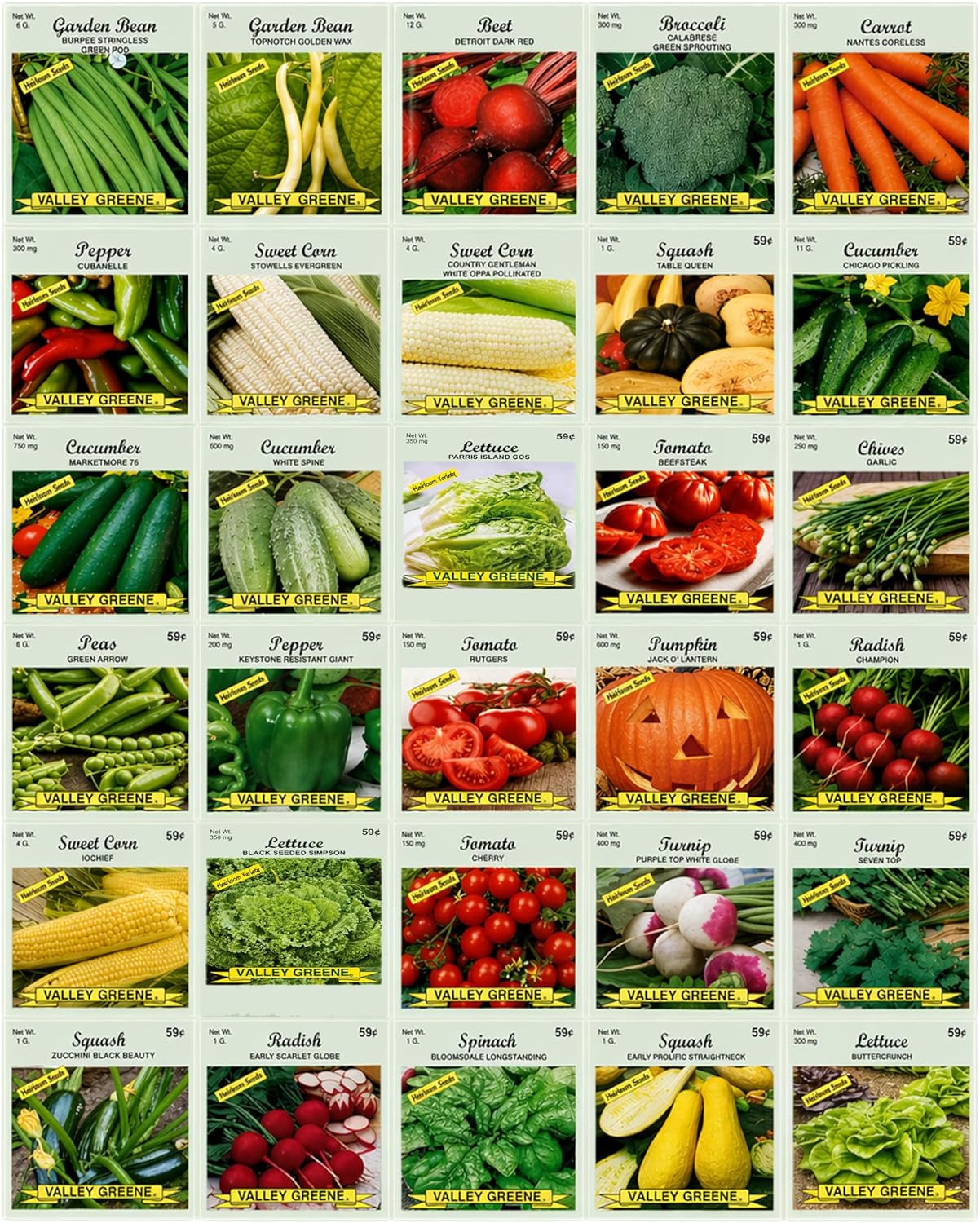
Valley Greene Deluxe 30-Pack Heirloom Vegetable Seeds
| Indoor Outdoor Usage | Outdoor |
|---|---|
| Other Special Features of the Product | High Germination Rate |
| Sunlight Exposure | Partial Sun |
| Soil Type | Loam Soil |
| Material Features | GMO Free, Heirloom |
This 30-pack from Valley Greene supplies thirty different heirloom vegetable seed packets intended to kickstart a diverse outdoor vegetable garden. The seeds are labeled non-GMO and the listing emphasizes a high germination rate, typically producing sprouts within 7 to 14 days when sown in loam soil with partial sun exposure. Typical use is direct sowing or starting in flats for transplanting; the assortment makes it easy to trial many varieties without buying full-size seed packets. Practical benefits include broad variety for succession planting, an implied longer-term viability if stored cool and dry, and heirloom genetics for seed saving. Limitations to expect are lack of specific variety names and growing details on the listing, so gardeners should be prepared to research spacing, days-to-harvest, and cold tolerance for each type. Also the packet set is a general-purpose mix aimed at outdoor partial-sun sites, so it is less useful for strictly indoor or full-sun specialist plantings.
Best for: Gardeners who want to maximize output and diversity per dollar and prefer practical, tried-and-true heirloom varieties for outdoor beds and trial plantings.
Less Ideal for: Growers seeking documented cultivar names, certified organic labeling, or seed mixes designed specifically for indoor growing or full-sun specialty crops.
- Large variety with 30 different vegetable seed packets in one purchase
- Heirloom, non-GMO seeds suitable for saving seed from mature plants
- High germination rate claimed with sprouts commonly in 7–14 days
- Seeds are dated and store well if kept cool and dry
- Listing does not identify individual varieties or provide specific growing timelines
- Not tailored for full-sun only gardens or specialized crop needs
Verdict: A cost-effective way to add wide vegetable variety to an outdoor garden while relying on heirloom, non-GMO seed with strong germination potential.
RDR Seeds Little Gem Mini Romaine Lettuce Seeds — 1000 Heirloom Non-GMO

| Unit Count | 1000 Count |
|---|---|
| Material Features | GMO Free, Heirloom |
| Sunlight Exposure | Full Sun |
| Moisture Needs | Moderate Watering |
| USDA Hardiness Zone | 3, 4, 5, 6, 7, 8, 9, 10, 11, 12 |
This packet contains 1,000 Little Gem mini romaine seeds intended for cool-season sowing in containers, raised beds or small garden plots. Little Gem forms compact upright heads about 6 inches tall, making it well suited to tight spacing and succession planting in small raised beds. The seeds are listed as heirloom and non-GMO and come in a waterproof packet with planting guidance. You sow shallow (about 1/4 inch), keep the surface evenly moist and expect emergence in 7 to 14 days under 60 to 70 F conditions. The large seed count lets you over-sow, thin to the strongest seedlings and still save seed for future plantings, which stretches value for budget-minded gardeners. Practical limits are that lettuce prefers cool weather so germination and growth slow or fail in hot summer temperatures and you must thin or transplant to get good head development. Also, success depends on careful moisture management early on to avoid damping off and on spacing to prevent crowding in very small beds.
Best for: Gardeners working with small raised beds or containers who want an inexpensive way to grow compact romaine heads and stretch seed across multiple plantings.
Less Ideal for: Those seeking a heat-tolerant summer crop or gardeners who prefer ready-to-transplant seedlings rather than starting many seeds themselves.
- High seed count (1000) provides many plantings or over-sowing for stronger stands
- Compact mini romaine habit fits well in containers and small raised beds
- Heirloom and non-GMO seed packaged in a waterproof packet
- Clear planting guidance provided for cool-season sowings
- Lettuce is a cool-season crop and seeds may not germinate or perform in hot summer conditions
- Requires careful moisture management early to reduce risk of damping off
Verdict: A budget-friendly choice for small raised beds that supplies plenty of heirloom Little Gem seeds to plant multiple cool-season rounds and maximize harvests.
SURVIVAL GARDEN SEEDS Tower Garden 15-Variety Heirloom Seed Collection

| Indoor Outdoor Usage | Indoor, Outdoor |
|---|---|
| Other Special Features | Attracts Pollinators, Compact, Extended Bloom Time, High Germination Rate, Low Maintenance |
| Sunlight Exposure | Full Sun |
| USDA Hardiness Zone | 3-9 |
| Seed Treatment Method | Untreated |
This 15-variety seed collection is built for small-space and tower-style gardens, offering packets of compact lettuces, kale, chard, pak choi, herbs, radish, green onion, and alpine strawberry. Each packet is untreated, open-pollinated, and labeled with variety-specific instructions for planting depth, soil temperature, light, and moisture, which makes it straightforward to use for succession planting in containers, raised beds, or hydroponic towers. The mix emphasizes fast, cut-and-come-again greens and culinary herbs that provide steady harvests from a small footprint and support seed saving later. Practical benefits include clearly written growing guides, high germination claims, and heirloom genetics you can preserve over seasons. Limitations are that success still depends on matching individual varieties to your local season and light conditions and that fragile or slow-maturing crops like alpine strawberry may need more attention than the leafy greens. For gardeners prioritizing dependable, repeatable results in compact systems, this collection reduces guesswork but does not remove the need for routine watering and seasonal planning.
Best for: Gardeners who want a reliable, ready-to-use mix of compact heirloom vegetables and herbs for tower gardens, containers, or small raised beds and who value clear instructions and the ability to save seeds.
Less Ideal for: Large-scale growers or those seeking only full-size commercial varieties and single-crop seed bulk; this kit is tailored to small-space and compact varieties rather than high-acreage production.
- Includes 15 heirloom, non-GMO, open-pollinated seed packets suitable for seed saving
- Packets contain variety-specific planting instructions for depth, soil temperature, light, and moisture
- Selection optimized for compact and tower systems with fast, cut-and-come-again greens and herbs
- Untreated seeds with high germination rate claims suitable for organic or low-input gardens
- Some varieties like alpine strawberry require more care and longer time to produce compared with the leafy greens
- USDA zone and timing vary by variety so growers must match packets to local season planning
Verdict: Choose this heirloom, non-GMO 15-pack when you want dependable, compact varieties and clear planting guidance for tower or small-space gardens.
SURVIVAL GARDEN SEEDS Tiny Tim Cherry Tomato Seeds (1 Pack)

| Indoor Outdoor Usage | Indoor, Outdoor |
|---|---|
| Sunlight Exposure | Full Sun |
| USDA Hardiness Zone | 4-11 |
| Seed Treatment Method | Untreated |
| Material Features | GMO Free, Heirloom |
Tiny Tim cherry tomato seeds are a small-space variety designed for containers, patios, and windowsills. As an heirloom, non-GMO, untreated seed, it is intended to be started indoors 6 to 12 weeks before last frost, then hardened off and transplanted to loam-rich soil or a container with regular watering and full sun. Plants stay compact at roughly 12 to 18 inches and set heavy clusters of sweet red cherry tomatoes in about 50 to 65 days after transplanting, which makes them useful for quick, repeated harvests. The packet claims high germination, disease and pest resistance, and practical planting instructions for first-time growers and seed saving. Limitations are the small plant size and determinate habit, which means it will produce in a concentrated flush rather than continuously, and yields per plant are lower than larger indeterminate varieties; gardeners wanting long-season, high-volume harvests should plan multiple plants or different varieties. These seeds are untreated and open-pollinated, so expect the usual variability of heirloom seed stocks and follow good seed-starting practices for best results.
Best for: Ideal for budget-minded gardeners who want fresh cherry tomatoes from containers, balconies, or indoor setups and prefer seeds they can save and reuse.
Less Ideal for: Not the best choice for gardeners seeking continuous, high-volume production from each plant or those who need hybrid disease-resistant varieties backed by coatings or treatments.
- Compact determinate habit suits containers and tiny gardens
- Heirloom, non-GMO, and untreated seeds allow seed saving
- Short time to harvest (about 50–65 days after transplant)
- Brand packet includes clear planting and transplanting guidance
- Determinate growth produces a single main harvest rather than continuous fruiting
- Smaller plants yield less per plant compared with larger tomato varieties
Verdict: A compact, easy-to-grow heirloom cherry tomato seed that gives budget gardeners a quick, space-saving route to fresh tomatoes and reusable seed stock.
Choosing the Right Vegetables for Small Raised Beds: Key Factors to Consider
Space Efficiency and Plant Habit
How a vegetable occupies the bed matters more in a small raised bed than in a large plot. Compact, bushy, or vertical-friendly habits let you fit more plants into limited square footage. For example, plants that can be grown in bunches, thinned for repeated harvests, or trellised upward free horizontal space for neighbors.
Consider whether the crop can be planted in tight blocks, paired with quick-maturing companions, or trained to grow vertically. Dense planting can increase yields but also raises humidity and disease risk, so choose varieties known to tolerate close spacing.
Root Depth and Soil Volume Needs
Raised beds often have shallower soil profiles than in-ground gardens, and some beds are intentionally shallow to save soil and cost. Vegetables with shallow to moderate root systems will establish and produce without needing deep digging. Root-depth compatibility influences water-holding capacity, nutrient access, and whether a plant will become root-bound and stunted.
Assess typical mature root depth for each crop and match it to the bed depth. If the bed is very shallow, favor surface-feeding crops that take nutrients from the topsoil or those that respond well to frequent light watering and feeding rather than deep watering.
Maturity Rate and Succession Potential
Fast-maturing vegetables let you get multiple crops from the same small bed in a single season. Quick turnover maximizes productivity where space is the limiting factor. Vegetables that mature in a few weeks or months are ideal for succession planting and can be alternated with cover crops or quick green-manure windows.
Also consider whether plants tolerate being moved or transplanted for staggered starts. Varieties that set harvestable produce early free up space for follow-up plantings and reduce the period a bed is occupied by a single crop.
Water and Fertility Requirements
Small raised beds have less soil volume to buffer moisture and nutrients, so crops that require constant heavy watering or intensive feeding can be harder to manage. Choose vegetables that perform well with regular but moderate moisture and that respond predictably to a standard feeding schedule.
Crops that show immediate signs of nutrient stress or that demand frequent, heavy fertilization increase maintenance time. When planning beds, think about irrigation options and select plants whose water use patterns align with what you can reliably supply.
Pest and Disease Susceptibility in Close Quarters
Plants packed tightly in small beds are more susceptible to foliar diseases and insect outbreaks because air circulation is reduced and pests can move rapidly between hosts. Picking vegetables and varieties with known resistance or tolerant growth habits lowers the chance of catastrophic loss.
Observe typical local pest pressures and favor crops that can be monitored and treated easily at the scale of a small bed. Also consider whether crop rotation is feasible within limited space and how that affects long-term disease management.
Support and Training Needs
Some high-yield vegetables are naturally vining or sprawling but can be adapted to small beds by using vertical supports or stakes. Assess whether you are willing to install trellises, cages, or strings and whether those supports fit the aesthetics and access patterns of small raised beds.
Training plants upward conserves horizontal space and can improve light exposure and air circulation, but it adds setup work. Balance the labor of installing supports against the space saved and the likely increase in yield.
Best Crops for Shallow Soil
Many small raised beds are shallower than traditional frames. Vegetables with compact root systems, such as leafy greens and certain root crops, make the most of limited soil depth. These crops establish quickly and rarely need deep redistribution of roots to access moisture.
When soil depth is the primary constraint, prioritize surface-feeding vegetables and incorporate frequent light feedings rather than deep fertilization. Amending the top 6 to 8 inches with compost and choosing plants with compatible root habits keeps productivity high.
- Leafy greens and salad mixes thrive in shallow beds due to small root volume.
- Small-rooted root crops can do well if given loose, well-drained topsoil.
- Shallow beds warm faster in spring, letting early crops get a head start.
Using Vertical Space Efficiently
Vertical supports transform limited beds into multi-layered production zones. Climbing beans, peas, and compact vining types can be trained up trellises to free ground space for low-growing companions.
Good trellis placement takes sunlight and bed access into account. Place taller supports on the north side of south-facing beds to avoid shading smaller plants, and use removable or hinged trellises for easy bed maintenance.
- Choose sturdy but slim supports to avoid losing planting area.
- Use vertical training for crops that fruit above the canopy to reduce slug and soil-borne disease pressure.
Crop Pairing and Succession Strategies
Small beds benefit from intentional pairing and timing. Fast-growers like baby lettuce can be interplanted between slower-starting vegetables and harvested before the larger plants need the space. Succession planting keeps beds producing through the season and reduces empty periods.
Plan a seasonal calendar that staggers plantings so that bed space is rarely idle. Consider overwintering options with cold-hardy greens or using quick summer crops in early spring and late fall windows.
- Interplant quick-maturing crops with longer-season plants to maximize output.
- Use succession sowing every few weeks for continuous harvests.
Soil Building and Amendment Practices for Small Beds
Because small beds hold limited soil, each amendment has an outsized effect. Regular top-dressing with compost and periodic side-dressing of nutrients maintain fertility without needing large-volume soil changes. Focus on building a light, friable topsoil layer that drains well but retains moisture.
Avoid overworking the entire bed; instead, concentrate amendments in planting holes or rows. Mulch the surface to conserve moisture and suppress weeds, reducing competition for scarce nutrients in the confined soil.
- Apply compost in thin, frequent layers rather than heavy one-time fills.
- Mulch to cut watering frequency and protect shallow roots from temperature swings.
Pest Management Techniques for Dense Plantings
Pests move quickly through compact beds, so early detection and low-impact controls work best. Monitor plants often, remove infected foliage promptly, and use physical barriers like row covers or collars for vulnerable young crops.
Encourage beneficial insects by adding small flowering plants or herbs at the bed edge. Clean, tidy beds with good air flow and prompt removal of crop residues lower overwintering pest pressure.
- Inspect undersides of leaves and the soil surface weekly during peak seasons.
- Rotate plant families when possible to break pest life cycles in the soil.
How We Chose the Best Vegetables for Small Raised Beds
We focused on vegetables that reliably perform in shallow, narrow, or otherwise limited raised-bed spaces. Selection criteria emphasized species and varieties that mature quickly, tolerate confined root zones, and yield effectively when spaced tightly. We prioritized plants with manageable water and nutrient needs so small beds do not require complex irrigation or heavy fertilization schedules. Evaluation criteria included actual root depth requirements, typical yield per square foot, susceptibility to common pests and diseases in small beds, and ease of successive planting or succession cropping. We also considered how well plants adapt to training or vertical supports to economize horizontal space. Exclusions included crops that need deep, wide root systems, very long seasons that monopolize bed space, or forms that require large trellises unsuitable for compact beds. Products (varieties) were chosen for predictable performance in confined soil volumes and for offering clear cultural instructions that match small-bed workflows. The final list balances fast turnover crops with a couple of slightly longer-season options that still fit the size constraints.
FAQ
Can root vegetables grow well in shallow raised beds?
Many small-rooted varieties adapt well to shallow beds if the soil is loose and stone-free. Choose shorter-form carrots, radishes, and turnips bred for shallow soils and give them loose, friable topsoil to prevent deformities.
How should I space plants in a small raised bed to maximize yield?
Space according to mature plant habit and use closer spacing for microgreens or baby salad crops. Interplant fast-maturing and slow-maturing crops to overlap harvest windows but avoid crowding plants that need good air flow.
Is vertical training worth the effort in a small bed?
Vertical training is often worthwhile because it multiplies planting area without expanding the bed footprint. It does require supports and occasional tying, but the space saved and improved air circulation usually offsets the added setup.
How often should I water vegetables in a small raised bed?
Small beds dry out faster than large soil masses, so water more frequently but in controlled amounts. Aim for consistent moisture in the root zone and adjust frequency with temperature and plant stage; mulching reduces watering needs.
Can I rotate crops effectively in a single small raised bed?
Crop rotation is more challenging with limited beds, but you can rotate families seasonally and use container or temporary beds as rotation space. Incorporating cover crops or rest periods helps reduce disease buildup.
Final Verdict
For small raised beds, prioritize vegetables that use space efficiently, tolerate limited soil depth, and fit your maintenance routine. Fast-maturing greens and compact fruiting crops give the best returns in tight plots, while vertical training and succession planting stretch productivity further. Balance the labor of supports and frequent feeding against the space saved and expected yields. Choose crops based on root depth, water needs, and pest tolerance to match your bed's dimensions and microclimate. With careful planning and the right variety types, small raised beds can supply abundant, regular harvests without the demands of larger garden plots.
