

Note: This article contains affiliate links. If you click on these links and make a purchase, I may earn a small commission at no extra cost to you. This helps support my research and content. Read my full affiliate disclosure here.
If you are facing a spider mite outbreak on houseplants, greenhouse trays, or outdoor container gardens, the right bug bomb can stop heavy infestations before they cause serious leaf loss. Choosing an option formulated for spider mites matters because these pests reproduce quickly and hide on the undersides of leaves and in tight canopy pockets. This guide shortlists six top options tailored for spider mite control and evaluates them on factors that matter in real garden use: how long protection lasts and how safe each formulation is for plants and beneficials. Below are concise reviews of the shortlisted products, followed by practical advice on choosing and using a bug bomb for spider mite management.
Top Picks at a Glance
| Best Overall The best all-around choice for most situations | Hydrofarm Doktor Doom Total Release Fogger, 12.5 fl oz |  |
| Best Quality Built to a higher standard if you want something more solid | Hydrofarm Doktor Doom Total Release Fogger, 3 oz |  |
| Best Budget The cheapest option that still gets the job done reliably | BASF PT Pro-Control Plus Total Release Insect Fogger, 6 oz |  |
| Highest Rated A top-rated pick with lots of positive feedback | Doktor Doom Mini Total Release Fogger, 3 oz (case of 12) |  |
| Most Popular A crowd favorite that many people choose with confidence | HOT SHOT Fogger with Odor Neutralizer, 2 oz cans (3-count) |  |
| Best Seller A high-volume bestseller chosen again and again | Doktor Doom Spider Mite Fogger, 5.5 oz |  |
Hydrofarm Doktor Doom Total Release Fogger, 12.5 fl oz

| Item Form | Spray |
|---|---|
| Target Species | Spider |
| Liquid Volume | 12.5 fluid ounces |
This Hydrofarm Doktor Doom total release fogger is designed for greenhouse, indoor gardening, and fruit or vegetable storage areas to knock down spider mites and a range of soft-bodied pests. You set the can, leave the space, and the unit disperses a fine aerosol that contacts pests on leaves, in crevices, and around plant surfaces where hand-spray access is difficult. The product lists spider mites, fungus gnats, aphids, whiteflies, scale, mealybugs, and thrips on its label and produces no residuals, which reduces concerns about lingering deposits on foliage. Its total-release format makes treating whole growing rooms quick and useful for spot-to-whole-area knockdown. Limitations are that it is not a residual protector so repeat treatments or integrated measures will be needed for lasting control, and foggers can be less effective in very dense canopy or poorly circulated spaces where the aerosol may not penetrate evenly. Careful ventilation and following label safety directions are required for safe use around plants and stored produce.
Best for: Growers who want a fast, whole-room knockdown of spider mites and other soft-bodied pests in greenhouses or indoor gardening spaces and prioritize convenience and broad immediate control.
Less Ideal for: Gardeners seeking long-term residual protection or targeted spot treatments on individual plants should consider systemic or contact sprays and cultural controls instead.
- Formulated specifically for greenhouse and indoor garden use
- Targets spider mites plus a broad range of soft-bodied pests
- Total-release aerosol treats whole rooms and hard-to-reach spots
- No residuals reported, lowering risk of long-lasting deposits on foliage
- No residual activity means follow-up measures are required for longer-term control
- Fogger aerosol may not penetrate dense canopy or poorly ventilated areas evenly
Verdict: Choose this fogger when you need a quick, whole-room knockdown of spider mites and similar pests in greenhouse or indoor grow spaces.
Hydrofarm Doktor Doom Total Release Fogger, 3 oz

| Brand | Hydrofarm |
|---|---|
| Item Type Name | Doktor Doom 3-Ounce Total Release Fogger, Mini |
| Liquid Volume | 3 fluid ounces |
| Target Species | Spider |
| Specification Met | USDA |
The Hydrofarm Doktor Doom 3 oz Total Release Fogger is a compact fogger designed for fast knockdown of spider mites, fungus gnats, whiteflies and other common greenhouse and indoor garden pests. You set the can in the affected room or growing space, activate it and leave for the recommended exposure time so the aerosol distributes into dense foliage and hard-to-reach corners. Its natural pyrethrin formula breaks down quickly so there are no persistent residues on fruit, vegetables, or ornamentals when used as directed, which makes it practical for edible crop areas and storage rooms. The fogger covers a total area for even distribution and is easy to store and deploy for emergency spot treatments. Limitations are its small 3 oz size, which means multiple cans are often needed for larger greenhouses, and like other total release products it requires vacating the treated space and following reentry and ventilation instructions carefully.
Best for: Growers and greenhouse operators who prioritize fast, performance-focused knockdown of spider mites and other pests in small to medium indoor growing areas and storage rooms.
Less Ideal for: Those managing very large commercial greenhouses who need long-lasting residual control or who prefer continuous application systems.
- Effective against spider mites and a broad list of greenhouse pests including fungus gnats and whiteflies
- Natural pyrethrin formula that breaks down quickly and leaves no long-lasting residues
- Total release design disperses aerosol into dense foliage and hard-to-reach areas
- Specifically labeled for use in greenhouses and fruit or vegetable storage areas
- Small 3 ounce volume may require multiple cans for medium to large growing spaces
- Requires vacating and ventilating treated areas until safe reentry times are met
Verdict: Choose this fogger when you need a fast, no-residue knockdown for spider mites and other greenhouse pests in small to medium indoor grow spaces.
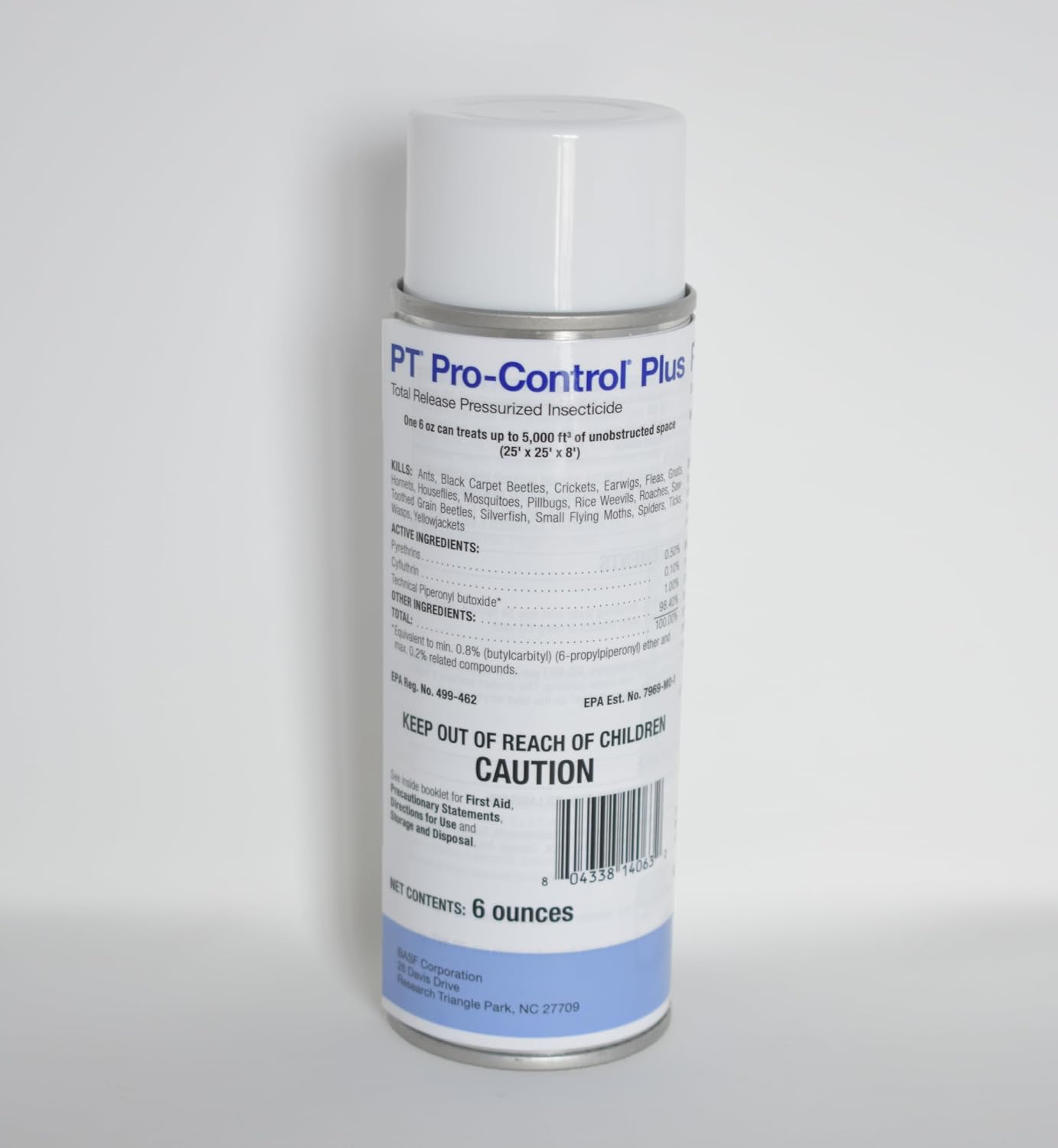
BASF PT Pro-Control Plus Total Release Insect Fogger, 6 oz
| Item Form | Spray |
|---|---|
| Target Species | Insects, Flies, Fleas, Beetles, Moths, Spiders |
| Liquid Volume | 6 fluid ounces |
| Active Ingredients | Pyrethrins 0.5%, Piperonyl Butoxide 4.0% |
This BASF PT Pro-Control Plus fogger is a ready-to-use total-release aerosol designed to fill an enclosed room and knock down a wide spectrum of insects. You set the can, leave the space, and the pressurized formula releases pyrethrins with piperonyl butoxide to deliver quick contact knockdown of flies, ants, fleas, moths, spiders and many stored-product pests. Its main use is whole-room treatment for acute infestations or as a follow-up after cleaning and exclusion work. The fogger is EPA-specified and labeled with PPE and ventilation instructions because it contains flammable propellants and active botanicals, so users should follow safety directions and vacate the area during application. Practical benefits are easy, no-mixer application and coverage of hidden cracks where handheld sprays miss. Limitations are that it is not a residual surface spray for long-term control, it does not list efficacy against bed bugs, and flammability and label restrictions require careful handling and airing out before reentry.
Best for: Buyers seeking an inexpensive, easy-to-use whole-room treatment to rapidly knock down noticeable infestations and sanitize indoor spaces before detailed follow-up work.
Less Ideal for: People who need long-term residual control, continuous protection for plants, or a non-flammable, surface-applied option should consider alternative products or integrated approaches.
- Broad-spectrum knockdown for many crawling and flying pests
- Total-release aerosol reaches cracks and voids handheld sprays may miss
- EPA-listed formula with fast-acting pyrethrins for quick results
- Not formulated as a long-lasting residual treatment
- Contains flammable propellant and requires strict adherence to label safety and ventilation
- Does not claim control of bed bugs
Verdict: A low-cost, easy-to-use room fogger that delivers fast knockdown of a wide range of household pests when you need quick, no-mixer treatment.
Doktor Doom Mini Total Release Fogger, 3 oz (case of 12)

| Target Species | Spider |
|---|---|
| Unit Count | 36 Ounce |
| Liquid Volume | 3000 ml |
The Doktor Doom Mini Total Release Fogger is a compact fogger designed for use in greenhouses, indoor gardening spaces and storage areas to knock down spider mites and a range of sap‑sucking and chewing pests. You place the activated can in a sealed space, leave to run and vacate the area until ventilation removes the aerosol; it disperses fine droplets for whole‑room coverage rather than spot treating individual plants. Notable features for growers include its labeled use against spider mites, fungus gnats, aphids, whiteflies and thrips and the manufacturer note that it leaves no residual. That can be a benefit when you want to avoid lingering residues on plant surfaces, but it also means followup treatments or integrated controls may be needed for eggs and reinfestation. The small 3 ounce format in a multiunit case is convenient for treating multiple rooms or repeat applications, though using foggers requires strict sealing and ventilation procedures to protect people, pets and beneficial insects. For reliance on consistent knockdown in a controlled environment this fogger is straightforward and effective when used as directed.
Best for: Growers who prioritize dependable room‑scale knockdown of spider mites and other greenhouse pests and who follow strict safety and ventilation procedures.
Less Ideal for: Outdoor gardeners, casual houseplant owners, or anyone who cannot fully seal and ventilate a treatment area should consider alternative targeted options.
- Labeled specifically for spider mites and several common greenhouse pests.
- Total release aerosol provides whole‑room coverage for greenhouse or indoor spaces.
- Described as leaving no residual on surfaces, useful when residue avoidance is important.
- Compact 3 ounce cans packaged as a case make it easy to stock for repeat use.
- No residual activity means it may not control eggs or prevent quick reestablishment of pests.
- Requires sealing and thorough ventilation of treated spaces, which adds setup and safety steps.
Verdict: Choose this fogger when you need a reliable whole‑room knockdown of spider mites in greenhouses or indoor growing areas with no residual on plant surfaces.
HOT SHOT Fogger with Odor Neutralizer, 2 oz cans (3-count)

| Item Form | Spray |
|---|---|
| Target Species | Insects |
| Liquid Volume | 36 |
| Active Ingredients | Tetramethrin,Cypermethrin |
The HOT SHOT Fogger with Odor Neutralizer is a total-release aerosol designed to treat enclosed indoor spaces for heavy insect infestations. You set a covered stand or chair in the room, activate the can, leave the area while it disperses a penetrating mist, then ventilate per label directions; one can treats up to 2,000 cubic feet. Notable features include a clear, non-staining formula and an odor neutralizer that reduces the typical aerosol smell. The product lists active ingredients tetramethrin and cypermethrin, which provide contact kill of many household pests such as ants, roaches, fleas, flies, mosquitoes, silverfish and spiders and can continue residual control for up to two months when used as directed. Practical benefits are fast coverage of hidden cracks and crevices and suitability for attics, basements, garages, campers and similar enclosed spaces. Important limitations are that it is not for use in very small enclosed areas and it does not control bed bugs, so targeted treatments or professional services may be needed for those infestations. Users should read and follow all label safety and ventilation instructions before use.
Best for: Buyers who want a ready-to-use, fast-acting fogger to tackle visible and hidden household pests in enclosed rooms and who prioritize a product that minimizes lingering odor.
Less Ideal for: People dealing specifically with bed bugs or those who prefer non-chemical or targeted spot treatments should consider alternative approaches.
- Creates a fine mist that penetrates cracks and crevices for broad indoor coverage
- Clear, non-staining formula safe for use around fabrics and furnishings when directions are followed
- Includes an odor neutralizer to reduce residual aerosol smell
- One can treats up to 2,000 cubic feet, suitable for whole rooms and similar enclosed spaces
- Does not control bed bugs so it is not a solution for bed bug infestations
- Not safe for very small or poorly ventilated enclosed spaces and requires evacuation and airing out
Verdict: A fast, effective whole-room fogger that reaches hidden pests and reduces lingering odor, making it a practical choice for homeowners needing broad indoor control.
Doktor Doom Spider Mite Fogger, 5.5 oz

| Item Form | Spray |
|---|---|
| Target Species | Insects |
| Net Weight | 5.5 oz |
This fogger is designed for small enclosed spaces such as greenhouses, indoor gardening areas, and fruit and vegetable storage where spider mites and similar pests are present. The product releases a fine aerosol intended to reach foliage and hidden crevices and is labeled to control two-spotted spider mites, aphids, whiteflies, fungus gnats, thrips, scale, and mealybugs. It is a one-shot treatment in a compact 5.5-ounce can, which makes it practical for spot treatments or for use in tighter spaces where a larger fogger would be overkill. A notable feature is that it advertises no residuals, so treated surfaces are not left with lingering deposits. Limitations include the small can size, which means multiple units may be needed for larger greenhouses, and the typical need to clear people and beneficial insects from the space during application. For cautious users, follow label instructions closely and ventilate thoroughly after use.
Best for: Gardeners who maintain small greenhouses, indoor growing rooms, or vegetable storage areas and want a targeted, easy-to-use aerosol for acute spider mite and small pest outbreaks while prioritizing low residue.
Less Ideal for: Large commercial growers or anyone needing continuous residual control or treatments across extensive beds should consider higher-capacity or professional solutions.
- Formulated specifically to target spider mites and other common greenhouse pests
- Compact 5.5-ounce can is convenient for small or enclosed growing spaces
- Advertised as leaving no residuals, reducing post-treatment buildup on plants and surfaces
- Small volume may require multiple cans for larger greenhouses or repeated treatments
- Requires clearing the area of people, pets, and beneficial insects during application
Verdict: A convenient, no-residue fogger made for small greenhouses and indoor garden spaces that need a quick, targeted spider mite and small pest treatment.
Choosing the Right Bug Bomb for Spider Mites: Key Factors to Consider
Residual Mite Control Duration
How long a product keeps killing or repelling spider mites after application matters because these pests have rapid life cycles and eggs that hatch days later. A bug bomb with a longer residual reduces the number of repeat treatments and lowers the chance of rebound infestations. However, residual efficacy can vary with sunlight, watering, and plant canopy density. Expect reduced residual on heavily irrigated or rain-exposed foliage compared with protected greenhouse conditions. When evaluating duration, look for explicit residual claims and recommended retreatment intervals on the label.
Plant Safety and Phytotoxic Risk
Many fogging or aerosol products can stress sensitive foliage, especially under high temperatures or when plants are wet. Phytotoxic reactions show up as leaf burn, spotting, or dropped leaves, and some ornamentals and seedlings are more vulnerable than hardy shrubs. Choose formulations labeled for use in plant spaces and follow precautions about temperature, humidity, and pre-wetting or covering sensitive specimens. If you manage a mixed collection of species, test a small area before treating the entire canopy and avoid applications during heat waves or direct sun.
Coverage, Penetration, and Application Ease
Spider mites hide on the undersides of leaves and deep inside dense foliage, so application method and particle size matter. Bug bombs that produce fine, penetrating aerosols reach more of the canopy than coarse sprays, but they still need even distribution and adequate contact time. Consider how many square feet a single canister covers and whether the product requires sealing an area for a set period. Ease of use also includes how easy it is to position the device, whether it requires activation outdoors or indoors, and whether it needs additional tools or multiple cans for larger spaces.
Label Clarity and Specific Use Instructions
Clear, detailed labels help gardeners use products safely and effectively. Look for instructions that specify which plant types are safe, required re-entry intervals, steps for ventilating treated spaces, and directions for protecting beneficial insects or pollinator plants. Labels that list compatible application scenarios-greenhouses, patios, enclosed balconies, or indoor plant rooms-give confidence about where the product can be used. Vague labels increase the risk of misuse and unintended plant damage.
Human and Pet Safety Considerations
Re-entry times, ventilation recommendations, and residue warnings are critical when treating areas people or pets access. Some products require that rooms remain sealed for a period and that people and animals stay away until ventilation is completed. Consider whether the product leaves detectable residues on foliage that require rinsing, and follow instructions for safe re-entry. If you have children, pets, or sensitive household members, prioritize options with shorter re-entry intervals and clear rinsing guidance.
When a Bug Bomb Makes Sense in Mite Management
Bug bombs are most useful when infestation is widespread across many plants in a confined area or when misting every plant is impractical. They can quickly reduce adult populations and contact-kill exposed mites on upper and lower leaf surfaces if the aerosol penetrates the canopy.
Use a bomb as part of an integrated approach rather than a standalone fix. Combine it with cultural measures such as increasing humidity, removing heavily infested leaves, washing plant foliage, and monitoring with sticky cards or leaf inspections. For isolated plants, targeted sprays or miticidal soaps can be safer and less disruptive to beneficials.
- Good for greenhouses, enclosed patios, and dense plant racks
- Less suitable for scattered outdoor beds where wind and rain reduce effectiveness
- Best paired with sanitation and follow-up inspections
Preparing Plants and Spaces Before Treatment
Before activating a bug bomb, remove open food, cover or remove pollinator-attractive blooms, and relocate small pets and people. Wipe heavy dust from leaves so aerosols make contact with mite hiding spots rather than being intercepted by grime.
Arrange plants to maximize airflow and expose as much canopy as possible. For greenhouses, close vents and doors for the labeled exposure period and then ventilate thoroughly afterward. Consider tenting very sensitive specimens or treating them separately with gentler methods.
- Test a small, inconspicuous leaf for phytotoxicity if unsure
- Avoid treating during the heat of the day or when foliage is wet
- Follow label directions on whether to cover collection trays or soil surfaces
Timing Treatments for Life Cycle Disruption
Spider mites complete multiple generations quickly, so one treatment rarely eliminates the population. Time initial applications when adults are active and follow up according to residual claims and egg-hatch timing indicated on the label. Some growers schedule a second treatment after a week to catch newly hatched mites if the product label allows.
Monitor populations after treatment with a magnifier and sticky cards. If mites persist, combine subsequent treatments with mechanical removal of heavily affected leaves and improved cultural controls to reduce reinfestation risk.
- Plan follow-up inspections at 5 to 10 day intervals
- Coordinate applications with cooler, calmer weather for outdoor enclosed spaces
- Rotate approaches in long-term management to reduce resistance pressure
Protecting Beneficial Insects and Pollinators
Many beneficial predatory mites and insects are vulnerable to broad-spectrum aerosols. Avoid treating flowering plants that pollinators visit and consider applying bombs only in enclosed spaces where you can isolate the treated area from beneficial populations.
If beneficials are present, look for products and timing strategies that minimize non-target impacts. After treatment, allow a full ventilation period and delay reintroduction of beneficial insects until residues have faded or been rinsed from foliage when the label permits.
- Do not treat open bloom or areas where pollinators forage
- Use localized miticide sprays for areas with active beneficials when possible
- Record treatment dates to manage reintroductions of biological controls
Disposing and Storing Unused Canisters Safely
Store unused aerosol canisters in a cool, dry place away from direct heat and sunlight. Keep them out of reach of children and pets and in original packaging if possible to preserve label information.
Follow local regulations for disposal of pressurized containers. Do not puncture or incinerate canisters even when empty, and consult municipal guidance for recycling or hazardous waste drop-off if standard recycling is not allowed.
- Check label for any special disposal instructions
- Avoid long-term storage in greenhouses where temperatures can soar
- Transport canisters upright and in ventilated containers
How We Chose the Best Bug Bomb for Spider Mites
We focused on products that specifically target tiny, fast-reproducing pests and that can be used around potted plants, greenhouses, patios, or sheltered outdoor beds. Selection filters included demonstrated efficacy against spider mites or similar eriophyid and tetranychid species, labeled directions for use around plants or in enclosed growing spaces, and clear guidance on re-entry intervals and plant safety. We excluded broad-spectrum fumigants intended only for structural pest control or products that required professional-only application. Evaluated dimensions emphasized residual mite control time, active ingredient suitability for foliage and enclosed spaces, labeled plant safety and phytotoxicity warnings, and ease of application for gardeners (including coverage per can and whether plants can remain in place). We also considered formulation stability and whether the product included guidance for using around beneficial insects. Products lacking clear plant-use labeling or with restrictions that made homeowner application unsafe were removed from consideration.
FAQ
Can a bug bomb damage my plants?
Some formulations can cause leaf burn or spotting, especially on sensitive species or when applied in high heat or to wet plants. Always follow label cautions, test on a small area if unsure, and avoid applying during direct sunlight or extreme temperatures.
How soon can I re-enter a treated greenhouse or plant room?
Re-entry intervals vary by product but are typically listed on the label. Many require ventilation for a set period before people and pets return. Shorter re-entry times are preferable when you have frequent access needs.
Will a bug bomb kill mite eggs?
Most aerosol treatments are contact killers and have limited effect on fully embedded eggs. Labels often recommend timed follow-up applications to address hatching cohorts or combining with ovicidal sprays if labeled for egg control.
Can I use a bug bomb outdoors in a patio or balcony garden?
Bug bombs are most effective in enclosed or sheltered spaces where the aerosol persists long enough to contact mites. Outdoor use in open wind-exposed areas reduces efficacy and is generally not recommended unless the product specifically allows sheltered outdoor applications.
Should I remove beneficial insects before treatment?
If possible, relocate or avoid treating areas where beneficial predators are active. Bug bombs can reduce beneficial populations, so plan treatments when beneficial activity is low or use targeted alternatives to preserve biological control agents.
Final Verdict
Choose a bug bomb for spider mites by balancing how long it protects with how safe it is for your plants and the people and pets that share the space. Prioritize labeled plant-safe options with clear application steps and realistic coverage claims so you can treat efficiently without unnecessary plant stress. Use bug bombs as one component of an integrated approach that includes sanitation, monitoring, and follow-up inspections to interrupt mite life cycles and reduce the chance of repeated outbreaks.
