

Note: This article contains affiliate links. If you click on these links and make a purchase, I may earn a small commission at no extra cost to you. This helps support my research and content. Read my full affiliate disclosure here.
Pest pressure can quickly turn a healthy vegetable row or container garden into a crop of damaged leaves and stunted growth. Choosing the right natural bug spray for plants matters because it balances effective pest control with safety for beneficial insects, edible crops, and the broader garden ecosystem. This guide shortlists seven top natural sprays that are suitable for use on flowers, raised beds, and potted herbs. We evaluated each option for how well it controls common pests, how gentle it is on foliage and beneficials, and how easy it is to apply and integrate into regular garden care. Read on to see which types of natural sprays align with your pest problems and garden priorities.
Top Picks at a Glance
| Best Overall The best all-around choice for most situations | Natria Neem Oil Ready-to-Use Spray, 24 oz |  |
| Best Quality Built to a higher standard if you want something more solid | Lost Coast Plant Therapy Natural Plant Spray Concentrate, 1 Gallon (Case of 4) |  |
| Best Value The sweet spot between price and what you get | Garden Safe Insecticidal Soap Ready-to-Use Spray, 32 oz |  |
| Best Budget The cheapest option that still gets the job done reliably | Bonide Insecticidal Soap Ready-to-Use Spray, 32 oz |  |
| Highest Rated A top-rated pick with lots of positive feedback | Colton's Naturals Fungus Gnat Killer Ready-to-Use Plant Pest Spray, 16 fl oz |  |
| Most Popular A crowd favorite that many people choose with confidence | Bonide Captain Jack's Ready-to-Use Neem Oil Spray, 32 oz |  |
| Best Seller A high-volume bestseller chosen again and again | Bonide Captain Jack's Deadbug Brew 16 oz Concentrate |  |
Natria Neem Oil Ready-to-Use Spray, 24 oz

| Unit Count | 24 Fluid Ounces |
|---|---|
| Item Form | Spray |
| Target Species | Insects |
| Active Ingredients | Clarified Hydrophobic Extract of Neem Oil – 0.9% |
Natria Neem Oil Spray is a 24 oz ready-to-use botanical spray formulated to kill common pests like aphids, whiteflies, spider mites and to suppress fungal diseases such as powdery mildew and black spot. You simply point and spray for spot treatments or broader coverage on roses, vegetables, ornamentals and houseplants without measuring or mixing. The product’s active ingredient is a clarified neem oil extract (0.9%) and the label allows use up to the day of harvest, which makes it practical for vegetable gardens and edible container crops. The spray combines insecticidal and fungicidal action, so it can reduce the number of separate products you need to keep on hand. Limitations to expect are that it is a contact product, so thorough coverage and repeat applications are required for good control, and it will be less effective against pests hidden in dense foliage or inside buds. For gardeners who prefer a low-toxicity botanical option and want a convenient ready-to-use format, this is an easy-to-use, multi-purpose choice.
Best for: Gardeners who want a low-toxicity, all-purpose spray they can use on vegetables, ornamentals and houseplants without mixing or juggling multiple products.
Less Ideal for: Growers needing a systemic or long-residual insecticide or those managing severe, established infestations that require professional-strength treatments.
- Ready-to-use trigger spray requires no mixing for quick application
- Controls both listed insects and several fungal diseases with a single product
- Label allows use up to the day of harvest, so safe for many edible crops when used as directed
- Active ingredient concentration is relatively low, so repeated applications may be needed for heavy infestations
- Effectiveness depends on thorough contact coverage and will be limited against hidden or systemic pests
Verdict: A convenient ready-to-use neem spray that delivers combined insect and fungal control for gardeners who want a low-toxicity, easy application.
Lost Coast Plant Therapy Natural Plant Spray Concentrate, 1 Gallon (Case of 4)
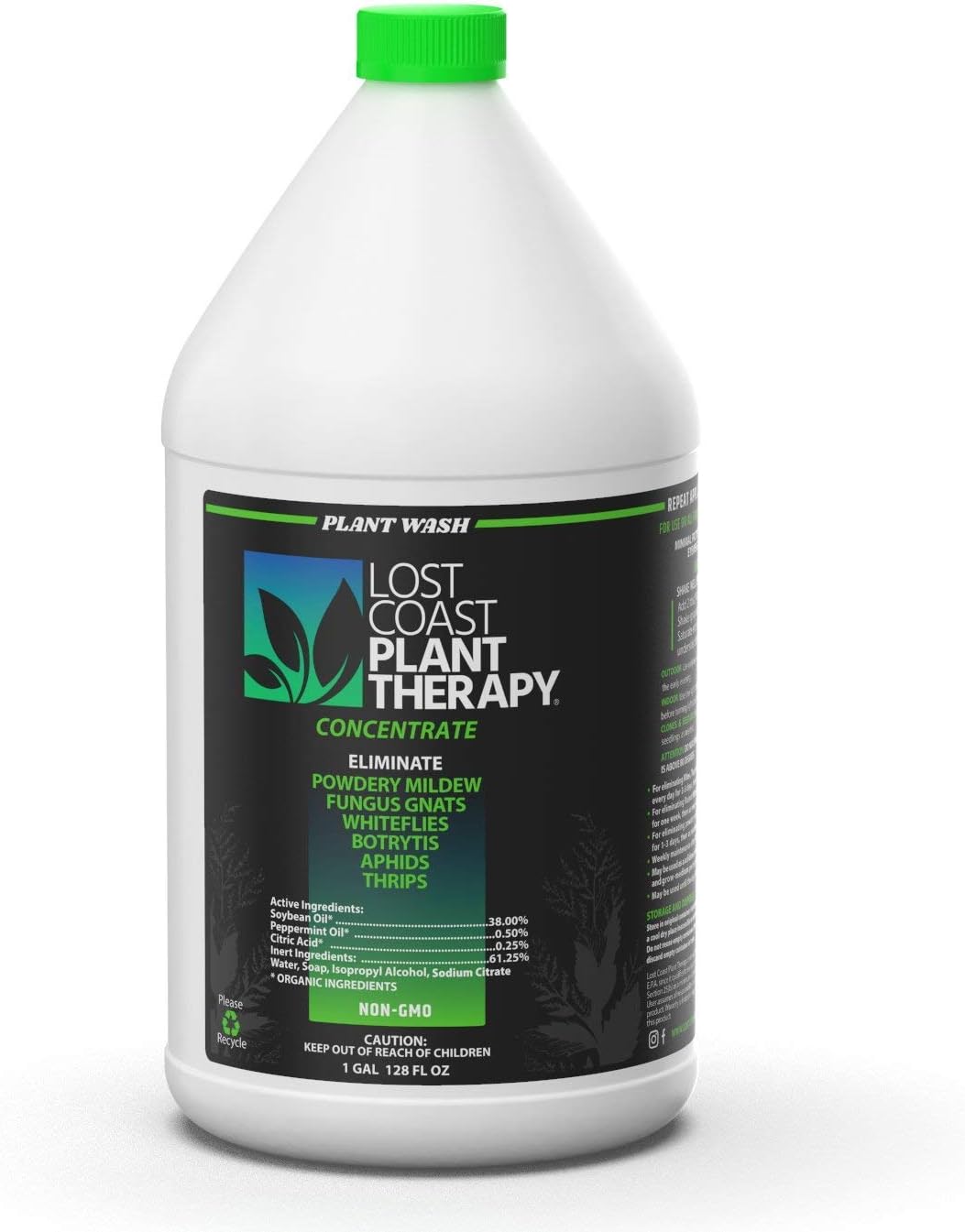
| Unit Count | 128 Fluid Ounces |
|---|---|
| Item Form | Spray |
| Target Species | Insects |
| Special Features | Organic, natural, concentrate |
| Liquid Volume | 1 gallons |
This concentrated plant spray is designed as an all‑purpose, contact insecticide and fungicide for ornamental and edible plants. You dilute and thoroughly saturate affected foliage so the formula can adhere to insects, eggs or larvae and cause respiratory disruption and dehydration on contact. It is commonly used for spider mites, powdery mildew and other soft‑bodied insects and can be applied up to harvest when used as directed. Notable features include an organic, natural concentrate formulation and laboratory testing that the product leaves no residue. In practice it performs well for growers who prioritize fast knockdown of outbreaks and want a product safe for soil, people and pets when used properly. Limitations are that it must directly contact pests to work, so thorough coverage and repeat treatments are often necessary for hidden or protected stages, and it requires careful application under cooler, lower‑light conditions to avoid plant stress. The one‑gallon concentrate case format favors users managing multiple plants or larger growing areas rather than casual spot treatments.
Best for: Gardeners and small‑scale growers who prioritize fast, effective control with a natural concentrate and who manage multiple plants or beds where thorough coverage and repeat treatments are feasible.
Less Ideal for: Casual gardeners who need a ready‑to‑use spray for occasional spot treatments or homeowners with only a few potted plants may prefer smaller, pre‑diluted bottles for convenience.
- Organic, natural concentrate reduces synthetic pesticide exposure
- Laboratory tested to leave no residue, allowing use up to harvest when applied correctly
- Effective knockdown on contact for mites, soft‑bodied insects and some fungal issues
- Case quantity and one‑gallon volume suit larger gardens or frequent applications
- Must physically contact pests to work so coverage and repeat sprays are required
- Requires careful timing and lower heat/lighting conditions to avoid plant stress
Verdict: Buy this if you need a powerful, residue‑free concentrate that delivers quick contact knockdown for larger gardens and repeated pest control.
Garden Safe Insecticidal Soap Ready-to-Use Spray, 32 oz

| Item Form | Spray |
|---|---|
| Target Species | Insects |
| Liquid Volume | 32 fluid ounces |
| Active Ingredients | Potassium Salts Of Fatty Acids |
Garden Safe Insecticidal Soap is a ready-to-use contact spray formulated with potassium salts of fatty acids to control aphids, mealybugs, mites, whiteflies and similar soft-bodied pests. You use it like a normal garden spray: thoroughly coat insects and all plant surfaces including undersides of leaves, ideally in calm weather and not in full sun. It is safe for use on vegetables, fruit trees, ornamentals, shrubs, flowers and in greenhouses and may be applied to edibles up to the day of harvest, which simplifies timing for vegetable growers. The spray works on direct contact so thorough coverage is essential and multiple applications may be needed for heavy infestations. The product is convenient because no mixing is required, but it can be washed off by rain and is hazardous to aquatic invertebrates so care is needed to avoid runoff into water. For routine control of common garden pests this soap is a practical, low-toxicity option when used as part of an integrated pest management approach.
Best for: Gardeners who prioritize practical, low-toxicity pest control and want a ready-made spray that can be used on edible crops without pre-harvest delays.
Less Ideal for: People needing a long-residual or systemic pesticide for heavy infestations or for pests hidden inside plant tissues should consider other control methods.
- Ready-to-use formula requires no mixing for quick spot treatments
- Labeled for use on vegetables and may be applied up to the day of harvest
- Controls a broad list of soft-bodied pests including aphids, mites and whiteflies
- Plant-safe when used as directed and usable indoors, outdoors and in greenhouses
- Only kills pests by direct contact so it has limited residual or systemic activity
- Can be washed off by rain and must be reapplied after watering or heavy rainfall
- Harmful to aquatic invertebrates so it requires careful application near water
Verdict: A convenient, low-toxicity ready-to-use soap spray that gives effective contact control of common soft-bodied garden pests and is safe to use up to harvest.
Bonide Insecticidal Soap Ready-to-Use Spray, 32 oz

| Unit Count | 32 Ounce |
|---|---|
| Item Form | Spray |
| Target Species | Insects |
| Active Ingredients | Potassium salt of fatty acids |
This ready-to-use insecticidal soap spray kills soft-bodied insects on contact using potassium salts of fatty acids derived from plants, making it suitable for organic vegetable beds and container vegetables. It is applied with the built-in spray nozzle directly to affected foliage to control aphids, mites, caterpillars, whiteflies and other listed pests; the label allows use up to the day of harvest on many food crops. Practical benefits include an easy spray application with no mixing, low residual toxicity compared with conventional insecticides, and a broad list of target species for small-scale home gardens and greenhouses. Important limitations are that it works by contact so complete coverage is required and it will not control pests hidden inside fruit or stems; repeated applications may be necessary for heavy infestations. Users should follow label safety directions and test on a few plants first since some sensitive foliage can show damage under hot conditions.
Best for: Gardeners who prioritize simple, low-residue organic solutions for vegetables and want a no-mix spray they can use quickly on affected plants.
Less Ideal for: Large-scale growers who need systemic or long‑residual control or anyone needing a product to reach pests hidden inside fruit or stems.
- Ready-to-use spray with an easy nozzle for immediate application
- Active ingredient is a plant-derived potassium salt suitable for organic gardening
- Labeled for use on a wide range of vegetables, herbs, ornamentals and houseplants
- Low residual toxicity compared with synthetic insecticides
- Kills only on contact so full coverage and repeat treatments are often required
- May cause phytotoxicity on some sensitive plants or under high heat if not spot-tested
Verdict: A convenient, ready-to-use organic spray that gives practical contact control of common vegetable garden pests with minimal residual impact.
Colton's Naturals Fungus Gnat Killer Ready-to-Use Plant Pest Spray, 16 fl oz

| Item Form | Spray |
|---|---|
| Target Species | Fungus Gnats |
| Unit Count | 16 Fluid Ounces |
This ready-to-use spray from Colton's Naturals is designed to control fungus gnats and other listed pests around houseplants and in small greenhouse or bench areas. You apply it directly to affected soil surfaces, containers, windowsills, and beneath leaves using the trigger bottle, so no mixing or measuring is required. The product claims to protect plant roots by targeting gnat larvae and can also be used against soil mites, aphids, whiteflies, thrips, and mealybugs, which makes it useful for mixed infestations. Practical benefits include straightforward spot treatment, a purpose-built trigger bottle that is convenient for targeted sprays, and a 16 fl oz size that covers repeated treatments around a collection of indoor plants. Limitations are that it is a surface spray intended for visible infestation areas rather than a systemic soil drench, so heavy or widespread infestations may need repeated applications or complementary control methods. As with any pest spray, follow label directions and avoid contact with edible foliage before harvest.
Best for: Buyers who want a dependable, no-fuss spray to treat visible fungus gnat problems on houseplants and small greenhouse benches and who prioritize straightforward, ready-to-use solutions.
Less Ideal for: Large-scale growers or users needing a systemic soil treatment should consider products designed for broader or deeper soil penetration and adjustable dosing.
- Ready-to-use trigger bottle requires no mixing or special equipment
- Formulated specifically to target fungus gnats and their larvae
- Safe for targeted application around houseplants, pots, and greenhouse benches
- Also lists efficacy against several common plant pests such as aphids and whiteflies
- Designed as a surface spray so it may not reach larvae deep in heavily compacted or very wet soil
- Not a concentrate so you cannot adjust strength for larger or commercial applications
Verdict: A convenient ready-to-use spray that reliably targets fungus gnats and other common plant pests for small-scale indoor plant care.
Bonide Captain Jack's Ready-to-Use Neem Oil Spray, 32 oz

| Item Form | Liquid |
|---|---|
| Target Species | Insects |
| Liquid Volume | 32 fluid ounces |
| Active Ingredients | Clarified Hydrophobic Extract of Neem Oil |
This ready-to-use neem oil spray is a multipurpose garden treatment that kills insects at all life stages while also serving as a miticide and preventative fungicide. Packaged in a 32-ounce trigger bottle, it is applied by shaking and thoroughly spraying plant surfaces, including leaf undersides, at the first sign of pests or disease and reapplying every 7 to 14 days as needed. The active ingredient is a clarified hydrophobic extract of neem oil, which is approved for organic gardening and labeled safe to use on vegetables up to the day of harvest. Practical benefits include broad pest coverage (aphids, whiteflies, spider mites and others), disease suppression such as powdery mildew, and convenience from a ready-to-use sprayer. Important limitations are that results are slower than synthetic contact insecticides and application timing matters to avoid leaf burn in full sun; repeated applications may be needed for heavy infestations. Follow label safety directions and keep the product away from children and pets.
Best for: Gardeners who want a single, organic-approved product to manage common vegetable garden pests and fungal problems and who prefer products with strong user feedback.
Less Ideal for: Growers needing rapid knockdown of severe infestations or commercial producers who require fast-acting, high-throughput treatments.
- Kills multiple pest stages including eggs, larvae and adults for more complete control.
- Also acts as a fungicide and miticide so one product covers pests and common fungal issues.
- Ready-to-use trigger bottle requires no mixing and is easy to apply to leaves and undersides.
- Approved for organic gardening and can be used on vegetables up to day of harvest.
- Slower-acting than many synthetic contact insecticides, so it may take several applications to see control.
- Must avoid spraying in peak sunlight to reduce risk of leaf burn.
Verdict: A convenient, organic-approved all-in-one neem spray that controls common vegetable garden pests and fungal issues with minimal fuss.
Bonide Captain Jack's Deadbug Brew 16 oz Concentrate

| Unit Count | 16 Ounce |
|---|---|
| Item Form | Spray |
| Target Species | Insects |
| Active Ingredients | Spinosad (Mixture of Spinosyn A and Spinosad D) |
Bonide Captain Jack's Deadbug Brew is a concentrated spinosad insecticide designed for use on vegetables, fruits, ornamentals, and other garden plants. You mix the 16 fl oz concentrate with water and apply it with a trigger, hand-held, backpack, or hose-end sprayer to target caterpillars, beetles, borers, leaf miners, and similar chewing pests. Because the active ingredient is spinosad, the product is approved for organic gardening and is selective enough that it does not significantly impact many predatory beneficial insects and mites when used as directed. In practical use it provides quick knockdown of listed pests and is suitable for protecting squash and other cucurbits from feeding damage. The main limitations are that it must be mixed and applied correctly following label rates and safety instructions and that repeated broad use can still affect non-target insects if timing and coverage are not careful. For gardeners focused on protecting food crops, it is a straightforward, effective option when integrated with scouting and spot treatments.
Best for: Gardeners who prioritize practical, effective pest control for edible gardens and want an organic-approved concentrate they can mix and apply themselves to protect squash and other crops.
Less Ideal for: Gardeners seeking a ready-to-use spray or those unwilling to follow label mixing and safety instructions should consider alternative formats or professional application.
- Contains spinosad, an active ingredient approved for organic gardening and effective against caterpillars and beetles
- Concentrate mixes with water for use with trigger, backpack, hand-held, or hose‑end sprayers
- Labeled for use on a wide range of vegetables, fruits, and ornamentals including cucurbits
- Designed to minimize impact on many predatory beneficial insects and mites when used as directed
- Requires careful mixing and application per label to avoid harming non-target insects
- Not a residual solution for all pests so repeat applications or scouting are often necessary
Verdict: A practical, organic-approved spinosad concentrate that reliably controls chewing pests on squash and other garden crops when mixed and applied correctly.
Choosing the Right Natural Bug Spray for Plants: Key Factors to Consider
Active Ingredients and Mode of Action
Know what is doing the work. Natural sprays rely on botanical extracts, soaps, oils, or microbial agents that act differently than synthetic pesticides. Botanical oils and insecticidal soaps smother soft-bodied insects and disrupt membranes, while neem and pyrethrum disrupt feeding or nervous-system function temporarily. Microbial agents target specific insect groups or life stages. Understanding the mode of action helps you match a spray to the pest you have and rotate approaches to limit pest resurgence.
Concentration matters. "Natural" does not mean inert. Higher concentrations of oils or soaps can increase control but also raise the risk of leaf burn on sensitive plants. Always check label guidance for dilution rates and maximum applications for edible crops.
Plant Safety and Phytotoxic Risk
Different plants tolerate sprays differently. Tender seedlings, broad-leafed ornamentals, and thin-leaved herbs may be more susceptible to scorch from oils, soaps, or certain botanicals, especially when applied in full sun or high heat. Test sprays on a small area before treating entire plants and follow heat-window guidance on labels.
Residue and taste are considerations for edibles. Choose formulations labeled for use on fruits, vegetables, and herbs when treating food crops. Some natural ingredients can leave residues that affect flavor or storage life, so note harvest intervals and rinse recommendations.
Impact on Pollinators and Beneficial Insects
One of the main reasons gardeners choose natural sprays is to protect pollinators and predatory insects. However, many botanically based sprays can still harm bees, lady beetles, lacewings, and parasitoids if applied when those insects are active. Time treatments for early morning or late evening, avoid spraying open blooms, and favor products with low residual toxicity to beneficials.
Consider targeted applications. Spot-treating affected foliage and using directed sprays under leaves reduces non-target exposure compared with broadcast spraying across flowering beds.
Application Method and Practicality
How you apply a spray affects coverage and effectiveness. Handheld pump sprayers, trigger bottles, and hose-end applicators all deliver different droplet sizes and coverage. Fine mists reach undersides of leaves and tight growth better but can drift; coarser droplets reduce drift but may miss protected pests. Choose a delivery method that matches plant form and the pest's typical hiding places.
Ease of mixing and clear label instructions also matter. Products that require multiple additions, extended agitation, or exact pH adjustments increase the chance of user error. For gardeners with large areas, look for concentrates that dilute cleanly and store easily.
Target Pest and Timing
Identify the pest life stage and timing before applying a spray. Many natural options are most effective against immature stages like aphid nymphs or newly hatched caterpillars. Timing applications to coincide with vulnerable stages improves results and reduces the number of treatments needed.
Monitor regularly and combine sprays with hand removal, pruning, and sticky traps to reduce overall pest pressure. Repeated blanket applications are rarely necessary if you address the root causes such as overcrowding or nutrient imbalance.
Environmental Conditions and Residual Longevity
Weather influences both safety and efficacy. Rain can wash off contact sprays and reduce residual protection, while hot sun can increase phytotoxic risk. Some natural agents break down quickly in sunlight, requiring more frequent reapplication. Consider whether you need a short-residual contact option for immediate knockdown or a longer-lasting formula when repeated access is difficult.
Storage stability is also practical: botanical extracts can degrade over seasons. Choose products with stable shelf instructions and store concentrates away from extreme heat.
When to Choose a Natural Spray Versus Other Controls
Natural sprays are best when you want to reduce pest numbers quickly while minimizing chemical exposure to people, pets, and beneficial insects. Use sprays as a component of an integrated pest management plan rather than the sole tactic.
For light to moderate infestations, targeted spraying combined with cultural fixes like improved airflow, pruning, and manual removal often resolves problems without repeated treatments. For heavy, rapidly expanding outbreaks, natural sprays can help buy time while you implement longer-term controls.
- Use spot treatments for localized infestations to limit non-target effects.
- Avoid spraying during bloom unless a product specifically permits it and you can protect pollinators.
Mixing, Application Windows, and Safety Precautions
Follow label dilution rates and mix only the amount you will use that day. Many natural concentrates degrade quickly once diluted. Use personal protective equipment recommended on the label, such as gloves and eye protection, especially when handling concentrated botanicals and oils.
Apply sprays in the cooler parts of the day to reduce leaf scorch and to limit exposure to bees. Rinse sprayers promptly after use and store concentrates where children and pets cannot reach them.
- Do a small patch test before full-plant application, especially on tender varieties.
- Record application dates and conditions to evaluate effectiveness and avoid overuse.
Combining Sprays with Cultural and Biological Controls
Natural sprays work best when paired with sanitation, resistant varieties, and habitat for beneficials. Remove heavily infested leaves, avoid overhead watering that encourages soft-bodied pests, and plant companion species that attract predators.
Introduce or encourage natural enemies by planting a diversity of flowering plants and providing shelter. Where available, use biological products that complement sprays rather than overlap modes of action excessively.
- Rotate modes of action to reduce the chance pests adapt to a single control type.
- Use monitoring tools like sticky traps to time interventions and measure treatment impact.
Safe Use on Edible Crops and Harvest Considerations
When treating vegetables, fruits, and herbs, verify that the chosen spray is labeled for edible plants and follow pre-harvest intervals if specified. Rinsing produce where recommended can remove surface residue and minimize taste or texture effects.
Prefer short-residual contact sprays when you need to treat close to harvest, and favor products with clear instructions for edible use to avoid unintended contamination.
- Avoid spraying herbs used fresh shortly before harvest unless the product label allows it.
- Record treatments on a garden calendar to track safe harvest windows.
How We Chose the Best Natural Bug Spray for Plants
We focused on real-garden performance and safety when selecting natural bug sprays for plants. First, we prioritized products and formulations with documented activity against a range of common garden pests such as aphids, whiteflies, spider mites, and caterpillars. Second, we looked for low-toxicity ingredient profiles that minimize harm to pollinators, predatory insects, and people handling treated plants. Third, we evaluated application practicality: spray pattern, dilution requirements, residual activity, and suitability for use on edible crops and tender foliage. Fourth, we considered foliage safety under varying conditions, including heat sensitivity and potential for leaf burn on young or stressed plants. Finally, we included sprays that integrate with integrated pest management approaches, pairing with mechanical and cultural controls. Exclusions: we did not include conventional synthetic insecticides, outright fumigants, or products whose labeling restricted use on edible plants or in home gardens. The final list reflects those that balance measurable pest suppression with plant safety and ease of use.
FAQ
Are natural bug sprays safe to use on vegetables?
Often yes, but it depends on the formulation and label approvals. Choose products labeled for edible crops and follow dilution and harvest interval guidance. Rinsing harvested produce can remove surface residues when recommended.
Will natural sprays harm bees and ladybugs?
Many natural sprays can harm beneficials if sprayed directly or when residues persist on flowers. Limit harm by avoiding sprays during bloom, applying at dawn or dusk, and using spot treatments rather than broad applications.
How often should I reapply a natural bug spray?
Reapplication frequency depends on the product's residual action and pest pressure. Some contact sprays require treatments every 7 to 10 days, while others break down faster and need more frequent attention after rain. Follow label guidance and monitor pest levels before re-treating.
Can I mix natural sprays with other garden inputs?
Compatibility varies. Some oils or soaps can interact poorly with fertilizer sprays or biologicals. Always do a compatibility test on a few leaves and follow label instructions about tank mixing to avoid phytotoxicity or reduced efficacy.
Do natural sprays control all common garden pests?
No single natural spray controls every pest. Many are best for soft-bodied insects like aphids and mites, while others target caterpillars or fungal vectors. Correct pest identification and choosing a spray with the appropriate mode of action are important for success.
Final Verdict
When choosing a natural bug spray for plants, prioritize the pests you need to control, the safety profile for edible crops and beneficial insects, and the practicalities of application in your garden. Expect tradeoffs: contact sprays give immediate knockdown but often need repeat applications and careful timing to avoid leaf burn or pollinator harm. Match spray choice with good cultural practices and monitoring so you treat only when necessary and preserve the garden's ecological balance. With these priorities in mind, you can select a natural spray that delivers meaningful pest reduction while protecting plants and the insects that help them thrive.
