

Note: This article contains affiliate links. If you click on these links and make a purchase, I may earn a small commission at no extra cost to you. This helps support my research and content. Read my full affiliate disclosure here.
Choosing the right natural bug spray matters because gardeners need pest control that protects plants without damaging foliage, beneficial insects, or soil life. If you garden in beds, containers, or raised planters, a plant-safe spray can reduce chewing and sucking insect damage while preserving pollinators and soil health. This guide shortlists the six best natural bug sprays for garden use and explains how each option earns a spot. We evaluate sprays for plant safety, pest control effectiveness, ease of application, and longevity so you can match a spray to your growing style and pest pressure. Read on for practical notes to help you pick the right spray for your garden needs.
Top Picks at a Glance
| Best Overall The best all-around choice for most situations | Bonide Captain Jack's Deadbug Brew Concentrate, 32 oz |  |
| Best Quality Built to a higher standard if you want something more solid | Wondercide Outdoor Pest Control Spray — 32 oz Ready-to-Use |  |
| Best Value The sweet spot between price and what you get | Cedarcide Yardsafe Ready-to-Use Outdoor Bug Spray, 1 Quart |  |
| Best Budget The cheapest option that still gets the job done reliably | Natria Neem Oil Ready-to-Use Spray, 24 oz |  |
| Highest Rated A top-rated pick with lots of positive feedback | Bonide Captain Jack's Bt Thuricide Ready-to-Use Spray, 32 oz |  |
| Most Popular A crowd favorite that many people choose with confidence | Bonide Captain Jack's Ready-to-Use Neem Oil Spray, 32 oz |  |
Bonide Captain Jack's Deadbug Brew Concentrate, 32 oz

| Unit Count | 32 Ounce |
|---|---|
| Item Form | Liquid |
| Target Species | Insects |
| Active Ingredients | Spinosad |
Bonide Captain Jack's Deadbug Brew is a concentrated spinosad-based insecticide designed for use on vegetables, fruits, flowers, and ornamentals in organic gardens. You mix the concentrate with water and apply it with a trigger, hand-held, backpack, or hose-end sprayer to target caterpillars, beetles, borers, leaf miners, thrips, spider mites and other listed pests. Because the active ingredient is spinosad, the product targets many chewing and some sucking insects while having limited impact on predatory beneficials when used as directed. The concentrate format keeps storage and transport compact and lets you treat multiple beds or trees from one bottle. Important limitations are following label directions closely for application rates and timing and taking normal safety precautions; like all insecticides it will not selectively remove a single pest species and repeated use can require integrated pest management strategies. For gardeners seeking a broadly effective, organic-eligible spray, this is a practical go-to option.
Best for: Gardeners who want a single, broadly effective insecticide approved for organic use to protect vegetables, fruits and ornamental beds and who prefer a concentrate that treats multiple areas.
Less Ideal for: People seeking an immediate-contact knockdown spray for household pests or those unwilling to follow dilution and safety instructions should consider other options.
- Contains spinosad, an organic-approved active ingredient effective against many caterpillars, beetles, borers and leaf-feeding pests
- Concentrate mixes easily with water and works with common sprayers including trigger, backpack and hose-end models
- Approved for use on a wide range of edible and ornamental plants, including vegetables, fruits and ornamentals
- Formulation is designed to have limited impact on predatory beneficial insects when used according to the label
- Requires careful dilution and adherence to label directions for safe and effective use
- Not selective to a single pest species and may require integration with other IPM practices
Verdict: Choose this concentrated spinosad spray if you want a versatile, organic-approved insecticide to protect a wide range of garden plants.
Wondercide Outdoor Pest Control Spray — 32 oz Ready-to-Use
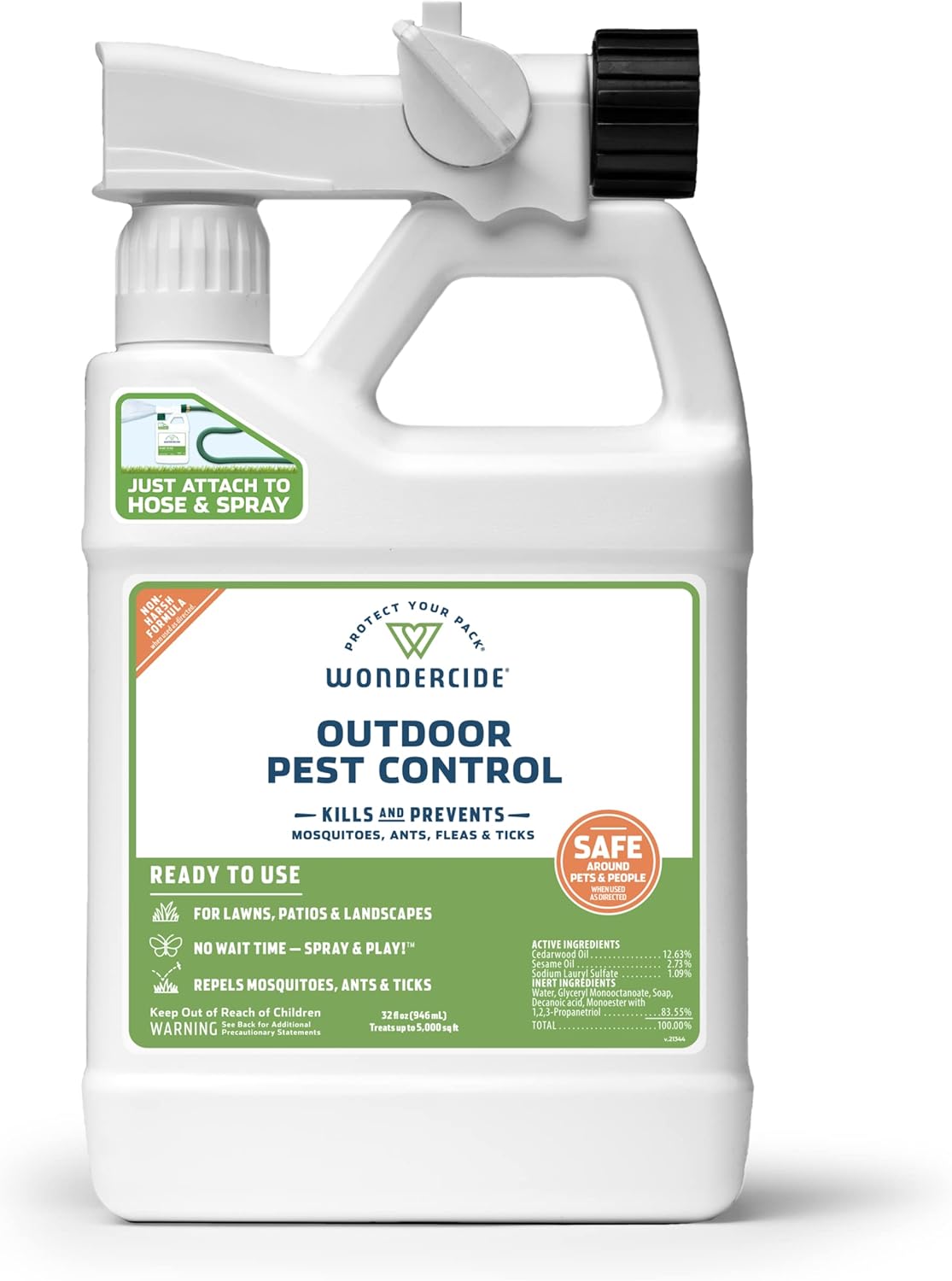
| Format | Pre-mixed, hose-end spray |
|---|---|
| Active ingredients | Cedarwood Oil 12.63%, Sesame Oil 2.73% |
| Coverage | Up to 5,000 sq ft (general); 2,500 sq ft (ticks/mosquito repel) |
Wondercide Ready-to-Use Outdoor Pest Control is a hose‑end spray designed for treating yards up to 5,000 sq ft for general pests and 2,500 sq ft for ticks and mosquito repellency. You attach the bottle to a garden hose, sweep the nozzle across lawns, patios, and foundation lines, and the cedarwood‑based formula delivers quick coverage with no dry time required. Notable features include plant-powered active ingredients (cedarwood and sesame oils), ready-to-use convenience, and instructions for both active infestations and preventative maintenance. Practical benefits are that it is safe to use around people and pets when directions are followed, residues are reported to be non-harmful to pollinators, and the hose attachment makes treating large areas fast. Important limitations are that effectiveness depends on water pressure, walking speed, and weather, heavy rain may require reapplication, and spraying in temperatures above 90°F or direct sun can cause plant burn. Users who need an all‑season, high‑durability pesticide for heavy infestations should plan on repeated applications and follow label precautions to protect sensitive plants.
Best for: Buyers who prioritize effective, plant‑based mosquito and tick control for medium to large yards and want a fast hose‑attached solution that is safe around families and pets when used as directed.
Less Ideal for: Gardeners who need a single, long‑lasting professional‑grade pesticide for severe, persistent infestations or who cannot reapply after rain should consider alternative, heavier‑duty treatments.
- Ready-to-use hose-end applicator for fast coverage of large yards
- Plant-based active ingredients (cedarwood and sesame oils) that target common yard pests
- No dry time required so kids and pets can re-enter treated areas quickly
- Covers up to 5,000 sq ft for general pest control and 2,500 sq ft for ticks/mosquito repellency
- May cause phytotoxic burning if applied in direct sun or temperatures above 90°F
- Performance depends on water pressure and user walking speed which can lead to uneven coverage
- Heavy rain can wash it away and requires reapplication
Verdict: If you want a fast, family- and pet-friendly plant‑based spray to reduce mosquitoes and ticks across a medium to large yard, this ready‑to‑use hose‑end formula delivers practical, repeatable results.
Cedarcide Yardsafe Ready-to-Use Outdoor Bug Spray, 1 Quart

| Ingredients | Cedarwood Oil |
|---|---|
| Coverage | Treats approx. 5,000 sq. ft. per quart |
| Application | Hose-attachable ready-to-use spray |
| Family Safe | Yes when used as directed |
| Target pests | Mosquitoes, ticks, fleas, ants, mites and more |
Cedarcide Yardsafe is a hose-attachable, ready-to-use outdoor spray formulated with cedarwood oil to repel and control mosquitoes, ticks, fleas, chiggers, ants and several other lawn pests. You install the spray top on the quart bottle, attach it to a full-pressure hose, and apply slow even strokes over lawns and vegetation; a single quart treats roughly 5,000 sq ft. It is intended for routine maintenance applications: twice two weeks apart for the first treatment of the season and monthly thereafter or after heavy rain. The product’s plant-based cedar oil formula is the main selling point for gardeners who want to avoid synthetic pesticides, and the hose-top delivery makes coverage fast for medium lawns. Expect pleasant natural scents and minimal downtime after spraying, and note that effectiveness requires regular reapplication and correct coverage; it is not a one-and-done residual chemical. If you prefer an ecological, pet-safe option and are willing to follow a monthly schedule, this is a practical choice for maintaining an outdoor space with lower chemical exposure.
Best for: Gardeners who prioritize lower-toxicity, natural pest control and want a quick, hose-applied solution for routine maintenance on medium-sized lawns and planted areas.
Less Ideal for: Users seeking a long-lasting, once-per-season chemical control or those unwilling to reapply after rain or on a monthly schedule.
- Plant-based cedarwood oil formula reduces reliance on synthetic pesticides
- Hose-attachable spray top covers about 5,000 sq ft per quart for fast application
- Family- and pet-friendly when used as directed
- Suitable for a broad list of lawn pests including ticks, mosquitoes, fleas and ants
- Requires repeated applications (initial two doses then monthly) and reapplication after heavy rain
- Less persistent than synthetic residual insecticides, so results depend on correct and consistent coverage
Verdict: A fast, family- and pet-friendly cedar oil lawn spray for gardeners who want a natural, hose-applied routine treatment for common outdoor pests.
Natria Neem Oil Ready-to-Use Spray, 24 oz

| Unit Count | 24 Fluid Ounces |
|---|---|
| Item Form | Spray |
| Target Species | Insects |
| Active Ingredients | Clarified Hydrophobic Extract of Neem Oil – 0.9% |
Natria Neem Oil Spray is a 24 oz ready-to-use botanical spray formulated to kill common pests like aphids, whiteflies, spider mites and to suppress fungal diseases such as powdery mildew and black spot. You simply point and spray for spot treatments or broader coverage on roses, vegetables, ornamentals and houseplants without measuring or mixing. The product’s active ingredient is a clarified neem oil extract (0.9%) and the label allows use up to the day of harvest, which makes it practical for vegetable gardens and edible container crops. The spray combines insecticidal and fungicidal action, so it can reduce the number of separate products you need to keep on hand. Limitations to expect are that it is a contact product, so thorough coverage and repeat applications are required for good control, and it will be less effective against pests hidden in dense foliage or inside buds. For gardeners who prefer a low-toxicity botanical option and want a convenient ready-to-use format, this is an easy-to-use, multi-purpose choice.
Best for: Gardeners who want a low-toxicity, all-purpose spray they can use on vegetables, ornamentals and houseplants without mixing or juggling multiple products.
Less Ideal for: Growers needing a systemic or long-residual insecticide or those managing severe, established infestations that require professional-strength treatments.
- Ready-to-use trigger spray requires no mixing for quick application
- Controls both listed insects and several fungal diseases with a single product
- Label allows use up to the day of harvest, so safe for many edible crops when used as directed
- Active ingredient concentration is relatively low, so repeated applications may be needed for heavy infestations
- Effectiveness depends on thorough contact coverage and will be limited against hidden or systemic pests
Verdict: A convenient ready-to-use neem spray that delivers combined insect and fungal control for gardeners who want a low-toxicity, easy application.
Bonide Captain Jack's Bt Thuricide Ready-to-Use Spray, 32 oz

| Unit Count | 32 Ounce |
|---|---|
| Item Form | Spray |
| Target Species | Insects |
| Active Ingredients | Bacillus Thuringiensi,Lapidapteran Active Toxins |
Bonide Captain Jack's Bt Thuricide is a ready-to-use biological spray that delivers Bacillus thuringiensis (Bt) to control caterpillars and worm-stage insects. You apply it with the trigger sprayer directly to the tops and undersides of leaves when you first see feeding damage; it is labeled for use on vegetables, fruit, shade trees and ornamentals and can be used up to the day of harvest on edibles. Because it kills by ingestion, treated pests stop feeding within a couple of days while birds, earthworms and many beneficial insects are largely unharmed. The product is convenient for small-to-medium infestations since it needs thorough coverage and repeat applications for new larvae. It is approved for organic gardening and comes in a 32-ounce bottle that is easier to use than concentrates for spot treatments, but using a ready-to-use bottle across a large property can become time consuming compared with hose-end or pressurized sprayers.
Best for: Gardeners who prioritize proven, low-risk biological control and want an easy spray for spot treating caterpillars on edible and ornamental plants; ideal for those who value safety around beneficials and pets.
Less Ideal for: People needing fast-contact knockdown for a large-scale outbreak or who must treat many acres quickly should consider concentrates or professional application methods instead.
- Targets caterpillars and worm-stage pests with a proven Bt active ingredient
- Safe for use on edible plants up to day of harvest when label directions are followed
- Ready-to-use trigger bottle requires no mixing for quick spot treatments
- Labeled for a wide range of plants including vegetables, ornamentals and shade trees
- Requires insects to ingest product so results are not immediate and depend on good spray coverage
- Ready-to-use bottle is less efficient for treating large areas compared with concentrates or hose-end applicators
Verdict: A convenient, organic-ready Bt spray that reliably controls caterpillars and worm pests while protecting beneficials, ideal for careful gardeners treating spot infestations.
Bonide Captain Jack's Ready-to-Use Neem Oil Spray, 32 oz

| Item Form | Liquid |
|---|---|
| Target Species | Insects |
| Liquid Volume | 32 fluid ounces |
| Active Ingredients | Clarified Hydrophobic Extract of Neem Oil |
This ready-to-use neem oil spray is a multipurpose garden treatment that kills insects at all life stages while also serving as a miticide and preventative fungicide. Packaged in a 32-ounce trigger bottle, it is applied by shaking and thoroughly spraying plant surfaces, including leaf undersides, at the first sign of pests or disease and reapplying every 7 to 14 days as needed. The active ingredient is a clarified hydrophobic extract of neem oil, which is approved for organic gardening and labeled safe to use on vegetables up to the day of harvest. Practical benefits include broad pest coverage (aphids, whiteflies, spider mites and others), disease suppression such as powdery mildew, and convenience from a ready-to-use sprayer. Important limitations are that results are slower than synthetic contact insecticides and application timing matters to avoid leaf burn in full sun; repeated applications may be needed for heavy infestations. Follow label safety directions and keep the product away from children and pets.
Best for: Gardeners who want a single, organic-approved product to manage common vegetable garden pests and fungal problems and who prefer products with strong user feedback.
Less Ideal for: Growers needing rapid knockdown of severe infestations or commercial producers who require fast-acting, high-throughput treatments.
- Kills multiple pest stages including eggs, larvae and adults for more complete control.
- Also acts as a fungicide and miticide so one product covers pests and common fungal issues.
- Ready-to-use trigger bottle requires no mixing and is easy to apply to leaves and undersides.
- Approved for organic gardening and can be used on vegetables up to day of harvest.
- Slower-acting than many synthetic contact insecticides, so it may take several applications to see control.
- Must avoid spraying in peak sunlight to reduce risk of leaf burn.
Verdict: A convenient, organic-approved all-in-one neem spray that controls common vegetable garden pests and fungal issues with minimal fuss.
Choosing the Right Natural Bug Spray for Garden: Key Factors to Consider
Plant Safety and Phytotoxicity
Natural does not automatically mean safe for every plant. Some botanical oils, soaps, or concentrated extracts can scorch tender leaves, stress seedlings, or cause fruit blemishes when applied in hot sun or at high concentrations. Consider whether the spray lists use on edible crops, ornamentals, and young transplants, and follow label timing guidance such as evening applications to reduce leaf burn.
Test any new spray on a few leaves or a single plant before wide application. Watch for signs of phytotoxicity for 24 to 48 hours after application and adjust concentration or timing as needed. Plant safety affects how frequently you can treat and whether a product is suitable for delicate herbs, lettuces, or flowering ornamentals.
Target Pest Range
Different sprays work better on chewing pests like caterpillars and beetles versus sucking pests like aphids, whiteflies, and spider mites. Some botanical insecticides are broad-spectrum, disrupting multiple pest types, while others are primarily repellents that reduce feeding rather than kill insects.
Match the active ingredients or documented targets to the insects you most commonly face. For mixed pest outbreaks, choose a spray with a broader documented spectrum or plan to combine compatible control methods such as targeted handpicking for large caterpillars plus spray treatments for sap-suckers.
Effect on Beneficial Insects
Garden health depends on predators and pollinators. Many natural sprays are gentler than synthetic insecticides, but some still harm beneficial insects on contact. Consider whether the product has instructions to avoid spraying blooms or to apply at times when pollinators are inactive.
Use selective timing and application techniques to protect beneficials: spray in the evening, avoid blanket bloom-time treatments, and prioritize spot treatments. Sprays with quick residual breakdown reduce exposure risk for predators and pollinators while still addressing pests.
Persistence and Reapplication Needs
Residual duration determines how often you must reapply and how much labor the treatment requires. Some natural products break down quickly in sunlight or wash off in rain and need frequent applications, while others include ingredients that provide longer control. Balance longer persistence against increased risk to non-target organisms.
Consider your tolerance for repeated applications and typical weather in your area. Short-lived sprays are useful for spot control during outbreaks, whereas longer-lasting options can be better for sustained pressure but may require stricter precautions around beneficial insects.
Application Method and Convenience
Ease of use affects whether you will use the product correctly and consistently. Ready-to-use bottles with adjustable nozzles are convenient for small beds and containers, while concentrates are more economical for larger areas but require careful mixing. Look for sprayers that deliver a fine, even mist for thorough coverage of undersides of leaves where many pests hide.
Consider tank compatibility if you plan to mix with fertilizers or wetting agents. Ergonomics matter for larger gardens: a comfortable pump sprayer or hose-end applicator can reduce fatigue and improve coverage quality.
Residue, Food Safety, and Harvest Interval
If you treat edible plants, check whether the spray specifies safe use on food crops and any pre-harvest intervals. Even natural ingredients can leave residues that affect taste or require a waiting period before harvest. Opt for products labeled for vegetables, fruits, and herbs if you plan to spray edible areas.
Follow rinsing recommendations and observe harvest intervals to avoid residue concerns. Choosing sprays with low or no required harvest intervals can simplify use in vegetable beds and container herb gardens.
How Natural Ingredients Work in the Garden
Botanical insecticides, insecticidal soaps, and horticultural oils reduce pest damage through physical or biochemical modes rather than systemic poisoning. Soaps and oils suffocate soft-bodied insects or disrupt their cell membranes, while botanicals may act as repellents or neurotoxins specific to certain groups of insects.
Knowing how an ingredient acts helps you choose the right timing and application. Contact-action sprays require coverage of the insect to be effective, so thorough leaf coverage is critical. Products that act as repellents are best for prevention and lower pest densities.
- Contact-action sprays need full coverage and are best used early in infestations.
- Repellent sprays reduce feeding and colonization but may not eliminate established populations.
- Oils and soaps are less likely to leave long-lived residues, but they can harm tender tissue if misapplied.
When to Spray and Timing Considerations
Apply sprays in the cooler parts of the day to reduce leaf burn and to avoid active pollinators. Evening or early morning applications lower the risk to bees and other beneficials while improving product uptake on plant surfaces.
Time treatments to target vulnerable pest life stages. Many sprays are most effective against nymphs, larvae, or newly hatched caterpillars. For cyclical pests, repeat at recommended intervals to intercept new generations before populations explode.
- Avoid spraying during bloom unless the product explicitly states it is safe for pollinators.
- Reapply after heavy rain unless the product notes rainfastness.
- Spot-treat localized infestations to limit non-target impacts.
Mixing and Tank-Mix Compatibility
Concentrates offer flexibility but require careful measuring and mixing. Follow label dilution rates exactly; stronger mixes increase phytotoxicity risk without guaranteed extra pest control. Test mixes on a small plant area first when combining with fertilizers or other sprays.
Some natural sprays are not compatible with surfactants, oils, or certain additives. When mixing products, check compatibility guidance and avoid combinations that can separate, clog sprayer nozzles, or increase plant damage.
- Always add concentrate to water rather than the reverse to reduce foaming and ensure even dilution.
- Rinse sprayers thoroughly between different products to prevent cross-contamination.
- Label guidance should be your primary source for safe mixing practices.
Using Sprays in Edible Gardens and Containers
When treating vegetables, herbs, or fruiting plants, prioritize products with clear food-safety directions and minimal required harvest interval. Container-grown plants can be more sensitive to concentrated sprays because roots are constrained and water stress is higher.
For edible areas, prefer spot treatments and avoid blanket applications during fruit set. Wash treated produce before eating and observe any stated waiting periods.
- Choose products labeled for edibles to avoid unnecessary risk.
- Apply lighter concentrations to young seedlings and high-value tender crops.
- Monitor soil moisture after spraying to prevent compounding stress in containers.
Integrating Sprays with Cultural and Biological Controls
Natural sprays work best as one part of an integrated pest management approach. Combine sanitation, habitat for predators, crop rotation, and resistant varieties to reduce overall pest pressure and the need for repeated sprays.
Encourage beneficial insects with flowering strips and avoid broad-timed sprays during peak pollinator activity. Use physical controls like row covers for early-season protection and reserve sprays for outbreaks or high-value plants.
- Handpick large pests and remove heavily infested plant material before spraying.
- Use monitoring tools like sticky traps or regular scouting to time applications.
- Favor spot applications to preserve predator populations.
How We Chose the Best Natural Bug Spray for Garden
We focused on 6 natural bug sprays suitable for garden use and judged them against concrete, gardener-centered criteria. Key evaluation dimensions included plant safety on a range of ornamentals and edibles, the spectrum of pest control against common chewing and sucking insects, and persistence or residual action so sprays do not require impractical reapplications. We also considered application convenience, including spray delivery, mixing requirements, and suitability for spot treatments versus whole-bed use. Finally, we assessed compatibility with beneficial insects and pollinators to avoid products that are effective but too harmful to garden ecology. We excluded conventional synthetic insecticides and any products labeled for broad agricultural use that lack clear guidance for gardens and containers. Products that relied on unproven anecdotal mixes without ingredient transparency were not considered. The final list reflects sprays that balance measurable pest suppression with documented plant safety and practical use patterns for home gardeners.
FAQ
Are natural bug sprays safe to use on edible plants?
Often yes, but it depends on the product. Many natural sprays are labeled for edible crops and include pre-harvest intervals or rinsing instructions. Choose products with food-crop directions and follow label guidance to reduce residue risk.
Will natural sprays harm bees and other pollinators?
They can if applied to open blooms or during pollinator activity. Many natural options break down quickly, so apply in the evening and avoid spraying flowers to minimize harm. Selecting products with lower pollinator toxicity and using spot treatments also helps.
How often do I need to reapply natural bug sprays?
It usually depends on the product's residual duration and weather. Short-lived sprays may need reapplication every few days after rain, while longer-lasting formulations can persist for a week or more. Follow label intervals and monitor pest pressure.
Can I mix natural bug sprays with fertilizer or other garden products?
Sometimes, but compatibility varies. Always check the product label for tank-mix guidance, test mixes on a small plant area, and rinse sprayers between products to avoid adverse reactions or nozzle clogging.
Are ready-to-use sprays as effective as concentrates?
Ready-to-use bottles are convenient for small areas and spot treatments, while concentrates are more economical for larger gardens and allow dilution control. Effectiveness depends on coverage and proper application rather than format alone.
Can natural sprays control both chewing and sucking insects?
Some can, but efficacy differs by ingredient. Soaps and oils work well on soft-bodied sucking pests, while certain botanicals and contact insecticides may suppress chewing insects. Match the product to the dominant pest type for best results.
Final Verdict
Focus on plant safety, pest spectrum, and pollinator compatibility when choosing a natural bug spray for garden use. Short-lived sprays are useful for spot treatments and minimizing non-target impacts, while longer-residual options reduce reapplication frequency but demand more cautious timing. Prioritize products labeled for your specific plants, follow application guidance, and integrate sprays with cultural and biological controls. That approach helps you protect crops and ornamentals effectively while preserving beneficial insects and overall garden health.
