

Note: This article contains affiliate links. If you click on these links and make a purchase, I may earn a small commission at no extra cost to you. This helps support my research and content. Read my full affiliate disclosure here.
If you want to reduce insects in living spaces without relying on harsh chemicals, choosing the right natural home bug spray matters. You need a formula that actually deters or kills the target pests while being safe on surfaces, fabrics, and around family members and pets. This guide covers seven shortlisted natural home bug sprays that fit indoor living, apartment, and family-friendly situations. We evaluated each option for real-world repellency, safety on common household materials, odor and residue, and ease of use. Read on to see which characteristics matter most for different rooms and pest problems.
Top Picks at a Glance
| Best Overall The best all-around choice for most situations | EcoVenger Bed Bug Killer Spray, Plant-Based 16 oz (EcoRaider) |  |
| Best Quality Built to a higher standard if you want something more solid | Wondercide Indoor Pest Control Spray, Cedarwood, 16 oz |  |
| Best Value The sweet spot between price and what you get | Mighty Mint Peppermint Oil Insect Repellent Spray, 1 Gallon |  |
| Best Budget The cheapest option that still gets the job done reliably | STEM Plant-Based Bug Spray — Ants, Roaches & Spiders, 10 oz |  |
| Highest Rated A top-rated pick with lots of positive feedback | Kufonsung Peppermint Oil Pest & Insect Control Spray (10.15 fl oz) |  |
| Most Popular A crowd favorite that many people choose with confidence | Mighty Mint Peppermint Oil Insect Repellent Spray, 16 oz |  |
| Best Seller A high-volume bestseller chosen again and again | Vet's Best Flea & Tick Home Spray Refill for Dogs, 96 oz |  |
EcoVenger Bed Bug Killer Spray, Plant-Based 16 oz (EcoRaider)

| Volume | 16 oz |
|---|---|
| Active ingredients | Geraniol, Cedarwood oil, Sodium Lauryl Sulfate |
| Residual protection | Up to 14 days |
| Target pests | Bed bugs, eggs, nymphs, resistant strains |
EcoVenger Bed Bug Killer is a ready-to-use, plant-derived spray designed to eliminate all life stages of bed bugs, including pesticide-resistant adults and eggs. In typical use you shake the bottle, spray mattress seams, box springs, bed frames, cracks, and crevices, then repeat weekly until activity stops. The formula lists botanical actives such as geraniol and cedarwood oil and claims rapid knockdown with proven ovicidal activity; independent field studies cited by the brand report high efficacy and roughly two weeks of dry residual protection. Practical benefits include a non-staining, mild woody scent and a safety profile that allows use around bedding and in occupied spaces where children and pets are present. Important limitations are that it is a topical spray only and may require repeated treatments for heavy infestations or hidden harborage sites; nozzle parts are noted as delicate and could need replacement if mishandled. For best results pair targeted spray applications with laundering, vacuuming, and monitoring to break infestations completely.
Best for: Buyers who prioritize proven, high-efficacy solutions that are safe to use in occupied bedrooms and sensitive settings and who plan to apply focused, repeated treatments where bed bugs hide.
Less Ideal for: Users seeking a single-treatment, whole-house remediation service or those who prefer professional fumigation or non-spray control methods.
- Plant-based formula effective against adults, nymphs, and eggs according to studies
- Provides up to two weeks of residual protection after drying
- Safe for use on mattresses and around children and pets when used as directed
- Mild, non-staining formula with a pleasant natural scent
- Not a whole-home solution; repeated spot treatments and integrated housekeeping are needed for severe infestations
- Spray nozzle contains delicate parts that may break with rough handling
Verdict: Choose EcoVenger when you want a research-backed, plant-based spray that kills all bed bug life stages and gives up to two weeks of residual protection for in-room treatments.
Wondercide Indoor Pest Control Spray, Cedarwood, 16 oz

| Unit Count | 16 Fluid Ounces |
|---|---|
| Item Form | Spray |
| Target Species | Ants, Roaches, Spiders, Flies, Fleas, Ticks, Mosquitoes, Silverfish, Moths, Gnats |
| Active Ingredients | 5.7% Cedar Oil; 2.2% Sodium Lauryl Sulfate; 0.1% Sesame Oil |
Wondercide Indoor Pest Control is a ready-to-use spray that uses cedarwood oil and other plant-derived ingredients to kill and repel a wide range of indoor pests. You spray it around baseboards, windows, doors, under sinks, in cabinets and directly on visible insects; the nozzle offers mist or targeted spray for spot treatment. Its active formula lists cedar oil as the main ingredient, so expect a natural scent and fewer synthetic pesticides compared with conventional aerosols. Practical benefits include multi-surface use, safe-for-pets labeling when directions are followed, and suitability for routine preventative spraying in kitchens, bathrooms and living areas. Important limitations are that it must contact flying insects to be effective, surfaces can be slippery when wet, and the label warns of possible eye or skin irritation in sensitive people. For persistent infestations you may need repeated applications and integrated measures like sealing entry points and cleaning attractants to get durable control.
Best for: Buyers who want an effective, plant‑powered indoor pest spray for routine use around the house and who prioritize reduced synthetic chemicals and pet safety when used as directed.
Less Ideal for: People facing heavy or structural infestations who need professional-strength residual products or rapid elimination without repeated applications.
- Plant-based active (cedarwood oil) provides a natural alternative to synthetic pesticides
- Ready-to-use spray with adjustable nozzle for mist or targeted application
- Labeled safe for use around people and pets when directions are followed
- Versatile for use on multiple indoor surfaces including carpets, furniture and cabinets
- Requires direct contact to kill flying insects which limits efficacy against some flying pests
- May cause eye or skin irritation for sensitive individuals and can make floors slippery when wet
Verdict: A pet‑friendly, plant‑based indoor spray that provides versatile, routine protection against common household pests.
Mighty Mint Peppermint Oil Insect Repellent Spray, 1 Gallon

| Volume | 128 oz |
|---|---|
| Ingredients | Water, Glycerin, Polyglycerol Oleate, Soap, Peppermint Oil |
| Use areas | Indoor / Outdoor |
| Scent | Peppermint |
Mighty Mint’s 1-gallon peppermint oil spray is a plant-based insect repellent intended for broad indoor and outdoor use. The product is supplied as a large ready-to-use bottle with a detachable nozzle for spraying around entryways, baseboards, patios, and gardens or for refilling smaller spray bottles. Its formula lists peppermint oil along with water, glycerin, and soap, so it works by delivering a strong peppermint scent that repels spiders, ants, roaches and similar pests without synthetic pesticides. Practical benefits include the large 128 oz volume for extended coverage and a scent that many households find more pleasant than chemical sprays. The label notes it is safe for use around people and pets when used as directed, and the concentrate-style packaging simplifies repeat applications. Limitations to keep in mind are that it is a deterrent rather than a lethal insecticide, so it may not eliminate established infestations, and effectiveness can vary by pest and environmental conditions. Users should follow safety directions and reapply after heavy rain or watering for outdoor use.
Best for: Buyers who prioritize safer, plant-based pest control and want a proven, widely used product with visible social proof for routine outdoor and perimeter pest prevention.
Less Ideal for: People facing severe infestations who need a fast-acting, residual insecticide or professional pest control should consider stronger, targeted treatments instead.
- Large 128 oz ready-to-use gallon provides long-lasting coverage and value
- Plant-based formula using peppermint oil rather than synthetic pesticides
- Versatile for indoor and outdoor application and can refill smaller bottles
- Pleasant mint scent that is less intrusive than chemical alternatives
- Designed as a repellent and deterrent so it may not eradicate heavy or established infestations
- Performance can be inconsistent depending on pest type and weather conditions
Verdict: Choose this gallon peppermint spray if you want a plant-based, widely adopted repellent for routine outdoor perimeter and home pest prevention.
STEM Plant-Based Bug Spray — Ants, Roaches & Spiders, 10 oz

| Item Form | Aerosol |
|---|---|
| Target Species | Ants, Roaches, Spiders |
| Unit Count | 10 Ounce |
| Active Ingredients | Geraniol 6.0%, Lemongrass Oil 0.5% |
This STEM plant-based bug spray is an aerosol insecticide formulated with geraniol and lemongrass oil to kill ants, roaches, and spiders while avoiding strong chemical odors or added fragrances. It is used like a conventional spray: aim at visible insects, crevices, or likely harborages and apply short bursts for spot treatments inside or around entry points outdoors. The botanical active ingredients make it suitable for households looking to reduce synthetic pesticide exposure and the product is labeled for use around people and pets when directions are followed. Practical benefits include a fresh, low-odor application, entomologist testing noted by the brand, and a compact 10 oz size that is convenient to store in a utility closet. Limitations are that it is a spot-treatment aerosol rather than a long‑lasting residual solution and botanical actives can require more frequent reapplication than some conventional synthetic insecticides for ongoing control of heavy infestations.
Best for: Buyers who want an inexpensive, low-odor spray for quick indoor and perimeter spot treatments and prefer plant-based formulations over conventional chemicals.
Less Ideal for: Those facing a heavy or persistent infestation who need a long‑lasting professional‑strength residual treatment should consider alternative products or professional services.
- Plant-based active ingredients (geraniol and lemongrass oil) that reduce harsh chemical odors
- Suitable for indoor and outdoor spot treatments when used as directed
- Compact 10 oz aerosol is easy to store and handy for quick use
- Formulation is marketed as safe around people and pets when directions are followed
- Provides spot control rather than long-lasting residual protection
- May require more frequent applications than stronger synthetic insecticides
Verdict: A budget-friendly, low-odor plant-based aerosol for quick spot control of ants, roaches, and spiders around the home.
Kufonsung Peppermint Oil Pest & Insect Control Spray (10.15 fl oz)

| Unit Count | 10.15 Fluid Ounces |
|---|---|
| Item Form | Spray |
| Target Species | Rodent, Roach, Spiders, Ants |
| Ingredients | Peppermint Oil, Cedarwood oil, Cinnamon oil, Rosemary oil |
This peppermint oil spray is a ready-to-use, plant-based option for routine and spot pest control around the home. You spray it directly on entry points, baseboards, under sinks, and other trouble spots to deter and eliminate ants, cockroaches, spiders and other common pests. The formula uses concentrated peppermint oil with added natural essential oils and is described as safe for use around people and pets when used as directed. Its main practical benefits are the pleasant mint scent, fast contact action on crawling insects, and suitability for both indoor and outdoor use without harsh synthetic pesticides. Limitations to keep in mind are that essential-oil sprays typically need repeat applications for ongoing prevention and may be less reliable against large infestations compared with professional-grade insecticides. For best results use it as part of a regular maintenance routine or combined with exclusion and sanitation measures rather than as a standalone solution for heavy infestations.
Best for: Homeowners who prioritize natural, low-toxicity pest control for routine maintenance and want a spray that is safe to use around family and pets.
Less Ideal for: People facing severe or established infestations who need longer-lasting, professional-strength pesticide control.
- Plant-based formula using concentrated peppermint oil and other essential oils
- Ready-to-use spray bottle for easy spot treatment
- Suitable for indoor and outdoor use and safe for routine household application
- Pleasant peppermint scent that is milder than synthetic fragrances
- May require frequent reapplication for ongoing prevention
- Not formulated for large or deep-seated infestations where professional treatment may be needed
Verdict: Choose this peppermint oil spray if you want an easy, plant-based daily or spot-treatment option for keeping common household pests away.
Mighty Mint Peppermint Oil Insect Repellent Spray, 16 oz
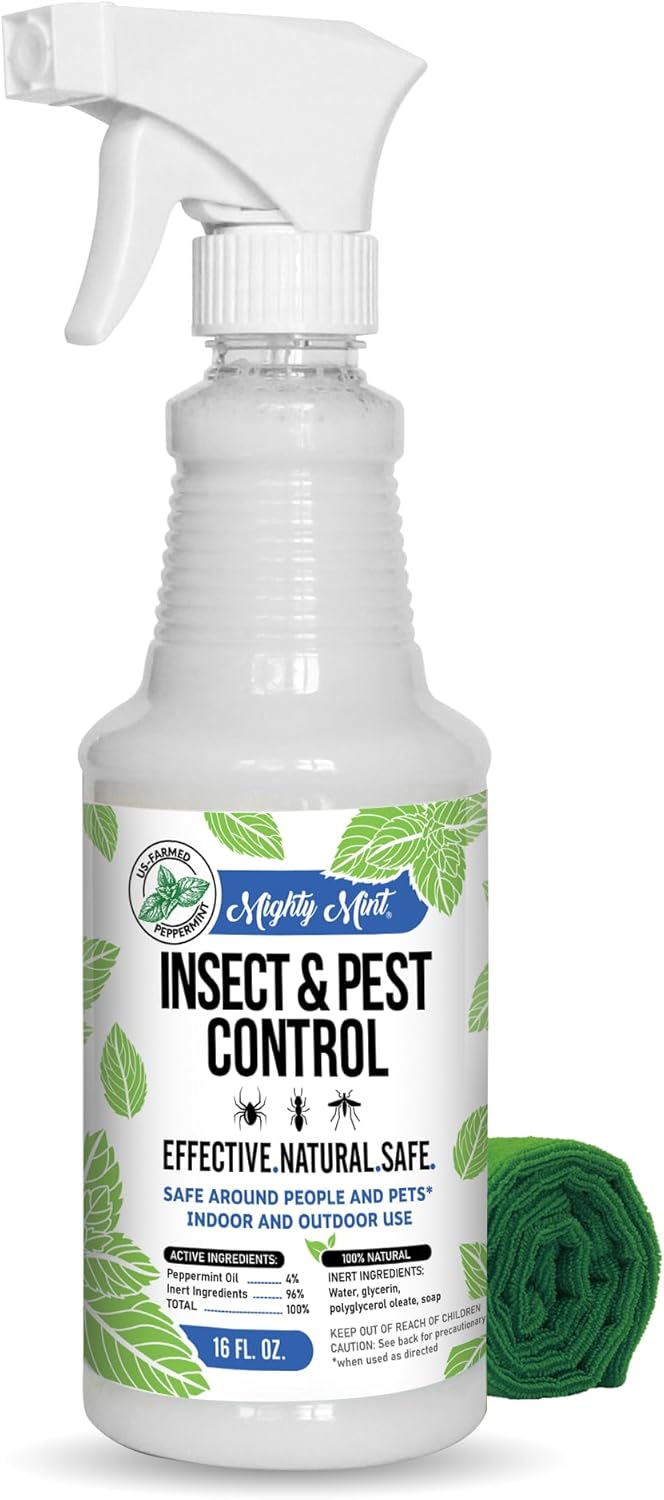
| Ingredients | Water, Glycerine, Polyglycerol oleate, Soap, Peppermint oil |
|---|---|
| Use Areas | Indoor / Outdoor |
| Size | 16 oz |
Mighty Mint is a plant-based, ready-to-use spray that uses concentrated peppermint oil to repel a broad range of household and patio pests. You apply it directly to problem areas such as baseboards, entryways, patios and around outdoor seating; the manufacturer recommends shaking and spraying until surfaces are covered and repeating applications two or more times per week for best results. Notable features include a peppermint-only scent profile, a formulation that avoids synthetic fragrances and the convenience of a 16 oz spray bottle for targeted spot treatments. Practical benefits are that it is safe to use around people and pets when dry and does not leave obvious stains on most surfaces, and the scent can make treated areas smell fresher than chemical alternatives. Important limitations are that it is a repellent rather than a pesticide so it works by discouraging pests rather than killing them, effectiveness depends on regular reapplication and it should not be applied when pollinators are present or to skin or food-contact surfaces.
Best for: Buyers who prioritize natural, low-toxicity solutions and want a targeted spray to reduce insects around patios and entryways while keeping family and pets in mind.
Less Ideal for: Anyone needing a one-time extermination or long-term residual pesticide for severe infestations should consider professional treatments or products formulated to kill pests rather than repel them.
- Plant-based peppermint formula that avoids synthetic fragrances
- Ready-to-use spray for quick, targeted indoor and outdoor applications
- Safe for people and pets when used as directed and allowed to dry
- Nonstaining on most surfaces and leaves a fresh mint scent
- Repels rather than kills insects so regular reapplication is needed to maintain protection
- Strong peppermint concentration may bother scent-sensitive individuals and requires keeping children and pets away until dry
Verdict: Choose Mighty Mint when you want a pet-friendly, plant-based spray to reduce patio and entryway insects with a fresh peppermint scent.
Vet's Best Flea & Tick Home Spray Refill for Dogs, 96 oz

| Unit Count | 96 Fluid Ounces |
|---|---|
| Item Form | Spray |
| Target Species | Dog |
| Active Ingredients | Clove Oil 0.05%, Cottonseed Oil 0.05% |
Vet's Best Flea & Tick Home Spray Refill is a large, plant-powered refill intended for treating dogs 12 weeks and older and for use on bedding, carpets, crates, and furniture. The formula combines small amounts of clove oil and cottonseed oil with inert ingredients to kill fleas, flea eggs, ticks, and mosquitoes on contact while leaving a mild cotton spice scent. In practice you shake, test a small area, then apply a light spray to animal coats or household surfaces and let dry before allowing pets back in the area. The refill size makes it practical for multi-pet homes or repeat treatments and the label emphasizes non-staining and veterinarian-formulated, family-safe use when directions are followed. Important limits to note are the low concentrations of active oils, the need to follow safety steps for puppies, pregnant or medicated animals, and the potential for skin or eye irritation in sensitive people or pets. For severe infestations the manufacturer recommends consulting a veterinarian and combining this product with other control measures for full lifecycle control.
Best for: Pet owners who prefer a natural, veterinarian-formulated option for routine flea and tick prevention around the home and on dogs and who prioritize family-safe ingredients and gentle scents.
Less Ideal for: Owners facing a heavy or established infestation who need fast, high-efficacy chemical treatments or those with pets that have known sensitivities requiring veterinary-prescribed products.
- Plant-based formula that targets fleas, flea eggs, ticks, and mosquitoes on contact
- Large 96 fl oz refill size suited for homes with multiple pets or repeated applications
- Safe for use on dogs 12 weeks and older and on bedding, carpets, crates, and furniture when used as directed
- Mild cotton spice scent is more neutral than strong peppermint or citrus alternatives
- Active ingredients are low-percentage essential oils, which may be less potent than chemical treatments for severe infestations
- Can cause skin or eye irritation in sensitive people or pets and requires testing and caution on vulnerable animals
Verdict: A large, plant-based home and pet spray refill that provides gentle, family-friendly flea and tick control for routine prevention and light infestations.
Choosing the Right Natural Home Bug Spray: Key Factors to Consider
Target Pest and Intended Location
Different insects respond differently to botanical and low-toxicity actives. What repels mosquitoes may not work on ants, cockroaches, or pantry moths. Identify whether you need a spray for flying insects in living rooms and bedrooms, crawling insects along baseboards, or occasional pantry invaders. Indoor sprays labeled for residual control along baseboards are preferable for ants and crawling pests, while fast-knockdown aerosol-style sprays are more useful for flies and mosquitoes.
Also consider where you will apply the spray. Surfaces in kitchens and around food prep areas require products with clear food-contact instructions or no-rinse claims. For upholstery, curtains, and bedding you need a formula that will not stain or leave a greasy residue and that has short re-entry times.
Active Ingredients and Toxicity Profile
Natural and plant-derived active ingredients include essential oils like peppermint, cedarwood, citronella, lemongrass, and geraniol, along with compounds such as sodium lauryl sulfate in some formulations. Check ingredient lists for concentrations and for any synthetic synergists that may raise toxicity. Even plant-based oils can be irritating to sensitive skin or respiratory systems at higher concentrations.
Understand labeled precautions and re-entry intervals. A product that lists specific safe use around pets or infants and provides cleanup instructions is usually better for indoor use than one with vague safety claims. If household members have allergies or asthma, prioritize low-odor, low-volatility formulas and consider spot treatment rather than whole-room spraying.
Surface Compatibility and Residual Appearance
Many botanical sprays can leave an oily film or temporary discoloration on painted surfaces, unfinished wood, or some fabrics. Surface compatibility matters for maintaining finishes in living rooms, on wooden trim, and on soft furnishings. Read labels for guidance about testing in an inconspicuous spot before wider application.
Residual duration is also important. Some natural sprays offer only momentary repellency and evaporate quickly, while others leave a short-lasting residue that continues to deter pests for days. For long-term perimeter control inside, choose a product that balances low residue with measurable residual activity so you do not need to reapply constantly.
Scent Profile and Indoor Air Comfort
Scent is a common tradeoff with botanical products. Strong essential oil blends can be pleasant outdoors but overpowering in smaller indoor spaces. Consider who will be in the sprayed area-children, elderly, or people with scent sensitivities may react to concentrated botanical fragrances.
Look for formulations that specify low-odor or quick-dry characteristics if indoor comfort is a priority. If scent lingers, ventilation strategies like opening windows or using fans can help. Also assess whether the scent masks pest odors or could attract certain species in enclosed spaces.
Application Method and Ease of Use
Spray delivery affects precision, coverage, and waste. Fine-mist pumps are good for treating soft furnishings and delicate spots because they distribute product evenly with less runoff. Trigger sprays with adjustable nozzles allow coarse sprays for baseboards and spot treatment in cracks. Aerosol-style botanicals may offer convenience for quick knockdown but can be less precise and create more airborne particles.
Ergonomics matter for routine use. Lightweight bottles with comfortable triggers reduce fatigue during multiple applications. Refillable options or concentrates that mix with water can reduce packaging waste and cost over time, but they require careful measuring and mixing, which may not suit every user.
Label Instructions and Re-Entry Timing
Follow label directions closely for safe indoor applications. Labels should state how long to wait before re-entering treated rooms, whether food-contact surfaces require rinsing, and recommended protective measures for applicators. Clear instructions reduce misuse and accidental exposure.
Products that offer straightforward guidance for different indoor scenarios-such as spot treatment versus whole-room application-are easier to use correctly. Ambiguous labels or lack of specific indoor guidance were grounds for exclusion in our selection process.
Common Indoor Pests and Realistic Expectations
Natural home bug sprays can work well as part of an integrated approach, but they are not a universal fix. Expect better results against nuisance flies, mosquitoes, and some species of ants than against tough infestations of cockroaches or stored-product pests. Understand that botanical options often perform best as prevention and deterrent when used regularly.
Combine sprays with non-chemical measures like sealing entry points, removing food sources, and keeping standing water to reduce pest pressure. For pantry pests, physical sanitation and airtight storage are usually more effective than spraying alone.
- Flying nuisances respond quickly to contact sprays and repellents.
- For crawling insects, treat baseboards and entry points rather than random wall areas.
- Persistent infestations often need non-spray interventions such as traps or exclusion.
Safe Indoor Application Practices
When applying any indoor spray, ventilate the area and remove pets, plants, and exposed food. Test on an inconspicuous surface first to check for staining or finish damage. Apply lightly and let products dry fully before allowing contact with fabrics or skin.
Use spot treatments instead of broad room fogging when possible to minimize airborne residues. Keep children and pets out of treated rooms for the recommended interval, and store products securely out of reach.
- Ventilate rooms during and after application.
- Test on a small area before full application.
- Follow re-entry and rinsing instructions on the label.
Combining Sprays with Physical Controls
A spray is most effective when combined with exclusion and sanitation. Seal cracks, repair screens, and install door sweeps to reduce entry. Clean up crumbs, fix leaks, and store dry goods in airtight containers to remove attractants.
Use sticky traps or mechanical fly traps as monitoring tools so you can see if populations decline after treatment. For many households, a short-term spray plus long-term exclusion drastically cuts repeat problems.
- Seal gaps and screen openings to prevent re-entry.
- Keep food stored in sealed containers to limit pantry pests.
- Monitor with traps to measure effectiveness over time.
Storing and Disposing Natural Sprays Safely
Store natural formulations in a cool, dry place away from direct sunlight to preserve active ingredients. Keep caps tightly closed to prevent evaporation and accidental spills. Clearly label any mixes you prepare and dispose of empty containers according to local regulations for household chemical waste.
Avoid pouring unused product down drains unless the label explicitly permits it. When in doubt, consult local waste authority guidelines for disposal of household pest-control products.
- Keep out of reach of children and pets.
- Do not mix different products unless label instructions allow.
- Follow local disposal guidelines for containers and leftovers.
When to Seek Professional Help
If you have a large or persistent infestation, visible damage from pests, or pests that pose health risks, professional assistance may be necessary. Natural sprays can reduce nuisance activity but may not eliminate well-established populations or structural infestations.
Professionals can identify species, locate breeding sites, and recommend targeted interventions that are safer and more effective than repeated broad spraying.
- Consider pros for recurring cockroach or bed bug problems.
- Seek expert help if children or immunocompromised people are affected.
- Use professional assessment when structural or hidden infestations are suspected.
How We Chose the Best Natural Home Bug Spray
We focused on products suited for indoor and near-entry outdoor use where households prefer plant-based or low-toxicity active ingredients. Selection started with formulations labeled for indoor use and with ingredient transparency. We excluded broad pesticide concentrates and products intended solely for outdoor perimeter treatments. Evaluation criteria emphasized measurable, gardener- and homeowner-relevant dimensions. Repellency and knockdown were assessed by reported effectiveness against common indoor invaders such as ants, flies, mosquitoes, and pantry pests. Surface safety covered how formulas behave on painted walls, wood trim, upholstery, and kitchen surfaces when applied according to directions. Residue and odor looked at how quickly scents dissipate and whether visible film remains. Application versatility considered spray ergonomics, nozzle control, and suitability for spot treatment versus room fogging. Finally, pet and child safety examined ingredient toxicity, recommended re-entry intervals, and labeled precautions. Products were excluded if labels restricted indoor use, if ingredient lists were incomplete, or if they relied on restricted synthetic actives. The final shortlist balances practical indoor effectiveness with low-toxicity formulations and clear usage guidance.
FAQ
Are natural home bug sprays safe to use around pets?
They often have lower toxicity than conventional insecticides, but safety depends on specific ingredients and concentrations. Follow label guidance on pet exposure, remove pets during application, and ventilate treated areas. For species with known sensitivities, consult a veterinarian if you are unsure.
How long do botanical sprays remain effective indoors?
Residual duration varies widely. Some formulas evaporate within hours and provide short-term repellency, while others leave a light residue that deters pests for days. Expect to reapply more frequently than with synthetic residual insecticides unless the product specifically claims longer-lasting control.
Can I use natural bug spray on kitchen countertops and in food areas?
Only if the product label explicitly permits use on food-contact surfaces or gives clear rinsing instructions. Otherwise, avoid direct application where food is prepared and instead treat around the perimeter or under cabinets while keeping food covered.
Will natural sprays stain fabrics or painted walls?
Some botanical oils can leave temporary marks or a sheen on certain finishes and fabrics. Always test in an inconspicuous area first and apply sparingly. Drying fully and wiping with a damp cloth after the recommended contact time can reduce visible residue.
Are concentrates or ready-to-use bottles better for home use?
Ready-to-use bottles are more convenient and reduce mixing errors, making them suitable for quick spot treatments. Concentrates can be economical and reduce packaging waste but require careful measuring and correct dilution. Choose based on how often you plan to treat and your comfort with mixing solutions.
How should I measure effectiveness after applying a natural spray?
Use monitoring tools like sticky traps or visual counts of pest activity before and after treatment. Track changes over several days because botanical products may reduce activity gradually. If you see no decline, reassess sanitation and exclusion measures before increasing application frequency.
Final Verdict
Prioritize a product that matches the pests you face and the rooms you need to treat. Balance repellency and residual effect with surface compatibility and family safety to choose an option that works in daily home life. If you have scent sensitivities, pets, or vulnerable household members, favor low-odor, clearly labeled formulations and focus on spot treatment and exclusion measures. For persistent or large infestations, supplement natural sprays with targeted non-chemical controls or professional advice to achieve reliable control.
