

Note: This article contains affiliate links. If you click on these links and make a purchase, I may earn a small commission at no extra cost to you. This helps support my research and content. Read my full affiliate disclosure here.
If you tackle tall trees or routinely prune upper canopy branches, the right high limb rope chainsaw changes the job from risky ladder work to controlled overhead cutting. These tools let you reach farther, reduce strain, and keep both feet on the ground when removing dead limbs or shaping canopy growth. This guide covers six shortlisted High Limb Rope Chainsaws that suit a range of pruning needs and garden sizes. We evaluated reach, cutting capacity, safety features, and handling to highlight options that perform well in real garden and yard use. Read on for the decision factors and practical setup tips before the product list.
Top Picks at a Glance
| Best Overall The best all-around choice for most situations | SENSILIN 55-Inch Rope Chainsaw Kit with 70-Tooth Dual-Sided Blade |  |
| Best Quality Built to a higher standard if you want something more solid | CAMPNDOOR 53" High Limb Rope Chainsaw with Ergonomic Handles and Case |  |
| Best Value The sweet spot between price and what you get | Loggers Art Gens 55" Hand Rope Chain Saw Kit with 72-Teeth Pocket Chain and 46 ft Ropes |  |
| Best Budget The cheapest option that still gets the job done reliably | KNFFSAAJL 53-Inch Hand Rope Chain Saw with Dual-Sided 68-Tooth Blade |  |
| Highest Rated A top-rated pick with lots of positive feedback | JAOCDOEN 48-Inch Hand Rope Chainsaw — Folding Pocket Chain Saw for Tree Pruning |  |
| Most Popular A crowd favorite that many people choose with confidence | Kutir 55-Inch 360 Rope Chain Saw High-Limb Kit |  |
SENSILIN 55-Inch Rope Chainsaw Kit with 70-Tooth Dual-Sided Blade

| Power Source | Hand Powered |
|---|---|
| Number of Teeth | 70 |
| Blade Length | 55 inches |
| Blade Material | Carbon Steel |
| Other Special Features of the Product | Bidirectional cutting function |
The SENSILIN rope chainsaw is a compact hand-powered cutting kit built around a 55-inch carbon steel chain with 70 teeth arranged on both sides for bidirectional cutting. It is used by throwing the weighted bag over a high limb or feeding the rope around a lower branch, then pulling the ergonomic handles to saw back and forth. The kit includes two 23-foot ropes, a thickened throw bag, gloves, carabiners, spare handles and a file so you can set up and maintain the chain on site. In practice the long, dual-sided chain clears wood quickly and the bidirectional design helps eject sawdust so the chain is less likely to bog down during a cut. The compact kit is easy to carry for yard work, camping, or occasional tree trimming and cuts branches in the roughly 15 to 17 inch diameter range. Important limitations are that this is a manual tool so cuts require sustained effort and technique on large limbs, and the plastic handles and lightweight components will not match the speed or comfort of a gas or battery saw for heavy or frequent professional use.
Best for: Buyers who want a low-cost, portable solution to trim higher or awkward branches themselves and prefer tools that save money over hiring a tree service.
Less Ideal for: People who need to fell large trees frequently or who prioritize the speed and comfort of a powered chainsaw should choose a motorized tool instead.
- Dual-sided 55-inch carbon steel chain with 70 teeth for faster, bidirectional cutting
- Includes complete kit: throw bag, two 23 ft ropes, carabiners, gloves, spare handles and a file
- Bidirectional cutting sheds sawdust to reduce bogging and maintain cutting speed
- Lightweight and portable for camping, yard work, or occasional tree trimming
- Manual operation requires significant physical effort on larger limbs
- Plastic handles and some kit components feel less durable than power saw alternatives
Verdict: A highly portable, fully equipped rope chainsaw kit that lets a practical homeowner cut medium limbs without paying for professional service.
CAMPNDOOR 53" High Limb Rope Chainsaw with Ergonomic Handles and Case

| Power Source | Hand Powered |
|---|---|
| Blade Material | High Carbon Steel |
| Number of Teeth | 68 |
| Blade Length | 53 inches |
| Included Components | Attachments, Bag, Case, Rope Chainsaw, Safety Gloves, 2 x 25 ft Ropes |
The CAMPNDOOR 53" high limb rope chainsaw is a manual pull saw kit designed to reach and cut higher branches without climbing. The kit includes two 25-foot ropes, ergonomic handles, a carrying case, gloves, and a 53-inch double-sided high-carbon steel chain with 68 teeth that cuts by pulling both sides of the chain back and forth. In practice you toss a weighted rope over the target limb, pull the chain ends alternately through the branch, and the aggressive teeth cut through wood while you stand safely on the ground. Notable features are the high-carbon steel blade and the included accessories that make setup and storage straightforward. The tool is lightweight and portable for camping or yard work and lets a performance-minded user tackle thick limbs without powered equipment. Limitations are that it is hand powered so cutting large diameter timber requires sustained effort and proper technique, and using it overhead needs care to avoid falling debris and ensure secure rope placement.
Best for: Buyers who prioritize cutting performance without power tools and want a portable solution for pruning or emergency limb removal from the ground.
Less Ideal for: People who prefer powered chainsaws for frequent heavy-duty tree work or those unwilling to use rope-throwing and pulling techniques above shoulder height.
- Aggressive 68-tooth high carbon steel chain for fast manual cutting.
- Includes two 25 ft ropes, ergonomic handles, gloves and a storage case for complete setup and portability.
- Double-sided chain cuts on both strokes for more efficient cutting action.
- Compact and lightweight kit suitable for carrying to campsites or around the yard.
- Requires significant manual effort on thicker limbs compared with powered saws.
- Proper technique and safety precautions are necessary when working overhead to manage falling branches.
Verdict: A portable, performance-focused manual rope chainsaw that lets you cut high limbs from the ground without power tools.
Loggers Art Gens 55" Hand Rope Chain Saw Kit with 72-Teeth Pocket Chain and 46 ft Ropes

| Number of Teeth | 72 |
|---|---|
| Blade Material | Carbon Steel |
| Handle Material | Nylon |
| Power Source | Corded Electric |
This kit combines a 48–55 inch pocket chainsaw chain with long ropes and a weighted bag so you can cut high limbs from the ground. You use the serrated chain as a manual two-person pull saw for lower branches or attach the chain to the ropes and weight to convert it into a rope saw for higher limbs. The chain is carbon steel with 72 double-sided teeth arranged for bi-directional cutting, which helps the blade cut smoothly and resist getting stuck. Included ropes and an aluminum buckle speed up setup and let you reach higher while keeping distance from the cut. The kit is lightweight and comes with a storage case for transport to campsites or around the yard. Important limitations are that it is a manual tool requiring physical effort and a second person or time to reposition ropes for wide cuts, and the metal components will need cleaning and occasional sharpening after heavy use. For routine high-limb trimming where you want a low-cost, portable option this kit works well, but it does not replace powered saws for large-diameter trees or frequent professional work.
Best for: Buyers who want a compact, budget-friendly solution for occasional high-limb pruning or campsite limb cutting and who prioritize portability and simple, do-it-yourself yard maintenance.
Less Ideal for: Property owners who need to fell large trees or professionals who perform heavy daily pruning should choose a powered chainsaw or professional gear instead.
- 72 double-sided carbon steel teeth arranged for bi-directional cutting to reduce snagging
- Includes long ropes, weighted bag, and aluminum buckle for safe high-limb cutting from a distance
- Lightweight kit with a case that is easy to carry for camping or garden tasks
- Quick connection system that converts between pocket chain and rope saw in about 20 seconds
- Manual operation requires physical effort and is slower than powered saws
- Not suited for very large-diameter trunks or frequent professional arborist use
Verdict: A highly portable, low-cost rope-and-chain saw kit that lets practical users trim high limbs safely from the ground without specialized gear.
KNFFSAAJL 53-Inch Hand Rope Chain Saw with Dual-Sided 68-Tooth Blade
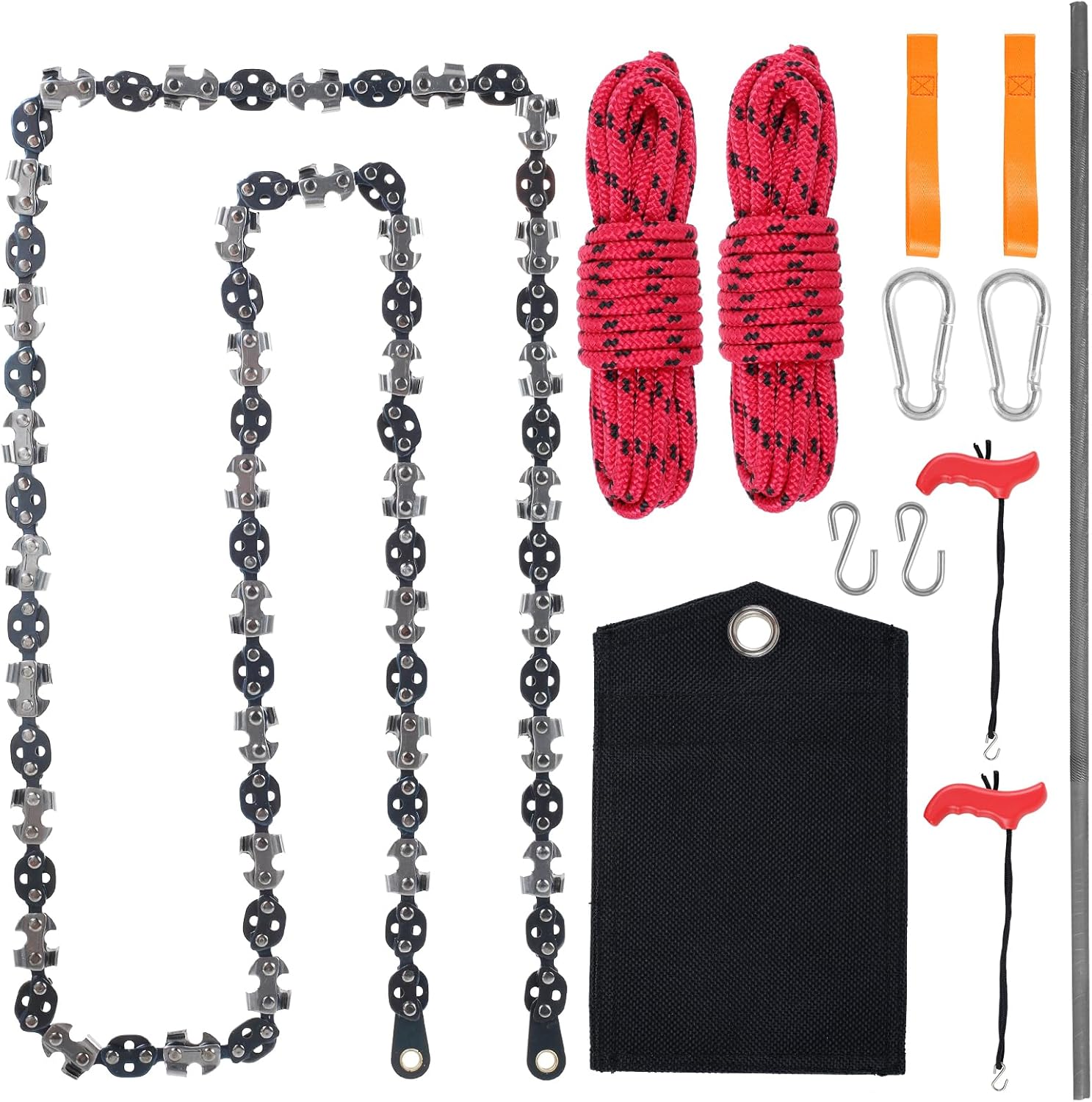
| Power Source | hand_powered |
|---|
This hand rope chain saw is a lightweight, portable tool for trimming high branches without a ladder or power equipment. It uses a 68‑tooth carbon steel chain with cutting teeth on both sides and two long control ropes so you can throw and pull the chain over overhead limbs to saw through them from the ground. The kit includes a throwing weight pouch to help you accurately position the chain and a small chainsaw sharpener so you can restore cutting performance in the field. In practice it is handy for campsite work, quick yard cleanup, or pruning trees where a pole saw or chainsaw is impractical; the soft handles improve grip comfort during repeated pulls. Expect manual effort for thicker cuts and slower progress than a motorized saw, and the technique needs some practice to place the chain and keep consistent pulling motion, but it trades power for portability and simplicity. It stows compactly on a belt or in a pack for backcountry use.
Best for: Buyers who want a very affordable, highly portable tool for occasional high‑limb pruning, camping, or light yard work and who prefer simple, nonpowered gear they can carry into remote areas.
Less Ideal for: People who need fast, frequent, or heavy-duty tree cutting or who prefer hands‑free pole or motorized solutions should consider other tools.
- High cutting capacity with 68 sharp teeth and dual‑sided blades for efficient bites
- Two 25 ft control ropes let you reach higher limbs from the ground
- Includes throwing weight pouch for accurate placement and a chainsaw sharpener for field maintenance
- Soft ergonomic handles improve grip and reduce hand fatigue
- Foldable and compact for easy belt carry or backpack storage
- Requires physical effort and good technique for larger diameter branches
- Slower than powered saws and not suitable for frequent heavy-duty cutting
Verdict: If you need a low-cost, highly portable way to cut high limbs from the ground, this hand rope chain saw delivers practical performance in a compact kit.
JAOCDOEN 48-Inch Hand Rope Chainsaw — Folding Pocket Chain Saw for Tree Pruning

| Material | 65 Manganese Steel |
|---|---|
| Number of Teeth | 63 Knots, 21 Knives |
| Length | 48 Inch |
| Includes | Carabiner, tapes, storage bag |
This folding hand rope chainsaw is a simple, low-tech tool for pruning high limbs and cutting small to medium trunks where a powered saw is impractical. The 48-inch chain is made from 65 manganese steel with 63 teeth, which gives it higher hardness and wear resistance for repeated outdoor use. It comes with a foldable handle, carabiner, tapes and a storage bag so you can rig it into the tree and pull from the ground or from a ladder. In practice the saw works by feeding the chain around a branch and pulling the handles in a reciprocating motion; it cuts faster than a bow saw on thinner limbs and is very compact to carry for tree work or camping. Limitations are that it requires physical effort and technique for efficient cutting and is not suitable for very large trunks or prolonged heavy-duty jobs where a powered chainsaw is faster and less tiring. The materials and included rigging accessories make it a reliable backup tool for seasonal pruning and remote jobs where portability and durability matter.
Best for: Buyers who prioritize a dependable, low-maintenance pruning tool for occasional high-limb work and remote jobs where portability and durability matter.
Less Ideal for: People who need a fast, low-effort solution for frequent large-tree removal or professional arborists who require powered saws for heavy workloads.
- Durable 65 manganese steel chain with 63 teeth for wear resistance
- Foldable design and compact storage bag for easy transport
- Includes carabiner and tapes for convenient rigging and setup
- Comfortable folding handles that improve grip during pulling
- Manual operation requires significant physical effort on thicker limbs
- Not intended for cutting large trunks or heavy, continuous cutting tasks
Verdict: Choose this folding hand rope chainsaw when you want a compact, durable, and reliable manual tool for pruning high limbs and remote cutting tasks.
Kutir 55-Inch 360 Rope Chain Saw High-Limb Kit

| Blade Length | 55 feet |
|---|---|
| Number of Teeth | 30 |
| Blade Material | Carbon Steel |
| Included Components | Complete High Limb Kit with Blade Sharpener, Ropes, Throwing Weight Pouch, and Extra Handles |
The Kutir 55-inch 360 rope chain saw is a manual limb-cutting kit built for trimming high branches without ladders. It consists of a 55-foot chain-like blade with dual-sided teeth, two long ropes, throw weights, ergonomic handles, a sharpening tool, and a carrying pouch. You use the throwing weight to get the line over a limb, then pull the ropes back and forth so the chain teeth slice through the wood. In practice it handles medium to large limbs efficiently when you can position the blade around the target; the bi-directional teeth and carbon steel construction help keep cuts moving and the included sharpener lets you maintain edge performance in the field. Because it is portable and compact it is convenient for yard work, trail clearing, and camping. Important limitations are that it requires two-person technique or careful solo rigging for higher branches and physical effort increases on very thick or knotty wood, and the chain and handles need inspection after heavy use to avoid wear or failure.
Best for: Buyers who want a portable, nonpowered solution to trim high limbs safely from the ground and prefer a tool with included accessories and maintenance options.
Less Ideal for: People who need fast, frequent removal of very large-diameter limbs or who prefer motorized tools for minimal physical effort.
- Complete kit with ropes, throw weights, extra handles and a sharpener for immediate use in the field
- Bi-directional carbon steel teeth on a 55-inch chain provide effective cutting without power
- Compact and lightweight for easy storage and transport in a pouch
- Handles and rope system let you cut high limbs without climbing
- Requires correct rigging and two-handed pulling which can be tiring on very thick or dense limbs
- Manual operation is slower than powered saws for large-diameter cuts
Verdict: A fully equipped, portable rope-chain saw that lets you cut high limbs from the ground without power, making it a practical pocket chainsaw alternative for occasional arborist tasks.
Choosing the Right High Limb Rope Chainsaw: Key Factors to Consider
Cutting Reach and Bar Length
Reach determines how high you can prune without a ladder, and bar length affects the maximum limb diameter you can cut. Longer bars and extended reach systems let you remove higher branches but add swing weight and can reduce control when the saw is suspended on a rope.
Consider the typical height and limb thickness in your yard. For pruning high but relatively thin limbs, prioritize extra reach with a moderate bar length. For thicker upper limbs, choose a configuration that balances reach with a bar long enough to cleanly sever the branch in one pass.
Operator Safety and Tethering Options
Safety is the top concern when cutting overhead. Look for chain brakes that stop quickly, multiple secure tether points to attach ropes or pole clamps, and guards that reduce kickback risk when the saw is angled above the head.
Since you will often be standing under the cut, the saw should allow for a stable, predictable hanging orientation and accommodate a separate lowering system to control falling branches. Tools with clear tether attachment locations and redundancy in securing points reduce the chance of accidental drops.
Weight and Balance While Suspended
A saw that feels light in hand can behave very differently when hanging at the end of a pole or rope. Suspended weight and balance influence how easy it is to aim the chain and hold the cut line steady, especially during long pruning sessions.
Assess both the listed weight and how the center of gravity shifts when the saw is attached to your pole or rope system. A slightly heavier unit with better balance can be less fatiguing than a lighter one that pulls off-axis.
Cutting Power and Chain Performance
Chain speed and drive system affect how cleanly and quickly a saw slices through wood. Higher chain speed reduces binding and makes shorter work of thicker branches, while a robust drive system maintains cutting consistency under load.
For most residential pruning, a mid-range chain speed and a sharp, well-tensioned chain are sufficient. If you regularly encounter green wood or large diameters aloft, prioritize stronger cutting performance and an easy way to change or sharpen the chain.
Power Source, Runtime, and Reliability
Battery or corded electric options are common for high-limb work because they are quieter and require less maintenance than gas. Runtime matters when you have several trees or a large canopy to trim; assess how many medium cuts a single battery delivers and whether fast swap options are practical in the field.
Also consider charging logistics and whether you can easily bring a spare battery or an inline power connection. For longer jobs, having predictable power delivery helps avoid mid-session interruptions that force you down from the pole or ladder.
Maintenance Accessibility and Field Service
Field servicing matters because sharpness, chain tension, and lubrication directly affect safety and cutting performance. Choose a design with straightforward tensioning, accessible lubrication ports, and commonly available replacement chains and bars.
Tools that allow quick on-site maintenance reduce downtime and keep cutting predictable. For gardeners who prefer minimal upkeep, look for sealed drive systems and clear maintenance intervals in the manual.
Safe Setup and Rigging Basics
Setting up a high-limb rope chainsaw for safe use starts with selecting solid anchor points, using rated climbing or rigging rope, and inspecting all hardware before every session. Anchor locations should be above the work area and able to hold several times the weight of the saw plus the live load of a falling limb.
Before cutting, plan how the branch will fall and where the rope will lead it away from people and property. Practice a few dry runs with a lightweight training line so you get the feel of how the saw hangs and pivots when attached to your pole or rope system.
- Use a separate safety line to secure the saw to your pole or harness
- Maintain at least two secure attachment points when possible
- Wear eye and head protection and keep bystanders well clear
Techniques for Controlled Overhead Cuts
Start each cut by reducing weight on the branch with a small relief notch lower on the limb, then finish the cut from above or the side to avoid tearing bark. When the saw is suspended, feed the chain into the cut smoothly to avoid sudden snagging that can swing the limb unpredictably.
If the saw is attached to an extendable pole, work in short controlled strokes and reposition the pole rather than overreaching. If you are lowering limbs, rig a guided rope to steer the falling piece and prevent it from snagging other branches.
- Make an undercut first to prevent bark tear
- Keep controlled, shallow passes with the chain when cutting aloft
- Use tag lines to guide and lower larger limbs
Maintaining Chains and Bars in the Field
Carry the basic maintenance kit: a compact file or sharpening tool, spare chain links, a small wrench for tensioning, and chain oil. Check chain tension frequently during the job since heat and cuts alter tension and affect cutting behavior.
Clean saw teeth and remove sap buildup whenever you stop for a break. A well-lubricated chain with correct tension reduces kickback risk and keeps cuts clean. Replace bars or chains at the first sign of uneven wear rather than pushing for marginal economy.
- Check tension after every 10 to 20 medium cuts
- Top up chain oil before long sessions
- Sharpen or swap chains as soon as cutting becomes sluggish
When to Call a Professional Arborist
If branches are directly over structures, power lines, or if the pruning requires working from a climbing harness in the canopy, a professional arborist with rigging experience is the safer choice. Complex canopy work can risk property damage or injury if not handled with proper equipment and training.
Also consider a pro when tree health is uncertain and pruning could compromise structural integrity. Arborists can assess targets for removal or selective pruning and perform controlled lowering for large limbs that would be hazardous from the ground.
- Hire a professional for work near power lines or roofs
- Get an arborist opinion for large structural cuts or diseased trees
How We Chose the Best High Limb Rope Chainsaw
Our selection focused on tools that make elevated pruning safer and more effective for home gardeners and small property owners. We prioritized measurable, garden-relevant criteria: cutting reach and bar length to judge how high you can prune without climbing; chain speed and cut capacity to assess whether the saw will handle typical deadwood and medium limbs; operator safety systems such as chain brake geometry, tethering points, and effective hand guards for overhead work; weight and balance when suspended from a rope or pole to minimize wrist and shoulder fatigue; corded or battery runtime paired with real-world cut counts so a single battery or session covers common pruning tasks; and maintenance needs including accessible tensioning and lubrication for field service. We excluded specialty arborist tools that require certification or advanced rigging, and heavy-duty commercial saws designed for constant professional use. The final list favors accessible, durable tools that gardeners can set up and use safely with basic rope and pole skills.
FAQ
Can I use a regular chainsaw with a pole attachment for high limbs?
Often you can, but not all regular chainsaws are designed for overhead hanging or pole mounting. Check for secure tether points, adequate balance when suspended, and whether the manufacturer allows pole mounting. Use rated hardware and follow safety guidance.
How thick a limb can a typical High Limb Rope Chainsaw cut?
It depends on bar length and cutting power. Many units comfortably handle small to medium limbs under several inches in diameter. For consistently thicker limbs, choose a saw with a longer bar and stronger drive system or plan to make relief cuts before the final pass.
Is it safe to lower branches by hand from the ground?
Lowering large branches by hand is risky unless you have a controlled rigging system. Use tag lines and a guided rope setup to steer the limb and reduce the chance of it swinging unexpectedly. For very large pieces, professional rigging is recommended.
How often should I sharpen the chain during a big pruning session?
Sharpen the chain whenever cutting becomes sluggish, produces long wood shavings instead of fine chips, or increases strain on the motor. For heavy work, expect to touch up or swap chains every few hours depending on wood conditions.
What personal protective equipment is essential for high-limb pruning?
Wear a hard hat, eye protection, hearing protection if the saw is loud, and cut-resistant gloves. If you are working from a pole, also use a secure harness or hand strap as appropriate and ensure clear communication with anyone assisting on the ground.
Final Verdict
Focus first on safety, reach, and suspended handling when choosing a High Limb Rope Chainsaw. Prioritize tools that provide enough cutting reach for your canopy while offering secure tethering options and predictable balance when hung from a pole or rope. Consider runtime and ease of field maintenance so you can finish a pruning session without interruptions. Weigh the tradeoffs between extra reach and added swing weight, and favor designs that make on-site maintenance straightforward and that include clear attachment points for rigging. With those priorities in place, you can choose a tool that reduces risk and speeds routine canopy care.
