

Note: This article contains affiliate links. If you click on these links and make a purchase, I may earn a small commission at no extra cost to you. This helps support my research and content. Read my full affiliate disclosure here.
Picking the right bonsai scissors matters because tiny cuts make big differences in branch healing, ramification, and the overall look of your tree. The right tool gives a clean slice that closes quickly and encourages neat growth while minimizing damage to delicate stems and leaves. This guide covers six shortlisted bonsai scissors selected for common bonsai tasks: fine trimming, wiring cleanup, and leaf pruning. We evaluated blade sharpness, ergonomics, steel quality, and suitability for different bonsai styles so you can choose the right pair for your pruning routine.
Top Picks at a Glance
| Best Overall The best all-around choice for most situations | Wazakura Satsuki Bonsai Scissors 7in (High Carbon Steel) |  |
| Best Quality Built to a higher standard if you want something more solid | Wazakura Traditional 7" Bonsai Scissors — High Carbon Steel |  |
| Best Value The sweet spot between price and what you get | CHIKAMASA B-500SF Professional Fluorine-Coated Garden Shears |  |
| Best Budget The cheapest option that still gets the job done reliably | MUUZLL 3-Pack 4.1" Bonsai Pruning Scissors (Stainless Steel) |  |
| Highest Rated A top-rated pick with lots of positive feedback | KAKURI 7" Satsuki Bonsai Scissors — Japanese High-Carbon Steel |  |
| Most Popular A crowd favorite that many people choose with confidence | VIVOSUN 6.5" Gardening Pruning Shears with Straight Stainless Steel Blades |  |
Wazakura Satsuki Bonsai Scissors 7in (High Carbon Steel)

| Blade Material | High Carbon Steel (S58C) |
|---|---|
| Blade Type | Straight |
| Hand Orientation | Right |
| Blade Length | 9.5 centimeters |
These Wazakura Satsuki scissors are a purpose-built bonsai tool for precision trimming, thinning, and deadheading. Made in Sanjo, Japan, the 7-inch design has a slim body and long, narrow blades that reach into dense foliage and allow clean cuts up to about 4 mm (1/8 in). The S58C high-carbon steel blade stays sharp, can be resharpened, and produces clean shears that reduce tearing and scarring on delicate branches. The right-hand orientation and rounded point make detailed shaping comfortable for right-handed users. Build quality is solid with alloy-steel handles and traditional Japanese craftsmanship evident in the finish and edge. The main limitations are the small cutting capacity and right-handed layout, so these are not for heavy pruning or left-handed gardeners. If you need a dependable, finely finished scissor for everyday bonsai maintenance and precise work inside the canopy, these perform very well; for thicker branches choose a dedicated branch cutter.
Best for: Gardeners who want a high-quality, precision bonsai scissor for regular maintenance and detailed shaping inside the canopy and value traditional Japanese craft.
Less Ideal for: People who need heavy-duty branch cutting or left-handed users looking for ambidextrous tools should consider other cutters.
- Handcrafted in Sanjo, Japan with traditional workmanship
- S58C high-carbon steel blades hold a sharp edge and are resharpenable
- Slim 7-inch profile reaches into the canopy for precise trimming
- Sharp straight blades make clean cuts that minimize scarring
- Right-hand orientation limits use for left-handed gardeners
- Cutting capacity is small and not suitable for thick branches
Verdict: Choose these scissors if you want a finely made Japanese bonsai tool that delivers precise, clean cuts for everyday detailed maintenance.
Wazakura Traditional 7" Bonsai Scissors — High Carbon Steel

| Blade Material | High Carbon Steel |
|---|---|
| Blade Edge | Straight |
| Hand Orientation | Right |
| Blade Length | 5.2 centimeters |
These Wazakura Traditional 7" bonsai scissors are a performance-focused pruning tool built for precise, repeatable cuts. Made in Sanjo, Japan, the S58C high-carbon steel blades arrive very sharp and hold an edge well; they are also straightforward to resharpen, which keeps them useful through heavy seasonal use. The classic butterfly loop handle keeps your fingers close to the blade for control when trimming fine shoots, leaf work, and deadwood on bonsai or delicate garden plants. Straight, round-point blades produce clean shears that reduce ragged cuts and scarring so wounds close faster. The scissors are right-handed and intentionally compact for detail work rather than heavy branch cutting. Because they are carbon steel, they require drying and occasional oiling to avoid rust if used in wet conditions. The weight and blade length favor accuracy over leverage, so they are best for frequent detailed pruning rather than tackling thick wood. Overall, these are a durable, precision-focused choice for users who prioritize sharpness, feel, and traditional Japanese craftsmanship.
Best for: A bonsai enthusiast or professional who prioritizes cutting performance, sharpness retention, and fine control for detailed pruning and styling.
Less Ideal for: Not suited for gardeners who need a left-handed tool or who will frequently cut large, woody branches; users who want low-maintenance stainless blades should consider alternatives.
- High-carbon S58C blades hold a keen edge and are easy to resharpen
- Handmade in Sanjo with traditional craftsmanship for consistent build quality
- Butterfly loop handle offers close control for precise trimming and shaping
- Straight, round-point blades deliver clean cuts that minimize scarring
- Carbon steel is prone to rust without regular drying and oiling
- Right-handed orientation limits use for left-handed gardeners
Verdict: Choose these scissors if you want a precision, performance-focused bonsai tool with long-lasting high-carbon blades and excellent tactile control.
CHIKAMASA B-500SF Professional Fluorine-Coated Garden Shears

| Blade Material | Stainless Steel |
|---|---|
| Finish Types | Polished |
| Handle Material | Plastic |
| Blade Edge | Straight |
| Hand Orientation | Ambidextrous |
These CHIKAMASA B-500SF shears are compact, precision-oriented hand tools meant for fine trimming and light harvesting tasks such as bonsai work, grape care, and detailed pruning. The stainless steel blades are thin and razor-sharp with a fluorine coating that resists sap buildup and corrosion, so they stay cleaner during repeated cuts. Rounded outside blade edges help protect nearby stems while a stainless steel rivet and shock-absorbing elastomer grips reduce cutting resistance and hand fatigue during longer sessions. The ambidextrous, ergonomic plastic handles make the shears comfortable for most users and the overall size favors control for detailed cuts. Limitations are the small blade length and lightweight construction, which mean these are not suited for very thick branches or heavy-duty landscaping. Regular sharpening will still be necessary over time to keep the fine edge for delicate bonsai work.
Best for: Gardeners who prioritize precise, efficient tools for detailed pruning and bonsai maintenance and want comfortable shears that minimize hand strain during focused sessions.
Less Ideal for: People who need a heavy-duty pruner for thick branches, large-scale pruning, or commercial vineyard work should choose a sturdier, larger tool instead.
- Fluorine-coated stainless steel blades resist sap and corrosion for cleaner cutting
- Thin, razor-sharp blade profile provides precise cuts ideal for bonsai and detailed pruning
- Ergonomic elastomer resin grips with shock absorbers reduce hand fatigue during repetitive use
- Ambidextrous design suits both left and right handed users
- Short blade length and lightweight build are unsuitable for cutting thick branches
- Plastic handle and small size may feel less durable for heavy or commercial use
Verdict: A precise, comfortable pair of shears built for detailed bonsai and trimming work where control and sap resistance matter.
MUUZLL 3-Pack 4.1" Bonsai Pruning Scissors (Stainless Steel)

| Number of Packs | 3 |
|---|---|
| Material Type | Stainless Steel |
| Blade Material | Stainless Steel |
| Hand Orientation | Ambidextrous |
These compact bonsai pruning scissors come as a three-pack and are built from polished stainless steel for basic trimming tasks. Each 4.1-inch snip has a rounded point and ambidextrous stainless handles, making them comfortable for quick shaping, bud pinching, and leaf trimming on small bonsai branches. The blades are described as sharp and spring back to open, which speeds repetitive cuts and reduces hand fatigue during light sessions. Because they are small and lightweight they are easy to maneuver in tight branch structures and the pack of three gives you spares or allows you to keep one in different work areas. Limitations are that these are intended for light-duty work only: the blade shape and compact size are not suited to thicker branches or heavy wiring tasks, and long-term durability under heavy use may be limited compared with higher-end tool steels. For routine maintenance and detailed shaping of small bonsai, they offer an inexpensive, practical option.
Best for: Buyers looking for an inexpensive, no-frills set of small pruning scissors for routine bonsai maintenance and detailed leaf and bud work who value getting spares in one purchase.
Less Ideal for: Serious hobbyists who regularly prune thicker branches or professionals who need long-lasting, hardened-steel shears should consider heavier-duty bonsai tools instead.
- Three scissors in one purchase provides spares or tools for multiple workstations
- Stainless steel blades and polished finish resist corrosion for outdoor use
- Compact 4.1-inch size and rounded point aid precise trimming and leaf work
- Ambidextrous design suits both left and right handed users
- Spring-action opening reduces hand strain during repetitive cuts
- Not intended for cutting thick branches or heavy-duty pruning
- Compact size may feel flimsy for users accustomed to larger bonsai shears
Verdict: An affordable three-pack of small stainless-steel bonsai scissors that gives casual growers practical, ready-to-use tools for routine shaping and leaf work.
KAKURI 7" Satsuki Bonsai Scissors — Japanese High-Carbon Steel

| Blade Material | Carbon Steel |
|---|---|
| Blade Edge | Straight |
| Blade Type | Anvil |
| Hand Orientation | Right |
| Size | 7 inches |
These KAKURI Satsuki bonsai scissors are a purpose-built trimming tool for detailed bonsai and azalea work. The 7-inch design pairs a slim, round-point tip with long handles so you can reach into compact foliage and make precise cuts on buds and very thin twigs. The blade is high-carbon Japanese steel, hand-forged and sharpened by Japanese craftsmen, which delivers an exceptionally sharp edge and clean cuts that reduce tearing on delicate growth. The anvil-style straight blade favors accuracy and control when clipping small stems rather than heavy pruning. Because the blade is carbon steel it needs routine care to prevent rust — wipe dry after use and apply oil if stored long term — so it is better suited to gardeners who will maintain their tools. Overall the tool excels for fine detail work and will last for years with proper maintenance, but it is not intended for thick branches or heavy-duty pruning tasks.
Best for: Buyers who prioritize a reliable, long-lasting cutting edge and who perform meticulous bonsai or azalea detail work and will maintain their tools regularly.
Less Ideal for: Gardeners who need a heavy-duty pruner for thicker branches or who prefer maintenance-free stainless tools.
- Hand-forged Japanese high-carbon steel blade for very sharp, long-lasting edge
- Slim round-point tip and long handles for precise work in tight bonsai foliage
- Anvil straight-edge design gives controlled, clean cuts on small stems
- Carbon steel blade requires regular drying and oiling to prevent rust
Verdict: Choose these scissors if you want a professionally made, razor-sharp tool that delivers dependable precision for detailed bonsai and azalea trimming.
VIVOSUN 6.5" Gardening Pruning Shears with Straight Stainless Steel Blades
| Blade Type | Anvil |
|---|---|
| Blade Material | Stainless Steel |
| Hand Orientation | Ambidextrous |
| Blade Edge | Straight |
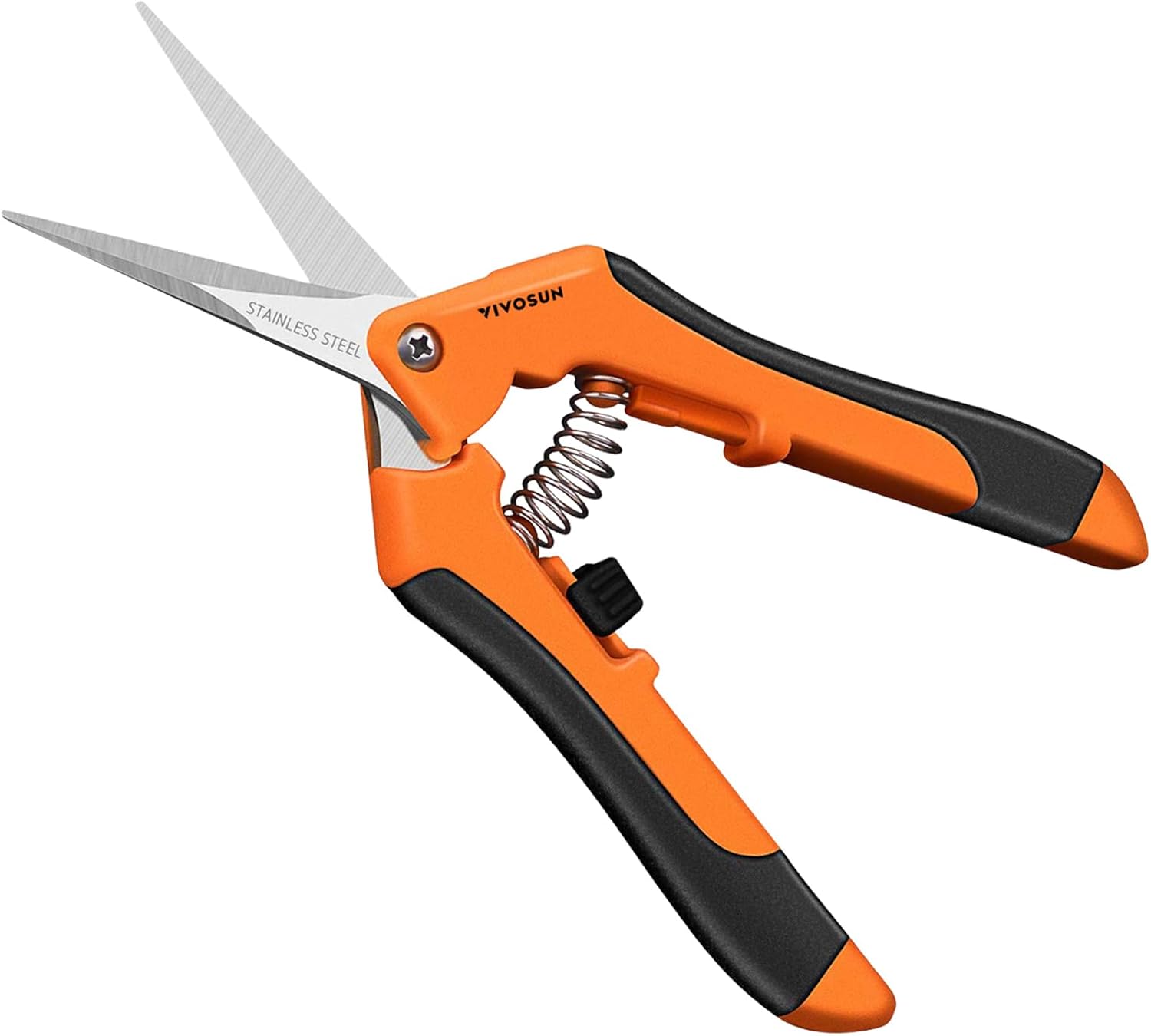
These VIVOSUN 6.5-inch pruning shears are small, light, and built for precise cutting of flowers, small stems, and detailed garden tasks. The straight, precision-sharpened stainless steel blades and micro tip design let you get into tight spaces for deadheading, shaping, and bonsai work without disturbing nearby stems. An ambidextrous polished stainless steel handle keeps the tool simple and durable while a sideways locking mechanism secures the blades when not in use. Because it is an anvil-style cutter with a short 2.1-inch blade, it excels at delicate snips rather than thick branch work; expect best results on softwood and thin-diameter growth. The low weight and ergonomic grip reduce hand fatigue for long sessions, though heavier pruning or cutting branches near 3/4 inch will require a larger bypass pruner. For gardeners who want a budget-friendly, fuss-free snipping tool for everyday trimming, these shears cover the basics reliably with minimal maintenance required.
Best for: A no-frills, cost-conscious gardener who needs an easy-to-use snipping tool for daily deadheading, shaping, and light pruning around flowers and small shrubs.
Less Ideal for: Gardeners who regularly cut thick woody branches or need a shear for heavy-duty tree pruning should choose a larger bypass pruner or lopper instead.
- Precision micro-tip stainless steel blades for tight, detailed cuts
- Ambidextrous design and comfortable grip reduces hand strain
- Sideways locking mechanism keeps blades closed and safe when stored
- Lightweight construction makes it easy to use for extended trimming sessions
- Anvil blade and short blade length limit effectiveness on thicker woody stems
Verdict: A simple, affordable micro pruning shear that delivers precise, low-effort snips for everyday deadheading and light pruning.
Choosing the Right Bonsai Scissors: Key Factors to Consider
Blade Sharpness and Grind
Sharpness directly affects how cleanly you cut delicate bonsai tissue. A fine, well-honed edge slices through green wood and new shoots without crushing the fibers, which lowers infection risk and improves callus formation.
The grind profile matters too. A thinner, concave or hollow grind gives faster, cleaner cuts but can be more fragile on harder wood. Consider how often you prune and the typical branch thickness you work with when weighing sharpness versus durability.
Handle Fit and Ergonomics
Comfortable handles reduce hand and wrist strain during long shaping sessions and when doing lots of repetitive snips. Look for grips that fit your hand size, have a non-slip finish, and allow a natural wrist angle for close, controlled cutting.
Smooth, rounded handle edges are gentler on skin when making fine cuts. If you have limited hand strength or joint issues, smaller-lever designs or spring-return mechanisms can make pruning less tiring.
Tip Shape and Precision
The tip profile determines how close you can get to buds, trunk nodes, and interior foliage. Narrow, pointed tips are best for cutting small shoots and for working inside dense branches where access is tight.
Blunter, rounded tips are safer for general leaf trimming and reduce the chance of accidental punctures, but they may not reach tight junctions. Think about the styles you grow and the common pruning moves you perform when choosing tip geometry.
Corrosion Resistance and Material
Bonsai scissors are used around water, sap, and acidic potting mixes, so resistive steels or protective finishes extend tool life. Stainless or treated carbon steels are common; each has tradeoffs between edge retention and rust resistance.
Regular cleaning and drying after use help any steel last longer. If you live in a humid climate, prioritize corrosion-resistant finishes or stainless compositions to avoid frequent maintenance.
Joint Construction and Durability
The fulcrum and joint determine action smoothness and long-term reliability. A loose or poorly made pivot will wobble and reduce cutting accuracy. Look for riveted or screw-adjustable joints that hold alignment and let you tweak tension if needed.
Durable joints also withstand occasional heavier cuts without deforming. For bonsai work, a smooth, tight action gives the best control for tiny, deliberate snips.
When to Use Different Scissor Types
Bonsai scissors come in a few functional styles: long, straight shears for leaf and fine branch trimming; curved-edge scissors that follow branch contours for cleaner compound cuts; and narrow-tipped scissors for detail work around buds and wiring. Match the type to the task to reduce unnecessary damage and speed up styling sessions.
- Long straight scissors for sweeping cuts and leaf thinning
- Curved-edge scissors for following branch shapes
- Narrow-tipped scissors for bud pruning and interior work
Basic Maintenance to Keep Scissors Cutting Well
Routine care keeps edges performing: wipe sap and debris after each use, dry tools thoroughly, and apply a thin coat of light oil to the joint and blade to prevent rust. For carbon steel edges, occasional light stropping or honing restores keen performance.
Regularly check the pivot tension and tighten or loosen it so blades meet cleanly without binding. If the scissor pair develops nicks, careful sharpening on a fine stone will return a smooth cut; avoid aggressive grinding that changes the blade profile.
- Wipe sap immediately after cutting
- Dry and oil blades after use
- Adjust pivot tension for smooth action
- Hone on a fine stone to remove small nicks
Safe Pruning Practices with Bonsai Scissors
Use clean, sharp blades and make deliberate cuts at the appropriate angle to leave a small, neat wound that heals quickly. Cut as close to the branch collar or node as the design allows without tearing surrounding bark. For structural cuts on thicker branches, use the appropriate tool type rather than forcing scissors to prevent damage.
Keep scissors away from wiring and metal supports to avoid dulling the edge. Store scissors in a sheath or dedicated toolkit so tips are not knocked out of alignment during transport or storage.
- Sanitize blades between trees to prevent disease spread
- Cut at a slight angle, close but not flush with the trunk
- Use the right tool for thicker branches
Choosing Scissors for Different Bonsai Styles
Different bonsai styles and species require different tools. Deciduous and tropical species with softer shoots respond best to very sharp, thin-edged scissors for precise leaf pruning. Conifers and species with resinous sap may demand harder-wearing edges and more corrosion-resistant finishes.
For formal upright or detailed styles that emphasize fine ramification, prioritize tip precision and ergonomic control. For larger, sculptural styles where occasional heavier trimming is needed, blend sharpness with stronger blade geometry.
- Soft-wood species benefit from thinner edges
- Resinous species need corrosion-resistant finishes
- Formal styles require fine-tipped precision
How We Chose the Best Bonsai Scissors
We shortlisted tools based on practical criteria that matter when working on living miniature trees. First, we prioritized blade geometry and edge retention because a consistently sharp, well-ground edge reduces tearing and speeds healing on thin bonsai shoots. Second, ergonomics and grip design were essential to limit hand fatigue during repetitive detail work and to allow confident control for precision cuts. Third, we assessed steel type and corrosion resistance to ensure tools stay sharp and rust-free in humid potting and watering environments. Fourth, we looked at size and tip profile to match different bonsai tasks, from sweeping shears for leaf work to narrow-tipped scissors for cutting back buds and buds along the trunk. We excluded multi-tool shears meant for heavy garden pruning and any tool too large for standard bonsai branch diameters. We also filtered out instruments with unstable joint construction or poor handle finish that can slip during use. The final selection focuses on tools that balance cutting performance, durability, and comfort for regular bonsai maintenance.
FAQ
How often should I sharpen bonsai scissors?
Often depends on use. For regular weekly pruning, hone lightly every few weeks and do a more thorough sharpening a couple times a year. Less frequent users can sharpen as needed when cutting becomes ragged.
Can I use bonsai scissors on wiring or thick branches?
Usually you should avoid cutting wire or thick branches with bonsai scissors. They are designed for fine greenwood. Using them on wire or woody branches can damage the edge or misalign the joint.
What is the best way to clean sap from the blades?
Wipe fresh sap with a cloth dampened with warm, soapy water, then dry thoroughly. For stubborn resin, a small amount of rubbing alcohol or oil helps loosen residue before wiping and drying.
Are stainless or carbon steel scissors better for bonsai?
It depends. Stainless steels offer good corrosion resistance and lower maintenance, while carbon steels often take and hold a keener edge longer but require more care to prevent rust. Choose based on climate and willingness to maintain tools.
Should I sterilize scissors between trees?
Sterilizing between different trees, especially if disease is suspected, is a good practice. Quick options include wiping with alcohol or a diluted bleach solution followed by thorough rinsing and drying.
Final Verdict
Prioritize clean cutting edges, comfortable ergonomics, and a tip shape that matches the pruning detail your trees require. Tradeoffs are common: thinner edges give cleaner cuts but need more maintenance, while tougher steels last longer at the cost of slightly less finesse. Consider your climate, the species you grow, and how often you prune when choosing scissors so the tool supports both precise shaping and long-term care.
